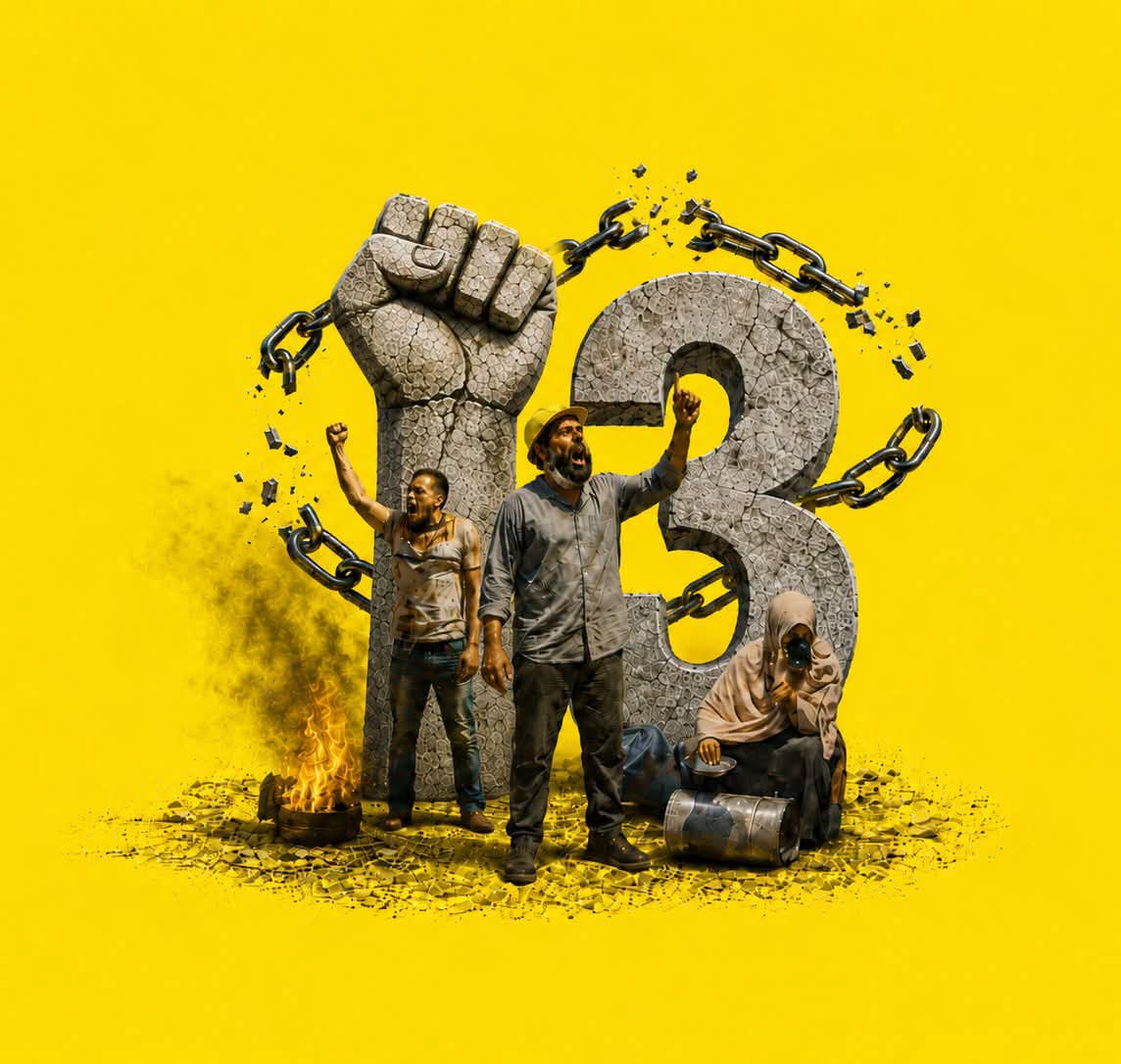
A Crown Instead of the Barracks: An Idea From Outside the Box Could Egypt’s exiled opposition use constitutional monarchy to dismantle the legitimacy of the 1952 coup? By Adham Hasanin Egyptian journalist and political writer, based in the Netherlands To understand what follows, a reader unfamiliar with Egypt needs one basic fact: since 1952, Egypt has never been governed by anyone who did not first wear a military uniform. Gamal Abdel Nasser, Anwar Sadat, Hosni Mubarak, and today Abdel Fattah el-Sisi four men, four eras, one common origin. All rose through the armed forces. All inherited a state built by a coup that year, when a group of officers calling themselves the "Free Officers" overthrew King Farouk I and, within a year, abolished the monarchy altogether and declared a republic. For seventy-three years, the underlying equation has not changed: the army rules, power passes from one officer to the next, and legitimacy is drawn from the barrel of a gun rather than the ballot box. Every conceivable form of opposition has been tried legal parties and banned ones, Islamist movements, liberal and leftist coalitions, the 2011 popular uprising, and the 2013 elections whose result was overturned by force within a year. All of them hit the same wall: a military institution that reproduces itself under different names, while the core of the system remains untouched. So what if the problem, all along, has not simply been who rules, but the constitutional framework that makes military rule possible in the first place? And what if the answer lies not in swapping one president for another, but in dismantling the underlying equation itself, through a framework Egyptian opposition movements have never seriously tried: a purely ceremonial constitutional monarchy, on the model of Belgium, the Netherlands, or Spain where the head of state becomes a symbol above the political fray, while the army is permanently expelled from politics and returned to its barracks. This is not a call to revive a particular family, nor nostalgia for a golden age that never quite existed. It is a proposal for a political and strategic tool that has not yet been used in the intellectual arsenal of Egypt’s opposition in exile a tool that deserves serious discussion, regardless of whether it is ever literally realised or simply serves to expand the boundaries of what is politically thinkable. I. Why 1952, Not 2013 or 2011, Is the Root The strategic error made by most Egyptian opposition movements from the Muslim Brotherhood to the April 6 Youth Movement to the various civil opposition parties has been treating each political crisis as an isolated case: Mubarak was corrupt and had to be toppled; Sisi staged a coup that must be condemned; the interim military council was a transitional phase to be endured. This piecemeal approach treats the symptoms while leaving the original illness untouched. That original illness is the very structure of legitimacy established by the coup of 23 July 1952. The Egyptian republican system, from Nasser to today, has never built its legitimacy on a genuine democratic social contract. Instead, it has rested on a fixed trinity: the rhetoric of "revolution against feudalism and colonialism," charismatic individual leadership, and military protection of the regime framed as the guarantor of stability. This trinity has repeated itself from Nasser to Sadat to Mubarak to Sisi, with only cosmetic variations. Each new president was never a break from the system he was its continuation. When the opposition says "let us return to the constitutional framework that preceded the coup," it is not criticising a particular policy. It is declaring that the legal foundation of everything that came after 1952 was illegitimate from the start. Here lies the rhetorical power of "returning to the pre-1952 order": it does not merely demand swapping one ruler for another. It withdraws historical legitimacy from the entire republican military system including today’s regime, which draws its own declared legitimacy from that same "1952 legacy." II. Why a "Ceremonial Crown," Not "the Return of a Ruling Family" Here is the most important distinction anyone advocating this idea seriously must grasp: the project does not rest on restoring any particular individual from the Muhammad Ali dynasty, nor on nostalgia for King Farouk or his ancestors. The real power of the idea lies in the constitutional form, not in the person who happens to sit on the throne. Three successful European democracies illustrate the model clearly. Belgium, where King Philippe is a purely constitutional symbol with no real executive power, while the state is run through an elected parliament and a complex coalition government reflecting the country’s linguistic and political diversity. The Netherlands, where King Willem-Alexander formally opens the parliamentary year and signs laws, but where actual decision-making rests with the prime minister and the elected parliament. And Spain, where the king represents symbolic continuity of the state above party politics, while the military and security services answer entirely to civilian authority a transition achieved after the death of the dictator Francisco Franco in 1975, when King Juan Carlos I voluntarily relinquished the extensive executive powers he had inherited and backed free elections, most dramatically in February 1981, when he personally ordered the armed forces to remain loyal to the constitution during an attempted military coup, causing it to collapse within hours. The common thread across these three models is not "the presence of an ancient royal family." It is the principle of separating symbol from power. The monarch in these countries does not rule; he represents. He issues no political decisions; he provides the continuity and symbolic stability that allows party political competition to revolve beneath him, without every transfer of power becoming an existential crisis of legitimacy. This is precisely what Egypt’s military republican system lacks: a neutral mechanism for guaranteeing state continuity that does not depend on the person of the ruler or his security apparatus. When Egypt’s military-republican president is absent, it is always the army that fills the vacuum, because it is the only institution built to be the "guarantor of stability." Under a ceremonial monarchical model, by contrast, it is the king not the army who represents that symbolic guarantee, genuinely opening the door to removing the military institution from the political equation altogether. III. Egypt’s Standing Under the Monarchy: An Honest Reckoning, Not Blind Nostalgia For a Western reader with little prior knowledge of Egypt’s monarchical period (1922–1952), it helps to know this: Egypt was nominally independent under its own king from 1922, but Britain retained enormous informal control over the country’s foreign policy, military bases, and the Suez Canal throughout the period a reality that shaped everything that follows. Any honest invocation of "Egypt’s standing under the monarchy" must avoid the trap of mythologised nostalgia that many advocates of this idea fall into. Egypt in that era was no lost paradise, and any honest article must say so plainly. The Egyptian pound, for instance, often invoked as a symbol of "national currency strength" in that period, was not strong because of independent Egyptian monetary policy. It was pegged to the British pound sterling as part of Egypt’s complete colonial financial dependency until 1947, with Egypt exercising no independent oversight of its own currency whatsoever. The pound’s strength, in other words, was not a sovereign Egyptian achievement it was a reflection of British imperial power ruling Egypt from behind the throne. But this does not mean Egypt lacked a genuine regional standing worth studying. Cairo, in the 1930s and 1940s, was the undisputed cultural capital of the entire Arab world: the Egyptian film industry produced more than half of all Arabic-language cinema; its theatre scene, led by figures like Youssef Wahbi and Naguib al-Rihani, and its music, with Umm Kulthum and Mohammed Abdel Wahab, set the standard across the region; Cairo University was the first modern university in the Arab world; and the Egyptian press was the reference point for Arab public opinion from the Atlantic to the Gulf. Cairo was, quite simply, to the Arab world what Paris was to Francophone Europe: an unrivalled centre of cultural and intellectual gravity. This standing was not necessarily a product of monarchy itself, so much as a product of a relative space of political and press pluralism that allowed Egyptian civil society to flourish, despite all the flaws of the political system and the interference of both palace and occupier. The lesson here is not "bring back the king and the standing will return." It is: when even a limited margin of civic freedom exists, Egypt flourishes culturally and intellectually almost by its own nature. And that margin is precisely what has been entirely absent across the past seven decades of unchallenged military rule. IV. What Reform Would Actually Require Not Repeating the Old Mistakes Any serious advocacy of this model must include, even briefly, a clear vision for avoiding the flaws of the old monarchical system itself otherwise the proposal collapses into simply replacing one form of authoritarianism with another wearing a different crown. First, the armed forces would need to be placed fully under a civilian ministry of defence, with its budget subject to transparent parliamentary oversight the exact opposite of its current status as a state-within-a-state, and equally opposed to its role under the monarchy, when it often served as an instrument of British influence. Second, a judiciary fully independent of both palace and government alike, unlike the old model, which saw direct royal interference in political life as when King Fuad I dismissed the elected government of Prime Minister Saad Zaghloul’s successor, Mustafa al-Nahhas, in 1928, in one of the clearest "constitutional coups" in modern Egyptian history. Third, a parliament that genuinely represents the people rather than landowners and the aristocracy, as was the case before 1952, when membership in the Senate was effectively conditional on the ability to pay land taxes meaning political representation was, by law, restricted to the wealthy. Fourth, genuine economic sovereignty, with a truly independent national currency rather than one pegged to a foreign power’s currency, unlike the historical dependency of the Egyptian pound on sterling. These four principles are enough to clarify that the project on offer is not a literal "return to the past," but a borrowing of the constitutional form (symbolic monarchy) combined with an explicit rejection of its old substance (colonial dependency, palace interference, parliamentary feudalism). V. The Role of Egyptian Movements in Exile: Between Goal and Instrument This raises the most practical question of all: how might Egypt’s opposition abroad actually adopt this idea, and in what capacity? The honest answer is that the power of this proposal does not necessarily lie in its literal fulfilment, but in its dual strategic function. On one hand, it can be advanced as a genuine political goal adopted by broad coalitions of Egyptian movements coalitions that might include Islamists, liberals, leftists, and traditional monarchists, united around a single shared premise: rejecting the legitimacy of the 1952 order and everything that followed from it, even if they later disagree over the precise final shape of the state. On the other hand and this matters more in practice the idea can be deployed as a rhetorical instrument of pressure to widen a Egyptian political debate currently trapped between two false choices: "continued military rule" or "no alternative, chaos awaits." When the opposition puts forward a clearly defined third model a European-style constitutional monarchy it breaks this false binary and opens new intellectual space in Egyptian public discourse, even if the project is never realised in its literal form. This kind of "leverage idea" is common in the history of political movements worldwide: it is not necessarily proposed to be fulfilled immediately in full, but to redraw the boundaries of the politically possible, and to force the existing regime to defend its legitimacy rather than simply assume it. Conclusion: An Invitation to Debate, Not a Ready-Made Prescription This article does not claim that restoring a monarchical form would magically resolve Egypt’s chronic crisis of legitimacy, nor does it ignore the immense difficulties facing any transformative project under a military institution as economically and securitywise entrenched as Egypt’s is today. But it raises a question that deserves serious debate among Egypt’s opposition in exile, rather than automatic dismissal simply for being unfamiliar: Has the Egyptian opposition exhausted every available tool for dismantling the legitimacy of 1952, or has it remained trapped in the same old binary swapping one ruler for another while the framework that makes military rule possible remains untouched? The idea is on the table now, not as a finished solution, but as an overdue invitation to think outside the box.
Adham Hasanin
A Generation That Forgot the Shape of the Square On memory left to die alone By Adham Hasanin Egyptian journalist and political writer, based in the Netherlands In a house near mine, there is a boy of thirteen. Born in 2013 just a few months younger than the July coup itself, younger than the new republic under whose shadow we now live. I asked him once, with no preamble, no test, out of nothing more than passing curiosity: do you know what January was? He answered simply, without hesitation, without any sense that he was missing something: "An old revolution, against Mubarak, right?" Not entirely wrong. But it is everything he knows. The name Tahrir Square means nothing specific to him. The sound of the crowd chanting has no echo in his mind. He does not know that his own family whom he sees every day saying "thank God for stability," who warn him against "chaos" whenever a political headline crosses the screen once, at a moment two years before he was born, went down into the street, betting their entire lives on the possibility that something might change. This article is not about politics. It is about memory, and about who decides what gets told and what is left to die in silence. I. Who Erases the Picture? The first question that comes to mind is the easiest and most deceptive one: who erases this memory? And where do we begin holding them accountable? But the truth is too complex to reduce to a single actor. No one actually erases memory, in the literal sense of the act. There is no ministry called the "Ministry of Forgetting," no presidential decree ordering January struck from the collective consciousness. What happens is simpler than that, and more dangerous at once: the subject is simply never told. School says nothing. The textbook leaps from one period to another without pausing on January for more than two faded lines, composed with deliberate neutrality, devoid of any detail that might make the event feel alive to its young reader. Television no longer has any reason to return to it; the programmes that once hosted witnesses and activists stopped years ago, replaced by an official discourse that mentions January only in passing, as an unfortunate prelude to the "stability" that supposedly followed. And the home the most dangerous link of all has become afraid of the subject. Speech now carries a price, and many families, whether consciously or by sheer survival instinct, have decided that silence is safer than the story. The father who marched fears passing on to his son a curiosity that might one day lead him into trouble the family cannot afford. The mother who lost a friend in the events prefers not to reopen the wound before a child who does not yet grasp the weight of loss. And so, generation after generation, the circle of those who know shrinks, and the circle of those who do not even ask because they do not know there is anything worth asking widens. No one decided to erase the memory through an explicit decision. The memory was simply left to die alone, with no one tending it. And it is precisely this decentralised absence of responsibility that makes this kind of erasure more dangerous than any direct official ban: there is no single decision to challenge, no single body to hold accountable. Responsibility is distributed across thousands of small decisions made by thousands of individuals, each within their own context, each seeming reasonable when viewed in isolation. II. Why This Is More Dangerous Than Direct Repression An objection might be raised: is direct repression arrest, imprisonment, publishing bans not far more lethal than mere gradual forgetting? The answer is complex, and deserves calm unpacking. Direct repression can be seen. It can be documented, and the victim can know they are a victim, can tell their story, and their pain can become a testimony added to the collective memory, even if it never reaches justice. The political prisoner knows he is a political prisoner. The journalist banned from writing knows he is banned, and can tell the world he is banned. Direct repression, for all its cruelty, leaves a trace that can be followed. But a generation that has forgotten something happened at all does not even have a starting point from which to ask. This thirteen-year-old boy will never ask "why were we repressed?" because he does not know there is anything deserving that question in the first place. He feels no absence, because he does not know there is anything absent. He simply lives in a version of reality stripped of an entire chapter of his country’s history, and never for a moment suspects that this void is a void at all. Here lies the essence of the danger: direct repression creates victims who know they are victims. Erasure of memory, when it succeeds, creates a generation that does not even know it has been deprived of anything. And deprivation that is not felt cannot be resisted, because resistance always begins with an awareness of loss. The regime that came after 2013 does not need to convince the new generation that January was a mistake. That would be an arduous, costly task, requiring sustained propaganda and continuous effort to persuade each individual one by one. It is far easier, and strategically far more efficient, simply to ensure they never know it was anything at all. The void requires no defence; it requires only silence, and silence is free and always available. III. The Four Mechanisms of Erasure Four complementary mechanisms can be identified working together to produce this collective void not as an organised conspiracy, but as a system of incentives that pushes each party, consciously or not, to contribute to the same process. The first mechanism: formal education. The curriculum, as currently designed, treats January as a passing footnote rather than a founding event deserving detail and analysis. The student memorises two dates the start of the revolution and its presumed end without understanding why people took to the streets, what they were demanding, or how they felt in that pivotal moment. The second mechanism: broadcast media. The channels that once hosted live discussions on January, featuring varied perspectives, have gradually disappeared, or transformed their discourse entirely. Today’s televised image either ignores the anniversary altogether, or invokes it only to frame it as a prelude to chaos that must be avoided. The third mechanism: the silence of homes. This is the most dangerous of all, precisely because it is the most human and understandable. Parents who lived through the experience protect it with silence, not out of aversion to the story, but out of fear of its price. This silence, however legitimate its motives, achieves exactly the same effect as official censorship: it blocks the transmission of knowledge from one generation to the next. The fourth mechanism: the absence of alternative spaces. Even those among the new generation who wish to know cannot easily find places to look. Archives are scattered, trustworthy websites are blocked or require effort to reach, and personal testimonies are dispersed across corners of the internet that an ordinary student at an ordinary school will never stumble upon. These four mechanisms require no central coordination to work together. Each naturally serves the others, and all converge on a single result: a growing void in the consciousness of every new generation. IV. Memory as an Act of Resistance If erasure operates without a centre, then resisting it must also be decentralised. No one waits for a government decision to restore January to the curriculum, nor for a television programme to revive the testimonies. Resistance here is necessarily individual, happening in small details, in passing conversations, in the simple decision to tell rather than to stay silent. This is exactly what I try to do, without any claim to heroism, without any grand mission. I try, whenever I can, to tell the thirteen-year-old boy and others like him details that are never written in official reports or in schoolbooks: what the voices in the square sounded like, how someone felt the first time they realised change was possible, what that moment of hope was like before everything changed. The goal is not to bring back the past; the past cannot be brought back. The goal is that this boy, when he grows older and asks again and he will ask, because the questions always return at some point finds someone to tell him the full story, not two faded lines in a schoolbook. That he knows the stability he is told is the fruit of "wisdom" has a prior history, that this history carried other possibilities, and that real people bet their lives on those possibilities. V. Why This Matters Now Talking about the memory of a generation not yet aware might seem an intellectual luxury next to more urgent matters: arrests, a collapsing economy, regional wars. But the truth is that this issue is the foundation on which every other issue is built. A people who do not know they once rose up will not understand why they should ever think of rising again. A generation raised to believe "stability" is the only natural state possible will never ask itself what drove its own parents, shortly before it was born, to risk everything for an alternative that was never guaranteed. Memory is not a luxury; it is the reference point by which every generation measures its present, and through which it determines what is possible and what is not. And whoever understands this understands why erasing memory, not direct repression alone, is among the most important tools of any regime seeking to guarantee its permanence: because a people who have forgotten they were once free will not even know they are missing freedom. Memory, like the word, needs someone to tell it in order to survive. And when the tellers stop, memory does not die suddenly; it withers slowly, generation after generation, until the day comes when a boy asks an innocent question, and finds no one to answer him but two faded lines in a schoolbook.
My Name Is on a File On a case I was never summoned to, and a price I do not pay alone By Adham Hasanin Egyptian journalist and political writer, based in the Netherlands | July 2026 In 2024, I learned that my name had been entered into a case. Case number 1282. Listed as a "defendant." I was never summoned, and no one called to tell me the exact charge. I found out the way anyone in my position finds out — from a colleague, from a quick search of my own name, from another journalist who called to ask: "Did you know your name is on file?" I do not want to overdramatise the story. No cinematic manhunt, no car tailing me down a European street. What happened is simpler and crueller than that: a state thousands of kilometres away opened a file bearing my name, without my knowledge, without any way for me to defend myself within it, without even anyone standing before me to answer. The charge is not based on any act I committed. The charge is that I wrote. An article, an opinion, a tweet — it makes no difference. What matters is that the words were read, and someone decided they were dangerous enough to become a case number. I. How Do You Know You Are Accused? This question seems like a technicality, but it is in fact the heart of the whole matter. I received no official letter. No lawyer knocked on my door carrying documents. No one from an embassy or consulate called to inform me. The knowledge itself arrived by accident — a passing search, or a message from a friend asking: "Where did you see your name?" This small detail reveals something far larger than a mere administrative oversight. When you are not formally notified that you are accused, you do not even have a clear starting point from which to act. You do not know exactly when the file was opened. You do not know who decided to include your name. You do not know whether a hearing was held, a decision was made, or even whether an investigation took place at all. You simply discover, one day, that you have become "accused" within a legal system that never gave you the chance to know its rules. This ambiguity is not a flaw in the procedure; it is the procedure itself. A case opened without a clear announcement, with no trial date set, performs its full function even while suspended indefinitely. It does not need a conviction to frighten; it is enough that it simply exists. II. The Charge That Needs No Crime In conventional legal systems, a case begins with an act: theft, assault, fraud — something material that can be proven or disproven. But my case, like many others, began with a word. I stole nothing. I assaulted no one. I incited no violence, called for no chaos. I wrote an opinion. I analysed a policy. I criticised a decision. That is the entirety of it. And yet this simple act — writing — became the basis for a legal file bearing a number and classified under a security heading. The paradox is that this kind of charge requires no fixed standard. What counts as "dangerous" today may not be tomorrow, and vice versa. There is no published list of forbidden words, no clear criterion distinguishing incitement from opinion. This deliberate ambiguity — or perhaps unintentional, but effective regardless — leaves every writer living in a state of permanent unease: will this sentence be the one that opens a file bearing my name? III. The Real Danger Is Not to Me Many ask me: "Can they reach you in the Netherlands?" The honest answer: no, not directly. I am here, in a country governed by the rule of law, physically protected by Dutch police, and no one can arrest me on the basis of a case in another country absent a valid extradition treaty and supporting facts. This is not my first concern. My real concern is that this case does not target me alone. It targets those around me. My family in Egypt. People walking down the street, opening their front door, with no connection to politics whatsoever — and suddenly someone is asking about them because I wrote a word from here. This is not a threat spoken aloud. No one calls to say: "If you continue, we will do such-and-such." The message arrives without anyone saying it — through the kind of questions asked of my family, through their timing, through the silence that meets me when I try to learn the details. Sometimes it is a "routine" phone call from some office, asking about my place of residence, my activities, or people I am in contact with. None of it is an explicit threat, but the timing alone is enough to deliver the message. This is precisely the mechanism by which this kind of pursuit operates: it does not need to touch me physically to affect me. It is enough to make me know that the people I love are exposed to harm because of what I write. IV. I Am Not an Exception It would be easy for an article like this to turn into a personal complaint, and I am careful that it should not. Case 1282 is not an isolated incident, and if I stay silent about it I become complicit — unintentionally — in concealing a pattern that genuinely exists. There are others like me — far more than me — whose names sit in similar files, some of whom have no platform to speak from as I do. Journalists, activists, even ordinary people who never practised journalism but shared a post or left a comment. Case 1282 is not an exception; it is a method of operation. Someone writes from abroad, someone else decides they are "dangerous," and the matter shifts from opinion to legal file, without a real trial, without even a clear official announcement that a charge exists at all. More dangerously, this pattern is not confined to Egyptians alone, nor to any single country. It is a recurring tactic used by several regimes seeking to pursue voices beyond their borders without bearing the burden of actual proof or a transparent legal process. The open, unannounced file serves the same purpose everywhere: it frightens without convicting, and keeps the writer in a permanent state of tension without ever offering him the chance to defend himself. V. What Has Actually Changed in Me I will not say this made me stronger. The phrase is worn out, usually deployed to prettify a painful experience, and I refuse to do that. What actually happened is simpler and more honest: I began writing more slowly. Not less candidly — I still say what I believe, still criticise what deserves criticism. But I have become more aware that every sentence I write from here may carry a price I am not the only one paying. This awareness slows the writing, not because I am censoring myself out of fear for my own safety, but because I am thinking about who might pay the price on my behalf. And this is precisely the point of such a case, whether intended or a by-product of a broader mechanism. Actual arrest is not required for censorship to function. No summons is required, no trial, not even a clear charge. It is enough to know your name is written on a piece of paper somewhere, to make you think twice before writing the next time. VI. Why I Continue Regardless A reader might ask: if the price is this clear, why keep writing? Would silence not be safer, for you and for your family? The answer is not as heroic as it might sound, but it is honest: because silence does not solve the problem, it postpones and expands it. If I stopped, and others like me stopped, the mechanism that produced Case 1282 would keep operating with no voice to expose it. Files would keep opening, names would keep being entered, families would keep being questioned, with no one outside the circle of direct victims ever knowing this was happening at all. Writing about this experience, for all its risks, is the only way I have to make this pattern visible. When an article like this is published, the file no longer remains a secret between a government body and an isolated writer; it becomes part of a public record that other journalists, human rights organisations, and even international institutions can follow and document. Conclusion: A Price Not Paid Once I am still writing. More slowly than before, but still writing. And Case 1282 remains open, suspended, with no set date for a hearing or a verdict, exactly as it began. This very ambiguity is the message. An authority that opens a file and never closes it, never tries its subject, never even clearly states what the charge is — is not pursuing justice. It is pursuing something else entirely: that everyone who thinks of writing knows the price is possible, even if not certain. And that everyone who has already written carries that price with them wherever they go, however far they travel from the source of the case. This is the true price of a single word: not one arrest at one moment, but a continuous state of uncertainty that lives with you every time you open a blank page to write. Adham Hasanin is an Egyptian journalist and political writer based in the Netherlands.
| JULY 2026 | The Guard State How the largest Arab nation became a security contractor at the gates of its own people By Adham Hasanin Egyptian journalist and political writer, based in the Netherlands In June 2025, hundreds of activists from forty countries landed at Cairo airport. Doctors from France, lawyers from Australia, students from the United States, pensioners from the Netherlands. They carried no weapons and no banned slogans; they carried backpacks, walking shoes, and a single intention: to march from Arish to the Rafah crossing — entirely on Egyptian soil — to demand that food be allowed through to a people starving behind the gate. Not one of them reached Rafah. More than two hundred were detained before the march could begin. Around five hundred foreign nationals were deported from airports, hotels, and checkpoints. Passports were confiscated, activists were pulled out of downtown Cairo cafés, and the Global March to Gaza was cancelled on 16 June without taking its first step. And the world watched. This was no secret operation in a dark basement; it happened in the open, documented by the deportees’ own phone cameras, carried by every international news agency. The world watched an Arab state arrest Europeans, Americans, and Africans for wanting to walk towards Palestine. A state guarding the gate of a siege — from the side that was supposed to be the side of rescue. Hold that image, because it is the key to everything that follows. This was not an aberration in Egyptian policy, nor an isolated security decision. It is the function — the complete function around which the Egyptian state has been redefined over the past decade, and which it is time to call by its proper name: the Guard State. I. The Name — What Do We Mean by the Guard State? Political economy has long described states that live off the rent of their location rather than the production of their people. But what has crystallised in Egypt over the past decade goes beyond traditional geographic rent — the Suez Canal, say — into something far graver: the conversion of sovereignty itself into a commodity for hire. The Guard State does not sell its location; it sells its function. It collects its wages not for what it produces, but for what it prevents: it prevents the refugee from reaching Europe, the activist from reaching Gaza, its own people from reaching politics, and the resistance’s weapons from reaching their destination. Four gates, guarded by a single machine, whose wages are paid in loans, deposits, and perpetually renewed rescue packages. This is not a rhetorical metaphor; it is an economic structure with numbers attached. When the Egyptian economy collapsed in 2024, it was rescued not by productive reform but by a single deal whose subject was location: Ras el-Hekma — thirty-five billion dollars for a stretch of coastline. And whenever negotiations with the IMF stall, the tranches are unlocked by explicit European pressure whose subject is migration: nine billion euros from the European Union in the 2024 “Strategic Partnership,” whose own documents place “migration management” at its core. Europe does not pay Egypt to prosper. It pays Egypt to guard. Thus the model is complete: income in exchange for prevention, external legitimacy in exchange for guarding, and international silence about domestic tyranny in exchange for keeping the gates controlled. To see how the model works on the ground, consider the bloodiest gate of all: the gate of Gaza. II. The Gaza Gate — The Guard Who Is Himself Searched The first paradox must be nailed down with facts: Egypt is not a sovereign guard of its own crossing; it is a searched guard. Egyptian relief trucks — ninety-two thousand food parcels in a single convoy this month — are subject to Israeli inspection before entering the Strip: from Egyptian soil, through a crossing that bears an Egyptian name. The state that guards the gate does not hold its key. It owns the threshold, but not the door. Then the October 2025 truce added a new layer to the function. Under the fifteen-point roadmap sponsored by the international envoy together with the “guarantor states” — Egypt foremost among them — Cairo is to train the civilian police force that will replace Hamas in administering the Strip, under the slogan of “one authority, one law, one weapon.” Let us call things by their names: the state that could not — or would not — deliver a loaf of bread without Israeli permission is now qualifying to graduate the security apparatus that will oversee the disarming of the resistance. From guarding the siege to administering what comes after the siege — a promotion within the same project. And meanwhile, what is happening behind the guarded gate? Since the truce, more than one thousand one hundred Palestinians have been killed by Israeli fire — the latest, just two days ago, a ten-year-old boy named Motaz Abu Shaar, carried to his grave in Khan Younis by his mother, Warda. A United Nations commission of inquiry has concluded that Israel is “deliberately targeting children in an ongoing genocide.” This is what the guarantors’ official language calls a “ceasefire.” What meaning is left in the word “guarantor”? A guarantor that the gate stays firmly shut — however high the dead pile up behind it. III. The Mediterranean Gate — The Guard Europe Pays For The second gate faces north. Since 2016, Cairo has boasted — through its officials at every European forum — that “not a single irregular migration boat has departed from Egyptian shores.” This is very nearly true. But the forbidden question is: at what political price has this “efficiency” become an instrument of mutual blackmail? Europe — which condemns Egypt’s human rights record in its parliamentary resolutions — is the same Europe that signed the nine-billion-euro partnership, and the same Europe that stays silent about sixty thousand political prisoners because the alternative, in its calculations, is boats that never stop. And Cairo understands the game and has mastered it: whenever human rights pressure intensifies, the official discourse turns up the volume on “Egypt hosts millions of refugees” and “the last line of defence.” The result is a perfect structure of mutual blackmail: Europe buys its conscience’s silence, the regime sells its location, and the people — Egyptian and refugee alike — are the commodity in the transaction. The democracies that lecture on values are financing the guard who keeps the victims from knocking on their doors. This is not passing hypocrisy; it is a structural partnership in the Guard State model — one that makes Brussels and Berlin shareholders in everything this state produces, from domestic repression to external siege. IV. The Interior Gate — Guarding the People Against Politics But the most dangerous gate is not on any border; it is inside. The Guard State cannot perform its external function unless it first guards an internal gate: the people’s gate to politics. The function requires a people that does not ask: why are we guarding the siege of our brothers? Why are our trucks searched on our own soil? Why are guests deported for coming to walk in peace? To guarantee the question is never asked, the largest silencing machine in the country’s history was built: sixty thousand prisoners of opinion, a press ranked 166th out of 180 worldwide, and a state security case number waiting for anyone who writes. I write these lines from experience, not from reading reports. When I continued writing from my Dutch exile, the machine reached me across continents: accounts shut down by coordinated mass-reporting campaigns, documented threats, a family harassed inside Egypt as leverage — and my name entered into Case 1282 of 2024, not for any act I committed, but for opinions written from free European soil. This is not a personal complaint; it is a job description: the Guard State guards even beyond its borders, because the free word — wherever it is written — threatens the entire contract of guardianship. The logic is perfectly self-consistent: a regime that sells “stability” abroad cannot tolerate a voice revealing that the stability on offer is the stillness of graveyards. This is why the arrest of the foreign activists in June 2025 was inevitable, not incidental: a peaceful march reaching Rafah would have revealed, before the world’s cameras, that the gate opens when it is wanted open — and that the one keeping it shut is a partner, not a mediator. V. What Has Egypt Lost? — The Guard’s Bill An apologist might argue: what is the harm? A state monetising its location as Norway monetises its oil. The answer lies in the essential difference: Norway sells a resource; Egypt leases its will. And the difference between the two is the difference between trade and bondage. Let us tally what Egypt has paid for this model, in bare facts. It lost its water sovereignty: the Renaissance Dam was completed and filled without the state — owner of “the largest defence headquarters in the world” — daring anything beyond statements of concern; for the guard does not make trouble for the international order that employs him. It lost its regional standing: in the Iran–America war halted just weeks ago, Cairo was neither party nor mediator nor even consultant — Pakistan brokered the deal, while Egypt absorbed the economic shrapnel of Hormuz’s closure like a bystander caught in a battle whose parties it does not know. It lost its place in the conscience of its nation: the state that liberated its land in 1973 and led the Arab world for a century has become, in the eyes of the Arab street from the Atlantic to the Gulf, the gatekeeper of the siege. This loss, specifically, no loan or deposit can repay — because it is the only capital that cannot be printed. And it lost — here is the crux — the very national security in whose name the guarding is justified. The model proved its fragility at the moment of testing: when Israel feared an Iranian response last year, it cut off Egypt’s gas by unilateral decision within hours. The guard who believed himself a partner discovered he was merely a hireling whose wages stop the moment danger arrives. VI. The Alternative Is Not a Slogan — It Is the Recovery of the Original Function I will not close with an essay on “the solution lies in Arab unity”; worn-out words kill more surely than silence. The alternative is specific, and it begins with redefining the function. The state is not a guard; the state is the agent of its people’s will. Every foreign policy not derived from that will is — by definition — functional servitude, however it is wrapped in the language of wisdom and moderation. And the Egyptian will is known and needs no referendum: no people in this region accepts that its country serve as warden of the siege of Gaza, or as Europe’s border post. Practically, the recovery begins with three measurable steps. Open the Rafah crossing fully and sovereignly, by purely Egyptian decision — that alone would overturn the equation of the siege. Break the negotiating bondage by linking any cooperation on migration to concrete European positions on Palestine, not statements of concern. And open the interior gate — release the prisoners and lift the hand from the written word — because a state that fears an article will never dare face an occupier. I know the current regime will do none of this; guarding is its founding contract and its financial artery. But this article is not written for the regime. It is written for memory, and for the generation that will inherit the gates — so that it knows that what is presented to it today as “the fate of geography” is no fate at all. It is an employment contract, signed by a regime without a mandate from its people. And contracts, however long they run, end when one of their parties does. And the world — I return to where I began — is a witness that requires no further proof. It watched the deportees at Cairo airport; it watched the searched trucks; it watched Warda Abu Shaar carry her son to his grave behind a firmly guarded gate. The question is no longer: what is happening? The only question left is: who dares to name it? This article is a naming. Adham Hasanin is an Egyptian journalist and political writer based in the Netherlands, covering Arab and European political affairs.