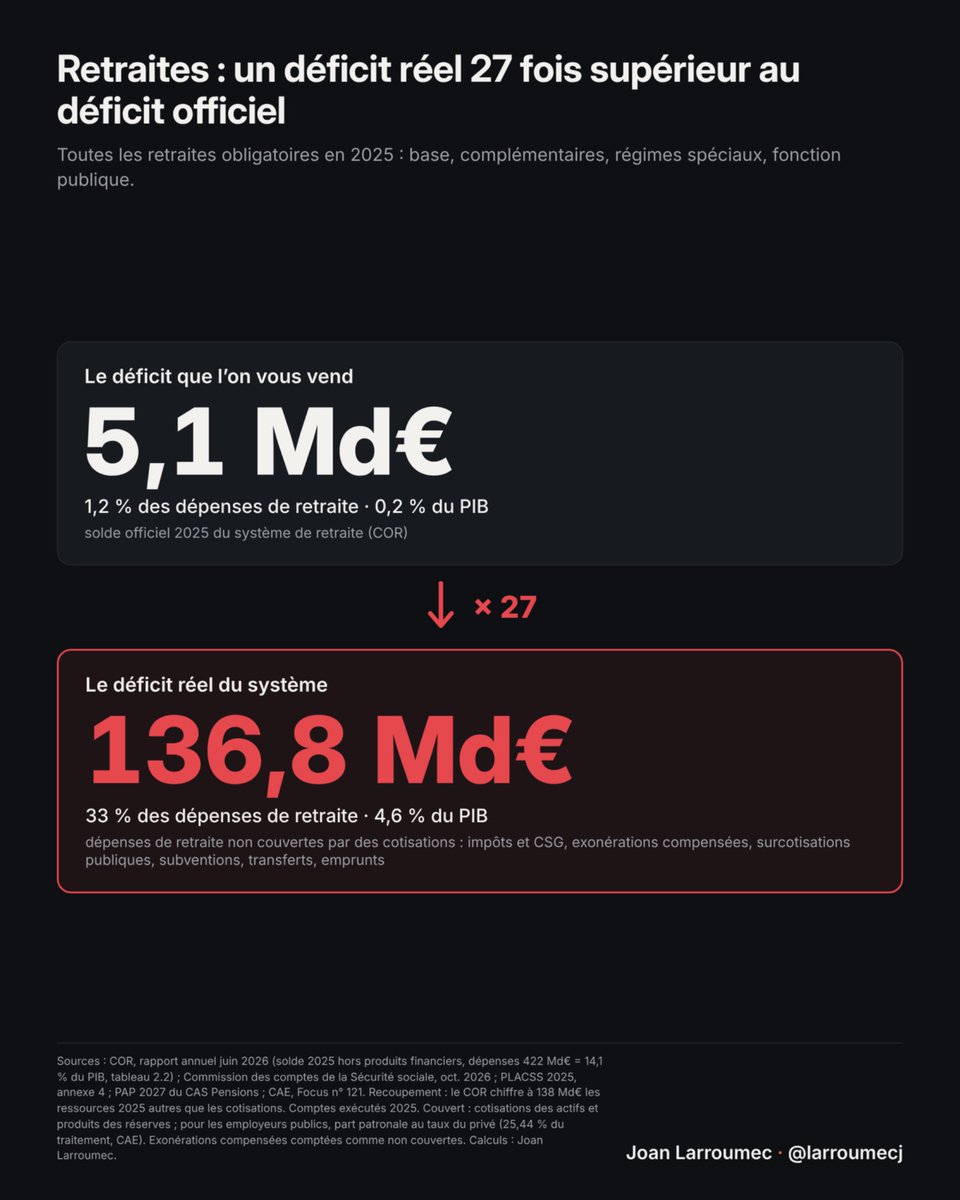
Joan Larroumec stated that the French private pension system was also heavily in deficit, estimating its deficit at 77 billion euros. He argued that the public system's deficit reached 50 billion euros per year, masked in his view by accounting overcontributions, notably 82% for the state and 126% for the military. According to his calculations, the private system received 228 billion euros in contributions, against 300 billion euros in pensions paid, or 305 billion euros including management fees. He indicated that the gap was covered by subsidies, allocated taxes, and debt. He specifically cited 37 billion euros in levies related to the CSG and allocated taxes, 24 billion euros in reimbursements by the state for exemptions from charges, and 17 billion euros collected from family and unemployment funds. Larroumec estimated that the pay-as-you-go system should have been adjusted 25 years ago, either by lowering pensions or raising the retirement age, due to the aging population and the decrease in the number of active workers per retiree. He attributed the lack of reform to a lack of political will and opposition from the population, stating that the deficits had been financed through overcontributions in the public sector and by taxes, subsidies, and debt in the private sector. He also disputed the figures from the Retirement Orientation Council, which estimated the deficit at 5 billion euros. According to his calculations, 420 billion euros were spent each year on pensions, against 282 billion euros in contributions collected, leaving 137 billion euros to be found elsewhere in the economy. He suggested that political leaders were staying silent about the problem because retirees formed the largest electorate in France and that attempts at reform had cost some elected officials their jobs. #Retraites #France #Déficit (translated)