WRLD

Peter Bajomi-Lazar

@peterbajomilazar wrld.org
https://sites.google.com/view/peterbajomilazar?fbclid=IwY2xjawVHJZlleHRuA2FlbQIxMABwZG9mBWJyaWQRMVNFM0lZSlVOYlpUZFE5YVNzcnRjBmFwcF9pZBAyMjIwMzkxNzg4MjAwODkyAAEe
1 followers · 5 following
Mention
Peter Bajomi-Lazar 1w

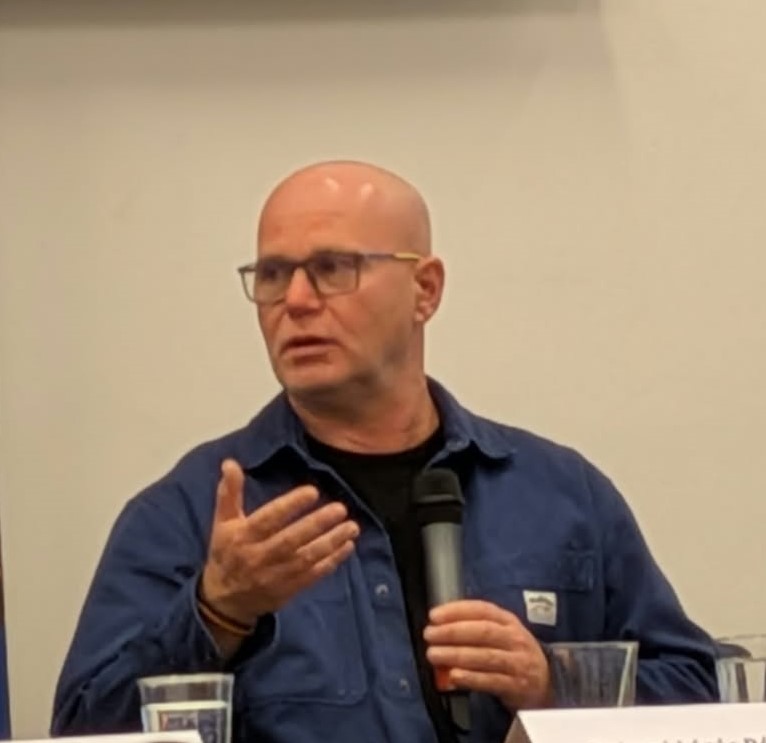
It was a privilege to be on the panel on the safeguards of the independence of public service media, organised by VRT, Belgium’s Flemish public service broadcaster, on 9 November 2026 in Brussels, where I argued that independence is primarily not a function of regulation, media law itself being an effect rather than a cause. In fact, media can be captured with the best regulation in place or may be free despite flawed regulation. I further suggested that, in an Eastern European context, media freedom is mainly a function of the prevailing political party configuration, as proportional election laws tend to bring about multi-party cabinets, while majority election laws result in single-party governments, the former offering internal checks and balances, which the latter fail to do.

1026
Peter Bajomi-Lazar 2w

COMPETENCES OF THE GOOD JOURNALIST 2 Studying the ‘personification’ of the news, Jaap van Ginneken (1998, 30) describes reporting practices that focus on people as opposed to societal, political and economic processes because ‘[p]ersons can be pictured and described in concrete ways’ and the public ‘can sympathise or disapprove of them.’ A part of this practice is to report on the leaders of social movements, political parties and governments, constructing ‘a black and white world in which the good guys clash with the bad guys’. The alternative, Ginneken suggests, would be for journalists to cover the events and the issues of the day in their complexity, i.e. as the structural consequences of social forces rather than the outcome of individual ambitions. A typical example of this practice in the 2020s is media reporting on the re-election and policies of Donald Trump as if the US president was the main cause of radical changes in the world and overlooking the fact that Trump’s election is itself the outcome of decades of political processes, including growing disillusionment with neoliberal elites.11 Arguably, then, the good journalist has the competence of identifying, and conveying information on, the social processes unfolding behind the events and the issues of the day. (Péter Bajomi-Lázár - Dalma Boldog: Journalism Ethics in Eastern Europe. Anthem Press, 2026, pp. 79).

345
Peter Bajomi-Lazar 3w

COMPETENCES OF THE GOOD JOURNALIST 1 "Investigating US and UK television broadcasting, Brian McNair (1998, 119) finds that ‘the style of journalism has gradually come to take precedence over substance’. Competition, intensified by the emergence of cable and satellite television channels in the 1970s and 1980s, has turned the bulletins of traditional news organisations into entertainment, focusing on interesting, rather than important, stories. The rise of infotainment is a clear indication that competition on the media market does not necessarily improve quality. Pseudo-events, i.e. public appearances by politicians such as interviews, press conferences and political performances organised by spin doctors (cf. Boorstin 1961/1992), cost-efficient for media to cover, have become commonplaceon television. When broadcasting pseudo-events, however, journalists allow political actors to set and frame the news agenda and hence divert attention from abuses that they wish to hide from the public eye. One may add to McNair’s observation dating from the 1990s that the rise of social media platforms in the 2000s and 2010s enabled political elites to more efficiently impose their own agendas and frames on the public, as they can now bypass professional journalists and address voters directly and uninterruptedly. As a result, professional journalists may find themselves in a passive and reactive position. To take McNair’s line of thought further, we can suggest that good journalists have the competence of not letting politicians set and frame the news agenda. They should not only report on issues raised by political elites but also break stories based on independent sources. Of course, journalists cannot completely ignore pseudo-events, yet they can cover them critically and put them in context, noting that many pseudo-events have been orchestrated by campaign experts." -- Péter Bajomi-Lázár - Dalma Boldog: Journalism Ethics in Eastern Europe. Anthem Press, 2026, pp. 78-79.

579
Peter Bajomi-Lazar 4w

We scrolled through the titles of online newspapers and actively selected articles, but on social media platforms, we are only passive recipients of self-opening content. We willingly expose ourselves to algorithms. News influencers have little to do with news, as they blend facts and opinions. They are not journalists but opinion leaders. The use of artificial intelligence as a news source is particularly unfortunate because there is no one who takes responsibility for the content shared, admits to errors made, and publishes corrections. Online propaganda is more effective than offline propaganda because it gives the illusion of personal communication, but it still has its limitations, as where there is propaganda, counter-propaganda will eventually appear. I spoke about such things the day before yesterday in a long interview with the Slovak public radio, Pátria, seeking answers to the excellent questions of Dóra Tilajcsik. https://patria24.stvr.sk/2026/10/17/a-kozossegi-media-ternyerese-a-korabban-ismert-politikai-kommunikaciot-is-teljesen-atalakitotta/?fbclid=IwY2xjawVH3I5leHRuA2FlbQIxMQBwZG9mBXNydGMGYXBwX2lkEDIyMjAzOTE3ODgyMDA4OTIAAR7OMIgfZTk7nIXylmpa03i6VoA1uwgn-5UaTDMLxZovYKsEAMwKCYIwUVcxng_aem_aT_J7791Ee46Xsli2kkBFQ (translated)

patria24.stvr.sk
A közösségi média térnyerése a korábban ismert politikai kommunikációt is teljesen átalakította 
465