a very hard bet, but we won it. Gualtieri on stage talks about "a very hard bet, but we won it," and indeed no one would have wagered a euro on the success of the operation. #TeatroValle #RomaCultura #RiaperturaTeatrale (translated)
Rick Azevedo stated that the fight to end the 6x1 shift had been hard and that it would not have been possible without the support of so many people who decided to get involved. He thanked the working class, the MTST, the VAT Movement, and other supporters, saying that together they had inscribed their names in history. https://t.co/By5GQeuk7p #LutaTrabalhadora #DireitosTrabalhistas #MovimentoSocial (translated)
Gena(rirang)⁷ said that she also felt sad and discouraged about what had happened, but encouraged other fans to make the most of the concerts. She pointed out that the situation had gotten out of control and that there were things that shouldn't have happened, although she also requested to recognize the efforts of the ARMY who prepared projects to commemorate the group's arrival, without ill intention. She added that, in her opinion, the members would see both perspectives and that it was possible to admit mistakes without allowing other countries to belittle the fans. Finally, she urged them to enjoy the last two dates with the group and not to continue feeling discouraged. #ArmysUnidas #Conciertos #Fuerza (translated)
The aircraft carrier Abraham Lincoln has returned to San Diego, California, after a difficult several-month deployment in the Middle East, marked by harsh living conditions and suicide attempts among the crew. #AbrahamLincoln #MoyenOrient #RetourEnForce (translated)

Jones Manoel wrote that an electoral turnaround was possible, although arduous and difficult. He stated that the left needed to abandon the idea that it could govern without a long-term project, without confronting the powerful, and without popular mobilization. https://t.co/TPVvbKJKmz #Eleições2024 #Política #MobilizaçãoPopular (translated)
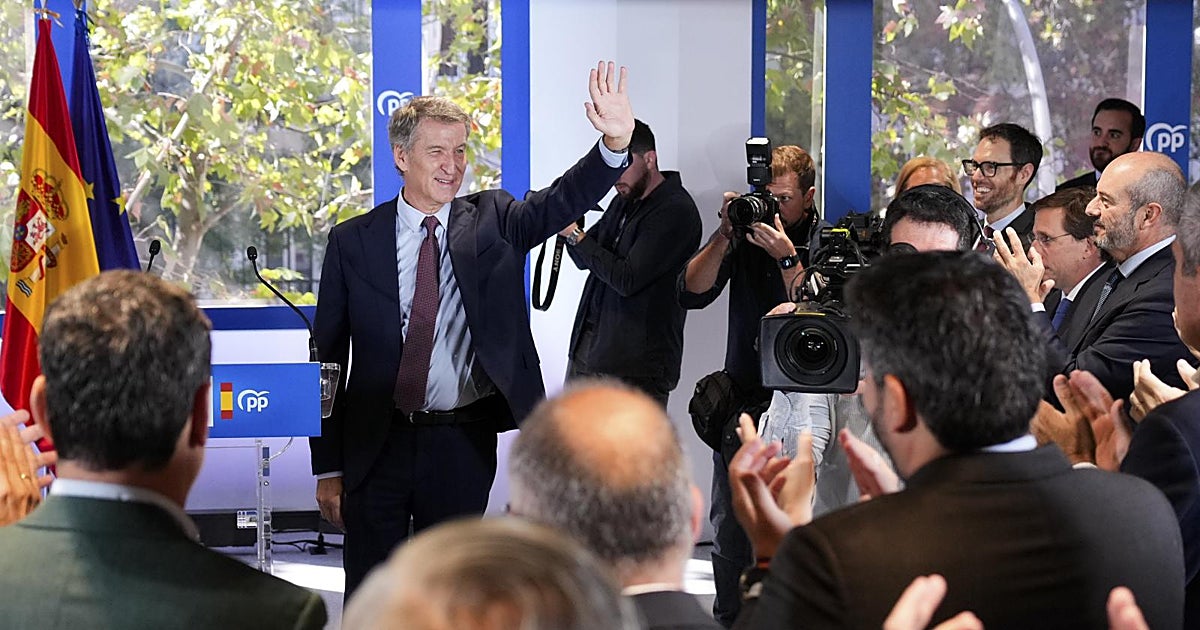
Alberto Núñez Feijóo, leader of the PP, warns his party about the danger of their opponents and emphasizes the need to work hard until the polls close, without falling into premature celebrations or emotional manipulation by the Government. #PartidoPopular #AlbertoNúñezFeijóo #Elecciones2026 (translated)

In Turin, the search for accommodation has become a tough challenge for students and workers, with rooms for rent reaching up to 500 euros and a growing demand that fuels a speculative and difficult market to navigate. #Affitti #Studenti #CrisisAbitativa (translated)

Gníomhaíonn na ministéireachtaí chun cosaint a dhéanamh ar an €14m ardú atá molta san infheistíocht i gcúnamh thar lear agus in urraim do chúlra casta na hÚcráine. #Cookies #OnlineSecurity #WebsiteAccess
Flavia Ferronato stated that there were 2.5 weeks left to elect Flávio and that the hardest work had not yet begun. She said that Metrópoles had published behind-the-scenes details about Rogério Marinho's actions and compared the selection of names for ministries to the selection of candidates for the Senate. Ferronato claimed that Marinho was from the Centrão and opposed bolsonarism, but said that this discussion would be left for after the election. She also warned that a lot of effort would be needed. https://t.co/q9hiqFKZ3y #Eleições2023 #Política #Centrão (translated)
Jones Manoel recommended watching Heribaldo's video, which, according to him, provided guidance on how to convince voters to vote for Lula. He requested that each point be heard and taken into account for the initiative to have an effect. Manoel stated that there was a difficult task ahead, but he said they would succeed. #Lula #Eleições2024 #ViraVoto (translated)
Is mama singil, ag fáilte roimh ardú ar an gcuideachta leictreachais agus an chreidmheas cánach, ach deir go bhfuil an buiséad 'greamaithe le plástar' in ainneoin a cuid imní maidir le domhan an gheimhridh. #Cookies #Security #AccessBlocked
Tosaíonn praghsanna tithíochta in Éirinn ag dul i gcion, ag léirigh go bhfuil an ardú praghsanna ag teacht chun deiridh, dar le Richard Curran. #SeguridadEnLínea #BloqueoDeAcceso #Cookies
Tá an Uachtarán na Conradh Chúirte ag ardú a guth i gcoinne na nganganna drugaí a úsáideann páistí chun coireanna a dhéanamh, ag cur in iúl go bhfuil sé seo ina shíor-chall air. #cookies #security #webaccess
Figures like Lula are very rare. Not only because he is the first president from the working class and the greatest popular leader in our history, but for everything he represents and for all the transformation he brought to this country. There is a Brazil before Lula and a Brazil after. Those who know this country, those who know history, know what I am talking about. I, from the Northeast, son of a bricklayer, living in a boarding house in my childhood, was doomed to repeat the sad trajectory of all those who preceded me. But in the middle of the way, there was Lula. And with him came the chance to become the first in my family to attend university. With him came the possibility for my family, who worked hard their whole lives and never achieved anything because the country didn’t provide opportunities, to ascend socially. With him came the own house, our first car, our first plane trip, our first international trip, our second apartment. This man changed my life. Changed the lives of tens of millions. Brought dignity, hope, and the right to dream for the workers of our country. I always say that Lula's contribution to Brazil is already made. He has already done much more than what is expected of a single man. A boy from the countryside who came out of misery, shining shoes in the streets, to become the reorganizer of the trade union movement, to lead the fight against the dictatorship, to become the president who took the country out of the hunger map and ended the scourge of drought. Lula is 80 years old. He should be resting. That baton should have been passed to us on the left a long time ago. But we didn't do it. And there he is again, at 80 years old, trying to save this country once more. An extraordinary figure, who owes nothing to the greatest fighters of the popular classes in recent centuries. I respect those who will vote for Hertz, Samara, Edmilson Costa. But frankly? I lament those who will miss the opportunity to vote, for the last time, for a giant of history of Lula's magnitude. The radical left will still recognize the greatness of this man. Probably only after he is no longer among us – as usually happens, by the way. But I am sure that the realization will eventually come. #Lula #História #JustiçaSocial (translated)
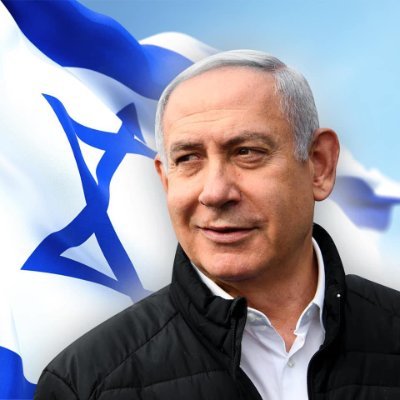
«Distruggere gli impianti nucleari dell'Iran è stata un'impresa ardua - ha ribadito - È stato estremamente difficile da realizzare. Eppure, per me, è stata una delle decisioni più semplici che abbia mai dovuto prendere in qualità di primo ministro. Perché, se non lo avessimo fatto, saremmo tutti morti»Netanyahu ha affermato che accusare Israele di genocidio è «la più grande menzogna del secolo». #Netanyahu #ONU #Palestina
The Return to Feudalism in 21st Century Garb A simple observer's viewpoint, with no claim to hold any absolute truth. The Veneer Cracks There is something strangely archaic about the world unfolding before our eyes, despite its satellites, artificial intelligence, and promises of infinite progress. Here and there, we witness heads of state behaving like feudal lords of another age, patiently nibbling away at the neighboring territory, redrawing borders through force rather than law, as if governing a nation mattered less than expanding one's fiefdom. No names need be mentioned here: current events provide plenty of illustration, and each reader will recognize, according to their own geography and moment of reading, the faces that embody this observation. But this return to the archaic is not confined to grand geopolitical stages. It also permeates the most ordinary daily life—that of social media, where anyone can pour out venom against another without filter, without form, and often without the slightest argument. The verbal jousting of yesteryear, with its codes, its rhetoric, its tacit limits, has given way to raw invective, snap judgment, instant condemnation. We no longer debate: we execute, verbally—and sometimes it doesn't stop at words. The Vanished Inhibition What strikes one, in this dual observation—macro-political and micro-social—is the lifting of an inhibition we thought firmly anchored. Centuries of cultural construction, education, philosophy, sometimes religion, had patiently shaped mechanisms of restraint: politeness as social ritual, argumentation as a mode of resolving disagreement, respect for one's opponent as the very foundation of democratic debate. This civilizational veneer, however fragile it always was, seemed to hold. Today it is cracking, and the question—which for me remains a simple hypothesis, not a certainty—is why. A convenient explanation would blame social media: anonymity, the distance of the screen, the instantaneousness of publication would favor verbal acting-out without the usual mediation of reflection. This is probably true, but likely insufficient. For technology here is only an accelerant, an amplifier—not necessarily a root cause. A Poorly Formatted Neocortex? The more unsettling hypothesis—and I frame it explicitly as hypothesis, not scientifically established fact—is that of a failure in the formation of moral judgment and tolerance toward otherness. The human brain possesses the neural structures enabling empathy, the distancing of impulsive reaction, the acceptance of difference—but these capacities are not innate in their full exercise: they must be built, educated, cultivated, like a muscle that needs patient training from childhood onward. If this education in otherness, nuance, and tolerance of disagreement erodes—for multiple and undoubtedly complex reasons that are not mine to settle here—then older reflexes resurface: instinctive distrust of the stranger outside the clan, the law of the strongest, the logic of territorial or symbolic predation. The other ceases to be a possible interlocutor and becomes once again a potential threat, unless they belong to my tribe, my clan, my party, my digital bubble. Two Scales, One Logic What is striking, in this deliberately provocative reading, is the structural similarity between these two scales. The leader who invades a neighbor in the name of a rediscovered greatness or a reinvented historical right, and the anonymous internet user who insults a stranger in the name of an unnegotiable conviction, may obey the same underlying grammar: that of territory to defend, clan to protect, the other to subdue or exclude rather than understand. The form has changed—satellites instead of horses, tweets instead of heralds—but the substance, in this reading that remains mine alone and commits no one else, seems strangely identical to that of feudal rivalries: the absence of a recognized third party, of an accepted common rule, of a respected arbitrating authority. Everyone becomes judge and party, lord of their own digital or territorial fiefdom. A Civilization on a Knife's Edge Norbert Elias, in his Civilizing Process, showed how Western societies had historically built, with remarkable slowness, an increasing control over impulses and direct violence, in favor of more sublimated forms of social regulation. What we may be observing today—and I stress again the conditional—is a form of regression in this process, or at least a fragilization of the veneer it had patiently laid down. Should we see this as an effect of great technological accelerations, which shake up our cognitive rhythms without leaving education time to adapt? A deeper crisis of the institutions tasked with transmitting these values of tolerance—school, family, religion, the rule of law? Or simply a cyclical movement of human history, where phases of policed civilization alternate with darker backlashes? I have no certain answer, and I would be wary of anyone claiming to hold one. In Conclusion, a Shared Concern This text is only a viewpoint, necessarily partial and subjective, on a world that sometimes seems to replay ancient logics in new clothing. Perhaps I am wrong to perceive a continuity between the feudal lord and the contemporary dictator, between the anonymous online insult and the absence of education in nuance. Perhaps these phenomena are unrelated, or too complex to be thus summarized. But if this reading, even partially, hits the mark, then the question that arises is less one of technological regulation—though necessary—than the far more arduous question of how to rebuild, generation after generation, this capacity to accept the other in their difference, to debate without destroying, to coexist without necessarily dominating. This undertaking, if it exists, will not be resolved by an algorithm nor by an international treaty. It plays out, patiently, in the most elementary education—the one that teaches a child that the other is not a threat, but a possibility. Bibliography Elias, N. (1939). Über den Prozess der Zivilisation [The Civilizing Process]. Oxford: Blackwell (Eng. trans. 1978-1982). Lorenz, K. (1963). Das sogenannte Böse [On Aggression]. London: Methuen (Eng. trans. 1966). Arendt, H. (1970). On Violence. New York: Harcourt, Brace & World. Han, B.-C. (2013). Im Schwarm [In the Swarm: Digital Prospects]. Cambridge, MA: MIT Press (Eng. trans. 2017).
“O pessoal eleitoral de Washington já está a trabalhar arduamente para garantir uma eleição segura, fiável e precisa”
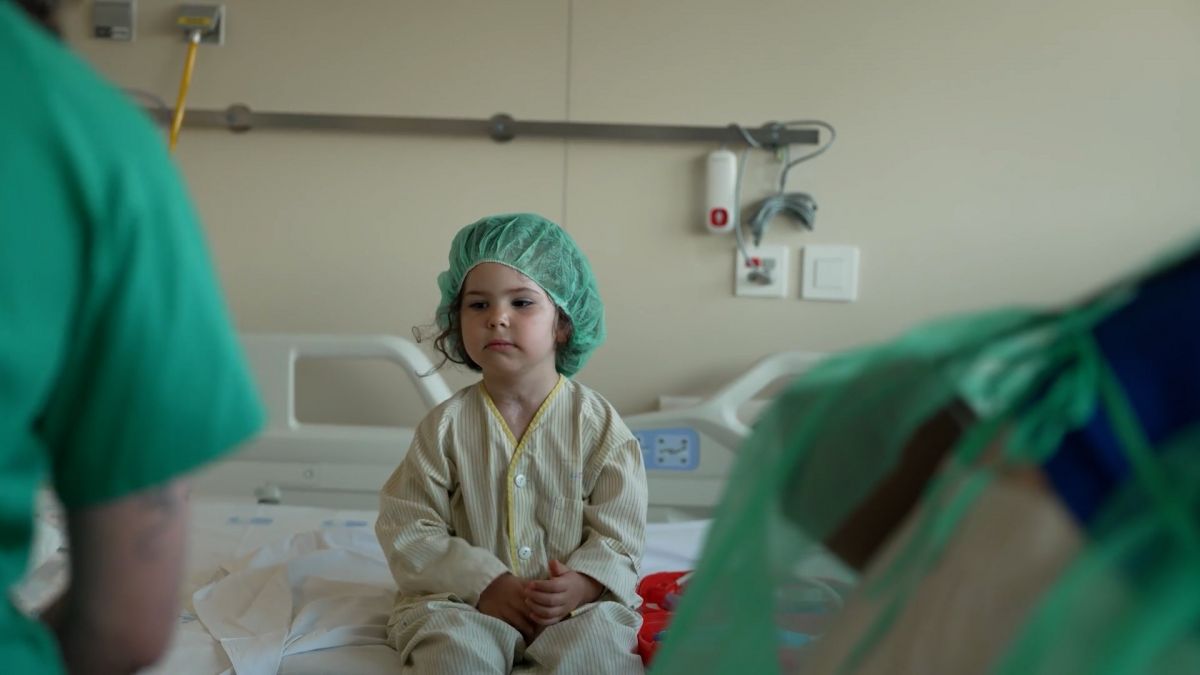
Alejandra, una niña que nació con malformaciones en las vías aéreas y tuvo que superar una serie de complicadas intervenciones médicas, logró soplar las velas en su cuarto cumpleaños después de un largo y arduo proceso de tratamiento en el Hospital Universitario 12 de Octubre. #Salud #Pediatría #Superación

⭕️ Parece que @jmalbares está destinando muchos recursos públicos a intentar calificar como “bulos” mis informaciones sobre Cooperación. Ha puesto a dos empresas y a todos los diplomáticos a trabajar para tumbar mis publicaciones. Ánimo chicos, tienen una ardua tarea. Nos vemos en las redes… https://t.co/AUHQySH0od #Cooperación #FakeNews #RedesSociales
O presidente Trump envia cumprimentos. Ele, obviamente, está a seguir isto muito atentamente e está a trabalhar arduamente para tentar encontrar um caminho para acabar com esta guerra, mas não só para acabar com o conflito. O presidente Trump está muito focado em criar um plano que permita uma paz duradoura. O que nós estamos a fazer é tentar criar um pacote de medidas para a paz. Nós temos trabalhado muito com os nossos parceiros europeus também, porque isto tem sido uma guerra longa e dura e quando resolvermos isto, teremos que resolver todos juntos.