BETA nonprofit public democratic european moderated

Search

#HAMAS

Şase membri ai aceleași familii, inclusiv patru copii, au murit într-un atac aerian israelian asupra unei zone rezidențiale din Fâșia Gaza, armata israeliană confirmând că obiectivul atacului era un militant Hamas, în contextul unei escaladări violente a conflictului din regiune. #FâșiaGaza #AtacAerian #Hamas

Șase membri ai aceleiași familii au murit într-un atac aerian israelian în Fâșia Gaza

På B.T. har vi selvfølgelig dækket historien om Wolt buddet, der kører rundt i København med Hamas klistermærker på sin taske. Jeg udtaler mig i den forbindelse om Hamas-trekanten: »Den bliver brugt af terrorgruppen som en slags markør over israelske soldater i Gaza - altså en form for skydeskive. Det er tydeligt, at trekanten på disse klistermærker er en direkte reference til Hamas.« »Den røde Hamas-trekant er siden 7. oktober blevet et af de mest brugte symboler for de mest ekstreme pro-palæstinensere. Fra København, til Sydney og New York.« #Hamas #Copenhagen #ProPalestine

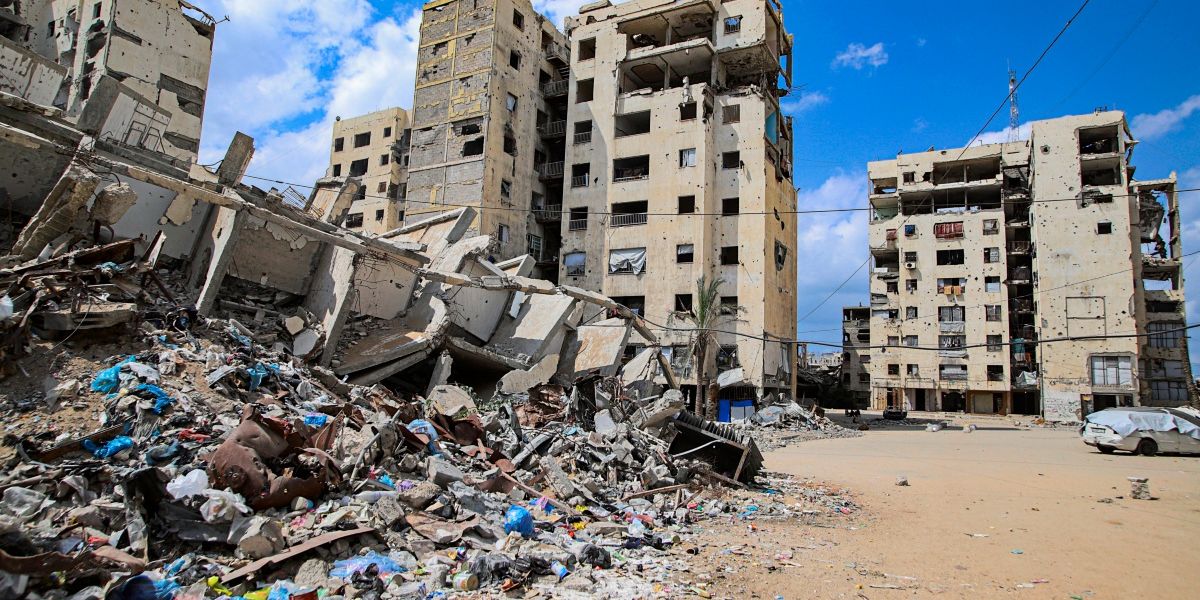
| JULY 2026 | The Guard State How the largest Arab nation became a security contractor at the gates of its own people By Adham Hasanin Egyptian journalist and political writer, based in the Netherlands In June 2025, hundreds of activists from forty countries landed at Cairo airport. Doctors from France, lawyers from Australia, students from the United States, pensioners from the Netherlands. They carried no weapons and no banned slogans; they carried backpacks, walking shoes, and a single intention: to march from Arish to the Rafah crossing — entirely on Egyptian soil — to demand that food be allowed through to a people starving behind the gate. Not one of them reached Rafah. More than two hundred were detained before the march could begin. Around five hundred foreign nationals were deported from airports, hotels, and checkpoints. Passports were confiscated, activists were pulled out of downtown Cairo cafés, and the Global March to Gaza was cancelled on 16 June without taking its first step. And the world watched. This was no secret operation in a dark basement; it happened in the open, documented by the deportees’ own phone cameras, carried by every international news agency. The world watched an Arab state arrest Europeans, Americans, and Africans for wanting to walk towards Palestine. A state guarding the gate of a siege — from the side that was supposed to be the side of rescue. Hold that image, because it is the key to everything that follows. This was not an aberration in Egyptian policy, nor an isolated security decision. It is the function — the complete function around which the Egyptian state has been redefined over the past decade, and which it is time to call by its proper name: the Guard State. I. The Name — What Do We Mean by the Guard State? Political economy has long described states that live off the rent of their location rather than the production of their people. But what has crystallised in Egypt over the past decade goes beyond traditional geographic rent — the Suez Canal, say — into something far graver: the conversion of sovereignty itself into a commodity for hire. The Guard State does not sell its location; it sells its function. It collects its wages not for what it produces, but for what it prevents: it prevents the refugee from reaching Europe, the activist from reaching Gaza, its own people from reaching politics, and the resistance’s weapons from reaching their destination. Four gates, guarded by a single machine, whose wages are paid in loans, deposits, and perpetually renewed rescue packages. This is not a rhetorical metaphor; it is an economic structure with numbers attached. When the Egyptian economy collapsed in 2024, it was rescued not by productive reform but by a single deal whose subject was location: Ras el-Hekma — thirty-five billion dollars for a stretch of coastline. And whenever negotiations with the IMF stall, the tranches are unlocked by explicit European pressure whose subject is migration: nine billion euros from the European Union in the 2024 “Strategic Partnership,” whose own documents place “migration management” at its core. Europe does not pay Egypt to prosper. It pays Egypt to guard. Thus the model is complete: income in exchange for prevention, external legitimacy in exchange for guarding, and international silence about domestic tyranny in exchange for keeping the gates controlled. To see how the model works on the ground, consider the bloodiest gate of all: the gate of Gaza. II. The Gaza Gate — The Guard Who Is Himself Searched The first paradox must be nailed down with facts: Egypt is not a sovereign guard of its own crossing; it is a searched guard. Egyptian relief trucks — ninety-two thousand food parcels in a single convoy this month — are subject to Israeli inspection before entering the Strip: from Egyptian soil, through a crossing that bears an Egyptian name. The state that guards the gate does not hold its key. It owns the threshold, but not the door. Then the October 2025 truce added a new layer to the function. Under the fifteen-point roadmap sponsored by the international envoy together with the “guarantor states” — Egypt foremost among them — Cairo is to train the civilian police force that will replace Hamas in administering the Strip, under the slogan of “one authority, one law, one weapon.” Let us call things by their names: the state that could not — or would not — deliver a loaf of bread without Israeli permission is now qualifying to graduate the security apparatus that will oversee the disarming of the resistance. From guarding the siege to administering what comes after the siege — a promotion within the same project. And meanwhile, what is happening behind the guarded gate? Since the truce, more than one thousand one hundred Palestinians have been killed by Israeli fire — the latest, just two days ago, a ten-year-old boy named Motaz Abu Shaar, carried to his grave in Khan Younis by his mother, Warda. A United Nations commission of inquiry has concluded that Israel is “deliberately targeting children in an ongoing genocide.” This is what the guarantors’ official language calls a “ceasefire.” What meaning is left in the word “guarantor”? A guarantor that the gate stays firmly shut — however high the dead pile up behind it. III. The Mediterranean Gate — The Guard Europe Pays For The second gate faces north. Since 2016, Cairo has boasted — through its officials at every European forum — that “not a single irregular migration boat has departed from Egyptian shores.” This is very nearly true. But the forbidden question is: at what political price has this “efficiency” become an instrument of mutual blackmail? Europe — which condemns Egypt’s human rights record in its parliamentary resolutions — is the same Europe that signed the nine-billion-euro partnership, and the same Europe that stays silent about sixty thousand political prisoners because the alternative, in its calculations, is boats that never stop. And Cairo understands the game and has mastered it: whenever human rights pressure intensifies, the official discourse turns up the volume on “Egypt hosts millions of refugees” and “the last line of defence.” The result is a perfect structure of mutual blackmail: Europe buys its conscience’s silence, the regime sells its location, and the people — Egyptian and refugee alike — are the commodity in the transaction. The democracies that lecture on values are financing the guard who keeps the victims from knocking on their doors. This is not passing hypocrisy; it is a structural partnership in the Guard State model — one that makes Brussels and Berlin shareholders in everything this state produces, from domestic repression to external siege. IV. The Interior Gate — Guarding the People Against Politics But the most dangerous gate is not on any border; it is inside. The Guard State cannot perform its external function unless it first guards an internal gate: the people’s gate to politics. The function requires a people that does not ask: why are we guarding the siege of our brothers? Why are our trucks searched on our own soil? Why are guests deported for coming to walk in peace? To guarantee the question is never asked, the largest silencing machine in the country’s history was built: sixty thousand prisoners of opinion, a press ranked 166th out of 180 worldwide, and a state security case number waiting for anyone who writes. I write these lines from experience, not from reading reports. When I continued writing from my Dutch exile, the machine reached me across continents: accounts shut down by coordinated mass-reporting campaigns, documented threats, a family harassed inside Egypt as leverage — and my name entered into Case 1282 of 2024, not for any act I committed, but for opinions written from free European soil. This is not a personal complaint; it is a job description: the Guard State guards even beyond its borders, because the free word — wherever it is written — threatens the entire contract of guardianship. The logic is perfectly self-consistent: a regime that sells “stability” abroad cannot tolerate a voice revealing that the stability on offer is the stillness of graveyards. This is why the arrest of the foreign activists in June 2025 was inevitable, not incidental: a peaceful march reaching Rafah would have revealed, before the world’s cameras, that the gate opens when it is wanted open — and that the one keeping it shut is a partner, not a mediator. V. What Has Egypt Lost? — The Guard’s Bill An apologist might argue: what is the harm? A state monetising its location as Norway monetises its oil. The answer lies in the essential difference: Norway sells a resource; Egypt leases its will. And the difference between the two is the difference between trade and bondage. Let us tally what Egypt has paid for this model, in bare facts. It lost its water sovereignty: the Renaissance Dam was completed and filled without the state — owner of “the largest defence headquarters in the world” — daring anything beyond statements of concern; for the guard does not make trouble for the international order that employs him. It lost its regional standing: in the Iran–America war halted just weeks ago, Cairo was neither party nor mediator nor even consultant — Pakistan brokered the deal, while Egypt absorbed the economic shrapnel of Hormuz’s closure like a bystander caught in a battle whose parties it does not know. It lost its place in the conscience of its nation: the state that liberated its land in 1973 and led the Arab world for a century has become, in the eyes of the Arab street from the Atlantic to the Gulf, the gatekeeper of the siege. This loss, specifically, no loan or deposit can repay — because it is the only capital that cannot be printed. And it lost — here is the crux — the very national security in whose name the guarding is justified. The model proved its fragility at the moment of testing: when Israel feared an Iranian response last year, it cut off Egypt’s gas by unilateral decision within hours. The guard who believed himself a partner discovered he was merely a hireling whose wages stop the moment danger arrives. VI. The Alternative Is Not a Slogan — It Is the Recovery of the Original Function I will not close with an essay on “the solution lies in Arab unity”; worn-out words kill more surely than silence. The alternative is specific, and it begins with redefining the function. The state is not a guard; the state is the agent of its people’s will. Every foreign policy not derived from that will is — by definition — functional servitude, however it is wrapped in the language of wisdom and moderation. And the Egyptian will is known and needs no referendum: no people in this region accepts that its country serve as warden of the siege of Gaza, or as Europe’s border post. Practically, the recovery begins with three measurable steps. Open the Rafah crossing fully and sovereignly, by purely Egyptian decision — that alone would overturn the equation of the siege. Break the negotiating bondage by linking any cooperation on migration to concrete European positions on Palestine, not statements of concern. And open the interior gate — release the prisoners and lift the hand from the written word — because a state that fears an article will never dare face an occupier. I know the current regime will do none of this; guarding is its founding contract and its financial artery. But this article is not written for the regime. It is written for memory, and for the generation that will inherit the gates — so that it knows that what is presented to it today as “the fate of geography” is no fate at all. It is an employment contract, signed by a regime without a mandate from its people. And contracts, however long they run, end when one of their parties does. And the world — I return to where I began — is a witness that requires no further proof. It watched the deportees at Cairo airport; it watched the searched trucks; it watched Warda Abu Shaar carry her son to his grave behind a firmly guarded gate. The question is no longer: what is happening? The only question left is: who dares to name it? This article is a naming. Adham Hasanin is an Egyptian journalist and political writer based in the Netherlands, covering Arab and European political affairs.

Pri izraelských náletoch v Gaze zahynula šesťčlenná rodina, pričom izraelská armáda tvrdí, že útoky cielili na militantov Hamasu a od začiatku októbra 2023 došlo k smrteľným stratám viac ako 1150 Palestínčanov, prevažne civilistov. #Gaza #Hamas #izraelskénálety

Pri izraelských útokoch v Gaze zahynula šesťčlenná rodina

Skrót info w 2 min ze świata 🌍. Wtorek 22.07 -🇨🇦USA nakładają 50% cła na wiele towarów Kanady -𝕏 z nową aplikacją na Androida. Ultra szybka - 9 noc nalotów🇺🇸na Iran. Iran: pełna skala wojny -Pyszne_pl zwalnia swoich kurierów. Tyle zewnętrzni - 1% najbogatszych Amerykanów posiada tyle samo bogactwa, co 90% najuboższych razem wziętych -🛢️🌀koncerny zamykają platformy w Zat. Meksykańskiej. Zbliża się burza tropikalna -📉branża AI to 15% rynku akcji w USA -WaPo: USA szykują się na totalną wojnę z Iranem -🇨🇳🇯🇵Chiński niszczyciel otwiera ogień na wodach, do których prawa rości sobie Japonia. -Inspekcja🇵🇱: uchybienia w 50% lokali sprzedających słodkości w kurortach ( gofry,rurki etc ) - 🇭🇺 mistrzyni szachowa Judit Polgar odrzuca propozycję zostania Prezydentem na Węgrzech -🇵🇸nowym przywódcą Hamasu został Chalil al-Hajja - $SPCX pierwsze wyniki finansowe 4 VIII -📦Allegro i DHL bliżej w usługach Allegro Delivery - giełda zawiesza czasowo obrót akcjami Novaturas -🎦starcia między Filipinami i Chinami. Sporne🏝️ - Dzień Fast Food`u ( Jak kanibale na Polinezji nazywają biegaczy 🏃 ? Fast Food 🙃) #Świat #Aktualności #Polityka

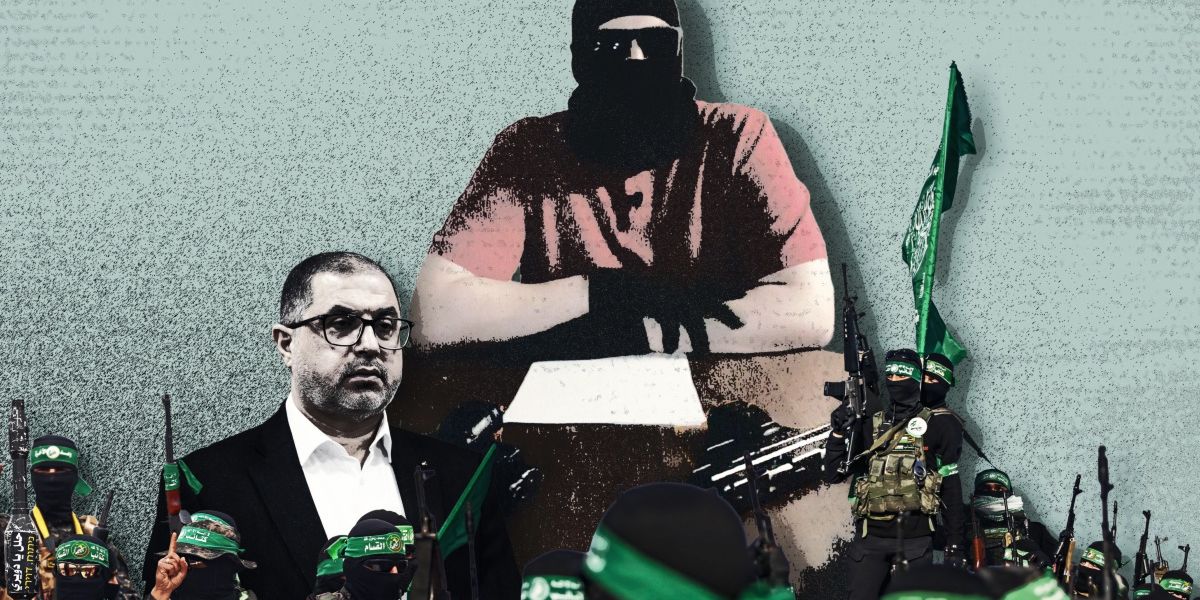
Hamas has new leadership. The new leader is 65-year-old representative of the movement’s exile wing, Khalil Hajj. He wants to continue the fight against Israel regardless of the situation of the Palestinians. (translated)

Elections in #Hamas and victory by a single vote of Khalil Al-Hayya over Khaled Meshaal. Strong internal division. The sector closest to #Iran wins and loses the "man" from #Qatar. Al-Hayya is the new leader of the Islamist group. (translated)

Khalil al-Hayya a été élu nouveau chef politique du Hamas, succédant à Yahya Sinouar dans un contexte de crise pour le mouvement, marqué par l'affaiblissement militaire et diplomatique après les attaques du 7 octobre, et il devra naviguer entre négociations de paix et une administration potentiellement transférée au Fatah de Mahmoud Abbas. #Hamas #KhalilAlHayya #Palestine

Qui est Khalil al-Hayya, le nouveau chef politique du Hamas ?

Hamas planned 'second October 7th' attack on Europe for 2025, German prosecutors reveal German authorities have uncovered evidence that Hamas was planning large-scale attacks on European soil, including a potential "second October 7th" event for 2025. The German Federal #Hamas #Terrorism #EuropeSecurity #DE #EU

La pareja de James Fergie Chambers, un filántropo estadounidense detenido en Ibiza por supuestamente financiar a Hamás, lucha contra su extradición a Estados Unidos, denunciando que las acusaciones formuladas por la Administración Trump son infundadas y reflejan la represión hacia la causa palestina. #FergieChambers #Extradición #CausaPalestina

La pareja del filántropo propalestino detenido en Ibiza lucha contra su extradición a EEUU: "Es increíble que pueda pasar esto"

Bundesrat w Niemczech planuje wprowadzenie kary więzienia za publiczne podważanie prawa Izraela do istnienia, co ma na celu walkę z rosnącym antysemityzmem w kraju, szczególnie po ataku Hamasu na Izrael, ale spotyka się z krytyką ze strony prawników obawiających się ograniczenia wolności wypowiedzi. #Izrael #antysemityzm #Bundesrat

Niemiecka dyskusja o granicach krytyki państwa Izrael
V

Hamas heeft Khalil Al-Hayya aangesteld als de nieuwe opperste leider ter vervanging van Yahya Sinwar, die in oktober 2024 door Israëlische troepen werd gedood, waarbij Al-Hayya een belangrijke rol speelde in de organisatie en onderhandelingen van Hamas, ondanks persoonlijke tragedies door Israëlische aanvallen op zijn gezin. #Hamas #KhalilAlHayya #Israël

Hamas kiest toponderhandelaar Al-Hayya tot enige leider

Chalil al-Hajja został nowym szefem biura politycznego Hamasu, zastępując tymczasową radę kierowniczą, a jego wybór, który odbył się z wyraźną przewagą głosów, odzwierciedla bliskie sojusze z Iranem oraz zamiar utrzymania władzy w Strefie Gazy. #Hamas #ChalilAlHajja #StrefaGazy

Klamka zapadła. Wybrano nowego przywódcę Hamasu
L'Obs 19h

Khalil al-Hayya, négociateur en chef du Hamas et survivant de multiples tentatives d’assassinat, a été élu nouveau dirigeant politique du mouvement islamiste palestinien, remplaçant Yahya Sinouar, dans un contexte de fragilité du groupe dû à la guerre à Gaza. #Hamas #KhalilAlHayya #Gaza

Après Sinouar, le Hamas mise sur Khalil al-Hayya, son homme des négociations

Khalil al-Hayya è stato eletto nuovo capo di Hamas, succedendo a Yahya Sinwar, e viene visto come un leader radicale e negoziatore con Israele, con posizioni di sostegno alla guerra contro l'Autorità nazionale palestinese e all'alleanza con l'Iran. #Hamas #KhalilAlHayya #Gaza

Khalil al-Hayya è il nuovo capo di Hamas. Caponegoziatore con Israele e leader dalle posizioni radicali: chi è il successore di Sinwar

Mohammad Hannoun, presidente dell'Associazione benefica di solidarietà con il popolo palestinese, scrive da un carcere di massima sicurezza per sostenere che la solidarietà ai palestinesi non è terrorismo, nonostante le accuse di finanziamento al terrorismo palestinese basate su presunti legami con Hamas, e ribadisce l'impegno della sua associazione per la trasparenza e l'umanità, evidenziando i progetti umanitari realizzati a favore della popolazione palestinese. #Palestina #Giustizia #Solidarietà

Mohammad Hannoun scrive al giudice dal carcere di massima sicurezza: “Solidarietà ai palestinesi non è terrorismo”. La lettera
Bild 20h

Die Hamas hat Chalil al-Haja (65) als neuen Anführer vorgestellt, der den 7. Oktober 2023, an dem 1200 Menschen in Israel ermordet wurden, als Stolz unseres Volkes bezeichnete und eng mit Iran über militärische Unterstützung für die Angriffe zusammenarbeitete. #Hamas #ChalilAlHaja #Terrorismus

Er nennt Israel-Massaker „Stolz des Volkes“ - Hamas präsentiert neuen Terror-Chef
Digi24 20h

Hamas a anunțat alegerea lui Khalil al-Hayya ca nou lider al mișcării, succesor al lui Yahya Sinwar, asasinat de armata israeliană în 2024, în contextul în care al-Hayya este negociatorul-șef și a fost confirmat cu o „majoritate zdrobitoare” de către membri ai organizației. #Hamas #KhalilAlHayya #Gaza

Hamas are un nou lider: negociatorul-șef al organizației teroriste, Khalil al-Hayya, ales succesor al lui Yahya Sinwar

Hnutí Hamás si zvolilo nového vůdce Chalíla Hajjá, který, šokován rychlým kolapsem izraelské obrany při útoku ze 7. října 2023, prohlásil, že cílem jeho hnutí není zajišťování základních potřeb v Gaze, ale boj za palestinskou věc, čímž se znovu zaměřil na radikální spojení s Íránem. #Hamas #Palestina #Izrael

Nový šéf Hamásu: Šokoval nás rychlý izraelský kolaps, vše mělo být jinak