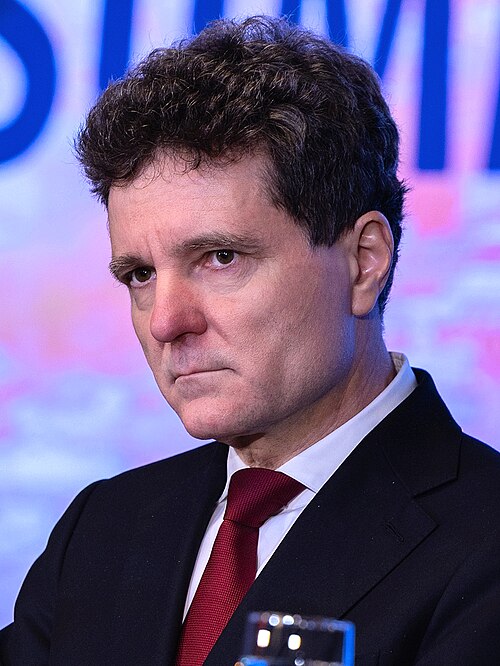
"We are living through an economic revolution with artificial intelligence. Time is very important, and the development of this new industry is linked to many economic elements, such as the capital market, business regulation within the European Union, and, very importantly, energy. There is a very strong dependence of the efficiency of this new industry on the quantity and price of energy," said Nicușor Dan. "Risks that artificial intelligence can create have been discussed, as well as responsibility and how it should be regulated. If, in a decision-making chain involving multiple artificial intelligence operators, an accident occurs at the end of the process without each of them being subject to human control, there must be accountability," the head of state explained. Nicușor Dan emphasized that regulation must be done in such a way as to ensure safety without affecting Europe's ability to compete in a field where economic competition is expected to be very intense. "Artificial intelligence brings competitiveness and efficiency to companies. On the other hand, in the not-so-distant future, there will be economic specializations in which humans will be replaced by artificial intelligence, and this will raise social issues," said Nicușor Dan. "The essential element in education is the human capacity to generate a cognitive process, with stages, connections, and a final result. If we forget this process and are tempted to go directly to the final result that artificial intelligence offers us, at the level it has reached today, the risk for the level of education can be very high," the president stated. Nicușor Dan noted that discussions about artificial intelligence will continue at the European Council in February. #InteligențaArtificiale #PiațaMuncii #Educație (translated)