BETA nonprofit public democratic european moderated

Search

#Tierras

Gustavo Petro stated that an imprisoned prosecutor had asked a judge to protect him from those who, he said, could kill him in prison because of the people he had imprisoned. He also asked Evo Morales, Luis Arce, and social leaders from Bolivia to support threatened judges and prosecutors. He maintained that they had discovered that Fernando Cerimedo, whom he accused of links to drug trafficking and of being a Nazi and a femicide, was a business partner and a member of a circle of friends of a son of U.S. President Donald Trump. Petro pointed out that the Bolivian prosecutor's office could have suppressed the people and served wealthy sectors, but he called for unity among those who were not fascists and to defend democracy. He stated that the peoples of the region had a history of 60,000 years and called for unity and organization. He also urged Trump to correct his son's behavior and his policy towards Latin America; he argued that Israeli algorithms linked, according to him, to genocide were replacing voters, and called for respect for Afro-Latin America. He warned the U.S. president not to unleash popular violence. https://t.co/4VTfJykSS4 #Bolivia #Unidad #Democracia (translated)

Gustavo Petro defended a proposal to desalinate seawater and pump it to Santa Marta from the north of the city using solar energy and batteries. He said that the supply would complement the water arriving by gravity from the Sierra Nevada, which, according to him, was no longer sufficient, and accused Abelardo of opposing the project as a megadrought was approaching. He also claimed that the proposal would bring drinking water to the northern Caribbean coast and questioned why the project was destroyed just as the installation was about to begin, without proposing an alternative. Petro compared Abelardo to Peñalosa and stated that the latter had replaced an underground metro with an elevated one, which, as he wrote, did not reduce average travel times and cost USD 7 billion to the Colombian people. He added that Bogotá had lost 12 years and continued to suffer from traffic jams, linking the project to the devaluation of developments in the northern savannah. In addition, he questioned the Sierra Azul mining concession, which, according to Petro, would extract copper and silver for Abelardo's foreign allies and affect the water of the Rancherías river and lands intended for food production. He argued that the priority should be to invest in drinking water for the northern Caribbean and accused Abelardo of depriving Santa Marta of water while he had never lacked it in his home in Florida, where Petro also associated him with Marcos and people he described as drug traffickers. He concluded by labeling those responsible as "professional scammers." #AguaPotable #SantaMarta #Desalinizacion (translated)

Javier Negre stated that Donald Trump's silence on Brazil was not due to a desire to avoid supporting Lula or Flavio. He wrote that Bolsonaro's team had warned him that explicit support could mobilize the left and give Lula arguments to denounce U.S. intervention. Negre claimed that despite the lack of public support, the U.S. government had fully backed Bolsonaro and considered Brazil a priority. He also asserted that Lula was offering China Brazilian reserves of critical lands and minerals. In his view, if Bolsonaro had won, Trump's decision not to get involved would have been a magnificent strategy. #Trump #Brasil #Bolsonaro (translated)

Gustavo Petro urged those he called "Lords of Time" not to deceive the public. He stated that the current Government had not freed up land for food production, but had removed protection areas that, according to him, his Government had established in La Guajira, Tolima, and Cundinamarca. He also claimed that the Executive was disregarding the constitutional mandate to provide special protection for food production. #Agricultura #ProducciónDeAlimentos #DerechosAgrarios (translated)

Gustavo Petro stated that the University of Córdoba had been under the control of Salvatore Mancuso, with the murders of dozens of students and professors, and pointed out that Abelardo had been an advisor to Mancuso and paramilitarism. Petro said he had held parliamentary debates on the influence of drug trafficking and paramilitary groups in politics, including public universities. He wrote that he denounced that these had been taken over to divert resources, promote violence, and restrict freedom of thought and expression. He added that, after his debates and accusations against politicians allegedly allied with armed drug traffickers, 35% of senators were convicted and imprisoned by the Supreme Court of Justice. He also claimed that the court was persecuted and replaced by the "cartel of the toga" and corrupt prosecutors. The president maintained that, after the fall of politicians linked to drug trafficking — whom he said were succeeded by family members — the University of Córdoba was freed from paramilitarism and grew significantly in coverage and quality. He stated that those who benefited from the takeover of the institution stagnated it while turning the private university into a business and hoarding peasant lands and water through violence. Petro said that these sectors governed Córdoba and had a president, despite not having a majority, and that they sought to return to the past. He attributed to them the halting of programs of his government to recover swamps, including the Grande, and to promote agrarian reform in Córdoba and Sucre. He also asserted that they wanted to stop the development of the university and the access of Cordoban youth to knowledge. Finally, he called on the Historic Pact to summon the people to elect delegates to its congress and urged resistance against what he described as a new advance of allies of drug trafficking and violence, with municipal coordinations ideally made up of women, peasants, and youth. #UniversidadDeCórdoba #Narcoparapolítica #DerechosHumanos (translated)

Gustavo Petro criticized the Minister of Agriculture for talking about stopping rice cultivation and called the proposal miserable for the Colombian people. He argued that rice was nutritious and that the country should move towards food self-sufficiency. He warned that a fall in the peso, a mega-drought, and rising food prices would increase hunger. He also stated that the Ibagué plateau had rice yields similar to those of the United States. Petro said he had proposed a "rice route" that would include cooperative mills owned by producers, cheap credit, cooperation with Chinese universities to improve techniques and productivity, tariff protection, and the expansion of rice-growing areas. He also suggested building the road between Ayapel, San Marcos, and Magangué, deepening agrarian reform in Magangué and southern Bolívar, and allowing water to flow in La Mojana. He asserted that Colombia should produce more cereals and replace extensive livestock farming on 15 million hectares of fertile land with food agriculture in the hands of peasant farmers and small and medium producers. He added that cashew production was important, but not as a substitute for rice-growing areas: he proposed cultivating it in low-productivity livestock areas, as a voluntary alternative to coca leaf crops and in the Colombian altillanura. Petro linked the minister's announcement about rice production to land burning in Tolima due to human action and to what he described as the idea of Abelardo and Restrepo of substituting production and intensive labor for hydrocarbon extraction and activities with less employment. https://t.co/zB0X6wz13i #Arroz #AutosuficienciaAlimentaria #ProducciónAgrícola (translated)

Gustavo Petro criticized the minister of agriculture's stance on discontinuing rice cultivation, calling it harmful to the Colombian population. He argued that rice was nutritious and that Colombia should move towards food self-sufficiency. He added that a decline in the peso, a mega-drought, and rising food prices could exacerbate hunger. Petro stated that the productivity of rice in the Ibagué plateau was similar to that of the United States. He said he had proposed a "rice route" that would include cheap credit, protective tariffs, and the expansion of rice-growing areas. He also suggested that producers become cooperative owners of mills, as in Zulia, Norte de Santander; promote an agreement with Chinese universities to improve techniques and productivity; build the road between Ayapel, San Marcos, and Magangué; deepen agrarian reform in Magangué and southern Bolívar; and allow water flow in the Mojana. Petro defended increasing the production of cereal foods and proposed replacing extensive livestock farming on 15 million hectares of fertile land with food agriculture led by peasants and small and medium-sized producers. https://t.co/zB0X6wz13i #AgriculturaColombia #SoberaníaAlimentaria #ProducciónDeAlimentos (translated)

The author stated that it was predictable for BTS to return to Twitter after more than a year because, as she wrote, the group was in Latin America, a region she deemed key. https://t.co/tMeFUkdgK5 #BTS #LATAM #Twitter (translated)

Gustavo Petro stated that during his government the lowest unemployment rate of the century was reached, with 8.3% in his last month. He argued that in August unemployment rose to almost double digits in Argentina, Chile, and Colombia, citing rates of 9.6% in Chile and 9.7% in Colombia. Petro attributed this situation to the return of neoliberal policies, which, he said, reduce the capacity of the State, harm productive companies, favor extractivism, and hand over land to foreigners. #Desempleo #Economía #Neoliberalismo (translated)

Gustavo Petro stated that Bolivia had become a dictatorship and accused its authorities of detaining the Attorney General and his replacement to prevent an investigation. According to Petro, this inquiry aimed to clarify alleged links between disinformation campaigns during Latin American elections and the U.S. State Department and the White House. He also accused the Bolivian president and his circle of persecuting former president Luis Arce and indigenous leader Evo Morales, repressing protests, and violating the Constitution. He attributed ties to drug trafficking and fascism to the president and claimed that he had attempted to kill his pregnant girlfriend. Furthermore, he asserted that a network of fake profiles, allegedly funded by Jeffrey Epstein and Netanyahu, promoted presidents he described as subservient and sought to harm economies and facilitate the appropriation of natural resources. Petro urged U.S. President Donald Trump to open a dialogue between the United States and Latin America based on democracy and freedom and warned that the imposition strategy he attributed to Marco Rubio could lead to violence. He also called on Latin American progressive movements to defend Lula in Portuguese against what he described as bot farms, and summoned activists and former members of artificial intelligence companies to develop digital tools against disinformation and fear. #Bolivia #Dictadura #Latinoamérica (translated)

The person who published the message stated that the “Idol” walk in South American lands was historic and emphasized how close the Tannies were. https://t.co/MZ5XNc6su5 #Idol #Sudamérica #histórico (translated)

The author stated that the Arirang Tour had brought “we are BTS” to South America for the first time and said they were witnessing a historic moment. https://t.co/kjgiG4VExa #BTS #ArirangTour #Sudamérica (translated)

Milei's remorseful wrote that, during a recital by Nonpalidece, he had announced a large march for October 15 against the sale of land to foreigners. He said that, although some attendees were bothered by the political moment, he was fed up and stated that Milei had sold the country by decree. https://t.co/fRtyuEQjx3 #Marcha #Política #Argentina (translated)

Melu expressed enthusiasm about the possibility that the next fancams of the Tannies would be recorded in South America and that the group would speak Spanish. She also wrote that the upcoming content would take place in the region and that, in her opinion, it was time for their South American fans. https://t.co/PEuySoFNSH #Fancams #Sudamérica #TANNIES (translated)

The account wrote that that day officially marked the beginning of BTS's tour in South America and that there were only hours left until the group's first concert in the region as part of the Arirang Tour. It also expressed excitement for the start of the show. https://t.co/j1pf9J0BN7 #BTS #ArirangTour #Sudamérica (translated)

Juan Grabois came out strongly against the Supreme Court for allowing the foreign acquisition of land. Five minutes later, they confirmed an indictment against him for defending a public institution. Judges Llorens, Bertuzzi, and Yadarola. What a mafia. https://t.co/9AdVDDscSq #Justicia #DerechosHumanos #Política (translated)

🚨 There is a date to take to the streets. On October 15 at 2 PM there is a session to reject the Milei Decree that allows the SALE OF LAND TO FOREIGNERS WITHOUT LIMITS. It will be alongside the University March. We need to be MILLIONS defending education and our country. https://t.co/Jif3YGQoTD #Marcha #Educación #DerechosHumanos (translated)

It is very nice that the tannies are in South American lands, it is nice that we are in the same time zone or breathing the same air, but remember NOT TO HARASS THEM, what is important for them is also to be without feeling harassed at all times wherever they go, being idols does not make them deserving of being harassed, THEY ARE HUMANS TOO WHO DESERVE PRIVACY LIKE EVERY HUMAN BEING 🚨🫵 https://t.co/J0wrHodk8S #Respeto #Privacidad #Idols (translated)

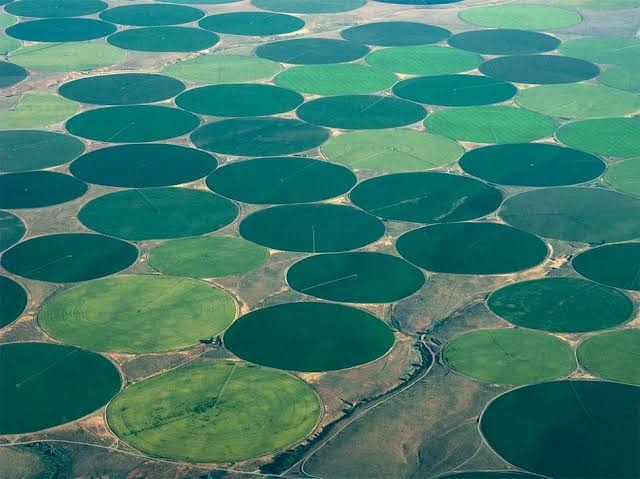
What a Cayman company buying 10 thousand desert hectares for irrigation and intensive production is "handing over the homeland"; that Bolivians have cleared a protected mountain of native forest, renting it out and charging rent from La Paz, is that "homeland"? https://t.co/cBlGX4rQWW #Bolivia #MedioAmbiente #Patria (translated)

"Bringing the land sale bill to Congress was HASTY. It is a possibility that DNU 70/23 will be overturned, as it could not be approved by law." -What if it goes well? -Flaco Bullrich says that logically, the DNU 70/23 should be overturned. (translated)