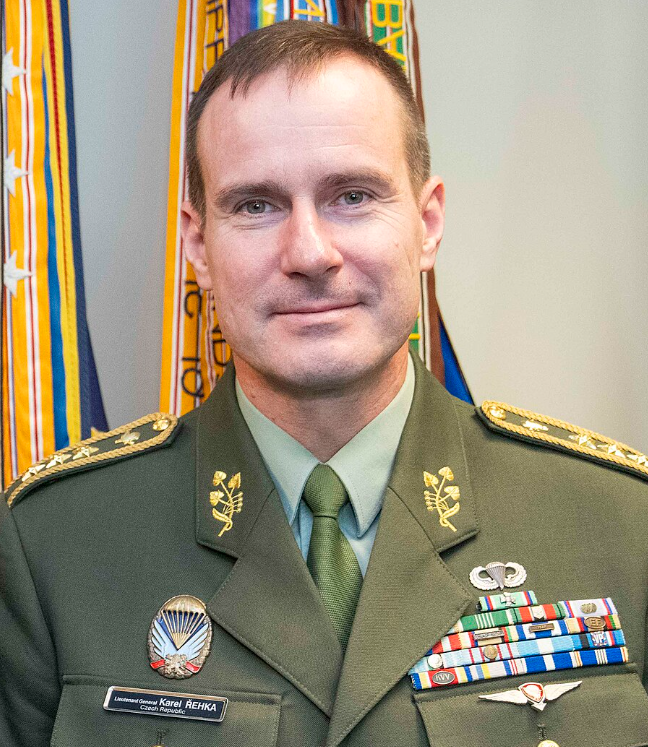
The army broke free from its chains. The president covered everything up, the media is silent. Řehka, Foltýn, Hofírek, Veverka, and also Pavel? The biggest scandal in the history of the Czech Republic Army has been swept under the rug. In Group D, the interesting issue is not the escapade with drones and today's investigation. The courts are deciding whether a 48% gross margin on a charitable collection is legal and whether the proceeds from the fund could legally justify the purchase of four SUVs, Mercedes, and BMWs. It's audience-grabbing, but the real scandal lies elsewhere. In Group D, Otakar Foltýn, Karel Řehka, Radek Hasala, Jan Veverka, and other media-known faces meet, Milan Mikulecký or Ondřej Vetchý. The real brain behind the association is Jan Veverka. An active army reservist, co-owner of the billboard company BigBoard, and a very wealthy - also very dangerous - man. The association is connected to the company FPV Space, which is officially owned by the Poul couple. Zdeněk Poul is a former member of the Military Police and was subordinated to Otakar Foltýn, the main figure of the collection. Radek Hasala is the chief of staff of Petro Pavel's army, and Karel Řehka holds the highest position in the army. What could possibly go wrong? The Group D association was formed just two days before the company FPV Space was established. They were founded in the same notary's office and are interconnected. Without Group D, FPV Space would have no customers, as the courts concluded. These events have already been described to the public. The company used the proceeds from the collection to purchase four SUVs averaging 2 million crowns each, rented commercial space from Jan Veverka, and sent the rent to his former partner. What's important is what the media has largely ignored so far. The connections to the Czech Republic Army and the cover-up of the collection's members by President Pavel and Karel Řehka, today's candidate with STAN's support for the Senate. Now, let’s get to the heart of the matter. Jan Veverka said in an interview that the cooperation between the army and the non-profit sector is common - even that is questionable. However, it is definitely not common for the non-profit sector - according to courts, a very profitable one - to integrate directly (!!) into the Czech Republic Army and act in its activities in the name of armed (!!) forces. Miroslav Hofírek, colonel, later general and director of special forces, issues Jan Veverka a diplomatic passport at the turn of 2023 and 2024, without any (!!) authorization for such a fundamental act. Throughout the year 2024, Group D makes several trips to Ukraine, not as a private association, but under direct orders (!!) from General Hofírek. The official justification is "Protecting the security of diplomatic missions and information assurance." Thus, Group D does not transport drones to Ukraine in the name of a non-profit organization, but travels under the direct order of the Directorate of Special Forces of the Czech Republic Army. Participants in the trips include not only Jan Veverka but also an unspecified number of members of the 601st group from Prostějov, which falls directly under Miroslav Hofírek. From later statements by Jana Černochová, it appears that she was not aware of the trips of Czech special forces members at all. They were fulfilling an order in a war zone, which Ukraine undoubtedly is. However, Hofírek did not have the authority to issue such an order without authorization. This authorization had to be issued by Karel Řehka, or the trip must have been expressly approved personally. Here, the situation becomes even more complicated. Jan Veverka, who was issued a diplomatic passport by the army without authorization and sent soldiers to Ukraine with him, was very generous to Řehka. In May 2024, Karel Řehka announced his separation from his wife and according to his own words, moved to a military barracks in Plzeň. Just a few days after Řehka's announcement, Jan Veverka buys a house. He renovates it and rents it to Karel Řehka and his new partner, Michaela Opltová from the STAN movement. The Řehkas have been living in the house ever since. Hofírek issued diplomatic passports not only to civilian Jan Veverka, turning him into a soldier during his travels to Ukraine, but also to other members of special forces who were in Ukraine with Jan Veverka. That was too much even for Jana Černochová and although Hofírek's actions - with the probable knowledge of Řehka - were scandalous until now, what happened next is interesting. Jana Černochová cancels all diplomatic passports issued by Hofírek and introduces a new process where the issuance of documents is directly approved. She cancels business trips for Řehka and files a proposal for Hofírek's dismissal. Here, Petr Pavel intervenes. He explicitly rules out the dismissal of the army general and tells Černochová to stop questioning the authority and integrity of the army. According to available sources, Černochová was not only seeking to dismiss Hofírek but intended to remove Karel Řehka from his position as well. "The support for Ukraine is seen as correct. If anyone helps Ukraine, it is commendable. An extraordinary situation requires extraordinary measures." Without the president's consent, it is not possible to dismiss Hofírek or Řehka. Illegal deployment of special forces in support of Jan Veverka's private initiative and issuing diplomatic passports without authorization, however, is not enough reason for Petr Pavel to endorse Černochová's intervention. The only remaining option for the minister is the Military Police. They begin investigating Group D and uncover significant discrepancies in asset management. These include the already mentioned payments to Veverka's former partner, SUVs costing 8 million crowns, and other connections. However, the media do not address the "cowboys from Prostějov." Their attention is focused on Jana Černochová, questioning her authority to intervene against an army that approves its own missions without the knowledge of politicians. The media blitz after Pavel's intervention escalates in favor of the army. It doesn't so much address the practically scandalous arbitrariness of the army but bombards Jana Černochová - she is supposed to prevent Jan Veverka's group from helping Ukraine. President Pavel stated, for example: "On the other hand, I consider it absolutely non-standard and harmful when new information and speculation are constantly introduced into such a case during an investigation. It damages the good name of the army, the ministry, and unfortunately also the whole Czech Republic," said Pavel. Karel Řehka admitted to only "minor administrative mistakes" in the same text for ČTK. However, Jana Černochová spoke differently again for ČTK. Petr Pavel allegedly explicitly denied that he was "addressing" Hofírek and in his eyes, everything was fine. Arbitrary deployment of special forces members has not yet been punished. Karel Řehka, who had sole authority to authorize Hofírek to deploy forces, has never been disciplined. Jan Veverka is not charged, and the Military Police is investigating only Zdeněk Poul and his wife. Miroslav Hofírek still commands special forces. Otakar Foltýn, who sharply opposed Jana Černochová and trivialized the issue of arbitrary deployments of soldiers to war zones, currently holds a position at Prague Castle. A total of 48 million, which the Military Police did not seize from Group D, was sent by Jan Veverka to the non-profit organization Memory of the Nation. This organization is financed by Jan Dobrovský, the largest sponsor of the STAN movement, with whose support Karel Řehka is running in Plzeň. That Jan Dobrovský, who is supposed to have significant influence over President Pavel together with Petr Kolář. That Jan Dobrovský, who employs two brothers of Janku Kroupa, a leading investigative journalist at Seznam Zpráv. And again, that Jan Dobrovský, who has a regular podcast on Seznam Zprávy with Jindřich Šídlo, where criticism of STAN can only be sought with a molecular microscope and just as fruitlessly. If anything were to happen to the special forces members and Jan Veverka during their trips to Ukraine, the Czech Republic would have to admit the following. The individuals were sent into a war zone without the knowledge of the country's political leadership, on illegally issued diplomatic passports - without the Ministry of Defense's authorization - and likely for purposes unrelated to the army and to a private collection. The cowboys from Prostějov were not in Ukraine with Group D for the first time; such cases of arbitrariness can be found in the Czech Republic Army in significant numbers. So maybe next time. Shalom. (translated)