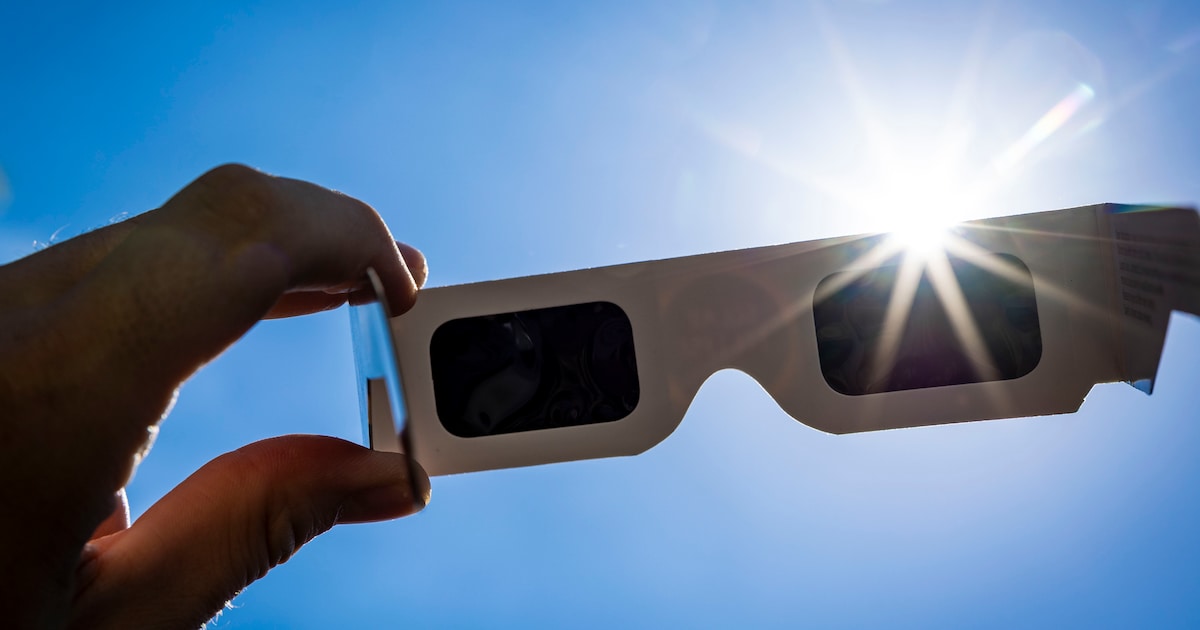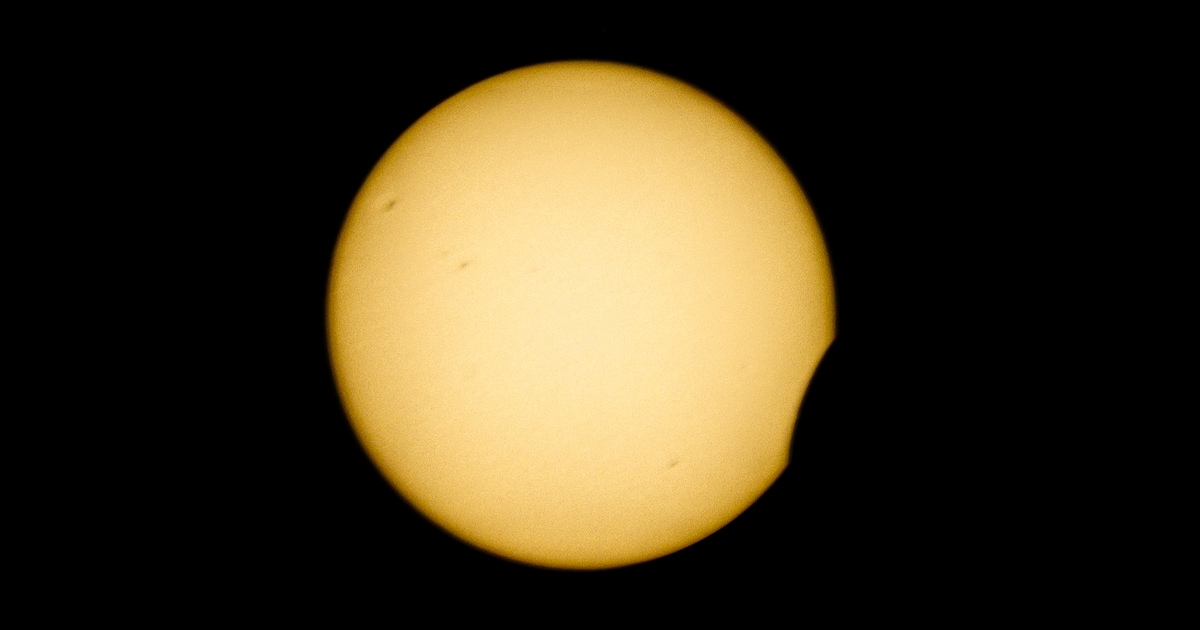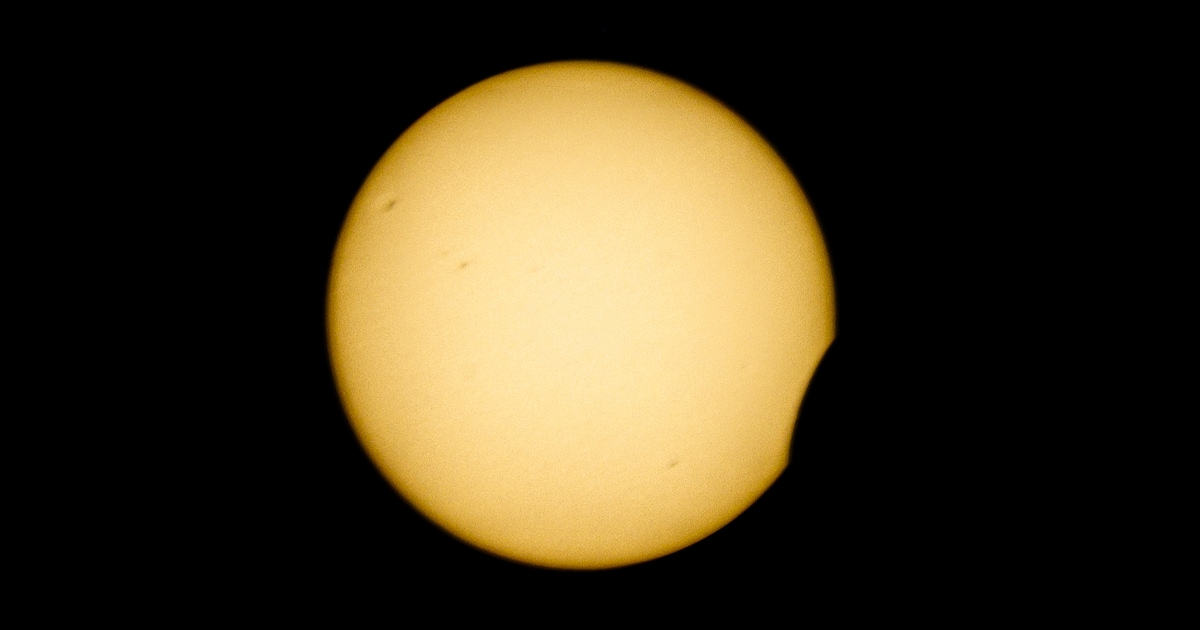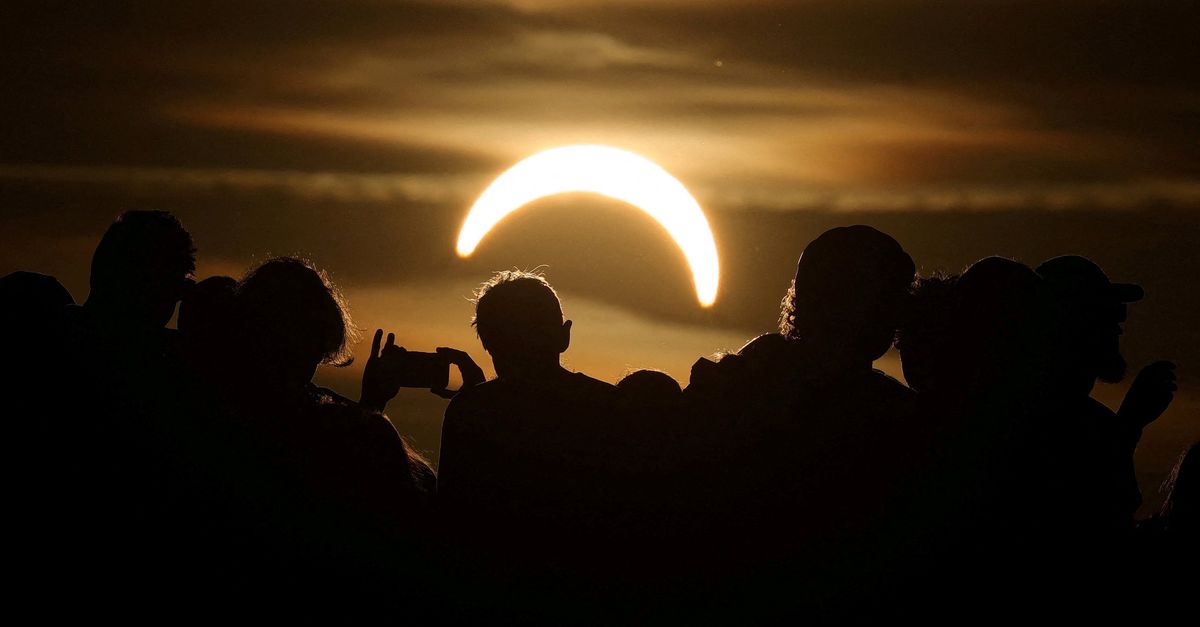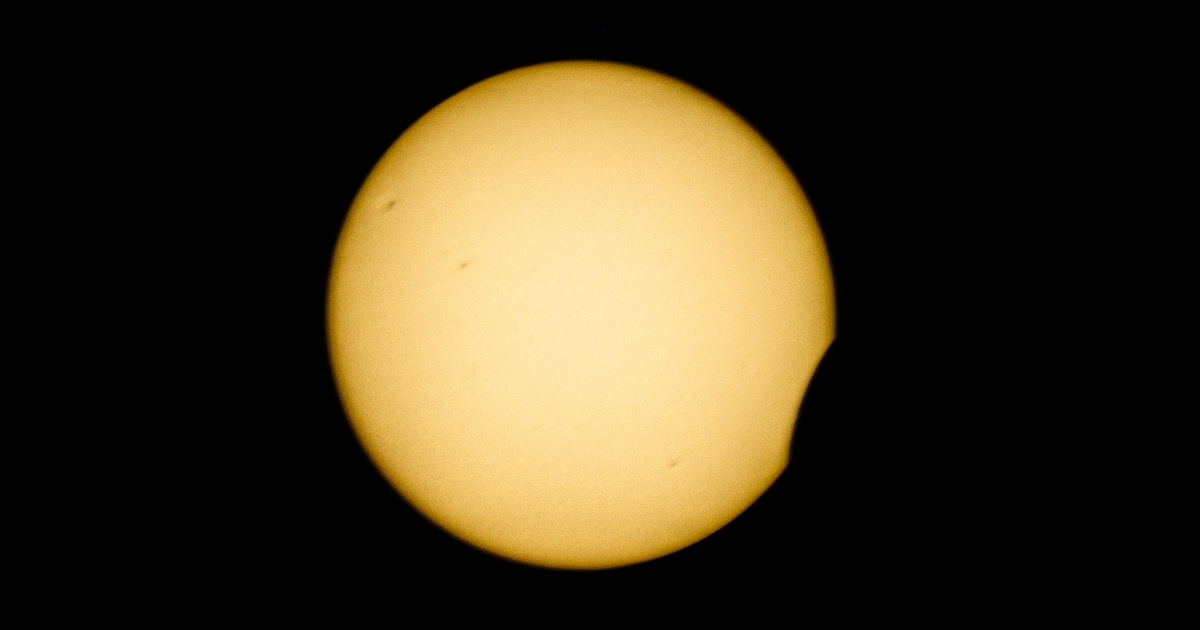
The solar eclipse yesterday reportedly caused little eye damage, with only a few reports of temporary complaints, while three people suffered retinal damage, but even in those cases, recovery is possible. (translated)
The solar eclipse yesterday reportedly caused little eye damage, with only a few reports of temporary complaints, while three people suffered retinal damage, but even in those cases, recovery is possible. (translated)

Er was gisteren een zonsverduistering. Er werd sterk geadviseerd niet in de zon te kijken. Ik vermoed dat veel mensen wellicht toch in de zon keken. Mogelijk zien die vandaag een beetje zwarte vlekken. Ik vroeg 'Wie ziet er zwarte vlekken vandaag?' En nu ben ik een laffe racist? #Zonsverduistering #ZwarteVlekken #Veiligheid
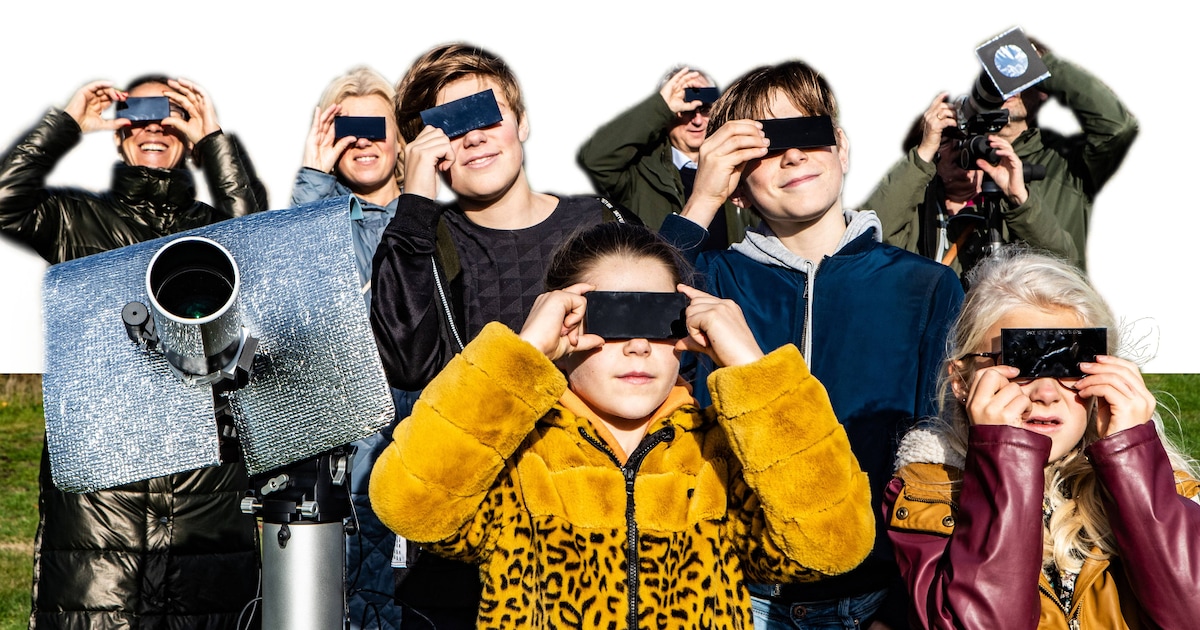
Three people had to go to the Eye Hospital in Rotterdam due to eye damage they sustained during the solar eclipse, despite the advice not to look at the sun unprotected, and showed symptoms such as a visible spot in their vision. (translated)

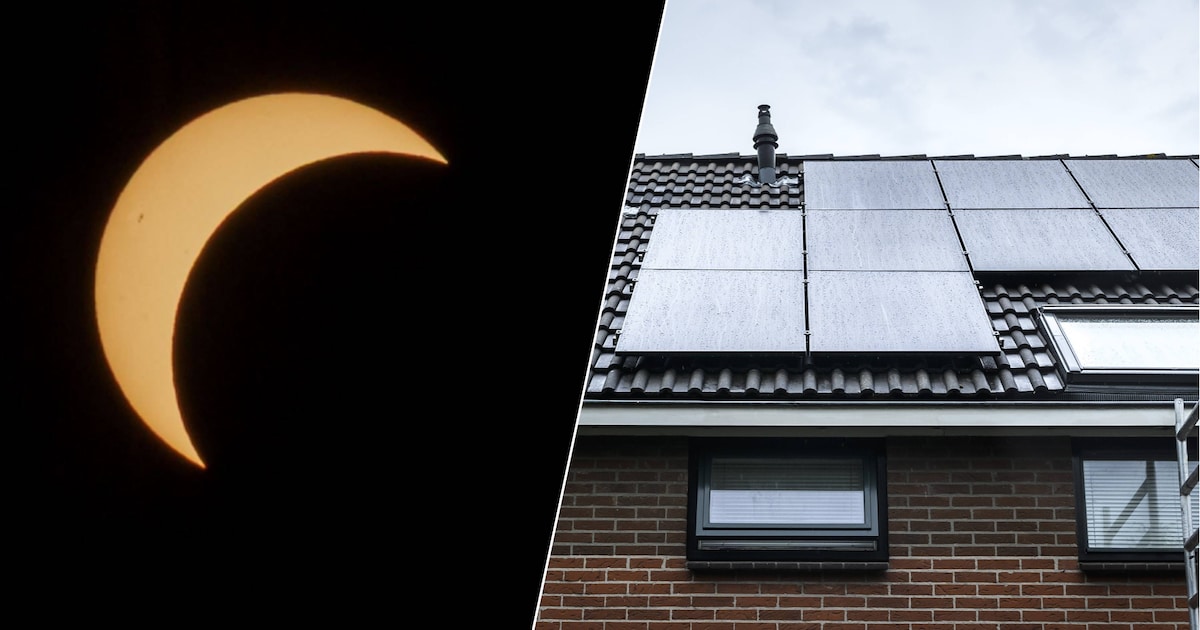
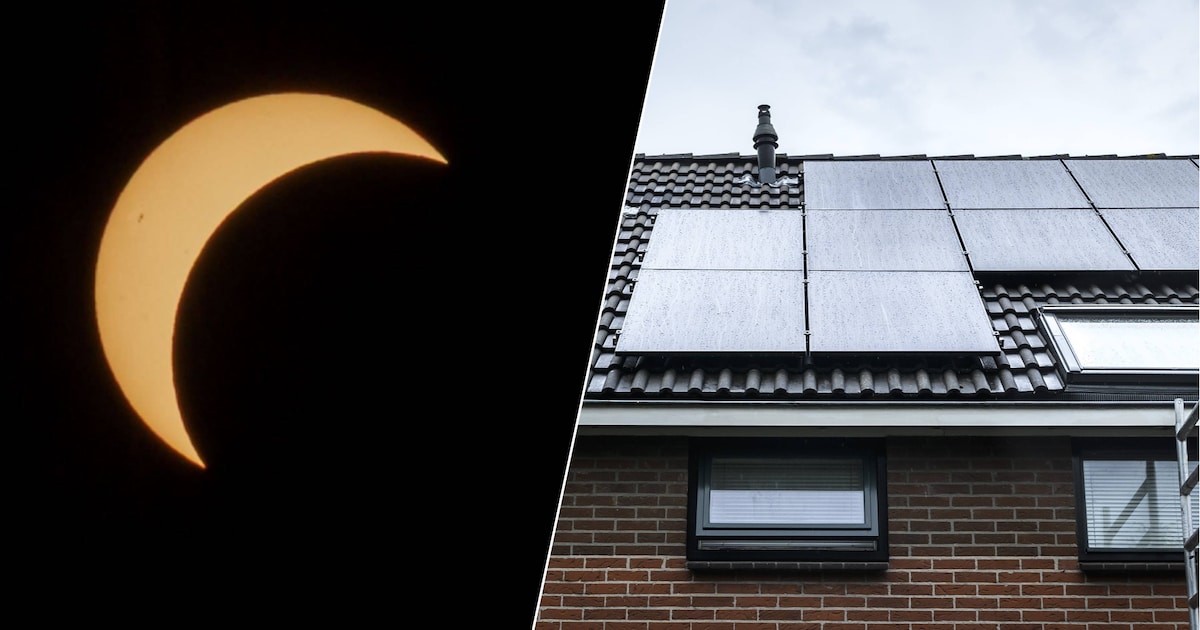
During the recent solar eclipse in the Netherlands, where almost 90 percent of the sun was covered, electricity prices doubled due to a significant decrease in solar energy, but grid operator TenneT successfully stabilized the power grid and assisted other European countries, such as England and Germany. (translated)

During the solar eclipse on Thursday evening, the electricity price in the Netherlands doubled due to a sharp drop in solar energy, but grid operator TenneT was able to successfully stabilize the electricity grid and even assist other countries, such as England and Germany, with electrical energy. (translated)

☀️🌔 Wát een belevenis! Vanaf een prachtig rotsgebergte boven het wolkendek konden we de #zonsverduistering zien. Hieronder een 'selfie' van gisteravond om 20.27 uur, in het noorden van Spanje. Bekijk ook mijn video van de eclipse: https://t.co/aJZnHX1HJU? v=YTydgKC70Qk https://t.co/4ClHnkgKcq #zonsverduistering #eclipse #natuur
Na de #zonsverduistering wat kleur opgezocht. Fijne donderdag😀 #zonsondergang https://t.co/ZDl2CR1Yoc #zonsverduistering #zonsondergang #natuur
The partial solar eclipse that took place on August 12, 2026, was enthusiastically observed by thousands of people in the Netherlands and other parts of Europe, with various observatories being heavily visited and foreign media describing the event as a historical occurrence. (translated)

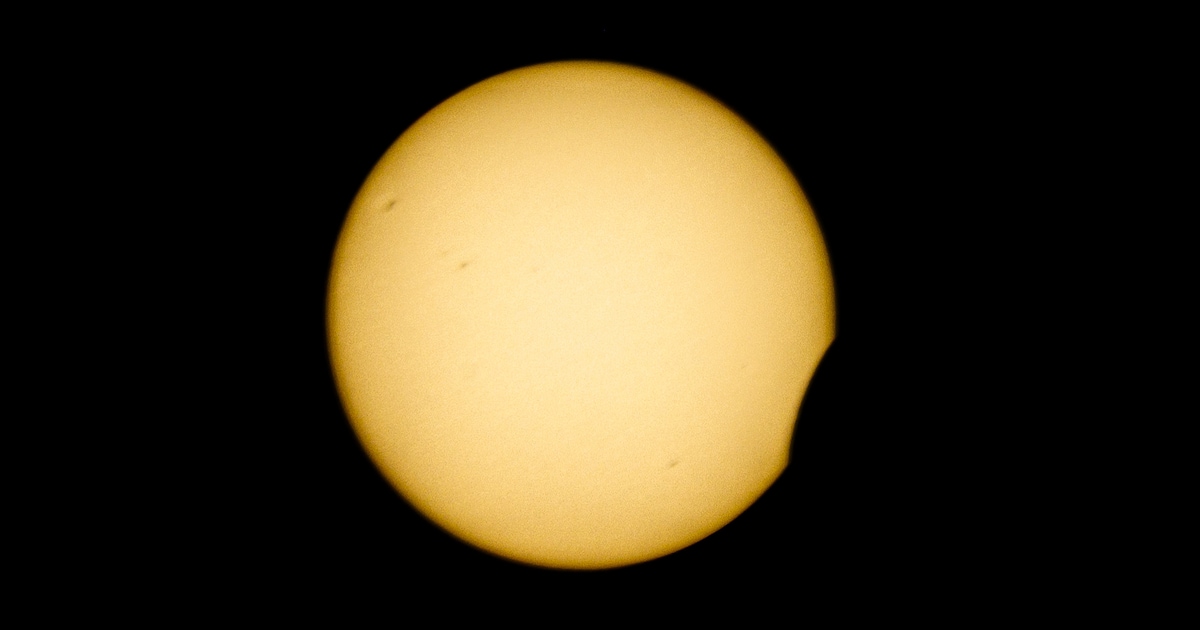
The partial solar eclipse, which was visible in the Netherlands and other parts of Europe, was experienced with great enthusiasm on August 12, 2026, reaching its peak around 8:10 PM, while foreign media labeled it a historic event, especially since the last total solar eclipse in Europe occurred in 1999. (translated)

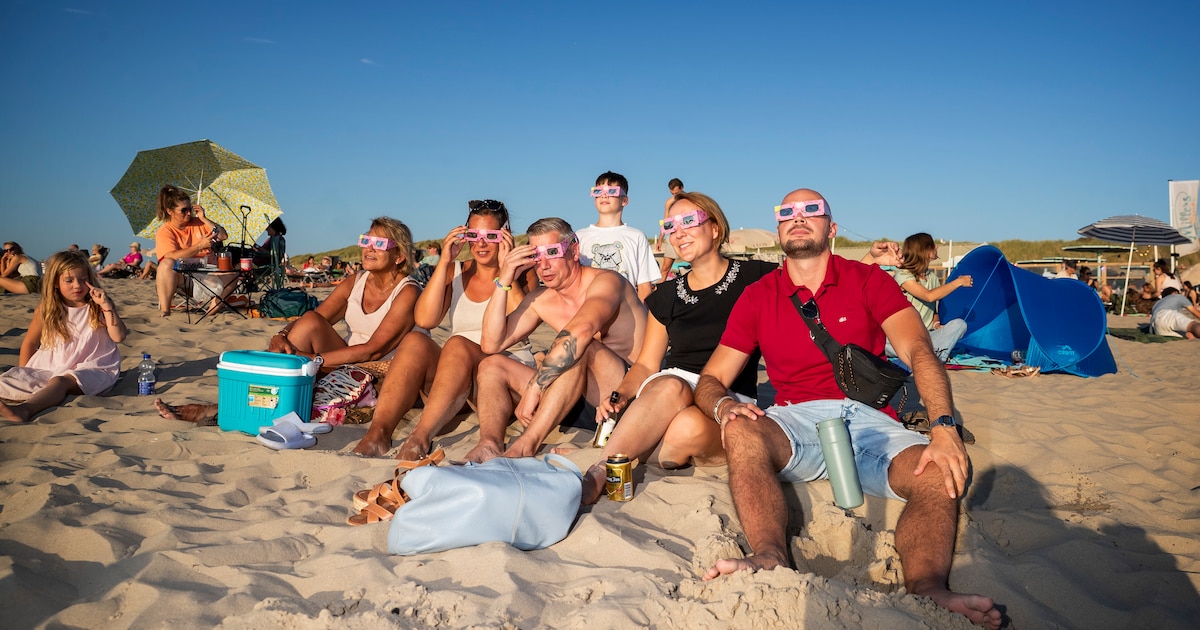
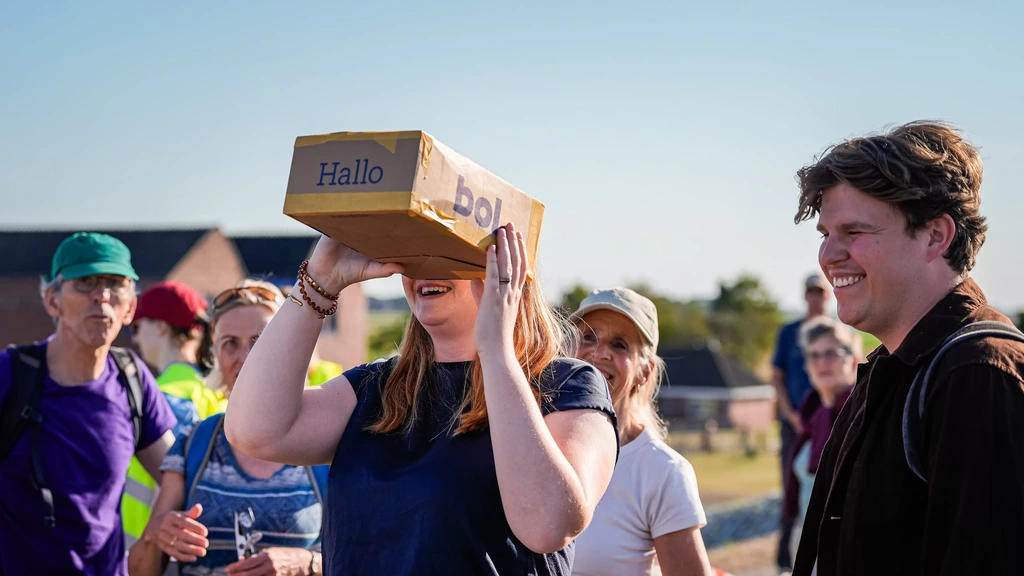
Thousands of Dutch people gathered on the beach of The Hague to admire the rare nearly complete solar eclipse with special eclipse glasses, viewing boxes, and telescopes, while enjoying the natural phenomenon that will not occur again until 2081. (translated)

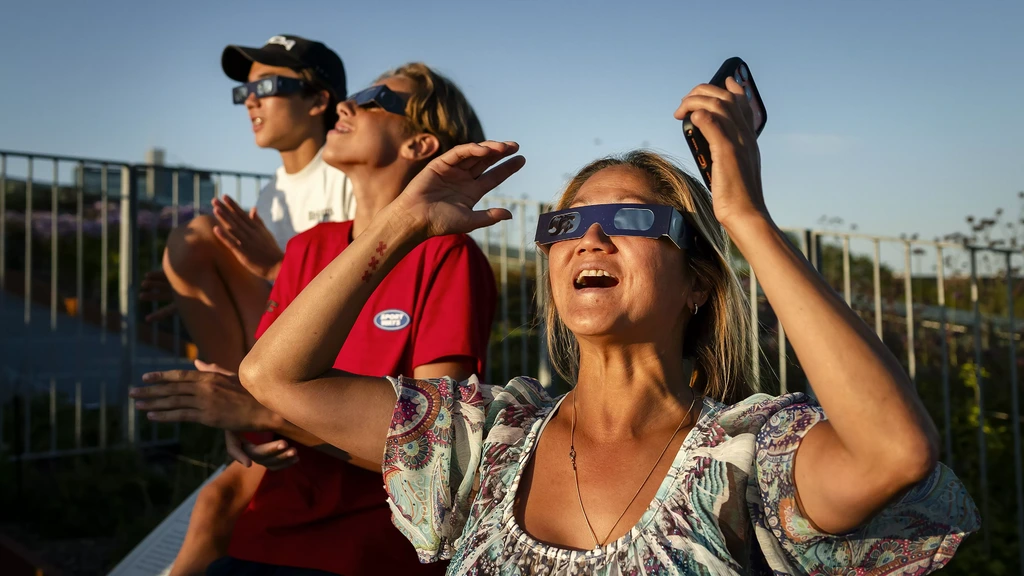
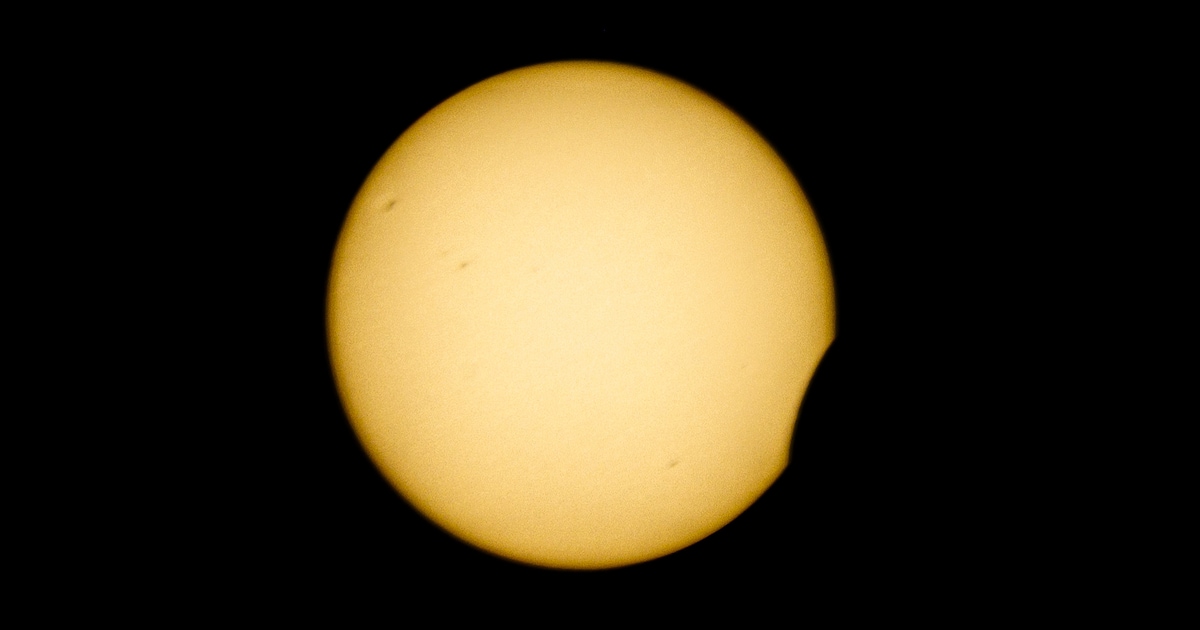
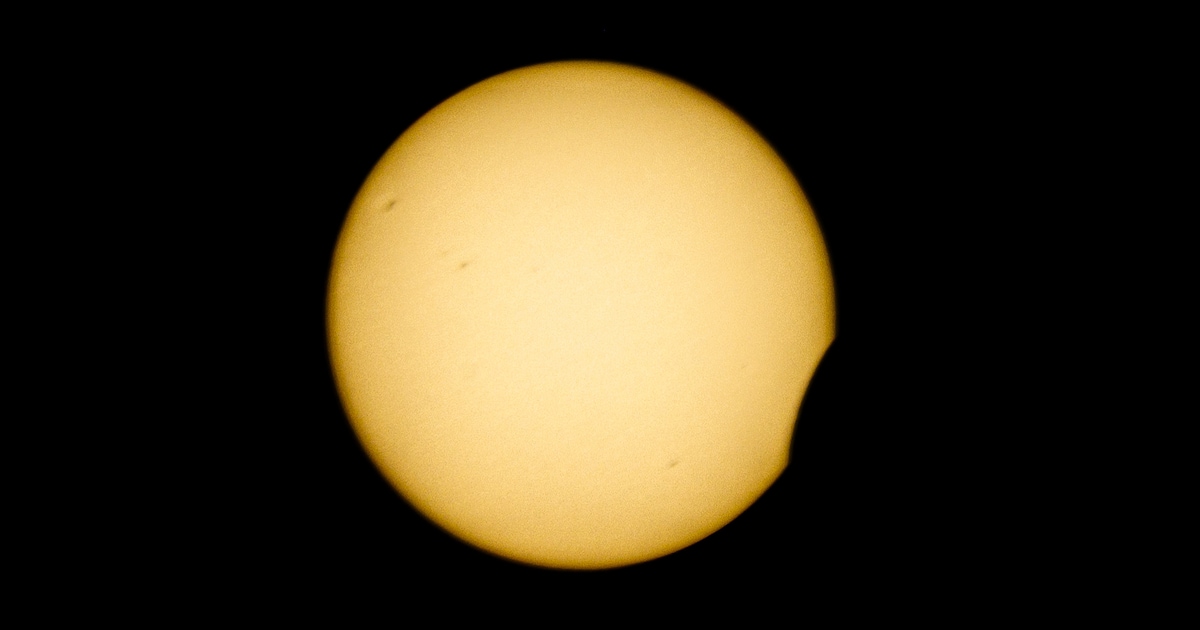
During the largest solar eclipse of the past decades, many Dutch people stood with their mouths agape, especially along the coast, where almost 90 percent of the sun was covered by the moon, leading to euphoric reactions and emotional moments among the spectators. (translated)

In the Netherlands, the final preparations have been made for a rare total solar eclipse, which will reach its peak on August 12, 2026, at around ten minutes past eight, while millions of Europeans, armed with special eclipse glasses, prepare to witness this natural phenomenon. (translated)

The partial solar eclipse, which was awaited for 27 years, reached its peak around 8:10 PM, for which people all over the Netherlands, including on beaches and in cities, gathered to witness the phenomenon, and even a marriage proposal took place during the eclipse in Noordwijk aan Zee. (translated)

ThePartial solar eclipse in the Netherlands, which took place on August 12, 2026, peaked around 8:10 PM and drew large crowds to beaches and other locations, where there was applause and a marriage proposal occurred in Noordwijk aan Zee. (translated)

The solar eclipse, which was visible in Europe on August 12, 2026, attracted a lot of attention, with people watching the phenomenon from various locations, including Berlin and Madrid, and it marked the last opportunity until 2081 for a similar eclipse in the Netherlands. (translated)

On August 12, 2026, a partial solar eclipse took place in the Netherlands, peaking at 8:10 PM, while Spain experienced a total solar eclipse, resulting in a large turnout of people at various locations to admire the unique natural phenomenon. (translated)

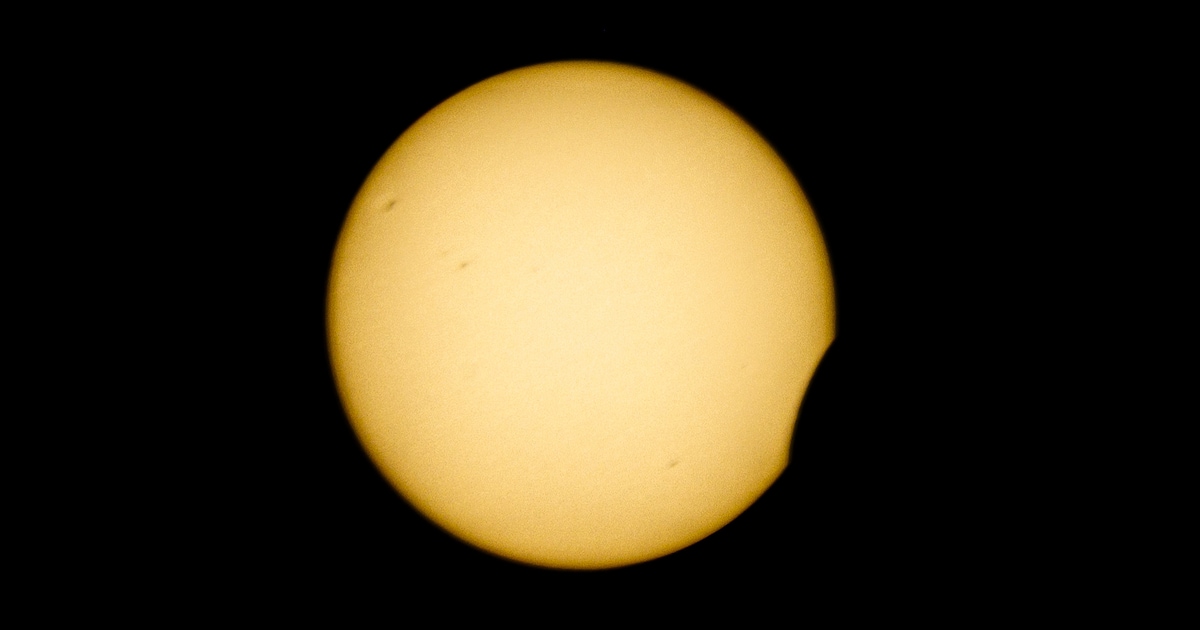
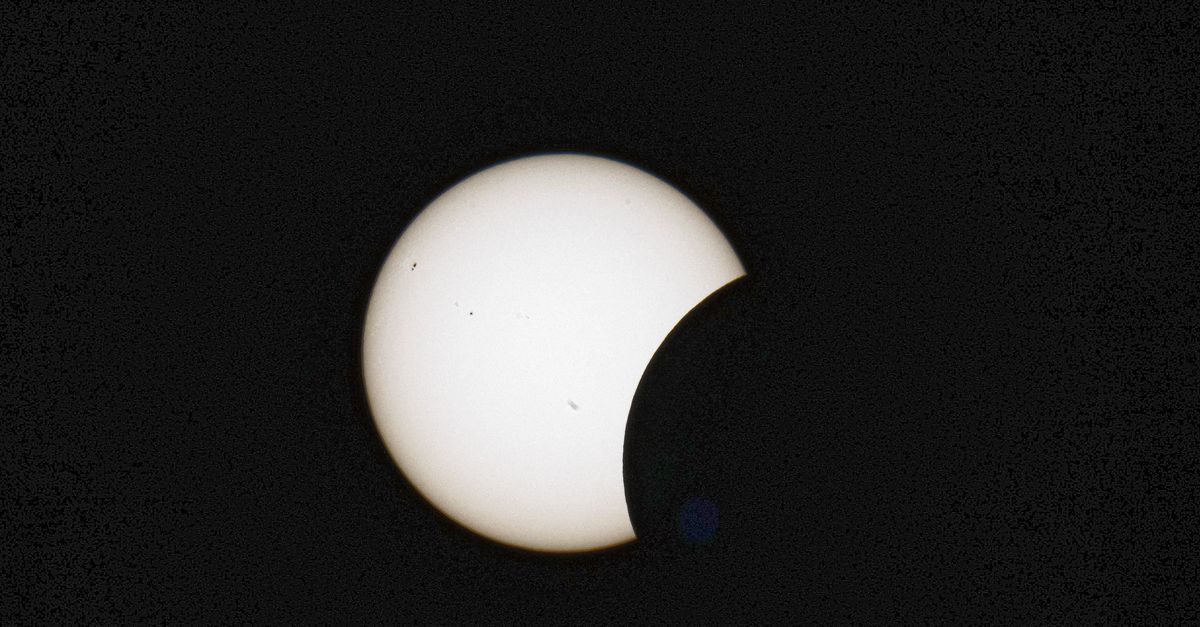
On August 12, 2026, a partial solar eclipse occurred in the Netherlands, where the moon covered 88 percent of the sun, and thousands of people gathered at various locations, while Spain prepared for a total eclipse peaking around 8:27 PM. (translated)

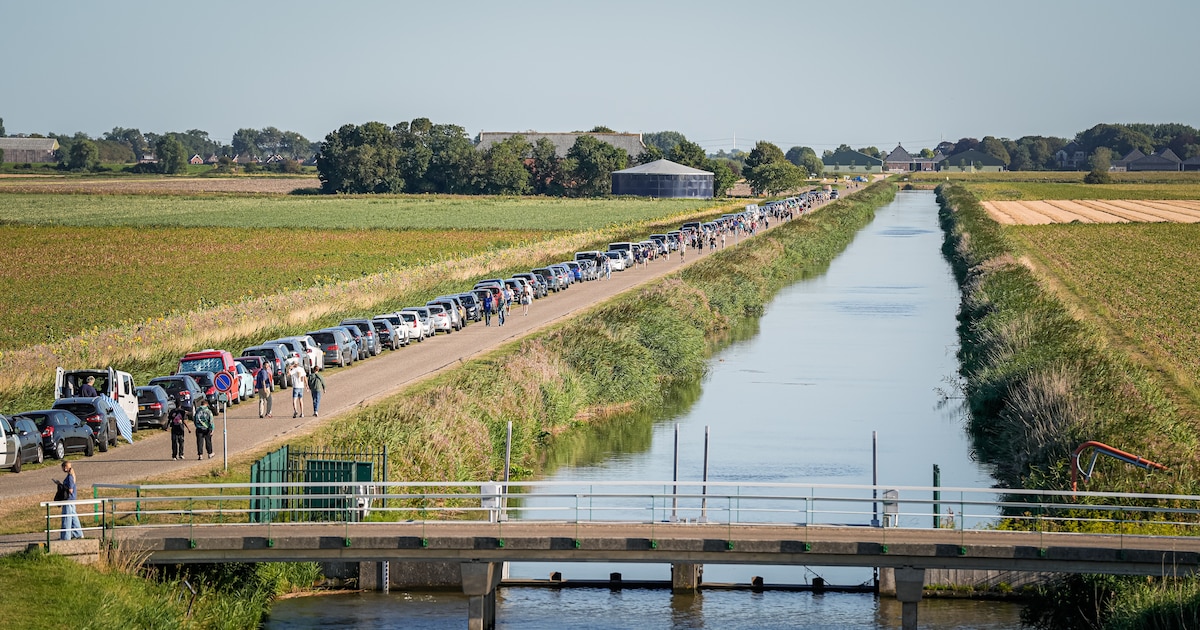
On August 12, 2026, the long-awaited partial solar eclipse began in the Netherlands, with the moon covering the sun for the first time at 7:15 PM, and the peak was expected at 8:00 PM, as hordes of people gathered on beaches and observation locations to experience this extraordinary natural phenomenon. (translated)

The Netherlands is waiting for the partial solar eclipse that starts at 7:15 PM, peaking at 8:00 PM, while thousands of people are heading to coastal towns and viewpoints for the unique natural phenomenon. (translated)

The fascinating appeal of a solar eclipse lies in the unique experience of seeing the sun disappear, leading to a collective moment of wonder, connection with nature, and reflection on our place in the larger scheme of things. (translated)