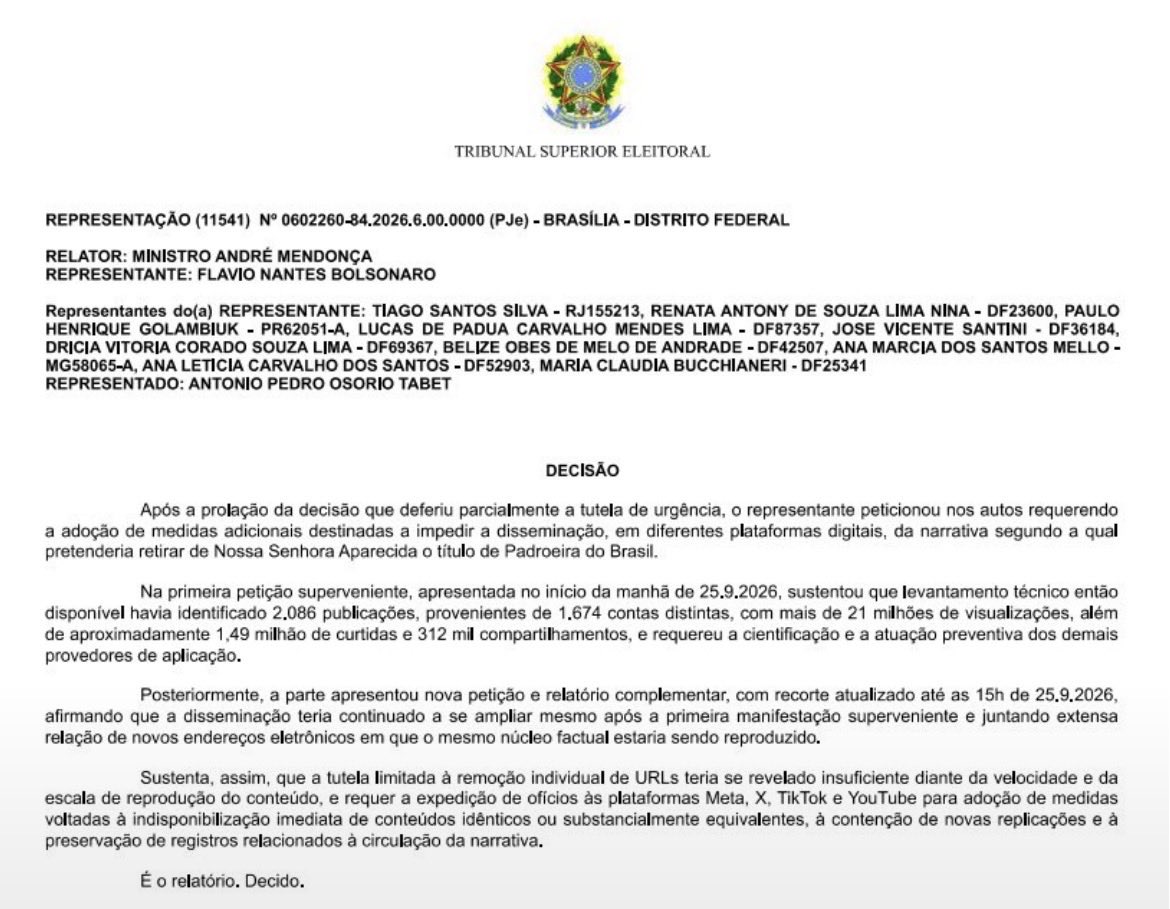
Essa decisão do ministro André Mendonça, tal como se apresentada, carregam uma grave e preocupante dimensão de censura prévia. Quando se determina não apenas a retirada de uma publicação específica, mas também o bloqueio antecipado de conteúdos futuros, supostamente “equivalentes”, abre-se espaço para impedir previamente a circulação de críticas, denúncias, comentários e debates políticos. Em uma democracia, especialmente no período eleitoral, não se pode aceitar que plataformas recebam uma espécie de licença para silenciar, por antecipação, tudo aquilo que possa desagradar a uma candidatura ou a um grupo político. Mais grave ainda é que muitos dos fatos tratados como “desinformação” integram o debate público e são notórios, documentados, amplamente discutidos pela imprensa e conhecidos pela sociedade. Não se pode chamar de fake news aquilo que é fato público, crítica política, memória coletiva ou questionamento legítimo sobre declarações, alianças, posições e condutas de agentes públicos. A Justiça Eleitoral deve combater a mentira deliberada, mas não pode se transformar em instrumento de blindagem política, apagamento de fatos ou intimidação de quem exerce o direito constitucional de informar, criticar e se manifestar. É um escândalo que, mais uma vez, na reta final do processo eleitoral, se tente restringir o debate público por meio de decisões amplas e potencialmente silenciadoras. A liberdade de expressão não existe apenas para discursos confortáveis ou favoráveis aos poderosos: ela existe, sobretudo, para proteger a crítica, a divergência e a circulação de informações de interesse coletivo. Já estamos mobilizados e preparando representações em defesa de pessoas que estejam sendo atingidas por esse tipo de medida. #LiberdadeDeExpressão #Censura #Democracia