MAILLOT CHAMPIONS 2026 ! Il est disponible dès maintenant en édition limitée sur le shop, avec une collection spéciale Worlds 2026 https://t.co/nljPwUhm2b #Maillot #Champions2026 #Worlds2026

MAILLOT CHAMPIONS 2026 ! Il est disponible dès maintenant en édition limitée sur le shop, avec une collection spéciale Worlds 2026 https://t.co/nljPwUhm2b #Maillot #Champions2026 #Worlds2026
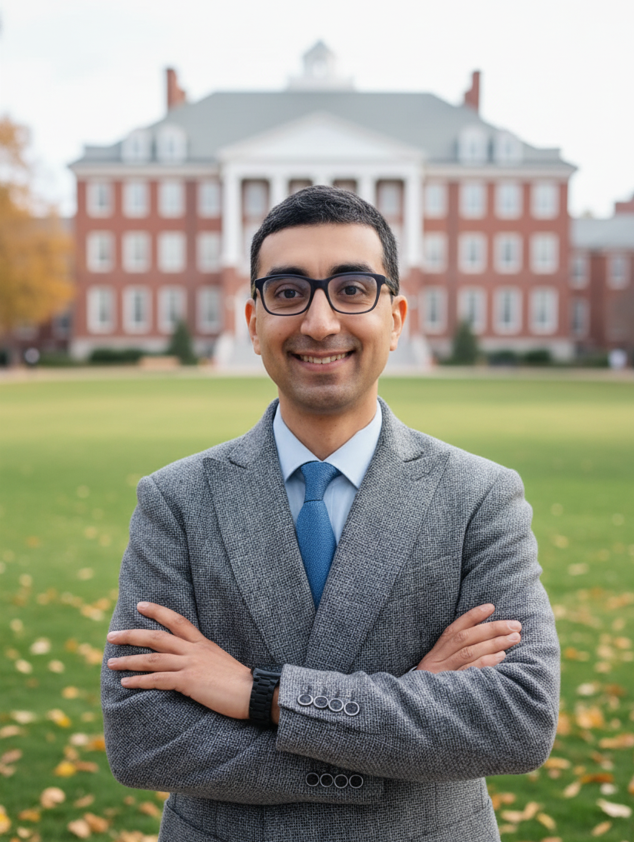
L' ATTACCO DI FOGGIA - FRANCESCO GRAVINA'S TEATRO-EDICOLA, THE WORLD'S SMALLEST THEATRE, BECOMES THE SUBJECT OF A CASE STUDY AT STANFORD UNIVERSITY The Teatro-Edicola Foyer '97 Becomes an International Case Study for the Stanford Social Innovation Review SAN SEVERO, 16 September 2026 - From a derelict newsstand of four square metres in Via Tondi to a paradigm of social innovation examined by Stanford University. Such is the trajectory of the Teatro Edicola Foyer '97, the cultural project realized by the Foyer '97 company under the artistic direction of Francesco Gravina, which in the space of a few months has transcended national boundaries. The news, reported today by La Gazzetta del Mezzogiorno, is that the prestigious "Stanford Social Innovation Review", the cultural journal of Stanford University dedicated to social innovation, will publish in September, both on its website and in its Fall 2026 print edition, the reportage "The Six-Seat Revolution", authored by Dr Luciano Magaldi Sardella and overseen editorially by Deputy Editor David V. Johnson. The project was inaugurated on 27 March last, on the occasion of World Theatre Day, when a former newsstand, shuttered for years, was transmuted into a diminutive theatre: six seats, a stage of fewer than two square metres, performances lasting but a few minutes, with actors and audience separated by less than a metre. A formula at once essential and original that has taken all by surprise: more than sixty spectators in a single afternoon and full houses throughout the three days of the inaugural season. A success that has evinced the public's appetite for a cultural proposition beyond the conventional circuits. It is for this reason that the SSIR has elected to analyse it as a potential model of low-cost urban regeneration, conceivably replicable across the thousands of disused newsstands throughout Italy and Europe. Enquiries regarding its replication have already been received from other cities, including Lucca and Rome. At its heart, as Gravina explains, lies a simple notion: "The theatre comes to the street where you walk every day". The newsstand, once a locus of daily information, changes its function and becomes a place of encounter with artists. An accolade that brings a reality born in the Province of Foggia to the centre of the international discourse on social innovation. What appeared to be a four-square-metre wager may now become a model to be exported far beyond San Severo.
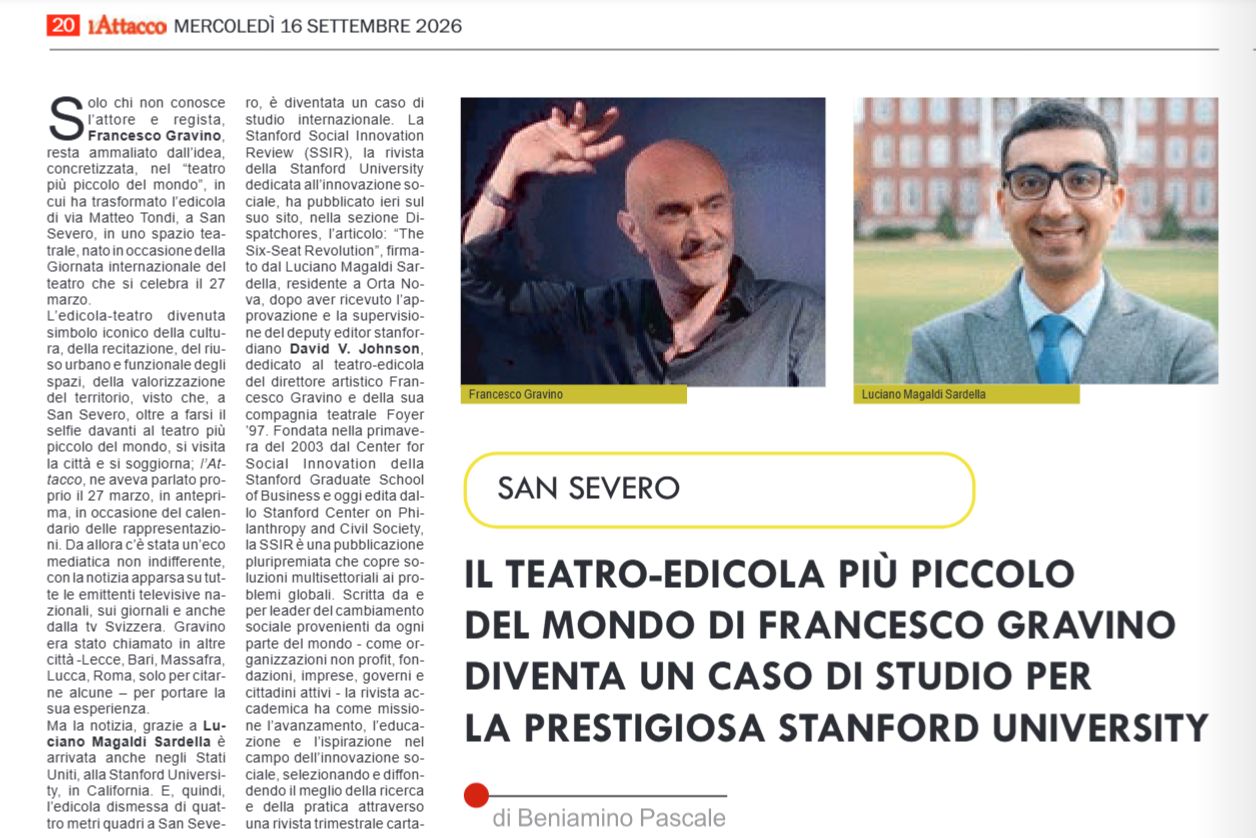
LA GAZZETTA DEL MEZZOGIORNO - SAN SEVERO'S TEATRO EDICOLA FOYER '97 ON THE STANFORD SOCIAL INNOVATION REVIEW The Teatro-Edicola Foyer '97 Becomes an International Case Study for the Stanford Social Innovation Review SAN SEVERO, 16 September 2026 - From a derelict newsstand of four square metres in Via Tondi to a paradigm of social innovation examined by Stanford University. Such is the trajectory of the Teatro Edicola Foyer '97, the cultural project realized by the Foyer '97 company under the artistic direction of Francesco Gravina, which in the space of a few months has transcended national boundaries. The news, reported today by La Gazzetta del Mezzogiorno, is that the prestigious Stanford Social Innovation Review, the cultural journal of Stanford University dedicated to social innovation, will publish in September, both on its website and in its Fall 2026 print edition, the reportage "The Six-Seat Revolution", authored by Dr Luciano Magaldi Sardella and overseen editorially by Deputy Editor David V. Johnson. The project was inaugurated on 27 March last, on the occasion of World Theatre Day, when a former newsstand, shuttered for years, was transmuted into a diminutive theatre: six seats, a stage of fewer than two square metres, performances lasting but a few minutes, with actors and audience separated by less than a metre. A formula at once essential and original that has taken all by surprise: more than sixty spectators in a single afternoon and full houses throughout the three days of the inaugural season. A success that has evinced the public's appetite for a cultural proposition beyond the conventional circuits. It is for this reason that the SSIR has elected to analyse it as a potential model of low-cost urban regeneration, conceivably replicable across the thousands of disused newsstands throughout Italy and Europe. Enquiries regarding its replication have already been received from other cities, including Lucca and Rome. At its heart, as Gravina explains, lies a simple notion: "The theatre comes to the street where you walk every day". The newsstand, once a locus of daily information, changes its function and becomes a place of encounter with artists. An accolade that brings a reality born in the Province of Foggia to the centre of the international discourse on social innovation. What appeared to be a four-square-metre wager may now become a model to be exported far beyond San Severo.
WOAH 🚨 An addiction recovery center in Minnesota accused of stealing millions with fake Medicaid billing has just been exposed to have another account with $25 MILLION They’ve used our stolen tax money to buy: - 3 Minnesota homes - $10.4 million in charges - $3.5 million on leather goods and luggage - $380k jewelry and watches - $150k clothing and shoes - One month of LV charges alone was $440,000 June 2024 spending alone included - $35k at Fendi - $57k at LV - $13k at Hermès - $64k private jet - $41k Airbnb And now a $25 million CD has been discovered Some of the craziest items they bought were - 3 Minnesota homes - Rolex Oyster Mickey Mouse edition that’s 18kt yellow gold with genuine Rolex crocodile band - Louis Vuitton trunks and hard-side luggage including additional jewelry trunks - Louis Vuitton black mink coat and other fur pieces - Gents diamond cluster rings and fashion rings that were 14kt gold pieces with 7–59 diamonds, plus EFFY, Kabana, and Gabriel & Co. platinum diamond rings - 18kt yellow gold and diamond Louis Vuitton pendant on an 18kt LV chain, plus other 14kt gold diamond heart pendants and Tiffany pearl and diamond pieces - Louis Vuitton Tambour watches Again, this is all with our stolen tax money with fake Medicaid billing in Minnesota Tim Walz and Democrats allowed this and would have never did anything to stop them if it wasn’t for Trump getting elected https://x.com/WallStreetApes/status/2099815504667959479


Le retour d'un parfum tant attendu, celui de l'Europe et ses soirées en semaine. 🇦🇹 Tout commence en Autriche. Ce soir, le Stade Rennais F.C. fête son entrée en @EuropaLeague, édition 26/27. ⇾ 21h, @CanalplusSport, x @SKSturm. https://t.co/CmXoeHwVTd #EuropaLeague #StadeRennais #Football


La chaîne américaine CNN annonce la sortie officielle de la version anglaise du livre de Miguel KASHAL KATEMB, intitulé « Africa’s Development through Local Content: The Case of the Democratic Republic of the Congo », publié depuis les États-Unis par la prestigieuse maison d’édition Bertelsmann. Il s’agit du tout premier ouvrage congolais consacré au développement de l’Afrique à travers le contenu local, considéré comme un véritable levier de développement économique, avec pour étude de cas la République démocratique du Congo (RDC). Dédié au combat du Président Félix-Antoine Tshisekedi Tshilombo en faveur de la souveraineté économique de la RDC, l’ouvrage est préfacé et postfacé respectivement par Son Excellence Olusegun Obasanjo, ancien Président de la République fédérale du Nigeria, et Son Excellence Nana Akufo-Addo, ancien Président de la République du Ghana. À travers cet ouvrage, Miguel KASHAL KATEMB met en lumière le rôle stratégique du contenu local dans la transformation économique de la RDC et, plus largement, dans la construction d’un modèle de développement africain fondé sur la valorisation des compétences, des entreprises et des ressources locales. @MiguelKashal @Presidence_RDC #DéveloppementAfricain #RDC #ContenuLocal


Nous avons le grand plaisir d’annoncer, à travers la chaîne américaine CNN, la sortie officielle de la version anglaise de notre livre intitulé « Africa’s Development through Local Content: The Case of the Democratic Republic of the Congo », publié aux États-Unis par la maison d’édition Bertelsmann. Cet ouvrage aborde la problématique du développement de l’Afrique par le contenu local, utilisé comme levier économique, à travers le cas de la République démocratique du Congo. Il est dédié à l’engagement de Son Excellence Félix-Antoine Tshisekedi Tshilombo, Président de la République, en faveur de la souveraineté économique de la RDC. Le livre est préfacé et postfacé par Leurs Excellences Olusegun Obasanjo, ancien Président de la République fédérale du Nigeria, et Nana Addo Dankwa Akufo-Addo, ancien Président de la République du Ghana. Cette publication constitue une contribution à la réflexion sur les stratégies de développement de l’Afrique, fondées notamment sur la valorisation des ressources, des compétences et des entreprises locales. #DéveloppementAfricaine #RDC #ContenuLocal


📆L'édition 𝗨𝗟𝗧𝗜𝗠𝗘 de #FC27 sera disponible ce vendredi à 0h00 ! 🤨Alors, vous êtes autant hypés que les années précédentes ou pas ? https://t.co/36AQ2RSfXo #FC27 #édition #hype

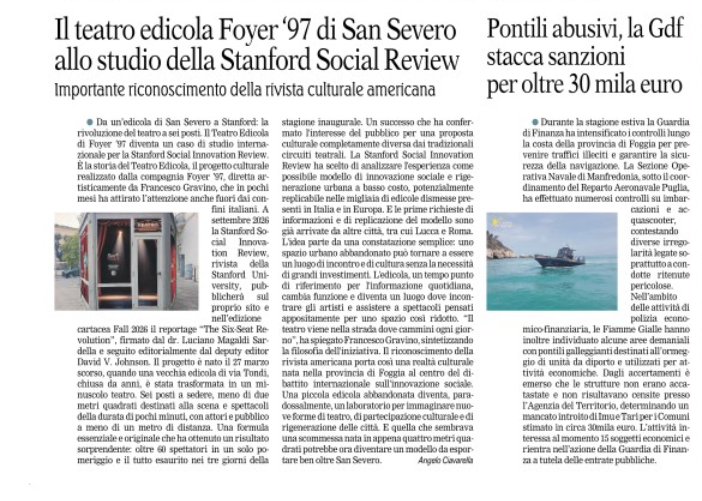
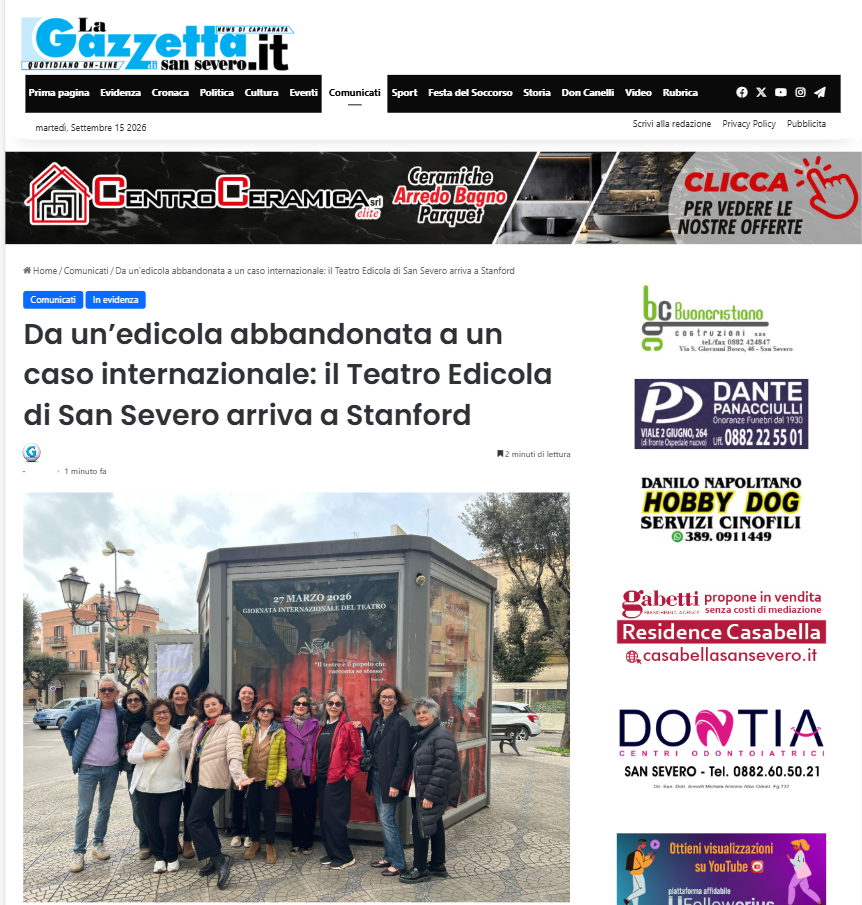
“TEATRO EDICOLA” OF SAN SEVERO BECOMES AN INTERNATIONAL CASE STUDY IN THE “STANFORD SOCIAL INNOVATION REVIEW (SSIR)” — STANFORD UNIVERSITY SOURCE: https://l1nq.com/rruntbb LA GAZZETTA DI SAN SEVERO SAN SEVERO (FG) — Six persons enter a news kiosk. Before them lie no newspapers, magazines, or tobacco, but a theatrical stage measuring less than two square metres. The actors stand but a few paces from the spectators, with scarce any separation betwixt those who perform and those who behold. It is in this manner that in San Severo a place abandoned for years hath begun to live anew. And today that diminutive theatrical experiment hath fallen beneath the glare of international attention. It is the story of the “Teatro Edicola”, the project realised by the company Foyer ’97, under the artistic direction of Francesco Gravino, which hath transformed an old news kiosk in Via Tondi into one of the smallest stages ever conceived. The project commenced on 27th March last, with a formula as simple as it is original: six seats, a stage of most exiguous dimensions, and performances lasting but a few minutes. A minimal distance betwixt public and performers that doth wholly alter the traditional relationship betwixt spectator and theatre. The wager, however, was forthwith rewarded by the public. More than 60 persons attended the performances in a single afternoon, and the three days of the inaugural season registered a complete sold-out. From a local experiment, the “Teatro Edicola” hath thus become a case capable of attracting attention far beyond the confines of the Province of Foggia. In September 2026, the Stanford Social Innovation Review (SSIR), the journal of Stanford University, shall publish upon its website and in its Fall 2026 print edition the reportage “The Six-Seat Revolution”, authored by Dr Luciano Magaldi Sardella and edited by Deputy Editor David V. Johnson. The interest of the American review concerneth not merely the originality of the theatrical proposition. The Teatro Edicola is, in fact, observed as a potential paradigm of social innovation and low-cost urban regeneration. Become a Medium member The idea is particularly compelling in a country such as Italy, wherein numerous news kiosks have ceased their activity and risk becoming vacant interstices within the urban fabric. The question, at bottom, is simple: can a place born to sell newspapers become once more a locus of encounter? In San Severo, the answer hath been entrusted to the theatre. The kiosk hath not been merely restored in a physical sense. It hath changed its function, transforming itself into a place where artists encounter the public directly and where the performance becometh part of the quotidian life of the street. “The theatre cometh into the street wherein thou walkest every day,” Francesco Gravino hath explained, thus synthesising the philosophy underpinning the project. And it is precisely this aspect that hath rendered the experience interesting also upon the plane of its potential replicability. Initial requests for information have already arrived from other cities, amongst them Lucca and Rome, interested in learning of the model and the modalities for its realisation. The strength of the Teatro Edicola resideth also in its apparent disproportion: a minimal investment and space to produce a cultural effect far greater. There is no need for a grand theatre, an auditorium of hundreds of seats, or complex structures. An unused space sufficeth, together with an idea and the will to restore it to the community. That old kiosk in Via Tondi, therefore, recounteth something that goeth beyond the theatre. It recounteth the possibility of rethinking the spaces of our cities, restoring a social function to places that seemed to have definitively lost it.

Who Kills Whom? There is no single international database that directly compares “women who kill children” with “men who kill women.” I therefore used a triangulation method: systematic research on child homicide, international homicide statistics from UNODC, and detailed national homicide data from the FBI. The figures are not merged into one artificial global statistic; instead, they are used to see whether the same pattern appears across different sources. A systematic review of 126 studies from 44 countries found that parents were responsible for a median 56.5% of child homicides. For children under one year, parents were responsible for approximately 77.8%. Mothers were particularly prominent among perpetrators of killings of infants (Stöckl et al., 2017). That is remarkable. Women are relatively strongly represented when the homicide victim is a very young child. But this is where the sensational version of the story falls apart. It does not mean that women kill more children than men kill women. Men commit the overwhelming majority of homicides. In the FBI’s 2019 data, there were 1,647 male offenders who killed female victims in single-victim/single-offender cases. By comparison, female-perpetrated child homicide was far smaller. (Federal Bureau of Investigation [FBI], 2019). UNODC similarly reports that men and boys accounted for 81% of global homicide victims in 2021, while women and girls accounted for 19%. Yet women and girls were disproportionately killed by intimate partners or family members: such killings accounted for 56% of female homicide victims (UNODC, 2023). So what does the evidence actually tell us? Men dominate homicide statistics. But female homicide has a strikingly different pattern: women are disproportionately represented among perpetrators when the victim is an infant, while men account for vastly more homicide overall and for a much broader range of victims. Perhaps the real lesson is uncomfortable for both sides: statistics do not support a simple “men are killers, women are victims” story. Nor do they support reversing that story. Reality is considerably more complicated — and considerably more interesting. References — APA 7th edition Federal Bureau of Investigation. (2019). Expanded homicide data table 6: Murder—race, sex, and ethnicity of victim by race, sex, and ethnicity of offender. U.S. Department of Justice. Stöckl, H., Dekel, B., Morris-Gehring, A., Watts, C., & Abrahams, N. (2017). Child homicide perpetrators worldwide: A systematic review. BMJ Paediatrics Open, 1(1), e000112. https://doi.org/10.1136/bmjpo-2017-000112 United Nations Office on Drugs and Crime. (2023). Global study on homicide 2023. United Nations.

🚨ALERTE REDBULL dévoile son NOUVEAU GOÛT en édition limitée pour l’HIVER 2026 !! « PISTACHE & FRUIT DES BOIS » https://t.co/RoXHB0ZoqJ #RedBull #ÉditionLimitée #NouveauGoût


Dzisiaj znów jest ten dzień. Tym razem rosyjski dron wleciał do Polski od strony morza, więc mem jest w Late Summer Edition. https://t.co/tguhZFIMCQ #Polska #drony #Lato


📊 Le Grand Prix d'Espagne a enregistré un total de 4 dépassements, le plus faible de la saison 2026 😬 Dans une course verrouillée, le circuit du Madring ne s'est pas illustré comme une piste de dépassement dans une réglementation offrant cette année des dizaines d'actions de ce genre par Grand Prix. Cette première édition au Madring fait pire que le Grand Prix de Monaco 2026 qui avait cumulé 10 dépassements 😲 #F1 #SpanishGP #F1 #GP2026 #Madring


🚨FLASH SPÉCIAL — DIALOGUE NATIONAL Une nouvelle étape vient d’être franchie ! Le Président de la République a signé une Ordonnance fixant l’organisation et le fonctionnement du Comité d’organisation du Dialogue National pour la Paix, la Cohésion et la Refondation de l’État. Une décision qui donne désormais un cadre institutionnel à ce processus d’importance nationale. Quels sont les contours de ce Comité ? Quel sera son rôle ? Quels enjeux derrière cette nouvelle étape ? •Rendez-vous ce dimanche dans l’édition de 13h sur la @rtncofficielle1. 🇨🇩 Le Dialogue national entre dans une nouvelle phase. À suivre. @FelixUdps @SuminwaJudith @Presidence_RDC @TinaSalama2 @KayowaM @cpvsrdc #Le_Congo_Avant #DialogueNational #Paix #Cohésion
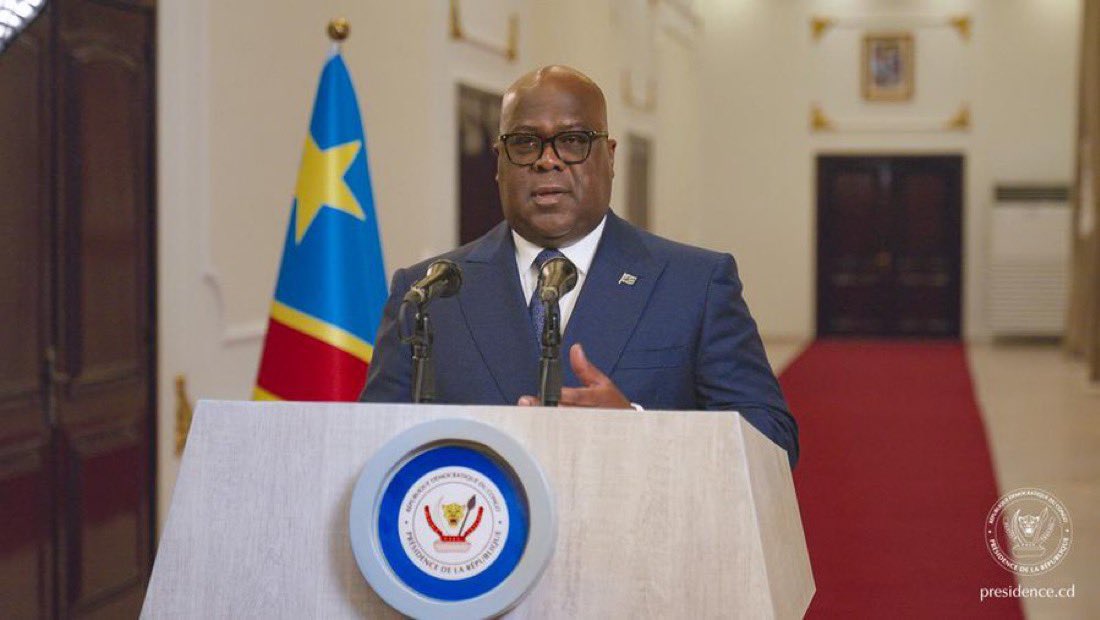

🚨 Le Président de la République a signé une Ordonnance portant Organisation et Fonctionnement du Comité d’organisation du Dialogue National pour la Paix, la Cohésion et la Refondation de l’Etat À suivre sur la @rtncofficielle1 dans l’édition de 13h30 https://t.co/4GOuI4awSk #DialogueNational #Paix #Cohésion


#ppg 1002 mk2 black limited edition of 3 https://www.liquidskyartistcollective.com/liquid-sky-d-vices--ppg/ppg-1002-mk2-black-ltd-edition-of-3

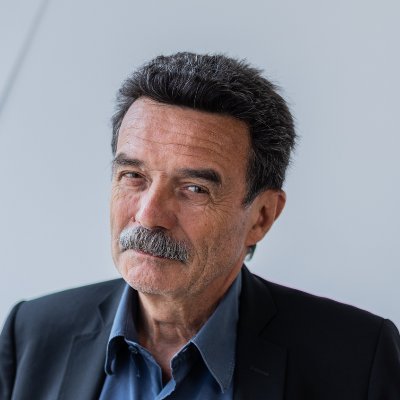
In the midst of the campaign against Vincent Bolloré's control over the publishing sector, LFI deputy Aurélien Taché (formerly LREM and formerly EELV) will publish his next book with Fayard, a publishing house that is at the heart of the far-right billionaire's strategy. (translated)
🚨 Le voisin, le commerçant, l'asso : les 3 piliers oubliés du lien social 📒 Étude Solitudes 2025 — Les liens de proximité : pivots de la sociabilité✍️ ✍️ Hadrien Riffaut (direction de la recherche, CERLIS), Séverine Dessajan (CERLIS), en collaboration avec Solen Berhuet et Sandra Hoibian (CRÉDOC) - Fondation de France — 15ᵉ édition de l'étude annuelle sur les solitudes Capsules Audio/Vidéo de Pratiques en Santé 🎙️🎥 https://www.youtube.com/watch?v=Kg8EFSitvS8 Analyse de Pratiques en Santé et lien vers la source ℹ️➕ https://www.pratiquesensante.com/blog/pratiques-15/etude-solitudes-2025-les-liens-de-proximite-pivots-de-la-sociabilite-6186 🔍💡 Lien social & territoires : quand la famille et les amis manquent, ce sont le voisinage, les commerces et les associations qui retiennent les personnes seules. L'étude Solitudes 2025 cartographie ces « liens de proximité » et pointe des leviers d'action concrets. 📌 Cette étude donne des repères concrets pour agir là où les grands réseaux (famille, amis, travail) se sont délités. Elle montre que le voisinage, les petits commerces et surtout les associations deviennent alors les vrais points d'appui du lien social — et que leur activation dépend fortement du territoire et de la mobilité. Elle outille une lecture fine des publics les plus exposés (précarité, ruralité enclavée, quartiers prioritaires, santé fragilisée) et propose des leviers directement transposables : repérage des fragilités, aller-vers, valorisation des voisins-relais, bascule de l'usager vers le bénévolat. 🇬🇧: Solitudes Study 2025 — Proximity Links: Pivots of Sociability - https://www.pratiquesensante.com/en/blog/practices-15/solitudes-study-2025-proximity-links-pivots-of-sociability-6186 #️⃣ #pratiquesensante #LienSocial #LutteContreIsolement #Solitude #SantéCommunautaire #AllerVers #Ruralité #Associations
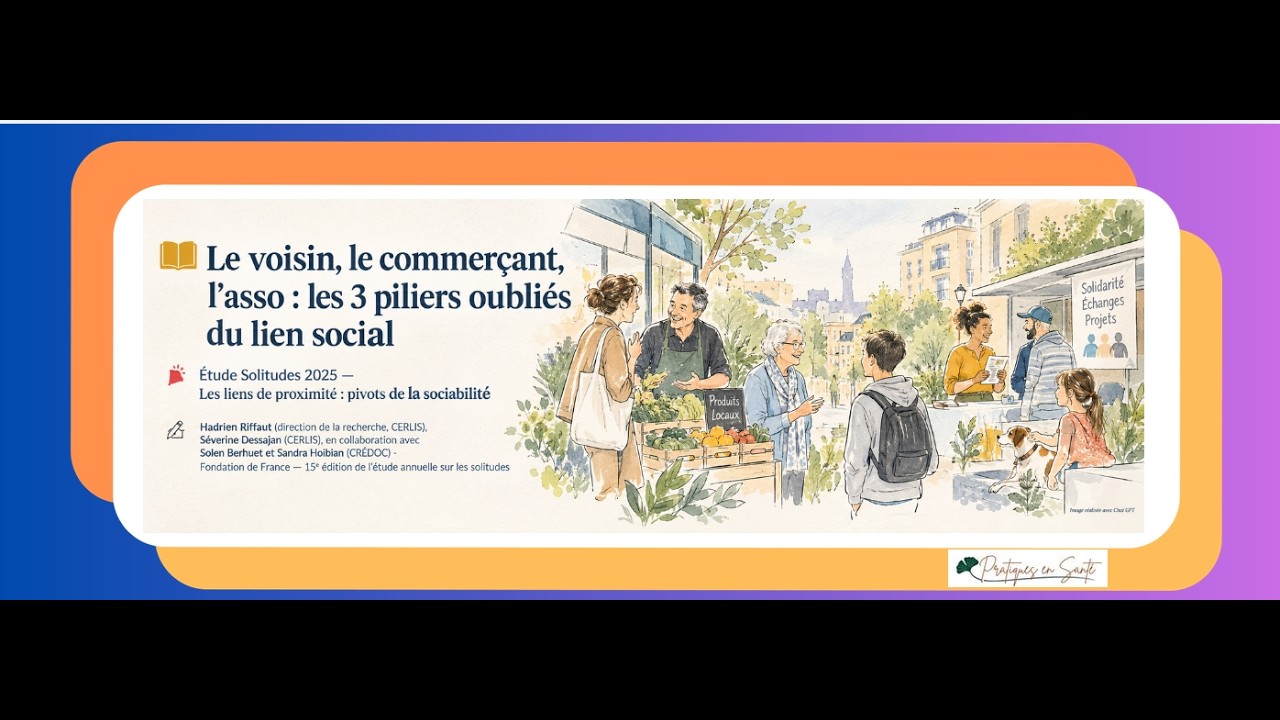
🚨 Le voisin, le commerçant, l'asso : les 3 piliers oubliés du lien social 📒 Étude Solitudes 2025 — Les liens de proximité : pivots de la sociabilité✍️ ✍️ Hadrien Riffaut (direction de la recherche, CERLIS), Séverine Dessajan (CERLIS), en collaboration avec Solen Berhuet et Sandra Hoibian (CRÉDOC) - Fondation de France — 15ᵉ édition de l'étude annuelle sur les solitudes Capsules Audio/Vidéo de Pratiques en Santé 🎙️🎥 https://www.youtube.com/watch?v=Kg8EFSitvS8 Analyse de Pratiques en Santé et lien vers la source ℹ️➕ https://www.pratiquesensante.com/blog/pratiques-15/etude-solitudes-2025-les-liens-de-proximite-pivots-de-la-sociabilite-6186 🔍💡 Lien social & territoires : quand la famille et les amis manquent, ce sont le voisinage, les commerces et les associations qui retiennent les personnes seules. L'étude Solitudes 2025 cartographie ces « liens de proximité » et pointe des leviers d'action concrets. 📌 Cette étude donne des repères concrets pour agir là où les grands réseaux (famille, amis, travail) se sont délités. Elle montre que le voisinage, les petits commerces et surtout les associations deviennent alors les vrais points d'appui du lien social — et que leur activation dépend fortement du territoire et de la mobilité. Elle outille une lecture fine des publics les plus exposés (précarité, ruralité enclavée, quartiers prioritaires, santé fragilisée) et propose des leviers directement transposables : repérage des fragilités, aller-vers, valorisation des voisins-relais, bascule de l'usager vers le bénévolat. 🇬🇧: Solitudes Study 2025 — Proximity Links: Pivots of Sociability - https://www.pratiquesensante.com/en/blog/practices-15/solitudes-study-2025-proximity-links-pivots-of-sociability-6186 #️⃣ #pratiquesensante #LienSocial #LutteContreIsolement #Solitude #SantéCommunautaire #AllerVers #Ruralité #Associations