WRLD

Search

#Algorithms
Paul Murphy 🇵🇸 Wrld summary 2d
Irish politician

The author questioned whether data centres provided “added value” to the energy system and said toxic social media algorithms were driving a mental health epidemic among young people, including rising anxiety, self-harm, eating disorders and online addiction. They added that Big Tech was being prioritised.


3340
Paul Murphy 🇵🇸 Wrld summary 4d
Irish politician

The author said they did not want electricity, gas and water used to run algorithms that they claimed exposed children to harmful material, displaced workers and undermined artists and creators, while increasing energy costs for everyone.

3377
Paul Murphy 🇵🇸 Wrld summary 4d
Irish politician

The author said demonstrators had made clear they opposed using electricity, gas and water to run algorithms that they believed exposed children to harmful material, took jobs from workers and undermined artists and creators.

3378
Alfons López Tena 🦇 Wrld summary 2w
Spanish politician and lawyer

The author wrote that the US election had sent a message to billionaire and trillionaire megadonors, including those who owned social media algorithms, cable news networks and politicians. They described the election as a referendum on those donors’ power. https://t.co/9EPapJVQcU #Election2023 #Billionaires #VoterPower #US

3449
Cristina Andersson Wrld summary 2w
Finnish expert in artificial intelligence and robotics

The author argued that the “rabbit hole effect” was primarily a behavioural governance issue rather than a content problem, saying engagement-driven algorithms could shape behaviour at scale. They said the central question was how platforms used what they knew about people to influence them.

3450
Scott Horton 2w

Why we need the billionaire's tax: With unlimited political spending and control of social media algorithms, the tech bros are exerting unprecedented influence on democratic processes

2303
Dangiuz Wrld summary 2w
visual artist

The author wrote that an algorithm rewarding content that shocks or impresses people into giving it another second of attention could make it harder for meaningful work to succeed. They said they might be wrong, but wanted their work to retain its meaning after the initial shock faded, regardless of whether its medium went out of fashion.

2768
Simon Nixon 4w

Elon Musk not only controls the satellite systems that the Ukrainian army - and other European armies - rely upon, he also controls the algorithms that govern a large swathe of the European information space. Europe needs to decouple from this clear and present threat to their security. My latest

nixons.substack.com
Musk’s Power Grab
2554
BBC Oct 14

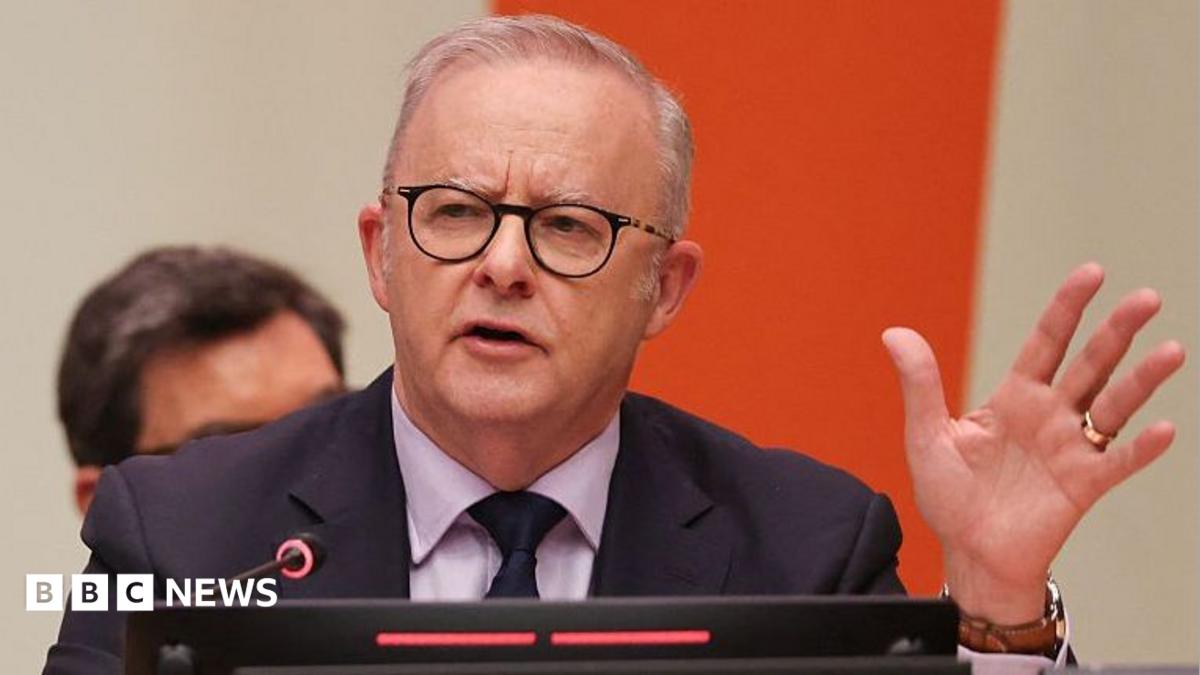
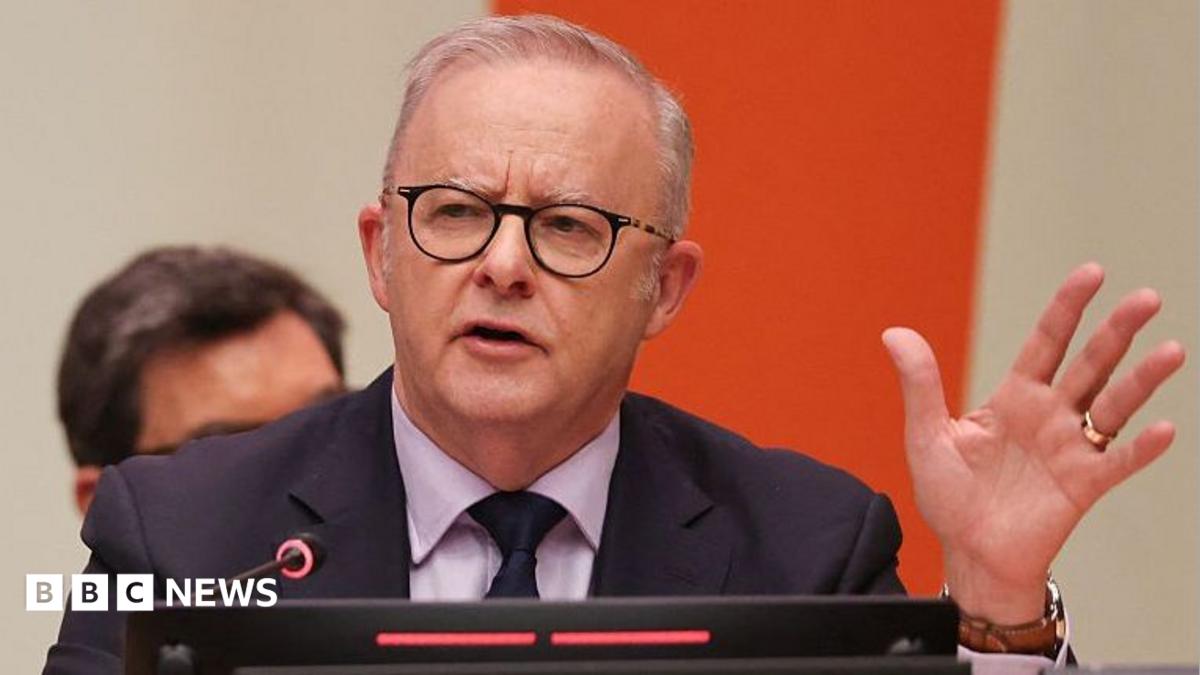
New legislation is being tabled in Australia's parliament today to force big tech to allow users to switch off algorithms which send them recommended content. #AlgorithmControl #TechRegulation #AustraliaLegislation

www.bbc.co.uk
What if you could turn off your algorithm? Australia is about to try
3623
Jürgen Schmidhuber Wrld summary Oct 3
German computer scientist and artificial intelligence researcher

The author wrote that I. J. Good had speculated in 1966 about an “intelligence explosion” driven by self-improving super-intelligences, but had not developed concrete RSI algorithms. By contrast, the author said their 1987 diploma thesis applied genetic programming to itself recursively.

235
BBC Sep 25

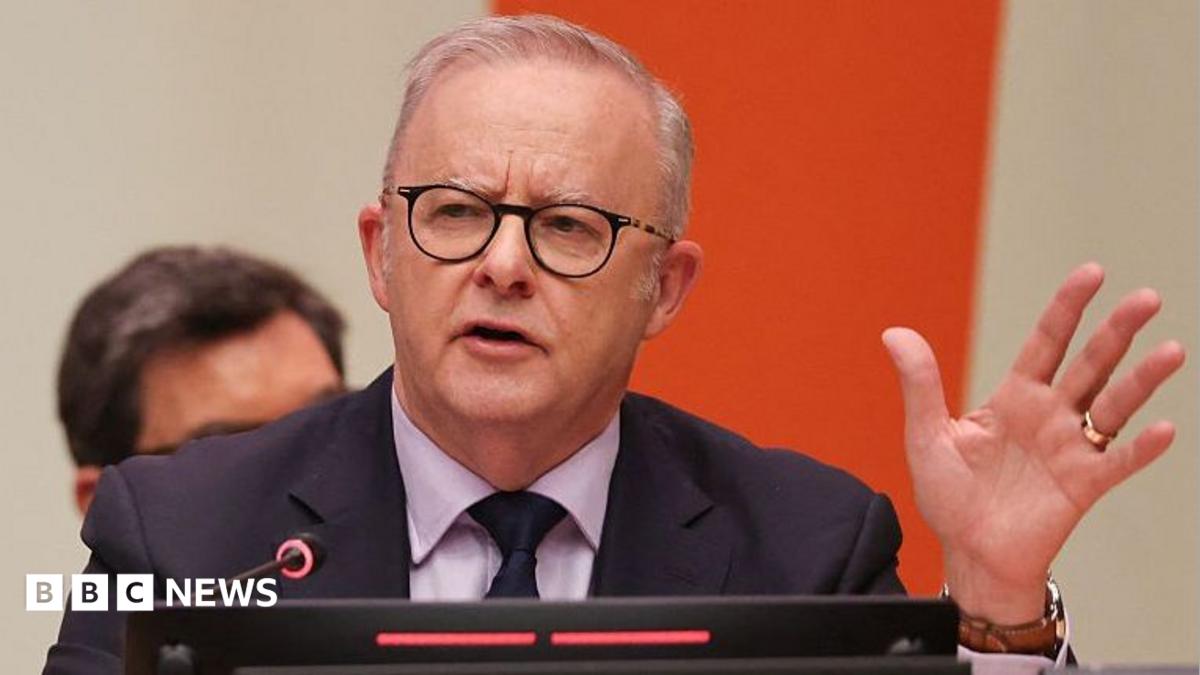
Australia, which has strict social media restrictions and has proposed controls on algorithms and smart glasses, announced the breach at the UN. #ArtificialIntelligence #DataBreaches #TechRegulation

www.bbc.co.uk
Why Australia chose the world's biggest political stage to reveal OpenAI hack
2118
BBC Sep 24

Australia, which has strict social media restrictions and has proposed controls on algorithms and smart glasses, announced the breach at the UN. #Australia #AI #DataBreach

www.bbc.co.uk
Why Australia chose the world's biggest political stage to reveal OpenAI hack
1766
BBC Sep 24

Australia, which has strict social media restrictions and has proposed controls on algorithms and smart glasses, announced the breach at the UN. #AIRegulation #DataBreach #AustraliaPolitics

www.bbc.co.uk
Why Australia chose the world's biggest political stage to reveal OpenAI hack
1766
Jürgen Schmidhuber Wrld summary Sep 24
German computer scientist and artificial intelligence researcher

It's infeasible to ban super intelligence. Compute continues to become 10 times cheaper every 5 years. Soon, millions of people will have entire frontier labs on their desktops, and run recursive self-improvement algorithms https://t.co/gN8fAAyDPm #Superintelligence #AI #TechRevolution #Nospecificcountrycodesarementionedinthetweet.

118
Jürgen Schmidhuber Wrld summary Sep 17
German computer scientist and artificial intelligence researcher

Already in 1966, I. J. Good speculated about an "intelligence explosion" through self-improving "super-intelligences" [GOOD]. But Good did not have any concrete RSI algorithms. My 1987 diploma thesis [META1], however, applied "genetic programming" (GP) to itself, to recursively #IntelligenceExplosion #GeneticProgramming #Superintelligence #Nospecificcountrycodesarementionedinthetweet.

118
Jürgen Schmidhuber Wrld summary Sep 17
German computer scientist and artificial intelligence researcher

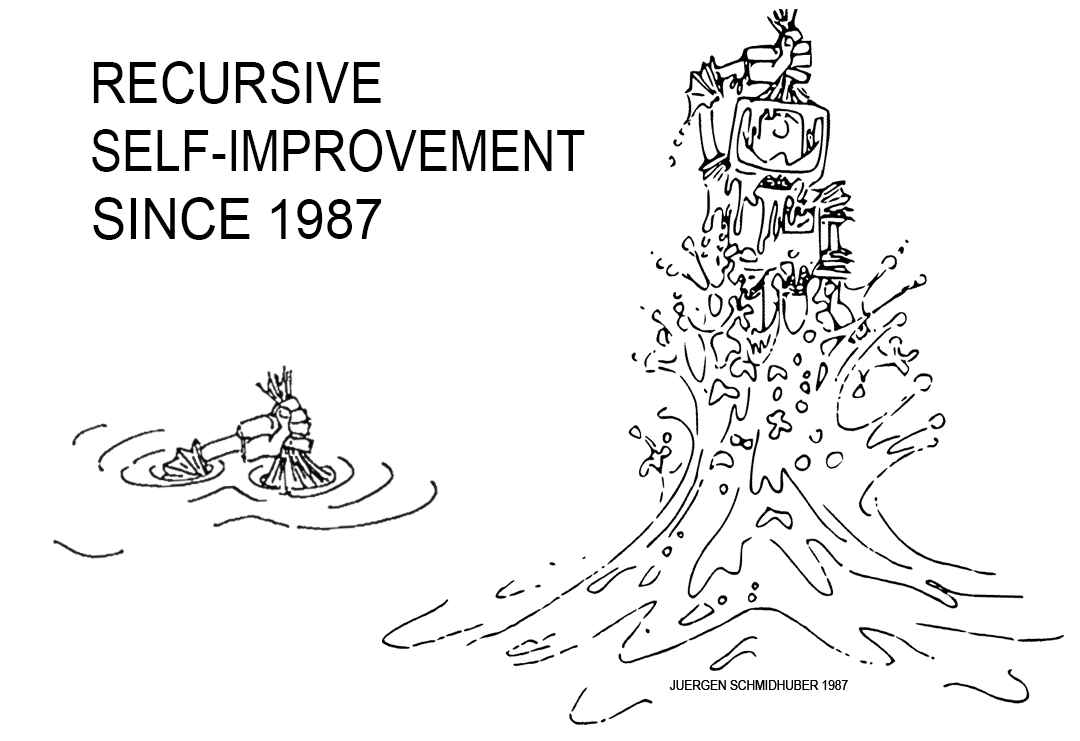
Today everyone is talking about Recursive Self-Improvement (RSI). In 1987, when compute was 100,000,000 x more expensive, I published the 1st concrete RSI algorithms. Now compute is cheap, and RSI is driving the future of both software and physical AI. See: RSI since 1987 https://t.co/by3gFD73jA #RecursiveSelfImprovement #AI #SoftwareDevelopment #Thetweetdoesnotmentionanyspecificcountries.Therefore #theresponseis:

1062
Jürgen Schmidhuber Wrld summary Sep 13
German computer scientist and artificial intelligence researcher

Concrete algorithms for recursive self-improvement (RSI) date back to 1987. 1992-: gradient descent-based neural RSI. 1994-: RSI for reinforcement learning with self-modifying policies. 1997: RSI plus artificial curiosity and intrinsic motivation. 2002-: asymptotically optimal #ArtificialIntelligence #MachineLearning #ReinforcementLearning #Nocountrycodesarepresentinthetweet.

236
S
Sandfeen Sep 12

When Emotion Takes the Reins A remarkable study published in Proceedings of the National Academy of Sciencesexamined millions of books covering almost 170 years and tracked language associated with rationality—facts, conclusions, analysis and determination—against language associated with sentiment—feeling, belief and emotion. The pattern was striking. From roughly 1850 to 1980, rationality-related language steadily increased while sentiment-related language declined. Then the trend reversed. By around 2007, sentiment-related language had overtaken rationality-related language and continued rising (Scheffer et al., 2021). This does not prove that people have become less rational, nor does the study establish a single cause. But it raises an important question: what happens when trust in the institutions associated with knowledge and expertise begins to collapse? If people believe governments, experts, universities and media are corrupt or captured, “look at the data” can sound less like an appeal to reason and more like an appeal to authority. And when institutional trust declines, emotion becomes politically powerful. Anger supplies an enemy. Fear supplies urgency. Hope supplies a future. Identity supplies belonging. Could this help explain why socialism and even communism have regained some appeal among young people despite the historical record? The study cannot establish that causal link. But it is a plausible hypothesis: when politics becomes increasingly emotional, an ideology can be judged by what it promises rather than by what it has historically produced. Benjamin Franklin captured the necessary balance: “If passion drives, let reason hold the reins.” Passion is not the enemy. It is the engine of human action. The danger comes when we surrender the steering wheel. Today, algorithms, political campaigns and media incentives are exceptionally good at exploiting emotion. Outrage spreads faster than nuance. A soundbite can provoke a reaction before we have checked whether it is true.

354
Ursula von der Leyen Wrld summary Sep 10
President of the European Commission since 2019

We do not have to accept childhoods shaped by algorithms. We do not have to accept a system that fails our children. Europe has the power to act. To give children the time they need in the real world. I will detail our proposal in my upcoming State of the Union address. https://t.co/IvP2RJ3TkG #ProtectOurChildren #DigitalWellbeing #StateOfTheUnion #EU

6144
S
Sandfeen Sep 8

When Emotion Takes the Reins A remarkable study published in Proceedings of the National Academy of Sciencesexamined millions of books covering almost 170 years and tracked language associated with rationality—facts, conclusions, analysis and determination—against language associated with sentiment—feeling, belief and emotion. The pattern was striking. From roughly 1850 to 1980, rationality-related language steadily increased while sentiment-related language declined. Then the trend reversed. By around 2007, sentiment-related language had overtaken rationality-related language and continued rising (Scheffer et al., 2021). This does not prove that people have become less rational, nor does the study establish a single cause. But it raises an important question: what happens when trust in the institutions associated with knowledge and expertise begins to collapse? If people believe governments, experts, universities and media are corrupt or captured, “look at the data” can sound less like an appeal to reason and more like an appeal to authority. And when institutional trust declines, emotion becomes politically powerful. Anger supplies an enemy. Fear supplies urgency. Hope supplies a future. Identity supplies belonging. Could this help explain why socialism and even communism have regained some appeal among young people despite the historical record? The study cannot establish that causal link. But it is a plausible hypothesis: when politics becomes increasingly emotional, an ideology can be judged by what it promises rather than by what it has historically produced. Benjamin Franklin captured the necessary balance: “If passion drives, let reason hold the reins.” Passion is not the enemy. It is the engine of human action. The danger comes when we surrender the steering wheel. Today, algorithms, political campaigns and media incentives are exceptionally good at exploiting emotion. Outrage spreads faster than nuance. A soundbite can provoke a reaction before we have checked whether it is true. Reference: Scheffer, M., van de Leemput, I., Weinans, E., & Bollen, J. (2021). The rise and fall of rationality in language. PNAS, 118(51), e2107848118. https://doi.org/10.1073/pnas.2107848118

355