WRLD

Search

#Bucurie
Luca Niculescu 19h
Romanian journalist and diplomat

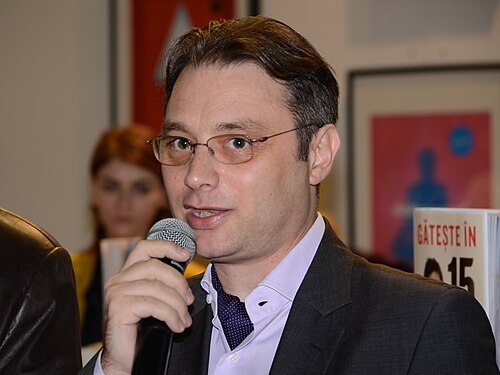
Niculescu described the initiative as the first concrete step towards the administrative reform of the country, after 35 years, stating that the reorganization must allow for the provision of better public services at lower costs, without affecting the traditions, identity, and history of local communities. #ReformaAdministrativă #GuvernareRomână #BucurieLocală (translated)

Luca Niculescu, bilanț la o lună de guvernare. Reforma administrației începe cu localitățile sub 1.500 de locuitori
stirileprotv.ro
2466
edyrosen edyrosen 3d

With grace around the neck Political scientist Vladimir Tismaneanu has recently pinpointed one of the most subtle wounds of the unconscious, inflicted by communist totalitarianism; parasitic neuro-affective imprinting. Mental leveling through psychological conditioning techniques based on suggestion and neurolinguistic programming, through hymns, wooden language, and anchor symbols. The wound lies in the fact that, after decades of carrying it, the mask of a False Self has become entrenched in the flesh and can no longer be torn away without suffering. We are talking about a diversion of attachment, through post-hypnotic graft — a subtle trauma in which the very vitality and biological candor of the child have been turned against themselves, becoming the adhesive of their own captivity. In the terms of Richard Bandler and Robert Dilts, when an emotional anchor (the love for the Dictator, the Party, ideology) is installed at a time of maximum neuroplasticity, amidst a spike of cortisol and dopamine, it is no longer a simple reflex, but an identity imprint. The external symbol fuses with the chemistry of the joy of existence. Gregory Bateson (the mentor from whom R. Bandler and the studies on M. Erickson departed) explains why this wound hurts in adulthood: the conscious mind of the adult understands the ideological falsehood, but the body retains the post-hypnotic suggestion implanted through song and ritual. Reason sees the prison, but the limbic system still flinches warmly at the sound of the horn. It is a somatic double bind, favored by source amnesia. This is the classic hypnotic phenomenon in which the subject retains the emotion or conviction implanted during trance, but forgets it was induced from outside. This explains why many adults today sincerely defend their conditioned reflexes from communism, believing they are defending their own "happy childhood." If Aldous Huxley had had the curiosity — at least as a political entomology exercise — to visit a schoolyard in Romania in the 1980s, on a chilly autumn morning with fuzzy loudspeakers, he would likely have experienced a mixed feeling of authorial pride and slight humiliation. The pride of seeing his fiction in "Brave New World" confirmed on an industrial scale; the humiliation of realizing that his British imagination had, in fact, been too dull, erring on the side of politeness! For where Huxley imagined sterile laboratories of hypnopaedia, in which the axioms of social conformity were dripped beneath children's pillows during REM sleep, totalitarian pedagogy had succeeded in inducing the same hypnotic sleep in broad daylight, with eyes wide open, using only a triangular piece of red acetate, a transparent plastic ring, and a horn. If we look at things a little detached and without rosy nostalgia, we are faced with an astonishing early confiscation engineering. Totalitarianism quickly understood a truth that theology has known for millennia, and neuroscience has only recently begun to measure: whoever reaches the child’s synaptic architecture first no longer needs too many guards later on. The phenomenon did not arise from nothing, nor even from Lenin's imagination. Its historically documented archetype dates back to the 7th century B.C., in the Spartan Agoge — the first state system that decreed that a child does not belong to the family but to the city, taking them away at the age of seven to dissolve their private loyalty into a collective military pack reflex. However, modernity added a tragic irony to this ancient brutality. In 1907, British Lord Robert Baden-Powell invented scouting — a pedagogical system designed to cultivate autonomy, individual honor, and resourcefulness in nature. But the totalitarian regimes of the 20th century looked at the uniform, the badge, the salute, and the scout oath and had an instrumental revelation: the form was brilliant, it just needed to be emptied of freedom and filled with ideology. Thus, through reverse engineering, the Bolshevik Komsomol (1918) emerged, and in 1922, the Pioneer Organization in the USSR, designed by Nadezhda Krupskaia and Soviet ideologists — explicitly built on the confiscated skeleton of scouting. Mussolini immediately adopted the recipe in 1926 through Opera Nazionale Balilla, which even enlisted six-year-old children in Figli della Lupa — Sons of the She-Wolf… followed by the Nazi Hitlerjugend, where the mystique of the campfire was converted into an SS nursery. When the regime in Bucharest established the Pioneers in 1949, it unified the youth in UTC and, ultimately, through Nicolae Ceaușescu's decree in 1976, created the Falcons of the Fatherland for preschoolers aged four to seven, the assembly line had become airtight. The state no longer waited for the young person to gain discernment to convince them; it occupied their imagination before they even knew how to tie their shoelaces. Richard Bandler best explains how an anchor is established in the nervous system. In neurolinguistic programming (NLP), the ideological mystery evaporates and a disarmingly simple technical recipe remains. Today Bandler would tell us directly, without mincing words: "Stop asking why children believed in those nonsense. They didn’t believe in ideas; they responded to conditioned anchors!” How does emotional anchoring work in NLP? You take an intense physiological state — it doesn't matter if it's artificially produced — and, right at its peak, when the child's brain is swimming in dopamine, adrenaline, and cortisol, you attach a unique visual, auditory, and kinesthetic stimulus to it. Let’s remember how "the initiation into the Pioneers" was done. Not the whole class received the scarf at once. There was a learned economy of prestigious scarcity: the "first batch" was reserved for the top students, taken to a monumental setting — at the Mausoleum, at the museum, on a sunlit platform — while the rest remained in their seats, consumed by mimetic anxiety. For a seven or eight-year-old child, the horror of being excluded from the tribe and the euphoria of being chosen among "the good" represent a neurochemical tsunami. Right at the crest of this emotional wave, when the nervous system is wide open, the ritual intervenes: the adult's hand ties the red scarf around their neck (kinesthetic anchor at the larynx and plexus), the trumpet splits the air (auditory anchor), the hand rises to the forehead at a precise angle with three fingers fused (proprioceptive anchor), and the mouth utters the motto: “For the glory of the people and the flourishing of socialist Romania, forward!” From that moment, Bandler explains, the Pavlovian circuit is myelinated. The child's nervous system has fused the biological need for love and validation with the symbols of the Party. You no longer need to explain dialectical materialism; it is enough to show them the emblem or sound the horn, and their body will automatically deliver the thrill of solemn submission. Ideology did not enter through the front door of the intellect, but through the back window of the conditioned reflex. Milton Erickson explains what is up with "wooden language" hypnosis. Why did the texts of pioneers and youth organizations sound like a wooden incantation, filled with gerunds and abstract nouns? Wooden language was not a mere stylistic incompetence of the activists but an induction device for trance. Erickson demonstrated that the conscious mind can be bypassed through a few precise linguistic techniques: nominalization (turning active verbs into frozen nouns), presupposition, and cognitive oversaturation. When a student would utter phrases such as "full commitment to the construction of multi-laterally developed socialist society" or "unequivocal fulfillment of outlined tasks" during a UTC meeting, their brain would futilely attempt to sensorily represent what "unequivocal construction" meant. Failing to find a concrete reference in the real world, the analytical cortex would enter a micro-trance of semantic fatigue. Moreover, the mottos worked through what Erickson and linguists call presupposition frames. When the Falcon of the Fatherland said, "I am preparing to become a pioneer," and the pioneer swore to be ready for UTC, the fundamental question — "Do I want to be part of this machinery?" — was already grammatically abolished. The future was conjugated in the indicative mood, as a completed fact. Furthermore, wooden language practiced a systematic erasure of the human agent: things “were built,” the homeland “flourished,” history “advanced.” The individual was no longer the author of their own actions but a mere verb in the passive voice, in the phrase spoken by the Party and the tireless Leader. The acoustic Trojan horse; why does sung suggestion disable critical spirit? Why was there so much singing in communism? Why was every level — from kindergarten to artistic brigades in universities and to mammoth literary circles — soaked in marches, hymns, and bright refrains ("We in the year 2000, when we will no longer be children," "Three colors," "E-he-hei, dear comrade")? The answer lies in a structural vulnerability of the human brain. If you tell a person a lie in prose — for example, that they live in the happiest of worlds while waiting in line for chicken wings — their critical apparatus (housed in the dorsolateral prefrontal cortex, the seat of doubt and reality checking) immediately wakes up and formulates an internal counter-argument. But if you put the exact same lie to a major melody, in a 4/4 march or in an uplifting choral harmony, and have them sing it themselves, the critical sentinel is disarmed. The mechanism is double: neurologically and physiologically. Neurologically, melody and rhythm are massively processed in the right hemisphere and in the limbic system, the seat of pure emotion, while the ideological text travels clandestinely, like a stowaway, hidden in the hold of aesthetic emotion. The brain cannot reject the verse without also rejecting the pleasure of musical harmony; and since the human being longs for consonance, they accept the whole package. Physiologically, singing in chorus is an ancient technique of vagal synchronization: two hundred children singing the same refrain are forced to inhale at the same second, exhale in the same rhythm, and align their heartbeats. And when your diaphragm works in unison with that of the platoon to hold the high note on the word "Party," your critical ego has already dissolved into the acoustics of the mass. You cannot polemicize with a phrase that your own vocal cords are transforming into harmonic vibration. However, if we rise from Bandler's Pavlovian mechanics to the metaphysical diagnosis, the picture takes on the contours of an anthropological tragedy that Søren Kierkegaard prophesied as early as the mid-19th century, before the first pioneer was born. For Kierkegaard, the entire stake of human life is the passage from the aesthetic stage (of immediate sensation and squandering) to the ethical and, finally, to the religious, through the birth of the singular Individual (Den Enkelte) — the man who stands alone before their own conscience and before God. Therefore, Kierkegaard's warning falls like lightning over any collectivist utopia: "The crowd is the untruth" (Mængden er Usandheden). The crowd, says the Danish philosopher, is the place where responsibility evaporates through fraction: no one is guilty because everyone sings at the same time; no one chooses because the detachment has already voted unanimously. Communist youth organizations were, in Kierkegaardian terms, a gigantic prophylactic machine against anxiety and fertile solitude. They served to prevent the young person from ever being alone with themselves. They offered a simulacrum of the ethical stage — "duty" to the collective, "honor" of being a member — precisely to atrophy the organ of genuine conscience. Sin was no longer a moral fall before the Truth, but the stridency of not being in line, of singing off-key in the angelic chorus of the brigade. In the extension of Kierkegaard, Karl Jaspers — who in The Spiritual Situation of Our Time (1931) and in his famous essay on German guilt x-rayed the anatomy of totalitarian regimes — offers us the key to understanding this training. Jaspers makes the vital distinction between simple empirical being, framed in apparatus (Dasein), and Authentic Existence (Existenz), which awakens only in limit situations (Grenzsituationen): suffering, struggle, guilt, death, radical doubt. What did the Falcons of the Fatherland, the Pioneers, and the UTC do? They confiscated the biological thresholds of transition — the exit from childhood, puberty, adolescence — and replaced them with bureaucratic limit situations: receiving the scarf, exclusion in front of the square, self-criticism in meetings. Instead of allowing adolescents to discover transcendence through inner turmoil, the regime delivered them a cardboard, horizontal transcendence, where the Absolute had the retouched face of the General Secretary. More seriously, as Jaspers would observe, this pedagogy produced an early ontological complicity: by having the five-year-old recite homage poems and the fourteen-year-old raise their hand in meetings of denouncement, the system sickened them with a diffuse "moral guilt" before they had even reached the age of discernment. When you have applauded and sung since kindergarten, later rebellion demands not only civic courage but a painful amputation of your own affective memory. An epilogue for the "recent man"... Here, the circle closes between Aldous Huxley and our former youth with a red scarf. The drama is not that we were lied to; raw lies leave the spirit intact and provoke resistance. The drama is that the training used the noblest resources of childhood against the child itself: the need for beauty, the joy of singing together, the desire to be good, the thirst for ritual and meaning. And if today we no longer wear commander's cords over our shoulders, it doesn't mean that Huxley's hypnopaedia has gone dormant. It has simply been privatized. The pioneer horn has shifted to the algorithmic notification of the phone, the school square has become the instant validation flow of social networks, and the song that lulls the critical instance is no longer a patriotic march but an infinite loop of visual dopamine. The technique, however, remains unchanged from Sparta to the present: whoever succeeds in linking your need for belonging to an external symbol and putting your thinking to a pleasant melody no longer needs to lock you up in any prison — you will carry your own grace around your neck, convinced it is an ornament... Psychotherapy and psychoeducation, as well as the strengthening of political culture, are viable solutions for deconditioning and healing. Eduard Rosentzveig (translated)

448
Roberta Metsola Wrld summary 3d
President of the European Parliament since 2022 (born 1979)

Twenty years ago, on December 31, 2006, tens of thousands of people gathered in the central squares of your cities. When the clock struck midnight, University Square in Bucharest erupted in cheers as people of all ages waved European flags to the tunes of the Ode to Joy. In Sofia, in Battenberg Square, the European anthem also echoed just before the clock struck midnight (...) There was something in the air that night. Hope. Relief. Excitement. A sense of belonging. A headline from a newspaper perfectly summed up what happened the next day, stating: 'We have arrived home,' Metsola said in a speech at the event in the European Parliament. #Romania #Bulgaria #UniuneaEuropeana (translated)

3475
Ilie Bolojan 6d

Ilie Bolojan, first reaction after his daughter Lucia Maria's wedding: "For me, it's a day of great joy." #Hamas #Israel #conflict (translated)

2717
Ilie Bolojan 6d

Ilie Bolojan, the first reaction after his daughter, Lucia Maria's wedding: "For me, it is a day of great joy." #alertădronă #avioaneF16 #ROAlert (translated)

2720
Stirile ProTV 2w

Democrats gained control of both chambers of the U.S. Congress in the U.S. elections, generating immense joy among voters and predicting difficulties for President Donald Trump in his last two years in office. #AlegeriSUA #Democrați #TsumaniAlbastru (translated)

stirileprotv.ro
„Tsumani albastru” în SUA. Imagini cu bucuria de la americani, după ce democrații au câștigat majoritatea în Congres
3458
Digi24 Oct 11

The joyful reactions from the Kremlin to Donald Trump's statements, in which he called Ukrainian President Zelensky "hysterical" and suggested choosing another leader in Ukraine to allow peace negotiations with Russia, were accompanied by stinging comments from Russian officials regarding the state of Ukrainian politics. #Trump #Ucraina #Rusia (translated)

www.digi24.ro
Reacții de bucurie de la Kremlin după declarația lui Trump: „Zelenski este isteric” / „Șobolanii vor înnebuni şi se vor ataca între ei”
2809
Sandu Negrea Wrld summary Sep 29

Bunul Dumnezeu să-l întărească pe Călin Georgescu, ca să treacă peste această situație și să iasă cu viață de acolo. Sistemul nu mai are nicio soluție pentru a șterge imaginea lui Călin Georgescu din mentalul colectiv. Sunt disperați, pur și simplu, și recurg la toate măsurile posibile. De aceea au inventat această poveste și au încercat să o traducă în diferite moduri, să o interpreteze după bunul plac, doar ca să reușească să-l agațe cumva și să spună: „Uite, justiția își face datoria.” Asta pentru că nu aveau absolut nicio dovadă și nu sunt capabili să ofere un raport despre anularea alegerilor. Ei știu că au comis cea mai mare crimă împotriva democrației din țara asta și de aceea vin cu aceste măsuri de origine bolșevică. Istoria se repetă. Am mai avut în țară acest scenariu când s-a instaurat regimul comunist. În 1989, s-a repetat scenariul, când anumite forțe externe au vrut să pună mâna pe România. Atunci a fost un alt moment greu pentru acest popor. Iar acum, când trebuia să vină schimbarea, sistemul revine cu aceleași tactici. Unii aplaudă din plin toată această uriașă măgărie. Aplaudă și râd într-un stil demonic, urlă de bucurie, dar uită un lucru: sistemul uneori își devorează propriii copii. Asta nu înțeleg acești demenți. Mâine s-ar putea să aibă aceeași soartă și să se întrebe: „Oare de ce? Cu ce am greșit?” Așa e când nu gândești și ai o minte închisă, dar te crezi deștept pentru că ești om cu diplomă, cu carte, și crezi că știi ce e bine. La asta s-a ajuns, pentru că nu mai au cum să acopere mizeria pe care au făcut-o în decembrie 2024. Pur și simplu, trebuie să-l elimine cu totul pe Călin Georgescu din viața românilor. Simpatia poporului față de el este mult prea mare. Nu s-a mai întâlnit așa ceva după 1989 și, pentru ei, reprezintă un pericol la viitoarele alegeri și pentru orice se mișcă în țara asta. Dar sunt momente grele. Unii probabil nu o să-și mai găsească vorbele pentru a se exprima. Așa se întâmplă când o țară este capturată de un sistem mafiot. Și știm cu toții foarte bine de unde este controlat și pentru cine fac toate aceste jocuri: doar pentru a le oferi unora liniștea necesară în cadrul Uniunii. Ne așteaptă vremuri din ce în ce mai grele. Important este să ne păstrăm credința în Bunul Dumnezeu și luciditatea și să învățăm din trecut. După cum am spus, aceste lucruri s-au mai întâmplat. Iar cei care au rezistat regimului comunist ne-au învățat cum să rezistăm și noi și să depășim momentele grele care pun la încercare națiunea și poporul român. Ion Motea #CălinGeorgescu #demnitate #România

12341
Stirile ProTV Sep 13

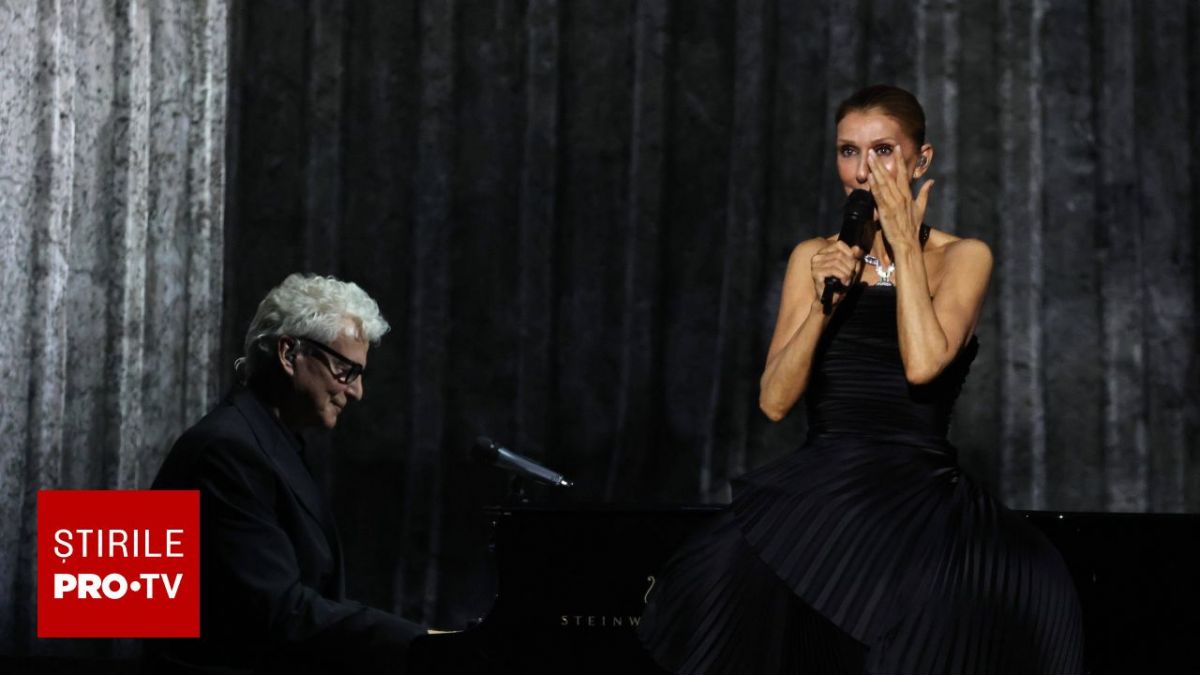
Céline Dion a revenit pe scenă după șase ani de absență, emoționând 30.000 de spectatori la deschiderea turneului său de concerte din apropiere de Paris, unde a interpretat 27 de melodii și a izbucnit în lacrimi de bucurie. #CelineDion #concert #revenire

stirileprotv.ro
Céline Dion a revenit pe scenă după șase ani de absență. Artista a izbucnit în lacrimi în fața a 30.000 de spectatori. VIDEO
19483
Fundación Leo Messi Wrld summary Aug 31
Argentine association football player (born 1987)

„După tot acest timp care a trecut de la finală și după mult timp de gândire, vreau să anunț pe toată lumea că mă retrag de la echipa națională… A fost o decizie care m-a durut, și încă mă doare, în adâncul sufletului, dar înțeleg că este momentul potrivit. Jur că am dat mereu totul, nu doar în ultimii ani când am câștigat totul, ci și înainte de asta. Am luptat mereu și am dat totul pentru acest tricou, pentru a vă aduce bucurie și a vă face mândri prin fotbal că sunteți argentinieni. Nu mai este mult timp, iar capitolele se încheie, iar acesta este unul care mă doare profund. Iubesc, am iubit și voi iubi mereu să fiu în echipa națională. Am dat tot ce am avut, nu mai am nimic de oferit și, în plus, sunt niște jucători tineri grozavi care vin din spatele meu și care merită să fie acolo. Vă mulțumesc pentru toată dragostea și sprijinul din acești 20 de ani. Îmi va fi dor să vă aud pe toți. Acum voi fi doar unul dintre voi, încurajându-vă și susținându-vă de pe margine, la bine și la rău, chiar mai mult. „Mulțumesc, Doamne, că m-ai făcut argentinian!” Mulțumesc familiei mele pentru că a fost mereu acolo, pentru că m-a însoțit în această călătorie frumoasă, dar dificilă. Mulțumesc fiecărui antrenor, coechipier și manager cu care am avut plăcerea să împărtășesc această experiență. Iau cu mine amintiri și momente de neuitat. Plec cu liniștea sufletească și mândria că v-am oferit, împreună cu coechipierii mei, niște momente cu adevărat de vis. A fost incredibil să împărtășesc asta cu voi toți. Vă iubesc! Mulțumesc, Doamne, că m-ai făcut argentinian. Hai, Argentina! Am scris aceste cuvinte pe 21 iulie, la două zile după finală. Astăzi (n.r. 31 august), după ce s-a întâmplat cu tatăl meu, sunt și mai convins decât înainte!”

Adio, Argentina! Lionel Messi și-a anunțat retragerea de la echipa națională
adevarul.ro
18946
Fundación Leo Messi Wrld summary Aug 31
Argentine association football player (born 1987)

"După tot acest timp care a trecut de la finală și după multă gândire, vreau să vă anunț pe toți că mă retrag din Echipa Națională... A fost o decizie care m-a durut și încă mă doare, din adâncul sufletului, dar înțeleg că este momentul potrivit. Jur că am dat mereu totul, nu doar în ultimii ani când am câștigat totul, ci și înainte de asta. Am luptat și am dat mereu totul pentru acest tricou, pentru a vă aduce bucurie și a vă face mândri că sunteți argentinieni prin fotbal. Nu mai este mult timp, iar capitolele se încheie, iar acesta este unul care mă doare profund. Iubesc, am iubit și voi iubi mereu să fiu în echipa națională. Am dat tot ce am. Nu mai am nimic de oferit și, în plus, sunt niște jucători tineri grozavi care vin în spatele meu și care merită să fie acolo. Vă mulțumesc pentru toată dragostea și sprijinul din acești 20 de ani. Îmi va fi atât de dor să vă aud pe toți din interior. Acum voi fi doar unul dintre voi, încurajându-vă și susținându-vă de pe margine la bine și la rău. Mulțumesc familiei mele pentru că a fost mereu alături de mine, pentru că m-a însoțit în această călătorie frumoasă, dar dificilă. Recomandări Video Liderii PSD, decizii importante la Sinaia. Social-democrații au votat să își ... Moment emoționant pe un stadion din Botoșani. Un fotbalist și-a cerut iubita în ... Sertarele „cu de toate”, prezente în 68% dintre gospodării. Cum și-a ... Mulțumesc fiecăruia dintre antrenorii, coechipierii și managerii cu care am avut privilegiul să lucrez. Iau cu mine amintiri și momente de neuitat. Plec cu pacea și mândria de a vă fi oferit, împreună cu coechipierii mei, momente de vis. A fost incredibil să trăiesc asta alături de voi toți. Vă iubesc! Mulțumesc, Doamne, că m-ai făcut argentinian. Hai, Argentina! *Am scris aceste cuvinte pe 21 iulie, la două zile după finală. Astăzi, după ce s-a întâmplat cu tatăl meu, sunt și mai convins decât înainte"

Lionel Messi se retrage de la naționala Argentinei. Anunțul care cutremură lumea fotbalului
stirileprotv.ro
18947
adevarul.ro Aug 17

Actrița Hayden Panettiere, cunoscută pentru rolurile sale din serialele „Heroes” și „Nashville”, a murit la 36 de ani, iar tatăl ei a descris-o ca fiind o „lumină incredibilă” care a adus bucurie celor din jur, în timp ce circumstanțele morții sale rămân neclare. #HaydenPanettiere #Heroes #Nashville

adevarul.ro
A murit actrița Hayden Panettiere, fosta parteneră a boxerului Wladimir Klitschko. Avea 36 de ani
14843
HotNews.ro Aug 17

Actrița Hayden Panettiere, cunoscută din serialele „Nashville” și „Heroes”, a murit la vârsta de 36 de ani, anunțul fiind făcut de reprezentantul ei, iar tatăl său a descris-o ca o „lumină incredibilă” care a adus bucurie celor din jur. #HaydenPanettiere #moarte #actualitate

hotnews.ro
Hayden Panettiere, actrița din „Nashville” și „Heroes”, a murit la vârsta de 36 de ani
10093
Nicușor Dan Wrld summary Aug 15

În ziua Adormirii Maicii Domnului, vǎ urez liniște sufleteascǎ și bucurie alături de cei dragi. Celor care își sărbătoresc astăzi ziua numelui, La mulți ani, sănătate și împliniri. Celebrăm astăzi si Ziua Marinei. Dintotdeauna, cei care au plecat pe mare au dus cu ei, alături de curaj, și credința în întoarcerea cu bine acasă. În ultimii ani, Marea Neagră a devenit o zonă crucială pentru securitatea Europei și locul din care începe una dintre cele mai importante responsabilități ale noastre față de securitatea europeană. Un spațiu în care România își afirmă interesele strategice și își proiectează viitorul. Totodată, Marea Neagră înseamnă și comerț, energie, conectivitate. Portul Constanța, Dunărea, industria navală, resursele energetice alcătuiesc împreună una dintre cele mai importante oportunități strategice pe care România le-a avut în ultimele decenii. Avem nevoie, așadar, de viziune și consecvență pentru a transforma regiunea Mării Negre într-unul dintre principalele motoare ale dezvoltării țării noastre. În această zi de sărbătoare, le mulțumesc tuturor marinarilor militari și civili. Și-au ales o profesie care cere disciplină, competență și curaj. Marea nu face niciodată concesii, iar cei care o cunosc învață că încrederea se câștigă prin pregătire, solidaritate și respect pentru colegi și pentru misiune. Aceste valori care definesc Marina Română de generații sunt un reper pentru întreaga noastră societate. #AdormireaMaiciiDomnului #ZiuaMarinei #MareaNeagră

11878
Jonas Gahr Støre Wrld summary Jul 22
Prime Minister of Norway since 2021

Tufte a oferit ţării noastre nenumărate momente de bucurie sportivă. A fost unul dintre cei mai mari eroi sportivi ai Norvegiei, un olimpic decorat de nenumărate ori, unul dintre cei mai buni canotori pe care i-am cunoscut vreodată şi un model pentru mulţi. Transmit cele mai sincere condoleanţe familiei şi celor apropiaţi ai săi

Un mare campion al canotajului, Olaf Tufte, a fost găsit mort la ferma sa
adevarul.ro
10133
adevarul.ro Jul 21

În Madrid, aproximativ două milioane de oameni au celebrat întoarcerea naționalei spaniole după câștigarea Cupei Mondiale din 2026, adunându-se pe străzile capitalei pentru a salută echipa campioană și a trăi momente de bucurie și unitate. #Spania #CupaMondială #Madrid

adevarul.ro
Mare roșie în Madrid. Două milioane de oameni au sărbătorit titlul mondial al Spaniei
17289
HotNews.ro Jul 20

Oficialii iranieni au salutat victoria Spaniei la Cupa Mondială, considerând-o o sursă de bucurie pentru cei care se opun Israelului și Statelor Unite, și au apreciat poziția jucătorilor spanioli față de conflictul din Gaza, subliniind importanța sprijinului politic din partea guvernului spaniol. #Spania #CM2026 #Gaza

hotnews.ro
Oficialii iranieni salută victoria Spaniei la CM și laudă poziția jucătorilor față de războiul din Gaza
17291
Digi24 Jul 20

Spania a câștigat pentru a doua oară în istorie Cupa Mondială la fotbal, învingând Argentina cu 1-0 după prelungiri, provocând o explozie de bucurie în întreaga țară, unde suporterii au celebrat în stradă și au strigat „Campeones! Campeones!” în onoarea echipei „La Roja”. #Spania #CM2026 #LaRoja

www.digi24.ro
CM 2026. Spania, campioană mondială la fotbal. Fiesta pentru „La Roja”: „Campeones, campeones”, au strigat fanii, de bucurie
20273
adevarul.ro Jul 13

Articolul abordează problema violenței sexuale la festivalurile de muzică, evidențiind că, deși aceste evenimente sunt promovate ca experiențe de libertate și bucurie, multe femei au parte de hărțuiri, agresiuni și comportamente necorespunzătoare, fenomenul fiind adesea normalizat și subraportat, ceea ce ridică întrebări serioase despre siguranța participanților. #ViolențaSexuală #Festivaluri #HărțuireSexuală

adevarul.ro
Violența sexuală la festivaluri: problema despre care nu vorbim deloc
10146
Andrei Burdusa Jul 5

Scriu de mai bine de o jumătate de secol. Și știu bine că, acum, mai sunt puțini oameni care citesc și și mai puțini care citesc poezie. De-a lungul vremii am căutat diverse forme în care să îmbrac versurile mele și am continuat și în perioada în care am lucrat în radio și televiziune. Forma pe care o dau astăzi creației mele poetice este una cu totul nouă, o formă care nu știu să mai existe nicăieri în această lume. Așa că am creat ADN FM, un post de radio care difuzează non-stop muzică. Și nu orice fel de muzică, ci melodii care au la bază versurile mele. Produsul final este atât de spectaculos încât îmi doresc să vi-l împărtășesc cu mare bucurie. Ascultați ADN FM! Poemul dintre pământ și etern! Cu drag, Andrei Constantin Burdușa

358