WRLD

Search

#Caregivers
rsvp 7d

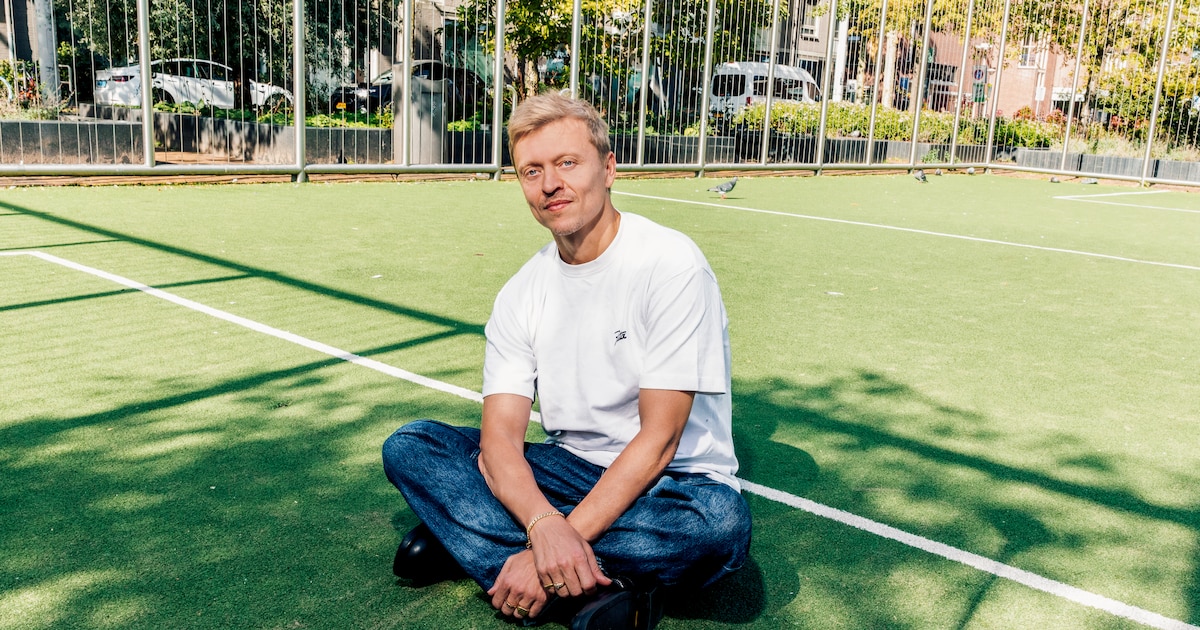
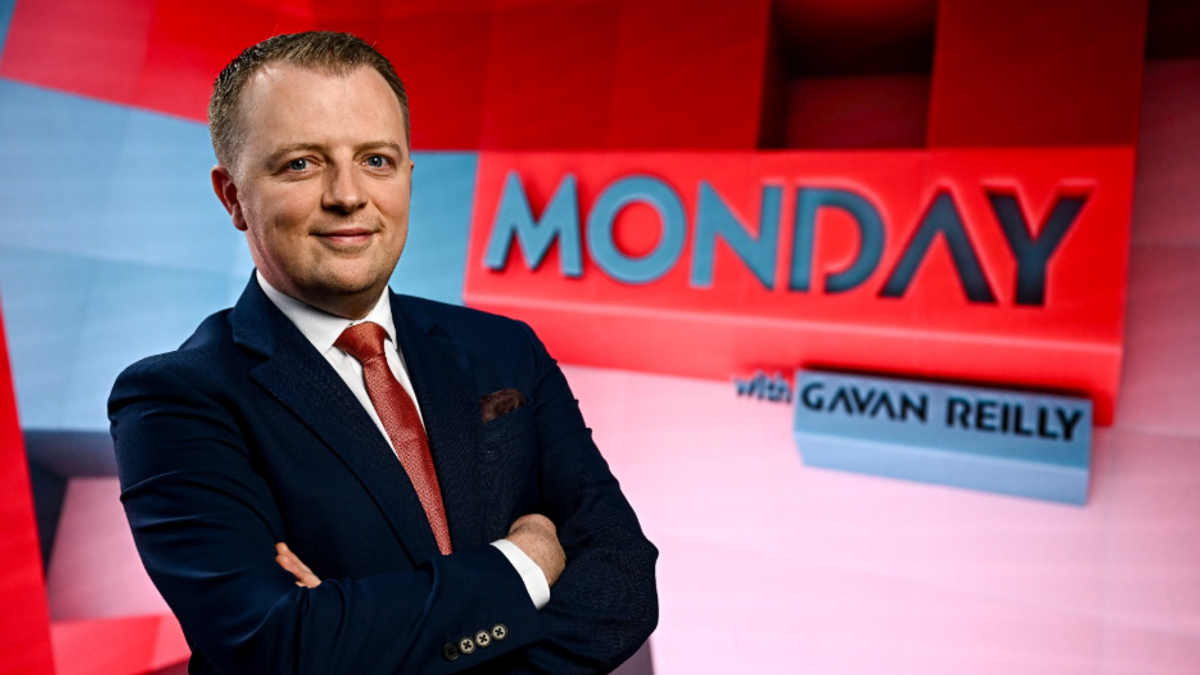
Gavan Reilly emphasizes the need to prioritize his and his wife's health in order to care for their daughter Doireann, who has autism and significant intellectual disabilities, while expressing frustration with the lack of support from the public system. #AutismAwareness #ParentingChallenges #CaregiverSupport
www.rsvplive.ie
Gavan Reilly needs to 'keep going for as long as possible' to care for daughter with autism
2725
O
Oberlé Daniel 2w

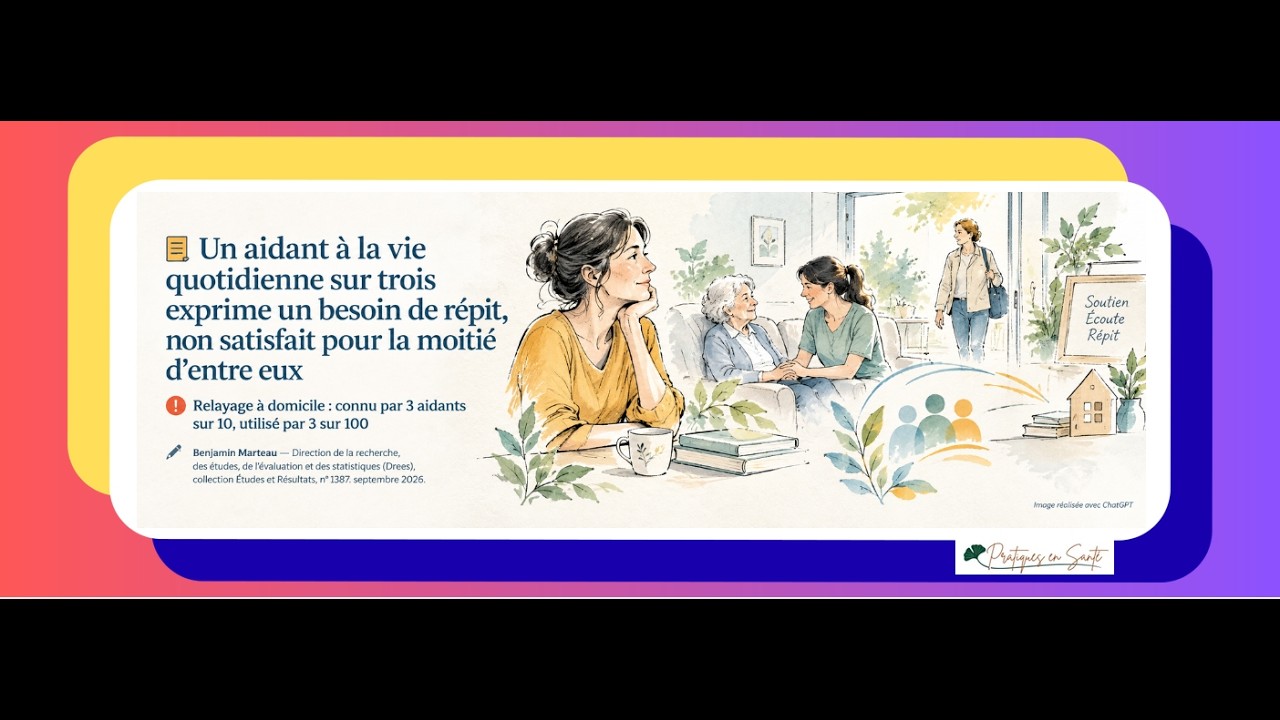
🚨Relayage à domicile : connu par 3 aidants sur 10, utilisé par 3 sur 100 📒 Un aidant à la vie quotidienne sur trois exprime un besoin de répit, non satisfait pour la moitié d’entre eux ✍️ Benjamin Marteau — Direction de la recherche, des études, de l’évaluation et des statistiques (Drees), collection Études et Résultats, n° 1387. septembre 2026. Capsules Audio de Pratiques en Santé 🎙️🎥 https://www.youtube.com/watch?v=pCdQfBWItKQ 🔍💡 Répit des aidants : 36 % en expriment le besoin, et près de la moitié d’entre eux n’en obtiennent pas assez, selon la Drees. 🧭 Le répit repose surtout sur l’entourage et les moments où le proche peut rester seul ; relayage et accueil temporaire restent marginaux. Un appui pour repenser l’information et le repérage sur le terrain. Analyse de Pratiques en Santé et lien vers la source ℹ️➕ https://www.pratiquesensante.com/blog/pratiques-15/un-aidant-a-la-vie-quotidienne-sur-trois-exprime-un-besoin-de-repit-non-satisfait-pour-la-moitie-d-entre-eux-6226 📌 Ce document met des chiffres récents sur un constat souvent posé à l’intuition : le répit manque surtout à ceux qui aident le plus (soins personnels, mobilité, 5 h par jour et plus), aux femmes et aux parents d’enfants en situation de handicap. Il montre aussi que les dispositifs formels (relayage, accueil temporaire) restent très peu utilisés, y compris quand ils sont connus. Il peut servir à argumenter un projet d’action auprès d’un financeur, à cibler le repérage des aidants les plus exposés, et à revoir la manière dont l’offre de répit est présentée aux familles. 🇬🇧: One in three daily caregivers expresses a need for respite, unmet for half of them - https://www.pratiquesensante.com/en/blog/practices-15/un-aidant-a-la-vie-quotidienne-sur-trois-exprime-un-besoin-de-repit-non-satisfait-pour-la-moitie-d-entre-eux-6226 #️⃣ #pratiquesensante #ProchesAidants #RépitDesAidants #Prévention #PerteDAutonomie #Handicap #NonRecours #SantéPublique

www.youtube.com
Crise cachée des aidants : Relayage à domicile : connu par 3 aidants sur 10, utilisé par 3 sur 100
691
António Guterres 3w

The author wrote that too many people faced insecurity and the risk of being left behind as they grew older, and described older people as leaders and caregivers who played a vital role in families, communities and economies. On the International Day of Older Persons, the author called for ensuring longer lives were lived with—but left the thought unfinished.

1731
A
AD Sep 16

Nicolaas Veul deelt in zijn nieuwe documentaireserie '100 dagen in de gehandicaptenzorg' zijn indringende ervaringen en uitdagingen tijdens zijn drie maanden durende opname in een zorgpark, waar hij de onzichtbare wereld van mensen met ernstige beperkingen en hun caregivers blootlegt. #gehandicaptenzorg #documentaire #maatschappelijkevraag

www.ad.nl
Nicolaas Veul (42) over slopende dagen in gehandicaptenzorg: ‘Ik moest steeds huilen, ik wist niet waarom’
15152
S
Sandfeen Sep 12

The Daycare Governance Model Something sinister is lurking behind the curtain of compassion. We have told ourselves that caring for others is the highest good, but there is a pathological side to it that we refuse to acknowledge. There is a phenomenon known as Munchausen syndrome by proxy. It is a form of child abuse in which a caregiver—typically the mother—fabricates or induces illness in someone under her care in order to gain attention or sympathy. The mother is not indifferent to the child’s well-being, and that is the most disturbing part. She is devoted to the child. Around the clock, she visibly tends to the infant’s needs. This is depicted in *The Sixth Sense*. A young boy who can see and speak to the dead is brought to the wake of a girl named Kyra. She leads him to a box containing a videotape. The tape shows Kyra’s mother quietly lacing her daughter’s food with poison, only to play the role of a saint at her bedside for the gathered relatives—absorbing their pity and praise for how selflessly she cared for her dying daughter. The town saw a devoted mother, but the reality was manufactured sickness. We have scaled this pathology up to the level of civilization. The will to care is one of the most powerful drives in women. Properly channeled, it is deeply necessary and virtuous. But as social institutions—therapy, academia, law, NGOs, and bureaucracies—are increasingly comprised of women, this instinct is redirected from individual children, where it can be extremely beneficial, toward society at large, where it becomes disastrous. I call this the daycare governance model. It has only three roles: infants to be protected, or the oppressed; caregivers to administer care, or the dissenters. The caretaking class, or its allies, gains power and influence by managing human suffering. They are rewarded with prestige, funding, and greater authority—all of which increase in proportion to the number of victims under their care. Those incentives resemble the logic of Munchausen syndrome by proxy: increasing the number of sick people under their supervision will, in the end, produce more sick people.

234
The International Dublin Writers' Festival Sep 7

From my husband’s dementia journey comes a guide for caregivers—tools, resources, and lessons learned. 💜 #DementiaCare #CaregiverSupport https://t.co/36fAXyyax5 #DementiaCare #CaregiverSupport #DementiaAwareness #Nospecificcountriesarementionedinthetweet.Therefore #therearenocountrycodestoreturn.

S
Sandfeen Aug 28

The Pathology Behind Compassion Something sinister can lurk behind compassion. Caring for others is noble, but when institutions are rewarded not for reducing suffering—only for managing it—care can become pathological. Munchausen syndrome by proxy shows the logic: a caregiver fabricates or induces illness in someone dependent on them to gain sympathy and attention. The caregiver looks devoted; the “sickness” is manufactured. In that sense, devotion can hide control. I call this the Daycare Governance model: society splits into infants to be protected (oppressed), caregivers who provide protection (allies), and predators to be removed (dissenters). Caretakers gain prestige, funding, and moral authority by managing suffering. Many may believe sincerely, yet incentives can overpower intentions—if status and resources grow with the number of “vulnerable” people, the system has reason to expand the victim class. It does so via concept creep (“trauma” broadens until ordinary difficulty counts), and by creating the perpetual patient, where normal sadness becomes pathology and struggle is rebranded as dysfunction. Care institutions and “victims” then reinforce each other. Dependency costs competence. True care prepares people to stand alone; pathological care keeps them dependent. Endless expansion of victimhood risks producing more dependency. We call it compassion—but compassion without boundaries can become control.

352
S
Sandfeen Aug 28

The Great Feminization, Measured Seventy-two percent of men under thirty hold a positive view of women; among women under thirty, 50% (a 22-point gap). Among women under twenty-five, the share is 35% (a 37-point gap). Where the manosphere and “toxic masculinity” dominate headlines, the data points elsewhere: young women increasingly sort men into the enemy column. The class divide is sharp. Among working-class young women, 61% view men positively; among professional-class women, 36%—a 25-point gap tied to exposure to universities, HR departments, media organizations, and NGOs. The pattern runs through institutional conditioning. Helen Andrews argued this in 2020: between 2015 and 2020 many Western institutions became majority-female, including the New York Times newsroom (2018), law schools (2016), medical schools and the college-educated workforce (2019). Affirmative-action mandates, discrimination settlements, and diversity requirements helped drive the shift. As institutions changed, so did missions: justice increasingly focused on protecting “oppressed” minorities; newsrooms shifted from reporting toward narrative enforcement; universities moved from arguing to “safe spaces.” The result is a “daycare governance model”: infants to be protected (the oppressed), caregivers to provide protection (the allies), and predators to be removed (the dissenters). Research shows the same frame in speech: FIRE’s 2026 college speech rankings found women less tolerant than men across ideologies, including less tolerance for their allies. A woman entering kindergarten in 2005 has spent twenty years inside this system—she didn’t invent it, she inherited it. The 35% figure suggests sorting into victim, ally, and predator, with no grey zones. Working-class women, less conditioned by these pipelines, still view men positively (61–36). None of this is entirely new; Gustave Le Bon described the mechanism in 1895.

705
S
Sandfeen Aug 28

Daycare Governance and the Tyranny of Compassion Something sinister can hide behind compassion. Caring is virtuous, but it becomes pathological when institutions gain power by expanding the number of people who need care. Munchausen syndrome by proxy shows how: a caregiver fabricates or induces illness in a dependent person, then gains sympathy by performing devotion. The sickness is manufactured, but the care is real. The claim: modern society can scale this into governance. Call it the daycare governance model: (1) victims to protect, (2) caregivers to provide protection, (3) dissenters to remove. Health, therapy, NGOs, academia, media, and bureaucracy gain prestige, funding, and moral authority by managing ever-expanding categories of suffering. It unfolds in two stages. First, the victim class expands: “trauma” drifts from specific, severe harms to everyday experiences, lowering the threshold for suffering until demand is nearly limitless. Second, the perpetual patient forms: ordinary difficulties are medicalized—strength as toxicity, sadness as disorder, restlessness as pathology—creating a cycle where caretakers and victims gain status or protection. This drives a crisis of competence. Victimhood can shield accountability, and institutions are rewarded for treating problems rather than eliminating the need for themselves. Plato warned against doing for people what they can do for themselves: removing every burden removes the reason to grow stronger. True care aims to make itself unnecessary. That’s the difference between a good mother and a poisoning one: one allows appropriate hardship to build independence; the other denies it. Failing to distinguish these forms of care makes the pathology hard to recognize—and easy to applaud.

940
The International Dublin Writers' Festival Jun 16

From my husband’s dementia journey comes a guide for caregivers—tools, resources, and lessons learned. 💜 #DementiaCare #CaregiverSupport https://t.co/36fAXyyax5 #DementiaCare #CaregiverSupport #SupportForCaregivers #Nocountrycodesareidentifiedinthetweet.

119
Oliver Varhelyi Jun 15

Alzheimer’s affects memory, identity & independence with a huge impact on patients, families & caregivers. In my message at MindShift in 🇮🇹, I underlined 🇪🇺 support for prevention, diagnosis & care from brain health research to the #SafeHeartsPlan, #medicaldevices & #BiotechAct. https://t.co/fPIE8Q5LKT #Alzheimers #BrainHealth #Caregiving #IT #EU

119
The International Dublin Writers' Festival Jun 9

From my husband’s dementia journey comes a guide for caregivers—tools, resources, and lessons learned. 💜 #DementiaCare #CaregiverSupport https://t.co/36fAXyyax5 #DementiaCare #CaregiverSupport #AlzheimersAwareness #Thetweetdoesnotmentionanyspecificcountries.Therefore #therearenocountrycodestoreturn.

BBC May 17

A suicide prevention charity, Every Life Matters, has developed support packs containing vital information and resources for families and caregivers to be distributed in hospitals across Cumberland, which has one of the highest suicide rates in the UK, to assist those affected by suicide crises. #SuicidePrevention #MentalHealthAwareness #SupportSystem #GB

www.bbc.com
Suicide support packs distributed to Cumbria hospitals
8977
BBC May 17

A suicide prevention charity, Every Life Matters, has developed support packs for hospitals in Cumbria, which address the region's high suicide rates by providing practical advice and local resources to parents and caregivers following a suicide crisis. #SuicidePrevention #MentalHealthSupport #CommunityCare #GB

www.bbc.com
Suicide support packs distributed to Cumbria hospitals
8379
BBC May 17

A suicide prevention charity in Cumbria, where suicide rates are notably high, has launched support packs, including a specialized booklet for parents and caregivers, to provide guidance and resources for managing the aftermath of a suicide crisis. #SuicidePrevention #MentalHealthSupport #CommunityCare #GB

www.bbc.com
Suicide support packs distributed to Cumbria hospitals
8379
BBC May 17

A suicide prevention charity, Every Life Matters, has developed support packs for distribution in hospitals across Cumbria, addressing the region's high suicide rates and providing essential guidance and reassurance for families and caregivers following a suicide crisis. #SuicidePrevention #MentalHealthAwareness #SupportResources #GB

www.bbc.com
Suicide support packs distributed to Cumbria hospitals
8379
BBC May 16

A suicide prevention charity, Every Life Matters, has created support packs for hospitals in Cumbria, where suicide rates are among the highest in the UK, to provide guidance and reassurance to parents and caregivers after a suicide crisis. #SuicidePrevention #MentalHealthSupport #CrisisIntervention #GB

www.bbc.com
Suicide support packs distributed to Cumbria hospitals
8978
The International Dublin Writers' Festival May 13

From my husband’s dementia journey comes a guide for caregivers—tools, resources, and lessons learned. 💜 #DementiaCare #CaregiverSupport https://t.co/36fAXyyax5 #DementiaCare #CaregiverSupport #SupportForCaregivers #Therearenospecificcountriesmentionedinthetweet.Therefore #theresponseisempty.

The International Dublin Writers' Festival May 13

From my husband’s dementia journey comes a guide for caregivers—tools, resources, and lessons learned. 💜 #DementiaCare #CaregiverSupport https://t.co/36fAXyyax5 #DementiaCare #CaregiverSupport #MentalHealthAwareness #Nospecificcountrycodesarementionedinthetweet.

BBC May 12

A coroner determined that failures in the care of 32-year-old Tom Parsons at East Surrey Hospital, specifically the withholding of prescribed blood-thinning injections for 14 days due to safety concerns, "materially contributed" to his death from complications related to blood clots, highlighting a lack of communication and involvement of his family and caregivers in his treatment. #Healthcare #PatientSafety #MentalHealth #GB

www.bbc.com
NHS care contributed to autistic man's death - Surrey coroner
8383