WRLD

Oberlé Daniel

@oberledaniel wrld.org
O
2 followers · 2 following
Mention
O
Oberlé Daniel 18h

Forty years ago, the Ottawa Charter invited us to act on living conditions, not just behaviors. This issue shows that this ambition remains relevant, with the plan on endocrine disruptors, the Nutri-Score rejected by a single vote, and the cost of sexist and sexual violence. It also gives a voice to those who are seldom heard: primary school students facing violence, elderly people living on the streets, young people and their body image. On the ground, the signal is worrying: 45% of employers’ associations consider their situation difficult. You will also find concrete tools to announce a damage associated with care, open a third place, or mobilize parents to motivate teenagers, as well as two readings to reflect on the rigor of qualitative studies and the role of the individuals involved in research. Happy reading, and if the Nutri-Score is important to you, sign and circulate the petition: by a single vote, every support counts. #pratiquesensante #PromotionDeLaSanté #ChartedOttawa #NutriScore #PerturbateursEndocriniens #ViolencesSexistesEtSexuelles #ClimatScolaire #SansAbrisme #VieAssociative #SantéDesJeunes (translated)

www.pratiquesensante.com
L'Hebdo N°44-2026 de Pratiques en Santé | pratiquesensante
O
Oberlé Daniel 2d

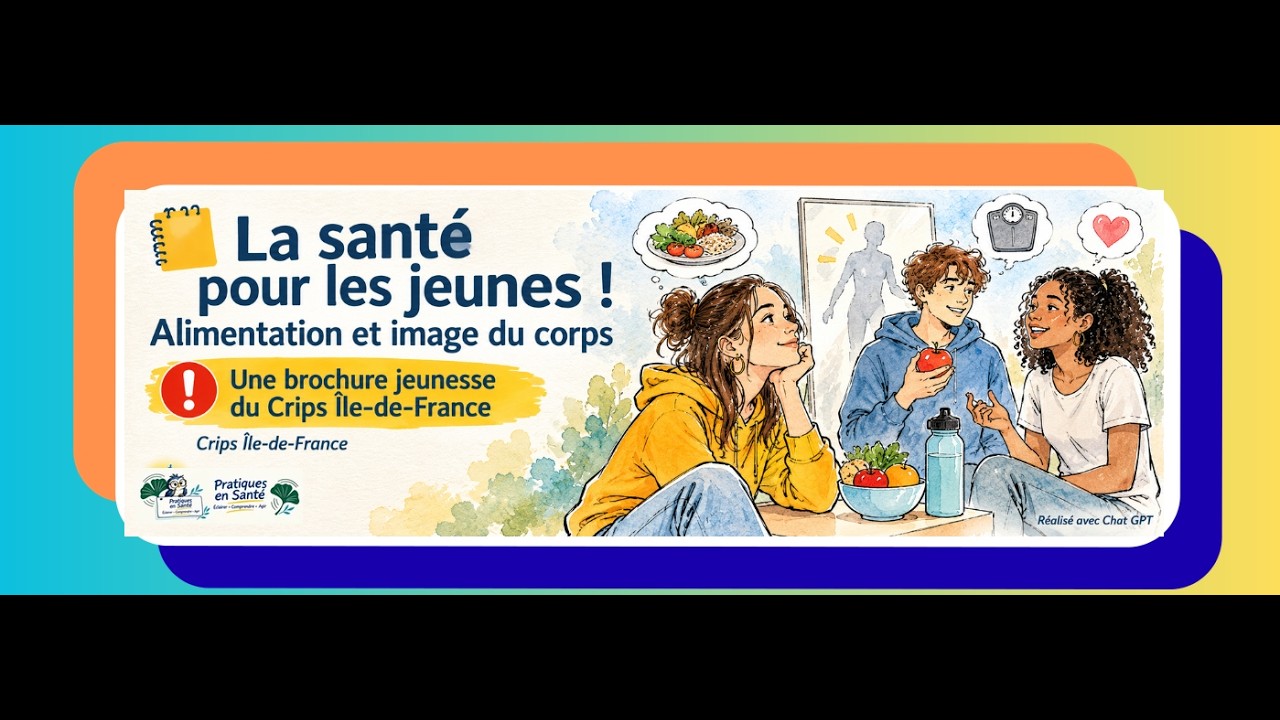
A youth brochure from Crips Île-de-France that connects nutrition, bodily sensations, and self-image, with exercises, games, and help contacts. A ready-to-use resource to discuss hunger, desire, budget, and pressure on bodies with teenagers. Health for young people! Nutrition and body image. Crips Île-de-France Audio Capsules from Health Practices Analysis of Health Practices and link to the source The document addresses young people directly, using informal language, to provide them with "some information and tips" for taking care of themselves and their health. It combines nutrition, listening to the body, and body image in one document. It offers exercises to do alone, games, a daily checklist, and a list of organizations and websites to turn to. It can serve as a resource to hand out or discuss with a young person. Health for Young People! Nutrition and Body Image - #pratiquesensante #BodyImage #SelfEsteem #YouthHealth #EatingDisorders #MindfulEating #NutritionalEducation #HealthPromotion #pratiquesensante #ImageCorporelle #EstimeDeSoi #SantéDesJeunes #TCA #MangerEnPleineConscience #ÉducationNutritionnelle #PromotionDeLaSanté (translated)

www.youtube.com
a santé pour les jeunes ! Alimentation et image du corps
O
Oberlé Daniel 2d

💶🧭 Findings, challenges, and 6 proposals in 3 areas: structuring these places, stabilizing their economic model, and making the Youth Habitat network a recognized interlocutor on third places. 🏠🤝 Youth Habitat residences opening up to their neighborhood: 33 third places identified, examples from the field, projects and funding reviewed. 📒 Youth Habitat — Third Places. Practical Guide. ✍️ National Union for Youth Habitat (Unhaj) — March 2026. Audio Capsules of Health Practices 🎙️🎥 https://www.youtube.com/watch?v=jJHuXnX4nvc Analysis of Health Practices and link to source ℹ️➕ https://www.pratiquesensante.com/blog/pratiques-15/habitat-jeunes-tiers-lieux-guide-pratique-6291 📌 The guide aims to equip members of the Youth Habitat network for their third places projects (p. 8). It provides a definition based on 3 criteria (p. 9), a situational assessment (p. 11-13), possible structures and their effects (p. 18-19), dedicated funding (p. 25, 31), and examples from Besançon to Poitiers (p. 16-30). Outside the network, social centers, MJC, landlords, local authorities, and prevention actors will find a framework to qualify a project, a panorama of funding (ANCT, FEDER, Caf, ANRU, DRAC), and points of vigilance: difficult mix (p. 17), risk of institutionalization (p. 18). The guide also shows that an open place helps marginalized groups to "more easily pass through the door" (p. 18). 🇬🇧: Youth Habitat — Third Places. Practical Guide - https://www.pratiquesensante.com/en/blog/practices-15/habitat-jeunes-tiers-lieux-guide-pratique-6291 #️⃣ #pratiquesensante #TiersLieux #HabitatJeunes #FJT #UrbanPolicy #PopularEducation #SocialCohesion #YouthHousing #pratiquesensante #TiersLieux #HabitatJeunes #FJT #PolitiqueDeLaVille #EducationPopulaire #CohesionSociale #LogementDesJeunes (translated)

www.youtube.com
Guide Unhaj Habitat Jeunes — Tiers-lieux
105
O
Oberlé Daniel 4d

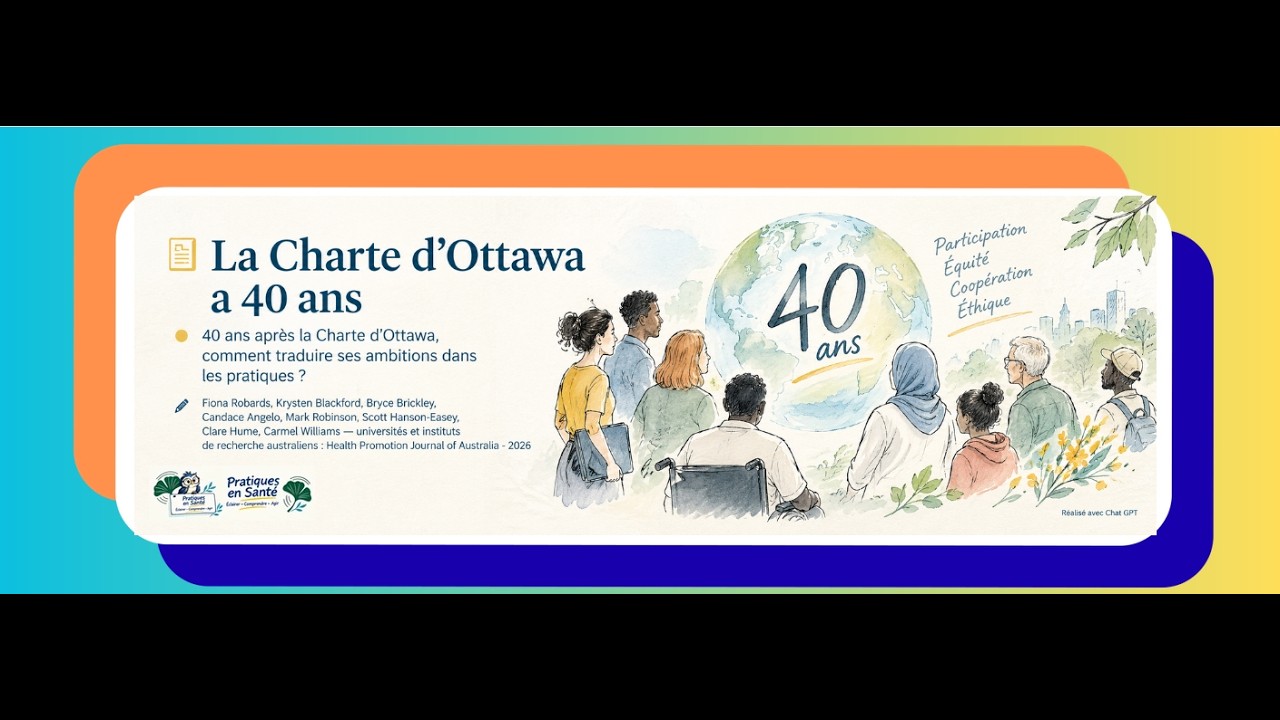
🎂🌏 40 years after the Ottawa Charter, how can we translate its ambitions into practices? A historical perspective and ideas to strengthen participation, equity, cooperation, and ethics within teams. 📒 The Ottawa Charter is 40 years old ✍️ Fiona Robards, Krysten Blackford, Bryce Brickley, Candace Angelo, Mark Robinson, Scott Hanson-Easey, Clare Hume, Carmel Williams — Australian universities and research institutes: Health Promotion Journal of Australia - 2026 Audio Capsules of Health Practices 🎙️🎥 https://www.youtube.com/watch?v=X_M3PtK5bvI Analysis of Health Practices and link to the source ℹ️➕ https://www.pratiquesensante.com/blog/pratiques-15/la-charte-d-ottawa-a-40-ans-6299 📌 Understanding the history of the Ottawa Charter, adopted in 1986, allows us to make sense of current practices: acting on living conditions, building health-promoting policies, and working with communities rather than limiting ourselves to individual behaviors. Forty years later, this editorial questions how to realize this ambition. Using Australian examples, it invites professionals to reflect on their practices: what place should be given to the knowledge and priorities of populations? How to strengthen cooperation between sectors, advocacy, and ethical reflection? A resource to connect the historical foundations of health promotion to the daily choices of teams, without constituting a ready-to-use methodological guide. To extend this reading, the "History of Health Promotion" dossier from Pratiques en Santé gathers foundational texts and testimonies from actors who participated in this history, particularly around the preparation and adoption of the Ottawa Charter. https://www.pratiquesensante.com/1-5-hisoire-promotion-sante 🇬🇧: The Ottawa Charter is 40 years old - https://www.pratiquesensante.com/en/blog/practices-15/the-ottawa-charter-is-40-years-old-6299 #️⃣ #pratiquesensante #ChartedOttawa #Ottawa40 #HealthPromotion #CommercialDeterminants #HealthInAllPolicies #EthicsInHealthPromotion #Reflexivity #pratiquesensante #ChartedOttawa #Ottawa40 #PromotionDeLaSanté #DéterminantsCommerciaux #SantéDansToutesLesPolitiques #ÉthiqueEnPromotionDeLaSanté #Réflexivité (translated)

www.youtube.com
Charte d Ottawa 40 ans
338
O
Oberlé Daniel 5d

🏚️👥 Teams of social watch and SIAO: understaffing, participation, partnerships, then aging individuals on the street — two parts of the same national survey (503 then 504 responses). 🧭📊 Declared figures and field examples to situate its structure and prepare a local advocacy. #practicesinhealth 📒 The realities of homelessness — Parts 1 and 2 ✍️ Federation of solidarity actors (FAS) and National Federation of social SAMUs (FNSS) - July 2026 Audio Capsules of Practices in Health 🎙️🎥 https://www.youtube.com/watch?v=RGYpuY1E3xs&t=45s Analysis of Practices in Health and link to the source ℹ️➕https://www.pratiquesensante.com/blog/pratiques-15/les-realites-du-sans-abrisme-volets-1-et-2-6298 📌 To better understand how life on the street and extreme precariousness weaken health, accelerate aging, and complicate access to rights, care, and appropriate support. These two parts provide stakeholders in prevention, social work, and the medico-social field with markers to identify rupture risks, adjust their practices, and strengthen cooperation between sectors. The observations of the teams, field experiences, and recommendations also contribute to a collective reflection on the participation of those affected and the means necessary to better support them. 🇬🇧: The realities of homelessness — Parts 1 and 2 - https://www.pratiquesensante.com/en/blog/practices-15/les-realites-du-sans-abrisme-volets-1-et-2-6298 #️⃣ #practicesinhealth #Homelessness #SocialWatch #SIAO #PrematureAging #ExtremePrecariousness #PeerWork #ParticipationOfIndividuals #pratiquesensante #SansAbrisme #VeilleSociale #SIAO #VieillissementPrématuré #GrandePrécarité #TravailPair #ParticipationDesPersonnes (translated)

www.youtube.com
Réalités du sans abrisme
563
O
Oberlé Daniel 5d

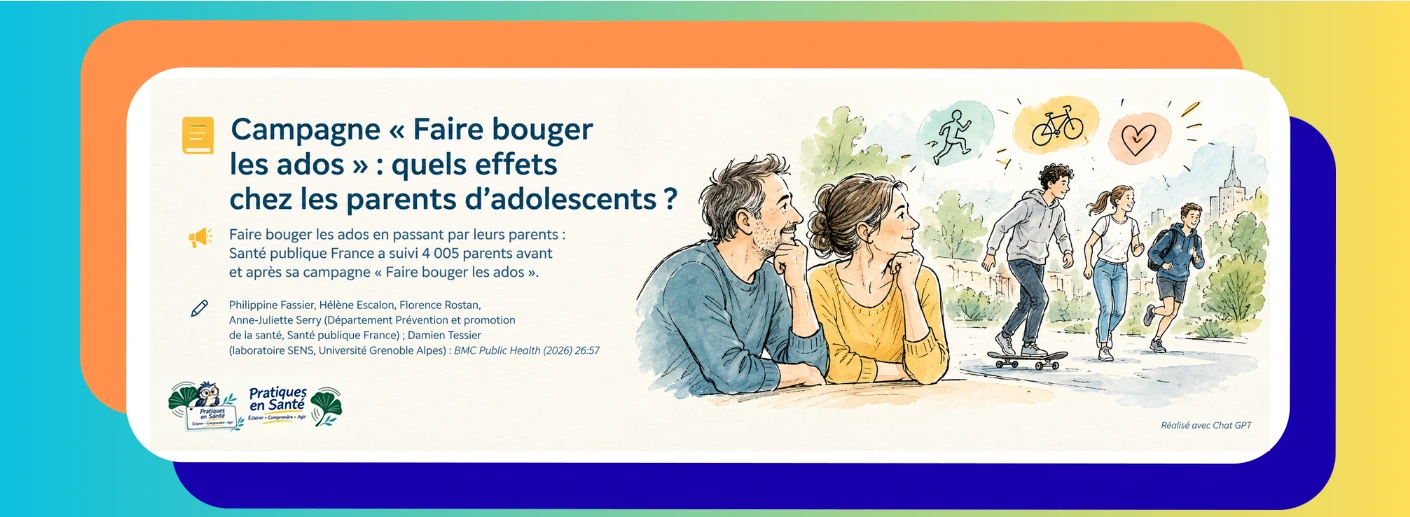
Getting teens moving by involving their parents: Public Health France tracked 4,005 parents before and after its campaign "Getting Teens Moving." Few effects on all parents, but positive associations among parents of girls, from lower socioeconomic categories or starting from a low level. Campaign "Getting Teens Moving": what effects on parents of teenagers? Philippine Fassier, Hélène Escalon, Florence Rostan, Anne-Juliette Serry (Department of Prevention and Health Promotion, Public Health France); Damien Tessier (SENS laboratory, University of Grenoble Alpes): BMC Public Health (2026) 26:57 Impact of a French social marketing campaign to increase parental support and physical activity in adolescents aged 11–14 years: a longitudinal study Health Practices Audio Capsules 🎙️🎥 Analysis of Health Practices and link to the source ℹ️➕ https://www.pratiquesensante.com/blog/pratiques-15/campagne-faire-bouger-les-ados-quels-effets-chez-les-parents-d-adolescents-6297 For a prevention actor, the article shows how a national campaign chose to involve parents to support the physical activity of adolescents, targeting their sense of personal efficacy (p. 2-3). It describes three measurable forms of parental support: encouraging, helping to find a sport that they like, practicing together (p. 4). It refers to a test and advice for parents on mangerbouger.fr (p. 3). It observes positive associations especially among parents of girls, from lower socioeconomic categories or starting from a low level (p. 8). It also outlines the limitations of an evaluation based on reported memory (p. 10). 🇬🇧: Campaign "Getting Teens Moving": what effects on parents of teenagers? - https://www.pratiquesensante.com/en/blog/practices-15/campagne-faire-bouger-les-ados-quels-effets-chez-les-parents-d-adolescents-6297 #️⃣ #pratiquesensante #PhysicalActivity #Teenagers #ParentalSupport #SocialMarketing #PublicHealthFrance #SedentaryLifestyle #SocialInequalities #pratiquesensante #ActivitéPhysique #Adolescents #SoutienParental #MarketingSocial #SantéPubliqueFrance #Sédentarité #InégalitésSociales (translated)

www.pratiquesensante.com
Campaign "Getting Teens Moving": what effects on parents of teenagers?
338
O
Oberlé Daniel 5d

🚨🩺💬 How to announce harm associated with care? Guidelines for informing, listening, and maintaining trust, useful for healthcare professionals and social-medical actors who support patients. 🧭 The HAS guide details the three stages of the announcement, with concrete cases, technical sheets, and a "To do / Not to do" list. 📒 Announcement of harm associated with care. Guide intended for healthcare professionals working in healthcare facilities or in the community. ✍️ High Authority of Health (HAS), "Improvement of practices and patient safety" collection. Project conducted by the evaluation and improvement of practices service (SEVAM), project leader Céline Schnebelen, with a HAS project group and an external working group (p. 59, p. 61-62). Preface by Jean-Luc Harousseau (HAS) and Claude Rambaud (association le LIEN, CISS) (p. 3). Audio Capsules of Health Practices 🎙️🎥 https://www.youtube.com/watch?v=9c0MsO9hmPM Analysis of Health Practices and link to the source ℹ️➕https://www.pratiquesensante.com/blog/pratiques-15/annonce-d-un-dommage-associe-aux-soins-guide-destine-aux-professionnels-de-sante-exercant-en-etablissement-de-sante-ou-en-ville-6296 📌 This guide is aimed at all healthcare professionals, in healthcare facilities or in the community, to help them prepare, carry out, and follow up on the announcement of harm associated with care. It provides guidelines for informing clearly, listening to the patient, recognizing their suffering, and maintaining trust. It offers a summary of "To do / Not to do", technical sheets, and concrete cases. It is also of interest to social-medical actors who support the concerned individuals and their families: its guidelines can enrich their practices of listening, support, and coordination with healthcare providers. This utility constitutes a broader reading of Health Practices; the guide explicitly designates healthcare professionals as its recipients. 🇬🇧: Announcement of harm associated with care. Guide for healthcare professionals working in healthcare facilities or in the community - https://www.pratiquesensante.com/en/blog/practices-15/annonce-d-un-dommage-associe-aux-soins-guide-destine-aux-professionnels-de-sante-exercant-en-etablissement-de-sante-ou-en-ville-6296 #️⃣ #pratiquesensante #SécuritéDesPatients #AnnonceDuDommage #RelationSoignantSoigné #DroitsDesPatients #ÉvénementIndésirable #SecondeVictime #GestionDesRisques #pratiquesensante #SécuritéDesPatients #AnnonceDuDommage #RelationSoignantSoigné #DroitsDesPatients #ÉvénementIndésirable #SecondeVictime #GestionDesRisques (translated)

www.youtube.com
Guide HAS Comment annoncer un dommage associé aux soins ?
676
O
Oberlé Daniel 5d

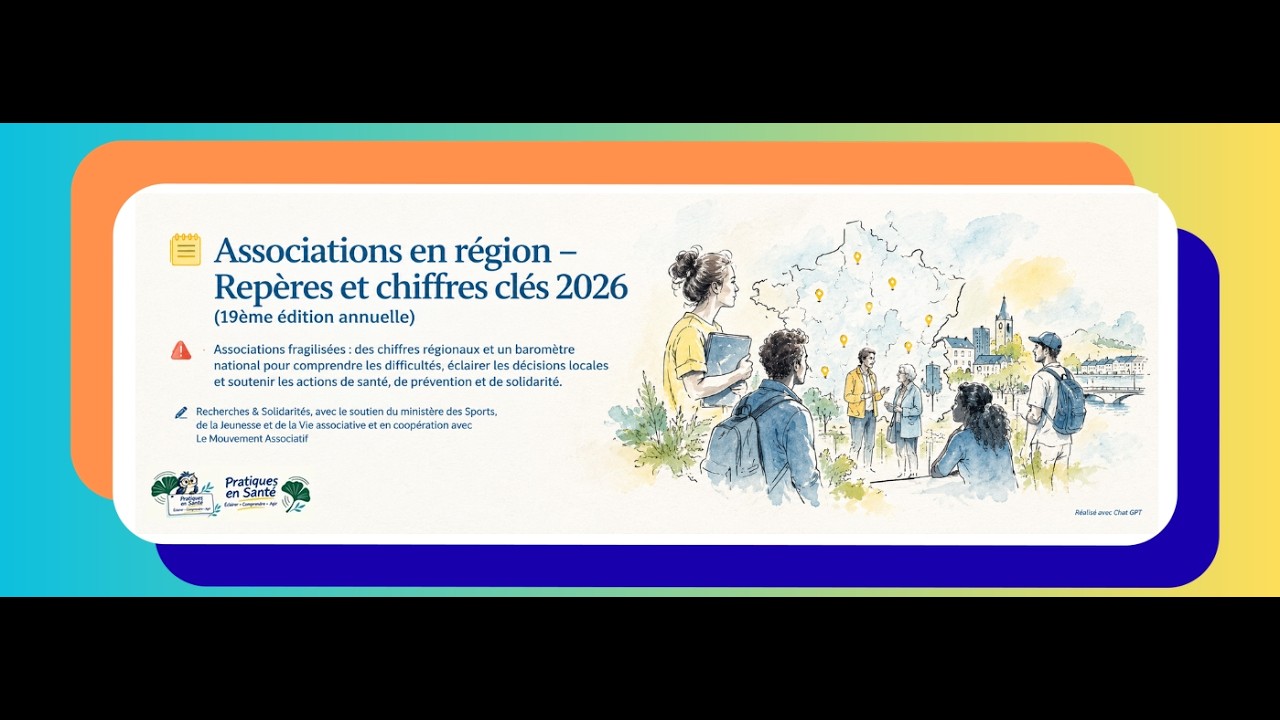
Weakened associations: regional figures and a national barometer to understand the difficulties, inform local decisions, and support health, prevention, and solidarity actions. Regional Associations – Key Figures and Indicators 2026 » (19th annual edition) Research & Solidarity, with the support of the Ministry of Sports, Youth, and Associative Life, and in cooperation with The Associative Movement Audio Capsules on Health Practices Analysis of Health Practices and link to the source The document presents a state of play intended "for stakeholders, local decision-makers, and all those interested in associative life." It gathers, for each region, recent administrative data on the creation of associations and associative employment, as well as estimates of the number of active associations and volunteers. The tables allow for situating the region in relation to national benchmarks, particularly for employment in health and social sectors. The collection also presents national results from the opinion barometer of association leaders, conducted in spring 2026. In a context of fragility in the associative sector, this collection provides benchmarks to objectify the difficulties and inform dialogue with funders and local decision-makers. In spring 2026, 45% of heads of employing associations find their situation difficult or very difficult, compared to 35% in 2025; 12% are considering reducing their activities after the summer, compared to 8% a year earlier. Beyond the survival of structures, these signals question their capacity to maintain their actions and support, particularly in social, medico-social, and health areas. Regional data allows for situating the weight of the sector in each territory; however, the results on difficulties remain national and describe the situation in spring 2026, not an updated assessment in the fall. #pratiquesensante #VieAssociative #Bénévolat #EmploiAssociatif #EngagementBénévole #ESS #ActionSociale #DonnéesRégionales (translated)

www.youtube.com
Associations fragilisées : des chiffres régionaux et un baromètre national pour comprendre
789
O
Oberlé Daniel 6d

🚨🔍🧩 Small sample, absence of saturation or specialized software: should we doubt the rigor of a qualitative study? This article scrutinizes ten common misconceptions and provides guidelines for better reading, writing, and evaluating this research. 📒 Qualitative methods: ten misconceptions for better evaluating research ✍️ Andrea L. Nevedal, Christine P. Kowalski, Erin P. Finley, Gemmae M. Fix, Alison B. Hamilton, Christopher J. Koenig (p. 1). Affiliations: research centers of the Department of Veterans Affairs (VA) and American universities - Implementation Science (BMC), vol. 21, article 4 Optimizing qualitative methods in implementation research: a resource for editors, reviewers, authors, and researchers to dispel ten common misperceptions about qualitative research methods Audio Capsules of Health Practices 🎙️🎥 https://www.youtube.com/watch?v=5Jfj2wvdqXI Analysis of Health Practices and link to the source ℹ️➕ https://www.pratiquesensante.com/blog/pratiques-15/methodes-qualitatives-dix-idees-recues-pour-mieux-evaluer-les-recherches-6294 📌 This article helps to better appreciate the rigor of a qualitative study without limiting itself to criteria such as sample size, saturation, or the use of specialized software. Aimed at researchers, authors, editors, and reviewers, it examines ten misconceptions and provides advice for justifying methodological choices and evaluating their coherence with the research question. Two tables and an infographic facilitate consultation (p. 3-9). For professionals in prevention and the medico-social field, these guidelines can also illuminate the reading of a study or a qualitative evaluation report: this use constitutes a proposal by Health Practices, and not a use directly developed in the article #️⃣ #healthpractices #QualitativeResearch #ImplementationScience #QualitativeEvaluation #Transferability #MixedMethods #RapidQualitativeAnalysis #MethodologicalRigor #pratiquesensante #RechercheQualitative #ScienceDeLaMiseEnOeuvre #ÉvaluationQualitative #Transférabilité #MéthodesMixtes #AnalyseQualitativeRapide #RigueurMéthodologique (translated)

www.youtube.com
10 Idées Reçues : Méthodes qualitatives : dix idées reçues pour mieux évaluer les recherches
565
O
Oberlé Daniel 6d

Equity, diversity, inclusion (EDI) in health research: a Quebec report from 12 interviews regarding 8 projects. A complete toolkit accompanies the report (p. 17-18). Three appendices present the instruments of the approach: an interview guide, a descriptive table, and an EDI analysis grid (p. 19-24). Equity, diversity, and inclusion in the scientific programming of the SSA Support Unit Québec. Bilkis Vissandjée, Laurie Martin, Romy Labranche, Télia Fénié - SSA Support Unit Québec - April 2026. Audio Capsules of Health Practices. Source analysis and link. For health, prevention, and medico-social stakeholders, this report offers benchmarks to strengthen inclusion in projects: involving the concerned persons from the design phase, recognizing their experiential knowledge, and making tools accessible to diverse audiences. It also highlights the necessary conditions for real participation: time, resources, support, and clearly defined roles. Its interview guide and analysis grid can feed a team reflection on practices and possible improvements. Originating from a Quebec research approach, these benchmarks need to be adapted to intervention contexts. #pratiquesensante #EquiteEnSante #EDI #PatientPartenaire #SystemeDeSanteApprenant #SavoirsExperientiels #CoConstruction #Québe (translated)

www.youtube.com
Équité, diversité, inclusion (EDI) dans la recherche en santé
793
O
Oberlé Daniel 7d

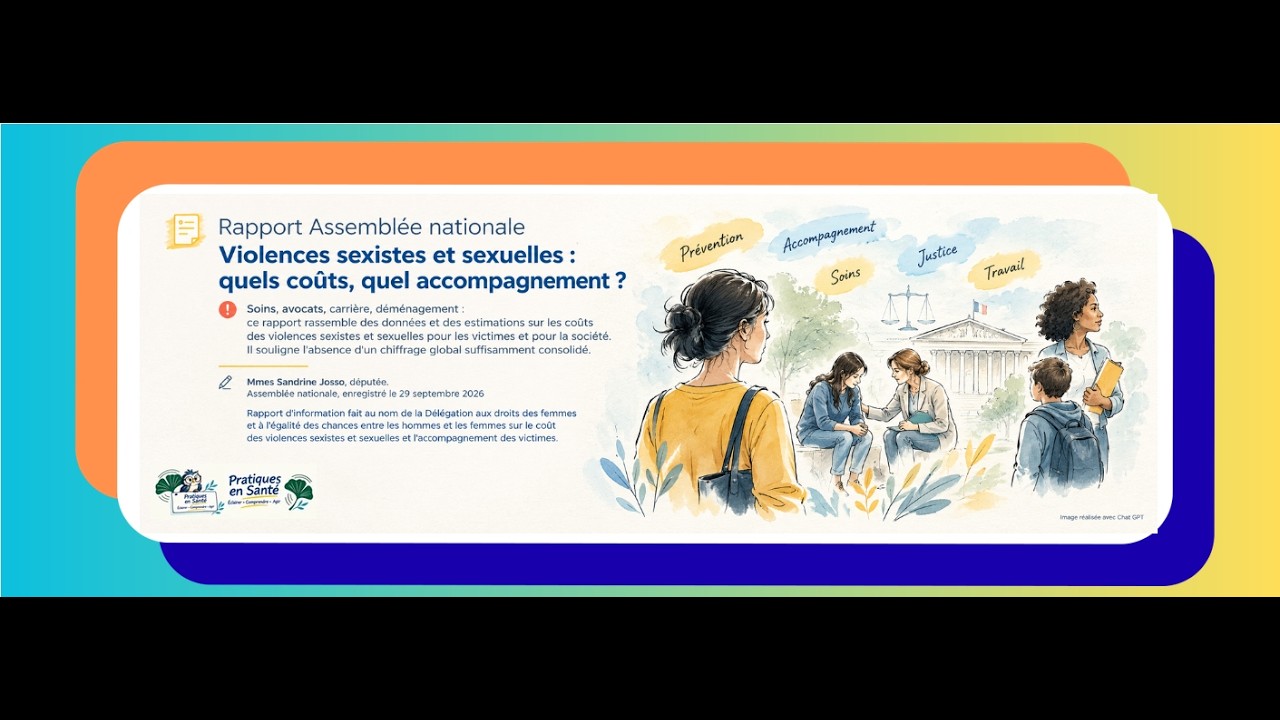
🚨 💶 Care, lawyers, career, relocation: this report brings together data and estimates on the costs of gender-based and sexual violence for victims and for society. It highlights the lack of a sufficiently consolidated overall estimate. 🧭 It makes 100 recommendations on prevention, support, care, justice, and work. 📒 National Assembly Report - Gender-based and sexual violence: what costs, what support? ✍️ Ms. Sandrine Josso, MP. National Assembly, registered on September 29, 2026 Information report made on behalf of the Delegation for Women's Rights and Equality Between Women and Men on the cost of gender-based and sexual violence and the support for victims. Audio Capsules of Health Practices 🎙️🎥 https://www.youtube.com/watch?v=DouTz5B_MTY Analysis of Health Practices and link to the source ℹ️➕ https://www.pratiquesensante.com/blog/pratiques-15/rapport-assemblee-nationale-violences-sexistes-et-sexuelles-quels-couts-quel-accompagnement-6292 📌 This report sheds light on an area of gender-based and sexual violence that is still insufficiently documented: their costs for victims and for society. It gathers budgetary data and estimates, describes care and justice expenses that remain the responsibility of individuals, and shows how violence can permanently weaken their employment, income, and housing. For health, prevention, social, and medico-social professionals, it helps to understand the obstacles to accessing rights, breaks in pathways, and risks of secondary victimization. Its 100 recommendations provide benchmarks for team reflection on reception, orientation, and coordination of support, with attention to individuals facing discrimination. However, it does not constitute a consolidated overall estimate of violence nor an operational guide: its proposals should be distinguished from existing systems and rights. 🇬🇧: National Assembly Report - Gender-based and sexual violence: what costs, what support? - https://www.pratiquesensante.com/en/blog/practices-15/rapport-assemblee-nationale-violences-sexistes-et-sexuelles-quels-couts-quel-accompagnement-6292 #️⃣ #pratiquesensante #SexistAndSexualViolence #CostOfViolence #SupportForVictims #Psychotrauma #SecondaryVictimization #LegalAid #EVARS #pratiquesensante #ViolencesSexistesEtSexuelles #CoutDesViolences #AccompagnementDesVictimes #Psychotraumatisme #VictimisationSecondaire #AideJuridictionnelle #EVARS (translated)

www.youtube.com
Le coût des VSS
567
O
Oberlé Daniel 1w

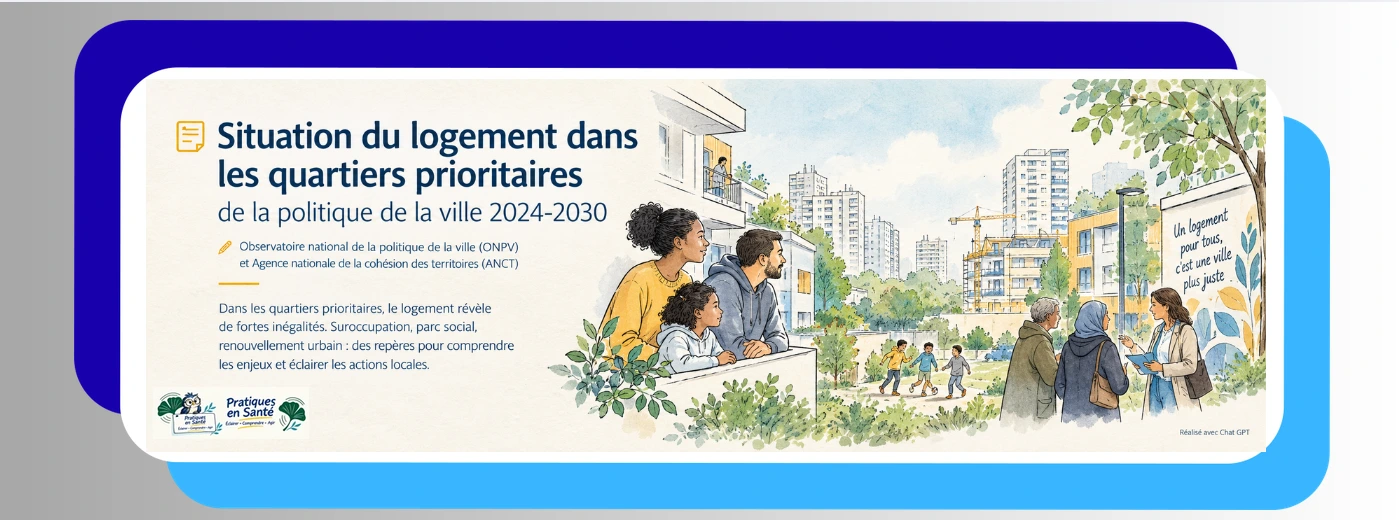
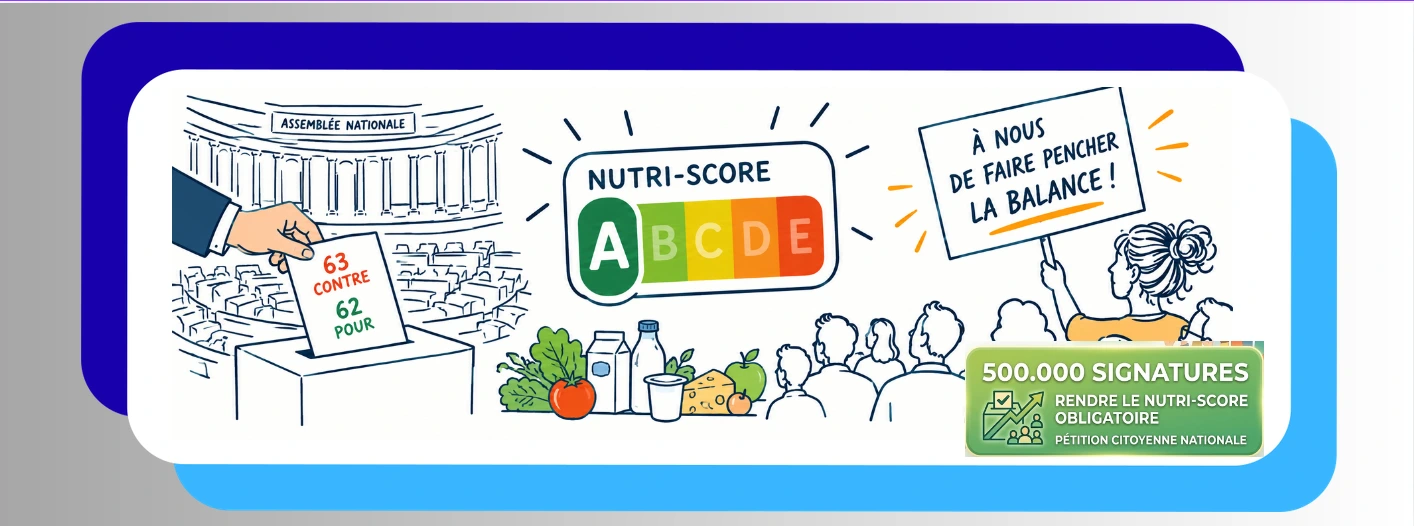
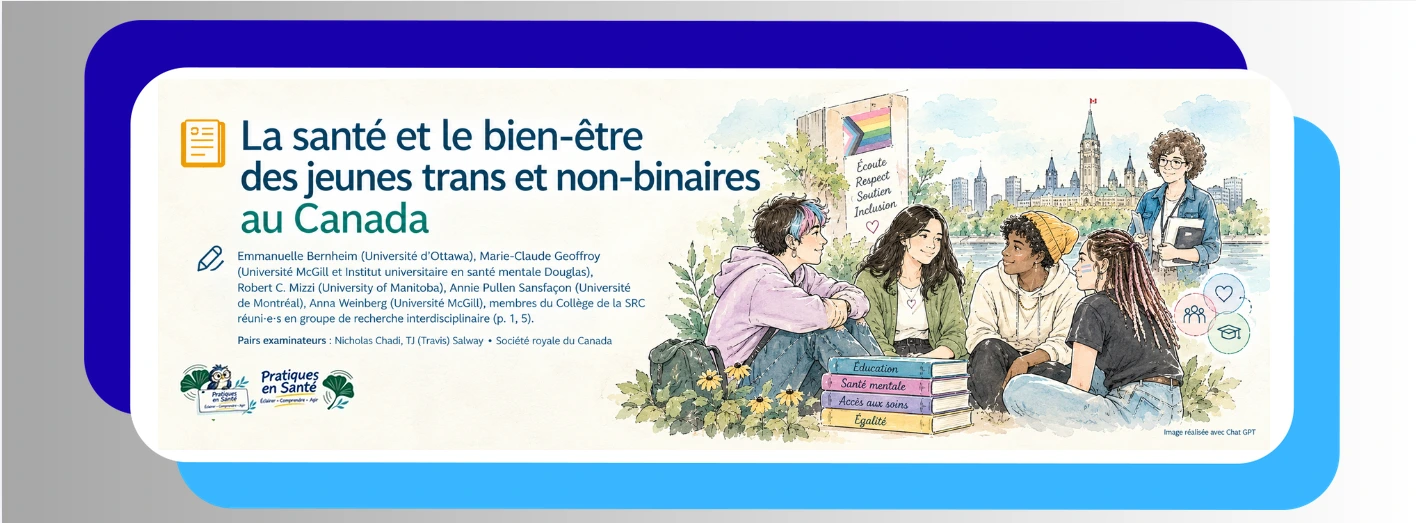
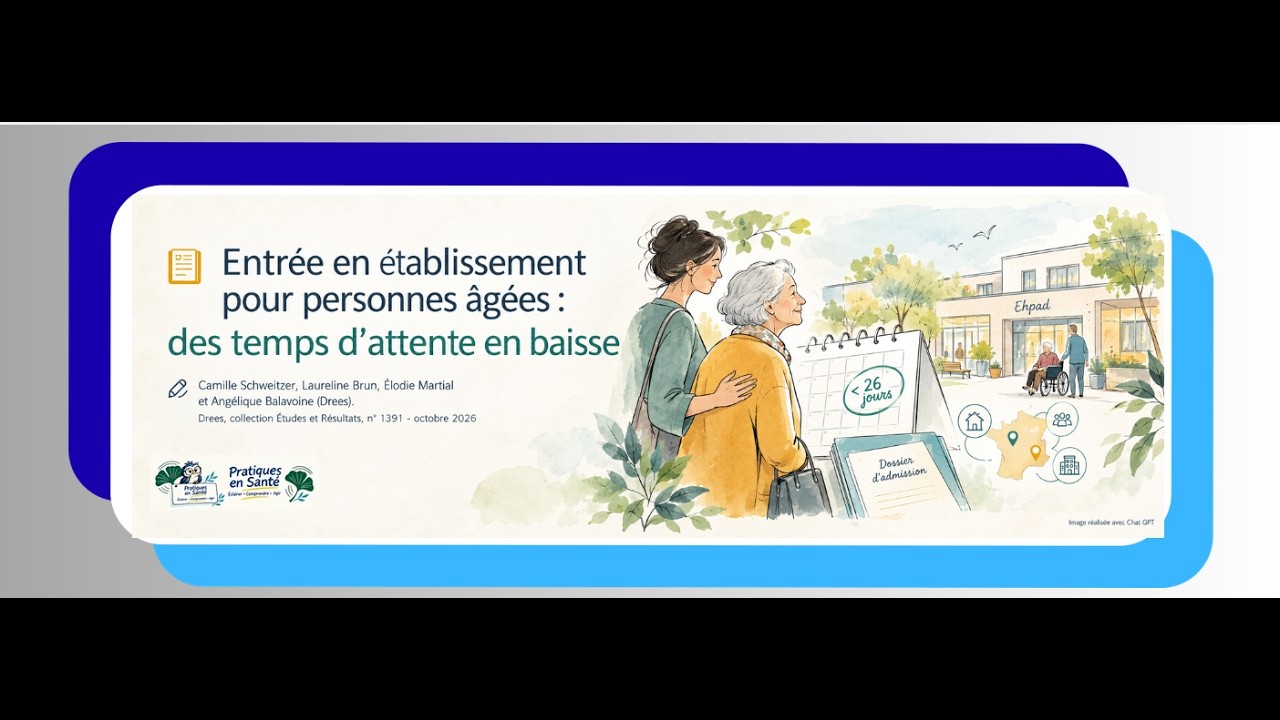
This week, one question runs through our readings: who decides our health, and with what means? In Parliament, the Nutri-Score was blocked by a single vote; a petition can reignite the debate, and every signature counts. The State publishes its strategy against health misinformation, and the WHO reminds us that the majority of avoidable deaths in Europe could be prevented. But health is also determined far from care: in the housing of priority neighborhoods, at the entrance to high school, in universities where equality lacks resources. Several documents give a voice to those who are rarely heard: disabled individuals deprived of their sexual rights, young trans and non-binary people, audiences distanced from sexual health services. On the medico-social side, good news: the waiting time to enter nursing homes is decreasing, although it remains unequal across regions. Finally, in the face of cuts to international aid, three researchers invite us to turn solidarity into actions. Enjoy your reading, and feel free to share these resources with those around you. #pratiquesensante #PromotionDeLaSanté #SantéPublique #NutriScore #DésinformationSanté #PréventionPrimaire #InégalitésSocialesDeSanté #SantéSexuelle #Handicap #MédicoSocial (translated)

www.pratiquesensante.com
L'Hebdo N°43 - 2026 - de Pratiques en Santé | pratiquesensante
909
O
Oberlé Daniel 1w

Making equality in higher education a reality: at what cost? Through 26 interviews, discover the daily lives of those who act, balancing commitment, lack of resources, and resistance. The equality-diversity missions tested by their institutionalisation: perspectives from those who bring them to life. CPED — Permanent Conference of Equality and Diversity Mission Officers - Qualitative aspect of the REMÈDE 2 survey (2025) — 2026 Audio Capsules on Health Practices 🎙️🎥 https://www.youtube.com/watch?v=IC0VtnT_1ak Analysis of Health Practices and link to the source ℹ️➕ https://www.pratiquesensante.com/blog/pratiques-15/situation-du-logement-dans-les-quartiers-prioritaires-de-la-politique-de-la-ville-2024-2030-6286/ The report gives a voice to the professionals who daily carry out the equality-diversity policies in higher education and research (p. 4). It does not aim to measure the extent of phenomena but to understand their professional realities, the transformations of their role, and the conditions for implementing these policies (p. 3). The document indicates a desire to contribute to a better understanding of ongoing transformations and the necessary conditions for their deployment (p. 4). It also addresses the emotional burden of those listening and the effects of the role on individuals' health (p. 16-18). The equality-diversity missions tested by their institutionalisation: perspectives from those who bring them to life - https://www.pratiquesensante.com/en/blog/practices-15/the-equality-diversity-missions-tested-by-their-institutionalisation-perspectives-from-those-who-bring-them-to-life-6288 #️⃣ #pratiquesensante #ÉgalitéDiversité #EnseignementSupérieur #VSS #LutteContreLesDiscriminations #SouffranceAuTravail #CPED #EnquêteQualitative #pratiquesensante #ÉgalitéDiversité #EnseignementSupérieur #VSS #LutteContreLesDiscriminations #SouffranceAuTravail #CPED #EnquêteQualitative (translated)

www.youtube.com
Enquête REMÈDE 2 - Les missions égalité-diversité à l'épreuve de leur institutionnalisation
911
O
Oberlé Daniel 2w

⚖️ In 2020, 1.8 million deaths from non-communicable diseases before the age of 75 were considered avoidable in the WHO European Region: about 60% were due to preventable causes. 📉 The report analyzes trends in tobacco, alcohol, physical activity, obesity, and diabetes since 2010, as well as the adoption of prevention and care policies. 📒 Avoidable mortality, risk factors and policies for tackling noncommunicable diseases in the WHO European Region ✍️ WHO Regional Office for Europe, Copenhagen. Writing: Ivo Rakovac, Gauden Galea, Nadia Scott, Laura Vremis, Stephan Spat, Allison Ekberg, Sergei Bychkov, Natalia Fedkina, and Sumudu Kasturiarachchi, Special Initiative on Noncommunicable Diseases and Innovation Audio Capsules of Health Practices 🎙️🎥 https://www.youtube.com/watch?v=I-al1KNLSOo Analysis of Health Practices and link to the source ℹ️➕ https://www.pratiquesensante.com/blog/pratiques-15/mortalite-evitable-facteurs-de-risque-et-politiques-de-lutte-contre-les-maladies-non-transmissibles-dans-la-region-europeenne-de-l-oms-6285 📌 For health, prevention, and medico-social professionals, this report provides arguments to advocate for the role of prevention to decision-makers and funders, while highlighting the need for accessible and quality care (p. viii-ix, 59). It helps to place actions on tobacco, alcohol, diet, or physical activity within a common strategy for reducing chronic diseases, rather than in isolated interventions. It also reminds that action must focus on living conditions and environments, and not just on individual behaviors, involving multiple sectors and civil society (p. 65). Data concerning France allows for situating national issues in the European context (annex 3). A resource to support a project, mobilize partners, or inform a diagnosis, to be complemented by local data: the report does not allow to determine alone the priorities of a territory nor to precisely choose the modalities of intervention. 🇬🇧: Avoidable mortality, risk factors and policies for tackling noncommunicable diseases in the WHO European Region - https://www.pratiquesensante.com/en/blog/practices-15/avoidable-mortality-risk-factors-and-policies-for-tackling-noncommunicable-diseases-in-the-who-european-region-6285 #️⃣ #pratiquesensante #NonCommunicableDiseases #AvoidableMortality #PrimaryPrevention #WHOEurope #RiskFactors #HealthInequalities #HealthInAllPolicies #pratiquesensante #MaladiesNonTransmissibles #MortalitéÉvitable #PréventionPrimaire #OMSEurope #FacteursDeRisque #InégalitésDeSanté #SantéDansToutesLesPolitiques (translated)

www.youtube.com
Mortalité évitable, facteurs de risque et pol. de lutte contre les maladies non transmissibles
572
O
Oberlé Daniel 2w

Nutri-Score: one voice was enough to block public health. It's up to us to tip the balance! TO LEARN MORE / https://www.pratiquesensante.com/blog/avis-8/nutri-score-une-voix-a-suffi-pour-bloquer-la-sante-publique-a-nous-de-faire-pencher-la-balance-6284 🎙️🎥 https://www.youtube.com/watch?v=rmi355nX2EM Reaching 500,000 signatures may seem colossal, but the stakes concern 100% of us: our health, our plates, and food transparency. After an absurd rejection by just one vote in the National Assembly, the sense of urgency is here and the momentum is driven by the Academy of Medicine, scientists, and dozens of associations. The only real obstacle would be to believe the goal is unattainable and to refrain from acting: each registered signature and every share beyond your usual networks help to break the passivity to finally impose this crucial debate in the chamber. A petition does not make the law, but our mobilization can help to shift the lines. By a single vote, every support counts! PASS IT ON 6 https://www.pratiquesensante.com/blog/avis-8/nutri-score-une-voix-a-suffi-pour-bloquer-la-sante-publique-a-nous-de-faire-pencher-la-balance-6284 https://www.pratiquesensante.com/blog/avis-8/nutri-score-une-voix-a-suffi-pour-bloquer-la-sante-publique-a-nous-de-faire-pencher-la-balance-6284 (translated)

www.pratiquesensante.com
Nutri-Score : une voix a suffi pour bloquer la santé publique. À nous de faire pencher la balance !
1143
O
Oberlé Daniel 2w

In Laval, 13 vulnerable individuals and 14 practitioners describe the obstacles to accessing comprehensive sexual health services. Suggestions for action: reach out, support, make reception more flexible, and better promote resources. Towards the development of comprehensive sexual health services in Laval: analysis of the needs of vulnerable populations Sophie Gilbert and Sylvie Lévesque (researchers, UQAM), Sophia Grouev and Kasandra Beaulieu (research assistants, UQAM). Co-researchers from practice settings: Maude St-Germain and Justine Gendron (Sphere – Comprehensive Sexual Health), Danielle Fournier (Laval Women's Condition Roundtable) Audio Capsules on Health Practices Analysis of Health Practices and link to the source This report helps adapt practices to people that sexual health services find difficult to reach. Based on testimonies from the individuals concerned and practitioners, it sheds light on the barriers to accessing care: shame, distrust, isolation, daily constraints, or inappropriate access criteria. It offers concrete suggestions for reaching out to the public, building trust, supporting efforts, and improving partnerships. Founded on the context of Laval, Quebec, it can stimulate team reflection on accessibility and continuity of support, taking into account local resources and realities. Towards the development of global sexual health services in Laval: analysis of the needs of vulnerable populations. #️⃣ #pratiquesensante #ComprehensiveSexualHealth #ReachOut #Intersectionality #SocialHealthInequalities #PartnershipResearch #AccessToCare #VulnerablePopulations #pratiquesensante #SantéSexuelleGlobale #AllerVers #Intersectionnalité #InégalitésSocialesDeSanté #RecherchePartenariale #AccèsAuxSoins #PopulationsVulnérabilisées (translated)

www.youtube.com
Vers le développement de services en santé sexuelle globale à Laval
802
O
Oberlé Daniel 2w

In 2023, among residents entered into permanent accommodation in nursing homes and still present on December 31, half waited less than 26 days between the receipt of the admission file and entry into the establishment. The waiting time varies according to the status of the nursing home, the region, and the previous place of residence (p. 2-3 and 6). Entry into care home for the elderly: decreasing waiting times Camille Schweitzer, Laureline Brun, Élodie Martial and Angélique Balavoine (Drees). Drees, Studies and Results collection, no. 1391 - October 2026 Audio Capsules of Health Practices Analysis of Health Practices and link to the source The document analyzes, based on the EHPA surveys of 2015, 2019, and 2023, the time between the receipt of the admission application file and entry into the establishment. The calculation is based on residents who entered during the year and were still present on December 31; those who entered and exited in the same year are excluded (box 1, p. 6). The study describes the waiting times according to the type of accommodation, the category of establishment, the territory, the previous place of residence, specific accommodation, the resource group (GIR), the benefit of social accommodation assistance (ASH), and sex (p. 2-5). The departmental results combine data from 2019 and 2023 (p. 6). The document also presents the procedure for the national single admission application file (box 2, p. 6) and uses econometric models to examine associations with other comparable characteristics (box 3, p. 7). #pratiquesensante #Ehpad #GrandÂge #PerteDAutonomie #MédicoSocial #EnquêteEHPA #AdmissionEhpad #InégalitésTerritoriales (translated)

www.youtube.com
Entrée en établissement pour personnes âgées : des temps d’attente en baisse
802