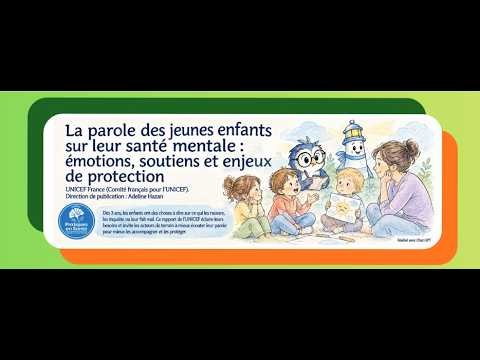
Starting at age 3, children have things to say about what reassures them, what worries them, or what hurts them. This report from UNICEF highlights their needs and invites field actors to listen to their voices better to support and protect them. The voices of young children on their mental health: emotions, support and protection issues UNICEF France (French Committee for UNICEF). Publication direction: Adeline Hazan Audio Capsules on Health Practices Analysis of Health Practices and link to the source This report helps professionals in early childhood, education, prevention, and the medico-social field to better understand what children aged 3 to 5 express about their emotions, their relationships, and their support needs. It presents supports and methods of exchange adapted to their age, without constituting a ready-to-use professional protocol. It also invites one not to confuse solicited adults with protective adults, and shows the importance of anticipating the follow-up when a child mentions violence. A useful read for reflecting on listening practices, the place given to the voices of young children, and coordination among professionals to protect them. The voices of young children on their mental health: emotions, support and protection issues #pratiquesensante #ChildSpeech #ChildMentalHealth #Kindergarten #PsychosocialSkills #OrdinaryEducationalViolence #ChildProtection #ChildRights #pratiquesensante #ParoleDeLEnfant #SantéMentaleInfantile #ÉcoleMaternelle #CompétencesPsychosociales #ViolencesÉducativesOrdinaires #ProtectionDeLEnfance #DroitsDeLEnfant (translated)