WRLD

Search

#DémocratieEnSanté
Oberlé Daniel 3d

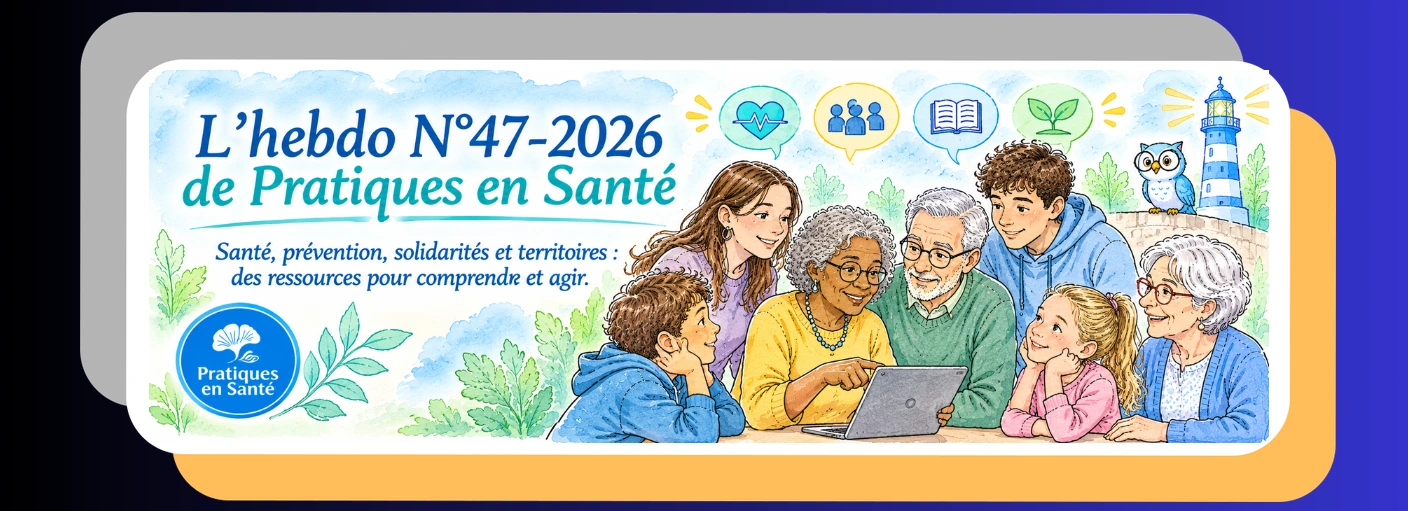
This issue of Health Practices explores major issues that affect our practices: children's mental health, protection of their rights, prevention of violence, access to care, and the fight against inequalities. It also questions public health choices, from the role of prevention in future policies to the real participation of citizens in the decisions that concern them. Occupational health, artificial intelligence, support for the elderly and disabled, physical activity among adolescents, and environmental health with endocrine disruptors complete this overview. Several resources provide scientific benchmarks, feedback from experience, and tools that can be directly applied on the ground. Not to mention subjects that invite debate and engagement, such as the Nutri-Score or migration. A new selection to understand, question practices, share knowledge, and most importantly, provide keys to act. This week, Health Practices has surpassed 2 million visitors - Thank you all for your interest. #PratiquesEnSanté #PromotionDeLaSanté #Prévention #SantéPublique #SantéMentale #DroitsDeLEnfant #InégalitésDeSanté #DémocratieEnSanté #SantéEnvironnementale #SantéAuTravail (translated)
www.pratiquesensante.com
L'Hebdo N°47-2026 de Pratiques en Santé | pratiquesensante
223
Oberlé Daniel 7d

🚨Two years after the WHO resolution on social participation in health, 226 actors from 74 countries share the same observation: they are increasingly consulted, but decisions are still made without them. A report from civil society explains why and outlines what needs to change for their voice to finally carry weight. 📒 Monitoring the implementation of social participation in health: a multi-actor evaluation ✍️ Civil Society Engagement Mechanism (CSEM), the civil society mechanism within UHC2030, in collaboration with the Global Health Council, IAPO, the George Institute, Save the Children, Amref Health Africa, Action Against Hunger, and other partners - October 2026 Audio Capsules on Health Practices 🎙️🎥 https://www.youtube.com/watch?v=_zaodrGzGYw Analysis of Health Practices and link to the source ℹ️➕ https://www.pratiquesensante.com/blog/pratiques-15/suivre-la-mise-en-%C5%93uvre-de-la-participation-sociale-en-sante-une-evaluation-multi-acteurs-6344 📌 This report is about you. It puts words and examples to what many experience: consultations where opinions are given without knowing what happens to them, associations that survive thanks to volunteering, audiences invited but rarely listened to. It mainly provides concrete guidelines for demanding better: written feedback on submitted opinions, dedicated budgets, criteria to verify if participation truly has an impact. A solid support for arguing in front of decision-makers. #️⃣ #SocialParticipation #HealthDemocracy #PublicHealth #HealthPromotion #UniversalHealthCoverage #CivilSociety #WHO #WHA77 #PowerToAct #HealthForAll #ParticipationSociale #DémocratieEnSanté #SantéPublique #PromotionDeLaSanté #CouvertureSanitaireUniverselle #SociétéCivile #OMS #WHA77 #PouvoirDAgir #SantéPourTous (translated)

www.youtube.com
Suivre la mise en œuvre de la participation sociale en santé : une évaluation multi-acteurs
909
Oberlé Daniel 7d

Four major names in public health call on the candidates of 2027: 22 priorities to shift from care to prevention, regulate alcohol, tobacco, and gambling, and give back a voice to citizens. Faithful to the Ottawa Charter? Partly. And why aim for only 5% for prevention? Analysis. For the presidential candidates: A manifesto for health: 22 priorities divided into 4 axes, detailed in approximately 110 to 115 recommendations. 4 public health doctors — Bernard Basset (former DGS, INPES, addictions), François Bourdillon (former DG of Santé publique France, InVS, INPES), Serge Hercberg (epidemiologist, former president of the PNNS, creator of the Nutri-Score), Philippe Quénel (epidemiologist, former president of the Scientific Council of SpF, president of AIRPARIF). Audio Capsules of Health Practices. Analysis of Health Practices and link to the source. This manifesto directly concerns you if you work in prevention, health promotion or in social and medico-social fields. It proposes to make prevention a real policy over ten years, to give territories the responsibility for the health of their entire population and to act on food, the environment, work, and addictions. These are your areas of action. Reading it will help you identify what could change for your missions and funding, measure the gap with the Ottawa Charter, and prepare your arguments to engage the candidates of 2027. #SantéPublique #PromotionDeLaSanté #Prévention #ChartedOttawa #Présidentielle2027 #InégalitésDeSanté #DéterminantsDeSanté #AccèsAuxSoins #DémocratieEnSanté #ManifestePourLaSanté (translated)

www.youtube.com
Pour les candidats aux présidentielles : Un manifeste pour la santé : 22 priorités en 4 axes
568
Oberlé Daniel 3w

Collecting the voice of patients is not enough: IGAS describes how to move from gathering to actions for improvement built with them. Twelve recommendations, benchmarks on the role of partner patients, and a warning about the audiences that are not heard. Patient Experience Mission at the hospital: a lever to transform, improve, and give meaning back. Stephanie Dupays, Bernard Goichot, and Philippe Sudreau, members of the General Inspectorate of Social Affairs (IGAS), with the participation of Maxence Teissier, IGAS intern. Audio Capsules of Health Practices Analysis of Health Practices and link to the source For caregivers, this report provides benchmarks for transforming patient voices into concrete improvements: better organizing reception and discharge, adapting pathways, and building solutions with the cared-for individuals. It shows how this partnership can strengthen trust, support cooperation, and give meaning back to the work, while specifying the necessary conditions and difficulties to anticipate. For the patient and their relatives, it helps to understand how their experience can contribute to improving care and hospital organization, beyond a satisfaction questionnaire. It presents different ways to participate, distinguishes the role of partner patients from that of user representatives, and emphasizes the need to better hear people facing digital, linguistic, or disability-related obstacles. #pratiquesensante #ExperiencePatient #PatientPartenaire #DemocratieEnSante #RepresentantsDesUsagers #eSatis #SavoirExperientiel #QualiteDesSoins (translated)

www.youtube.com
Mission Expérience patient à l’hôpital : un levier pour transformer, améliorer, redonner du sens
1270
Oberlé Daniel Sep 8

🇫🇷 : L'Hebdo N°36-2026 de Pratiques en Santé - https://www.pratiquesensante.com/blog/actualites-17/l-hebdo-n-36-2026-de-pratiques-en-sante-6174 Capsules Audio/Vidéo de Pratiques en Santé 🎙️🎥 https://www.youtube.com/watch?v=Nt7i8VriLs8 🇬🇧: The Weekly N°36-2026 of Health Practices - https://www.pratiquesensante.com/en/blog/news-17/l-hebdo-n-36-2026-de-pratiques-en-sante-6174 Le numérique traverse ce numéro d'un bout à l'autre. Pour les jeunes 2SLGBTQ+, il est parfois le premier endroit où poser des mots sur soi ; pour d'autres, il amplifie l'anxiété et la désinformation. Même l'intelligence artificielle en santé se lit ainsi : ni magie, ni catastrophe. À chaque fois revient la même invitation — ne rien diaboliser, ne rien idéaliser, garder l'esprit critique. Les grandes feuilles de route, sur la santé sexuelle comme sur le handicap, donnent le cap, mais rappellent que l'essentiel se joue sur le terrain. Et les déterminants les plus concrets — le bruit d'une rue, le chemin de l'école, un indicateur climat — pèsent autant que les stratégies nationales. Derrière chaque texte, une conviction : informer sans surplomber, outiller sans culpabiliser. #pratiquesensante #PréventionSanté #SantéDesJeunes #PréventionVSS #ÉducationAuNumérique #PromotionDeLaSanté #PolitiquesPubliques #InégalitésDeSanté #DémocratieEnSanté #LittératieSanté

www.pratiquesensante.com
The Weekly N°36-2026 of Health Practices
1302
Oberlé Daniel Sep 1

L'Hebdo N°35-2026 de Pratiques en Santé - https://www.pratiquesensante.com/blog/actualites-17/l-hebdo-n-35-2026-de-pratiques-en-sante-6159 Capsules Audio/Vidéo de Pratiques en Santé 🎙️🎥 https://www.youtube.com/watch?v=aFxZiE0OwgQ 🇬🇧: The Weekly N°35-2026 of Health Practices - https://www.pratiquesensante.com/en/blog/news-17/l-hebdo-n-35-2026-de-pratiques-en-sante-6159 La rentrée 2026 place la jeunesse au premier plan : loi sur les réseaux sociaux, généralisation de l'EVAR-S, prévention du bizutage, éducation aux médias… Les textes se multiplient, mais un même fil les traverse : distinguer ce que la règle impose vraiment de ce qu'elle affiche. La mesure phare de la loi « mineurs » a été censurée, Qualiopi durcit ses exigences, l'École se dote d'un cadre contre les violences sexistes et sexuelles. Plus loin, la recherche rappelle que l'essentiel n'est pas toujours le plus visible : c'est le sentiment de solitude, non le seul isolement, qui pèse sur la santé des aînés ; c'est la participation structurelle des usagers, non symbolique, qui fait la démocratie en santé. Cancers, santé des femmes précaires, accessibilité numérique, transformation du médico-social complètent ce numéro. Autant de repères pour ajuster l'action au plus près du terrain. #pratiquesensante #PréventionSanté #SantéDesJeunes #PréventionVSS #ÉducationAuNumérique #PromotionDeLaSanté #PolitiquesPubliques #InégalitésDeSanté #DémocratieEnSanté #LittératieSanté

www.pratiquesensante.com
L'Hebdo N°35-2026 de Pratiques en Santé | pratiquesensante
711
Oberlé Daniel Aug 27

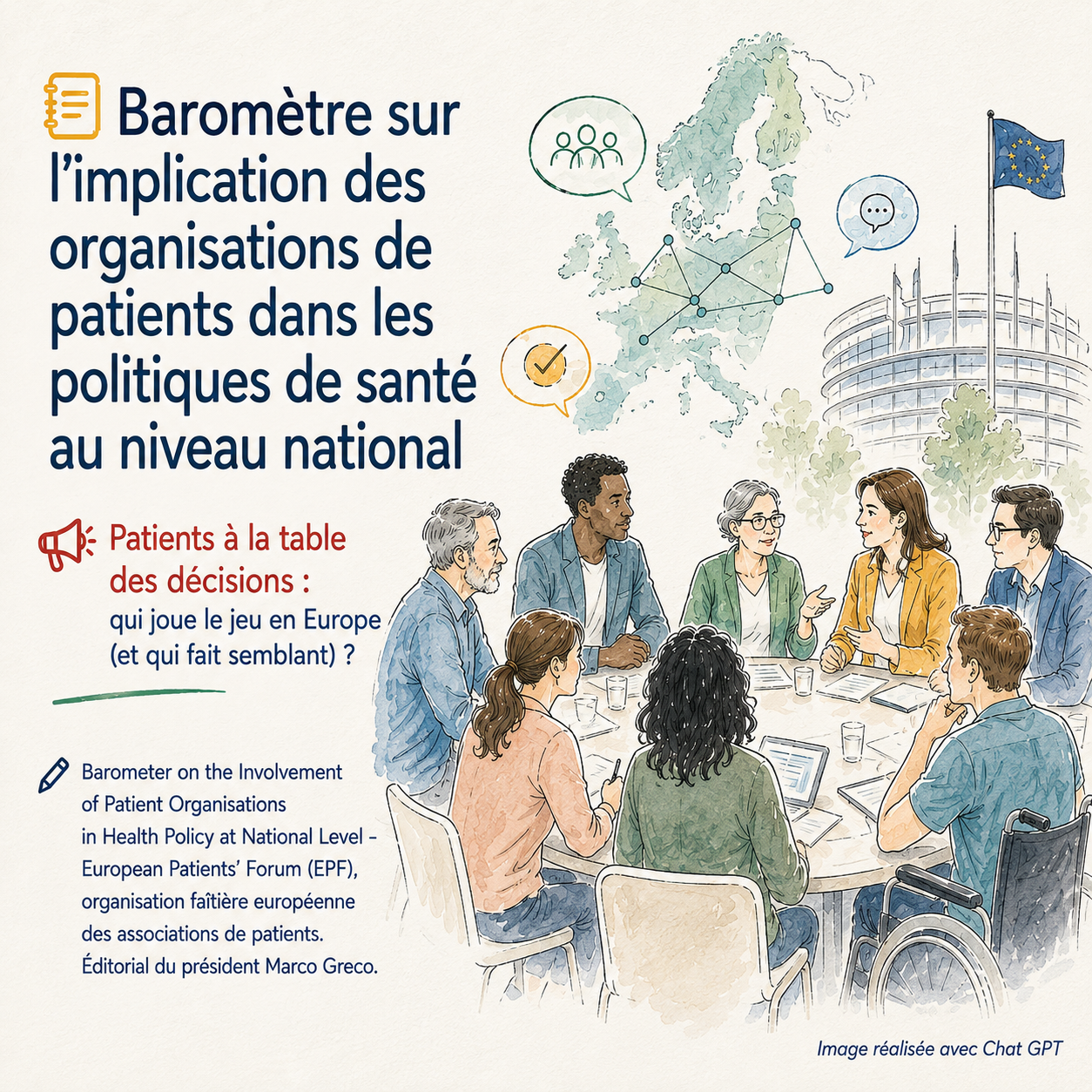
🚨 Patients à la table des décisions : qui joue le jeu en Europe (et qui fait semblant) ? 📒 Baromètre sur l’implication des organisations de patients dans les politiques de santé au niveau national ✍️ Barometer on the Involvement of Patient Organisations in Health Policy at National Level - European Patients’ Forum (EPF), organisation faîtière européenne des associations de patients. Éditorial du président Marco Greco. Capsules Audio de Pratiques en Santé 🎙️🎥 https://www.youtube.com/watch?v=PjTeyUBZ-HI 🔍💡 Implication des organisations de patients : 23 pays passés au crible. Plus d’1 sur 3 n’a aucun cadre institutionnel, et seuls 4 définissent juridiquement ce qu’est une organisation de patients. La participation reste souvent ponctuelle plutôt que structurelle. 🤝 Des repères concrets pour outiller le plaidoyer et la représentation des usagers Analyse de Pratiques en Santé et lien vers la source ℹ️➕ https://www.pratiquesensante.com/blog/pratiques-15/barometre-sur-l-implication-des-organisations-de-patients-dans-les-politiques-de-sante-au-niveau-national-6149 📌 Le document donne une grille de lecture concrète pour situer son propre pays — et sa propre pratique — sur l’implication réelle des usagers dans les décisions de santé, au-delà des discours. Il distingue nettement participation « symbolique » et participation « structurelle », et fournit des critères vérifiables (cadre légal, définition de l’organisation, transparence, financement, montée en compétences). Un acteur de terrain y trouve des arguments chiffrés et des exemples pour outiller un plaidoyer local, préparer une participation à une instance, ou évaluer la qualité d’une concertation dans laquelle il siège. 🇬🇧: Barometer on the Involvement of Patient Organisations in Health Policy at National Level - https://www.pratiquesensante.com/en/blog/practices-15/barometer-on-the-involvement-of-patient-organisations-in-health-policy-at-national-level-6149 #️⃣ #pratiquesensante #DémocratieEnSanté #ParticipationDesUsagers #PatientsPartenaires #OrganisationsDePatients #ETS #PlaidoyerSanté #PromotionDeLaSanté

www.youtube.com
Baromètre - Patients à la table des décisions : qui joue le jeu en Europe (et qui fait semblant) ?
949