
WRLD

Search

#ExperiencePatient
Oberlé Daniel 6h

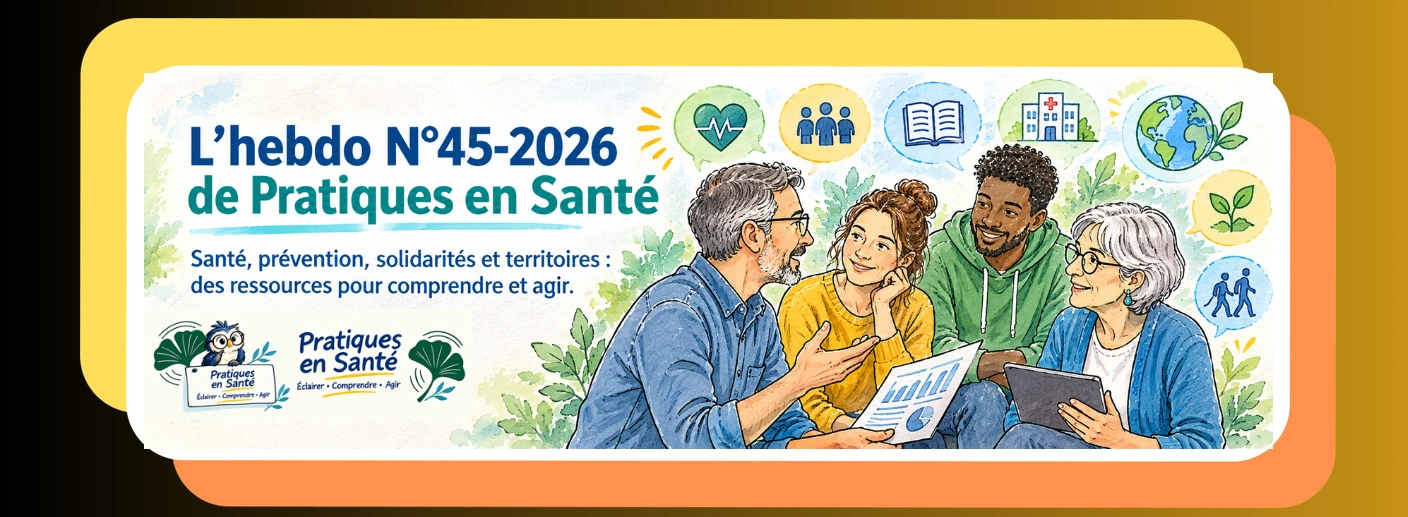
This week, Practices in Health offers you fifteen readings that start from the same observation: health is primarily played out in our living conditions. Unemployment, precariousness, mental burden, or violence weigh on mental health, particularly that of women and young people. Alcohol brands are investing in social networks to reach teenagers. Home care workers are working in difficult conditions. And sobriety cannot rely solely on individual actions. These documents remind us that prevention also means acting on people's environment. These readings also open up concrete avenues for field actors. They demonstrate the importance of involving young people, patients, and families, whether to create prevention content, improve hospitals, or assess the quality of care. They provide practical benchmarks on image rights in institutions, guidance in case of infertility, or physical activity as support for mental health. Finally, our file on disability poses a simple question: more systems, does it really mean more answers? Happy reading to all. #pratiquesensante #PromotionDeLaSanté #SantéPublique #SantéMentale #InégalitésSocialesDeSanté #PréventionAlcool #ParticipationDesJeunes #ExpériencePatient #MédicoSocial #Handicap (translated)
www.pratiquesensante.com
The Weekly N°45-2026 of Practices in Health
Oberlé Daniel 2d

Collecting the voice of patients is not enough: IGAS describes how to move from gathering to actions for improvement built with them. Twelve recommendations, benchmarks on the role of partner patients, and a warning about the audiences that are not heard. Patient Experience Mission at the hospital: a lever to transform, improve, and give meaning back. Stephanie Dupays, Bernard Goichot, and Philippe Sudreau, members of the General Inspectorate of Social Affairs (IGAS), with the participation of Maxence Teissier, IGAS intern. Audio Capsules of Health Practices Analysis of Health Practices and link to the source For caregivers, this report provides benchmarks for transforming patient voices into concrete improvements: better organizing reception and discharge, adapting pathways, and building solutions with the cared-for individuals. It shows how this partnership can strengthen trust, support cooperation, and give meaning back to the work, while specifying the necessary conditions and difficulties to anticipate. For the patient and their relatives, it helps to understand how their experience can contribute to improving care and hospital organization, beyond a satisfaction questionnaire. It presents different ways to participate, distinguishes the role of partner patients from that of user representatives, and emphasizes the need to better hear people facing digital, linguistic, or disability-related obstacles. #pratiquesensante #ExperiencePatient #PatientPartenaire #DemocratieEnSante #RepresentantsDesUsagers #eSatis #SavoirExperientiel #QualiteDesSoins (translated)

www.youtube.com
Mission Expérience patient à l’hôpital : un levier pour transformer, améliorer, redonner du sens
444
Oberlé Daniel Aug 18

🚨 8 ans d'Article 51 : ce que 166 expérimentations changent VRAIMENT sur le terrain 📒 Rapport au Parlement 2026 sur les expérimentations innovantes en santé - — Article 51 de la loi de financement de la sécurité sociale ✍️ Ministère de la Santé, des Familles, de l'Autonomie et des Personnes handicapées - Juillet 2026 Capsules Audio de Pratiques en Santé 🎙️🎥 https://www.youtube.com/watch?v=jFeoouAikiU 🔍💡 Innovation organisationnelle en santé : l'Article 51 montre, dispositif par dispositif, comment une réponse née d'un besoin local se structure, s'évalue et bascule dans le droit commun. 🧭 De la pharmacie rurale à la santé mentale « hors les murs », un répertoire de modèles à s'approprier. Analyse de Pratiques en Santé et lien vers la source ℹ️➕ https://www.pratiquesensante.com/blog/pratiques-15/rapport-au-parlement-2026-sur-les-experimentations-innovantes-en-sante-6126 📌 Ce rapport est moins un bilan à archiver qu'un catalogue de modèles d'organisation transposables et le mode d'emploi pour transformer un irritant local en projet financé et évalué. Un acteur de terrain y trouve des dispositifs concrets déjà éprouvés (antennes de pharmacie en zone rurale, régulation dentaire au SAMU, équipes mobiles en santé mentale, suivi numérique de proximité, réunions ville-hôpital rémunérées) qu'il peut répliquer ou adapter à son territoire. Il y comprend aussi le chemin réel — cahier des charges, accélérateur, appui ARS/DCGDR, période transitoire — pour porter sa propre idée. Enfin, il repère quelles expérimentations sont déjà passées en droit commun, donc mobilisables dès maintenant (urgences dentaires, parcours coordonné renforcé obésité, centres de santé sexuelle). 🇬🇧: Report to Parliament 2026 on innovative health experiments - https://www.pratiquesensante.com/en/blog/practices-15/rapport-au-parlement-2026-sur-les-experimentations-innovantes-en-sante-6126 #️⃣ #Article51 #InnovationEnSanté #AccèsAuxSoins #SantéDesTerritoires #ParcoursDeSoins #ExpériencePatient #DécloisonnementSanté #pratiquesensante

www.youtube.com
Rapport 2026 : 8 ans d'Article 51 : ce que 166 expérimentations changent VRAIMENT sur le terrain
355





