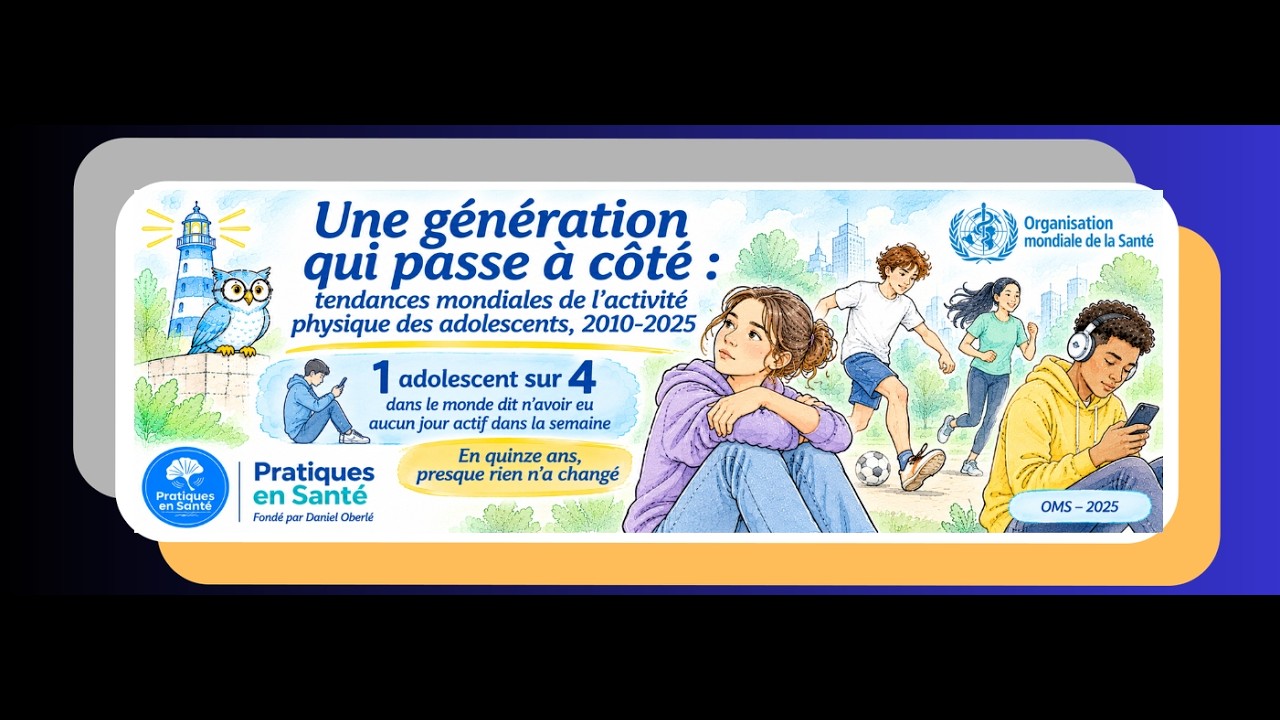
A quarter of adolescents worldwide report not having a single active day in the week. In fifteen years, almost nothing has changed. However, the new WHO report shows that some countries are doing much better than others, and that things can change. A generation missing out: global trends in adolescent physical activity, 2010-2025 World Health Organization (WHO), Geneva. The report was written by Dr. Fiona Bull and Dr. Juana Willumsen from the WHO headquarters' Physical Activity team, with funding from the WHO Foundation. Audio Capsules of Health Practices 🎙️🎥 https://www.youtube.com/watch?v=y50dPidY_tM Analysis of Health Practices and link to the source ℹ️➕ https://www.pratiquesensante.com/blog/pratiques-15/une-generation-qui-passe-a-cote-tendances-mondiales-de-l-activite-physique-des-adolescents-2010-2025-6349 In 16 highly readable pages, this report provides the latest global figures on physical activity for 11-17 year-olds. It shows that the gap between girls and boys persists and that progress is at a standstill. It also emphasizes that movement depends on the environments of young people and their opportunities, not just their individual choices. Finally, it proposes four main areas of action, useful for advocating for a project, convincing elected officials or partners, or rethinking an action with young people. A generation missing out: global trends in adolescent physical activity, 2010-2025 - https://www.pratiquesensante.com/en/blog/practices-15/a-generation-missing-out-global-trends-in-adolescent-physical-activity-2010-2025-6349 #PhysicalActivity #Adolescents #SedentaryLifestyle #WHO #HealthPromotion #GenderEquality #HealthInequalities #YouthHealth #SupportingEnvironments #Prevention #ActivitéPhysique #Adolescents #Sédentarité #OMS #PromotionDeLaSanté #ÉgalitéFillesGarçons #InégalitésDeSanté #SantéDesJeunes #EnvironnementsFavorables #Prévention (translated)