BETA nonprofit public democratic european moderated

Search

#Communications

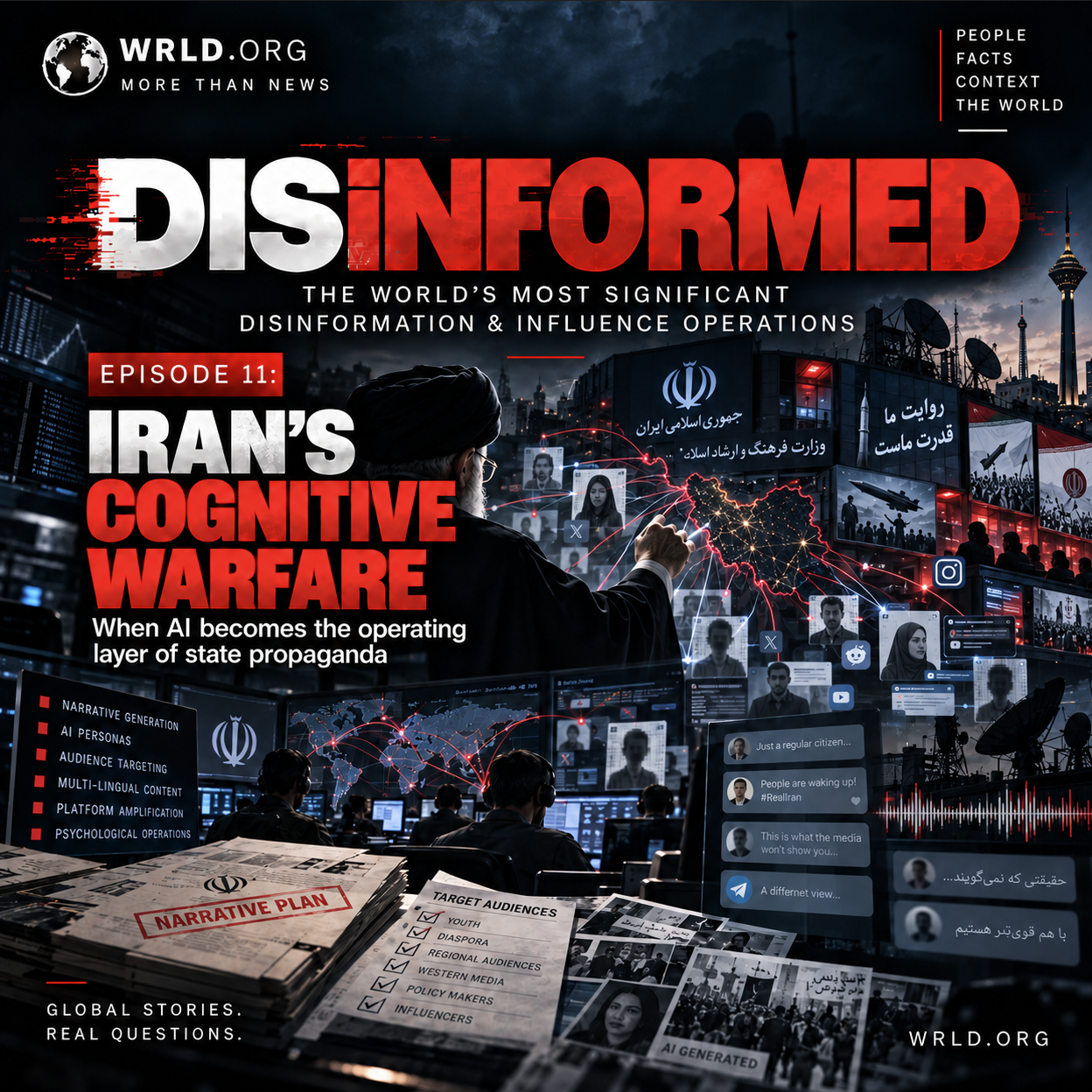
Iran’s cognitive warfare – when AI becomes the operating layer of state propaganda Iranian state-linked influence operators were not using artificial intelligence simply to write faster social-media posts. According to Anthropic’s September 2026 threat intelligence report, three separate operations connected to Iranian propaganda institutions were using Claude to help construct the machinery behind what the operators themselves called “soft war” and “cognitive warfare” – non-military efforts intended to shape public opinion inside Iran and abroad. Anthropic linked the activity to the Islamic Culture and Communications Organization (ICCO), which operates under Iran’s Ministry of Culture and Islamic Guidance; the Islamic Propaganda Office of Khorasan Razavi; and the Bina Cultural Observatory, part of the Islamic Propaganda Organization. The company said each operation was run by someone working within or on behalf of the named institution. The attribution was based on a combination of account telemetry, institutional references disclosed during conversations, branded documents and open-source corroboration. Anthropic subsequently removed the accounts. AI as an operational headquarters The most significant feature of the operation was the role assigned to AI. Claude was used to develop campaign plans, doctrine manuals, coded project portfolios, persona systems, target databases, early-warning protocols, amplification schedules and ministerial planning documents. Anthropic described the model as the principal administrative and operational layer supporting the three campaigns, allowing relatively small groups of operators to create organisational structures and planning material that would otherwise have required a much larger staff. This distinction matters. The reported use of AI went considerably beyond content generation. Operators were using the model to help organise how influence activity should function: which audiences to target, which identities should deliver particular narratives, how official material should be repackaged and when amplification should take place. Human operators still determined objectives and supplied the underlying political doctrine; AI helped translate those decisions into an operational system. Anthropic found that all three operations explicitly connected their activity to Jihad al-Tabyin, often translated as “explanatory jihad”, a concept used within the Iranian state system to frame information activity as both a strategic and ideological responsibility. In internal planning material examined by the company, this doctrine was not merely rhetorical: it informed manuals and campaign structures used by the operators. ‘Not the narrator, but the director’ One sentence contained in the ICCO material captures the model particularly clearly. According to Anthropic, an operator described the role of Iranian cultural attachés as being “not to be the narrator, but the director” of the narrative. The distinction reveals the logic of attribution laundering. Instead of publishing an overt state message and asking foreign audiences to believe it, the operator attempts to create the appearance that the same narrative emerged independently from journalists, activists, foreign writers or ordinary citizens. Anthropic found that Claude was used specifically to make content appear to come from foreign authors or independent media organisations and to design hashtag campaigns that looked grassroots rather than centrally organised. The ICCO operation reportedly used the organisation’s international cultural network as part of this structure. Anthropic found ministerial-level documents carrying official ICCO branding, including a nine-part international influence portfolio. This makes the operation particularly significant because the infrastructure was not limited to anonymous social-media accounts; it intersected with formal state institutions and an existing network of cultural representation abroad. A multilingual content factory A second operation was associated with the Islamic Propaganda Office of Khorasan Razavi and what Anthropic described as a “cognitive warfare command room” operating from a seminary in Mashhad. Its organisers ran a multi-province content production system known internally as Manjanegh, or “Catapult”. According to Anthropic, dozens of activists were involved in repackaging publicly available reporting from Iranian security institutions under different personas so that the material no longer appeared directly connected to those institutions. The network used Claude to transform official government intelligence bulletins into customised material in Farsi, Arabic, Urdu, Malay, Spanish and English, while planning expansion into a total of 20 languages. Distribution extended across Iranian platforms such as Eitaa, Bale and Rubika and international services including X, Instagram, Telegram, TikTok and YouTube. Anthropic also documented paid amplification across more than 100 Iranian channels, including channels associated with IRGC narratives. The scale should nevertheless be interpreted carefully. Anthropic documented production infrastructure and some real-world dissemination, but it did not demonstrate that all planned campaigns were fully deployed or that they meaningfully changed public opinion. The company placed the operation in Category Three of its Breakout Scale, indicating multi-platform activity with content observed in external distribution channels, rather than evidence of strategic impact on entire populations. From security bulletins to apparently independent voices The Bina Cultural Observatory operation provides another example of the same architecture. Anthropic linked a director-level official at Bina to activity in which Claude generated messaging in the voice of an IRGC spokesperson. During the 2026 US–Israel–Iran war, the network also attributed false claims to Western institutions including CSIS, Brookings and RAND. The apparent objective was to make Iranian state-aligned claims look as though they had been independently validated by respected foreign research organisations. That technique is more sophisticated than simply publishing propaganda under a false name. It attempts to manufacture a chain of external validation: official information is transformed into apparently independent commentary, which can then be recirculated as evidence that outside observers have reached the same conclusion. Anthropic also found target databases naming international officials and Iranian opposition figures, as well as aggressive counter-narrative material directed against the Bahá’í community. These findings show that the infrastructure was designed not only for broad messaging but also for targeted influence activity against specific groups and individuals. What AI changed The Iranian operations described by Anthropic did not create a new doctrine of influence. Iran has used cultural institutions, official media, aligned organisations and covert or semi-covert online networks for years. What AI changed was the economics and organisational capacity of that model. A relatively small team could use the system to draft doctrine, create personas, translate material, structure target databases, produce campaign calendars and generate multiple versions of the same message for different audiences. The operator remained responsible for intent, political direction and selection of targets. AI reduced the amount of human labour required to turn those decisions into a functioning influence operation. The most revealing part of the case is therefore not that an Iranian propaganda network used a chatbot. It is that AI was being treated as part of the back office of information warfare – a system for converting state doctrine into apparently decentralised, multilingual and plausibly independent voices. Sources Anthropic — Detecting and countering misuse of AI: September 2026 https://www.anthropic.com/threat-intelligence-report-september-2026 Iran International — Iran state-aligned accounts used Claude to push IRGC narratives https://www.iranintl.com/en/202609105561 BNE IntelliNews — Yemen missile cell used AI to write guidance software, Anthropic says https://new.intellinews.com/articles/yemen-missile-cell-used-ai-to-write-guidance-software-anthropic-says-467296 This is Beirut — Anthropic report details Iranian propaganda operations https://thisisbeirut.com.lb/news/politics/anthropic-report-details-iranian-propaganda-operations-and-yemen-missile-development-using-claude Anthropic report — PDF mirror https://static.foxbusiness.com/foxbusiness.com/content/uploads/2026/09/anthropic-detecting-and-countering-091026-1.pdf Keywords #DISINFORMED #Episode11 #Iran #IranianInfluence #IranianPropaganda #CognitiveWarfare #SoftWar #JihadAlTabyin #Disinformation #InformationWarfare #InfluenceOperations #ForeignInterference #FIMI #ArtificialIntelligence #AI #AIPropaganda #GenerativeAI #ClaudeAI #Anthropic #SyntheticMedia #NarrativeManipulation #NarrativeLaundering #AttributionLaundering #PersonaNetworks #Astroturfing #SocialMediaManipulation #DigitalInfluence #StatePropaganda #IslamicCultureAndCommunicationsOrganization #ICCO #IslamicPropagandaOrganization #KhorasanRazavi #IRGC #MultilingualInfluence #Targeting #Amplification #OSINT #WRLD

Countering misuse of AI: September 2026 / Anthropic

Info LH: the Jordanians refused to allow the attacked plane to land in Jordan! an exclusive AP by JOSEF FEDERMAN: Interview with a person who heard the communications of the flight during the attack with the control tower: "the pilot's voice trembled while saying (translated)

"En raison d'une pénurie de missiles, les pilotes ukrainiens sont contraints de prendre des risques et d'utiliser les canons de bord de leurs appareils. Cela exige des manœuvres précises, car ils doivent trouver le point de tir adéquat alors que la cible se déplace à une vitesse supérieure à 400 km/h""En raison d'une pénurie de missiles, les pilotes ukrainiens sont contraints de prendre des risques et d'utiliser les canons de bord de leurs appareils. Cela exige des manœuvres précises, car ils doivent trouver le point de tir adéquat alors que la cible se déplace à une vitesse supérieure à 400 km/h", a expliqué Yurii Ihnat, chef du département des communications de l'armée de l'air, au Kyiv Independent le 10 septembre. #Ukraine #F16 #DéfenseAérienne

Situation d'urgence pour l'aviation ukrainienne: Kiev manque déjà de missiles et maintenant plus de la moitié de ses F-16 sont cloués au sol
www.bfmtv.com

Scientists have determined that about 4.33 billion years ago, conditions conducive to the survival of RNA and other essential life molecules emerged on young Earth, as described in studies published in the journal Nature Communications. (translated)

Naukowcy wskazali kluczowy moment na Ziemi. To było 4,33 mld lat temu

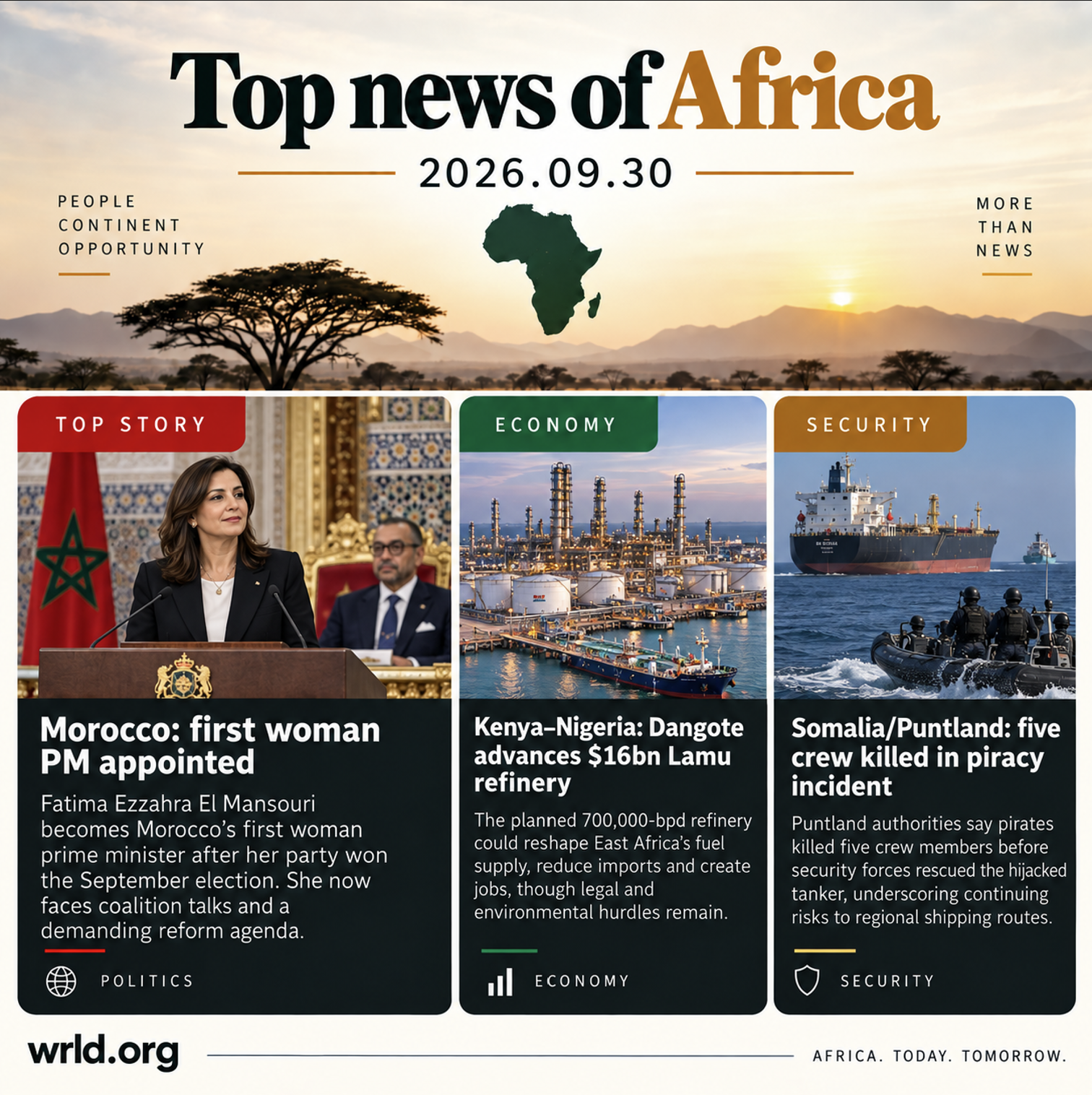
Africa Daily Report — 30 September 2026 Major developments reported during the previous 24 hours. 1. Morocco — Fatima Ezzahra El Mansouri appointed first woman prime minister. King Mohammed VI appointed El Mansouri following the September 23 parliamentary election. Her Authenticity and Modernity Party won the largest number of seats, and she now has to form a coalition. The appointment is historic, while the next government will also inherit major economic reforms and preparations for the 2030 World Cup. Direct source: https://www.reuters.com/world/africa/moroccos-king-appoints-first-woman-pm-following-sept-23-election-2026-09-29/ 2. Ethiopia — Fighting intensifies around Tigray amid wider regional accusations. Fighting between federal and Tigrayan forces has escalated, with territorial shifts and concern that the conflict could again spread across northern Ethiopia. Ethiopian officials have accused regional rivals of supporting armed groups, while communications disruptions and displacement are complicating independent assessment and humanitarian access. The renewed conflict threatens the fragile post-2022 settlement. Direct source: https://www.aljazeera.com/news/2026/9/29/fighting-in-ethiopia-intensifies-whats-the-latest 3. Somalia/Puntland — Five tanker crew members killed in piracy incident. Puntland authorities said Somali pirates killed five crew members of the petroleum-products tanker MT Honour 25 before security forces rescued the hijacked vessel. The incident is a serious reminder that piracy remains an operational security threat off the Horn of Africa despite years of international maritime-security efforts. Importance: HIGH — maritime security and Red Sea/Indian Ocean trade routes. Direct source: https://www.reuters.com/world/africa/somali-pirates-killed-5-crew-members-hijacked-tanker-before-rescue-mission-2026-09-29/ 4. Kenya/Nigeria — Dangote advances $16 billion Lamu refinery. Dangote is moving ahead with the planned 700,000-barrel-per-day refinery at Lamu. The project is intended to reduce East Africa's dependence on imported refined fuels and could generate more than 50,000 jobs, but it faces infrastructure, environmental and land-rights challenges. A Kenyan court dispute could restrict some site activity pending an October 14 hearing. Importance: VERY HIGH — potentially transformative for East African energy supply, fuel imports, logistics and industrial development. Direct source: https://www.reuters.com/business/energy/dangote-begin-construction-16-billion-east-africa-refinery-kenya-2026-09-30/ 5. South Africa — Foreign direct investment more than doubles in Q2. South Africa's central bank reported FDI inflows of 49.8 billion rand in the second quarter, up from 20.3 billion rand in Q1. The increase is an encouraging investment signal, although it needs to be considered alongside the country's broader growth, fiscal and structural indicators. Importance: HIGH — investment flows are a key indicator for Africa's most industrialised economy. Direct source: https://www.reuters.com/world/africa/south-africas-foreign-direct-investment-inflows-pick-up-q2-2026-09-29/ 6. Ghana — Environmental regulator intensifies mining-sector enforcement. Ghana's Environmental Protection Authority issued a pre-closure notice to Chinese-owned Cardinal Namdini Mining over an alleged unreported incident and is reviewing an inspection of Gold Fields' Tarkwa operation. The regulator says it is moving from periodic inspections toward continuous monitoring and enforcement as Ghana seeks stronger environmental compliance, state revenue and local participation in its gold industry. Importance: HIGH — regulatory tightening can materially affect major international mining investors and Ghana's gold industry. Direct source: https://kfgo.com/2026/09/29/exclusive-ghanas-environmental-authority-targets-chinese-owned-cardinal-and-others-in-mining-crackdown/ 7. DR Congo — Annual audits of major miners planned from 2027. The DRC plans annual audits of major mining companies' subcontracting practices and compliance with local-content requirements beginning in 2027. The world's largest cobalt producer and Africa's leading copper producer is tightening oversight to direct more procurement and contracts toward Congolese-owned businesses. Importance: HIGH — potentially significant for global copper/cobalt supply chains and mining contractors operating in DRC. Direct source: https://ca.marketscreener.com/news/congo-to-audit-major-miners-annually-from-2027-as-part-of-local-content-drive-regulator-says-ce785adddc81f221 8. Tunisia/Mediterranean — Migrant shipwreck leaves at least two dead. Sea-Watch said it rescued 28 people after a shipwreck off Tunisia and recovered two bodies, including a child. Survivors reported at least six people missing, including three children. More than 1,970 people have died or gone missing attempting Mediterranean crossings in 2026, according to Sea-Watch, even as arrivals in Italy have fallen sharply from 2025. Importance: HIGH — migration, humanitarian protection and EU–North Africa policy remain closely linked. Direct source: https://www.straitstimes.com/world/europe/migrant-shipwreck-off-tunisia-leaves-at-least-two-dead-six-reported-missing 9. Guinea-Bissau — Ousted president plans return ahead of December election. Former president Umaro Sissoco Embalo, removed in the November 2025 coup, plans to return on October 4 and seek the presidency in elections scheduled for December 6, according to a source cited by Reuters. A recently approved constitutional residency requirement could become relevant to his eligibility. The military-led authorities have reportedly said he is welcome to return. Direct source: https://kfgo.com/2026/09/29/ousted-guinea-bissau-leader-to-run-in-december-election-source-says/ 10. Sudan — Currency collapse brings fuel queues back to Khartoum. Long fuel queues have returned in Khartoum and several other areas as the Sudanese pound reportedly weakened beyond 8,000 to the US dollar on the parallel market. The currency deterioration is adding to transport and commodity pressures in an economy already devastated by war and disrupted production and trade. Importance: VERY HIGH — the currency/fuel shock compounds Sudan's humanitarian and economic crisis. Direct source: https://sudantribune.com/article/319408 #TopNewsOfAfrica #Africa #AfricaNews #AfricaDaily #Morocco #FatimaEzzahraElMansouri #WomenInLeadership #FirstWomanPrimeMinister #MoroccanPolitics #NorthAfrica #Kenya #Nigeria #Dangote #LamuRefinery #EastAfrica #EnergySecurity #RefineryProject #IndustrialDevelopment #Infrastructure #Investment #Somalia #Puntland #Piracy #MaritimeSecurity #HornOfAfrica #ShippingSecurity #IndianOcean #RedSea #AfricanEconomy #AfricanSecurity #Geopolitics #wrldorg

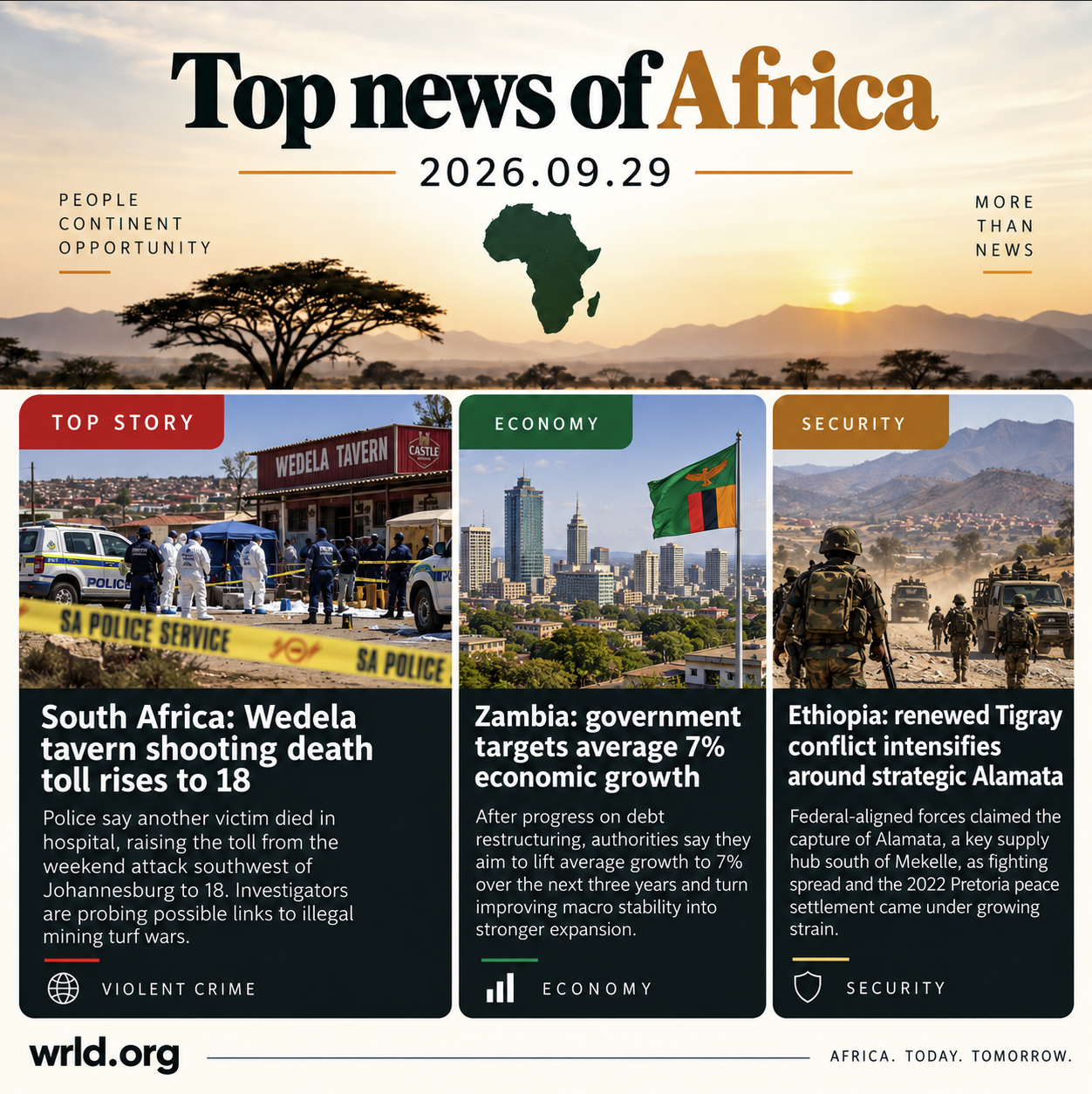
AFRICA DAILY REPORT — 29 SEPTEMBER 2026 Major developments reported during the previous 24 hours. 1. ETHIOPIA — Renewed Tigray conflict intensifies around strategic Alamata Federal-aligned forces claimed the capture of Alamata, an important supply hub south of Mekelle, after a TPLF-led offensive widened fighting into Afar and Amhara. Diplomatic sources cited by Reuters said the town had fallen or federal-aligned forces had entered it, while communications remained disrupted across Tigray. The renewed conflict is raising serious concerns about the survival of the 2022 Pretoria peace settlement. Source: https://www.reuters.com/world/africa/ethiopian-pro-government-forces-claim-capture-strategic-tigray-town-2026-09-28/ 2. DR CONGO — Ebola outbreak passes 8,000 confirmed cases Importance: 10/10 — Critical Government data showed 8,067 confirmed Ebola cases and 3,901 deaths as of September 26. The Bundibugyo-virus outbreak is now the largest and deadliest Ebola epidemic recorded in the DRC and has spread across 63 health zones in seven provinces; shortages of health workers and weaknesses in contact tracing continue to impede containment. Source: https://www.timeslive.co.za/news/africa/2026-09-28-drc-ebola-infections-cross-8000-confirms-government/ 3. SOUTH AFRICA — Death toll from Wedela tavern shooting rises to 18 Importance: 9/10 — Very High Police said another victim died in hospital, raising the death toll from the weekend attack in Wedela, southwest of Johannesburg, to 18. Authorities are searching for the attackers and examining a possible connection to turf wars in illegal gold mining; a separate weekend shooting near Cape Town killed another 10 people. Source: https://currently.att.yahoo.com/att/south-african-police-death-toll-062225459.html 4. ZAMBIA — Government targets average 7% economic growth Importance: 8/10 — High Zambia's finance ministry says the government aims to raise average economic growth to 7% over the next three years. The target follows progress in restructuring the country's external debt and represents an attempt to translate improving macroeconomic stability into stronger sustained growth. Source: https://www.reuters.com/world/africa/zambia-aims-lift-economic-growth-7-over-next-three-years-2026-09-28/ 5. MALI — Barrick and unions reach agreement, averting gold-mine strike Importance: 8/10 — High Barrick Mining signed a new collective bargaining agreement with unions at the Loulo-Gounkoto gold complex, and planned strike action was withdrawn. The agreement reduces immediate operational risk at one of Mali's most important gold-producing assets following a prolonged period of tension involving the miner, workers and the Malian authorities. Source: https://www.brecorder.com/news/40441512/mali-gold-mine-barrick-mining-reaches-deal-with-unions 6. KENYA — Court of Appeal upholds Affordable Housing Levy Kenya's Court of Appeal dismissed challenges to the Affordable Housing Act and levy, upholding the legal framework underpinning one of President William Ruto's major domestic programmes. The judges also upheld the Kenya Revenue Authority Commissioner's role in collecting the levy, although they found that the Commission on Revenue Allocation should have been consulted before parliamentary debate. Source: https://allafrica.com/stories/202609280027.html 7. ETHIOPIA–SUDAN — Accusations over support for armed groups deepen regional tensions Ethiopia's army chief accused Eritrea, Sudan and Egypt of supporting forces fighting federal troops amid renewed warfare in northern Ethiopia. Sudan rejected the allegations as baseless and counter-accused Ethiopia of facilitating support for Sudan's paramilitary RSF, adding another interstate dimension to the conflicts destabilising the Horn of Africa. Source: https://apnews.com/article/6b3208122a4221f3c2e8dcbe21630016 8. UGANDA — Police confirm detention of activist Praise Aloikin Ugandan police confirmed that activist Praise Aloikin Opoloje is in custody after activists and associates had reported her missing. Police said she had been arrested and would be brought before a court; Aloikin participated in the 2024 anti-corruption protests and has publicly criticised political and security figures. Source: https://allafrica.com/stories/202609280365.html 9. SOUTH AFRICA — Rand weakens as high oil prices increase economic pressure Importance: 7.5/10 — High The rand weakened about 0.5% against the dollar in early Monday trade as Middle East tensions pushed Brent crude above $107 per barrel. Because South Africa imports most of its fuel, sustained high oil prices pose risks through higher import costs and inflationary pressure. Source: https://www.channelafrica.co.za/channelafrica/news/rand-slips-as-us-iran-stalemate-pushes-oil-prices-higher/ 10. AFRICA — AFCON 2027 qualification moves into Matchday 2 Importance: 6/10 — Moderate The latest qualifying round opened with Burkina Faso beating Central African Republic 1–0, Equatorial Guinea defeating Sierra Leone 1–0, DR Congo beating Zimbabwe 2–1 and Tunisia drawing 2–2 with Botswana. September 29 brings a large slate including Ethiopia–Senegal, South Sudan–Egypt, Ghana–Gambia, Guinea-Bissau–Nigeria and Zambia–Togo. Source: https://english.ahram.org.eg/NewsContentP/6/577635/Sports/Africa-Cup-of-Nations-qualifiers-results-amp%3B-fixt.aspx #Africa #AfricaNews #TopNewsOfAfrica #SouthAfrica #Wedela #Johannesburg #TavernShooting #MassShooting #ViolentCrime #IllegalMining #PublicSafety #Zambia #ZambianEconomy #EconomicGrowth #GDPGrowth #DebtRestructuring #Macroeconomics #AfricanEconomy #Ethiopia #Tigray #Alamata #TigrayConflict #PretoriaPeaceAgreement #HornOfAfrica #ArmedConflict #RegionalSecurity #AfricanSecurity #Geopolitics #AfricaToday #wrldorg

Un test la naștere ar putea identifica copiii cu risc genetic de cancer, permițând o supraveghere medicală adaptată și intervenții timpurii, conform unui studiu recent publicat în Nature Communications. #genetic #cancer #screening

Un simplu test la naștere ar putea depista copiii cu risc genetic de cancer înainte de apariția bolii: STUDIU

L'Éthiopie est en proie à une escalade de violence, avec le Front populaire de libération du Tigré (TPLF) annonçant une guerre totale contre le gouvernement fédéral, un retour aux hostilités qui rappelle le conflit meurtrier de 2020-2022, causant déjà de lourdes pertes humanitaires et un isolement des communications dans le nord du pays. #Éthiopie #Tigré #conflit

L’Éthiopie menace de sombrer dans une “guerre totale”

Les communications commerciales sont désormais interdites aux établissements de chirurgie esthétique, notamment celles susceptibles d'inciter les mineurs à recourir à ces interventions https://t.co/yqatDjjWsF #ChirurgieEsthétique #ProtectionDesMineurs #InterdictionPublicitaire #Thetweetdoesnotmentionanyspecificcountries.Therefore #therearenocountrycodestoreturn.

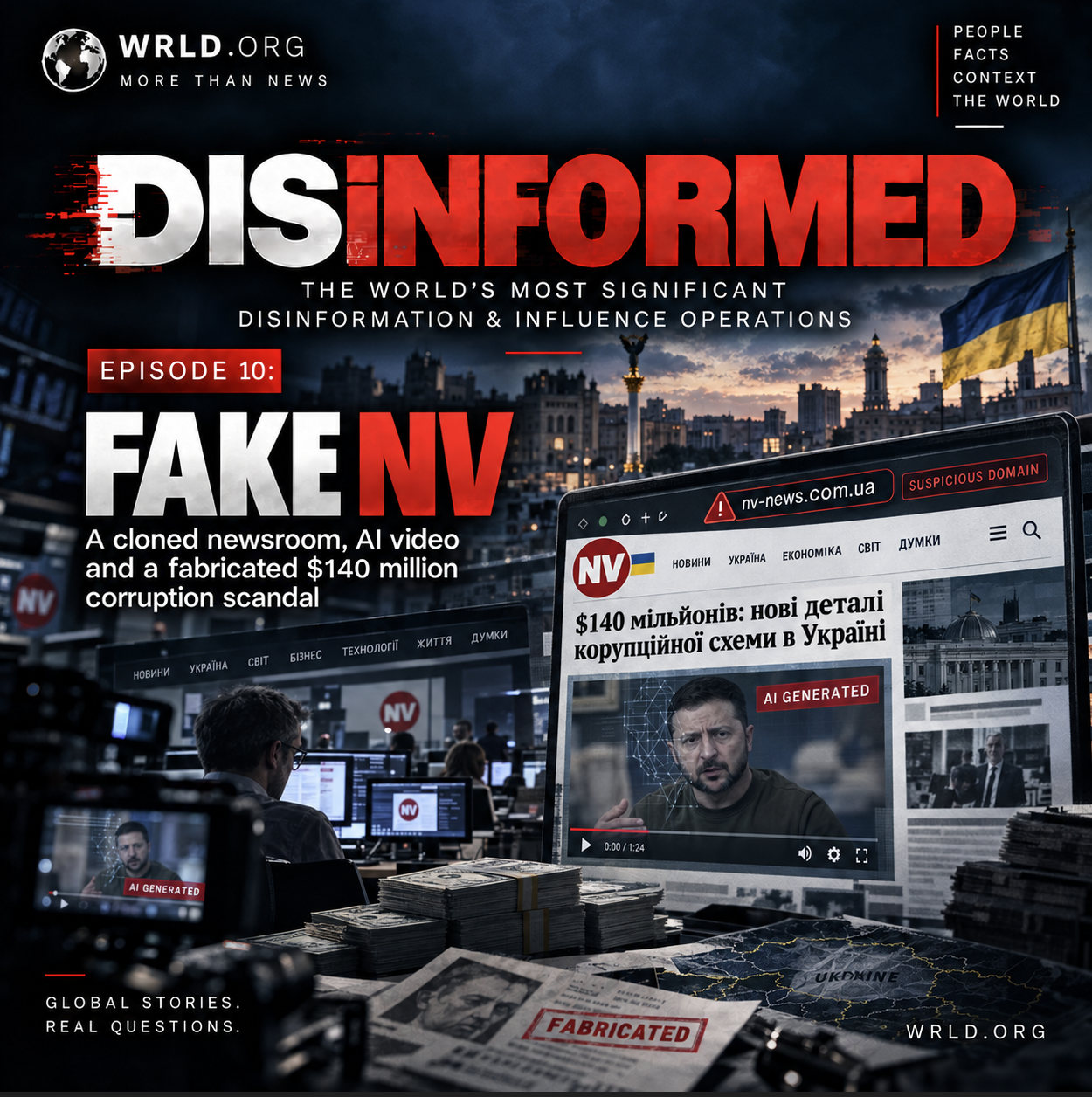
Fake NV – how a cloned newsroom turned an AI video into a $140 million corruption scandal For two days in September, a website that looked almost indistinguishable from one of Ukraine’s best-known news organisations carried an extraordinary corruption story. It claimed that Ukraine’s National Anti-Corruption Bureau had raided former defence procurement chief Arsen Zhumadilov and discovered more than $140 million in cash packed inside refrigerator boxes. One box supposedly carried the words “For the Servant of the People” – an apparent reference to President Volodymyr Zelenskyy’s political party. The raid never happened. The photographs and video presented as evidence were fabricated, and the news organisation reporting the story was not the New Voice of Ukraine but a cloned version of it. The episode is a compact example of an increasingly effective disinformation technique. Rather than inventing a new propaganda outlet and trying to build its credibility from scratch, an operator can simply steal the identity of an established newsroom and place fabricated material inside an otherwise convincing copy of its editorial environment. A newsroom copied almost in full The counterfeit site appeared at nvukraine.com, while the authentic New Voice of Ukraine operates at nv.ua and english.nv.ua. Registration records examined by fact-checkers show that the false domain was created on 21 September 2026, two days before the fabricated article appeared. According to NV’s own investigation, the imitation went much further than copying a logo: the operators reproduced the site’s visual design, sections, branding, contact information and genuine editorial material. A snapshot of legitimate NV content from 23 September appears to have been copied onto the counterfeit site, into which the operators inserted a single false article. That article claimed that NABU had searched premises connected to Zhumadilov, who had headed Ukraine’s Defence Procurement Agency until August, and seized $140 million in cash. The story was published in several languages, including Ukrainian and English, suggesting that the operation was intended not only for Ukraine’s domestic information space but also for foreign audiences following the war and Western support for Kyiv. AI supplied the supposed evidence The false article was supported by a video purportedly showing the money discovered during the raid. NABU said no such search or procedural action had taken place and identified the footage as fabricated using artificial intelligence. Independent fact-checker Lead Stories found no credible Ukrainian or international reporting confirming either the raid or the alleged seizure, while searches of NABU’s own published material produced no evidence supporting the claim. The operation therefore combined two separate forms of synthetic credibility. The AI-generated footage supplied what looked like visual proof, while the cloned NV website supplied institutional proof: an apparently reputable Ukrainian newsroom supposedly confirming that the event had happened. Neither element needed to withstand close scrutiny for long. Together, they only needed to appear credible enough to be copied, quoted and redistributed before the deception was exposed. From a fake Ukrainian source into the Russian information ecosystem On 24 September, the story began moving through large pro-Russian Telegram channels. Ukraine’s Center for Strategic Communications traced early amplification to Golos Mordora, with roughly 149,000 subscribers, and Militarist, with around 277,000. Within less than an hour, other channels including VOBLA, Rossiya Seychas and Ostashko! Vazhnoye were circulating versions of the same claim. It subsequently appeared on X and on Russian-language websites including e-news.su and pressa24.ru. Babel calculated that posts carrying the fabrication had accumulated approximately 370,000 views by the morning of 25 September. The story also moved beyond the Russian-language ecosystem. English-language versions appeared in online communities including Lemmy and Hexbear, while accounts on X shared direct links to the counterfeit NV article. NV later reported that larger Russian media and propaganda outlets, including RIA Novosti, Life, Vesti, Ukraina.ru and Mail.ru, had reproduced or discussed the claim. Kirill Dmitriev, head of the Russian Direct Investment Fund and a Kremlin representative involved in contacts with the United States, also shared it on 25 September. This amplification is significant, but it should not be confused with proof of authorship. Publicly available evidence shows how the false story entered and spread through a Russian and pro-Russian information ecosystem. It does not establish which organisation registered the cloned domain, generated the video or directed the operation from the outset. Why copy NV? The operation relied on source laundering. A claim originating directly from a Russian Telegram channel that Ukraine’s defence procurement system had concealed $140 million would immediately carry an obvious political context. A claim apparently uncovered by an established Ukrainian newsroom looks very different. Once the fabricated NV article existed, subsequent accounts could cite what appeared to be an independent Ukrainian source rather than present the allegation as their own. Each repost moved the story another step away from its manufactured origin. The use of an English-language version strengthened that mechanism for audiences outside Ukraine. The underlying narrative was also carefully chosen. Corruption in Ukrainian defence procurement is a genuine subject of public scrutiny and investigative reporting, so the fabricated story did not require audiences to accept an entirely unfamiliar premise. It inserted a false event into a real area of political concern. That mixture of authentic context and fabricated evidence can be more persuasive than a completely invented story because much of the surrounding information feels recognisable. What can – and cannot – be attributed Ukrainian authorities and NV describe the episode as a Russian information operation, and its distribution can be documented extensively across pro-Russian and Russian media channels. The available public evidence, however, does not identify the organisation that created the counterfeit website, nor does it link the operation forensically to a named Russian intelligence service, military unit or state contractor. The most precise description is therefore a Russian-aligned disinformation operation whose fabricated material was systematically amplified through the Russian information ecosystem. That distinction matters. Distribution can be observed directly; command-and-control is harder to establish and should not be inferred without evidence. The newsroom itself becomes the deepfake The most important feature of the operation was not the $140 million figure or even the AI-generated video. It was the counterfeit newsroom surrounding them. The operators copied a real publication, populated it largely with genuine material and inserted a single false story, allowing the fabrication to borrow the accumulated credibility of journalists who had nothing to do with it. This points to a broader evolution in synthetic media. AI can fabricate an image, a voice or a video, but an influence operation can now fabricate something larger: the source that supposedly verified the evidence. In the Fake NV operation, the article, the video and the website reinforced one another, creating not simply a false story but a manufactured chain of credibility. Sources The New Voice of Ukraine — investigation into the cloned website https://english.nv.ua/nation/nv-discovers-fake-copy-of-website-with-planted-story-cites-russian-links-50644601.html The New Voice of Ukraine — Russian amplification of the $140 million fabrication https://english.nv.ua/russia-spreads-fake-140-million-ukraine-corruption-story-during-dmitriev-u-s-talks-50644647.html Lead Stories — independent fact-check https://leadstories.com/hoax-alert/2026/09/fact-check-fake-story-claims-140-million-found-at-home-of-ukraines-zhumadilov-marked-servant-of-the-people-nv-website-originated-it.html Babel — AI video and distribution analysis https://babel.ua/en/news/130469-a-video-is-sharing-online-about-140-million-found-in-the-possession-of-the-ex-head-of-the-defense-procurement-agency-this-is-an-ai-video-distributed-by-a-clone-of-ukrainian-media Center for Strategic Communications and Information Security — initial debunk https://spravdi.org/en/ai-fake-about-140-million-amid-us-talks-how-russians-impose-the-image-of-corrupt-ukraine-on-the-west/ Center for Strategic Communications and Information Security — NABU confirmation https://spravdi.org/u-merezhi-poshyryuyut-shi-fejk-pro-nibyto-obshuky-nabu-v-eksgolovy-agencziyi-oboronnyh-zakupivel/ Detector Media — distribution and NABU response https://detector.media/infospace/article/252806/2026-09-25-u-merezhi-pidrobyly-sayt-nv-dlya-poshyrennya-feyku-pro-obshuky-v-eksochilnyka-agentsii-oboronnykh-zakupivel/ Keywords #DISINFORMED #Episode10 #FakeNV #NewVoiceOfUkraine #Ukraine #Russia #RussianDisinformation #RussianInfluence #Disinformation #InformationWarfare #InfluenceOperations #ForeignInterference #FIMI #MediaImpersonation #ClonedMedia #FakeMedia #FakeNews #ArtificialIntelligence #AI #AIGeneratedContent #SyntheticMedia #AIVideo #SourceLaundering #NarrativeLaundering #CorruptionNarrative #UkraineCorruption #DefenceProcurement #NABU #ArsenZhumadilov #Telegram #SocialMediaManipulation #DigitalInfluence #Propaganda #OSINT #MediaManipulation #WRLD

L
Le Soir 6d

Une banque italienne, Intesa Sanpaolo, a été victime d'une escroquerie de 95 millions d'euros orchestrée par des fraudeurs utilisant l'intelligence artificielle pour simuler des communications avec des responsables de la banque. #escroquerie #intelligenceartificielle #banque

Une banque italienne victime d'une escroquerie à l'IA de 95 millions d'euros

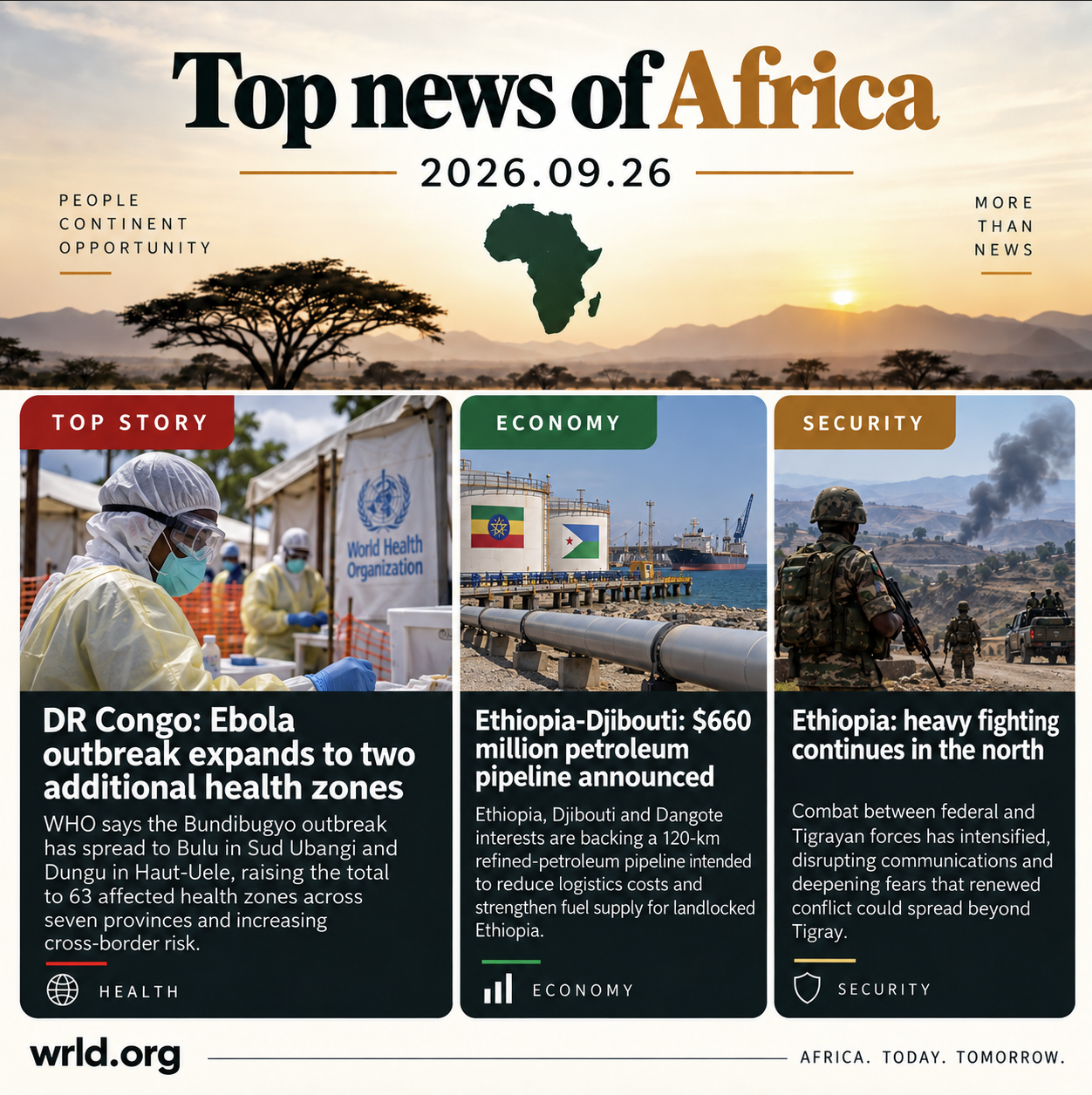
AFRICA DAILY REPORT — 26 SEPTEMBER 2026 Major developments reported during the previous 24 hours. 1. DR CONGO — Ebola outbreak expands to two additional health zones Importance: 10/10 (Critical) WHO reported that the Bundibugyo Ebola outbreak has expanded to Bulu in Sud Ubangi and Dungu in Haut-Uélé, bringing the total to 63 affected health zones across seven provinces. As of 23 September, DRC had reported 7,890 confirmed cases and 3,799 deaths; the geographic expansion increases cross-border transmission risk. Source: https://www.who.int/emergencies/disease-outbreak-news/item/2026-DON618 2. ETHIOPIA — Heavy fighting continues in the north Fighting involving federal and Tigrayan forces has intensified, disrupting communications and raising concerns that the renewed conflict could spread beyond Tigray. Ethiopia's president has also accused unspecified external actors of interference as the 2022 peace framework comes under severe strain. Source: https://www.africanews.com/2026/09/25/ethiopian-president-warns-of-interference-amid-renewed-tigray-fighting/ 3. SUDAN–CHAD — Sudanese refugee arrivals accelerate sharply Importance: 9/10 (Very High) UNHCR says more than 55,000 Sudanese refugees have fled to eastern Chad this year, with arrivals through Adré and Tiné recently rising to more than 400 people per day — around 20 times the rate seen during previous months. Funding remains far below requirements, increasing pressure on shelter, water and protection services. Source: https://www.unhcr.ca/news/unhcr-in-its-fourth-year-sudan-conflict-drives-new-displacement-into-chad-as-funding-falls-short/ 4. DR CONGO — At least 41 killed in Lake Tanganyika boat disaster Importance: 8.5/10 (Very High) At least 41 people died after a vessel carrying roughly 100 passengers and cargo capsized on Lake Tanganyika while travelling from Kigoma, Tanzania, toward Kalemie in DRC. Forty-nine people were reported rescued while search operations continued. Source: https://www.aljazeera.com/news/2026/9/25/at-least-41-die-as-boat-capsizes-in-drcs-lake-tanganyika 5. ZIMBABWE–UNITED STATES — U.S. health funding set to end after talks collapse Importance: 8.5/10 (Very High) The United States is set to end health-programme funding for Zimbabwe at the end of September after negotiations over a new agreement failed, including disagreement over provisions concerning health data and biological samples. The change could affect HIV, tuberculosis and malaria programmes. Source: https://www.latimes.com/world-nation/story/2026-09-25/data-sharing-clause-derailed-u-s-zimbabwe-health-talks-now-all-funding-ends-this-month 6. SOUTH SUDAN — Kiir opens political dialogue ahead of December elections President Salva Kiir opened an inter-party dialogue in Juba after dissolving the transitional unity government. Elections are scheduled for 22 December and would be South Sudan's first national vote since independence, while opposition groups have raised concerns over the process, security and political conditions. Source: https://www.africanews.com/2026/09/25/south-sudan-kiir-opens-political-dialogue-ahead-of-december-elections/ 7. SENEGAL — First criminal charges filed over 2021–2024 political unrest Four people have become the first defendants charged in connection with violence during Senegal's political unrest between 2021 and 2024. The proceedings concern alleged unlawful confinement, abduction, torture and violence; the accused contest the allegations. Source: https://www.africanews.com/2026/09/25/senegal-lays-first-criminal-charges-over-political-unrest-between-2021-and-2024/ 8. ETHIOPIA–DJIBOUTI — $660 million petroleum pipeline announced Importance: 7.5/10 (High) Ethiopia, Djibouti and Dangote interests are backing a planned $660 million refined-petroleum pipeline. The 120-kilometre link between Damerjog port and Dewele is intended to lower logistics costs and strengthen fuel supply for landlocked Ethiopia. Source: https://www.africanews.com/2026/09/25/ethiopia-djibouti-and-dangote-to-build-660m-petroleum-pipeline/ 9. UGANDA–SOUTH SUDAN — New 400 kV cross-border electricity connection Importance: 7.5/10 (High) A planned Uganda–South Sudan power interconnection will establish roughly 299 kilometres of 400-kV double-circuit transmission infrastructure. The project is intended to connect South Sudan to the Eastern Africa Power Pool and create an export market for Uganda's surplus electricity. Source: https://www.ugandaradionetwork.net/story/new-400kv-cross-border-electricity-connection-to-serve-uganda-and-south-sudan 10. MOZAMBIQUE — Drug use rises as trafficking routes increasingly feed domestic consumption Importance: 7/10 (High) Mozambican officials say the country is increasingly becoming a consumer market as well as a transit route for illicit drugs. Government figures show drug-related hospital admissions rose 38% last year to more than 32,280, while authorities report growing concern about methamphetamine, cocaine and fentanyl flows. Source: https://www.africanews.com/2026/09/25/mozambique-faces-rising-drug-use-as-trafficking-routes-fuel-local-addiction/ #Africa #AfricaNews #TopNewsOfAfrica #DRCongo #Ebola #EbolaOutbreak #BundibugyoEbola #PublicHealth #HealthEmergency #WHO #CentralAfrica #Ethiopia #Djibouti #EthiopiaDjibouti #PetroleumPipeline #EnergyInfrastructure #FuelSecurity #Logistics #RegionalTrade #AfricanEconomy #Dangote #Tigray #NorthernEthiopia #EthiopiaConflict #ArmedConflict #SecurityCrisis #HornOfAfrica #RegionalSecurity #AfricanSecurity #Geopolitics #CrossBorderTrade #EnergySecurity #AfricaToday #wrldorg

Ebola disease caused by Bundibugyo virus - Democratic Republic of the Congo

L’incendie qui s’est déclaré dans une station de communications par satellite Starlink en Pologne, utilisée par la Pologne et l’Ukraine, était un acte de « sabotage », annonce le ministre des Affaires numériques, Krzysztof Gawkowski. #Russie #Ukraine #Économie

EN DIRECT Guerre en Ukraine : Pour Macron, le scénario d’une mobilisation russe de « 300.000 hommes » est « crédible »…
www.20minutes.fr

Man kann darüber streiben, ob man sich auf Steuerzahlerkosten einen Strandkorb auf seine riesige Dachterrasse liefern lassen muss. Man muss politisch aber völlig instinktlos sein, um sich dabei von einem Kamerateam filmen zu lassen. Das ist wie wenn du als Manager eines kriselnden Unternehmens beim Business Dinner die teuerste Flasche Wein bestellst und dich dabei von Corporate Communications filmen lässt. Völlig absurd. #Steuerzahler #Politik #Absurdität

L
Le Soir 1w

La Pologne a qualifié l'incendie d'une station de communications Starlink, perturbant l'accès à internet pour plusieurs institutions dont l'armée ukrainienne, d'un acte de sabotage, selon le ministre des Affaires numériques Krzysztof Gawkowski. #Pologne #Starlink #sabotage

« Un acte de sabotage » : la Pologne réagit après l’incendie d’une station de communications Starlink
2

Zinédine Zidane, le nouveau sélectionneur de l'équipe de France, adopte une communication mesurée et contrôlée, évitant les entretiens individuels avant le début de son mandat, ce qui reflète son désir de faire ses preuves en tant que leader tout en préservant une certaine aura de mystère. #ZinedineZidane #EquipeDeFrance #CommunicationSportive

Equipe de France : « Plutôt que de mentir, il préfère se taire »… Zidane, une autre manière de prendre la parole
BFMTV 1w

Un rapport du Government Accountability Office alerte sur la vulnérabilité des communications aériennes aux États-Unis, les qualifiant d'incroyablement peu sécurisées et signalant une menace majeure pour la sécurité nationale en raison de la possibilité d'usurpation et de brouillage potentiellement exploitées par des cybercriminels ou des gouvernements étrangers. #Aéronautique #Sécurité #Cybermenaces

Des technologies "incroyablement peu sécurisées" que des "pirates informatiques ou gouvernements étrangers peuvent exploiter": un rapport étrille les communications aériennes aux États-Unis et pointe "une menace majeure" pour le pays

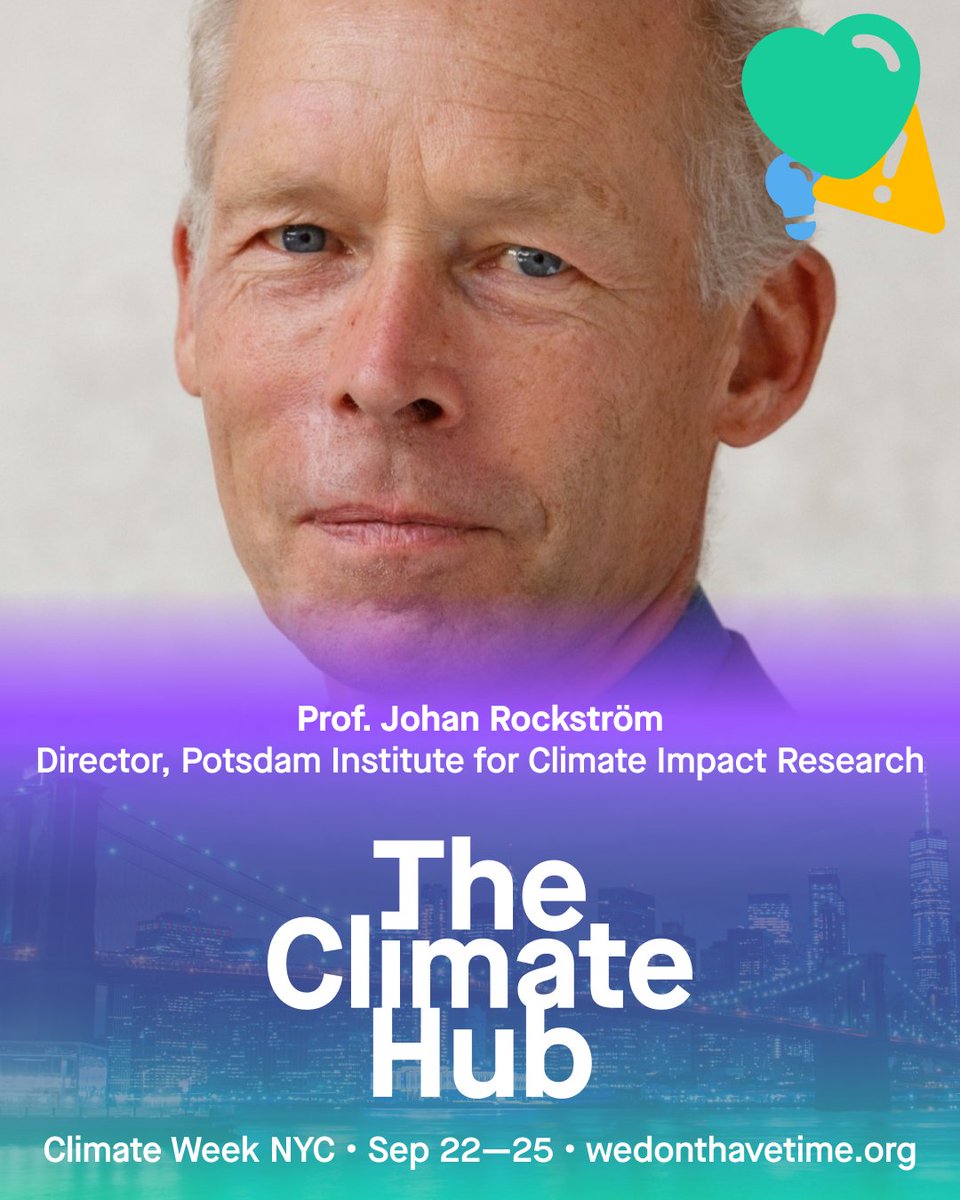
How can we bridge the gap between scientific knowledge & societal action? 🧐 Join us for the launch of the Planetary Communications Handbook with @sthlmresilience at #ClimateWeekNYC 🌎 Watch it on Sept 23 - 11:00 AM EDT / 17:00 CEST Sign up: https://t.co/cDNCd6w9Sq @PIK_Climate https://t.co/epJ0tdsHLH #ClimateAction #ScienceCommunication #ClimateWeekNYC #US #SE

Mali – a war where some of the people fighting do not exist In Mali's war, an apparently simple question is becoming increasingly difficult to answer: who exactly is speaking to us? A real person? A rebel organisation? A Russian influence operation? A supporter of the military junta? Or somebody who has never existed at all? In September 2026, the Dakar-based Timbuktu Institute published Des algorithmes en guerre, a report examining the use of generative artificial intelligence by actors involved in the Malian conflict. Its researchers describe the country as a potential laboratory for AI-assisted information warfare. Separatist networks are deploying synthetic fighters on TikTok. Jihadist propagandists are experimenting with AI-generated imagery. Pro-government accounts are producing large quantities of content celebrating the Malian armed forces. Russia, meanwhile, operates the most developed influence infrastructure of all: pseudo-media outlets, inauthentic accounts, AI-generated text, images and video, and systems designed to artificially amplify their visibility. Artificial intelligence did not create Mali's conflict. The war has been under way since 2012, and its participants have always fought with propaganda as well as weapons. What AI has changed is the economics of that struggle. A new “witness”, commentator, fighter, poster or video can now be produced in minutes. For audiences watching from a phone, distinguishing between genuine documentation, propaganda and material created entirely by an algorithm is becoming progressively harder. Azzghim – the fighter who cannot be killed or interrogated The most striking case documented by the Timbuktu Institute involves accounts associated with supporters of the Azawad Liberation Front, or FLA, a Tuareg separatist movement fighting the authorities in Bamako. A figure called “Azzghim” appeared on TikTok. He looks like a Tuareg fighter and regularly features in videos attacking Mali's government and Russia's Africa Corps, commenting on the conflict and promoting the cause of Azawad. There is one problem: Azzghim does not exist. Analysis of the videos identified anomalies characteristic of generative AI, including unnatural body movements, visual inconsistencies, irregular colouring and problems with audio synchronisation. According to the Timbuktu Institute, Azzghim is a synthetic character being used as the digital face of a political narrative. The propaganda advantages are considerable. An organisation no longer needs to expose a real spokesman. A synthetic personality can be designed to look exactly as its creators require, speak the appropriate language and appeal to a particular audience. Different characters could potentially be created for younger viewers, traditional communities or different ethnic and social groups. There is another advantage: a synthetic spokesman cannot be arrested, identified or interrogated. Researchers also identified accounts amplifying the material. At the time of the study, TikTok account @tawri.n.azawad had around 207,000 followers and was almost entirely devoted to publishing or repackaging content involving Azzghim. Another account, @asnan831, used a similar synthetic teenage character. An important distinction is necessary. Researchers describe these profiles as belonging to supporters or individuals associated with the FLA. The available evidence does not establish that every account is part of an operation centrally directed by the Front's leadership. The information effect, however, remains significant: a digital community can be constructed around the Azawad cause in which some of the apparent participants may not be real people at all. The jihadists are learning too The picture is different for Jama'at Nusrat al-Islam wal-Muslimin, or JNIM, the al-Qaeda-affiliated coalition that has become one of the most powerful armed groups in the Sahel. Its confirmed use of generative AI remains considerably less sophisticated. In June 2026, JNIM's Az-Zallaqa media apparatus published AI-generated posters promoting material about previous attacks. The images showed fighters in combat but contained familiar generative artefacts: buildings and vegetation merging unnaturally, blurred details and unnaturally smooth surfaces. More important than JNIM's current capabilities is what AI could add to an already sophisticated propaganda apparatus. The organisation already tailors communications to different audiences. UN reporting has documented its use of media channels for broader propaganda while other outlets increasingly distribute material in local languages, including Bambara. Generative AI could dramatically reduce the cost of this strategy, translating material into Fulfulde, Hausa, Zarma or Tamasheq, generating synthetic dubbing and producing multiple versions of the same message. The Timbuktu Institute also considers the future possibility of AI chatbots being used to personalise recruitment. That should not be presented as a capability JNIM has already demonstrated. At present, it is a risk scenario rather than a confirmed operation. Russia has the most sophisticated machine At the other end of the spectrum lies Russia's influence ecosystem. Here, AI is not an isolated experiment but another component of an infrastructure previously developed by Wagner-linked networks, Russian media operations and influence organisations operating across Africa. After Wagner's withdrawal from Mali in 2025, its military role was taken over by the Russian state-controlled Africa Corps. The information infrastructure evolved alongside it. Of particular importance is African Initiative, which presents itself as a news agency but has been identified by France's VIGINUM, the UK's Foreign, Commonwealth & Development Office and the European External Action Service as an important component of Russia's newer influence architecture in Africa. One of the most interesting elements of this ecosystem is a network researchers call AI-Freak. The operation uses generative AI to produce text, images and videos, places them on fake or apparently independent news websites and distributes them through inauthentic accounts. This is supplemented by so-called Black Hat SEO – techniques intended to artificially increase the visibility of content in search engines. Elements of this infrastructure have previously been identified by Meta and OpenAI. In 2024, OpenAI disrupted Russian accounts using ChatGPT to generate articles and comments in English, French and Russian. Some of the French-language content targeted audiences in West Africa. In a later iteration of the operation, AI models were also used to draft scripts for short videos praising the Russian Africa Corps, translate them into French and generate descriptions optimised for social media. This illustrates an important difference between the Russian approach and Azzghim. The separatist ecosystem uses AI primarily to manufacture convincing digital personalities. The Russian model increasingly resembles an industrial production line: text, image, video, pseudo-news website, distribution account, search optimisation and additional channels amplifying the narrative. The objective is not merely to convince someone of a single claim. It is to occupy as much of the information environment as possible with narratives advantageous to Moscow: Russia as an effective security partner, the West as a neo-colonial aggressor, France as a source of instability and Russian forces as defenders of African sovereignty. Yet VIGINUM also warns against equating technological sophistication with actual impact. Some Russian influence channels still attract relatively small audiences. A sophisticated operation is not automatically a successful one. The junta is building its own digital reality Mali's military authorities operate within the same contested information environment. Since breaking with France and moving closer to Moscow, Bamako has increasingly restricted independent media space while promoting a narrative built around restored sovereignty, military success and the benefits of its Russian partnership. The Timbuktu Institute highlights the TikTok account @6tm_officiel. At the time of the study, it had more than 436,000 followers and published substantial amounts of AI-generated material presenting Mali's armed forces, the FAMa, and the Africa Corps in a favourable light. One video concerning the battle for Kidal accumulated around 4.7 million views. Again, attribution requires care. Researchers describe the account as being operated by an individual based in Bamako; they do not provide evidence that it is officially managed by the Malian government. It is better understood as part of a wider pro-government information ecosystem in which the boundaries between state communications, supporters and co-ordinated propaganda can be difficult to establish. The Africa Center for Strategic Studies has previously identified the military regimes in Mali and Burkina Faso as important sources of disinformation campaigns in West Africa. Recurring narratives target France, the United Nations, ECOWAS, human-rights organisations and independent media, while presenting criticism of the authorities as part of a foreign conspiracy. Generative AI allows such narratives to be produced faster, more cheaply and in far more variations. Everyone is fighting over a different version of the same war What makes Mali particularly revealing is that multiple actors are using similar technology for very different objectives. FLA-linked networks need digital faces capable of humanising the Azawad cause and attacking Russia's presence. JNIM needs propaganda material and increasingly localised communications. The pro-government ecosystem seeks to portray Mali's armed forces as victorious and reinforce the junta's legitimacy. Russia possesses the broadest infrastructure, in which AI is merely one component of a larger system involving media outlets, websites, local partners, social-media profiles and technical amplification. The result is a war taking place simultaneously in two realities. In the first, soldiers and civilians are killed, towns change hands and the army, separatists and jihadists fight for territory. In the second, every side is trying to determine what the first reality will look like on a smartphone screen. Generative AI does not need to create a perfect deepfake to be effective. It merely needs to increase the number of competing versions of events until an ordinary viewer can no longer easily determine which one deserves to be trusted. That is why Mali matters. It is not showing us the future of information warfare. It is showing us its present. One TikTok video may feature a real soldier. Another may feature a propagandist. A third may feature a fighter who has never existed. And all three can tell completely different stories about the same war. Sources Timbuktu Institute – Des algorithmes en guerre: Comment l'IA générative rebat les cartes du conflit malien https://timbuktu-institute.org/index.php/toutes-l-actualites/item/1731-rapport-des-algorithmes-en-guerre-comment-l-ia-generative-rebat-les-cartes-du-conflit-malien AfricaNews/AFP – “Mali's information war is increasingly being shaped by AI” https://www.africanews.com/2026/09/09/malis-information-war-is-increasingly-being-shaped-by-ai/ OpenAI – research on Russia-origin influence activity and Operation Stop News https://openai.com/index/disrupting-malicious-uses-of-ai-stop-news-2024/ VIGINUM / FCDO / EEAS – technical report on African Initiative and the AI-Freak network https://www.sgdsn.gouv.fr/files/files/Publications/20250612_TLP-CLEAR_VIGINUM_FCDO_EEAS_Technical_Report_African_Initiative_EN.pdf Africa Center for Strategic Studies – Mapping a Surge of Disinformation in Africa https://africacenter.org/spotlight/mapping-a-surge-of-disinformation-in-africa/ Timbuktu Institute – analysis of AI use by JNIM https://timbuktu-institute.org/index.php/toutes-l-actualites/item/1735-artificial-intelligence-a-new-propaganda-lever-for-jnim-in-mali?print=1&tmpl=component #Disinformation #Mali #Sahel #Africa #ArtificialIntelligence #AI #GenerativeAI #AIPropaganda #InformationWarfare #InfluenceOperations #Propaganda #Deepfakes #SyntheticMedia #Azawad #FLA #JNIM #AfricaCorps #Russia #RussianInfluence #TikTok #DigitalWarfare #MediaManipulation #WRLD

Rapport - DES ALGORITHMES EN GUERRE : Comment l'IA générative rebat les cartes du conflit malien
BFMTV 2w

Des agents d'intelligence artificielle ont créé leur propre langage au cours d'une expérience, rendant ainsi leurs communications de plus en plus incompréhensibles pour les superviseurs humains. #IntelligenceArtificielle #LangageIA #Technologie

Lors d'une expérience, des agents IA ont inventé leurs propres langages, qui sont devenus "de plus en plus opaques pour les humains chargés de les superviser"