Franco Rodríguez Viau, a 22-year-old Argentine, has founded Satellites on Fire, a startup that uses satellite technology to detect wildfires more quickly than NASA's system, and has begun operations in Spain this summer. (translated)

Airbus plans to sell its space activities in the United States in order to focus on closer ties with Thales and Leonardo in Europe, according to the Financial Times. (translated)
The American army is investing tens of millions of dollars in acquiring satellite images from private providers to monitor strategic sites in China and South America, while seeking to improve its intelligence capabilities in the face of growing threats from adversarial countries. (translated)

Satellite images illustrate the devastating scale of the deadly mudslide that struck the Nepali villages of Kolputar and Betrawati Bazaar, causing at least 616 deaths and leaving many infrastructures submerged. (translated)

🇨🇳🇳🇵🌊 FLASH | La frontière entre la Chine et le Népal a été DÉVASTÉE par le gigantesque torrent de boue mortel. De nouvelles images satellites montrent que le poste-frontière de Rasuwagadhi a été entièrement détruit, tandis que la puissance des eaux a littéralement ravagé le fond de la vallée. Le bilan est d'au moins 359 morts et près de 1 000 personnes portées disparues. https://t.co/qHRrndcMNZ #Chine #Népal #catastrophe
The fire in the High Fens, having ravaged about 3,000 hectares in the East of Belgium, is illustrated by satellite images from Sentinel-2 that highlight the extent of the damage and the plume of smoke covering the region. (translated)
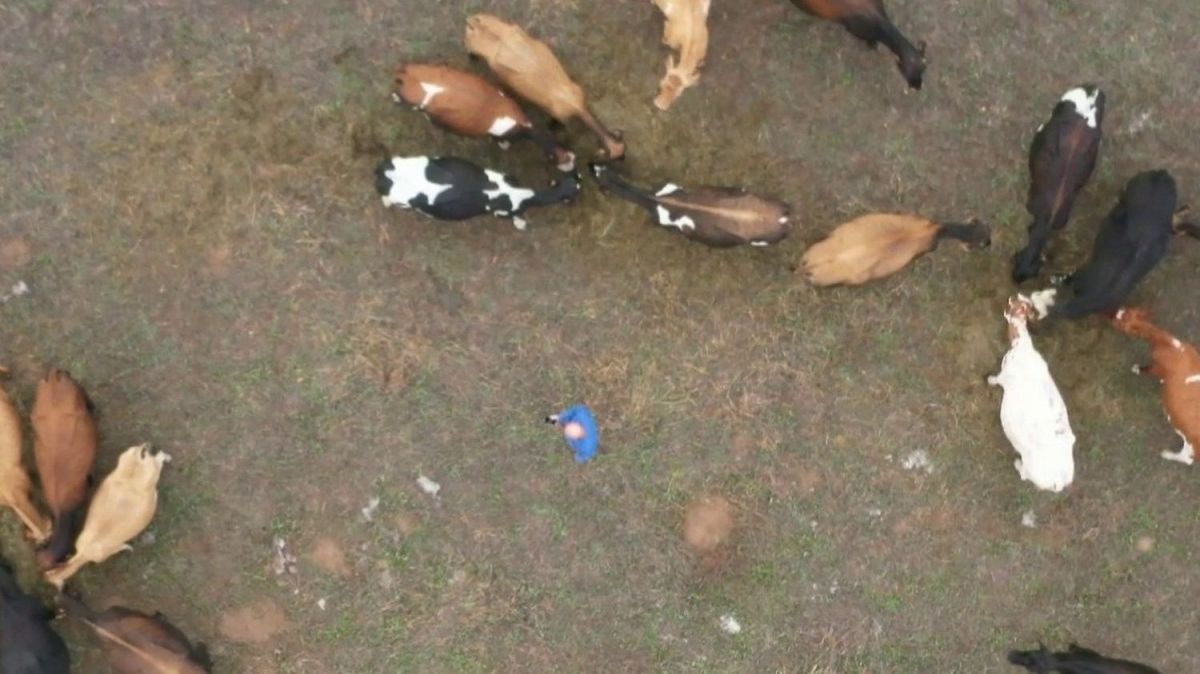
Europe has the talent & technology to lead in digital agriculture. Now we need to make sure farmers benefit from it. AI, satellites, drones & precision farming can boost productivity, use resources more efficiently & cut red tape🛰️🚜 Stay tuned👉Digital Strategy for Agriculture https://t.co/2jxic9IzRo #DigitalAgriculture #PrecisionFarming #AgTech #EU
The article raises the question of whether new technologies, such as artificial intelligence and satellites, could have allowed for an earlier detection of the fire in the High Fens, while criticizing the lack of adoption of these sophisticated systems by several countries, including Belgium. (translated)

🚀🔥🇺🇦🇷🇺 Les Flamingo ont frappé la Russie cette nuit ! Le Centre spatial « Progress », l’un des sites clés de l’industrie spatiale russe, a été frappé à Samara. RKC Progress assure notamment la conception et la production des lanceurs Soyouz, mais aussi de satellites d’observation de la Terre et d’équipements spatiaux utilisés au service de la sécurité nationale. Implantée dans une immense zone industrielle au sud-ouest de Samara, l’usine produit les composants et fuselages des fusées et réalise leur assemblage final, avec une capacité pouvant atteindre 20 lanceurs par an. Le site joue également un rôle essentiel pour Rassvet, la future constellation russe de satellites en orbite basse développée par Bureau 1440 pour concurrencer Starlink. Les deux premiers lots ont été lancés en mars et juillet 2026 à bord de Soyouz-2.1b. Une frappe sur Progress touche donc directement l’une des principales capacités russes de production de lanceurs et, potentiellement, le déploiement de sa future constellation satellitaire. #Espace #Russie #Conflit
🚀🔥 L’USINE DE FABRICATION DE FUSÉES RUSSES FRAPPÉE PAR AU MOINS UN FLAMINGO ! Plus de 1000 tonnes d’explosifs viennent de frapper ce site VITAL pour Poutine. Je vous explique 👇 RKC Progress (Progress Rocket Space Centre) est implantée dans une vaste zone industrielle au sud-ouest de Samara, avec des ateliers de production s’étendant sur environ un kilomètre. Le site fabrique les fuselages et composants des fusées et en assure l’assemblage final, avec une capacité annuelle pouvant atteindre 20 lanceurs. 🕵️♂️ Le programme Rassvet (« aube » en russe), développé par Bureau 1440, vise à constituer une constellation de satellites LEO censée rivaliser avec Starlink, avec un objectif d’au moins 288 satellites pour une pleine capacité opérationnelle. Les deux premiers lots de 16 satellites ont été lancés en mars puis en juillet 2026 depuis Plessetsk, tous deux à bord de Soyouz-2.1b 👉 Sans ce site, la Russie ne pourra pas déployer les lanceurs nécessaires pour mettre le reste des satellites de la constellation sur orbite. https://t.co/rqynM9mgwa #Espace #Géopolitique #Technologie
The article examines the discrepancies in the figures related to fires in France, explaining that the difference between the area covered by flames and that burned results from different calculation methods and assessments, carried out both by European systems using satellite images and by operational estimates from fire services, which can lead to significant discrepancies in the reported data. (translated)

Northrop Grumman is developing a new generation of robots capable of repairing and extending the lifespan of satellites in orbit, with the goal of making space more sustainable and reducing the maintenance costs of space infrastructure. (translated)

Benoît Biteau, the ecological deputy, emphasizes the need to create suitable conditions for the functioning of water storage in the face of the record drought currently affecting France, as indicated by satellite images showing largely dried landscapes. (translated)

Drought in France reaches record levels in August 2026, with satellite images showing a marked degradation of the land compared to previous years, exacerbated by a rainfall deficit of almost 70% in July, leading to water restriction measures in 94% of the country. (translated)

The Reflect Orbital project, which aims to place satellites that reflect sunlight toward the Earth at night, raises concerns among astronomers and experts due to potential risks to health, wildlife, and scientific research, particularly by making the night sky three to four times brighter and compromising astronomical observation. (translated)

« Si nous additionnons tous les satellites qui doivent être lancés dans le cadre des constellations et missions actuelles et prévues (…), nous constatons un pic des besoins de lancement autour de 2029, 2030 et 2031 »
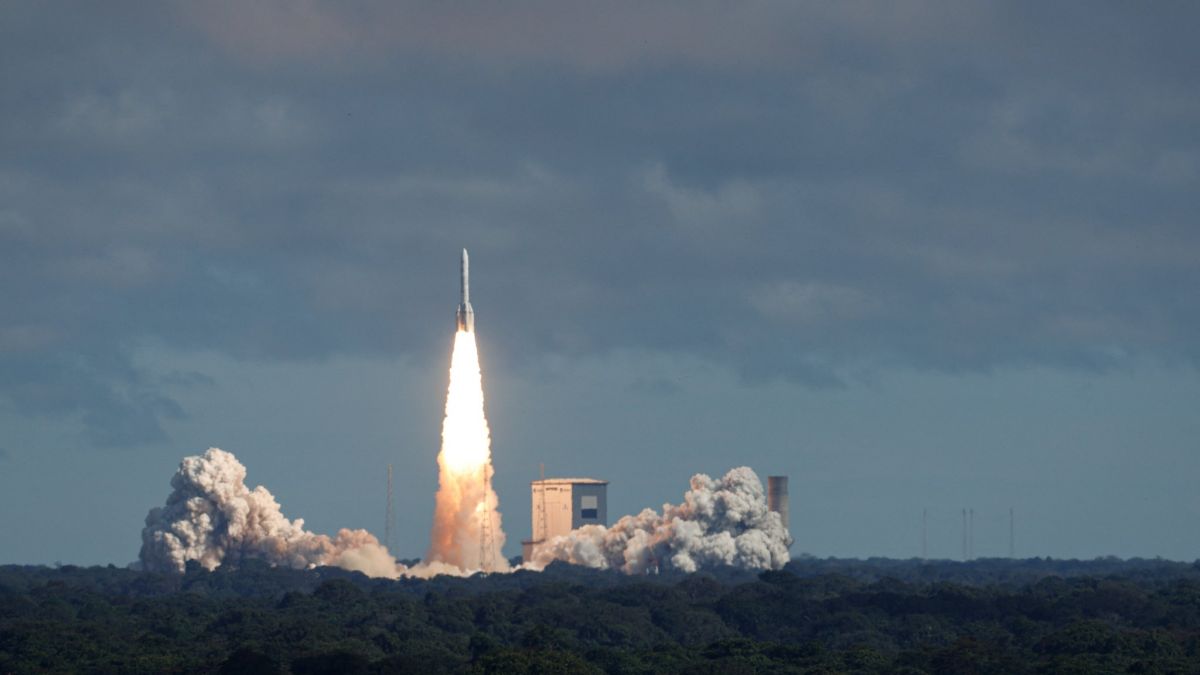
The Director General of the European Space Agency, Josef Aschbacher, warns of the risk of a shortage of launchers in Europe by 2030, as the demand for satellite launches is expected to peak around 2029-2031, while European launch capacities remain limited with only seven launches carried out in 2025 compared to 170 by SpaceX. (translated)
"Si l’on additionne tous les satellites à lancer depuis les constellations et missions actuelles et prévues... Nous constatons un pic des besoins de lancement autour de 2029, 2030, 2031"
The European Space Agency (ESA) has warned of a potential shortage of launchers by 2030 due to the growing demand for satellite launches, while the United States and China continue to expand their space capabilities, prompting the ESA to explore solutions to strengthen its launch program. (translated)