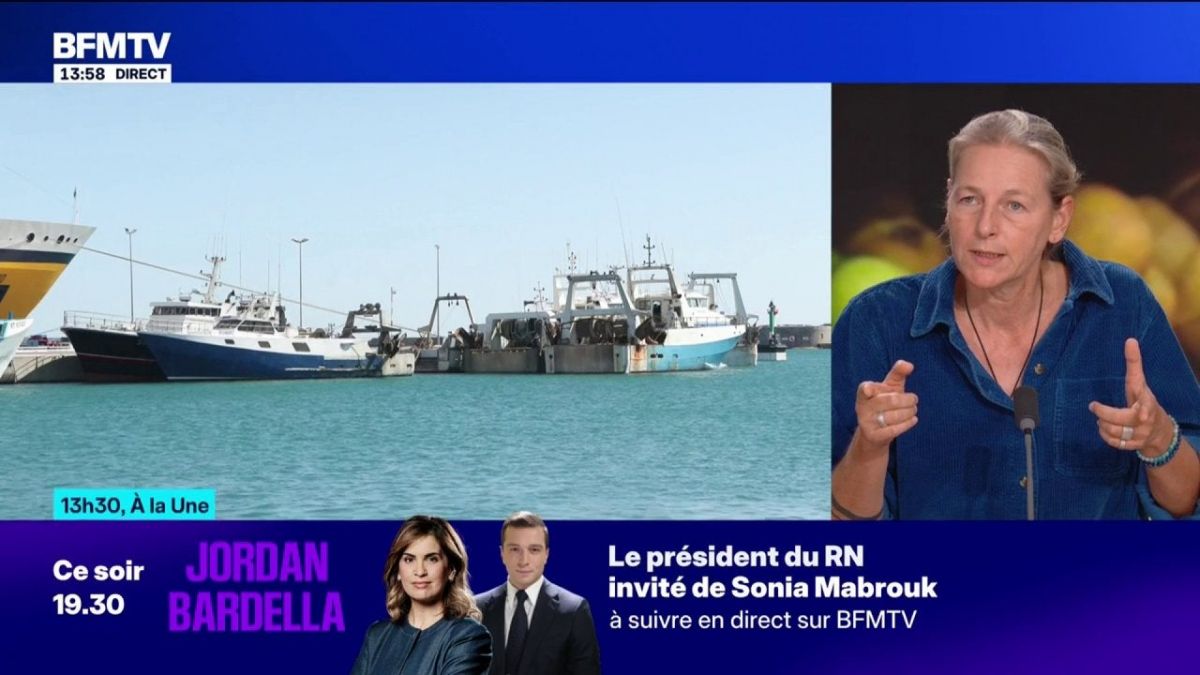
The inhabitants of Gard and Hérault assess the damage after exceptional rains that caused flooding, leaving many communities in difficulty and requiring the distribution of drinking water. (translated)

The inhabitants of Gard and Hérault assess the damage after exceptional rains that caused flooding, leaving many communities in difficulty and requiring the distribution of drinking water. (translated)

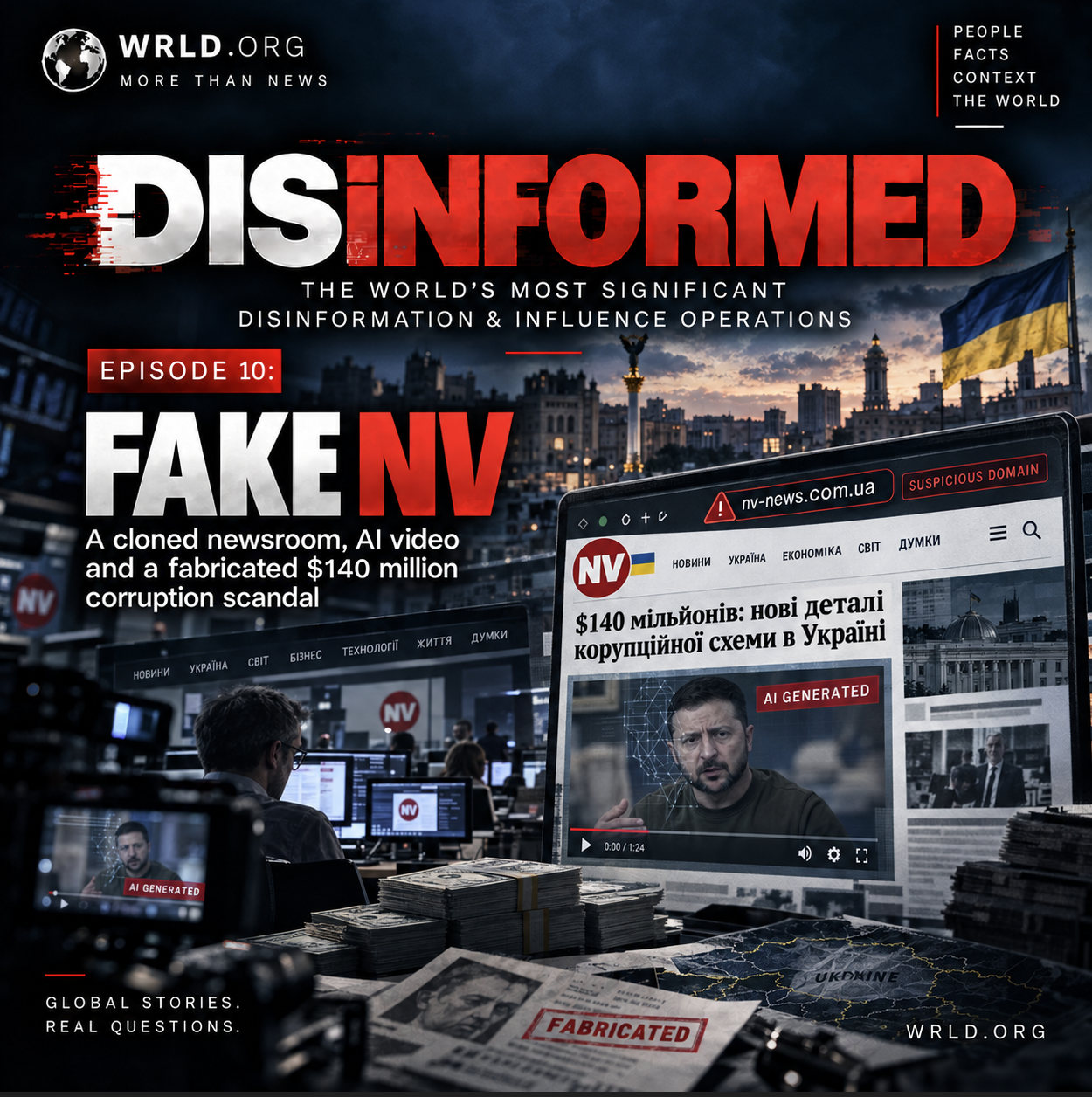
Fake NV – how a cloned newsroom turned an AI video into a $140 million corruption scandal For two days in September, a website that looked almost indistinguishable from one of Ukraine’s best-known news organisations carried an extraordinary corruption story. It claimed that Ukraine’s National Anti-Corruption Bureau had raided former defence procurement chief Arsen Zhumadilov and discovered more than $140 million in cash packed inside refrigerator boxes. One box supposedly carried the words “For the Servant of the People” – an apparent reference to President Volodymyr Zelenskyy’s political party. The raid never happened. The photographs and video presented as evidence were fabricated, and the news organisation reporting the story was not the New Voice of Ukraine but a cloned version of it. The episode is a compact example of an increasingly effective disinformation technique. Rather than inventing a new propaganda outlet and trying to build its credibility from scratch, an operator can simply steal the identity of an established newsroom and place fabricated material inside an otherwise convincing copy of its editorial environment. A newsroom copied almost in full The counterfeit site appeared at nvukraine.com, while the authentic New Voice of Ukraine operates at nv.ua and english.nv.ua. Registration records examined by fact-checkers show that the false domain was created on 21 September 2026, two days before the fabricated article appeared. According to NV’s own investigation, the imitation went much further than copying a logo: the operators reproduced the site’s visual design, sections, branding, contact information and genuine editorial material. A snapshot of legitimate NV content from 23 September appears to have been copied onto the counterfeit site, into which the operators inserted a single false article. That article claimed that NABU had searched premises connected to Zhumadilov, who had headed Ukraine’s Defence Procurement Agency until August, and seized $140 million in cash. The story was published in several languages, including Ukrainian and English, suggesting that the operation was intended not only for Ukraine’s domestic information space but also for foreign audiences following the war and Western support for Kyiv. AI supplied the supposed evidence The false article was supported by a video purportedly showing the money discovered during the raid. NABU said no such search or procedural action had taken place and identified the footage as fabricated using artificial intelligence. Independent fact-checker Lead Stories found no credible Ukrainian or international reporting confirming either the raid or the alleged seizure, while searches of NABU’s own published material produced no evidence supporting the claim. The operation therefore combined two separate forms of synthetic credibility. The AI-generated footage supplied what looked like visual proof, while the cloned NV website supplied institutional proof: an apparently reputable Ukrainian newsroom supposedly confirming that the event had happened. Neither element needed to withstand close scrutiny for long. Together, they only needed to appear credible enough to be copied, quoted and redistributed before the deception was exposed. From a fake Ukrainian source into the Russian information ecosystem On 24 September, the story began moving through large pro-Russian Telegram channels. Ukraine’s Center for Strategic Communications traced early amplification to Golos Mordora, with roughly 149,000 subscribers, and Militarist, with around 277,000. Within less than an hour, other channels including VOBLA, Rossiya Seychas and Ostashko! Vazhnoye were circulating versions of the same claim. It subsequently appeared on X and on Russian-language websites including e-news.su and pressa24.ru. Babel calculated that posts carrying the fabrication had accumulated approximately 370,000 views by the morning of 25 September. The story also moved beyond the Russian-language ecosystem. English-language versions appeared in online communities including Lemmy and Hexbear, while accounts on X shared direct links to the counterfeit NV article. NV later reported that larger Russian media and propaganda outlets, including RIA Novosti, Life, Vesti, Ukraina.ru and Mail.ru, had reproduced or discussed the claim. Kirill Dmitriev, head of the Russian Direct Investment Fund and a Kremlin representative involved in contacts with the United States, also shared it on 25 September. This amplification is significant, but it should not be confused with proof of authorship. Publicly available evidence shows how the false story entered and spread through a Russian and pro-Russian information ecosystem. It does not establish which organisation registered the cloned domain, generated the video or directed the operation from the outset. Why copy NV? The operation relied on source laundering. A claim originating directly from a Russian Telegram channel that Ukraine’s defence procurement system had concealed $140 million would immediately carry an obvious political context. A claim apparently uncovered by an established Ukrainian newsroom looks very different. Once the fabricated NV article existed, subsequent accounts could cite what appeared to be an independent Ukrainian source rather than present the allegation as their own. Each repost moved the story another step away from its manufactured origin. The use of an English-language version strengthened that mechanism for audiences outside Ukraine. The underlying narrative was also carefully chosen. Corruption in Ukrainian defence procurement is a genuine subject of public scrutiny and investigative reporting, so the fabricated story did not require audiences to accept an entirely unfamiliar premise. It inserted a false event into a real area of political concern. That mixture of authentic context and fabricated evidence can be more persuasive than a completely invented story because much of the surrounding information feels recognisable. What can – and cannot – be attributed Ukrainian authorities and NV describe the episode as a Russian information operation, and its distribution can be documented extensively across pro-Russian and Russian media channels. The available public evidence, however, does not identify the organisation that created the counterfeit website, nor does it link the operation forensically to a named Russian intelligence service, military unit or state contractor. The most precise description is therefore a Russian-aligned disinformation operation whose fabricated material was systematically amplified through the Russian information ecosystem. That distinction matters. Distribution can be observed directly; command-and-control is harder to establish and should not be inferred without evidence. The newsroom itself becomes the deepfake The most important feature of the operation was not the $140 million figure or even the AI-generated video. It was the counterfeit newsroom surrounding them. The operators copied a real publication, populated it largely with genuine material and inserted a single false story, allowing the fabrication to borrow the accumulated credibility of journalists who had nothing to do with it. This points to a broader evolution in synthetic media. AI can fabricate an image, a voice or a video, but an influence operation can now fabricate something larger: the source that supposedly verified the evidence. In the Fake NV operation, the article, the video and the website reinforced one another, creating not simply a false story but a manufactured chain of credibility. Sources The New Voice of Ukraine — investigation into the cloned website https://english.nv.ua/nation/nv-discovers-fake-copy-of-website-with-planted-story-cites-russian-links-50644601.html The New Voice of Ukraine — Russian amplification of the $140 million fabrication https://english.nv.ua/russia-spreads-fake-140-million-ukraine-corruption-story-during-dmitriev-u-s-talks-50644647.html Lead Stories — independent fact-check https://leadstories.com/hoax-alert/2026/09/fact-check-fake-story-claims-140-million-found-at-home-of-ukraines-zhumadilov-marked-servant-of-the-people-nv-website-originated-it.html Babel — AI video and distribution analysis https://babel.ua/en/news/130469-a-video-is-sharing-online-about-140-million-found-in-the-possession-of-the-ex-head-of-the-defense-procurement-agency-this-is-an-ai-video-distributed-by-a-clone-of-ukrainian-media Center for Strategic Communications and Information Security — initial debunk https://spravdi.org/en/ai-fake-about-140-million-amid-us-talks-how-russians-impose-the-image-of-corrupt-ukraine-on-the-west/ Center for Strategic Communications and Information Security — NABU confirmation https://spravdi.org/u-merezhi-poshyryuyut-shi-fejk-pro-nibyto-obshuky-nabu-v-eksgolovy-agencziyi-oboronnyh-zakupivel/ Detector Media — distribution and NABU response https://detector.media/infospace/article/252806/2026-09-25-u-merezhi-pidrobyly-sayt-nv-dlya-poshyrennya-feyku-pro-obshuky-v-eksochilnyka-agentsii-oboronnykh-zakupivel/ Keywords #DISINFORMED #Episode10 #FakeNV #NewVoiceOfUkraine #Ukraine #Russia #RussianDisinformation #RussianInfluence #Disinformation #InformationWarfare #InfluenceOperations #ForeignInterference #FIMI #MediaImpersonation #ClonedMedia #FakeMedia #FakeNews #ArtificialIntelligence #AI #AIGeneratedContent #SyntheticMedia #AIVideo #SourceLaundering #NarrativeLaundering #CorruptionNarrative #UkraineCorruption #DefenceProcurement #NABU #ArsenZhumadilov #Telegram #SocialMediaManipulation #DigitalInfluence #Propaganda #OSINT #MediaManipulation #WRLD
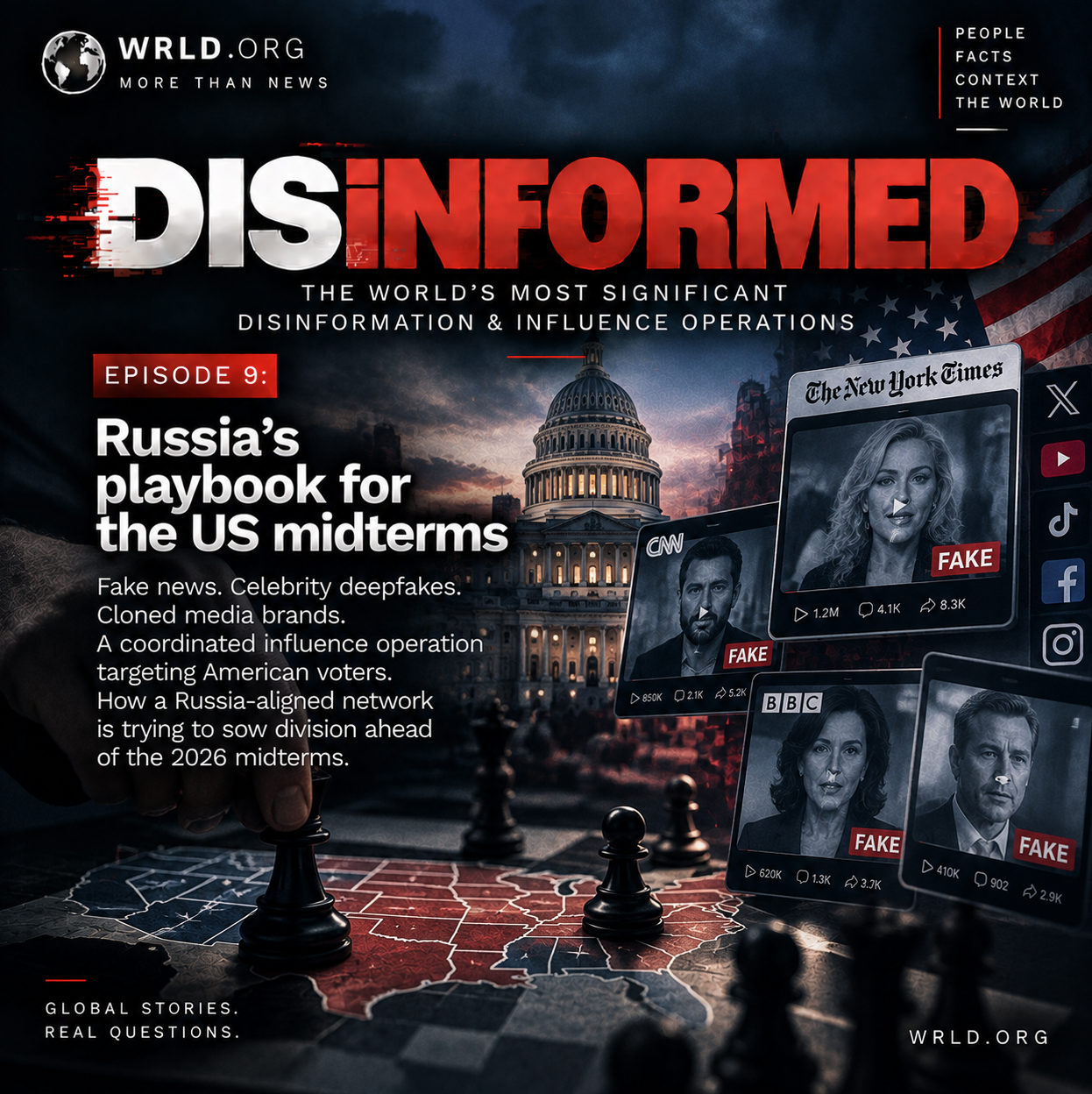
Russia’s influence operation arrives ahead of the US midterms With weeks remaining before America's November midterm elections, a familiar type of content has begun appearing online. Videos resembling reports from CNN, the BBC and The New York Times accuse candidates of corruption, antisemitism and misconduct. Hollywood actors appear to denounce Democrats. Other clips claim that warnings about Russian interference are themselves a Democratic disinformation campaign. The reports are fabricated. Graphika, which tracks online influence operations, says it has identified a coordinated campaign targeting candidates in competitive US Senate races. It assesses with high confidence that the material was produced by Operation Overload, also known as Matryoshka – a long-running Russia-aligned influence operation previously active against elections and political debates in Europe and the United States. The activity coincides with a broader warning from American intelligence officials. Classified assessments reported by The New York Times conclude that the Kremlin has authorised another digital influence campaign ahead of the 2026 midterms, aimed primarily at exploiting existing divisions and undermining confidence in American democracy. There is an important distinction. US officials have not reported evidence that Russia is attempting to manipulate voting machines or alter the counting of votes. The operation is about influencing the information environment surrounding the election. Fake scandals for competitive Senate races Graphika traced a concentrated wave of activity between 10 and 14 September. Likely inauthentic or repurposed accounts distributed videos accusing Democratic politicians of corruption, antisemitism and other misconduct. The targets included Senator Jon Ossoff in Georgia, Representative Chris Pappas in New Hampshire and Texas state representative James Talarico, as well as Senate candidates Sherrod Brown in Ohio, Roy Cooper in North Carolina, Mary Peltola in Alaska, Abdul El-Sayed in Michigan, Joshua Turek in Iowa and Troy Jackson in Maine. The selection was not random. These were politicians involved in Senate contests where the result could matter to control of the chamber. The campaign did not rely on a single political narrative. Instead, it attached different accusations to different candidates – corruption, social issues, antisemitism or personal misconduct – while maintaining a consistent production and distribution model. That model is characteristic of Matryoshka: create apparently independent pieces of evidence, disguise them as journalism and distribute them through networks of disposable accounts. Hollywood celebrities who never said what the videos claimed One of the campaign's more distinctive techniques involved genuine footage of American actors. Videos featuring celebrities including Sarah Jessica Parker and Julia Roberts were altered with captions and other material to suggest they were promoting the slogan #AllDemocratsAreCriminals. The technique continued in subsequent material. Fact-checkers identified fabricated New York Times-branded videos using footage of Alyssa Milano, Sean Astin, Rachael Harris, Leonardo DiCaprio, Eric Braeden, Annie Potts and Patrick Fabian. Some of the original footage came from Cameo, where actors record personalised video messages. Their authentic images were retained while fabricated audio, captions or surrounding material changed the meaning entirely. Lead Stories compared several of the clips with the originals and found that the supposed political statements did not appear in the genuine recordings. Eric Braeden's representative separately confirmed that the claim he had joined the anti-Democratic campaign was false. The advantage of the technique is straightforward. Generative AI does not need to create a convincing celebrity from nothing. The operator can begin with authentic footage of a recognisable person and manipulate only the elements necessary to manufacture a political statement. Stealing the authority of real newsrooms Celebrity impersonation was only one layer. The operation repeatedly borrowed the visual identity of established media organisations. Graphika identified material impersonating or falsely citing the BBC, CNN and Politico, alongside references to France's VIGINUM foreign-interference agency and journalist Brandy Zadrozny. Other material reproduced New York Times-style branding. Some fabricated reports made an unusual claim: that Democrats themselves were organising disinformation or “false-flag operations” and then blaming Russia. This creates a defensive layer around the influence operation. Instead of merely distributing false political allegations, the campaign also attempts to discredit future reporting about the manipulation itself. If successful, evidence exposing foreign interference can be reframed as part of the conspiracy. Graphika says it assesses with high confidence that Operation Overload produced these videos. The technique is well established. Earlier investigations by CheckFirst and Reset Tech documented hundreds of falsified pieces of content produced by Operation Overload, often impersonating journalists, institutions and major media brands. AI-generated or manipulated material has increasingly become part of that production system. What US intelligence says Russia is trying to achieve The broader strategic picture comes from American intelligence assessments reported on 18 September. According to US officials familiar with classified findings, the Kremlin has authorised a covert digital influence campaign aimed at Americans during the 2026 election season. Its apparent objective is to seed or amplify domestic divisions and weaken confidence in the political process. Some officials described the principal aim as creating disorder rather than helping a single political party. The publicly identified Matryoshka material examined so far, however, has targeted Democratic candidates. Those two findings should not be treated as contradictory. An operation can exploit partisan divisions while serving the broader objective of making the electoral system appear corrupt, chaotic or illegitimate. US officials also reportedly assess the current Russian campaign as less extensive or coordinated than some previous election operations. Moscow is considered less focused on congressional elections than presidential contests and remains heavily occupied by its war against Ukraine. Russia has denied previous US accusations of election interference. An operation with limited reach – so far There is another reason for caution: producing large quantities of disinformation is not the same as successfully influencing voters. Matryoshka has repeatedly demonstrated an ability to manufacture content at industrial speed, but much of its material receives little genuine engagement. Researchers monitoring the network have previously warned against confusing automated distribution and platform view counts with authentic audience penetration. There are exceptions. A fabricated New York Times-style video featuring Jamie Lee Curtis had accumulated nearly 200,000 views on X by the end of 17 September, according to reporting by The New York Times. Other pieces attracted considerably less attention. There is currently no public evidence demonstrating that the campaign has changed voting intentions or will affect election results. What the September activity demonstrates is something narrower but important: a Russia-aligned influence infrastructure previously used against European elections has now turned significant attention towards the American midterms. The basic method has changed little – impersonate trusted media, manufacture scandals and use networks of inauthentic accounts to distribute them. What has changed is the production technology. Authentic celebrity footage, synthetic voices, manipulated video and rapidly generated fake journalism allow the same operation to produce more tailored material for more candidates at lower cost. The objective does not require Americans to believe every fabrication. Creating uncertainty over which videos, news reports and public statements are authentic can itself degrade trust in the information environment surrounding an election. Sources - Graphika — Russia-Aligned Influence Operation Targets US Midterm Candidates, German State Elections https://www.graphika.com/insights/russia-aligned-influence-operation-targets-us-midterm-candidates-german-state-elections - The New York Times — Russia Aims to Inject Chaos Into Elections, U.S. Intelligence Finds https://www.nytimes.com/2026/09/18/us/politics/russia-election-disinformation-us-intelligence.html - Kathimerini / The New York Times — Russia Aims to Inject Chaos Into Elections https://www.ekathimerini.com/nytimes/1315792/russia-aims-to-inject-chaos-into-elections-us-intelligence-finds/ - CheckFirst — Operation Overload: An AI-fuelled escalation of the Kremlin-linked propaganda effort https://checkfirst.network/operation-overload-an-ai-fuelled-escalation-of-the-kremlin-linked-propaganda-effort/ - CheckFirst — Operation Overload targeting the US election https://checkfirst.network/operation-overload-a-growing-disinformation-threat-now-targeting-the-u-s-presidential-election/ - Lead Stories — Fake NYT videos: Alyssa Milano, Rachael Harris and Sean Astin https://leadstories.com/hoax-alert/2026/09/fact-check-fake-new-york-times-videos-of-alyssa-milano-rachael-harris-sean-astin-falsely-claim-they-support-all-democrats-are-criminals.html - Lead Stories — Fake NYT videos: Leonardo DiCaprio, Eric Braeden and other celebrities https://leadstories.com/hoax-alert/2026/09/fact-check-fake-new-york-times-videos-of-leonardo-dicaprio-eric-braeden-other-celebs-falsely-claim-they-support-all-democrats-are-criminals.html - Brennan Center for Justice — AI Is Changing Foreign Election Influence https://www.brennancenter.org/our-work/analysis-opinion/ai-changing-foreign-election-influence - ODNI — previous US intelligence assessment of foreign election information operations https://www.dni.gov/files/ODNI/documents/assessments/NICM-Declassified-Foreign-Threats-to-US-Elections-After-Voting-Ends-in-2024.pdf - FBI / ODNI / CISA — previous joint assessment of Russian election influence operations https://www.fbi.gov/news/press-releases/joint-odni-fbi-and-cisa-statement-110424 #DISINFORMED #Episode9 #Russia #UnitedStates #USMidterms #Midterms2026 #USElections #ElectionInterference #ForeignInterference #RussianInfluence #RussianDisinformation #OperationOverload #Matryoshka #Disinformation #InformationWarfare #InfluenceOperations #FIMI #ArtificialIntelligence #AI #AIPropaganda #Deepfakes #SyntheticMedia #MediaImpersonation #FakeMedia #FakeNews #PoliticalDisinformation #CelebrityDeepfakes #SocialMediaManipulation #DigitalInfluence #ElectionSecurity #CognitiveWarfare #Graphika #OSINT #Democracy #WRLD

⚡️🇫🇷FLASH - En croisade contre la gauche, Kristell #Niasme, maire #LR de Villeneuve-Saint-Georges et proche de Bruno #Retailleau, vient d’interdire la distribution de #tracts dans sa ville. Depuis son élection, elle a aussi fait supprimer les panneaux d’#expression libre. Dans la ville la plus pauvre du Val-de-Marne, la maire de droite a aussi privé de subventions des associations #caritatives locales, dont le Secours populaire, rapportait récemment Le Canard enchaîné. Celle qui préside l’« Observatoire des villes #LFI », créé par Retailleau, est « une grande démocrate », raille l’insoumis Manuel #Bompard sur X… #Politique #France #Liberté
Lors d'un forum BFMTV, Maximilien, superviseur dans la grande distribution, déclare que la crise des carburants fait que le gouvernement nous vole, soulignant les effets dévastateurs de la hausse des prix sur la vie quotidienne des Français. #CriseDesCarburants #VieChère #BFMTV

A fast, elegant open-source distribution for those who value performance, simplicity, and privacy. Based on Ubuntu Cinnamon Crest, powered by your intent. Engineered in Belgium for those who care about their privacy. https://www.hoopoelinux.org/
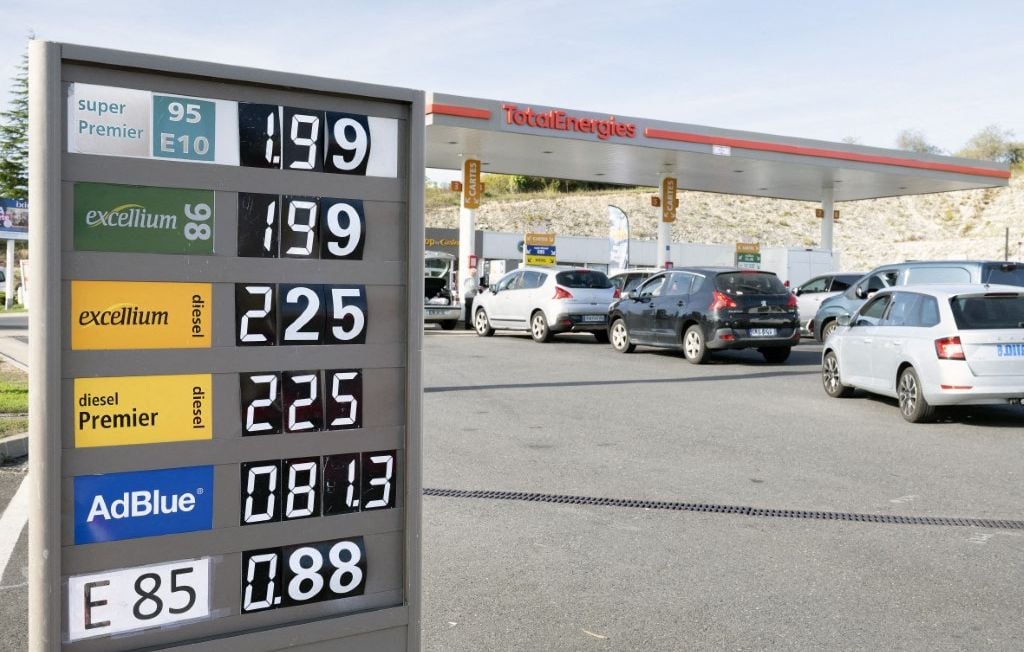
Le prix des carburants en France varie considérablement d'une région à l'autre, atteignant jusqu'à 2,445 euros le litre en Bourgogne-Franche-Comté, tandis que des régions comme la Corse affichent des tarifs plus bas grâce à des mécanismes de distribution spécifiques et une concurrence accrue. #PrixCarburants #Essence #Gazole

Russia’s fake African newsrooms – propaganda designed to look local A Facebook user in Nairobi, Accra, Johannesburg or Luanda encounters what appears to be a local news page. It publishes stories about African politics, Western influence and relations with Russia. The language is tailored to an African audience and the page presents itself not as a foreign broadcaster, but as part of the local information landscape. Behind some of these outlets, however, Meta found operators based in Russia. In its 2026 threat research, the company disclosed a Coordinated Inauthentic Behaviour network targeting audiences in Angola, Ghana, Kenya and South Africa. Meta removed 37 Facebook accounts and 29 Pages connected to the operation. Around 30,000 users followed at least one of the Pages, while the operators spent approximately $7,000 on Facebook and Instagram advertising, mostly in euros and US dollars. The numbers are relatively modest. The method is considerably more important. Rather than openly distributing Russian state messaging, the network posed as local African news sources and grassroots organisations, promoting narratives about Western colonialism and political interference while presenting Russia as a credible economic and political alternative. It was an old geopolitical message delivered through a much more effective identity: not Moscow speaking to Africa, but Africans apparently speaking to one another. A news outlet that was actually an influence operation Meta's investigation found that the network attempted to conceal its Russian origin while creating media brands that appeared indigenous to the countries they targeted. Its content amplified historical grievances against former colonial powers, criticised Western involvement in Africa and promoted closer relations with Russia. One example helps illustrate how the infrastructure was assembled. A Facebook Page targeting Kenya was called Kenya Watchtower. According to OpenAI's subsequent investigation, Facebook transparency records showed that the Page had previously been named “Farmtown5”. It appears to have been acquired or repurposed rather than built from scratch as a Kenyan news organisation. Some Pages also exposed administrator locations in Russia and Ukraine. Other elements of the network had previously targeted audiences in Zambia and Namibia. This use of apparently local identities is particularly important in the African information environment. A story published by RT or another identifiable Russian outlet arrives with an obvious geopolitical provenance. The same narrative presented by something resembling an independent Kenyan, Ghanaian or South African newsroom carries a different kind of credibility. The source appears closer to the reader, and the geopolitical interest behind the message becomes less visible. Then investigators found Dr Manuel Godsin The Facebook operation was only one part of a broader information ecosystem. OpenAI investigated related activity after receiving information from Meta and subsequently banned a ChatGPT account it assessed as likely originating in Russia. OpenAI called the campaign Operation No Bell. The account was being used to generate long-form articles and social-media posts about African geopolitics. Prompts were primarily written in English, but OpenAI also observed Russian-language instructions that the user described as coming from a manager. The operator sometimes explicitly asked the model to make the material appear less AI-generated – including requests to avoid stylistic features associated with machine-generated text and to write more like a human journalist. Many articles appeared under the name “Dr Manuel Godsin”, presented as an academic with a PhD from the University of Bergen and an affiliation with an organisation called the International Centre for Political and Strategic Studies. OpenAI could find no credible evidence that Godsin existed. Searches of Norway's National Research Information Repository and the University of Bergen library produced no record of him. Investigators subsequently discovered that a photograph used to represent Godsin had appeared years earlier on a Russian professional networking site and apparently belonged to a law student in St Petersburg. The fabricated academic identity was nevertheless remarkably productive. OpenAI identified 53 online articles carrying the Godsin byline. The fiction had moved beyond fake social-media pages and into the real media ecosystem. When propaganda enters genuine newsrooms This is the most consequential aspect of the operation. The articles were not confined to websites controlled by the influence network. Some were published by genuine African news organisations, including established South African outlets. The content mixed local political issues with broader geopolitical narratives. Some pieces criticised the United States and Britain or defended Russia's role in Africa. One accused the British NGO Crisis Action of fomenting protests in South Africa. Another praised Russia's presence in the Central African Republic. Other material addressed Kenya, Angola and relations between African governments and Washington. The mechanism represents a significant evolution from the classic troll-farm model. Instead of building an audience entirely on its own platforms, an influence operator can manufacture an apparently credible expert, generate articles in his name and persuade genuine news organisations to publish them. Once this happens, the propaganda acquires something a fake Facebook Page cannot provide: the institutional credibility of a real newsroom. OpenAI assessed No Bell's social-media impact as limited. One Facebook Page had around 3,000 followers before Meta removed it, while several others had very small audiences. But the operation was more successful in placing material in established media. In OpenAI's impact framework, it approached the level at which an influence operation breaks into mainstream media. For information operators, a single article published by a recognised outlet can potentially be more valuable than thousands of impressions generated by an obviously artificial account. A much larger network of ghost journalists Subsequent research suggests that Manuel Godsin was not an isolated experiment. In August 2026, Graphika, working with Code for Africa and with support from Meta, published a much broader investigation into Russian ghostwriting operations across African media. Researchers identified 44 ghost writers and fake experts, 38 of them assessed as high-confidence fabricated personas, operating between 2021 and 2026. Their material appeared or was quoted across 138 websites and was subsequently republished through at least 113 Facebook accounts and Pages, including authentic users, coordinated inauthentic networks and official Russian communication channels. The narratives were strikingly consistent. They included criticism of France, Ukraine and the United States; attacks on organisations such as ECOWAS and the International Criminal Court; positive portrayals of Russian involvement in Africa; praise for Russian paramilitary forces; and support for sovereignty-oriented political projects such as the Alliance of Sahel States. The operation therefore extends beyond creating fake news websites. It attempts to insert Russian-aligned narratives into the legitimate African media ecosystem using identities that appear African, independent or academically authoritative. This also explains why measuring reach through the original Facebook network alone is misleading. A fabricated article may begin with an influence operator, appear in a genuine African publication, be republished elsewhere and eventually circulate without any visible connection to Russia. At that point, the provenance of the narrative has effectively been laundered. An old Russian strategy with increasingly local faces Russia's use of local intermediaries in Africa is not new. Meta documented Russian networks using African nationals as early as 2019. In 2020 it dismantled another operation involving people in Ghana and Nigeria working on behalf of individuals in Russia, with links to previous activity associated with the Internet Research Agency. More recent Meta investigations suggest that this model has continued to evolve. Networks have increasingly relied on local freelancers, social-media managers and authentic media outlets rather than exclusively operating armies of obviously fake Russian-controlled accounts. This decentralisation offers several advantages. Local operators understand language, political sensitivities and cultural references. Authentic accounts are harder to identify than newly created synthetic personas. Local media brands can also deliver narratives without immediately triggering the scepticism associated with Russian state outlets. There is no evidence that every African journalist, freelancer or publication carrying such material knowingly participates in Russian influence activity. Meta explicitly notes in its investigations that some local contractors may not know who ultimately commissioned their work. That distinction is essential. The operation's effectiveness partly depends on precisely this ambiguity between deliberate participation, commercial content placement and unwitting amplification. The objective is to make Russian narratives look African The significance of this network is therefore not its 30,000 Facebook followers or its $7,000 advertising budget. Those figures are small compared with the audiences of major African media organisations. What matters is the distribution model. Traditional foreign propaganda asks an audience to trust a foreign source. These operations attempt to remove the foreign source from the equation altogether. A Russian geopolitical narrative can be generated with AI, attributed to an expert who does not exist, published by a media organisation that does, amplified through a Facebook Page presenting itself as local, and then rediscovered elsewhere as apparently independent African analysis. By the time the reader encounters it, Moscow may have disappeared completely from the chain of attribution. The resulting information operation is therefore less about making Russian propaganda more persuasive than about making it look as though it is no longer Russian propaganda at all. In an increasingly fragmented African media environment, that may be the more important evolution to watch. SOURCES: Meta Threat Research https://threatresearch-team.github.io/indicators/meta-h1-2026-russia-based-cib-network-1/ OpenAI — Operation “No Bell” https://openai.com/index/disrupting-malicious-uses-of-ai-no-bell/ Graphika — Umbrae Ex Machina https://www.graphika.com/reports/umbrae-ex-machina News24 https://www.news24.com/southafrica/news/ai-expert-exposed-fake-kremlin-linked-analyst-planted-stories-in-african-media-20260318-0560 Vanguard https://www.vanguardngr.com/2026/03/ai-expert-exposed-fake-kremlin-linked-analyst-planted-stories-in-african-media/ Meta — Russian Coordinated Inauthentic Behaviour, 2019 https://about.fb.com/news/2019/10/removing-more-coordinated-inauthentic-behavior-from-russia/ Meta — Russian Coordinated Inauthentic Behaviour, 2020 https://about.fb.com/news/2020/03/removing-coordinated-inauthentic-behavior-from-russia/ Meta Threat Research — Russian Use of Authentic Operators in Sub-Saharan Africa https://threatresearch-team.github.io/indicators/meta-h2-2025-russia-based-cib-network-2/ KEYWORDS: #DISINFORMED #Episode7 #Russia #Africa #RussianDisinformation #RussianInfluence #Disinformation #InformationWarfare #InfluenceOperations #ForeignInterference #FIMI #CoordinatedInauthenticBehaviour #CIB #FakeNews #FakeMedia #FakeNewsrooms #MediaImpersonation #GrassrootsManipulation #Astroturfing #ArtificialIntelligence #AI #AIPropaganda #SyntheticMedia #FakeInfluencers #SocialMediaManipulation #Facebook #Meta #OperationNoBell #AfricanMedia #MediaManipulation #Propaganda #DigitalInfluence #Angola #Ghana #Kenya #SouthAfrica #OSINT #WRLD
💶 Prix – Nintendo va mettre le paquet pour vendre les derniers exemplaires de Nintendo Switch avant la fin de distribution de la console en Europe. Le pack Nintendo Switch + Mario Kart 8 Deluxe (version physique) sera vendu pour seulement 199,99 € en prix officiel ! https://t.co/1J4tFdcPhD #NintendoSwitch #MarioKart8 #JeuxVidéo
Storm-1516 – Russia’s information war arrives early in France’s 2027 election France will not elect its next president until April 2027, but the information operations surrounding the campaign have already begun. In late July and August 2026, fabricated stories targeted several prominent figures associated with the presidential race, including Raphaël Glucksmann, Gabriel Attal and former prime minister Édouard Philippe. The methods included fake news websites copying established French media, impersonated journalists, AI-generated voices and manipulated video. French authorities identified the Russian operation known as Storm-1516 behind several of these campaigns. Other attacks were linked to Matryoshka, another Russia-aligned influence network. The timing is significant. Storm-1516 began targeting the French presidential environment roughly nine months before the first round, scheduled for 18 April 2027. Rather than a single disinformation campaign, the activity demonstrates how Russian influence networks can establish narratives and infrastructure long before an election reaches its decisive phase. A fake scandal targeting Raphaël Glucksmann One of the clearest examples appeared at the end of July. A website impersonating the French independent outlet Blast published a fabricated investigation claiming that journalist Léa Salamé had attempted to bribe media organisations in exchange for favourable coverage of her partner, Raphaël Glucksmann. The operation went beyond copying the appearance of a legitimate news site. The identities of real journalists were appropriated and a manipulated video used an AI-generated imitation of the voice of Edwy Plenel, founder of Mediapart, supposedly confirming the allegations. The accusation was false. On 4 August, Glucksmann said France's General Secretariat for Defence and National Security, the SGDSN, had informed him that he had been targeted by Storm-1516. Two days later, the Paris prosecutor's office opened an investigation into suspected Russian interference. The importance of the operation was not the quality of one particular deepfake but the construction of several mutually reinforcing elements: a fake media organisation, impersonated journalists, synthetic audio and social-media accounts distributing the material. Together they created the impression that the allegation had been independently corroborated. Different candidates, overlapping Russian networks Édouard Philippe was also targeted by fabricated stories claiming that he suffered from dementia and was medically incapable of running for president. VIGINUM attributed the operation to Storm-1516. Gabriel Attal faced another wave of false content, including fabricated stories mimicking the identities of French outlets such as RFI, BFM TV, France 24, AFP, Le Parisien, Libération and Le Monde. Some claimed that Attal had symptoms of Parkinson's disease or links to drug trafficking. Attribution here is more complicated. French reporting connected at least part of the campaign against Attal to Matryoshka, rather than Storm-1516. A later digitally manipulated video, apparently associated with Storm-1516, used genuine LCI footage from an August debate but added a white earpiece to Attal, suggesting that someone had secretly been feeding him answers. NewsGuard compared the circulating clip with authentic LCI footage and found no earpiece in the original. The distinction is important. France is not facing a single Russian propaganda operation but several overlapping networks using similar techniques and narratives. Treating every manipulation as Storm-1516 would obscure how this ecosystem actually functions. The real weapon is media impersonation The most interesting feature of Storm-1516 is not artificial intelligence itself. It is the systematic appropriation of the credibility of established journalism. Instead of relying only on anonymous Telegram channels or social-media profiles, operators create material that looks as though it originated from organisations audiences already recognise. A fabricated investigation can resemble Blast, a manipulated television report can borrow LCI's visual identity, while fake journalists and social-media accounts provide additional layers of apparent confirmation. VIGINUM has documented this architecture extensively. Its 2025 investigation analysed 77 Storm-1516 information operations and described a mature Russian system using fabricated media, websites and distribution networks to promote anti-Ukrainian and anti-Western narratives. The European External Action Service found that the infrastructure continued to expand. According to its 2026 FIMI Threat Report, Storm-1516 almost doubled its output during 2025. Five networks created that year to target French, German, American, Moldovan and international audiences comprised 453 websites, including fictional news organisations and sites impersonating genuine media or political platforms. A typical operation therefore follows a recognisable pattern: a fabricated allegation is supported by synthetic or manipulated evidence, published through an apparently legitimate source and then distributed by networks of accounts that create the appearance of wider discussion. AI makes this process faster and cheaper, but the fundamental objective remains the same – to manufacture credibility. Why begin nine months before an election? VIGINUM concluded that Storm-1516 is capable both of reacting rapidly to current events and of conducting longer campaigns aimed at discrediting Western institutions and public figures, particularly around elections and other major political events. This provides important context for France. Storm-1516 activity around the presidential race became visible in July 2026, approximately nine months before voting begins. There is no public evidence of a predetermined Russian “nine-month plan”, and the timing should not be presented as such. Early activity nevertheless provides operational advantages: narratives can be tested, websites and accounts established, audience reactions measured and the responses of journalists, authorities and fact-checkers observed. The first operations may therefore also provide information about which themes and techniques are most effective before the campaign enters its decisive months. This remains an analytical interpretation rather than a demonstrated statement of the operators' intentions. Russian operation, but what about the GRU? Attribution requires similar precision. VIGINUM explicitly describes Storm-1516 as a Russian information operation, and French authorities have attributed individual campaigns to it with high confidence. Connections with Russian military intelligence have also been reported. Glucksmann said the SGDSN informed him that the network targeting him was controlled by Russia's GRU, while French media have repeatedly described Storm-1516 as linked to Russian military intelligence. However, VIGINUM's publicly available technical documentation describes Storm-1516 primarily as a Russian information modus operandi, rather than identifying it as a formally established GRU unit. It is therefore well supported to describe Storm-1516 as a Russian influence operation with reported links to military intelligence. Saying simply that Storm-1516 is a GRU unit would go beyond what France's published technical evidence currently establishes. An early warning for the French election There is also no evidence that the operations have so far had a significant effect on French voters. Some of the fabricated material generated only limited engagement, and measuring the real impact of foreign information operations remains extremely difficult. Even a video attracting hundreds of thousands of views does not establish how many viewers believed it or whether it changed political attitudes. The significance of Storm-1516 lies instead in the infrastructure already being deployed. Months before the election, Russian influence networks have been able to test fake newsrooms, synthetic voices, manipulated television footage, candidate-specific narratives and systems for distributing them. The French case illustrates a broader evolution in election interference. The objective is no longer simply to place false claims on social media. Modern operations can manufacture an entire chain of apparent evidence in which a fake journalist cites a fake investigation, synthetic audio appears to confirm it and networks of accounts give the impression that an authentic controversy is unfolding. France still has months to go before its presidential election. The information environment surrounding it is already being contested. Sources: VIGINUM / SGDSN — Storm-1516 analysis https://www.sgdsn.gouv.fr/publications/analyse-du-mode-operatoire-informationnel-russe-storm-1516 VIGINUM / SGDSN — Full Storm-1516 technical report https://www.sgdsn.gouv.fr/files/files/Publications/20250507_TLP-CLEAR_NP_SGDSN_VIGINUM_Technical%20report_Storm-1516.pdf VIGINUM / SGDSN — Storm-1516 operation targeting Emmanuel Macron https://www.sgdsn.gouv.fr/publications/storm-1516-detection-dune-operation-dingerence-numerique-etrangere-ciblant-emmanuel EEAS — 4th Report on FIMI Threats https://www.eeas.europa.eu/sites/default/files/2026/documents/EEAS%204th%20Threat%20Report_web.pdf Le Monde — Russian interference targeting Philippe, Glucksmann and Attal https://www.lemonde.fr/politique/article/2026/08/07/presidentielle-2027-glucksmann-attal-philippe-les-ingerences-russes-s-invitent-dans-la-campagne_6740451_823448.html Le Monde — Storm-1516 and Matryoshka analysis https://www.lemonde.fr/pixels/article/2026/08/06/ingerences-russes-pourquoi-il-ne-faut-pas-nourrir-le-troll_6739956_4408996.html NewsGuard Risk Briefing — Russian activity targeting the French election https://newsguardriskbriefing.substack.com/p/russia-targets-french-elections-iran Euronews — Operation targeting Raphaël Glucksmann https://fr.euronews.com/my-europe/2026/08/04/presidentielle-de-2027-raphael-glucksmann-vise-par-une-operation-de-destabilisation-russe Télérama / AFP — Glucksmann deepfake investigation https://www.telerama.fr/debats-reportages/presidentielle-2027-raphael-glucksmann-vise-par-un-deepfake-d-origine-russe-7032318.php Le Parisien — Operation targeting Gabriel Attal https://www.leparisien.fr/elections/presidentielle/presidentielle-2027-gabriel-attal-a-son-tour-vise-par-une-ingerence-en-provenance-de-russie-05-08-2026-I3Z67Z7ZUBDUVBXUNDARI5KGPA.php Euronews — Paris prosecutor investigations into suspected Russian interference https://fr.euronews.com/my-europe/2026/08/18/soupcons-dingerence-russe-visant-attal-et-philippe-le-parquet-de-paris-ouvre-dune-enquete Keywords: #DISINFORMED #Episode6 #Storm1516 #France #FrenchElection2027 #Disinformation #InformationWarfare #InfluenceOperations #ForeignInterference #FIMI #RussianInfluence #RussianDisinformation #Propaganda #Deepfakes #ArtificialIntelligence #AI #SyntheticMedia #FakeNews #MediaImpersonation #FakeMedia #DigitalManipulation #ElectionInterference #PoliticalDisinformation #Matryoshka #VIGINUM #OSINT #CyberInfluence #DigitalInfluence #MediaManipulation #EuropeanSecurity #Democracy #WRLD

Mali – a war where some of the people fighting do not exist In Mali's war, an apparently simple question is becoming increasingly difficult to answer: who exactly is speaking to us? A real person? A rebel organisation? A Russian influence operation? A supporter of the military junta? Or somebody who has never existed at all? In September 2026, the Dakar-based Timbuktu Institute published Des algorithmes en guerre, a report examining the use of generative artificial intelligence by actors involved in the Malian conflict. Its researchers describe the country as a potential laboratory for AI-assisted information warfare. Separatist networks are deploying synthetic fighters on TikTok. Jihadist propagandists are experimenting with AI-generated imagery. Pro-government accounts are producing large quantities of content celebrating the Malian armed forces. Russia, meanwhile, operates the most developed influence infrastructure of all: pseudo-media outlets, inauthentic accounts, AI-generated text, images and video, and systems designed to artificially amplify their visibility. Artificial intelligence did not create Mali's conflict. The war has been under way since 2012, and its participants have always fought with propaganda as well as weapons. What AI has changed is the economics of that struggle. A new “witness”, commentator, fighter, poster or video can now be produced in minutes. For audiences watching from a phone, distinguishing between genuine documentation, propaganda and material created entirely by an algorithm is becoming progressively harder. Azzghim – the fighter who cannot be killed or interrogated The most striking case documented by the Timbuktu Institute involves accounts associated with supporters of the Azawad Liberation Front, or FLA, a Tuareg separatist movement fighting the authorities in Bamako. A figure called “Azzghim” appeared on TikTok. He looks like a Tuareg fighter and regularly features in videos attacking Mali's government and Russia's Africa Corps, commenting on the conflict and promoting the cause of Azawad. There is one problem: Azzghim does not exist. Analysis of the videos identified anomalies characteristic of generative AI, including unnatural body movements, visual inconsistencies, irregular colouring and problems with audio synchronisation. According to the Timbuktu Institute, Azzghim is a synthetic character being used as the digital face of a political narrative. The propaganda advantages are considerable. An organisation no longer needs to expose a real spokesman. A synthetic personality can be designed to look exactly as its creators require, speak the appropriate language and appeal to a particular audience. Different characters could potentially be created for younger viewers, traditional communities or different ethnic and social groups. There is another advantage: a synthetic spokesman cannot be arrested, identified or interrogated. Researchers also identified accounts amplifying the material. At the time of the study, TikTok account @tawri.n.azawad had around 207,000 followers and was almost entirely devoted to publishing or repackaging content involving Azzghim. Another account, @asnan831, used a similar synthetic teenage character. An important distinction is necessary. Researchers describe these profiles as belonging to supporters or individuals associated with the FLA. The available evidence does not establish that every account is part of an operation centrally directed by the Front's leadership. The information effect, however, remains significant: a digital community can be constructed around the Azawad cause in which some of the apparent participants may not be real people at all. The jihadists are learning too The picture is different for Jama'at Nusrat al-Islam wal-Muslimin, or JNIM, the al-Qaeda-affiliated coalition that has become one of the most powerful armed groups in the Sahel. Its confirmed use of generative AI remains considerably less sophisticated. In June 2026, JNIM's Az-Zallaqa media apparatus published AI-generated posters promoting material about previous attacks. The images showed fighters in combat but contained familiar generative artefacts: buildings and vegetation merging unnaturally, blurred details and unnaturally smooth surfaces. More important than JNIM's current capabilities is what AI could add to an already sophisticated propaganda apparatus. The organisation already tailors communications to different audiences. UN reporting has documented its use of media channels for broader propaganda while other outlets increasingly distribute material in local languages, including Bambara. Generative AI could dramatically reduce the cost of this strategy, translating material into Fulfulde, Hausa, Zarma or Tamasheq, generating synthetic dubbing and producing multiple versions of the same message. The Timbuktu Institute also considers the future possibility of AI chatbots being used to personalise recruitment. That should not be presented as a capability JNIM has already demonstrated. At present, it is a risk scenario rather than a confirmed operation. Russia has the most sophisticated machine At the other end of the spectrum lies Russia's influence ecosystem. Here, AI is not an isolated experiment but another component of an infrastructure previously developed by Wagner-linked networks, Russian media operations and influence organisations operating across Africa. After Wagner's withdrawal from Mali in 2025, its military role was taken over by the Russian state-controlled Africa Corps. The information infrastructure evolved alongside it. Of particular importance is African Initiative, which presents itself as a news agency but has been identified by France's VIGINUM, the UK's Foreign, Commonwealth & Development Office and the European External Action Service as an important component of Russia's newer influence architecture in Africa. One of the most interesting elements of this ecosystem is a network researchers call AI-Freak. The operation uses generative AI to produce text, images and videos, places them on fake or apparently independent news websites and distributes them through inauthentic accounts. This is supplemented by so-called Black Hat SEO – techniques intended to artificially increase the visibility of content in search engines. Elements of this infrastructure have previously been identified by Meta and OpenAI. In 2024, OpenAI disrupted Russian accounts using ChatGPT to generate articles and comments in English, French and Russian. Some of the French-language content targeted audiences in West Africa. In a later iteration of the operation, AI models were also used to draft scripts for short videos praising the Russian Africa Corps, translate them into French and generate descriptions optimised for social media. This illustrates an important difference between the Russian approach and Azzghim. The separatist ecosystem uses AI primarily to manufacture convincing digital personalities. The Russian model increasingly resembles an industrial production line: text, image, video, pseudo-news website, distribution account, search optimisation and additional channels amplifying the narrative. The objective is not merely to convince someone of a single claim. It is to occupy as much of the information environment as possible with narratives advantageous to Moscow: Russia as an effective security partner, the West as a neo-colonial aggressor, France as a source of instability and Russian forces as defenders of African sovereignty. Yet VIGINUM also warns against equating technological sophistication with actual impact. Some Russian influence channels still attract relatively small audiences. A sophisticated operation is not automatically a successful one. The junta is building its own digital reality Mali's military authorities operate within the same contested information environment. Since breaking with France and moving closer to Moscow, Bamako has increasingly restricted independent media space while promoting a narrative built around restored sovereignty, military success and the benefits of its Russian partnership. The Timbuktu Institute highlights the TikTok account @6tm_officiel. At the time of the study, it had more than 436,000 followers and published substantial amounts of AI-generated material presenting Mali's armed forces, the FAMa, and the Africa Corps in a favourable light. One video concerning the battle for Kidal accumulated around 4.7 million views. Again, attribution requires care. Researchers describe the account as being operated by an individual based in Bamako; they do not provide evidence that it is officially managed by the Malian government. It is better understood as part of a wider pro-government information ecosystem in which the boundaries between state communications, supporters and co-ordinated propaganda can be difficult to establish. The Africa Center for Strategic Studies has previously identified the military regimes in Mali and Burkina Faso as important sources of disinformation campaigns in West Africa. Recurring narratives target France, the United Nations, ECOWAS, human-rights organisations and independent media, while presenting criticism of the authorities as part of a foreign conspiracy. Generative AI allows such narratives to be produced faster, more cheaply and in far more variations. Everyone is fighting over a different version of the same war What makes Mali particularly revealing is that multiple actors are using similar technology for very different objectives. FLA-linked networks need digital faces capable of humanising the Azawad cause and attacking Russia's presence. JNIM needs propaganda material and increasingly localised communications. The pro-government ecosystem seeks to portray Mali's armed forces as victorious and reinforce the junta's legitimacy. Russia possesses the broadest infrastructure, in which AI is merely one component of a larger system involving media outlets, websites, local partners, social-media profiles and technical amplification. The result is a war taking place simultaneously in two realities. In the first, soldiers and civilians are killed, towns change hands and the army, separatists and jihadists fight for territory. In the second, every side is trying to determine what the first reality will look like on a smartphone screen. Generative AI does not need to create a perfect deepfake to be effective. It merely needs to increase the number of competing versions of events until an ordinary viewer can no longer easily determine which one deserves to be trusted. That is why Mali matters. It is not showing us the future of information warfare. It is showing us its present. One TikTok video may feature a real soldier. Another may feature a propagandist. A third may feature a fighter who has never existed. And all three can tell completely different stories about the same war. Sources Timbuktu Institute – Des algorithmes en guerre: Comment l'IA générative rebat les cartes du conflit malien https://timbuktu-institute.org/index.php/toutes-l-actualites/item/1731-rapport-des-algorithmes-en-guerre-comment-l-ia-generative-rebat-les-cartes-du-conflit-malien AfricaNews/AFP – “Mali's information war is increasingly being shaped by AI” https://www.africanews.com/2026/09/09/malis-information-war-is-increasingly-being-shaped-by-ai/ OpenAI – research on Russia-origin influence activity and Operation Stop News https://openai.com/index/disrupting-malicious-uses-of-ai-stop-news-2024/ VIGINUM / FCDO / EEAS – technical report on African Initiative and the AI-Freak network https://www.sgdsn.gouv.fr/files/files/Publications/20250612_TLP-CLEAR_VIGINUM_FCDO_EEAS_Technical_Report_African_Initiative_EN.pdf Africa Center for Strategic Studies – Mapping a Surge of Disinformation in Africa https://africacenter.org/spotlight/mapping-a-surge-of-disinformation-in-africa/ Timbuktu Institute – analysis of AI use by JNIM https://timbuktu-institute.org/index.php/toutes-l-actualites/item/1735-artificial-intelligence-a-new-propaganda-lever-for-jnim-in-mali?print=1&tmpl=component #Disinformation #Mali #Sahel #Africa #ArtificialIntelligence #AI #GenerativeAI #AIPropaganda #InformationWarfare #InfluenceOperations #Propaganda #Deepfakes #SyntheticMedia #Azawad #FLA #JNIM #AfricaCorps #Russia #RussianInfluence #TikTok #DigitalWarfare #MediaManipulation #WRLD
Karine Jacquemart, directrice générale de FoodWatch France, demande la mise à disposition de 100 produits conformes aux recommandations de santé publique à prix coûtants dans la grande distribution, alors qu'une majorité de Français s'inquiètent pour leur pouvoir d'achat. #PouvoirAchat #FoodWatch #SantéPublique

Monsieur le Président de la République, @fhollande, Vous présentez le succès de mon livre, Le Casse du Siècle, comme l'effet d'un matraquage publicitaire. Tout serait dû au groupe Bolloré, aux enseignes Relay ou aux médias du groupe. C'est montrer bien peu de respect aux innombrables Français qui ont acheté Le Casse du Siècle en conscience, parce qu'ils veulent y découvrir la vérité et la comprendre pleinement. C'est surtout passer bien vite sur votre propre situation. Vous êtes publié par Robert Laffont, maison du groupe Editis, l'un des deux géants de l'édition française, propriété du milliardaire Daniel Kretinsky. Editis possède sa propre force de diffusion et de distribution, Interforum, qui place vos livres dans toutes les librairies de France. Quant à monsieur Kretinsky, il détient aussi Marianne, Franc-Tireur et une partie de Libération. En matière de moyens de diffusion comme de médiatisation, vous n'avez donc rien à envier à personne. Alors, monsieur le Président, j'aimerais vous poser une question simple : pourquoi les ventes de votre livre sont-elles si faibles, si maigres, si désespérément tristes ? Le mauvais temps s’acharne-t-il une nouvelle fois sur vous ? Avez-vous été censuré ? Aucunement. Muselé par le pouvoir ? Pas davantage. Vous avez été dûment et abondamment invité par les télévisions, le service public, les radios, les quotidiens, les magazines, et commenté par tous les rubricards de France et de Navarre. Pourtant, le résultat est là, et il est sans appel. En deux semaines, 2 600 Français se sont intéressés à votre essai. 120 000 ont déjà rejoint mon enquête. Les journalistes comparent nos ventes, mais je ne vous ferai pas l'insulte de comparer le fond de nos livres. On peut me trouver parfois insolente, mais jamais cruelle. Sarah Knafo #Politique #Littérature #Édition

La distribution des vélos a commencé ! Toutes les informations pour récupérer votre vélo sont disponibles sur le site de la ville 🚲🏠 https://t.co/IWRfjZpsWD #Vélo #Mobilité #Ville
⚡️🇮🇱|🇵🇸INFO - Dans le documentaire #NAZA, 24 officiers ou agents des renseignements israéliens racontent leur participation aux opérations menées dans la bande de #Gaza, que certains d’entre eux qualifient de « #génocide ». Un responsable militaire évoque « des tueries de masse à une échelle industrielle ». À travers leurs témoignages, le film décrit l’utilisation par #Tsahal d’outils technologiques dopés à l’#IA pour tuer des #civils de façon calculée et systématique. Un militaire affirme que jusqu’à 500 personnes ont été tuées dans des frappes visant une seule personne. Un autre explique avoir eu le sentiment d’être dans un jeu vidéo et reconnaît y avoir pris du plaisir. Les témoins décrivent également des #massacres dans des zones interdites définies par #Israël, notamment à proximité de centres de distribution d’aide humanitaire. Des snipers y abattaient des #Gazaouis affamés tentant d’obtenir de la nourriture. De nombreux agents interrogés comparent la déshumanisation dont ils ont été témoins à celle de la #Shoah. Réalisé par les Israéliens Yuval #Abraham et Rachel #Szor, et produit notamment par The Guardian, NAZA s’appuie sur des enquêtes publiées par le média israélo-palestinien +972 Magazine et le quotidien britannique. Ces témoignages s’inscrivent dans un contexte où plus de 73 000 Palestiniens ont été tués dans la bande de Gaza depuis 2023. Selon certaines estimations, le bilan réel serait bien plus élevé, alors que les massacres de civils se poursuivent. Présenté à la Mostra de Venise, le documentaire a reçu une ovation de 25 minutes, un record pour le festival. À ce jour, aucune date officielle de sortie en salles en France n’a été annoncée… #Gaza #Israël #documentaire

🇫🇷💦🛒 Les 3 produits les plus achetés de France, en grande distribution, en 2026 : 🥇 Bouteille d’eau Cristalline 1,5L (257 millions vendues) 🥈 Pack 6x1,5L de Cristalline (214 millions vendus) 🥉 Bouteille 50cl de Cristalline (50 millions) Coca-Cola a perdu, pour l’instant, sa place sur le podium. #France #GrandeDistribution #ProduitsAchetés
🚨 @lequipe 🗞️ rappelle à quel point LA DISTRIBUTION AUX CLUBS PARTICIPANTS AUX COUPES D’EUROPE VARIENT ÉNORMÉMENT en fonction de la compétition jouée. 3.317.000.000 € À SE PARTAGER 💰 ENVIRON 75% POUR LES CLUBS DE CHAMPIONS LEAGUE. 🤑⭐️ Et seulement environ 17% pour les clubs jouant la C3, et seulement encore 8,6% pour les clubs jouant la C4. #Football #CoupeDEurope #ChampionsLeague
"RadioText-RadioSoftware (1983–1989)": The First (Forgotten) Radio Programme of Computer Science Dissemination in Italy SOURCE: https://www.linkedin.com/pulse/radiotext-radiosoftware-19831989-first-forgotten-sardella-ph-d--eqief/ Radiosoftware represents Italy's absolute pioneer in broadcasting digital literacy education over the airwaves in the Belpaese. Abstract This paper reconstructs the history of Radiosoftware, the first Italian radio programme which anticipated by over a decade the dissemination of microtelematics, computing, and digital technology, as well as modern methods of digital software distribution. Established in 1983 at Radio Popolare and subsequently developed as a national initiative on Rai Radio 3 from 1984 to 1989, Radiosoftware represents the first Italian radio programme to broadcast educational content and transmit executable software for home computers over the airwaves. Through analysis of its technical evolution, educational content, and cultural impact, this article demonstrates how the initiative constituted a significant precedent in national computer literacy, the democratisation of access to software, and the development of amateur programming communities, establishing itself as the progenitor of a media ecosystem dedicated to technological dissemination that has extended into the contemporary era. Keywords: history of Italian computing, technological dissemination, digital broadcasting, computer literacy, Radio Popolare Introduction: The Dawn of Computing Dissemination in Italy In the landscape of Italian digital media history, a fundamental chapter remains little explored in academic literature: that of computing dissemination through radio broadcasting in the 1980s. In an era characterised by the absence of network connectivity and economic and geographical barriers to accessing computer technologies, radio configured itself as a democratic instrument for the diffusion of nascent digital culture. Radiosoftware emerges in this context as an absolutely pioneering initiative in Italy, anticipating not only analogous Italian experiences but also positioning itself amongst the first European experiments in software transmission over the airwaves. Its genesis at Radio Popolare in 1983 and subsequent evolution as a national programme on Rai Radio 3 bear witness to a trajectory of technical and pedagogical innovation that merits in-depth analysis. Contenuto dell’articolo The Original Phase: Radio Popolare (1983) The birth of Radiosoftware at Radio Popolare in 1983 constitutes the foundational moment of radio-based computing dissemination in Italy. In a period when personal computers still represented niche objects, the programme set out to systematically explore programming languages, hardware architectures, and practical applications of home computing, addressing a heterogeneous audience composed of students, teachers, hobbyists, and professionals. This first incarnation established the conceptual paradigms that would characterise the entire subsequent tradition: linguistic accessibility, pedagogical vocation, attention to the social and cultural dimensions of technology, and promotion of active listener participation. Contenuto dell’articolo The National Evolution: From Radiotext to Radiosoftware (1984–1989) The experience gained at Radio Popolare found systematic development in the national initiative coordinated by Rai Radio 3. The pilot phase, denominated Radiotext, commenced on 11 May 1984 as an experimental segment within the current affairs programme Un certo discorso, presented by Pasquale Santoli. Eight 30-minute episodes, broadcast on Fridays at 16:00 with Sunday repeats, tested the technical feasibility and public interest in the transmission of executable software through audio signals. Curated by Luigi Grimaldi and Giovanni Sighele of the Lega Informatica of Florence, in collaboration with Arci Media, the pilot phase demonstrated the viability of the concept. In autumn 1984, the format consolidated with the definitive denomination Radiosoftware, expanding to one-hour episodes and maintaining its placement within Un certo discorso. Contenuto dell’articolo The third season, inaugurated on 7 February 1986, introduced a thematic structuring articulated in three distinctive segments: "Hard & soft news" (updates and reviews), "Studiare con il computer" (educational applications), and "Radio + informatica" (experimental intersections between broadcasting and computing). This phase evidenced a growing pedagogical sophistication and greater attention to formal educational applications. In late 1986, the programme acquired editorial autonomy, transforming into an independent transmission with nocturnal weekend scheduling. 1987 marked a significant technical innovation with the introduction of the 4800 bit/s hardware interface developed by the RAI Research Centre in Turin, which enabled direct connection to the RS-232 serial port, overcoming the limitations of the audio-cassette method. The concluding phase, from February to June 1989, adopted a brief daily format (10 minutes, Monday to Friday at 19:45), concentrating on MS-DOS-compatible software. Despite the announcement of a cycle for 1990, no national transmission is documented beyond June 1989. Contenuto dell’articolo The Audio-Cassette Method (1984–1987) The initial methodology replicated the cassette loading mechanisms typical of 1980s home computers. Programmes were encoded as sequences of audio impulses—electronic noises incomprehensible to the human ear—which listeners recorded onto blank audiocassettes by connecting a tape recorder to the radio's audio output. The recorded cassette was subsequently played through the computer's cassette interface, which decoded the signals, loading the software into memory. This approach, based on modulation techniques similar to frequency-shift keying (FSK), guaranteed compatibility with heterogeneous platforms such as the ZX Spectrum 48K, Commodore 64, Olivetti M10, subsequently extended to the Apple II, MSX, BBC Micro, Olivetti M24 and M28. Each episode transmitted sequentially platform-specific versions for each system. Whilst accessible and revolutionary for mass distribution in pre-Internet Italy, this method presented significant limitations: low transmission speed, susceptibility to errors induced by radio interference or ambient noise, and the necessity for precise volume and timing adjustments. Contenuto dell’articolo The RAI-Radiosoftware Hardware Interface (1987) In 1987, the RAI Research Centre in Turin developed an advanced interface documented in CCIR reports as the RAI-Radiosoftware system. The principal innovation consisted of direct transmission at 4800 bits/s utilising biphase modulation organised in packets, enabling connection to the computer's RS-232 serial port without cassette intermediation. The interface was designed for operating system independence, with management software adaptable for MS-DOS, CP/M, and potential future extensions to Macintosh. For Olivetti M24 and M28 computers, a version with an internal card was available. The Research Centre additionally developed management software, test cassettes, and manuals, considering initial commercialisation at approximately 90,000 lire. This technical evolution represented a significant advancement in terms of speed, reliability, and usability, whilst maintaining the audio-cassette method in parallel to guarantee universal access. Contenuto dell’articolo Types of Software Transmitted The catalogue of software distributed through Radiosoftware reflected a broad range of applications: practical utilities (thematic databases on fashion, music, itineraries, and personalised diets), educational tools (didactic programmes for secondary schools, upper secondary schools, and conservatoires), recreational software (games such as the Olympic pentathlon for the Commodore 64), graphic demonstrations, and creative tools (bases for musical composition and digital comics). Particularly significant was the introduction, from the third season onwards, of educational software developed in collaboration with the Ministry of Public Education, designed specifically for scholastic use across various disciplines, not limited to computing. Contenuto dell’articolo Community Participation: The ORSA Section The Osservatorio Radiofonico del Software Autoprodotto (ORSA) [Radio Observatory of Self-Produced Software], reintroduced in the third season from February 1986, constituted a space dedicated to the transmission of programmes created by listeners. This feature transformed Radiosoftware into a bidirectional platform, anticipating collaborative logics that would characterise, decades later, open-source communities and participatory digital cultures. The "listeners' post" section within "Hard & soft news" additionally facilitated continuous dialogue with the public, integrating feedback, questions, and suggestions into the programming. Questionnaires distributed at the end of cycles and surveys conducted by specialist magazines such as Sperimentare con l'elettronica e il computer provided further mechanisms for evaluation and editorial orientation. Contenuto dell’articolo Institutional Collaborations and School Experiments In 1987, Radiosoftware collaborated with the ITIS Enrico Fermi in Rome to produce a series of transmissions dedicated to the development and application of educational software in scholastic contexts. The initiative involved experimental reception centres in 60 Italian schools, where students and teachers utilised the specialised interfaces developed by the RAI Research Centre to capture and load directly the transmitted software. These experiments positioned Radiosoftware as an operational instrument of pedagogical innovation, extending its impact beyond the hobbyist user base towards formal integration within the national education system. Contenuto dell’articolo Comparison with European Experiences Although Radiosoftware represents the first Italian national initiative, it was not the first European experiment in radio transmission of software. In the Netherlands, the programme Hobbyscoop on the public broadcaster NOS began transmitting computer programmes via radio around 1979–1980, subsequently developing the Basicode standard (from 1982). This standardised format utilised a restricted subset of BASIC commands and platform-specific translation routines, guaranteeing portability across heterogeneous architectures through FSK modulation at 1200 bps. Contenuto dell’articolo In the United Kingdom, The Chip Shop on BBC Radio 4, presented by Barry Norman and launched in 1984, included a "takeaway" service that transmitted Basicode programmes during nocturnal hours on VHF. Contenuto dell’articolo Technical and Cultural Differentiation Unlike approaches based on Basicode, which privileged portability at the interpreted language level, Radiosoftware transmitted platform-specific executable files, often in machine code, encoded as audio tones analogous to cassette loading signals. This choice reflected different priorities: maximising performance and the specific capabilities of each architecture rather than guaranteeing universal compatibility through a standardised language. The subsequent introduction of the 4800 bit/s interface with RS-232 connection represented a further differentiation, bypassing cassette recording entirely. These technical specificities bear witness to an autonomous development pathway, oriented towards the characteristics of the Italian computing market and ecosystem. Contenuto dell’articolo Transition towards Telesoftware Between 1988 and 1989, Radiosoftware was progressively accompanied and superseded by telesoftware transmitted through Televideo, RAI's teletext system. Technically defined by the RAI Research Centre in collaboration with Olivetti, the system became operational in 1989 following scholastic experiments coordinated with the Ministry of Public Education and Seleco in 1988. Telesoftware represented a natural evolution that shifted distribution from radio to television, offering advantages in terms of bandwidth capacity and already widespread reception infrastructure. This transition reflected broader trends in media convergence and the evolution of digital broadcasting technologies. Contenuto dell’articolo Obsolescence and the Rise of the Internet The emergence of the Internet in the 1990s rendered obsolete both radio-based and teletext-based methods of software distribution. Bidirectional digital networks offered incomparable speed, scalability, and interactivity, radically transforming the paradigms of software access and distribution. However, the conceptual legacy of Radiosoftware persists: the idea of mass distribution of executable digital content through broadcasting channels anticipated logics that re-emerge in modern over-the-air distributions of firmware and software updates for mobile devices and IoT. Contenuto dell’articolo The Ecosystem of Italian Radio-Based Computing Dissemination COMPLETE TIMELINE From the birth of computing dissemination on radio to the contemporary digital ecosystem 🟦 1983 — THE ORIGIN Radiosoftware – Radio Popolare (1983) The first Italian programme entirely dedicated to computing, programming languages, and personal computers. The absolute progenitor of the Italian tradition of radio-based technological dissemination. 🟦 THE 1980s — THE FIRST HEIRS 1984–1989 — Bit, Byte & Musica – Radio Popolare Technology, electronics, early networks, hacker culture. Continues the pioneering spirit of Radiosoftware, exploring the countercultural and communal dimensions of nascent computing. 1987–1990 — Decoder / Cyberpunk – Radio Popolare First systematic discussions of BBS, cryptography, alternative telematics, anticipating themes that would become central in the Internet era. 🟩 THE 1990s — THE INTERNET ERA 1993 — Golem – Radio3 Critical reflection on media and digital technologies, situating technological transformation within a broader cultural and philosophical framework. 1994 — Eta Beta – Radio1 Innovation, information society, digital transformation. Technological dissemination for a general audience in the phase of initial digital literacy. 1995 — Internetworkcity – Radio Deejay Presented by Claudio Cecchetto and Marco Camisani Calzolari, represents the first pop-commercial programme dedicated to the Internet, introducing email, websites, chat, and cyber culture to the mass public with accessible language and a massified educational approach. 1996–1999 — Mediamente (radio version) – RAI Dissemination on the Internet, networks, digital culture, with particular attention to the social and cognitive implications of emerging technologies. 1997–2000 — Cybernet / Tecnologie e Libertà – Radio Sherwood Free software, digital rights, civic networks. Continuation of the critical and communal tradition inaugurated by Radio Popolare, with focus on the political and libertarian dimensions of technology. This timeline evidences how Radiosoftware does not represent an isolated phenomenon, but rather the point of origin of a continuous tradition that has traversed over four decades. From the programming languages and over-the-air software transmission of the 1980s, through explorations of BBS and alternative telematics, to mass literacy on the Internet in the 1990s and critical reflections on free software and digital rights, a connecting thread emerges that testifies to the role of radio as a privileged space for the cultural mediation of emerging technologies. Contenuto dell’articolo Contemporary Recognition and Archival Preservation In recent years, Radiosoftware has acquired renewed attention as a pioneering initiative in the history of Italian computing. In 2024, contributions by scholars such as Andrea Fortuna have described the programme as a fascinating chapter in the diffusion of personal computing in Italy, underscoring its innovative approach to the distribution of executable software in the pre-Internet era. RAI has preserved selections from the initial phase of the programme through digital platforms such as RaiPlay Sound, where a dedicated playlist in the "Via Asiago 10" series includes several pilot episodes from 1984, originally broadcast on Rai Radio 3. Preservation efforts by enthusiasts have further contributed to maintaining accessible portions of the programme's legacy, with partial audio recordings and listener interviews available on dedicated websites. Radiosoftware constitutes a significant case study from multiple disciplinary perspectives. From the standpoint of media history, it represents an innovation in the utilisation of radio broadcasting, extending its functionalities beyond the transmission of audio content towards the distribution of executable code. In computing history, it testifies to strategies of democratisation of software access in contexts characterised by scarcity of resources and infrastructure. From a pedagogical standpoint, it anticipates models of distributed and community learning that re-emerge in modern online educational platforms. The participatory dimension embodied by the ORSA section prefigures collaborative dynamics that would characterise open-source cultures. Its position as progenitor of a continuous media ecosystem dedicated to technological dissemination—from Radio Popolare through national public broadcasters to the experiences of the 1990s—underscores the role of radio broadcasting as essential cultural infrastructure in the processes of national digital literacy. In an era when over-the-air distribution of software updates has become ordinary practice for billions of connected devices, Radiosoftware emerges not as an antiquarian curiosity, but as a conceptual antecedent that illuminates often-neglected technological genealogies. Its rediscovery and archival preservation constitute essential operations for a complete understanding of the roots of Italian digital culture.
🔴 Toutes les écuries ont testé en FP1 à la fois le niveau de puissance et les stratégies de distribution de puissance. Au final, la voiture la mieux réglée semblait être la Ferrari, performante dans les virages lents et dotée d’une stratégie de gestion de la puissance privilégiant d’abord la première ligne droite, puis l’accélération vers la Parabolica. Au-delà des vitesses minimales, la SF-26 s’est montrée très efficace dans les virages lents au chronomètre, signe d’un réglage mécanique déjà au point, ce qui n’est pas toujours facile à Monza avec les vibreurs des chicanes. (🌕 @Fred__18) #Formule1 #Monza #Ferrari
For artists and music industry professionals, managing digital presence shouldn't mean using a dozen different tools. SXR Connect by SXR Music Group is a comprehensive platform designed to streamline your workflow: 🔹 Link Management: One link for every stream, store, and purchase option. 🔹 Campaigns: Lock in listeners before release day with Pre-Save Campaigns and Pixel tracking (Meta, TikTok, Google Analytics). 🔹 Operations: Sign contracts directly inside the platform with E-Signature support. 🔹 Analytics: Gain insights into geo, device, browser, and referrer data for every interaction. 🔹 Branding: Choose from visual presets like Punk, Neon, Glass, or Sunset for your / @username bio page. If you're looking to professionalize your music distribution and marketing, it's time to connect. 🔗 Learn more: subexile.com/connect #MusicIndustry #MusicMarketing #ArtistDevelopment #SXR #Subexile #MusicTech #DigitalDistribution #MusicBusiness