BETA nonprofit public democratic european moderated

Search

#Exclusive

🔴An exclusive look on the integration of Uyghur fighters in the ranks of the Syrian armed forces, how many are they and what is their status since the dissolution of TIP, what about their families and what were the obstacles? With « moral guidance » committee, clerics and #Uyghur #Syria #Conflict #SY #CN
Africa Daily Report — 30 September 2026 Major developments reported during the previous 24 hours. 1. Morocco — Fatima Ezzahra El Mansouri appointed first woman prime minister. King Mohammed VI appointed El Mansouri following the September 23 parliamentary election. Her Authenticity and Modernity Party won the largest number of seats, and she now has to form a coalition. The appointment is historic, while the next government will also inherit major economic reforms and preparations for the 2030 World Cup. Direct source: https://www.reuters.com/world/africa/moroccos-king-appoints-first-woman-pm-following-sept-23-election-2026-09-29/ 2. Ethiopia — Fighting intensifies around Tigray amid wider regional accusations. Fighting between federal and Tigrayan forces has escalated, with territorial shifts and concern that the conflict could again spread across northern Ethiopia. Ethiopian officials have accused regional rivals of supporting armed groups, while communications disruptions and displacement are complicating independent assessment and humanitarian access. The renewed conflict threatens the fragile post-2022 settlement. Direct source: https://www.aljazeera.com/news/2026/9/29/fighting-in-ethiopia-intensifies-whats-the-latest 3. Somalia/Puntland — Five tanker crew members killed in piracy incident. Puntland authorities said Somali pirates killed five crew members of the petroleum-products tanker MT Honour 25 before security forces rescued the hijacked vessel. The incident is a serious reminder that piracy remains an operational security threat off the Horn of Africa despite years of international maritime-security efforts. Importance: HIGH — maritime security and Red Sea/Indian Ocean trade routes. Direct source: https://www.reuters.com/world/africa/somali-pirates-killed-5-crew-members-hijacked-tanker-before-rescue-mission-2026-09-29/ 4. Kenya/Nigeria — Dangote advances $16 billion Lamu refinery. Dangote is moving ahead with the planned 700,000-barrel-per-day refinery at Lamu. The project is intended to reduce East Africa's dependence on imported refined fuels and could generate more than 50,000 jobs, but it faces infrastructure, environmental and land-rights challenges. A Kenyan court dispute could restrict some site activity pending an October 14 hearing. Importance: VERY HIGH — potentially transformative for East African energy supply, fuel imports, logistics and industrial development. Direct source: https://www.reuters.com/business/energy/dangote-begin-construction-16-billion-east-africa-refinery-kenya-2026-09-30/ 5. South Africa — Foreign direct investment more than doubles in Q2. South Africa's central bank reported FDI inflows of 49.8 billion rand in the second quarter, up from 20.3 billion rand in Q1. The increase is an encouraging investment signal, although it needs to be considered alongside the country's broader growth, fiscal and structural indicators. Importance: HIGH — investment flows are a key indicator for Africa's most industrialised economy. Direct source: https://www.reuters.com/world/africa/south-africas-foreign-direct-investment-inflows-pick-up-q2-2026-09-29/ 6. Ghana — Environmental regulator intensifies mining-sector enforcement. Ghana's Environmental Protection Authority issued a pre-closure notice to Chinese-owned Cardinal Namdini Mining over an alleged unreported incident and is reviewing an inspection of Gold Fields' Tarkwa operation. The regulator says it is moving from periodic inspections toward continuous monitoring and enforcement as Ghana seeks stronger environmental compliance, state revenue and local participation in its gold industry. Importance: HIGH — regulatory tightening can materially affect major international mining investors and Ghana's gold industry. Direct source: https://kfgo.com/2026/09/29/exclusive-ghanas-environmental-authority-targets-chinese-owned-cardinal-and-others-in-mining-crackdown/ 7. DR Congo — Annual audits of major miners planned from 2027. The DRC plans annual audits of major mining companies' subcontracting practices and compliance with local-content requirements beginning in 2027. The world's largest cobalt producer and Africa's leading copper producer is tightening oversight to direct more procurement and contracts toward Congolese-owned businesses. Importance: HIGH — potentially significant for global copper/cobalt supply chains and mining contractors operating in DRC. Direct source: https://ca.marketscreener.com/news/congo-to-audit-major-miners-annually-from-2027-as-part-of-local-content-drive-regulator-says-ce785adddc81f221 8. Tunisia/Mediterranean — Migrant shipwreck leaves at least two dead. Sea-Watch said it rescued 28 people after a shipwreck off Tunisia and recovered two bodies, including a child. Survivors reported at least six people missing, including three children. More than 1,970 people have died or gone missing attempting Mediterranean crossings in 2026, according to Sea-Watch, even as arrivals in Italy have fallen sharply from 2025. Importance: HIGH — migration, humanitarian protection and EU–North Africa policy remain closely linked. Direct source: https://www.straitstimes.com/world/europe/migrant-shipwreck-off-tunisia-leaves-at-least-two-dead-six-reported-missing 9. Guinea-Bissau — Ousted president plans return ahead of December election. Former president Umaro Sissoco Embalo, removed in the November 2025 coup, plans to return on October 4 and seek the presidency in elections scheduled for December 6, according to a source cited by Reuters. A recently approved constitutional residency requirement could become relevant to his eligibility. The military-led authorities have reportedly said he is welcome to return. Direct source: https://kfgo.com/2026/09/29/ousted-guinea-bissau-leader-to-run-in-december-election-source-says/ 10. Sudan — Currency collapse brings fuel queues back to Khartoum. Long fuel queues have returned in Khartoum and several other areas as the Sudanese pound reportedly weakened beyond 8,000 to the US dollar on the parallel market. The currency deterioration is adding to transport and commodity pressures in an economy already devastated by war and disrupted production and trade. Importance: VERY HIGH — the currency/fuel shock compounds Sudan's humanitarian and economic crisis. Direct source: https://sudantribune.com/article/319408 #TopNewsOfAfrica #Africa #AfricaNews #AfricaDaily #Morocco #FatimaEzzahraElMansouri #WomenInLeadership #FirstWomanPrimeMinister #MoroccanPolitics #NorthAfrica #Kenya #Nigeria #Dangote #LamuRefinery #EastAfrica #EnergySecurity #RefineryProject #IndustrialDevelopment #Infrastructure #Investment #Somalia #Puntland #Piracy #MaritimeSecurity #HornOfAfrica #ShippingSecurity #IndianOcean #RedSea #AfricanEconomy #AfricanSecurity #Geopolitics #wrldorg

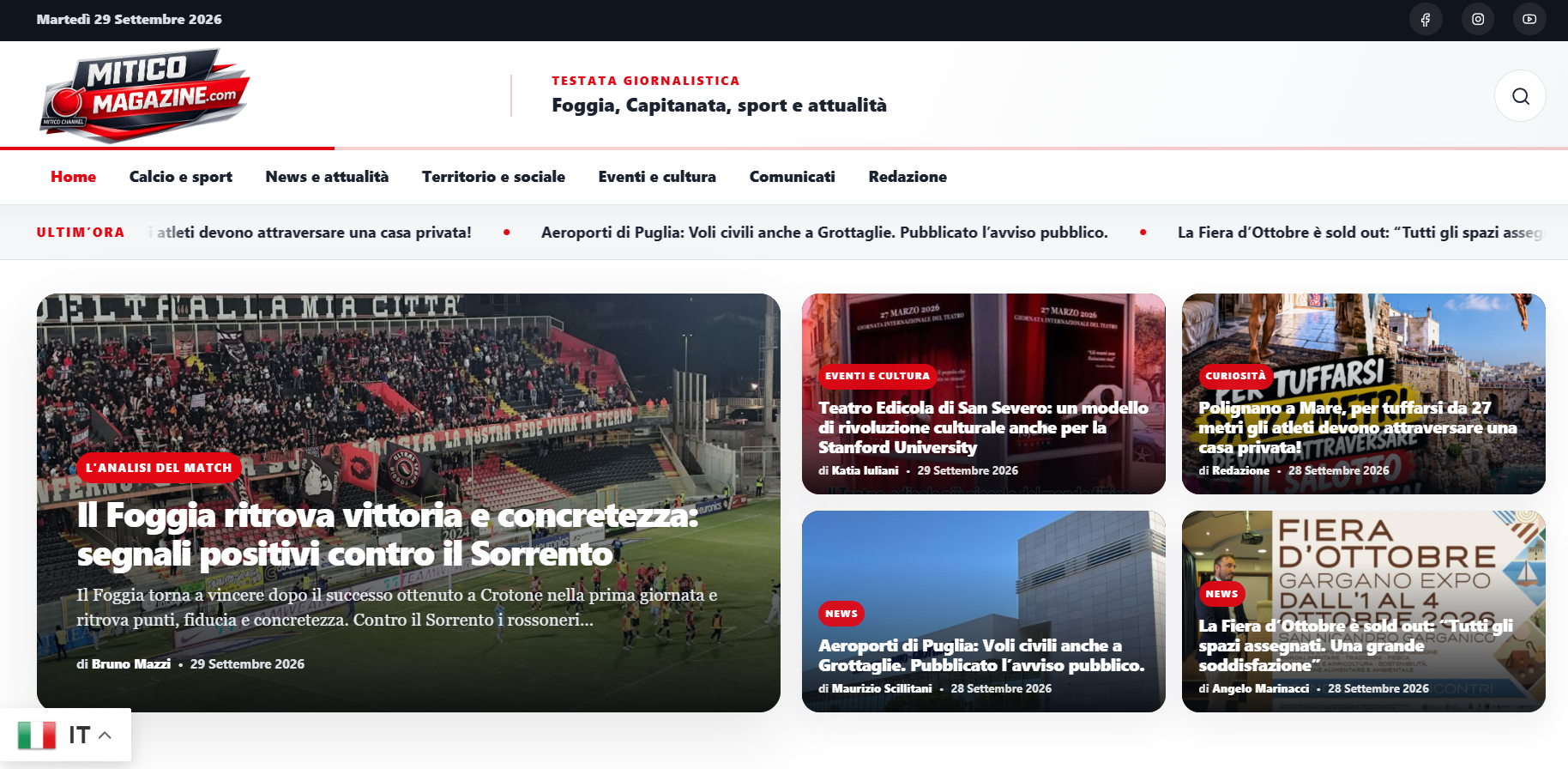
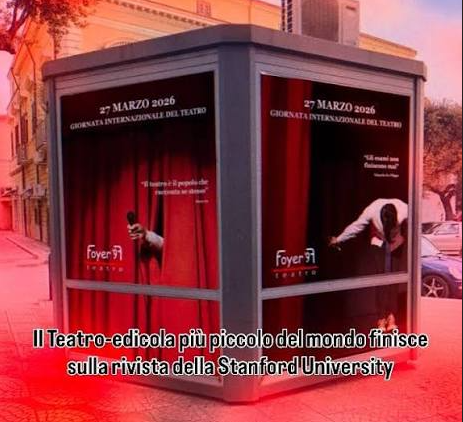
Mitico Magazine - The Teatro Edicola of San Severo: A Model of Cultural Revolution for Stanford University as Well Source: https://www.miticomagazine.com/territorio-e-sociale/teatro-edicola-di-san-severo-un-modello-di-rivoluzione-culturale-anche-per-la-stanford-university/ The Teatro Edicola in Via Tondi In San Severo, a singular metamorphosis has taken place: a newsstand abandoned for at least six years has found a new function and a new identity, transforming into one of the smallest and most unusual theatre stages in the world. An experiment born in the heart of the town which, in just a few months, has moved beyond local boundaries, attracting attention even overseas. It is called Teatro Edicola and it is a project conceived by the company Foyer '97, artistically directed by Francesco Gravino, which has brought the old newsstand in Via Tondi back to life through a formula that is both essential and surprising. Foyer '97 Foyer '97 APS was established as a formally constituted association active in the cultural sector in San Severo in 1997, born from the vocation of a group of actors, directors and theatre enthusiasts, with the aim of building a "living" and accessible theatre in the town. Over the years the company has developed a repertoire that includes texts from the classical tradition, contemporary dramaturgy, comedy and experimental projects, not limiting itself to the mere production of theatre shows, but also organising theatre courses and workshops and educational and cultural projects characterised by a strong inclusive ethos, particularly in schools. Foyer '97 does not always have a fixed artistic ensemble, but works with different performers and collaborators depending on the project; the only indispensable presence is that of Francesco Guido Gravino himself, actor, director and artistic director of the theatre company. The distinctive feature of Foyer '97 is certainly the value of social and cultural promotion attributed to theatre, the extremely close relationship with the audience and the search for a type of theatre outside conventional spaces, with cemeteries, trains, bell towers, and now a newsstand, as its backdrop. Six spectators, a few minutes and a minimal distance between stage and audience The project was launched on 27 March 2026, on the occasion of World Theatre Day, offering a theatrical experience built around a radical reduction of the conventional spaces and times of performance. The idea was born not only from the search for unconventional spaces, but also from "Edicola Fiore", the morning press review with a strongly ironic tone presented by Rosario Fiorello and Stefano Meloccaro, which was broadcast first only on Fiorello's social channels between 2011 and 2014, and then also on radio and television between 2016 and 2018. The review took its name from the diminutive of its founder, Fiore, and from the newsstand of a friend of Fiorello's in Via Flaminia Nuova in Rome, where the showman would meet early in the morning with a group of friends to read the newspapers. The San Severo newsstand was granted free of charge by its owner Pino Frau to the theatre group which, after obtaining temporary authorisation and institutional support from the Municipality of San Severo, refurbished it within two weeks at a cost of less than €3,000. Just six seats, a total surface area of 4 sq m, of which only 2 are for the stage area, less than a metre between actors and audience, a curtain, a lectern, two lights, performances lasting between 5 and 15 minutes, audience rotation every quarter of an hour: apparently minimal elements that end up subverting the usual relationship between stage and auditorium. Spectators, in fact, find themselves immersed in the stage action, in such proximity to the actors that every gesture, expression and word becomes immediately perceptible. In this way, theatre abandons its traditional spaces and insinuates itself into the everyday life of the street, becoming an intimate, concentrated and almost participatory experience. During the inaugural period admission was free with a subsequent voluntary donation from spectators; in the event of a more stable and longer-term concession, which could lead to seasonal theatre performances, the proposed ticket price would be €5. Audiences reward the experiment Foyer '97's gamble met with public interest right from the start: over 60 people attended the shows in a single afternoon, while the three days that inaugurated the season sold out. From a singular local experiment, the Teatro Edicola thus began to arouse curiosity even outside the province of Foggia, gradually transforming into a case of cultural and social interest, until it reached the American continent. From the province of Foggia to the "Stanford Social Innovation Review" The San Severo experience has now come under the international spotlight: in September 2026, the Stanford Social Innovation Review, an international journal and platform dedicated to social innovation published by the Stanford Center on Philanthropy and Civil Society at Stanford University in California, published on its website and in the Fall 2026 print edition the reportage "The Six-Seat Revolution", written by Dr Luciano Magaldi Sardella, independent journalist and researcher affiliated with the European Open University, and editorially supervised by deputy editor David V. Johnson. In the article, it is argued that the Teatro Edicola attracted attention overseas because the project concentrates cultural innovation, urban regeneration and proximity theatre into just a few square metres: starting from a real urban problem, it recovers an abandoned place with a modest investment, brings performance directly into public space and experiments with a much closer relationship between actors and spectators. From the point of view of theatrical representation, it also highlights how the format, based on micro-stories of five to twelve minutes, taken from great classics such as Goldoni, Chekhov, Ibsen, Euripides and Benni, and on audience rotation every fifteen minutes, transforms the physical limitations of the space into a precise dramaturgical choice, proving to be extremely innovative. All of this makes it possible to address some of the main critical issues in the sector: falling audience numbers, an exclusively elderly audience, reduced resources and distance from traditional cultural venues. The journal also highlights, however, the potential problems: economic sustainability, the need for stable institutional support and the difficulty of replicating the model, which is closely linked to the community and territory of San Severo. A model looking beyond San Severo Despite the difficulties, initial requests for information have already arrived from Lucca and Rome, where there is curiosity about the possibility of getting to know the model more closely and the steps needed to replicate it. The replicability formula, in fact, does not seem to require particularly costly infrastructure: an unused space, a targeted intervention, a cultural idea, in-depth knowledge of the surrounding area and a willingness to return that place to the community can be enough to trigger a new urban function. It is precisely in the disproportion between the modesty of the resources employed and the resonance generated by the initiative that perhaps the most original feature of the Teatro Edicola lies, certainly unique of its kind; there are, however, other examples in Italy of newsstands reused for other purposes: "Edicola 518", a twentieth-century kiosk abandoned in the centre of Perugia, now dedicated to independent publishing, art and cultural production; and in Rome itself, the abandoned newsstand in Piazza Testaccio used temporarily as a stage for a show by Fabio Morgan and the Erno newsstand in the Prati district, which almost every month offers a calendar of events, exhibitions, pop-ups and collaborations with artists and creative enterprises. Small revolutions, therefore, that tell stories of the reappropriation of urban spaces, of creativity and social innovation. And which, it is hoped, will take root in order to look ever further afield.

Teatro Edicola di San Severo: un modello di rivoluzione culturale anche per la Stanford University

Mitico Magazine - The Teatro Edicola of San Severo: A Model of Cultural Revolution for Stanford University as Well Source: https://www.miticomagazine.com/territorio-e-sociale/teatro-edicola-di-san-severo-un-modello-di-rivoluzione-culturale-anche-per-la-stanford-university/ The Teatro Edicola in Via Tondi In San Severo, a singular metamorphosis has taken place: a newsstand abandoned for at least six years has found a new function and a new identity, transforming into one of the smallest and most unusual theatre stages in the world. An experiment born in the heart of the town which, in just a few months, has moved beyond local boundaries, attracting attention even overseas. It is called Teatro Edicola and it is a project conceived by the company Foyer '97, artistically directed by Francesco Gravino, which has brought the old newsstand in Via Tondi back to life through a formula that is both essential and surprising. Foyer '97 Foyer '97 APS was established as a formally constituted association active in the cultural sector in San Severo in 1997, born from the vocation of a group of actors, directors and theatre enthusiasts, with the aim of building a "living" and accessible theatre in the town. Over the years the company has developed a repertoire that includes texts from the classical tradition, contemporary dramaturgy, comedy and experimental projects, not limiting itself to the mere production of theatre shows, but also organising theatre courses and workshops and educational and cultural projects characterised by a strong inclusive ethos, particularly in schools. Foyer '97 does not always have a fixed artistic ensemble, but works with different performers and collaborators depending on the project; the only indispensable presence is that of Francesco Guido Gravino himself, actor, director and artistic director of the theatre company. The distinctive feature of Foyer '97 is certainly the value of social and cultural promotion attributed to theatre, the extremely close relationship with the audience and the search for a type of theatre outside conventional spaces, with cemeteries, trains, bell towers, and now a newsstand, as its backdrop. Six spectators, a few minutes and a minimal distance between stage and audience The project was launched on 27 March 2026, on the occasion of World Theatre Day, offering a theatrical experience built around a radical reduction of the conventional spaces and times of performance. The idea was born not only from the search for unconventional spaces, but also from "Edicola Fiore", the morning press review with a strongly ironic tone presented by Rosario Fiorello and Stefano Meloccaro, which was broadcast first only on Fiorello's social channels between 2011 and 2014, and then also on radio and television between 2016 and 2018. The review took its name from the diminutive of its founder, Fiore, and from the newsstand of a friend of Fiorello's in Via Flaminia Nuova in Rome, where the showman would meet early in the morning with a group of friends to read the newspapers. The San Severo newsstand was granted free of charge by its owner Pino Frau to the theatre group which, after obtaining temporary authorisation and institutional support from the Municipality of San Severo, refurbished it within two weeks at a cost of less than €3,000. Just six seats, a total surface area of 4 sq m, of which only 2 are for the stage area, less than a metre between actors and audience, a curtain, a lectern, two lights, performances lasting between 5 and 15 minutes, audience rotation every quarter of an hour: apparently minimal elements that end up subverting the usual relationship between stage and auditorium. Spectators, in fact, find themselves immersed in the stage action, in such proximity to the actors that every gesture, expression and word becomes immediately perceptible. In this way, theatre abandons its traditional spaces and insinuates itself into the everyday life of the street, becoming an intimate, concentrated and almost participatory experience. During the inaugural period admission was free with a subsequent voluntary donation from spectators; in the event of a more stable and longer-term concession, which could lead to seasonal theatre performances, the proposed ticket price would be €5. Audiences reward the experiment Foyer '97's gamble met with public interest right from the start: over 60 people attended the shows in a single afternoon, while the three days that inaugurated the season sold out. From a singular local experiment, the Teatro Edicola thus began to arouse curiosity even outside the province of Foggia, gradually transforming into a case of cultural and social interest, until it reached the American continent. From the province of Foggia to the "Stanford Social Innovation Review" The San Severo experience has now come under the international spotlight: in September 2026, the Stanford Social Innovation Review, an international journal and platform dedicated to social innovation published by the Stanford Center on Philanthropy and Civil Society at Stanford University in California, published on its website and in the Fall 2026 print edition the reportage "The Six-Seat Revolution", written by Dr Luciano Magaldi Sardella, independent journalist and researcher affiliated with the European Open University, and editorially supervised by deputy editor David V. Johnson. In the article, it is argued that the Teatro Edicola attracted attention overseas because the project concentrates cultural innovation, urban regeneration and proximity theatre into just a few square metres: starting from a real urban problem, it recovers an abandoned place with a modest investment, brings performance directly into public space and experiments with a much closer relationship between actors and spectators. From the point of view of theatrical representation, it also highlights how the format, based on micro-stories of five to twelve minutes, taken from great classics such as Goldoni, Chekhov, Ibsen, Euripides and Benni, and on audience rotation every fifteen minutes, transforms the physical limitations of the space into a precise dramaturgical choice, proving to be extremely innovative. All of this makes it possible to address some of the main critical issues in the sector: falling audience numbers, an exclusively elderly audience, reduced resources and distance from traditional cultural venues. The journal also highlights, however, the potential problems: economic sustainability, the need for stable institutional support and the difficulty of replicating the model, which is closely linked to the community and territory of San Severo. A model looking beyond San Severo Despite the difficulties, initial requests for information have already arrived from Lucca and Rome, where there is curiosity about the possibility of getting to know the model more closely and the steps needed to replicate it. The replicability formula, in fact, does not seem to require particularly costly infrastructure: an unused space, a targeted intervention, a cultural idea, in-depth knowledge of the surrounding area and a willingness to return that place to the community can be enough to trigger a new urban function. It is precisely in the disproportion between the modesty of the resources employed and the resonance generated by the initiative that perhaps the most original feature of the Teatro Edicola lies, certainly unique of its kind; there are, however, other examples in Italy of newsstands reused for other purposes: "Edicola 518", a twentieth-century kiosk abandoned in the centre of Perugia, now dedicated to independent publishing, art and cultural production; and in Rome itself, the abandoned newsstand in Piazza Testaccio used temporarily as a stage for a show by Fabio Morgan and the Erno newsstand in the Prati district, which almost every month offers a calendar of events, exhibitions, pop-ups and collaborations with artists and creative enterprises. Small revolutions, therefore, that tell stories of the reappropriation of urban spaces, of creativity and social innovation. And which, it is hoped, will take root in order to look ever further afield.

Teatro Edicola di San Severo: un modello di rivoluzione culturale anche per la Stanford University

❗️L'OM annonce que le Groupe Chiliz, leader mondial des solutions blockchain sport et divertissement, devient partenaire officiel. Les supporters pourront bénéficier d'expériences exclusives : fouler la pelouse du Vélodrome, visiter le centre d'entraînement, participer à des rencontres virtuelles avec les joueurs ou encore participer à des votes autour de la vie du club. [@OM_Officiel] #OM #Chiliz #Blockchain

🚨 LE NOUVEAU CAMP NOU VA RAPPORTER UN PACTOLE AU BARÇA ! 💰 🏟️ Le club catalan mise gros sur son secteur VIP pour faire exploser ses revenus. Près de 5 000 places VIP sont déjà vendues, garantissant plus de 380 M€ D'ENTRÉES D'ARGENT. Le Barça lance désormais des licences exclusives sur 15 à 30 ans pour 2 000 autres sièges, espérant toucher 700 M€ de plus. (@diarioas) #FCBarcelona #CampNou #FootballFinance

H

“The Abolition of Slavery — and Its Unfinished History Slavery is far older than the transatlantic slave trade. It existed for thousands of years in societies across the Middle East, Europe, Africa and the Americas. It was therefore not invented by Europeans or white people. But another part of the history deserves recognition. In the late 18th and 19th centuries, predominantly European and Western abolitionist movements developed sustained political campaigns against the slave trade and slavery. Britain is a major example. British abolitionists such as William Wilberforce, Thomas Clarkson and Granville Sharp, together with Black activists and formerly enslaved people such as Olaudah Equiano, campaigned for abolition. Parliament abolished Britain’s slave trade in 1807, and slavery throughout most of the British Empire through the 1833 Slavery Abolition Act, with emancipation beginning in 1834. Britain then used its navy and diplomacy to suppress the international slave trade. Between 1808 and 1870, British naval forces seized roughly 1,400 slave ships and liberated around 160,000 enslaved people. This does not erase Britain’s earlier role in the slave trade. Nor was abolition exclusively a white achievement. Black activists, former slaves, religious groups and others were important to the movement. Nevertheless, Western societies became leading forces in creating political, legal, diplomatic and military mechanisms to suppress the Atlantic slave trade and abolish slavery. And slavery has not disappeared. The latest global estimates, based on 2021 data, put the number living in modern slavery at 49.6 million: 27.6 million in forced labour and 22 million in forced marriage. About 29.3 million were in Asia and the Pacific, 7.0 million in Africa, 6.4 million in Europe and Central Asia, 1.7 million in the Arab States and 5.1 million in the Americas. Slavery is ancient and global; Europeans became major participants in the transatlantic system and later major forces in its abolition. Yet an estimated 49.6 million people were still living in modern slavery in 2021” - ChatGPT

H

The Death of the Insult There was a time when being called an idiot was not a public-health emergency. You were called an idiot. You called the other person an idiot. Perhaps you argued, perhaps you fought, perhaps you laughed, had a beer and forgot about it. That may sound primitive. It was also a social technology. In traditional honor culture, an insult was a challenge: if someone attacked your status, you were expected to answer. Men in particular developed cultures of teasing, mockery and competitive abuse in which the ability to give and take an insult could itself demonstrate confidence. Then came dignity culture, with a liberating idea: you don’t have to care what everyone thinks of you. An insult does not necessarily diminish you. Someone else’s contempt does not become your inferiority simply because they express it. Now something else is emerging. Sociologists Bradley Campbell and Jason Manning describe victimhood culture, in which interpersonal offences increasingly become public grievances. The offended party seeks recognition, an audience and sometimes institutional intervention. The old question was: “Are you going to say that to my face?” The dignity question was: “Why should I care what you think?” The new question increasingly seems to be: “Who can I report this to?” This may illuminate an uncomfortable gender difference. Men have historically been more permitted to insult and confront one another directly, while women have often had greater incentives to avoid direct confrontation and use social pressure, criticism and complaint. Neither pattern is exclusively male or female, but cultural habits matter. The danger is a society so determined to protect people from offence that it forgets to teach them how to withstand it. There is a difference between being harmed and being insulted, between injustice and discomfort, and between demanding justice and demanding that nobody make you uncomfortable. We may have travelled from honor, to dignity, to grievance. And perhaps the most subversive sentence left is also the simplest: “Yes, he insulted you. So what?”

The US Army is considering deploying medical, logistics and military police units, as the Pentagon keeps plans ready for possible action in Cuba, the US broadcast network CBS is reporting exclusively. #USMilitary #Cuba #MilitaryAction

The US lays groundwork for possible military action in Cuba, according to 'CBS News'

⚪️⚫️🇦🇹 Official, exclusive story confirmed. David Alaba joins Udinese on one year deal after leaving Real Madrid as free agent. https://t.co/DOzpNRhhbi #Alaba #Udinese #TransferNews #AT

THREAD : Interview exclusive avec Lamine Sy, latéral de l’AJ Auxerre et international sénégalais 🇸🇳👇🏿 https://t.co/3hqNvKa80k #AJAuxerre #Football #LamineSy

🚨⚪️⚫️ David Alaba to Udinese, exclusive story confirmed and here we go! 💣🇦🇹 Former Real Madrid and FC Bayern centre back signs a one year deal until June 2027 with the Italian club. Surprise bomba, confirmed. 🪑 https://t.co/CKqOQdQcfc #Alaba #Udinese #TransferNews #AT #IT

🚨✈️ EXCL: David Alaba, here on the way to Italy where he’s landing now to sign in as new Udinese player. Alaba will sign for Udinese after medical tests with formal steps to follow next. 🇦🇹 The Italian club has already confirmed the exclusive story. ⚪️⚫️ https://t.co/QsJgqIurE7 #DavidAlaba #Udinese #SerieA #IT #AT

H

The Death of the Insult There was a time when being called an idiot was not a public-health emergency. You were called an idiot. You called the other person an idiot. Perhaps you argued, perhaps you fought, perhaps you laughed, had a beer and forgot about it. That may sound primitive. It was also a social technology. In traditional honor culture, an insult was a challenge: if someone attacked your status, you were expected to answer. Men in particular developed cultures of teasing, mockery and competitive abuse in which the ability to give and take an insult could itself demonstrate confidence. Then came dignity culture, with a liberating idea: you don’t have to care what everyone thinks of you. An insult does not necessarily diminish you. Someone else’s contempt does not become your inferiority simply because they express it. Now something else is emerging. Sociologists Bradley Campbell and Jason Manning describe victimhood culture, in which interpersonal offences increasingly become public grievances. The offended party seeks recognition, an audience and sometimes institutional intervention. The old question was: “Are you going to say that to my face?” The dignity question was: “Why should I care what you think?” The new question increasingly seems to be: “Who can I report this to?” This may illuminate an uncomfortable gender difference. Men have historically been more permitted to insult and confront one another directly, while women have often had greater incentives to avoid direct confrontation and use social pressure, criticism and complaint. Neither pattern is exclusively male or female, but cultural habits matter. The danger is a society so determined to protect people from offence that it forgets to teach them how to withstand it. There is a difference between being harmed and being insulted, between injustice and discomfort, and between demanding justice and demanding that nobody make you uncomfortable. We may have travelled from honor, to dignity, to grievance. And perhaps the most subversive sentence left is also the simplest: “Yes, he insulted you. So what?”

🛁Rendez-vous demain pour une interview exclusive entre Kylian Mbappé et Jeremstar. À ne pas manquer 🌕 https://t.co/kMSBBz6HG8 #Mbappé #interview #exclusive

Les premiers pas de Papa Clinton au Training Center 🥹❤️ L’Inside est de retour avec un premier épisode au plus près du groupe et des images exclusives 🔴🔵🎥 À découvrir en intégralité sur YouTube et @OLPLAY_Officiel ⤵️ https://t.co/BLyqDW91I7 https://t.co/3B2V9cO6Ha #OL #Football #TrainingCenter

AQABABE 1w

D'après mes informations exclusives, L'influenceuse Lea Mary, Oceane Elhimer et l'influenceur Amirrlife seraient actuellement en GAV à Dubaï Ils se seraient fait interpeller ce matin à 5h pour détention de stupéfiants (20g de cocaïne & extasy) Plusieurs community manager gèrent #Dubaï #Stupéfiants #Influenceurs #AE

Campagne russe 🇷🇺 de sabotage en Europe 🇪🇺 Ces dernières semaines, la campagne russe de sabotage en Europe s'est intensifiée. Voici donc, une liste non-exhaustive de 50 évènements depuis début septembre : 🔴1er septembre ▫️Roumanie : débris d'un drone russe armé trouvés par un civil, puis détruits sur place par les démineurs. ▫️Pologne : incendie de l'usine de drones WB Electronics à Skarżysko-Kamienna. Les services russes sont accusés. ▫️Pologne : incendie chez JFG Composites. Les services russes sont accusés. 🔴2 septembre ▫️Pologne : suite de l'affaire WB Electronics. 🔴4 septembre ▫️Finlande : drone de reconnaissance russe retrouvé près de Porvoo (géolocalisation estimée). 🔴8 septembre ▫️Moldavie et Roumanie : un drone Geran-4 traverse les deux pays sur plus de 500 km, viole deux fois l'espace aérien moldave et s'écrase près de Mihăileni. ▫️Roumanie : arrêt des vols à l'aéroport de Iași à cause d'un drone russe. ▫️Hongrie : 10 diplomates russes déclarés persona non grata pour espionnage. ▫️Moldavie : un Azerbaïdjanais travaillant pour le FSB est arrêté à Chișinău. Il est soupçonné de préparer un sabotage. ▫️Roumanie : arrestation de l'agent russe chargé des repérages contre l'OTAN. 🔴9 septembre ▫️Pologne : alerte aérienne en Podkarpackie à cause d'une activité russe de missiles et drones à la frontière. ▫️Pologne : arrêts des vols aux aéroports de Lublin et de Rzeszów-Jasionka. ▫️Pologne : Donald Tusk annonce qu'une attaque russe contre un poste-frontière a été déjouée. La localisation est classifiée. ▫️Norvège : on apprend qu'un exercice conjoint Norvège, États-Unis et Royaume-Uni a empêché en avril un sous-marin russe de saboter les câbles du Svalbard. ▫️Royaume-Uni : un Britannique est inculpé pour avoir aidé les services russes. 🔴10 septembre ▫️Roumanie : débris d'un drone de reconnaissance russe trouvés près d'une base militaire. ▫️Roumanie : débris de drone russe sur une plage. ▫️Roumanie : débris d'un drone armé détruits sur place. 🔴11 septembre ▫️Roumanie : trois débris de drones trouvés par les garde-côtes et détruits. ▫️Bulgarie : explosion du dépôt de munitions EMCO à Tsareva Livada. L'entreprise évoque un sabotage (non attribué). 🔴12 septembre ▫️Bulgarie : l'explosion d'août dans une usine de munitions fait désormais l'objet d'une enquête pour sabotage (non attribué). 🔴14 septembre ▫️Lituanie : des Eurofighter italiens abattent un drone russe Gerbera armé venu de Biélorussie. Il s'écrase près d'une infrastructure électrique. ▫️Pologne : un Gerbera armé est retrouvé flottant en Baltique près de Rusinowo. ▫️Moldavie : deux violations de l'espace aérien par des drones russes, dont une détectée près de Cioburciu. ▫️Lituanie : arrêt des vols à cause d'un drone inconnu venu de Biélorussie. ▫️Allemagne : un drone armé s'écrase près de la base de Wunstorf (non attribué). ▫️Danemark : une frégate russe tire deux fusées éclairantes vers un hélicoptère militaire danois. 🔴15 septembre ▫️République tchèque : le ministère américain de la Justice inculpe trois officiers russes supplémentaires dans l'affaire des bus incendiés à Prague. ▫️Lituanie : trois officiers russes sont inculpés aux États-Unis pour un complot d'assassinat mondial, dont une cible en Lituanie. 🔴16 septembre ▫️Pologne : alerte aérienne de 30 minutes dans la région de Lublin, et nouvelle alerte en Podkarpackie. ▫️Pologne : arrêts des vols à Lublin et Rzeszów. ▫️Lituanie : selon l'agence ANSA, deux avions militaires russes ont violé l'espace aérien lituanien et ont été interceptés par des Eurofighter italiens. ▫️Slovaquie : incendie dans l'usine de munitions MSM Group. Une enquête est ouverte (non attribué). 🔴17 septembre ▫️Pologne : arrêts des vols à Lublin et Rzeszów. ▫️Moldavie : un drone russe survole Tudora pendant environ 2 minutes. 🔴18 septembre ▫️Pologne : arrêts des vols à Lublin et Rzeszów. ▫️Moldavie : un missile de croisière russe s'écrase et explose. ▫️Danemark : un gros drone survole l'ambassade américaine à Copenhague (non attribué). ▫️Luxembourg : arrêt des vols à l'aéroport à cause de drones (non attribué). 🔴19 septembre ▫️Moldavie : deux drones russes violent l'espace aérien, dont un s'écrase en Ukraine près de Troitske. ▫️Moldavie : une autre violation près de Palanca. 🔴20 septembre ▫️Moldavie : deux violations de l'espace aérien par des drones russes, avec un point d'impact estimé. ▫️Roumanie : la marine récupère trois débris de drones russes dérivant dans les couloirs maritimes de la zone économique exclusive. 🔴21 septembre ▫️Moldavie : un drone russe traverse le nord du pays. ▫️Pologne : alerte radiologique, chimique et biologique dans la région de Lublin à cause d'une activité russe à la frontière. ▫️Lituanie : des ballons venus de Biélorussie sont détectés autour de l'aéroport de Vilnius pendant environ 3 heures. ▫️Lituanie : arrêt des vols à Vilnius. 🔴22 septembre ▫️Lituanie : nouvel arrêt des vols à Vilnius, le troisième, à cause d'un drone inconnu venu de Biélorussie et des ballons. Source : @MalcontentmentT #Saboatge #Europe #Russie