

Znalazłem moją nową ulubioną streamerke, nawet jest samoświadoma mając nick "Female Mamm0n" 🤑 https://t.co/EZ1Tfg1irC #streaming #gaming #femalegamers

Who Kills Whom? There is no single international database that directly compares “women who kill children” with “men who kill women.” I therefore used a triangulation method: systematic research on child homicide, international homicide statistics from UNODC, and detailed national homicide data from the FBI. The figures are not merged into one artificial global statistic; instead, they are used to see whether the same pattern appears across different sources. A systematic review of 126 studies from 44 countries found that parents were responsible for a median 56.5% of child homicides. For children under one year, parents were responsible for approximately 77.8%. Mothers were particularly prominent among perpetrators of killings of infants (Stöckl et al., 2017). That is remarkable. Women are relatively strongly represented when the homicide victim is a very young child. But this is where the sensational version of the story falls apart. It does not mean that women kill more children than men kill women. Men commit the overwhelming majority of homicides. In the FBI’s 2019 data, there were 1,647 male offenders who killed female victims in single-victim/single-offender cases. By comparison, female-perpetrated child homicide was far smaller. (Federal Bureau of Investigation [FBI], 2019). UNODC similarly reports that men and boys accounted for 81% of global homicide victims in 2021, while women and girls accounted for 19%. Yet women and girls were disproportionately killed by intimate partners or family members: such killings accounted for 56% of female homicide victims (UNODC, 2023). So what does the evidence actually tell us? Men dominate homicide statistics. But female homicide has a strikingly different pattern: women are disproportionately represented among perpetrators when the victim is an infant, while men account for vastly more homicide overall and for a much broader range of victims. Perhaps the real lesson is uncomfortable for both sides: statistics do not support a simple “men are killers, women are victims” story. Nor do they support reversing that story. Reality is considerably more complicated — and considerably more interesting. References — APA 7th edition Federal Bureau of Investigation. (2019). Expanded homicide data table 6: Murder—race, sex, and ethnicity of victim by race, sex, and ethnicity of offender. U.S. Department of Justice. Stöckl, H., Dekel, B., Morris-Gehring, A., Watts, C., & Abrahams, N. (2017). Child homicide perpetrators worldwide: A systematic review. BMJ Paediatrics Open, 1(1), e000112. https://doi.org/10.1136/bmjpo-2017-000112 United Nations Office on Drugs and Crime. (2023). Global study on homicide 2023. United Nations.
"A woman needs a man like a fish needs a bicycle" - Gloria Steinem … but women do need a handyman - and nothing else. “Wanted: Husband, Preferably With a Toolbox” Latvia has one of Europe’s most remarkable gender imbalances. Women constitute about 54% of the population—roughly 116 women for every 100 men. And this is not primarily a story about fewer boys being born. It is a story about men dying earlier. In 2025, life expectancy at birth was approximately 72.3 years for Latvian men, compared with 81.0 years for women. Latvia therefore has one of the largest male-female life-expectancy gaps in the OECD. Among the elderly, the consequences are striking: women dramatically outnumber men, leaving many older women living without a male partner. This produces an intriguing—and slightly ironic—market response. Latvia has businesses advertised as “husband for an hour”, providing plumbing, electrical work, repairs, furniture assembly and other household services traditionally associated with the male partner. There is no solid evidence that Latvia’s gender imbalance caused these businesses to become popular, so the connection should not be presented as established fact. But the phenomenon illustrates a much bigger point. Demography is not just about population pyramids and government statistics. It changes the structure of everyday life—and eventually the economy. Latvia is simultaneously experiencing low fertility, population ageing, high male mortality and long-term population decline. In 2025, only about 11,900 children were born while more than 26,000 people died. Migration adds further pressure. The “husband for an hour” may therefore be more than an amusing curiosity. It could be a small, almost comical symptom of a much more serious transformation: when demographic structures change, markets adapt. And sometimes the first sign of a demographic crisis is not found in a government report—but in the services people suddenly find themselves needing to buy.
The Erosion of Truth in Feminized Institutions Human beings developed the scientific process to observe reality and uncover fundamental truths about the universe. However, the increasing feminization of academia has, in some cases, shifted its priorities, with social equity taking precedence over truth. A study titled *“Taboos and Self-Censorship Among U.S. Psychology Professors”* asked professors whether they prioritized scientific truth or social equity when the two appeared to conflict. According to the study, 66.4% of male professors chose truth, compared with 43% of female professors—a 23.4-point gap. This suggests that some individuals are willing to set aside truth in favor of ideology. The study also found that professors feared social sanctions for expressing their empirical beliefs, while younger, more left-leaning, and female faculty members were more likely to oppose controversial scholarship. Psychology faculty are reportedly 56% women and 44% men. Based on the study’s figures, approximately 53.3% of professors would rank truth first. Women account for roughly 71–75% of newly awarded psychology doctorates. If the field reaches 73% women, only about 49.3% of psychologists would rank truth first. The broader implications are significant. As academic institutions increasingly prioritize diversity, equity, and inclusion, research and data may be ignored when they conflict with political goals. Science influences education, medicine, human resources, therapy, the media, and nearly every other field concerned with human behavior. These studies shape legislation, psychological diagnoses, corporate policies, pharmaceutical prescriptions, and popular advice. Truth is not necessarily losing to lies. Rather, as institutions become increasingly feminized, they may gradually stop valuing truth itself.
The Value of Truth in Science Humanity developed the scientific process to observe the universe and uncover its fundamental truths. However, the increasing feminization of academia has, in some fields, shifted emphasis from truth toward social equity. As a result, certain areas of science appear less focused on understanding how the world works and more focused on reshaping it according to political ideals. A study titled *“Taboos and Self-Censorship Among U.S. Psychology Professors”* asked professors whether they prioritized scientific truth or social-equity goals when the two appeared to conflict. According to the study, 66.4% of male professors chose truth, compared with 43% of female professors—a 23-point gap. This suggests that some academics would knowingly place ideology above truth. The study also found that nearly all professors feared social sanctions for expressing their empirical beliefs. Researchers observed that younger, more left-leaning, and female faculty members were more likely to oppose controversial scholarship. Psychology faculty are currently approximately 56% women and 44% men. Based on the study’s figures, an estimated 53.3% of professors rank truth first. Women also receive roughly 71–75% of newly awarded psychology doctorates. If women eventually comprise 73% of the field, only about 49.3% of psychologists would rank truth first. The broader implications are significant. As women’s representation in scientific and academic institutions increases through both natural trends and affirmative-action policies such as DEI, research and data may be disregarded when they conflict with political goals. Psychology influences education, medicine, human resources, therapy, media, and other institutions concerned with human behavior. These fields shape legislation, psychological diagnoses, corporate policies, pharmaceutical prescriptions, and popular advice. Truth is not necessarily losing to lies. Rather, as institutions become increasingly feminized, they may gradually stop valuing truth itself.


Idag införs en femårig period av att fjortonåringar räknas som straffmyndiga vad avser brott med minimi fyra års fängelse i straffskalan såsom grovt vapenbrott, grovt rån, mord m fl. #brott #lagstiftning #straffmyndighet

In the article, Marianne Björklund discusses how Asian parents place an extremely high pressure on their children when it comes to education, which is evident from the intense schedule of a five-year-old in China that includes several extra lessons to prepare them for the future. (translated)


The commonality between approving of female exclusion from this event and approving of male inclusion in female single-sex spaces is that both take from women and give men what they want. I suppose there have always been women who are fine with that https://t.co/HsqGIHZy3X #Feminism #GenderEquality #WomenEmpowerment #Thetweetdoesnotmentionanyspecificcountriesortheircodes.
The Erosion of Truth in Feminized Institutions Human beings developed the scientific process to observe reality and uncover fundamental truths about the universe. However, the increasing feminization of academia has, in some cases, shifted its priorities, with social equity taking precedence over truth. A study titled *“Taboos and Self-Censorship Among U.S. Psychology Professors”* asked professors whether they prioritized scientific truth or social equity when the two appeared to conflict. According to the study, 66.4% of male professors chose truth, compared with 43% of female professors—a 23.4-point gap. This suggests that some individuals are willing to set aside truth in favor of ideology. The study also found that professors feared social sanctions for expressing their empirical beliefs, while younger, more left-leaning, and female faculty members were more likely to oppose controversial scholarship. Psychology faculty are reportedly 56% women and 44% men. Based on the study’s figures, approximately 53.3% of professors would rank truth first. Women account for roughly 71–75% of newly awarded psychology doctorates. If the field reaches 73% women, only about 49.3% of psychologists would rank truth first. The broader implications are significant. As academic institutions increasingly prioritize diversity, equity, and inclusion, research and data may be ignored when they conflict with political goals. Science influences education, medicine, human resources, therapy, the media, and nearly every other field concerned with human behavior. These studies shape legislation, psychological diagnoses, corporate policies, pharmaceutical prescriptions, and popular advice. Truth is not necessarily losing to lies. Rather, as institutions become increasingly feminized, they may gradually stop valuing truth itself.

🚀 Great news for space & innovation in Europe! The Exploration Company led by a female founder and CEO has raised a record $450M Series C, with the Scaleup Europe Fund among the lead investors, backing reusable spacecraft and its rocket engine. (1/2) #SpaceInnovation #WomenInLeadership #ReusableTech #EU


At the KURIER Female Empowerment Event, Georg Wawschinek and other experts discussed the importance of visibility, perseverance, and authenticity for women's professional success and encouraged them to confidently pursue their own path. (translated)



The eradication of female specific language by the government is shocking. This 2 years after the people rejected this ideology in landslide referendums. https://t.co/EQPzyUWrFY #GenderEquality #LanguageRights #GovernmentAccountability #Thetweetdoesnotmentionanyspecificcountries.Therefore #therearenocountrycodestoreturn.


A successful for whom??? Certainly a success for the men who identify into the female prison population. Not so much of a success for the actual women… #GenderEquality #WomensRights #TransIssues #Thetweetdoesnotmentionanyspecificcountries.Therefore #theresponseis:

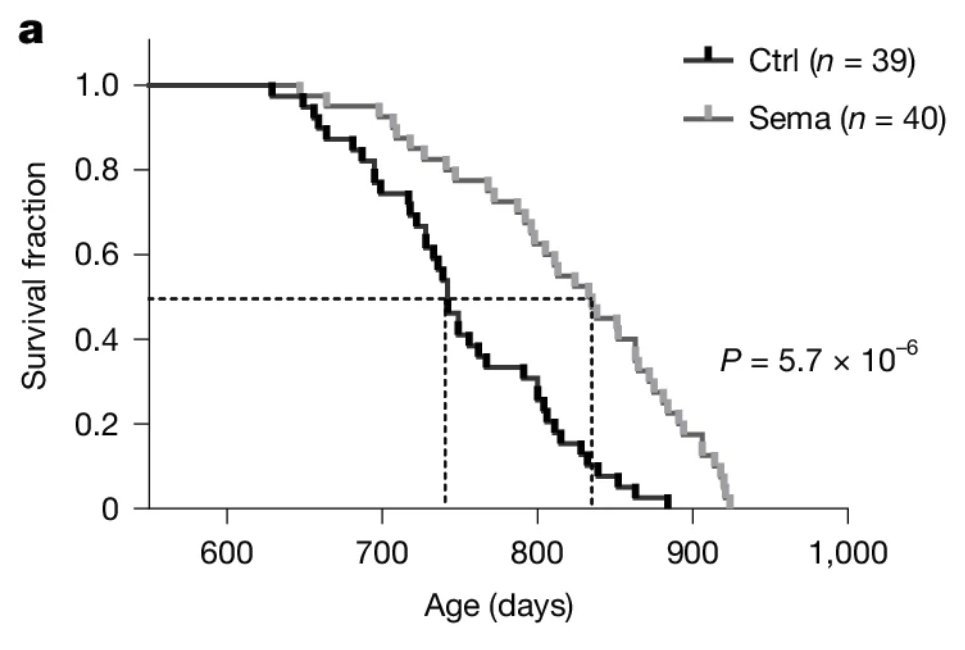
GLP-1 drugs significantly extend lifespan in female mice when given late in life 👀 Semaglutide (Ozempic) also improved physiological function, suggesting it might mimic the effects of caloric restriction. https://t.co/ZSui5qjODd #GLP1 #Semaglutide #LifespanResearch #Therearenospecificcountrycodesrelevanttothistweet.

Den 20-årige venezuelanske landsholdsspiller, David Martínez, skifter til Midtjylland på en femårig aftale. Han kommer til klubben fra LAFC i MLS. Læs mere på https://t.co/4TekMmSWop https://t.co/Ha6kcbrYkb #fodbold #transfer #Midtjylland


Alannah Myles (Toronto, 25 december 1958) is een Canadese singer-songwriter, die vooral bekend is geworden door haar wereldhit "Black Velvet". Ze won voor deze hit een Grammy Award voor Best Rock Vocal Performance, Female. Myles is de dochter van de Canadese radiopionier William Douglas Byles. Op haar 9e begon ze reeds met het schrijven van muziek. In haar tienertijd ging ze solo optreden in Southern Ontario. In mei 1989 bracht ze haar debuutalbum uit. Het album bracht vier Top 40-hits voort, waaronder "Love Is", "Lover Of Mine", en "Still Got This Thing". Ook haar nummer 1-hit "Black Velvet" stond op dit album. Dit lied bereikte de 3e plaats in de Nederlandse hitlijst, en de eerste plaats in de Amerikaanse hitlijst. https://hvdommelen.nl/m/MylesA.html






