Feijóo wants you 'quiet'. Yesterday he called the Minister of Science 'that girl from Gandía'. He exudes machismo. He can't help it. #DebateACuatro #DebateACuatro (translated)
Feijóo wants you 'quiet'. Yesterday he called the Minister of Science 'that girl from Gandía'. He exudes machismo. He can't help it. #DebateACuatro #DebateACuatro (translated)
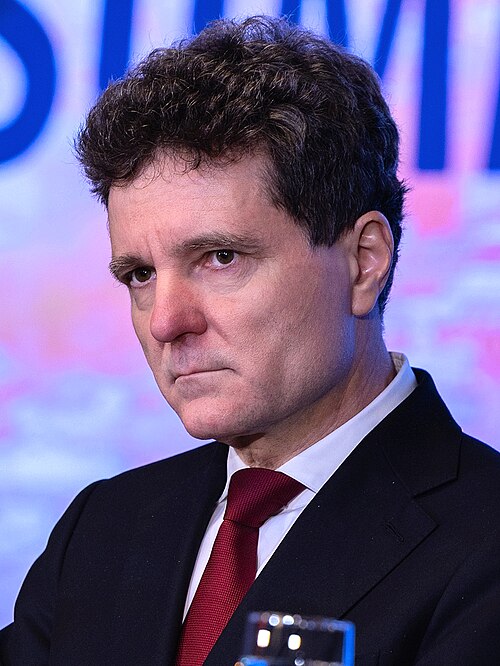
It is good that there are concerns for peace, but, as I have said several times, I do not believe that Russia is prepared or desires peace at this moment, and that is precisely why it is important to support Ukraine, to discuss the next package, 22, of sanctions to exert pressure. Russia's calculus at this moment is that winter benefits them, as it adds pressure to the damaging of Ukraine's energy network, and it adds pressure to Ukrainian society. So, probably, if we think realistically, the chances of peace are much greater in the spring than now. #pace #razboi #Ucraina (translated)
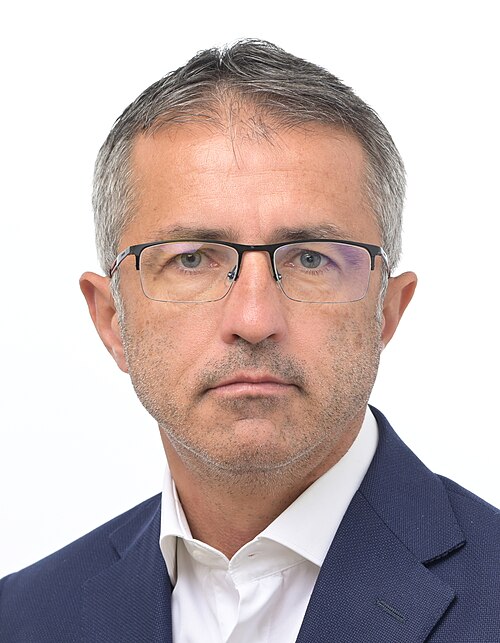
"The municipalities and villages are the closest shirt to the skin for the citizen, the central subject of discussions. In municipalities, we encounter the citizen most heavily burdened by the troubles of the day. We envision future municipalities that transcend even the borders of the current counties," declared Dragoș Benea. #reformăadministrativă #comasări #administrațielocală (translated)
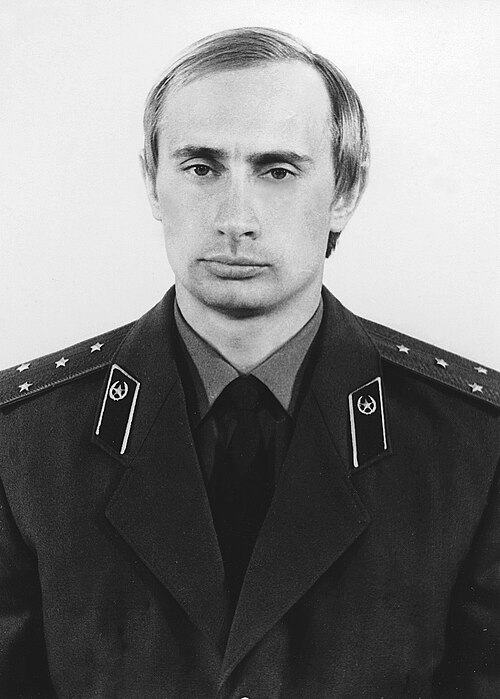
"If we talk about Ukrainians, I would like them to hear this. And, no matter what happens, regardless of the tragedies taking place today, we must think about the future, about the future of our children, and understand that if we want to be strong, to matter, and to have the necessary conditions for good development, we must, of course, be together." #RăzboiÎnUcraina #VladimirPutin #ConflictDeRăzboi (translated)

When asked about this parallel, Trump said: "I hadn't thought about that. I just went in there telling myself: I get along very well with these two people. We will resolve our differences." #Trump #Putin #XiJinping (translated)
If we talk about Ukrainians, I would like them to hear this. And no matter what happens, no matter what tragedies are taking place today, we must think about the future, the future of our children, and understand that if we want to be strong, relevant, and have conditions for good development, we must be together. #Putin #Ucraina #Război (translated)

With grace around the neck Political scientist Vladimir Tismaneanu has recently pinpointed one of the most subtle wounds of the unconscious, inflicted by communist totalitarianism; parasitic neuro-affective imprinting. Mental leveling through psychological conditioning techniques based on suggestion and neurolinguistic programming, through hymns, wooden language, and anchor symbols. The wound lies in the fact that, after decades of carrying it, the mask of a False Self has become entrenched in the flesh and can no longer be torn away without suffering. We are talking about a diversion of attachment, through post-hypnotic graft — a subtle trauma in which the very vitality and biological candor of the child have been turned against themselves, becoming the adhesive of their own captivity. In the terms of Richard Bandler and Robert Dilts, when an emotional anchor (the love for the Dictator, the Party, ideology) is installed at a time of maximum neuroplasticity, amidst a spike of cortisol and dopamine, it is no longer a simple reflex, but an identity imprint. The external symbol fuses with the chemistry of the joy of existence. Gregory Bateson (the mentor from whom R. Bandler and the studies on M. Erickson departed) explains why this wound hurts in adulthood: the conscious mind of the adult understands the ideological falsehood, but the body retains the post-hypnotic suggestion implanted through song and ritual. Reason sees the prison, but the limbic system still flinches warmly at the sound of the horn. It is a somatic double bind, favored by source amnesia. This is the classic hypnotic phenomenon in which the subject retains the emotion or conviction implanted during trance, but forgets it was induced from outside. This explains why many adults today sincerely defend their conditioned reflexes from communism, believing they are defending their own "happy childhood." If Aldous Huxley had had the curiosity — at least as a political entomology exercise — to visit a schoolyard in Romania in the 1980s, on a chilly autumn morning with fuzzy loudspeakers, he would likely have experienced a mixed feeling of authorial pride and slight humiliation. The pride of seeing his fiction in "Brave New World" confirmed on an industrial scale; the humiliation of realizing that his British imagination had, in fact, been too dull, erring on the side of politeness! For where Huxley imagined sterile laboratories of hypnopaedia, in which the axioms of social conformity were dripped beneath children's pillows during REM sleep, totalitarian pedagogy had succeeded in inducing the same hypnotic sleep in broad daylight, with eyes wide open, using only a triangular piece of red acetate, a transparent plastic ring, and a horn. If we look at things a little detached and without rosy nostalgia, we are faced with an astonishing early confiscation engineering. Totalitarianism quickly understood a truth that theology has known for millennia, and neuroscience has only recently begun to measure: whoever reaches the child’s synaptic architecture first no longer needs too many guards later on. The phenomenon did not arise from nothing, nor even from Lenin's imagination. Its historically documented archetype dates back to the 7th century B.C., in the Spartan Agoge — the first state system that decreed that a child does not belong to the family but to the city, taking them away at the age of seven to dissolve their private loyalty into a collective military pack reflex. However, modernity added a tragic irony to this ancient brutality. In 1907, British Lord Robert Baden-Powell invented scouting — a pedagogical system designed to cultivate autonomy, individual honor, and resourcefulness in nature. But the totalitarian regimes of the 20th century looked at the uniform, the badge, the salute, and the scout oath and had an instrumental revelation: the form was brilliant, it just needed to be emptied of freedom and filled with ideology. Thus, through reverse engineering, the Bolshevik Komsomol (1918) emerged, and in 1922, the Pioneer Organization in the USSR, designed by Nadezhda Krupskaia and Soviet ideologists — explicitly built on the confiscated skeleton of scouting. Mussolini immediately adopted the recipe in 1926 through Opera Nazionale Balilla, which even enlisted six-year-old children in Figli della Lupa — Sons of the She-Wolf… followed by the Nazi Hitlerjugend, where the mystique of the campfire was converted into an SS nursery. When the regime in Bucharest established the Pioneers in 1949, it unified the youth in UTC and, ultimately, through Nicolae Ceaușescu's decree in 1976, created the Falcons of the Fatherland for preschoolers aged four to seven, the assembly line had become airtight. The state no longer waited for the young person to gain discernment to convince them; it occupied their imagination before they even knew how to tie their shoelaces. Richard Bandler best explains how an anchor is established in the nervous system. In neurolinguistic programming (NLP), the ideological mystery evaporates and a disarmingly simple technical recipe remains. Today Bandler would tell us directly, without mincing words: "Stop asking why children believed in those nonsense. They didn’t believe in ideas; they responded to conditioned anchors!” How does emotional anchoring work in NLP? You take an intense physiological state — it doesn't matter if it's artificially produced — and, right at its peak, when the child's brain is swimming in dopamine, adrenaline, and cortisol, you attach a unique visual, auditory, and kinesthetic stimulus to it. Let’s remember how "the initiation into the Pioneers" was done. Not the whole class received the scarf at once. There was a learned economy of prestigious scarcity: the "first batch" was reserved for the top students, taken to a monumental setting — at the Mausoleum, at the museum, on a sunlit platform — while the rest remained in their seats, consumed by mimetic anxiety. For a seven or eight-year-old child, the horror of being excluded from the tribe and the euphoria of being chosen among "the good" represent a neurochemical tsunami. Right at the crest of this emotional wave, when the nervous system is wide open, the ritual intervenes: the adult's hand ties the red scarf around their neck (kinesthetic anchor at the larynx and plexus), the trumpet splits the air (auditory anchor), the hand rises to the forehead at a precise angle with three fingers fused (proprioceptive anchor), and the mouth utters the motto: “For the glory of the people and the flourishing of socialist Romania, forward!” From that moment, Bandler explains, the Pavlovian circuit is myelinated. The child's nervous system has fused the biological need for love and validation with the symbols of the Party. You no longer need to explain dialectical materialism; it is enough to show them the emblem or sound the horn, and their body will automatically deliver the thrill of solemn submission. Ideology did not enter through the front door of the intellect, but through the back window of the conditioned reflex. Milton Erickson explains what is up with "wooden language" hypnosis. Why did the texts of pioneers and youth organizations sound like a wooden incantation, filled with gerunds and abstract nouns? Wooden language was not a mere stylistic incompetence of the activists but an induction device for trance. Erickson demonstrated that the conscious mind can be bypassed through a few precise linguistic techniques: nominalization (turning active verbs into frozen nouns), presupposition, and cognitive oversaturation. When a student would utter phrases such as "full commitment to the construction of multi-laterally developed socialist society" or "unequivocal fulfillment of outlined tasks" during a UTC meeting, their brain would futilely attempt to sensorily represent what "unequivocal construction" meant. Failing to find a concrete reference in the real world, the analytical cortex would enter a micro-trance of semantic fatigue. Moreover, the mottos worked through what Erickson and linguists call presupposition frames. When the Falcon of the Fatherland said, "I am preparing to become a pioneer," and the pioneer swore to be ready for UTC, the fundamental question — "Do I want to be part of this machinery?" — was already grammatically abolished. The future was conjugated in the indicative mood, as a completed fact. Furthermore, wooden language practiced a systematic erasure of the human agent: things “were built,” the homeland “flourished,” history “advanced.” The individual was no longer the author of their own actions but a mere verb in the passive voice, in the phrase spoken by the Party and the tireless Leader. The acoustic Trojan horse; why does sung suggestion disable critical spirit? Why was there so much singing in communism? Why was every level — from kindergarten to artistic brigades in universities and to mammoth literary circles — soaked in marches, hymns, and bright refrains ("We in the year 2000, when we will no longer be children," "Three colors," "E-he-hei, dear comrade")? The answer lies in a structural vulnerability of the human brain. If you tell a person a lie in prose — for example, that they live in the happiest of worlds while waiting in line for chicken wings — their critical apparatus (housed in the dorsolateral prefrontal cortex, the seat of doubt and reality checking) immediately wakes up and formulates an internal counter-argument. But if you put the exact same lie to a major melody, in a 4/4 march or in an uplifting choral harmony, and have them sing it themselves, the critical sentinel is disarmed. The mechanism is double: neurologically and physiologically. Neurologically, melody and rhythm are massively processed in the right hemisphere and in the limbic system, the seat of pure emotion, while the ideological text travels clandestinely, like a stowaway, hidden in the hold of aesthetic emotion. The brain cannot reject the verse without also rejecting the pleasure of musical harmony; and since the human being longs for consonance, they accept the whole package. Physiologically, singing in chorus is an ancient technique of vagal synchronization: two hundred children singing the same refrain are forced to inhale at the same second, exhale in the same rhythm, and align their heartbeats. And when your diaphragm works in unison with that of the platoon to hold the high note on the word "Party," your critical ego has already dissolved into the acoustics of the mass. You cannot polemicize with a phrase that your own vocal cords are transforming into harmonic vibration. However, if we rise from Bandler's Pavlovian mechanics to the metaphysical diagnosis, the picture takes on the contours of an anthropological tragedy that Søren Kierkegaard prophesied as early as the mid-19th century, before the first pioneer was born. For Kierkegaard, the entire stake of human life is the passage from the aesthetic stage (of immediate sensation and squandering) to the ethical and, finally, to the religious, through the birth of the singular Individual (Den Enkelte) — the man who stands alone before their own conscience and before God. Therefore, Kierkegaard's warning falls like lightning over any collectivist utopia: "The crowd is the untruth" (Mængden er Usandheden). The crowd, says the Danish philosopher, is the place where responsibility evaporates through fraction: no one is guilty because everyone sings at the same time; no one chooses because the detachment has already voted unanimously. Communist youth organizations were, in Kierkegaardian terms, a gigantic prophylactic machine against anxiety and fertile solitude. They served to prevent the young person from ever being alone with themselves. They offered a simulacrum of the ethical stage — "duty" to the collective, "honor" of being a member — precisely to atrophy the organ of genuine conscience. Sin was no longer a moral fall before the Truth, but the stridency of not being in line, of singing off-key in the angelic chorus of the brigade. In the extension of Kierkegaard, Karl Jaspers — who in The Spiritual Situation of Our Time (1931) and in his famous essay on German guilt x-rayed the anatomy of totalitarian regimes — offers us the key to understanding this training. Jaspers makes the vital distinction between simple empirical being, framed in apparatus (Dasein), and Authentic Existence (Existenz), which awakens only in limit situations (Grenzsituationen): suffering, struggle, guilt, death, radical doubt. What did the Falcons of the Fatherland, the Pioneers, and the UTC do? They confiscated the biological thresholds of transition — the exit from childhood, puberty, adolescence — and replaced them with bureaucratic limit situations: receiving the scarf, exclusion in front of the square, self-criticism in meetings. Instead of allowing adolescents to discover transcendence through inner turmoil, the regime delivered them a cardboard, horizontal transcendence, where the Absolute had the retouched face of the General Secretary. More seriously, as Jaspers would observe, this pedagogy produced an early ontological complicity: by having the five-year-old recite homage poems and the fourteen-year-old raise their hand in meetings of denouncement, the system sickened them with a diffuse "moral guilt" before they had even reached the age of discernment. When you have applauded and sung since kindergarten, later rebellion demands not only civic courage but a painful amputation of your own affective memory. An epilogue for the "recent man"... Here, the circle closes between Aldous Huxley and our former youth with a red scarf. The drama is not that we were lied to; raw lies leave the spirit intact and provoke resistance. The drama is that the training used the noblest resources of childhood against the child itself: the need for beauty, the joy of singing together, the desire to be good, the thirst for ritual and meaning. And if today we no longer wear commander's cords over our shoulders, it doesn't mean that Huxley's hypnopaedia has gone dormant. It has simply been privatized. The pioneer horn has shifted to the algorithmic notification of the phone, the school square has become the instant validation flow of social networks, and the song that lulls the critical instance is no longer a patriotic march but an infinite loop of visual dopamine. The technique, however, remains unchanged from Sparta to the present: whoever succeeds in linking your need for belonging to an external symbol and putting your thinking to a pleasant melody no longer needs to lock you up in any prison — you will carry your own grace around your neck, convinced it is an ornament... Psychotherapy and psychoeducation, as well as the strengthening of political culture, are viable solutions for deconditioning and healing. Eduard Rosentzveig (translated)
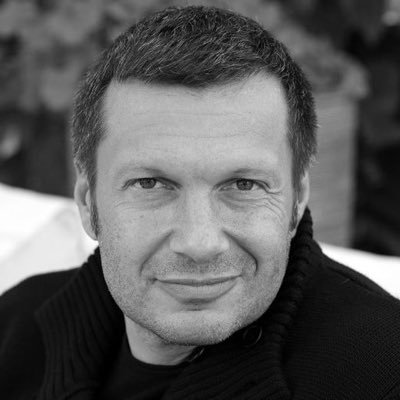
"In this night, NATO countries have actually moved to a direct aggression against us, violating all the rules that have been respected until now. We know very well where they will strike and what the targets are. Therefore, we must act and prepare in advance, to shelter ourselves underground and underwater and to think strategically," Soloviov stated. #RăzboiÎnUcraina #VladimirSoloviov #PodulKerci (translated)
We talked about administrative reform, the voluntary merger of the 429 localities with a population of up to 1,500 residents. We are thinking of an investment program for those who choose to merge voluntarily, with support and also for citizens, reducing taxes by up to 50% for those who choose to merge. #ImpoziteReducere #ComasareLocala #ReformaAdministrativa (translated)

The government in office, led by Ulf Kristersson and supported in parliament by the Sweden Democrats, an anti-immigration party, declared last year that it would consider ways to revoke the citizenship of individuals with dual citizenship convicted in organized crime cases. #Suedia #cetățenie #drepturihumane (translated)

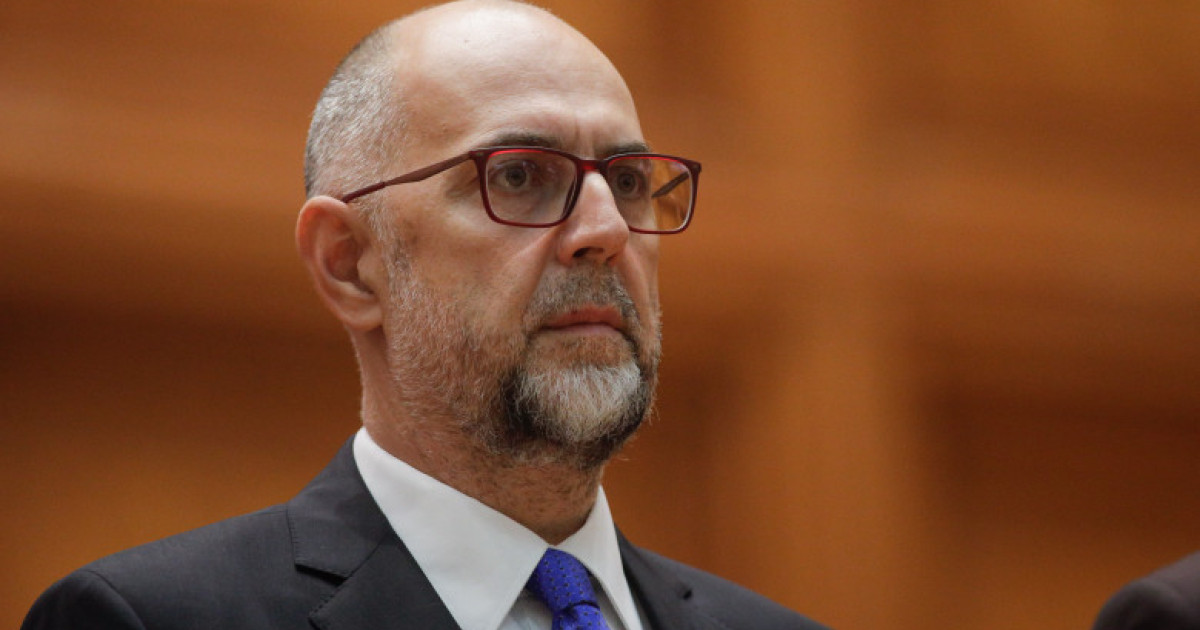
Kelemen Hunor, the president of UDMR, emphasizes the need for a well-thought-out administrative reform in Romania, which takes into account details and should be carried out through a referendum, considering also the country's international commitments. #ReformaAdministrativa #UDMR #Romania (translated)
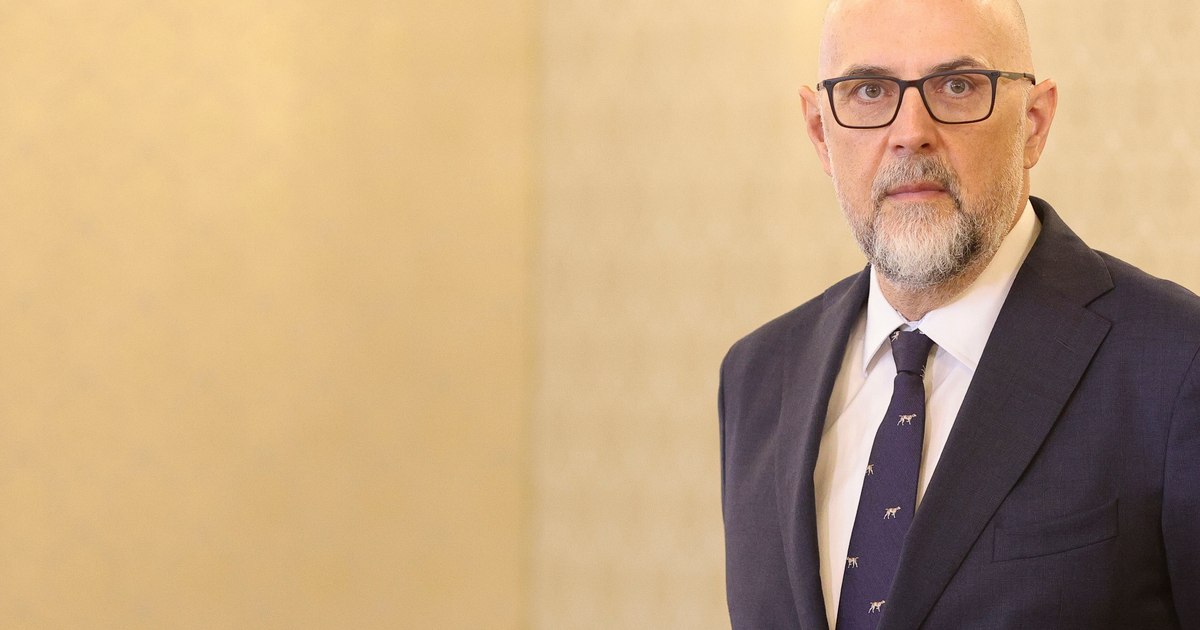

Kelemen Hunor stated that Romania needs a well-thought-out administrative reform that involves consulting communities and a referendum, emphasizing the importance of a detailed analysis before implementation. #reformaadministrativa #KelemenHunor #UDMR (translated)
Don't change the time! Change the schedule, not the time! The biological rhythm is regulated by the Sun, not the clock. Time is not a work schedule that we can shift at will. Time is the measure by which we organize our lives, and nature has its own rhythm. The Earth does not change its rotation twice a year. The sun does not rise earlier because we decided to move the clock forward. Animals, birds, insects, and plants follow their biological rhythms related to light, darkness, and the natural succession of seasons. Humans are part of this nature. Our bodies have their own biological clock, fundamentally influenced by light. And when we officially move the clocks by one hour, we are not changing the course of nature, but rather asking humans to abruptly adapt to an administrative convention. Why do this every spring and reverse it every autumn? Is it natural to change the time or to adapt our schedules? Let's consider the majority of people: workers, farmers, students, teachers, parents, retirees, people who must adhere to a schedule set by others. They cannot always modify their schedules at will. They need to wake up at a certain hour, get to work, take a child to school, or comply with the public transport timetable. In contrast, there are people and organizations that have the opportunity to adapt their schedules based on the season, natural light, or the needs of their activities. If, for some people, changing their schedule is feasible, why impose the time change on everyone? Let's take a hypothetical example: if 10% of people have the freedom to adapt their schedule, is it fair to change the time for all those who do not have this freedom? Would it not be more logical to change the schedule where needed, rather than change the time by which the entire society organizes itself? Stores can modify their opening hours. Factories can adapt their shifts. Institutions can adjust their schedules, and schools and public transport can analyze timetables according to local conditions and people's needs. We do not all have to operate on the same schedule to live by the same time. Nature does not need our approval to follow its rhythm. In spring, the days lengthen. In autumn, the days shorten. This is the natural rhythm of the Earth, which we can observe without moving even a single clock hand. If we want to start activities earlier in summer, we can start sooner. If winter requires a different schedule, we can adapt it. But why change the official time, get used to a new convention, and then revert to the old one? Would it not be simpler to keep the same time all year round and organize our activities according to the season? I do not claim that all living beings measure time in hours and minutes. I assert something more important: their biological rhythms are linked to the natural cycle of light and darkness, not to the numbers we display on the clock. And humans should take this truth into account when organizing their lives. The economy must serve people, not people be permanently forced to adapt to the economy. One argument presented in favor of changing the time is the more efficient use of natural light or the reduction of energy consumption. But the actual effects depend on the country, season, population habits, and how energy is used. If we want to save energy, let's examine actual consumption. If we want more light during activities, let's adapt the schedules. If we want to improve work organization, let's change the timetables where possible. There is no need to change the time for the whole society to achieve flexibility in certain areas. The schedule is a tool we can adapt. The time should be a stable reference. We cannot stop the seasons. We cannot modify the Earth's rotation. We cannot ask nature to adapt to our clock. But we can organize our lives more wisely. Instead of moving the clock hands twice a year, we can learn to adapt our schedules to the reality around us. Instead of changing the time for everyone, we can allow each field to find the appropriate schedule, within the bounds of the law and with respect for people's rights. Let's keep the time stable and make the schedules flexible! Let's leave time in peace. Twice a year, millions of people are forced to change their clocks, schedules, and biological rhythms to adapt to an administrative decision. It is said that changing the time brings economic or energy benefits. However, in modern society, these advantages are increasingly contested, while the disadvantages are felt by nearly the entire population. People, animals, and plants do not live by the clock on the wall, but by the natural rhythms of the Earth. The human body is regulated by the alternation of light and darkness. When we artificially move the time forward or back, we disturb this balance. Many people sleep worse, feel more tired, and need days or weeks to readjust. Living beings do not change their schedules twice a year. Birds do not migrate by the clock, cows do not produce milk according to the official hour, and dogs do not understand why their owner takes them for a walk an hour earlier. Nature follows the sun, not administrative decisions. There is also a principle issue. For a relatively small percentage of people and activities that would benefit from more light in the evening, the schedule of the entire society is modified. About 90% of people are forced to adapt, even though they did not ask for this and do not gain direct advantages. It would be more logical for the sectors that need a different schedule to adapt it themselves. Stores can open earlier or later. Factories can modify their work shifts. Schools, institutions, and companies can adjust their schedules as needed. It is much easier for certain organizations to change the schedule in a targeted manner than to change the official time for the entire population. Moreover, modern technology has greatly diminished the argument for saving energy. Lighting now represents a smaller proportion of total consumption, while air conditioning, computers, and other equipment operate regardless of time changes. The time should serve people, not people be obliged to serve the time. A modern society can function efficiently without moving the clock hands twice a year. Stability, health, and respect for natural rhythms are stronger arguments than the tradition of a measure introduced in another era. Therefore, the most rational solution is to keep the same time throughout the year and adapt schedules where necessary, rather than changing the lifestyle rhythm of an entire population. Why should we keep the same time all year? Changing the time twice a year represents an artificial intervention in the natural rhythm of society. Although it was introduced with the intention of saving energy, numerous modern studies show that the benefits are minimal, while the social, medical, and economic costs are significant. 1. The biological rhythm is regulated by the Sun, not the clock. The human body operates according to an internal biological clock, synchronized with the natural alternation of day and night. Research in chronobiology shows that artificial changes in time disrupt sleep, concentration, and metabolism. In the days following the switch to summer time: - sleep disorders increase; - more traffic accidents occur; - productivity at work decreases; - there is an increase in the risk of heart attacks and other cardiovascular problems. In practice, millions of people are forced to suffer a slight "jet lag" without having traveled anywhere. 2. Nature does not change the time. Animals and plants regulate their activity according to light. Birds, insects, domesticated and wild animals do not change their schedules just because the government decides to move the clock forward by one hour. Farmers often observe that cows continue to adhere to their biological schedule regardless of the change in official time. The same happens with many other living beings. In reality, we are changing the clock display, not the position of the Sun in the sky. 3. Economic benefits are diminishing. Changing the time was introduced in an era when lighting consumed a significant proportion of the energy used by the population. Today: - lighting is much more energy-efficient; - the main consumption comes from air conditioning, heating, servers, computers, and appliances; - estimated savings are very low or even nonexistent in many states. In contrast, the economic costs are real: - employee productivity decreases after the time change; - absenteeism increases; - additional costs associated with accidents and medical problems arise; - computer and logistics systems need to be periodically adjusted. 4. It is unfair to change the schedule of all for the needs of a minority. If certain economic sectors find it useful to start activities earlier in summer, they can adapt their schedules. For example: - stores can operate from 07:00 to 21:00 instead of 08:00 to 22:00; - factories can alter shifts; - public institutions can temporarily adjust working hours; - schools and companies can decide locally what schedule is optimal. It is much simpler for 10% of organizations to change their schedule than for 100% of the population to change their biological clock. 5. Stability means efficiency. Transport, information systems, international economic activities, and public services function more smoothly when the official time remains constant. One hour throughout the year: - reduces scheduling errors; - simplifies transport and communications; - eliminates confusion regarding timetables; - provides predictability for citizens and companies. Conclusion The sun does not change its time. The Earth does not change its time. Nature does not change its time. Only humans move the clock hands and then endure the consequences of this decision. Instead of modifying the schedule of an entire society twice a year, it is more logical to keep the same time constantly and allow those fields that need a different schedule to adapt their programs individually. This way, natural biological rhythms are respected, economic costs are reduced, and the comfort of the majority of the population is increased. A modern society needs flexibility in scheduling, not the constant change of the clock. (translated)

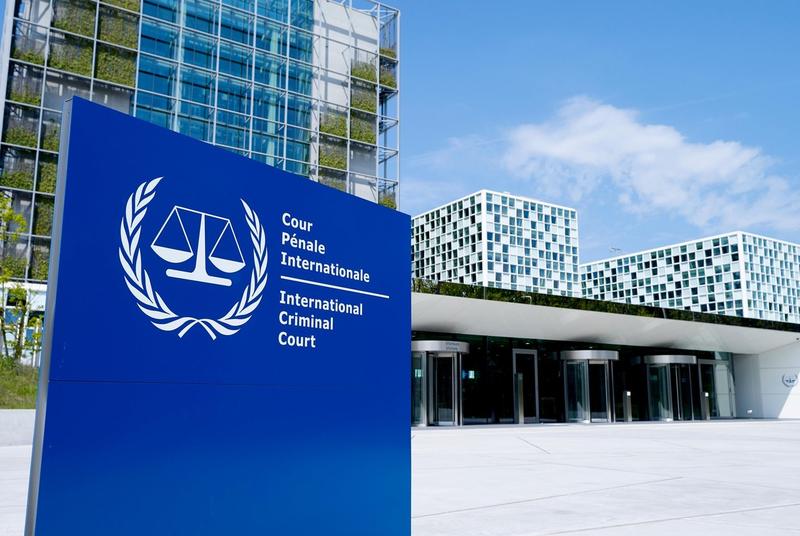
The International Criminal Court has been awarded the Sakharov Prize for Freedom of Thought, despite the sanctions imposed by Donald Trump, which underscores its importance in promoting international justice. #CurteaPenalaInternationala #PremiulSaharov #JustitieInternationala (translated)
The European Parliament awarded the Saharov Prize for Freedom of Thought to the International Criminal Court, despite the sanctions imposed by Donald Trump, highlighting the importance of protecting international justice and multilateralism. #PremiulSaharov #CPI #LibertateDeGândire (translated)


The International Criminal Court won the Sakharov Prize for Freedom of Thought, awarded by the European Parliament, in the context of the sanctions imposed by the Trump administration. #CurteaPenalaInternationala #DrepturileOmului #PremiulSaharov (translated)

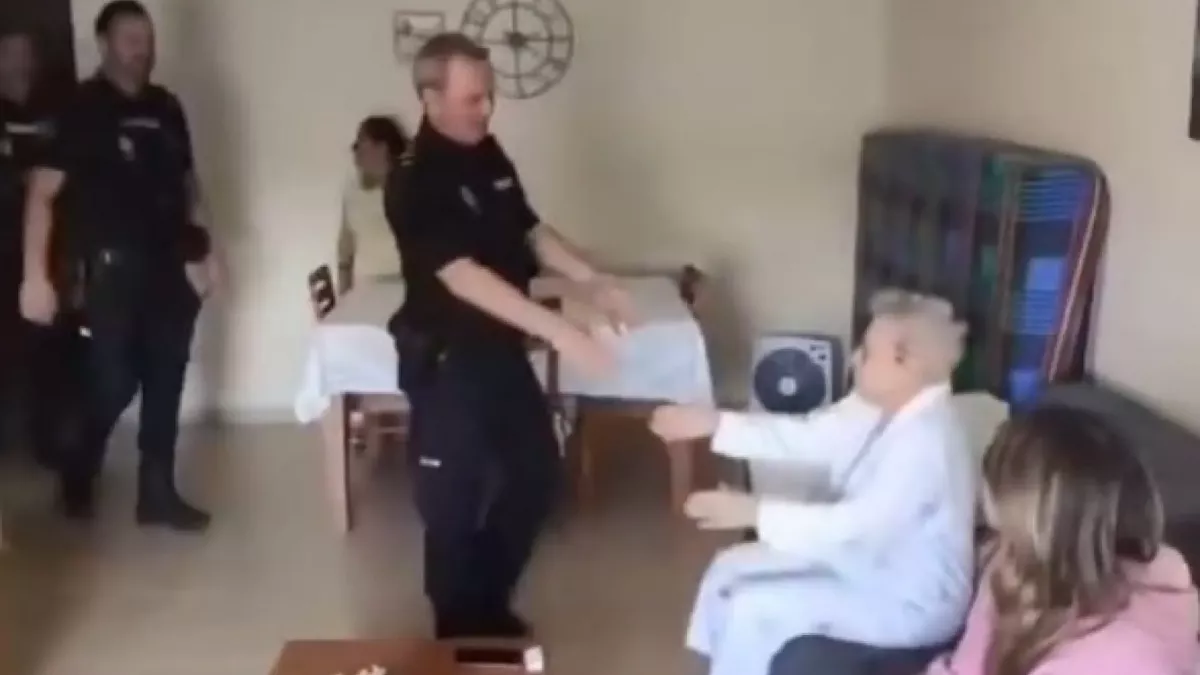
The National Police visited Teresa, a 93-year-old woman who was rescued from her home in Gandía, where she was trapped by the floods, and showed her gratitude after a touching intervention with a paddle surf board. #Gandía #Rescate #PolicíaNacional (translated)
The flood park of Gandía has demonstrated its effectiveness in managing the torrential rains of the DANA storm by temporarily retaining water and preventing flooding in the Beniopa ravine. #Gandia #DANA #inundaciones (translated)


The storm Adam has caused four deaths, a thousand rescues, and record rainfall in the Comunitat Valenciana, especially between Gandia, Oliva, and Pego, and has reignited fears of flooding just days before the second anniversary of the tragic flood of 2024. #DanaAdam #Inundaciones #Valencia (translated)
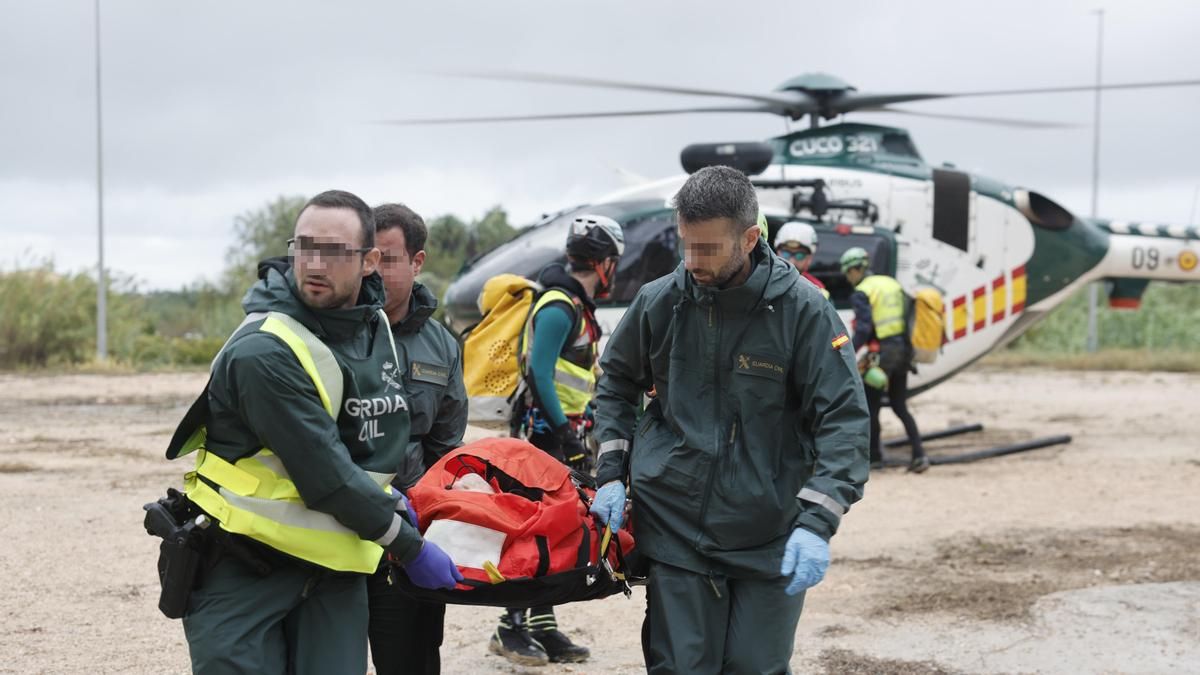
National Police agents rescued Teresa, a 93-year-old woman, in Gandía using a paddle surfboard, while the intense rains caused the water in her house to exceed one and a half meters in height. #Rescate #Gandía #Emergencias (translated)