WRLD

Search

#Historial
El Español Just Now

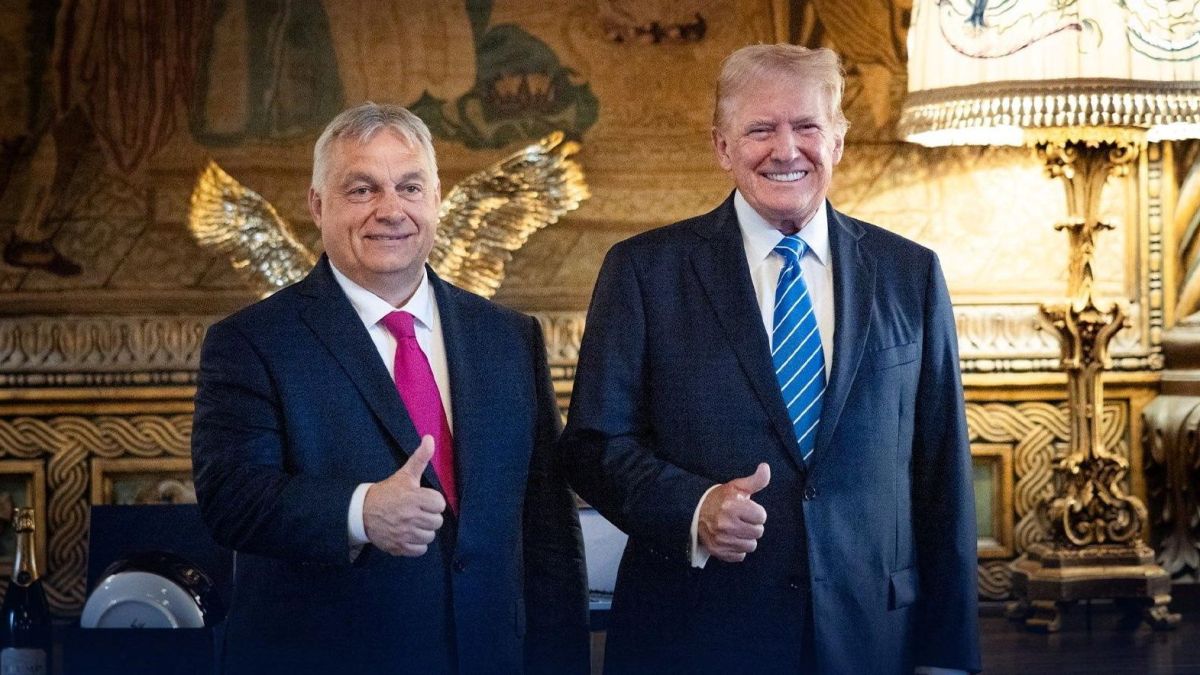
Donald Trump is promoting the anti-globalist Viktor Orbán as a candidate for the UN Secretary-General, seeking the support of China and Russia, despite skepticism from European and Ukrainian leaders about Orbán's authoritarian record. #ViktorOrbán #Trump #ONU (translated)
www.elespanol.com
Trump impulsa al antiglobalista Viktor Orbán como candidato a la secretaría general de la ONU y busca el aval de China y Rusia
1040
El Español 23m

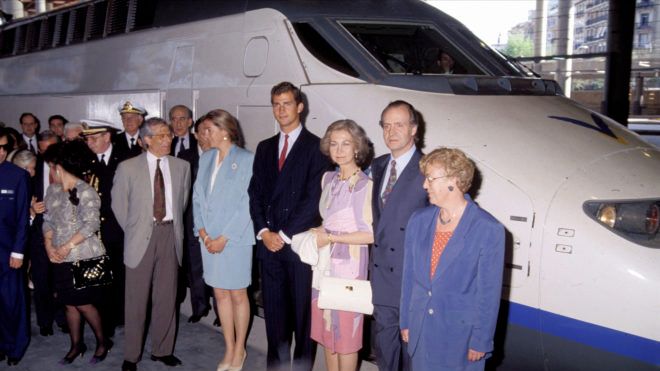
In just nine months, Spain has suffered 115 deaths in high-speed accidents, accounting for 72.8% of the world's fatalities in this type of trains and breaking a 34-year record without any fatalities in the service. #SeguridadFerroviaria #AltaVelocidad #AccidentesTreniarios (translated)

www.elespanol.com
De referente mundial a reunir el 73% de las muertes: España pierde en 9 meses 34 años de seguridad en la alta velocidad
1158
Juan Carlos Monedero 3d

The author claimed that President Abelardo PTE had been pointed out, he said, with evidence of links to drug trafficking. He also maintained that during the campaign, dark episodes from his time as a ship lawyer had been mentioned and that his record made him dependent on Donald Trump's orders. He added that the time had come for Colombia... #Colombia #Narcotráfico #Política #CO (translated)

3804
mtvuutiset.fi 4d

19-year-old NHL defenseman Matthew Schaefer made history by being on the ice for the entire five-minute overtime in the game between the New York Islanders and the Nashville Predators. #NHL #urheilu #MatthewSchaefer (translated)

www.mtvuutiset.fi
Koko jatkoaika jäällä: 19-vuotias NHL-tähti teki hämmästyttävän tempun
2697
eldiario.es 5d

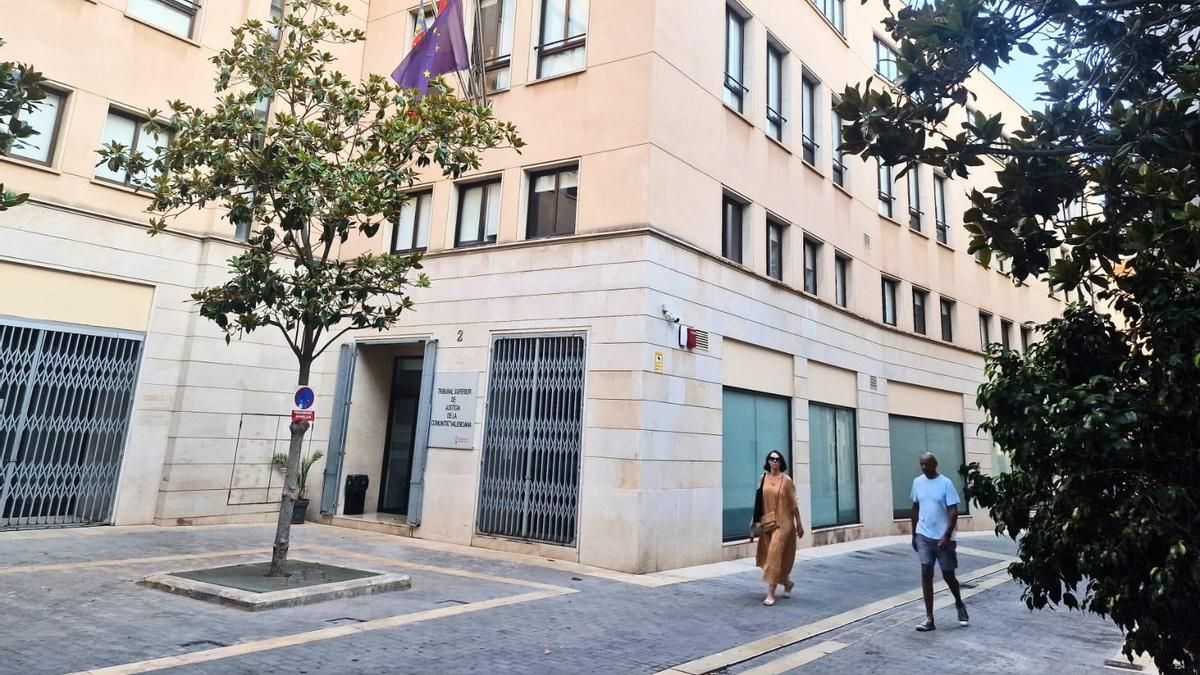
The High Court of Justice of the Valencian Community has confirmed a fine of 80,001 euros to the nursing home Savia SL for allowing an avoidable assault by a user with a history of violence, which resulted in injuries to another resident. #ResidenciasDeMayores #Violencia #ServiciosSociales (translated)

www.eldiario.es
Multa de 80.001 euros a una residencia de ancianos por la agresión evitable de una usuaria con historial de violencia
2369
mtvuutiset.fi 6d

The updates that increase the capacity of the Meilahti field to over 3,000 spectators have secured a place for Puna-Mustat in Superpesis, as confirmed by the historical decision of the Helsinki City Council. #Superpesis #Pesäpallo #Helsinki (translated)

www.mtvuutiset.fi
Puna-Mustissa ratkesi riemu: "Historiallinen päätös"
2603
Luciano Magaldi Sardella (PhD) 7d

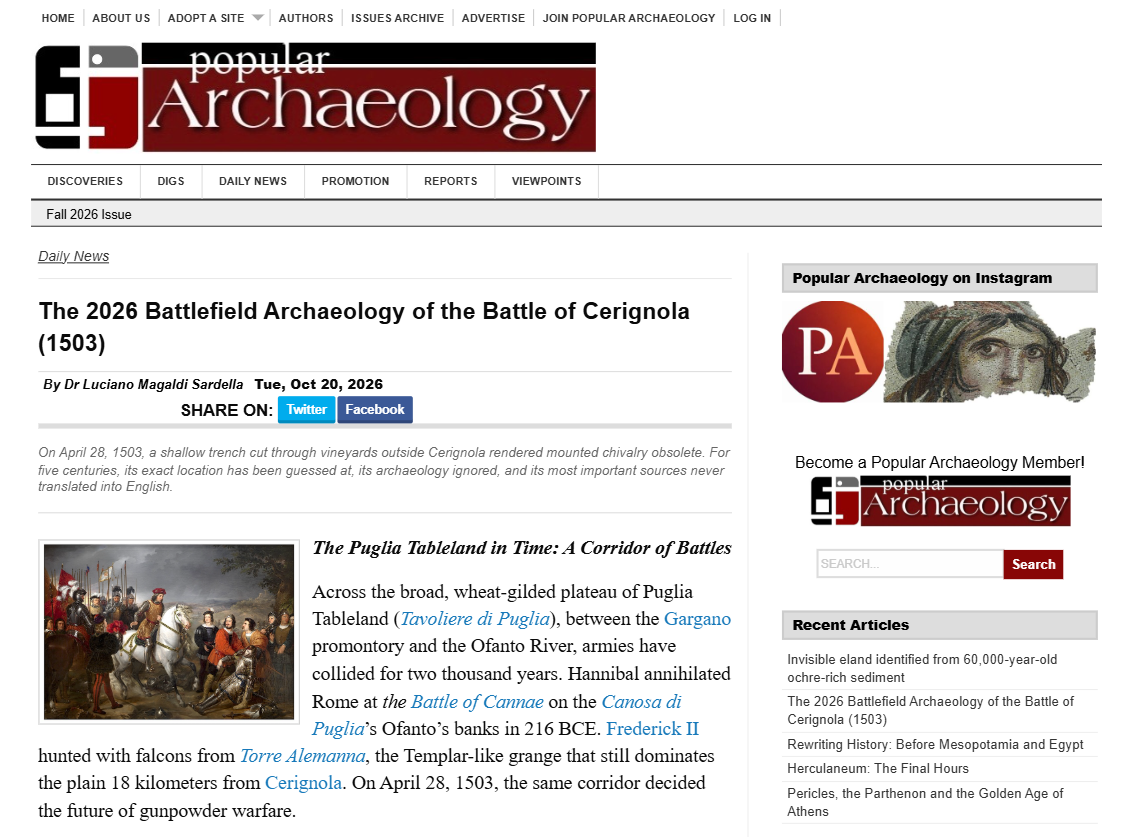
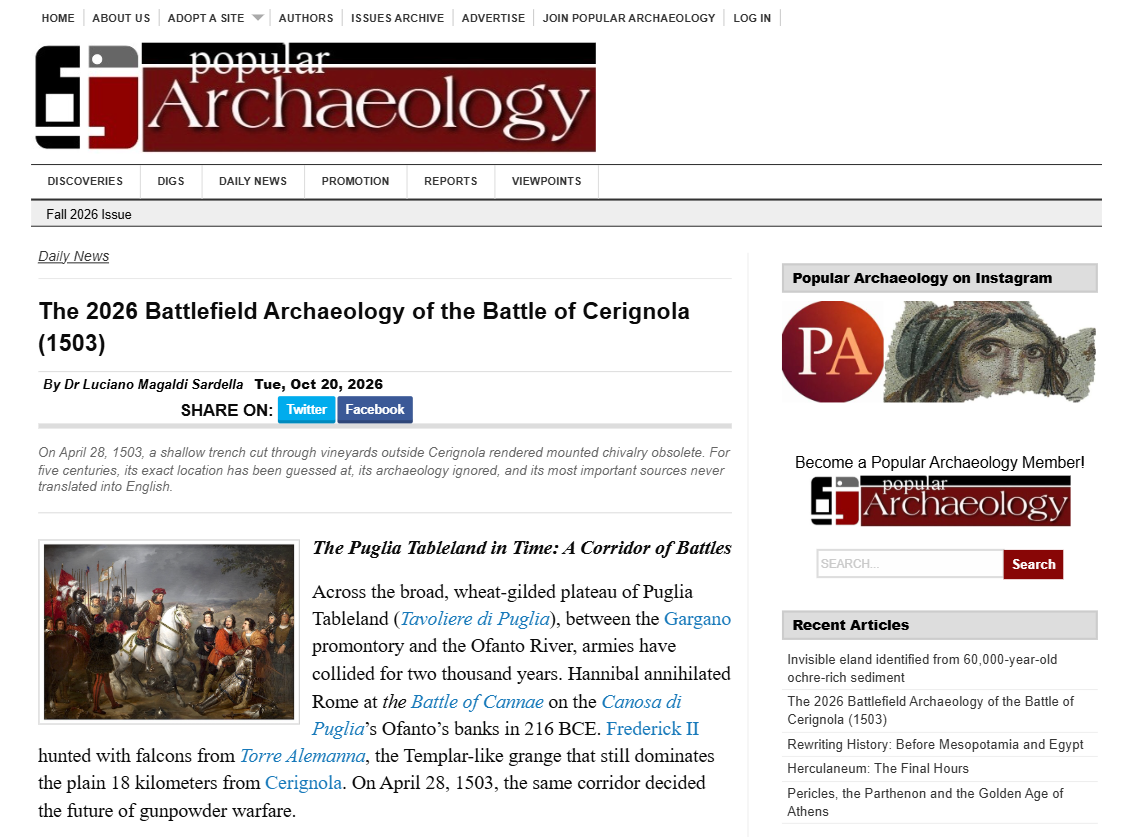
THE "BATTLE OF CERIGNOLA (1503)" ON "POPULAR ARCHAEOLOGY USA" (by LUCIANO MAGALDI SARDELLA) SOURCE 1: https://popular-archaeology.com/author/sardella/ SOURCE 2: https://popular-archaeology.com/article/the-2026-battlefield-archaeology-of-the-battle-of-cerignola-1503/ -------------------------------------------------------------------- CERIGNOLA (FG) — On April 28, 1503, at sunset, a shallow trench cut between the vineyards outside Cerignola rendered heavy cavalry obsolete. For five centuries, its exact location has only been conjectured, its archaeology ignored, its most important sources never translated into English. We are on the Tavoliere of Puglia, a corridor of battles for two thousand years: from Cannae in 216 BC to the falcon hunt of Frederick II from Torre Alemanna. Cerignola, at that time, was not a city but a rural village of 350 families at 120 meters above sea level, custodian of the Mena della Dogana delle Pecore, the great pastoral system of transhumance that financed the Kingdom of Naples. Its possession was fiercely contested. Facing each other were two worlds. Louis d’Armagnac, Duke of Nemours, Viceroy of Naples for Louis XII, in his thirties, splendidly armored, confident of victory. On the other side was Gonzalo Fernández de Córdoba, the Gran Capitán, who on April 27-28 marched from Barletta with about 9,000 exhausted men and decided to settle on a low ridge. He deepened what was already there: not an invention, but an agricultural ditch. The French gendarmes, the last heirs of the medieval knight, lowered their lances and never reached the line. From behind a parapet reinforced with vine stakes, over 1,000 Spanish arquebusiers opened fire. Nemours fell, almost certainly the first European army commander to die from a portable firearm. With him, the charge of cavalry as a dominant tactic died. And here is the scandal denounced by the article: no cartographer of the 17th-18th centuries ever mapped the battlefield. No monument commemorates it. It is not protected as a cultural landscape under the Code of Cultural Heritage. Every deep plowing of the Tavoliere, standard practice since the Bourbon reforms, destroys an archaeology never recorded. Yet the perimeter can be reconstructed. By cross-referencing the 16th-century descriptions of "vine-covered slopes fifteen miles north of the Ofanto" with the Via Traiana, the engagement area is a rectangle of 3-4 square kilometers northeast of the current settlement. With the 1m LiDAR DTM from ISPRA, it could reveal anomalous linear depressions, and the lower filling of a ditch 2-3 meters deep, under the plowed layer, is still readable with magnetometry and ground radar. Why did we arrive late? Not for lack of sources, but for lack of translation. The Municipality of Cerignola and the Torre Alemanna Research and Study Center of Prof. Matteo Stuppiello, who in 1978 obtained the first monumental protection for Torre Alemanna, have digitized a corpus that has never entered Anglophone historiography. Here are the 3 pillars: 1. The letter that still smells of gunpowder. The “Letter from Consalvo de Córdoba to the Spanish royals dated April 29, 1503,” edited by Stuppiello in 2003 and updated to 2025 on comune.cerignola.fg.it/biblioteche-digitali. A handwritten page written in Cerignola the day after the battle, “rich in flashes, twilight lights, and gunfire.” Not a polished chronicle like that of Giovio, but a field dispatch: the fatigue of the night march, the decision to entrench upon arrival, the recovery and honorable burial of Nemours, the intact capture of the French artillery. 2. The graffiti, a monument inside the monument. In the 14th-century church of Santa Maria delle Grazie, known as the Incoronatella, on the Via Trinitapoli Vecchia, where tradition holds that the body of Nemours was brought. On the triumphal arch, a 1503 graffiti gives, in almost notarized form, the date, sixth indiction, Friday at the hour XXIII-XXIIII. It was indeed Friday, as confirmed by the perpetual calendar of Cappelli. Decoded in 1995 by Prof. Francesco Magistrale, Latin paleographer at the University of Bari, in *The Battle of Cerignola (1993)* and in the municipal monograph *S.M. delle Grazie (1999)*. Today it is fading due to humidity and neglect. 3. The land registry that explains the ditch. The Survey of 1672 preserved at the State Archive of Naples, Pignatelli Aragona Cortes fund, Scanzia 63, fasc.1: “At the time of the battle, thick vineyards covered the hill reaching to the plain, and were distinctly separated from the rest of the countryside by a not very deep ditch.” Córdoba did not improvise; he adapted. This is confirmed by the catasti of the Giustiniani: 277 households in 1532, 699 in 1595. The landscape of 1503 was intensely horticultural, not the deeply plowed monoculture of today. In addition to these, there is the first monograph by Vincenzo Buonassisi, *The Battle of Cerignola* (1908, died in Via Fanfulla 10 on June 27, 1928), and the first modern military analysis by Piero Pieri, “Consalvo de Córdoba and the Battle of Cerignola,” Archivio Storico Pugliese 1952, which 30 years before the Anglophone rediscovery of the “pike-and-shot” defined Cerignola as an engineered killing ground. While Cerignola forgot, others remembered. The “Regimiento de Infantería Cerinola n.42”, later “Fuerteventura n.56”, carried the name of Cerignola until the 20th century. The coat of arms, described in *Heraldica e Historiales del Ejercito, Tomo V” (Madrid, 1981): silver field, dying white swan entangled in a hedge, golden wall crown, with the scroll “Cerignola.” Dossier officially transmitted on April 30, 1986, prot. 4565/509, from the Servicio Histórico Militar of Madrid to the Torre Alemanna Center thanks to Col. Alessio Antonutti and Gen. José Cifuentes. And in Amsterdam, at the Rijksmuseum, the anonymous bronze commemorative medal: Hercules with lion skin and club and Janus with the keys next to an eagle-armed coat of arms, legend “Consalvus Agidarius… Janum clausit,” on the reverse a battle scene “Consalvi Agidari Victoria de Gallis ad Cannas,” an artist's mistake that confuses Cerignola with Cannae. It belonged to Mrs. J.M. van Gelder-Nijhoff, donated in 1885. The author's conclusion is clear: Gonzalo's ditch is the most consequential earthwork in European military history. It inaugurates the infantry armed with firearm and conditions the Mediterranean for 160 years. It may still be there, filled, plowed, invisible to the naked eye but accessible to a magnetometer. It is not a matter of medieval archaeology but of the will to protect. (translated)

680
Luciano Magaldi Sardella (PhD) 7d

THE “BATTLE OF CERIGNOLA (1503)” ON “POPULAR ARCHAEOLOGY USA” (by LUCIANO MAGALDI SARDELLA) SOURCE 1: https://popular-archaeology.com/author/sardella/ SOURCE 2: https://popular-archaeology.com/article/the-2026-battlefield-archaeology-of-the-battle-of-cerignola-1503/ __________________________________________________________________ CERIGNOLA (FG) — On 28 April 1503, at sunset, a shallow trench cut through the vineyards outside Cerignola rendered heavy cavalry obsolete. For five centuries its exact position has been merely conjectured, its archaeology ignored, its most important sources never translated into English. We are on the Puglian Tablelanda, a corridor of battles for two thousand years: from Cannae in 216 BC to Frederick II’s falconry from Torre Alemanna. Cerignola, at that time, was not a town but a rural hamlet of 350 families at 120 metres above sea level, guardian of the Mena of the Dogana delle Pecore, the great customs system of transhumance that financed the Kingdom of Naples. It was for its possession that the battle was fought. Opposed, two worlds. Louis d’Armagnac, Duke of Nemours, Viceroy of Naples for Louis XII, thirty years old, splendidly armed, certain of victory. On the other side, Gonzalo Fernández de Córdoba, the Great Captain, who on 27–28 April marches from Barletta with some 9,000 exhausted men and decides to entrench himself upon a low ridge. In front of it he has deepened what was already there: not an invention, but an agrarian ditch. The French gendarmes, the last heirs of the mediaeval knight, lower their lances and never reach the line. From behind an embankment reinforced with vine stakes, more than 1,000 Spanish arquebusiers open fire. Nemours falls, almost certainly the first European army commander to die by a portable firearm. With him dies the cavalry charge as a dominant tactic. And here lies the scandal denounced by the article: no cartographer of the seventeenth or eighteenth century ever mapped the field. No memorial stone recalls it. It is not protected as a cultural landscape under the Code of Cultural Heritage. Every deep ploughing of the Tavoliere, standard practice since the Bourbon reforms, destroys an archaeology never recorded. Yet the perimeter is reconstructable. By cross-referencing sixteenth-century descriptions of “slopes covered with vineyards fifteen miles north of the Ofanto” with the Via Traiana, the engagement zone is a rectangle of 3–4 sq km to the north-east of the present settlement. With ISPRA’s 1m DTM LiDAR, anomalous linear depressions could be revealed, and the lower fill of a 2–3 metre ditch, beneath the ploughed layer, is still legible by magnetometry and ground-penetrating radar. Why have we arrived so late? Not for lack of sources, but for lack of translation. The Comune di Cerignola and the Centro Studi e Ricerche Torre Alemanna of Prof. Matteo Stuppiello, who in 1978 obtained the first monumental protection for Torre Alemanna, have digitised a corpus that has never entered Anglophone historiography. Here are the 3 pillars: 1. The letter that still smells of powder. The “Letter of Consalvo da Cordova to the Sovereigns of Spain of 29 April 1503,” edited by Stuppiello in 2003 and updated in 2025 on comune.cerignola.fg.it/biblioteche-digitali. A manuscript page written at Cerignola the day after the battle, “rich in flashes, twilight gleams, and gunfire.” Not a polished chronicle à la Giovio, but a field dispatch: the exhaustion of the night march, the decision to entrench upon arrival, the recovery and honourable burial of Nemours, the intact capture of the French artillery. 2. The graffito, a monument within the monument. In the fourteenth-century church of Santa Maria delle Grazie, known as the Incoronatella, on the Via Trinitapoli Vecchia, where tradition holds the body of Nemours was taken. On the triumphal arch, a graffito of 1503 gives in quasi-notarial form the date, sixth indiction, Friday at the twenty-third to twenty-fourth hour. It truly was a Friday, as confirmed by Cappelli’s perpetual calendar. Deciphered in 1995 by Prof. Francesco Magistrale, Latin palaeographer at the University of Bari, in La Battaglia di Cerignola (1993) and in the municipal monograph S.M. delle Grazie (1999). It is now fading through damp and neglect. 3. The cadastre that explains the ditch. The Apprezzo of 1672 preserved in the Archivio di Stato di Napoli, fondo Pignatelli Aragona Cortes, Scanzia 63, fasc.1: “At the time of the battle, dense vineyards covered the hill reaching down to the plain, and were clearly separated from the rest of the countryside by a not very deep ditch”. Córdoba did not improvise; he adapted. This is confirmed by the Giustiniani cadastres: 277 hearths in 1532, 699 in 1595. The landscape of 1503 was one of intensive horticulture, not the deep-ploughed cereal monoculture of today. To these are added the first monograph by Vincenzo Buonassisi, La Battaglia di Cerignola (1908, died at Via Fanfulla 10 on 27 June 1928), and the first modern military analysis by Piero Pieri, “Consalvo di Cordova e la battaglia di Cerignola”, Archivio Storico Pugliese 1952, which 30 years before the Anglophone rediscovery of “pike-and-shot” defined Cerignola as an engineered killing ground. While Cerignola forgot, others remembered. The “Regimiento de Infantería Cerinola n.42”, later “Fuerteventura n.56”, bore the name of Cerignola until the twentieth century. Its coat of arms, described in Heráldica e Historiales del Ejército, Tomo V (Madrid, 1981): argent field, a dying white swan entangled in a hedge, a gold mural crown, with scroll “Cerignola”. Dossier officially transmitted on 30 April 1986, prot. 4565/509, by the Servicio Histórico Militar in Madrid to the Centro Torre Alemanna through Col. Alessio Antonutti and Gen. José Cifuentes. And in Amsterdam, in the Rijksmuseum, the anonymous commemorative bronze medal: Hercules with lion-skin and club and Janus with keys beside an eagled coat of arms, legend “Consalvus Agidarius… Janum clausit”, on the reverse a battle scene “Consalvi Agidari Victoria de Gallis ad Cannas” — an error by the artist who confuses Cerignola with Cannae. It belonged to Mrs J.M. van Gelder-Nijhoff, donated in 1885. The author’s conclusion is unequivocal: Gonzalo’s ditch is the most consequential earthwork in European military history. It inaugurates the infantryman armed with a firearm and conditions the Mediterranean for 160 years. It may still be there, infilled, ploughed over, invisible to the naked eye but accessible to a magnetometer. It is not a question of mediaeval archaeology but of the will to protect.

907
El Español 7d

In the most uncertain elections in Serbia in 14 years, the Student List leads the polls with 44.5% compared to 42.7% for the ruling SNS of Aleksandar Vučić, who is facing pressure due to student protests and his authoritarian record. #Serbia #AleksandarVučić #ListaEstudiantil (translated)

www.elespanol.com
"Serbia o mafia": los estudiantes miden la resistencia autoritaria de Vucic en las elecciones más inciertas de los últimos 14 años
2951
Riikka Purra 1w

The author stated that he had accepted the use permit for Posiva in the government and described the decision as historic. According to him, Finland was the first country in the world to solve how to dispose of the generated nuclear waste in Onkalo. #ydinjätteet #loppusijoitus #Suomi #FI (translated)

3881
Pekka Toveri 1w

The author did not believe that Ukraine would collapse as a result of the bombings. He wrote that bombings had not historically broken a nation's will to defend itself, citing examples of Hitler, Stalin, and the Allies during World War II. #Ukraina #historia #sodankäynti #FI #UA #DE #SU (translated)

2740
mtvuutiset.fi 2w

American researchers have developed AI models that predict the survival chances of cancer patients solely based on facial images, revealing historical wisdom from Hippocrates in assessing the risk of death and biological age. #tekoäly #syöpä #biologinenikä (translated)

www.mtvuutiset.fi
Selviätkö syövästä? Selfie paljastaa kylmäävän tarkasti sen, minkä Hippokrates jo tiesi
3315
Perussuomalaiset 2w

The Finns Party announced that it had made cuts of 1.34 billion euros to development aid, which it described as historic. According to the party, it had also stopped or suspended several development aid projects and made aid conditional on the recipient country taking back its repatriable citizens and not supporting Russia's aggressive war. The Finns Party stated that development aid had undergone a complete overhaul and considered it necessary to continue this work in the next electoral term. #siksiPS #perussuomalaiset #kotimaakutsuu #kehitysapu #kehitysapu #perussuomalaiset #siksiPS (translated)

2973

Sammallahti wrote that the Finnish left, in his opinion, had remained silent about the riots in France. He claimed that masked antifascists had waved Palestinian flags, set major cities on fire, looted stores, and assaulted bystanders. Sammallahti assessed that the left's reaction would have been stronger if there had been features interpreted as right-wing in the riots. Sammallahti also claimed that in Finland, antifascist actors operated particularly under the protection of the Left Alliance and the Greens, and had organized events such as Kuokkavieraat, Smash ASEM, Kiakkovieraat, and Makasiinimellakat, as well as the Luokkaretki lähiöst linnaan event and the activities of Extinction Rebellion. According to him, the connections of far-left groups to current politics had not been investigated in Finland because there had been no lustration and the media had a sympathetic attitude towards the left. He added that leftist politicians had sometimes carried symbols of violent extremist groups and that some of the event organizers had advanced to influential political positions. Sammallahti hoped that leftist politicians would autonomously condemn the actions of their like-minded peers. He believed that the violence of the far-left should be prevented rather than understood, using soft and, if necessary, hard means. https://t.co/CXoRZ8GE6X https://t.co/YStFgDHL6U https://t.co/6EQpCOTZAo https://t.co/OOq0ayZ4Ou #vasemmisto #mellakat #antifasismi (translated)

3207
Melquisedec Torres 2w

Melquisedec Torres questioned whether the government of Gustavo Petro had paid the lawyer of former paramilitary leader Salvatore Mancuso. He stated that Juan Carlos Villamizar Alarcón participated in meetings of the "Pacto de Valledupar" in October 2025 as legal advisor to Mancuso and said he had revealed that information over the weekend. Torres noted that Villamizar had received at least two contracts from the national government in 2025 and 2026: one for $13.8 million from the National Center for Historical Memory and another for $128 million from RTVC. He indicated that the RTVC contract appointed him as an expert advisor in transitional justice to support the production of audiovisual content about the JEP and the Justice and Peace jurisdiction. He added that the lawyer had a professional card issued less than two years ago and that the contract, awarded directly, was signed on January 25, 2026. He also stated that, according to social media records, Villamizar had a long history as a member of far-left parties and ties to Gustavo Petro since at least 2009. He added that in 2014, Congreso Visible reported him as a member of the Unión Patriótica and that years earlier, he was listed as the coordinator of youth for the Polo Democrático Alternativo in Spain. #JusticiaTransicional #GustavoPetro #Colombia (translated)

2980
Riikka Purra 2w

The author described videos depicting the chaos in France as horrifying and said they showed burned cars, broken shop windows, looted stores and luxury shops, as well as destroyed public buildings. According to him, the destruction also occurred in historically valuable places, schools, and other facilities, and the protests escalated quickly. #Ranska #mielenosoitus #kriisi #FR (translated)

3444
Rita Tainola 2w

The author described the looting as shocking and said that historical buildings had been burned. According to him, it was about violence, not protests. He also expressed strong disgust. #väkivalta #ryöstely #historia #FI (translated)

3217
Kirill Dmitriev 2w

Putin's special envoy Kirill Dmitriev praised Trump's decision as historic on Saturday. #Ukraina #Zelenskyi #Trump (translated)

Zelenskyi syyttää Trumpia Venäjän auttamisesta – Ukrainalle outo Starlink-selitys
www.mtvuutiset.fi
2645
Javier Tebas Medrano 2w

Javier Tebas Medrano stated that Goebbels' propaganda techniques were studied in journalism and communication faculties to understand how they worked and to recognize them today. As an example, he cited the mandatory course General Theory of Informative Messages, from the first year of the Journalism Degree at the University of La Laguna, whose teaching guide for the 2025-2026 course included an exercise on the current application of the 11 principles of Goebbels. Tebas asserted that his comparison referred to techniques, not to an ideology or the fans of Real Madrid, and that this clarification was already noted in his original publication. He said he had criticized Real Madrid TV's systematic repetition of messages, the selective presentation of facts, and the construction of an enemy, and he used a derogatory term to refer to the channel's spokespeople. He also asked how many requests for schedule changes had been submitted and how many had been accepted, and pointed out that, in his opinion, that history should be taken into account. He added that the outrage and calls for resignation did not address the issues he had raised. #Propaganda #Comunicación #Periodismo (translated)

3565
ABC TU DIARIO EN ESPAÑOL 2w

Alejandro Davidovich faces Alexander Zverev in the semifinals of the Shanghai Masters 1000, where he seeks to demonstrate his good form after winning two recent titles, despite his unfavorable record against the German. #Tenis #Masters1000 #ZverevDavidovich (translated)

www.abc.es
Davidovich pone a prueba su estado de gracia con Zverev, un duro hueso en Shanghái
2875