
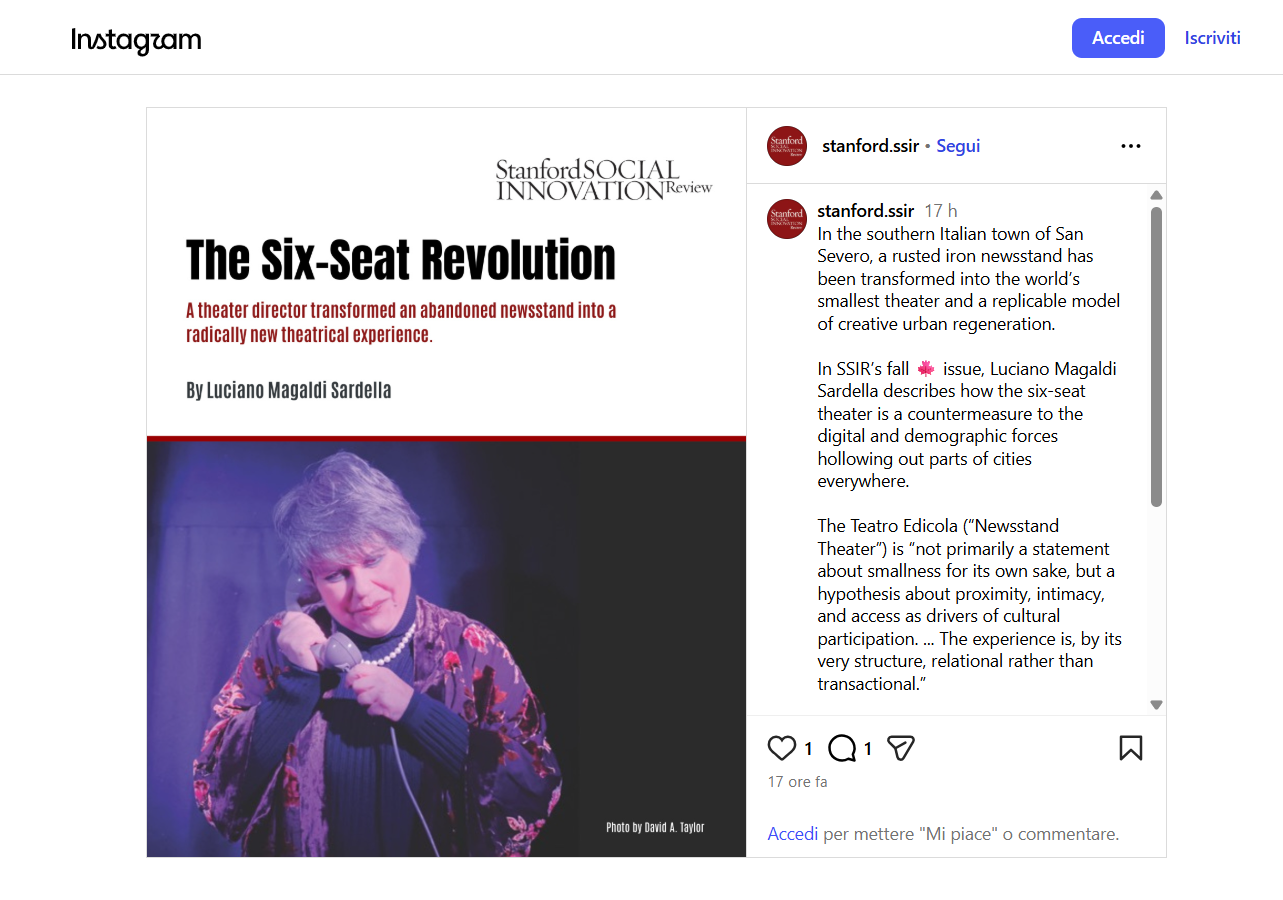
“STANFORD SOCIAL INNOVATION REVIEW (INSTAGRAM)” — “LA RIVOLUZIONE A SEI POSTI: UN REGISTA TEATRALE (FRANCESCO GRAVINO) HA TRASFORMATO UN’EDICOLA ABBANDONATA IN UN’ESPERIENZA TEATRALE RADICALMENTE NUOVA” by LUCIANO MAGALDI SARDELLA https://ssir.org/bios/luciano-magaldi-sardella SOURCE: https://www.instagram.com/p/Deor7xKlwNH/ Nella città di San Severo, nel sud Italia, un’edicola arrugginita è stata trasformata nel teatro più piccolo del mondo e in un modello replicabile di rigenerazione urbana creativa. Nel numero autunnale di SSIR, Luciano Magaldi Sardella descrive come questo teatro da sei posti sia una risposta alle forze digitali e demografiche che stanno svuotando intere parti di città ovunque. Il “Teatro-Edicola” è “non tanto una dichiarazione sulla piccolezza fine a sé stessa, quanto un’ipotesi sulla prossimità, l’intimità e l’accesso come motori della partecipazione culturale. … L’esperienza è, per sua stessa struttura, relazionale piuttosto che transazionale. (Francesco Gravino)”.
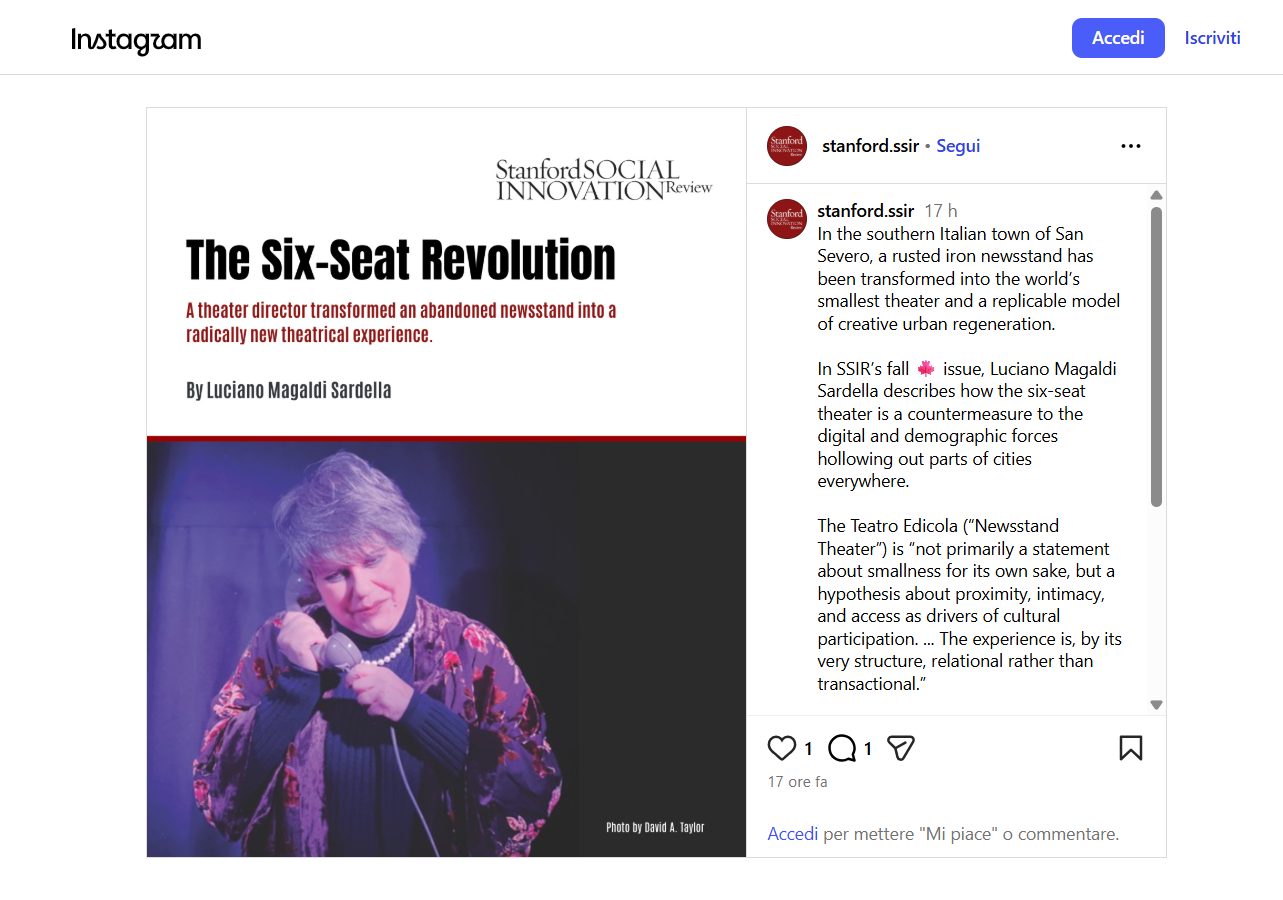
“STANFORD SOCIAL INNOVATION REVIEW (INSTAGRAM)” — “THE SIX-SEAT REVOLUTION: A THEATRE DIRECTOR (FRANCESCO GRAVINO) TRANSFORMED AN ABANDONED NEWSSTAND INTO A RADICALLY NEW THEATRICAL EXPERIENCE” by LUCIANO MAGALDI SARDELLA https://ssir.org/bios/luciano-magaldi-sardella SOURCE: https://www.instagram.com/p/Deor7xKlwNH/ In the southern Italian town of San Severo, a rusted iron newsstand has been transformed into the world’s smallest theater and a replicable model of creative urban regeneration. In SSIR’s fall issue, Luciano Magaldi Sardella describes how the six-seat theater is a countermeasure to the digital and demographic forces hollowing out parts of cities everywhere. The Teatro Edicola (“Newsstand Theater”) is “not primarily a statement about smallness for its own sake, but a hypothesis about proximity, intimacy, and access as drivers of cultural participation. … The experience is, by its very structure, relational rather than transactional (Francesco Gravino).”

Impact reported that Magali Berdah lost her temper live on television after Brahim called her out. She denied any tax evasion and claimed to have declared her taxes, before asking him to detail his accusations and provide evidence. She called him dangerous and disputed that he could speak on the set. Berdah also talked about her background, saying that her mother worked as a cleaning lady and spent several years at Emmaüs. She claimed to have started a business on her own that had reached 42 million euros, before being destroyed, according to her, by Booba, whom she presented as under investigation. Impact indicated that the segment came from BFM TV. #MagaliBerdah #Télévision #Débat (translated)

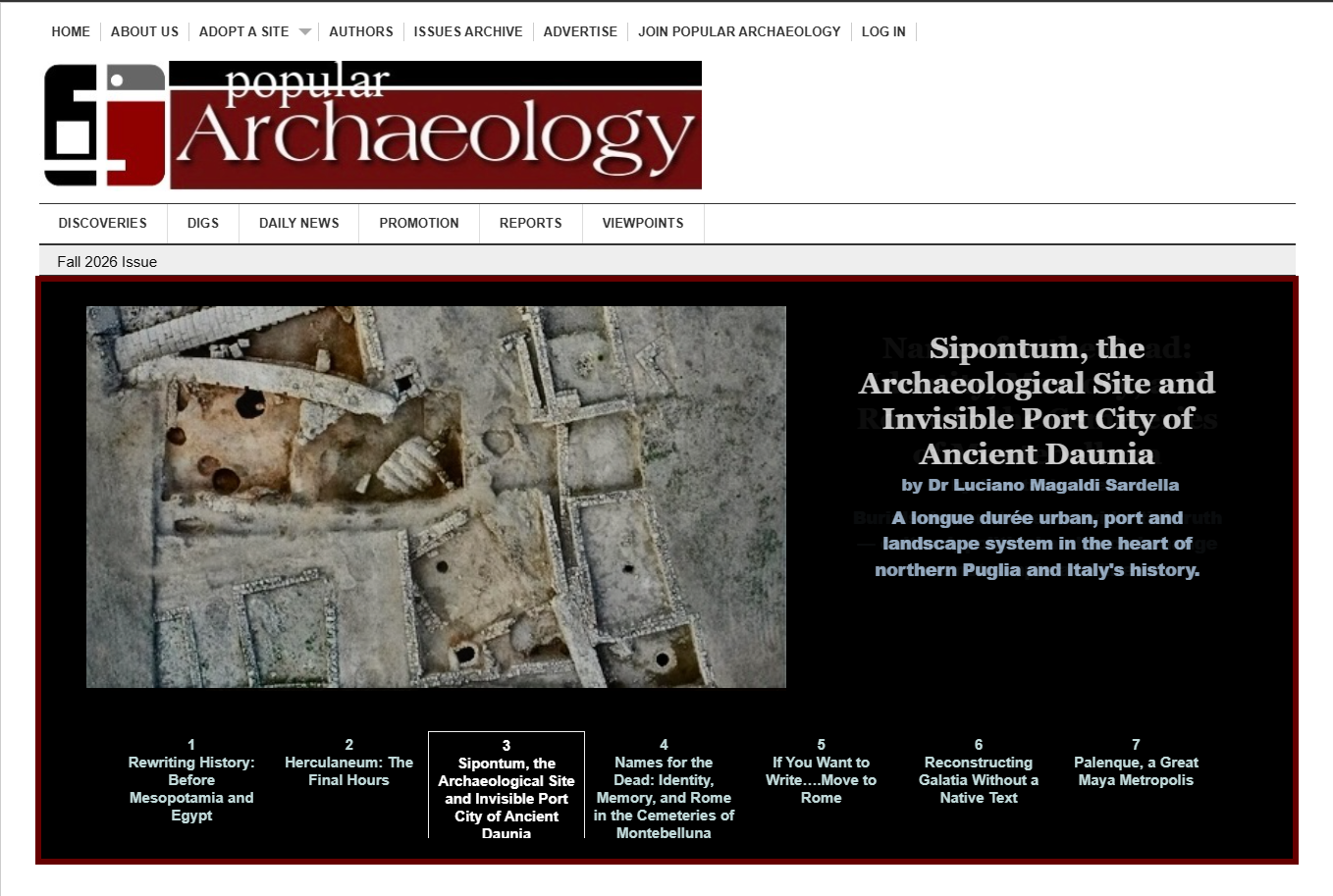
SIPONTO (MANFREDONIA) PUBBLICATA SU "POPULAR ARCHAEOLOGY USA" by LUCIANO MAGALDI SARDELLA "SIPONTUM, THE ARCHAELOGICAL SITE AND INVISIBLE PORT CITY OF ANCIENT DAUNIA" SOURCE: https://popular-archaeology.com/author/sardella/ Finalmente Siponto parla al mondo. È uscito su Popular Archaeology USA il primo grande racconto divulgativo in inglese dedicato a Sipontum, la città portuale invisibile della Daunia. Per chi lavora sul patrimonio archeologico di Foggia e provincia era un paradosso: l’Encyclopaedia Britannica liquidava Siponto in due righe come “città abbandonata per le lagune”, ma non esisteva ancora una sintesi completa della sua storia in lingua inglese per il pubblico internazionale. Questo articolo colma finalmente quel vuoto. Racconta una storia di longue durée che attraversa 7.000 anni: dalla laguna dell’Età del Bronzo alla colonia marittima romana del 194 a.C. il cui decumano massimo è ancora oggi la SS89 Garganica, dal porto granario citato da Cassiodoro alla basilica resa visibile da Edoardo Tresoldi, fino all’abbandono per malaria e al trasferimento voluto da Manfredi di Svevia che fondò Manfredonia nel 1256–1263. E soprattutto racconta il presente: le campagne 2021–2025 di Archeologia Globale delle Università di Bari e Foggia con Roberto Goffredo, Maria Turchiano e Giuliano Volpe, e il nuovo Parco Archeologico del Gargano. Un passo fondamentale per dare a uno dei siti più sottovalutati d’Italia la visibilità internazionale che merita.
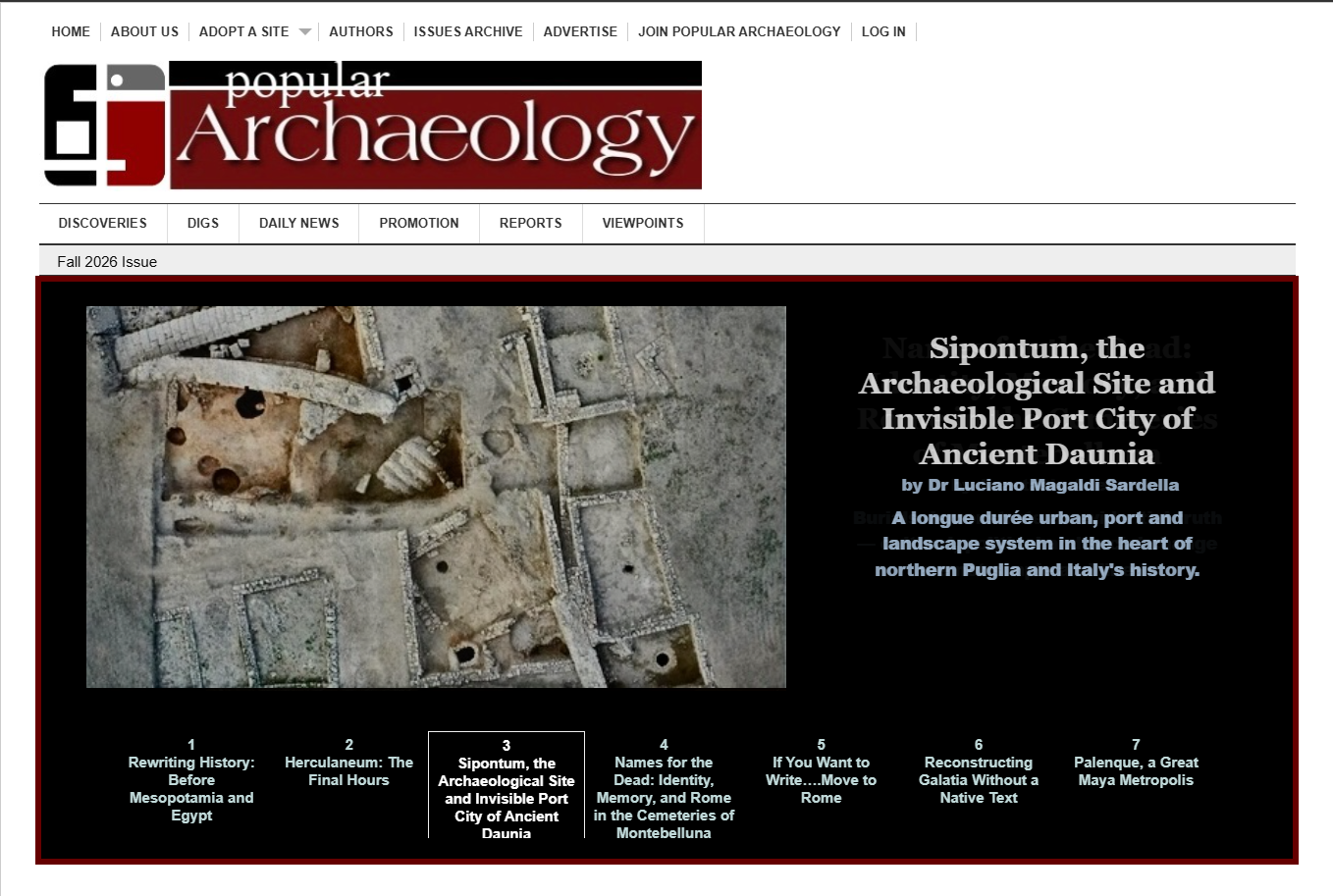
SIPONTUM (MANFREDONIA), PUBLISHED IN POPULAR ARCHAEOLOGY USA by LUCIANO MAGALDI SARDELLA "SIPONTUM, THE ARCHAELOGICAL SITE AND INVISIBLE PORT CITY OF ANCIENT DAUNIA" SOURCE: https://popular-archaeology.com/author/sardella/ At last, Siponto speaks to the world. The first major popular account in English devoted to Sipontum, the invisible port city of Daunia, has been published in Popular Archaeology USA. For those who work on the archaeological heritage of Foggia and its province, it has long been a paradox: the Encyclopaedia Britannica dismissed Siponto in two lines as a “city abandoned owing to the encroachment of lagoons”, yet no comprehensive synthesis of its history in English existed for an international readership. This article at last fills that lacuna. It narrates a longue durée history spanning 7,000 years: from the Bronze Age lagoon to the Roman maritime colony of 194 BC, whose decumanus maximus survives today as the SS89 Garganica; from the grain port cited by Cassiodorus to the basilica rendered visible by Edoardo Tresoldi; through to abandonment through malaria and the transfer ordained by Manfred of Swabia, who founded Manfredonia in 1256–1263. And, above all, it recounts the present: the 2021–2025 campaigns of Global Archaeology by the Universities of Bari and Foggia, led by Roberto Goffredo, Maria Turchiano, and Giuliano Volpe, and the new Archaeological Park of the Gargano. A fundamental step towards affording one of Italy’s most underrated sites the international visibility it deserves.

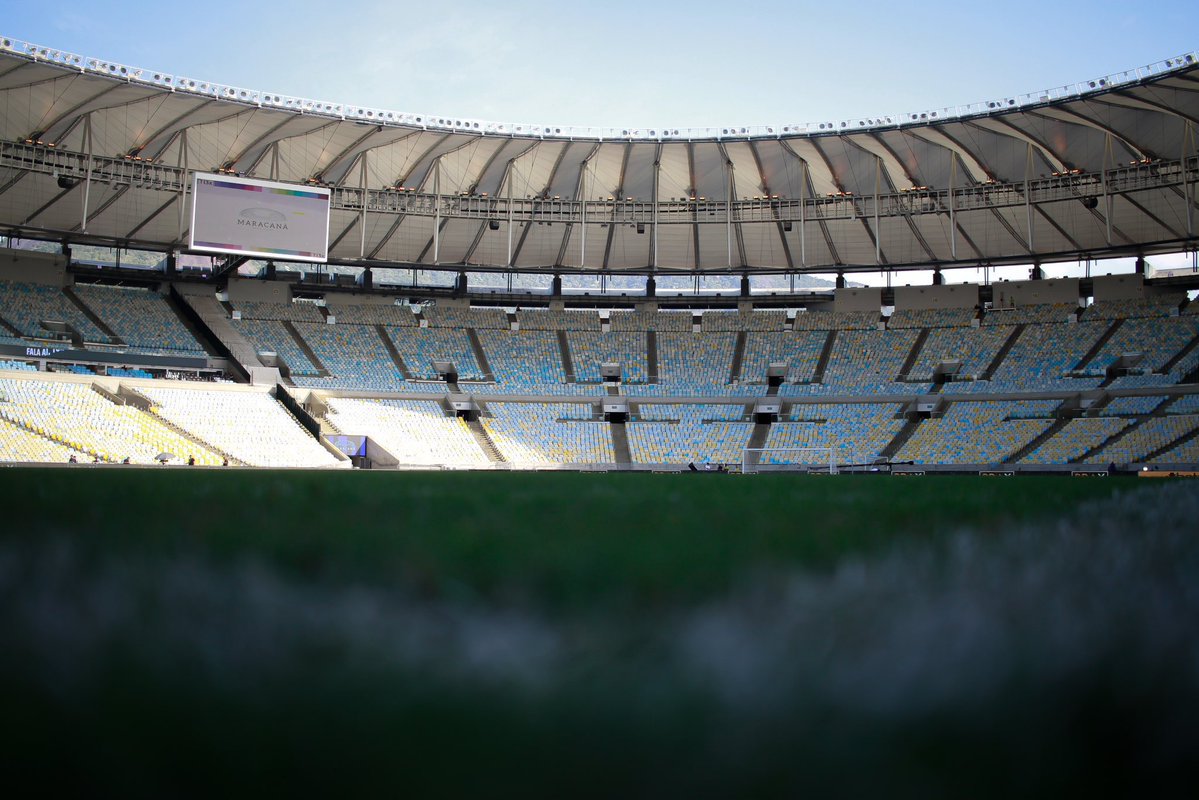
Gustavo Tutinha argued that Vasco should terminate its contract with Greenleaf. He claimed that the company had produced controversial reports and opinions in the legal dispute over Maracanã, used against the club's interests. Tutinha also requested that the MPRJ, PGE, and control bodies investigate the stadium's concession contract and compliance with the notice, especially in the application of technical and equitable criteria. According to him, the concessionaire managed a public asset and should be accountable for its decisions. Finally, he requested an investigation into the actions of the vice-president of TJRJ, Suely Lopes Magalhães, including the circumstances and competence of her decision, the compliance with the rules of the judicial planton, and the contradictions that, according to him, were pointed out in the decision that subsequently reconsidered its effects. #Vasco #Maracanã #Justiça (translated)
Gustavo Tutinha stated that Suely Lopes Magalhães, vice president of TJRJ, was in the Netherlands and was not part of the judiciary's on-call service when she made a decision that he considered disconnected in a writ of security. According to him, the judge responsible for the appeal later overturned the decision. Tutinha also asked if they could talk about her calmly. #Justiça #TJRJ #MandadoDeSegurança (translated)

Attention, Vasco fans! It was reported that the Institute of Cooperation, Human and Social Development (CODHES) presented, on Monday (12), a factual news item to the Public Prosecutor's Office of Rio de Janeiro, requesting urgent measures regarding the denial of use of the Maracanã for Vasco vs. Boca Juniors. The match was scheduled for October 20, for the semifinals of the Copa Sudamericana. According to the publication, the document, signed by the president of the institute, José Roberto da Costa Junior, requested that the responsibilities of the presidents of Flamengo and Fluminense and the administrators of the concessionaire Fla-Flu Serviços S.A. be investigated. CODHES also requested clarifications regarding the powers of the concessionaire and about a possible influence of sports rivalry on the decision. The entity further requested that the Public Prosecutor's Office examine the situation of Judge Suely Lopes Magalhães, who, according to journalistic information cited in the statement, was in the Netherlands when she suspended the authorization for the match. The request included clarifications about the trip, any functional suspension, and the exercise of the magistrate's duties during that period. The publication stated that the document mentioned more than 45,000 tickets sold and requested an assessment of possible losses for fans in terms of travel, accommodations, and transportation. The institute pointed out the possibility of compensation for material damages and potential collective moral damages, if the legal requirements were met, in addition to requesting measures to prevent clashes and risks related to the uncertainty of the stadium. According to Attention, Vasco fans!, CODHES also admitted the possibility of filing a collective lawsuit and resorting to the Inter-American Commission on Human Rights if it identified violations attributable to the Brazilian state and if the legal requirements were fulfilled. #Maracanã #CopaSulAmericana #Vasco (translated)

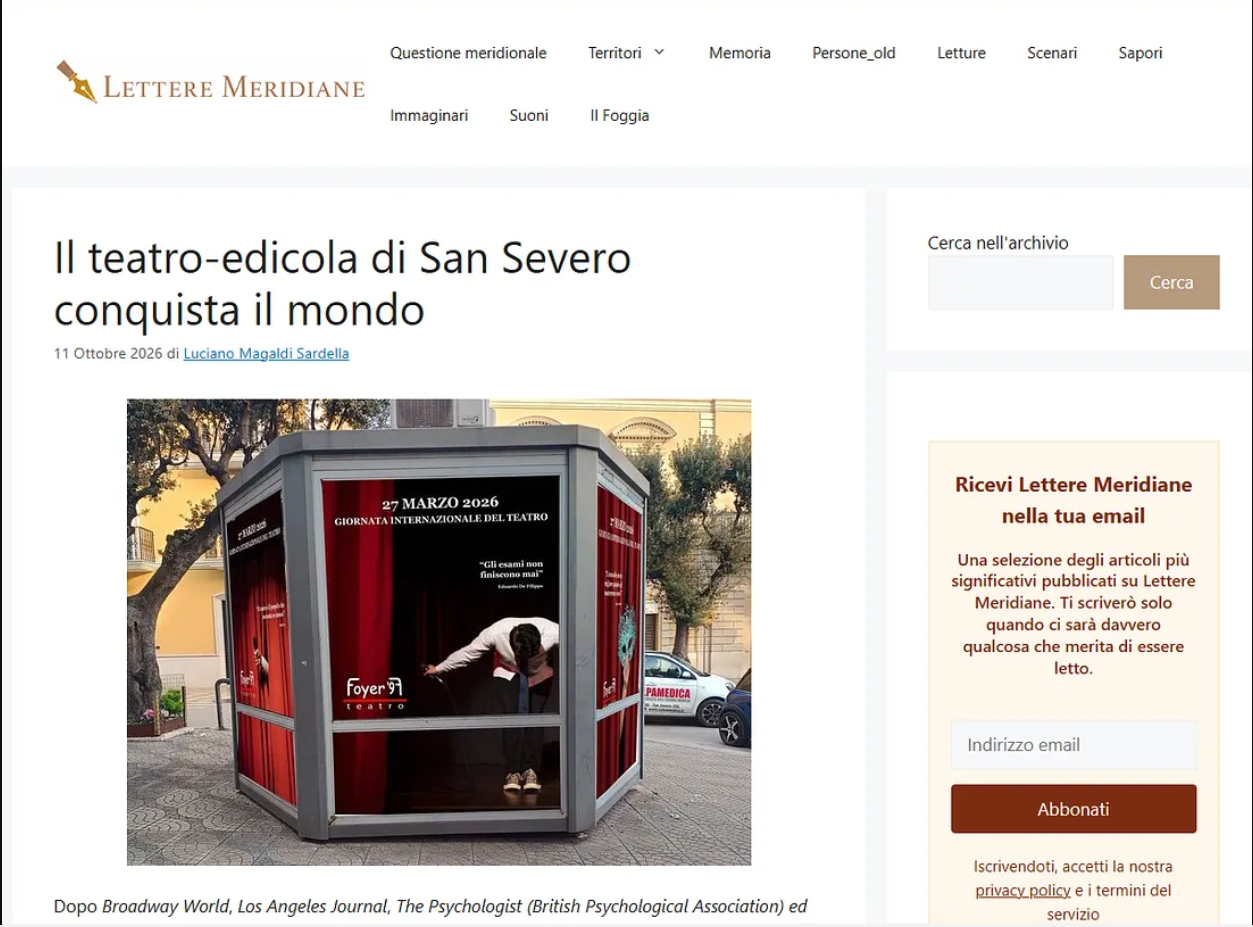
LETTERE MERIDIANE — “TEATRO-EDICOLA” OF SAN SEVERO CONQUERS THE WORLD SOURCE: https://www.letteremeridiane.org/2026/10/il-teatro-edicola-di-san-severo-conquista-il-mondo/?fbclid=IwY2xjawU4oqFleHRuA2FlbQIxMQBwZG9mAXNydGMGYXBwX2lkEDIyMjAzOTE3ODgyMDA4OTIAAR5rVEwYs6UUXg7v-P0SyIQ_DRb_F6ZiY58OcseYoV4J7atcTiERnhWaqKM2pw_aem_Njle1jq1XLzHr93KLBUcVA After “Broadway World”, the “Los Angeles Journal”, “The Psychologist (British Psychological Association)” and Hollywood Beat Magazine, its “academic consecration” has now arrived courtesy of Stanford University. As I have already emphasised in my article on the revival of the GIO Festival in Foggia, celebrated by BroadwayWorld for the world stage premiere of the Giordano’s opera Marina (1888), the province of Foggia has long ceased to be peripheral. It happens when it finds an idea that shifts the coordinates: well, in San Severo, 40 kilometres from Foggia, it has happened again. Only this time an orchestra was not needed; six chairs were enough. The celebrated Teatro-Edicola of San Severo artistic director Francesco Gravino of the theatre company Foyer ’97 has been featured in the academic journal “Stanford Social Innovation Review (SSIR)” as an academic case study. The news, relayed on 19 September 2026 by ANSA Nazionale, looked like a misprint. Then it became clear that it was not. SSIR, an award-winning publication covering multisectoral solutions to global problems, included the project in its Dispatches section with the reportage “The Six-Seat Revolution”. It is the inverse trajectory to that of the GIO Festival: not a forgotten opera returning to a grand historic Italian horseshoe theatre, but an entire theatre reborn inside a disused place, forgotten by man. There are moments when past and future intertwine to create something visionary, innovative, artistically “revolutionary”: San Severo experienced one of those moments on the morning of 27 March 2026, during World Theatre Day, when the shutter of a newsstand closed for six years in Via Matteo Tondi was reopened “not to sell newspapers, but to offer stirring stories”, to quote Gravino’s motto. The idea of the visionary Francesco Gravino, artistic director, stage director and actor of the San Severo company Foyer ’97, active for at least 30 years in Capitanata, centred on the kiosk, hexagonal in metal and glass, granted free of charge by its owner Pino Frau, by now an urban relic created by the publishing crisis of the early 2000s: today in Italy active newsstands have fallen from about 35,000 in 2005 to about 20,000 in 2024, a decline of 42.8%. Gravino and eleven other actors restructured it in two weeks of work, without institutional funding, and transformed it into what is now under examination by the London commission of Guinness World Records as the “world’s smallest theatre”. The formula is deliberately austere: six spectators at a time outside, actors inside at less than a metre’s distance, 15-minute performances, continuous rotation from 11:00 to 20:45, texts ranging from Goldoni to Chekhov, from Ibsen to Dacia Maraini. On the door a QR code with an original theatrical warning: “Warning! This QR code transforms passers-by into actors. Scan only if ready.” The numbers immediately showed that it was no boutade: more than 60 people in a single afternoon, three inaugural days that sold out. But above all a positive echo that went beyond the borders of San Severo. “Broadway World” (just as in the previous case of the GIO Festival), the world’s most influential theatre criticism outlet with over 5.5 million monthly views, devoted exclusive coverage to it on 27 April 2026: “An Abandoned Italian Newsstand Just Became the World’s Smallest Theatre”. Not a mere listing, but an analysis: “There is no foyer, there is no balcony, there is no grid. There is barely a wing. What there is is something almost unrecognisable as an evening at the theatre, and for that very reason it is all the more powerful.” “Broadway World” captured Gravino’s manifesto idea: “This is a theatre of proximity. In an era of digital distance, we are putting human contact back at the centre,” framing it as “More than a clever exercise in site-specific theatre. It is a reappropriation.” All of this, in a Mezzogiorno of Italy often narrated only in terms of organised crime and marginalisation. To that seal of approval was added another, even more disorienting for a newsstand in San Severo: the “Los Angeles Journal”, one of the most influential publications on the West Coast for the performing arts. On 12 May 2026, it headlined thus: “San Severo’s Teatro-Edicola as an Innovative Model for Los Angeles Theaters?” opening as follows: “In a city in southern Italy that Hollywood has never heard of, a theatre director has just built the smallest stage in the world: six seats, fifteen minutes, zero distance. Los Angeles should pay attention.” The “Los Angeles Journal” does not indulge in folklore, but places the kiosk in Via Matteo Tondi alongside the prestigious 1,600-seat Ahmanson Theatre in Los Angeles, the Pantages of Broadway in Hollywood, the 99-seat plan of Rogue Machine, the Odyssey, the Victory Theatre and the Hollywood Fringe. It even recalls Ethan Marks’s Electrical Box Theatre, a veritable electrical box lined with red velvet in downtown Los Angeles, to argue that Gravino has taken to the extreme the question Los Angeles has been asking itself for decades: How small can a stage become before it ceases to be a stage? And it recognizes the San Severo urban model: almost zero cost, two weeks of work and six chairs, in return for immediate provincial, regional and national media coverage, recognition by the San Severo’s Municipal Administration, and a format exportable anywhere. Then, the third American piece came from “Hollywood Beat Magazine” on 20 April 2026: Six seats. Fifteen minutes. One actor. No stage. The magazine recounts the kiosk in Via Tondi left disused for almost six years, the contemporary six-seat cultural outpost, placing Francesco Gravino in a distinguished genealogy: Richard Schechner and environmental theatre, Jerzy Grotowski and poor theatre, Nicolas Bourriaud and relational aesthetics. But it closes with pragmatism: it is not a thesis, it is fixing a street corner, that is, repairing an urban street corner by asking not how large a theatre can become, but how small it must become again to recover its original power. And finally, the celebrated London-based “The Psychologist”, the journal of the “British Psychological Society (BPS)”, the oldest psychological society in the world, transformed the Teatro-Edicola into a scientific case study: on 30 July 2026 it published “The world’s smallest theatre — and Psychologists’ next act”, starting from the same detail, the morning of 27 March when the metal shutter of the hexagonal kiosk in Via Tondi reopened after six years, six people inside, an actor at less than a metre’s distance beginning Chekhov. It describes the formula: six spectators, 15 minutes, 11 actors over 10 hours, from Goldoni to Euripides, inside a kiosk where the fourth wall does not break because architecturally it never existed. But the BPS goes a step further: it cites the 2025 studies by Damien Gabriel in IBRO Neuroscience Reports, that live performance generates measurably stronger emotional and physiological activation than video, and introduces Edward Hall’s proxemics: below one metre is intimate space, reserved for doctors, close friends, lovers. In that one-square-metre space, the actor’s breath is audible, micro-expressions legible, the self-other boundary becomes permeable. The Teatro-Edicola “does not make theatre better, it makes it inevitable”. And it is here that one understands why Stanford is studying it as an academic case study in social innovation, not as a case of artistic originality. In Italy, meanwhile, the national media circuit had already picked up the phenomenon: RaiNews — TG2 Storie brought it to RaiDue at midnight on 19 April. RTL 102.5 devoted space to the format conceived by Gravino and developed by Foyer ’97 in the heart of San Severo in Via Tondi, defining it as a permanent micro-stage capable of bringing theatre into public space. ANSA.it, Gazzetta del Mezzogiorno, La Repubblica, TG2000, Radio Capital, Swiss RSI, ANSA Brazil and many others followed. And for the record: Fiorello praised it in La Pennicanza as an artistic case inspired by his Edicola Fiore, and Biagio Antonacci, on his tour in the Augustan amphitheatre of Lucera, made a “fact-finding” stop at the Teatro-Edicola singing the celebrated and nostalgic Iris in front of an audience certainly larger than the “six seats”. Francesco Gravino’s theatre company Foyer ’97 was not born yesterday: behind it lie the Teatro-Cantina of 2016, the underground theatre, and in 2011 a performance on the bell tower of a church in the centre of San Severo at 45 metres high. The Teatro-Edicola completes, in Gravino’s words, “the entire vertical extension of theatre: underground, street level, rooftop”. And it is preparing for its thirtieth anniversary in 2027 aiming to purchase the kiosk to make it permanent, exporting the “San Severo Model” to Rome, Lucca, and to the festivals of Santarcangelo and Todi. As with the GIO Festival, someone might dare to claim that it is merely a stunt, but when BroadwayWorld places you alongside the Los Angeles Opera House, the “Los Angeles Journa”l proposes you as a model for Hollywood, “Hollywood Beat Magazine” reads you through Grotowski and the “British Psychological Society” uses you to explain mirror neurones, it is no longer a stunt but an excellent artistic and academic positioning. To those who still whisper that Foggia and Capitanata are provincial, the answer is now written on two opposite and complementary fronts: on 5 June in Foggia a 138-year-old opera found the stage again at the Giordano ending up on BroadwayWorld; on 27 March in San Severo a 4-square-metre kiosk invented a stage that did not exist, ending up at Stanford, in Los Angeles, in Hollywood and in London. The periphery, when it has a precise idea, becomes the centre. Even with six chairs. Luciano Magaldi Sardella
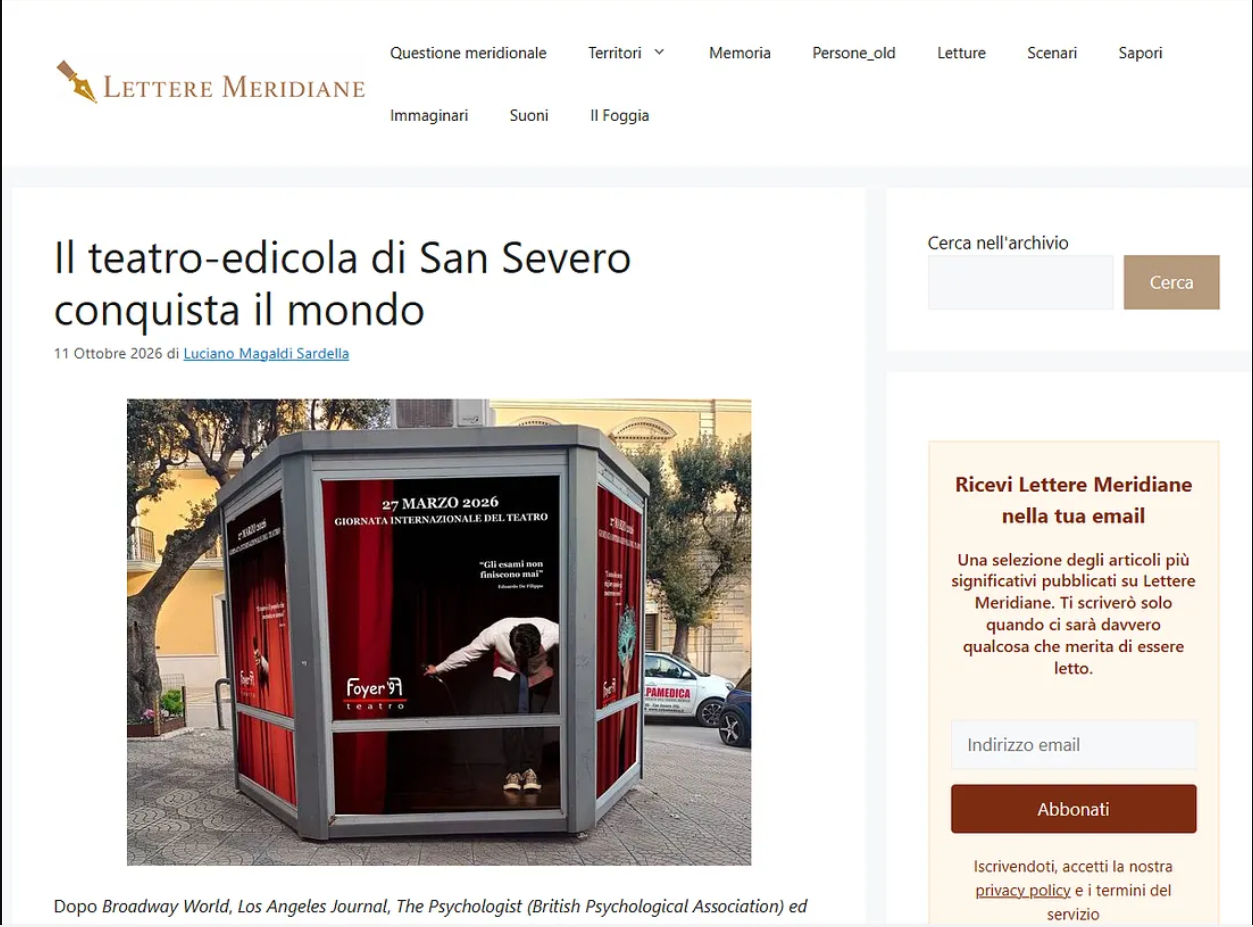

LETTERE MERIDIANE — IL TEATRO-EDICOLA DI SAN SEVERO CONQUISTA IL MONDO SOURCE: SOURCE: https://www.letteremeridiane.org/2026/10/il-teatro-edicola-di-san-severo-conquista-il-mondo/?fbclid=IwY2xjawU4oqFleHRuA2FlbQIxMQBwZG9mAXNydGMGYXBwX2lkEDIyMjAzOTE3ODgyMDA4OTIAAR5rVEwYs6UUXg7v-P0SyIQ_DRb_F6ZiY58OcseYoV4J7atcTiERnhWaqKM2pw_aem_Njle1jq1XLzHr93KLBUcVA Dopo Broadway World, Los Angeles Journal, The Psychologist (British Psychological Association) ed Hollywood Beat Magazine, ora è arrivata la sua “consacrazione accademica” a cura della Stanford University. Come ho già sottolineato nel mio articolo sulla rivincita del GIO Festival a Foggia, celebrata dal BroadwayWorld per la prima mondiale scenica della giordaniana Marina (1888), la provincia di Foggia ha smesso ormai di essere periferia. Accade quando trova un’idea che sposta le coordinate: ebbene, a San Severo, a 40 chilometri da Foggia, è successo di nuovo. Solo che questa volta non serviva un’orchestra, ma sono bastate sei sedie. Il celebre Teatro-Edicola del sanseverese direttore artistico Francesco Gravino della Compagnia Teatrale Foyer’97 è finito sulla rivista accademica Stanford Social Innovation Review (SSIR) in qualità di caso di studio accademico. La notizia, rilanciata il 19 settembre 2026 da ANSA Nazionale, sembrava un refuso. Poi si è capito che non lo era. La SSIR, pubblicazione pluripremiata che copre soluzioni multisettoriali ai problemi globali, ha inserito il progetto nella sezione Dispatches con il reportage The Six-Seat Revolution. È il percorso inverso rispetto a quello del GIO Festival: non un’opera dimenticata che torna in un grande teatro storico italiano a ferro di cavallo, ma un teatro intero che rinasce dentro un luogo dismesso, dimenticato dall’uomo. Ci sono momenti in cui il passato e il futuro si intrecciano per creare qualcosa di visionario, innovativo, artisticamente “rivoluzionario”: San Severo ha vissuto uno di questi momenti la mattina del 27 marzo 2026, durante la Giornata Mondiale del Teatro, quando la saracinesca di un’edicola chiusa da sei anni in Via Matteo Tondi è stata riaperta “non per vendere giornali, ma per offrire emozionanti storie”, citando il motto graviniano. L’idea del visionario Francesco Gravino (nella foto sopra), direttore artistico, regista e attore della compagnia sanseverese Foyer ’97, attiva da almeno 30 anni in Capitanata si è basata sull’edicola, esagonale in metallo e vetro, concessa a titolo gratuito dal proprietario Pino Frau, ormai un relitto urbano creato dalla crisi dell’editoria degli inizi anni 2000: oggi in Italia le edicole attive sono scese da circa 35.000 nel 2005 a circa 20.000 nel 2024, con un calo del 42,8%. Gravino e altri undici attori l’hanno ristrutturata in due settimane di lavoro, senza fondi istituzionali, e l’hanno trasformata in quello che oggi è sotto esame della commissione londinese del Guinness World Record come “teatro più piccolo del mondo”. La formula è volutamente austera: sei spettatori alla volta fuori, attori dentro a meno di un metro, spettacoli di 15 minuti, rotazione continua dalle 11 alle 20.45, testi da Goldoni a Čechov, da Ibsen a Dacia Maraini. Sulla porta un QR code con un originale avvertimento teatrale: “Attenzione! Questo codice QR trasforma i passanti in attori. Scansionate solo se pronti.” I numeri hanno sùbito detto che non era una boutade: più di 60 persone in un solo pomeriggio, tre giornate inaugurali che hanno registrato il tutto esaurito. Ma soprattutto un’eco positiva che è andata oltre i confini sanseveresi. BroadwayWorld (proprio come il previo caso del GIO Festival) la più influente testata mondiale di critica teatrale con oltre 5,5 milioni di visualizzazioni mensili, il 27 aprile 2026 gli ha dedicato una copertura esclusiva: An Abandoned Italian Newsstand Just Became the World’s Smallest Theatre. Non una segnalazione, ma un’analisi: “Non c’è foyer, non c’è balconata, non c’è graticcia. C’è a malapena una quinta. Quello che c’è è qualcosa di quasi irriconoscibile come serata a teatro, e proprio per questo è ancora più potente.” BroadwayWorld ha colto l’idea manifesto di Gravino: “Questo è un teatro di prossimità. In un’epoca di distanza digitale, stiamo rimettendo il contatto umano al centro,” incorniciandolo come “Più che un abile esercizio di teatro site-specific. È una riappropriazione.”. Il tutto, in un Mezzogiorno d’Italia spesso raccontato solo per criminalità organizzata e marginalizzazione. A quel sigillo se ne è aggiunto un altro, ancora più spiazzante per un’edicola di San Severo: il Los Angeles Journal, una delle testate più influenti della West Coast per le arti performative. Il 12 maggio 2026, titola in questo modo: San Severo’s Teatro Edicola as an Innovative Model for Los Angeles Theaters? aprendo così: “In una città del Sud Italia di cui Hollywood non ha mai sentito parlare, un regista teatrale ha appena costruito il palcoscenico più piccolo del mondo: sei posti, quindici minuti, zero distanza. Los Angeles dovrebbe prestare attenzione.” Il Los Angeles Journal non fa folklore, ma mette il chiosco di via Matteo Tondi accanto al presigioso teatro losangelino Ahmanson da 1600 posti, al Pantages di Broadway in Hollywood, ai 99-seat plan di Rogue Machine, all’ Odyssey, al Victory Theatre e all’ Hollywood Fringe. Rievoca persino l’Electrical Box Theatre di Ethan Marks, una vera e propria scatola elettrica foderata di velluto rosso in downtown Los Angeles, per dire che Gravino ha portato all’estremo la domanda che Los Angeles si fa da decenni: Quanto piccolo può diventare un palco prima di smettere di essere un palco? E riconosce il modello urbano sanseverese: costo quasi zero, due settimane di lavoro e una sestina di sedie, a fronte di una immediata copertura mediatica provinciale, regionale e nazionale, riconoscimento dell’ Amministrazione Comunale sanseverese, e un format esportabile (quasi) ovunque. Dopodiché, il terzo tassello americano è arrivato dall’ Hollywood Beat Magazine il 20 aprile 2026: Six seats. Fifteen minutes. One actor. No stage. Il magazine racconta il chiosco di Via Tondi rimasto dismesso per quasi sei anni, il presidio culturale contemporaneo da sei posti, inserendo Francesco Gravino nella genealogia alta: Richard Schechner e l’environmental theatre, Jerzy Grotowski e il teatro povero, Nicolas Bourriaud e l’estetica relazionale. Ma chiude con concretezza: non è una tesi, è fixing a street corner, ovvero aggiustare un angolo di strada urbana chiedendosi non quanto grande può diventare un teatro, ma quanto piccolo deve tornare per recuperare il suo potere originario. E infine, il celebre londinese The Psychologist, la rivista della British Psychological Society (BPS), la più antica società di psicologia al mondo, ha trasformato il Teatro-Edicola in caso di studio scientifico: il 30 luglio 2026 pubblica The world’s smallest theatre — and Psychologists’ next act, partendo dallo stesso dettaglio, la mattina del 27 marzo in cui la saracinesca metallica del chiosco esagonale di Via Tondi si riapre dopo sei anni, sei persone dentro, un attore a meno di un metro che inizia Chekhov. Descrive la formula: sei spettatori, 15 minuti, 11 attori su 10 ore, da Goldoni a Euripide, dentro un chiosco dove la quarta parete non si rompe perché architettonicamente non è mai esistita. Ma la BPS fa un passo oltre: cita gli studi del 2025 di Damien Gabriel su IBRO Neuroscience Reports, la performance live genera attivazione emotiva e fisiologica misurabilmente più forte del video e introduce la prossemica di Edward Hall: sotto il metro è spazio intimo, riservato a medici, amici stretti, amanti. In quello spazio da un metro quadrato, il respiro dell’attore è udibile, le microespressioni leggibili, il confine sé-altro diventa permeabile. Il Teatro-Edicola “non rende il teatro migliore, lo rende inevitabile”. Ed è qui che si capisce perché Stanford lo studia come caso di studio accademico di innovazione sociale, non come caso di originalità artistica. In Italia, nel frattempo, il circuito mediatico nazionale aveva già intercettato il fenomeno: RaiNews — TG2 Storie lo porta su RaiDue alla mezzanotte del 19 aprile. RTL 102.5 dedica spazio al format ideato da Gravino e sviluppato da Foyer’97 nel cuore di San Severo in Via Tondi, definendolo micro-palcoscenico permanente capace di portare teatro nello spazio pubblico. ANSA.it, Gazzetta del Mezzogiorno, La Repubblica, TG2000, Radio Capital, RSI svizzera, ANSA Brasile e tanti altri seguono. E per diritto di cronaca: Fiorello lo ha elogiato in La Pennicanzacome caso artistico ispirato al suo Edicola Fiore, nonché Biagio Antonacci, nel suo tour nell’anfiteatro augusteo di Lucera, ha fatto tappa “conoscitiva” nel Teatro-Edicola cantando la celebre e nostalgica Iris davanti ad un pubblico sicuramente maggiore dei “sei posti”. La Compagnia Teatrale Foyer ’97 di Francesco Gravino non è nata ieri: ha alle spalle il Teatro-Cantina del 2016, il teatro sottoterra, e nel 2011 una performance sulla torre campanaria di una chiesa del centro di San Severo a 45 metri d’altezza. Il Teatro Edicola completa, nelle parole di Gravino, “l’intera estensione verticale del teatro: sottoterra, piano strada, tetto”. E si prepara al trentennale del 2027 puntando ad acquistare l’edicola per renderla permanente esportando il “Modello San Severo” a Roma, Lucca, nei festival di Santarcangelo e Todi. Come per il GIO Festival, qualcuno potrebbe osare di affermare che si tratta solo di un exploit ma, quando BroadwayWorld ti mette accanto alla Los Angeles Opera House, il Los Angeles Journal ti propone come modello per Hollywood, Hollywood Beat Magazine ti legge con Grotowski e la British Psychological Society ti usa per spiegare i neuroni specchio, non è più un exploit ma un eccellente posizionamento artistico ed accademico. A chi ancora sussurra che Foggia e la Capitanata siano provincia, la risposta ora è scritta su due fronti opposti e complementari: il 5 giugno a Foggia un’opera di 138 anni ha ritrovato la scena al Giordano finendo su BroadwayWorld; il 27 marzo a San Severo un’edicola di 4 metri quadrati ha inventato una scena che non esisteva, finendo a Stanford, a Los Angeles, a Hollywood e a Londra. La periferia, quando ha un’idea precisa, diventa centro. Anche con sei sedie. Luciano Magaldi Sardella

Planeta do Futebol reported that, after an unfavorable court decision, the Fla-Flu Consortium asked the court to reject a new appeal from Vasco regarding ticket sales for the match against Boca Juniors. The concessionaire stated that the club should assume the risks of having sold tickets while the injunction could still be suspended. The Consortium argued that the appeal had lost its object due to the proximity of the deadline and that it repeated already rejected arguments. It advocated for the match to be held at Nilton Santos Stadium and stated that there would still be time to reorganize the event. According to the publication, Vasco urgently requested reconsideration of the suspension and claimed that it had begun sales for Maracanã after receiving court authorization. The club argued that the capacity of Nilton Santos, which is 44,661 people, was less than the 46,014 tickets sold, which would require cancellations and refunds. It also pointed out the need to accommodate 4,000 visiting fans and maintain separation areas between the supporters. The appeal from Vasco and the statement from the Fla-Flu Consortium were awaiting analysis from Judge Suely Lopes Magalhães, reported Planeta do Futebol, based on ESPN Brazil. #Vasco #Maracanã #Futebol (translated)

The Planet of Football reported that a decision by Judge Suely Lopes Magalhães suspended the injunction that required the Fla-Flu Consortium to release Maracanã for Vasco vs. Boca Juniors, for the semifinal of the South American Cup. According to the publication, the legal dispute continued. The judge reportedly understood that Marco Antônio Ibrahim could not alone review the decision of the rapporteur Alexandre de Carvalho Mesquita and that the appeal should be analyzed by the rapporteur himself or by a panel. She also reportedly pointed out the risk of having three rival fan bases in the same area, as Flamengo vs. Botafogo, for basketball, would be held that evening at Maracanãzinho. According to the report, Suely cited a report from BEPE that deemed Nilton Santos suitable to host the match and stated that the police's preference for Maracanã did not make its use indispensable for safety. The decision, the publication added, did not determine whether Vasco had the right to the stadium nor whether the consortium's refusal was legitimate. The writ of security would be forwarded to rapporteur Joaquim Domingos de Almeida Neto, and the decision would be submitted to the Special Body of TJ-RJ. The publication attributed the information to the newspaper O Globo. #Maracanã #Vasco #Justiça (translated)

Hayy stated that Vera Magalhães commented on the PT's reaction to a Datafolha poll that placed Flávio Bolsonaro ahead of Lula in the second round. According to Hayy, Magalhães said that some party members "threw in the towel," and the author added that Lula's team already knew. https://t.co/tnCzRpuLwP #Política #Brasil #Eleições2022 (translated)


Magali Daudet, a freelance nurse in Lozère, is faced with the rising price of gasoline, which prompts her to adjust her consumption habits and consider alternatives such as electric cars. #hausseprix #infirmière #carburant (translated)


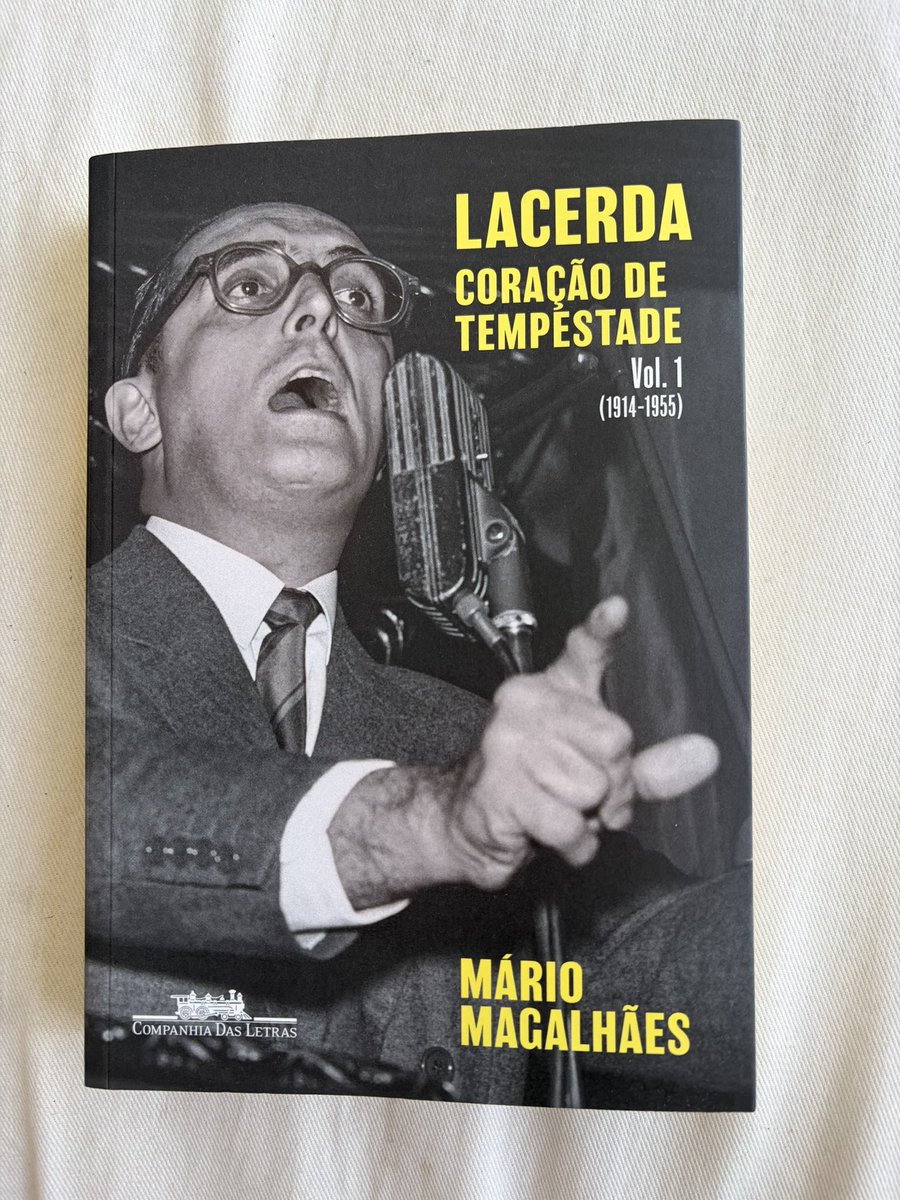
Eduardo Paes thanked for the expressions of affection and support he said he had received since the previous day. He stated that he was sad for not being able to do more for the state and the population but said he was at peace considering that he had fulfilled his duty. Paes referred to a passage from *Depoimento*, by Carlos Lacerda, to describe how he felt, suggesting that the reader replace "president" with "governor." The passage, according to him, contrasted the attraction to a public office with the satisfaction of living in freedom. Paes also stated that he had dedicated more than 30 years to Rio and its population, with deliveries and recognition, and said he felt gratitude and joy. Finally, he informed that he would start reading the first volume of Lacerda's biography, written by Mario Magalhães. #Gratidão #RioDeJaneiro #História (translated)
Magali Van Coppenolle, chief economist at Belfius, believes that the numerous budget discussions are not necessarily concerning, highlighting the importance of taking the time to develop a budget that reflects a societal vision. #Budget #Économie #Belgique (translated)
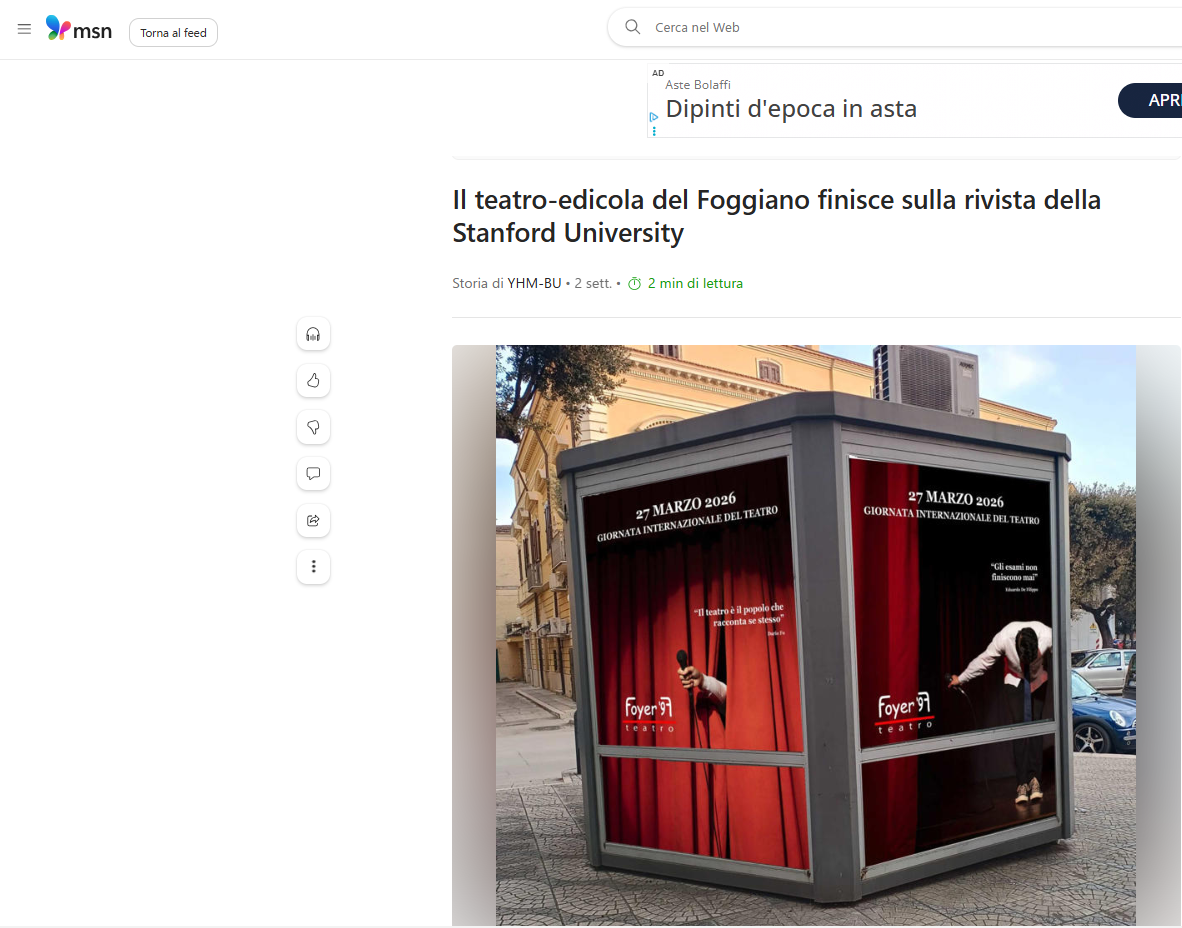
MSN ITALIA - ANSA ITALIA: "THE TEATRO-EDICOLA FEATURED IN STANFORD UNIVERSITY'S REVIEW" SOURCE: https://www.msn.com/.../il-teatro-edicola-del.../ar-AA2cyMWR (ANSA) - FOGGIA, 19 SEPT - The idea of the newspaper-kiosk theatre in San Severo, in the province of Foggia, renamed the smallest theatre in the world, has become a case study for Stanford University. The article "The Six-Seat Revolution" by the Foggian researcher Luciano Magaldi, supervised by editor David V. Johnson, has been published in Ssir (an award-winning publication covering multi-sectoral solutions to global problems). The article is in the "Dispatches" section of the "Stanford Social Innovation Review". "It is a result that rewards our work - emphasises Francesco Gravino, artistic director of the theatre company Foyer 97 - . Requests to replicate the model have come from other areas of Italy, such as Lucca and Rome. We thought of creating a cultural activity from a place that was disused and in a state of abandonment. There ought to be a regional law that allows for the reconversion of these disused places in which numerous activities could be created. Veritable cultural outposts". Gravino and the actors of the company are preparing the new programme. "Next year our company will be 30 years old - he said - , an important milestone which we shall celebrate with some new developments". Six chairs, less than two square metres, performances every 15 minutes and a sold-out audience of young people and adults. An experiment that has aroused curiosity and interest in the world of entertainment as well. Between the end of July and the beginning of August, during the tour in Lucera (Foggia), Biagio Antonacci made a surprise stop at the newspaper-kiosk theatre and sang his Iris. "It was truly a wonderful encounter which captured the attention of passers-by," concludes Gravino. (ANSA). (translated)
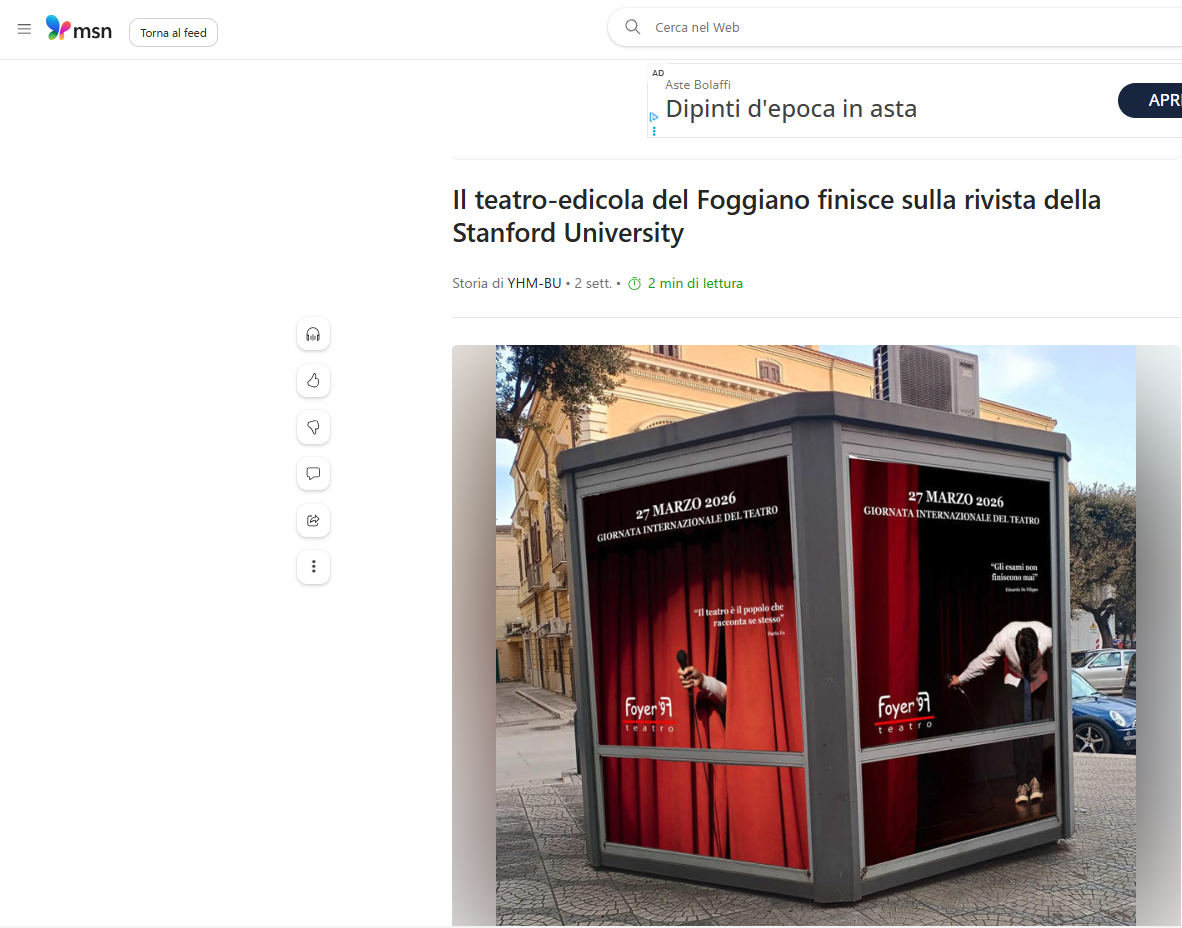
MSN ITALIA - ANSA ITALIA: THE THEATER-NEWSSTAND OF FOGGIA ENDS UP IN THE STANFORD UNIVERSITY MAGAZINE SOURCE: https://www.msn.com/.../the-theater-newsstand-of.../ar-AA2cyMWR (ANSA) - FOGGIA, SEPTEMBER 19 - The idea of the newsstand theater in San Severo, in the province of Foggia, nicknamed the smallest theater in the world, becomes a case study for Stanford University. An article titled "The Six-Seat Revolution," authored by Foggian researcher Luciano Magaldi and supervised by editor David V. Johnson, has been published in the Ssir journal (an award-winning publication covering multisectoral solutions to global problems). The article can be found in the "Dispatches" section of the "Stanford Social Innovation Review." "This is a result that rewards our hard work," emphasizes Francesco Gravino, artistic director of the Foyer 97 theater company. Requests to replicate the model have come from other areas of Italy, such as Lucca and Rome. We wanted to create a cultural activity in a place that has been disused and abandoned. There should be a regional law that allows the conversion of these abandoned places into venues for numerous activities. Real cultural outposts." Gravino and the company’s actors are preparing the new program lineup. "Next year our company will turn 30," he said, "an important milestone that we will celebrate with some new features." Six chairs, less than two square meters, reenactments of shows every 15 minutes, and sold-out attendance from both young and adults. An experiment that has sparked curiosity and interest even in the entertainment world. Between the end of July and the beginning of August, during the tour in Lucera (Foggia), Biagio Antonacci made a surprise stop at the newsstand theater and sang his song "Iris." "It was truly a wonderful encounter that drew the attention of passersby," concludes Gravino. (ANSA). (translated)
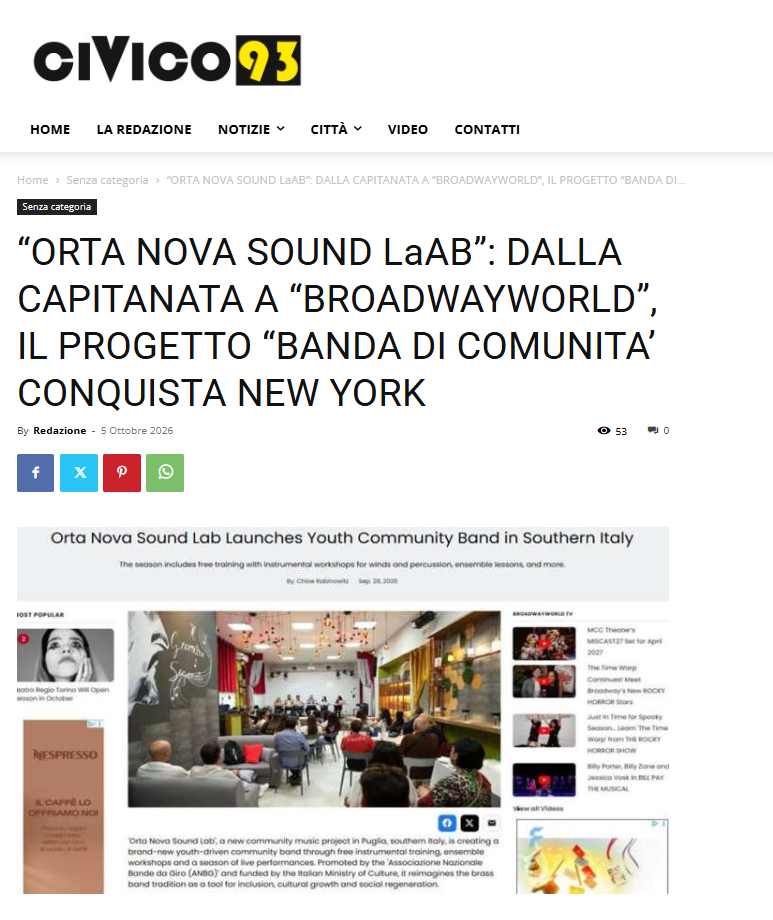
CIVICO 33 - "ORTA NOVA SOUND LAB": FROM CAPITANATA TO "BROADWAY WORLD", THE "COMMUNITY BAND" PROJECT CONQUERS NEW YORK The social laboratory promoted by ANBG and the Ministry of Culture lands on the largest theatrical network in the world thanks to the article co-written by Chris Rabinowitz and the Orthese author Luciano Magaldi Sardella. There is a brass thread connecting Piazza Mario Frasca to Broadway. "Orta Nova Sound Lab" is the Community and Social Regeneration Band through Music, the project officially presented on September 21 at the C-Lab MAO FM 19.77 by brothers Luca and Erminio Ferrandina, which is experiencing unprecedented media attention for a band initiative born in the province of Foggia. The journalistic success is marked by its appearance on September 28 in Broadway World, the most authoritative global portal dedicated to theater and live performance, based in New York with over 1.5 million monthly global visits. This is not an insignificant result, projecting a story from the Apulian periphery into the realm of international cultural information. The article, titled "Orta Nova Sound Lab Launches Youth Community Band in Southern Italy," is co-authored by New York editor Chris Rabinowitz, a journalist for the American publication, and his Italian co-author Luciano Magaldi Sardella, an international author originally from Orta Nova, an engineer, academic journalist, and researcher active between Italy and abroad. The dual Italian-American signature symbolizes how a "good local practice" can become global news when told with expertise and roots. The Project: the Band as Social Regeneration "Orta Nova Sound Lab" is promoted by the National Association of Marching Bands (ANBG), chaired by Benedetto Grillo, and has been approved for funding under the public notice of the Ministry of Culture as per D.D.G. April 7, 2026, rep. n. 149, aimed at "Enhancing research and dissemination of musical practices in peripheral and areas of high social vulnerability." It is realized with the support of the Municipality of Orta Nova and with the collaboration of a solid civic network: the A.P.S. MAO FM 19.77, the "A. Olivetti" Higher Education Institute, the "Sandro Pertini" Comprehensive Institute, the Music Art association, and the C.I.S.A. of Foggia. As highlighted by "Broadway World," this is the first initiative in Italy to reinterpret the distinctive tradition of marching bands and youth orchestras within a ministry grant dedicated to urban peripheries and social vulnerability. A model that explicitly dialogues with the spirit of the so-called "Caivano Decree" (D.L. 123/2023) for combating youth discomfort, educational poverty, and juvenile delinquency. The idea, in its disarming simplicity, was summarized by the project director for ANBG, Antonella Spagnoletti: "The band is aggregation! The band is cohesion. Bringing these kids together to learn and live differently from the social world is among the primary objectives of our association." This concept was reiterated by the Mayor of Orta Nova, Ing. Domenico Di Vito: "This is an important project that can definitely make a difference compared to the past because it has all the ingredients to connect the entire world of culture and social issues that exists in Orta Nova and needs to be valued. The administration's commitment is to ensure sustainability, structure, and continuity over time." At the press conference presentation, moderated by journalist Giuseppe Di Bisceglie, participated alongside President Grillo, Director Spagnoletti, and Mayor Di Vito, Regional Councillor Grazia Maria Starace, Councillor for relationships with the third sector Sebastiano Battista, Councillor for Culture Vittoria Mastrogiacomo, and educational professor Alfredo Coppola, delegate of the Olivetti Institute. Why the News Became International The "Orta Nova Sound Lab" marching band project demonstrates that when a project has anti-mafia roots, pedagogical value, and a credible institutional network, the press responds. From local and national outlets like Cassa Armonica, Ansa Puglia, TGNorba, Corriere della Sera Bari, RaiNews TGR Puglia, La Gazzetta del Mezzogiorno, Amica9TV, Brindisi In, Blasting News Italia, TRM Network, Secolo XIX, FoggiaToday, PlayNews24, Stato Quotidiano, and many others that well-documented the conference, it reached BroadwayWorld, which viewed the Orthese experience as a "social laboratory" capable of responding to the mafia with music. This leap in scale comes from joint efforts and the bridging work done by Luciano Magaldi Sardella, who managed to translate for the English-speaking audience alongside New York editor Chris Rabinowitz the deep meaning of a village band that in Apulia is not folklore, but a civil presence, a concrete alternative to screens and disintegration. In a South often narrated only for its emergencies, Orta Nova chooses to be told for its ability to generate community. And this time, the news has made its way around the world, starting from a square in Daunia. The Schedule The path, entirely free, includes instrumental workshops for brass and percussion, ensemble music lessons, and collective rehearsals with qualified teachers and conductors, open to aspiring musicians, families, schools, and citizens. The program that attracted the attention of national and now international press is organized as follows: October 2026: parade of bands marching through the streets and public spaces of Orta Nova, to recover the historical value of the band as a popular and identity expression. November-December 2026: high-profile concert season with the Grand Band Concert of Conversano and the Grand Band Concert "Biagio Abbate" City of Bisceglie, artistic training for the young students. Focus on inclusion: a special evening dedicated to female music with the Orchestra Note di Puglia, a formation composed entirely of professionals, to reinforce the values of equal opportunities. January 2027: first official concert of the newly formed Community Band of Orta Nova, a foundational act and public restitution of the work done. (translated)