

RT @JesusFerna7026: Replacement fertility in one chart: Even if 90% of women have children and average 2.2 each, we still fall short. Why?… #Fertility #Demographics #PopulationDecline #Thetweetdoesnotmentionanyspecificcountries.Therefore #therearenocountrycodestoreturn.

RT @Jorgebuxade: Dos tercios de los países del mundo registran ya tasas de fecundidad por debajo del nivel de reemplazo natural. Las élite… #FertilityRate #PopulationDecline #GlobalTrends #Nospecificcountrycodesarementionedinthetweet.
Marriage registrations in China dropped 6.2% year-on-year in the first quarter, reaching about half of 2017 levels, highlighting the country's demographic challenges as population decline and a record low birth rate continue to raise concerns among demographers. #ChinaDemographics #MarriageTrends #PopulationDecline #CN

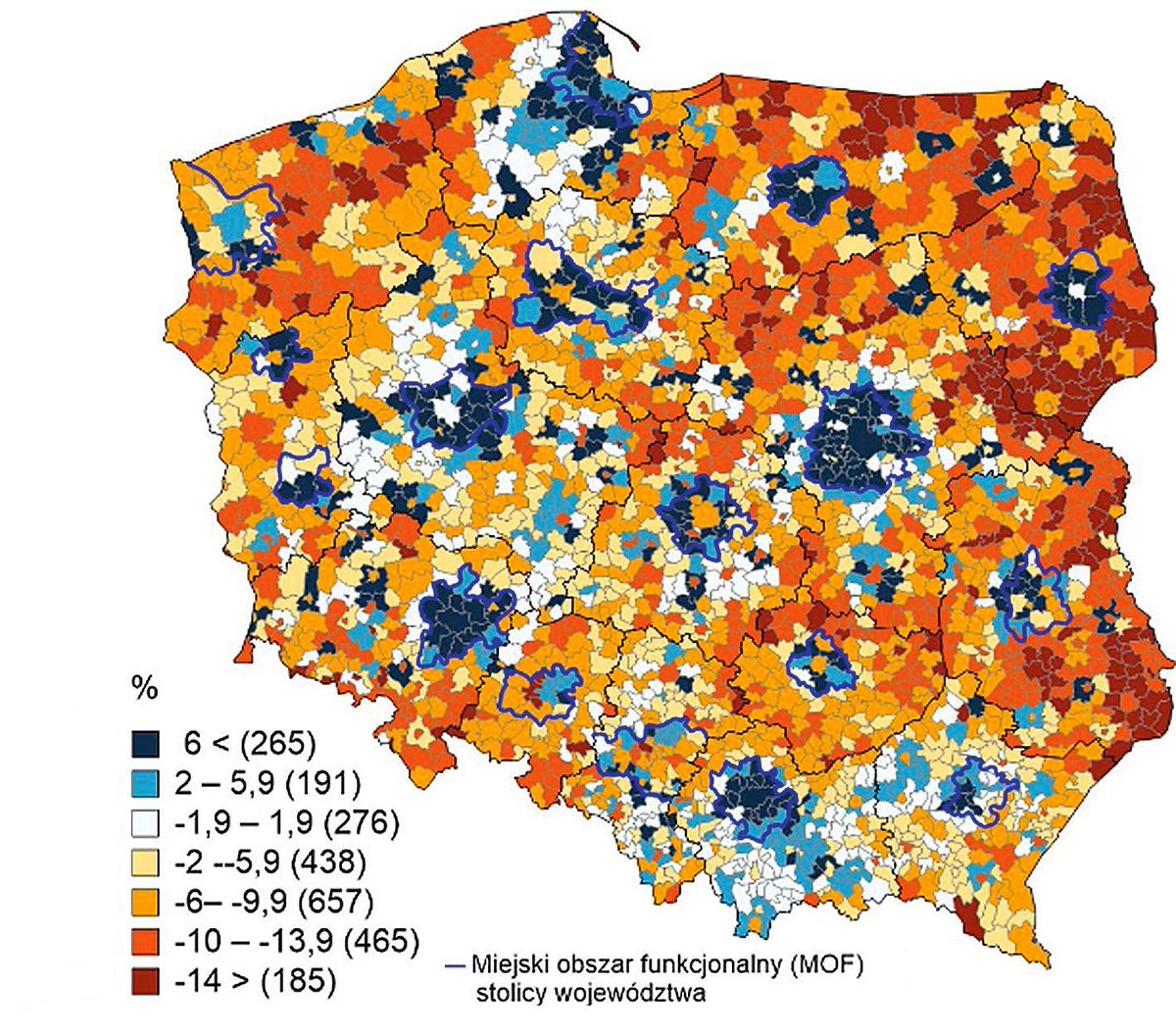
In the last decade, 79% of rural and urban-rural municipalities are losing residents, and in 2/3 of municipalities, more people die than are born, as well as more leave than arrive. (Original: W ostatniej dekadzie mieszkańców traci 79% gmin wiejskich i miejsko-wiejskich, a w 2/3 gmin jednocześnie więcej osób umiera niż się rodzi oraz więcej wyjeżdża niż przybywa) #PopulationDecline #RuralExodus #DemographicChange #PL
In the last decade, 79% of rural and urban-rural municipalities are losing residents, and in 2/3 of municipalities, more people are dying than being born, and more are leaving than arriving. Authors of the map: Prof. Monika Stanny, Łukasz Komorowski (Original: W ostatniej dekadzie mieszkańców traci 79% gmin wiejskich i miejsko-wiejskich, a w 2/3 gmin jednocześnie więcej osób umiera niż się rodzi oraz więcej wyjeżdża niż przybywa. Autorzy mapy: prof. Monika Stanny, Łukasz Komorowski https://t.co/guYJZotfXI) #PopulationDecline #RuralDevelopment #DemographicShift #PL

Millions of people in China celebrated the Lunar New Year with food and festivities, but many single adults faced pressure from their parents over their marital status, highlighting the country’s low birth rate crisis, which has reached historic lows and is linked to the long-standing one-child policy, prompting concerns about the economic and social ramifications of an aging population. #China #PopulationDecline #LunarNewYear #CN #JP #TW

In 2025, Germany experienced its lowest birth rate since 1946, with approximately 654,300 babies born, marking a 3.4% decline from the previous year, while the number of deaths exceeded births by 352,000, highlighting significant regional disparities and ongoing trends influenced by smaller birth cohorts from the 1990s entering their 30s. #BirthRate #PopulationDecline #GermanyStatistics #DE #FR #AT #IT #SE #ES #NL #FI

Europe's population is projected to decline by 11.7% from 2025 to 2100, with countries like Latvia, Lithuania, and Poland experiencing the largest declines, while nations such as Luxembourg, Iceland, and Malta are expected to grow, primarily influenced by fertility rates and migration patterns. #PopulationDecline #FertilityRates #DemographicChanges

Tesla CEO Elon Musk has warned European leaders about a potential population collapse, referencing a report that predicts the EU's population could shrink by 53 million by 2100, emphasizing that "children are the future" amidst concerning trends of ultra-low fertility rates and an aging demographic. #PopulationDecline #FutureGenerations #DemographicChallenges
Analysts from Visual Capitalist have determined that Ukraine has the fastest declining population in the world, having lost nearly one-third of its citizens over the past 25 years, with current demographic data suggesting a stark future in which the population could dwindle to as low as 15.3 million by 2100 due to declining birth rates and significant emigration, despite government attempts to address the crisis. #DemographicCrisis #Ukraine #PopulationDecline

The European Union's population is projected to decline by 53 million by the end of the century, reaching 398.9 million, due to record low birth rates—expected to fall to 1.3 children per woman—resulting in a demographic shift characterized by fewer children and more elderly individuals, with one in six people anticipated to be 80 or older by 2100. #PopulationDecline #FertilityRate #EuropeanUnion