BETA nonprofit public democratic european moderated

Search

#Urban

Stellantis has presented its innovative BOW prototype at the IAA transport fair, a fully electric autonomous 'box on wheels' designed to revolutionize urban mobility and meet the growing demands for logistics efficiency. (translated)

Una 'caja con ruedas', autónoma y 100% eléctrica: así es el coche que podría reinventar el futuro de la movilidad urbana


The Belgian government plans to extend the presence of soldiers in Brussels for six months as part of the Urban Shield operation, in order to support the police in facing security issues related to drug trafficking. (translated)

Le gouvernement envisage de prolonger la présence de militaires à Bruxelles
poponze 3h

ELA MERECE! Budah recebeu uma indicação ao GRAMMY Latino por “Frequência Lunar”, na categoria de Melhor Álbum Urbano em Língua Portuguesa. https://t.co/ourC4OsbHY #GRAMMYLatino #Música #FrequênciaLunar

BCharts 3h

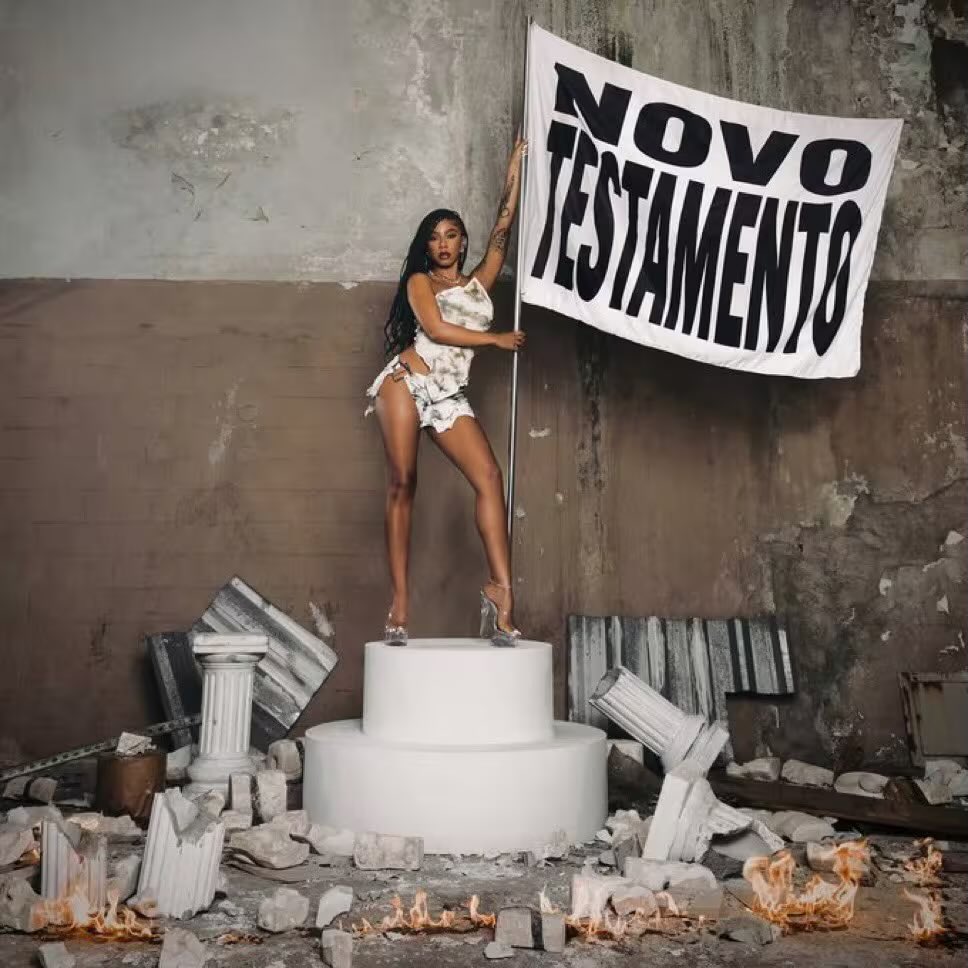
🏆 "Novo Testamento", de AJULLIACOSTA, é indicado ao #LatinGRAMMY de Melhor Álbum de Música Urbana em Língua Portuguesa. https://t.co/oiizXL4nWE #LatinGRAMMY #MúsicaUrbana #NovoTestamento

🚨 “Novo Testamento”, de AJULLIACOSTA, é indicado ao #LatinGRAMMYs de “Melhor Álbum de Música Urbana em Língua Portuguesa” https://t.co/tweZEMU4uE #LatinGRAMMYs #MúsicaUrbana #NovoTestamento

BCharts 3h

🏆 Indicados ao #LatinGRAMMY de Melhor Álbum de Música Urbana em Língua Portuguesa Novo Testamento - AJULLIACOSTA FREQUÊNCIA LUNA - Budah CARO Vapor II – qual a forma de pagamento? - Don L Emicida Racional VL 2 - Mesmas Cores & Mesmos Valores - Emicida Terra Vermelha: Do interior pro interior - Matuto S.A. #LatinGRAMMY #MúsicaUrbana #Álbum

poponze 4h

MERECIDO! Júlia Costa recebeu 1 indicação ao GRAMMY Latino: — Melhor Álbum Urbano em Língua Portuguesa, por ‘Novo Testamento’ https://t.co/iZuIs9Wr7O #GRAMMYLatino #Música #JúliaCosta

Anitta agora soma 12 indicações ao Latin GRAMMYs em toda a sua carreira. 2026
• Álbum do Ano — EQUILIBRIVM
• Melhor Álbum de Pop Contemporâneo em Língua Portuguesa — EQUILIBRIVM 2024
• Gravação do Ano — “Mil Veces”
• Melhor Interpretação Urbana em Língua Portuguesa — “Joga Pra Lua” 2022
• Melhor Interpretação Reggaeton — “Envolver”
• Gravação do Ano — “Envolver” 2020
• Melhor Canção “Urban” — “Rave de Favela” 2019
• Melhor Álbum de Música “Urban” — Kisses 2018
• Melhor Canção “Urban” — “Downtown”
• Melhor Fusão/Interpretação Urbana — “Sua Cara” 2016
• Melhor Fusão/Interpretação Urbana — “Pra Todas Elas” 2014
• Melhor Canção Brasileira (Língua Portuguesa) — “Zen” #Anitta #GRAMMYs #Música

Världens rikaste parti @Centerpartiet förkortas CP, domineras av urbana svenska 🇸🇪 feministiska kvinnor med pengar och bostadsrätt, som tror att de innehar en moralisk överhöghet och en känsla av bättre vetande än allmänheten. Det måste vara en berusande känsla. 🤔 #Centerpartiet #Feminism #Sverige

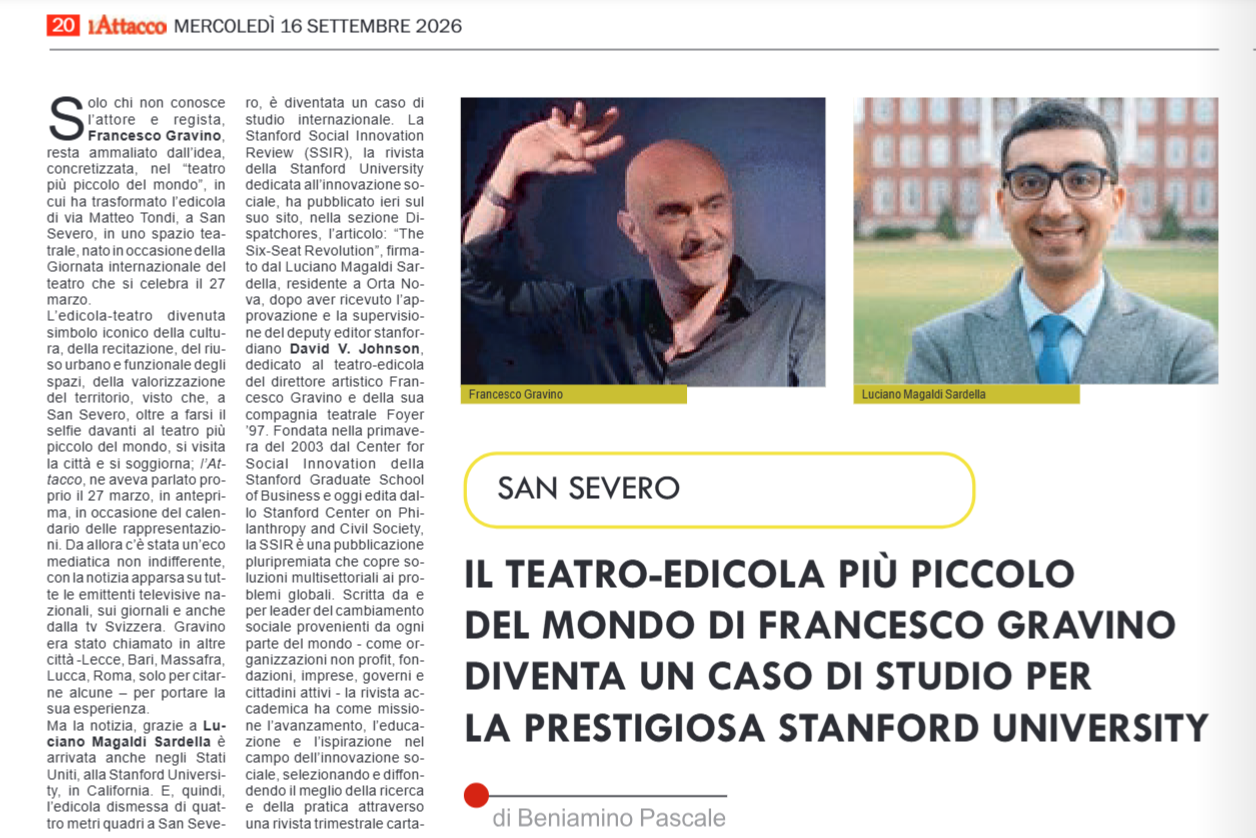
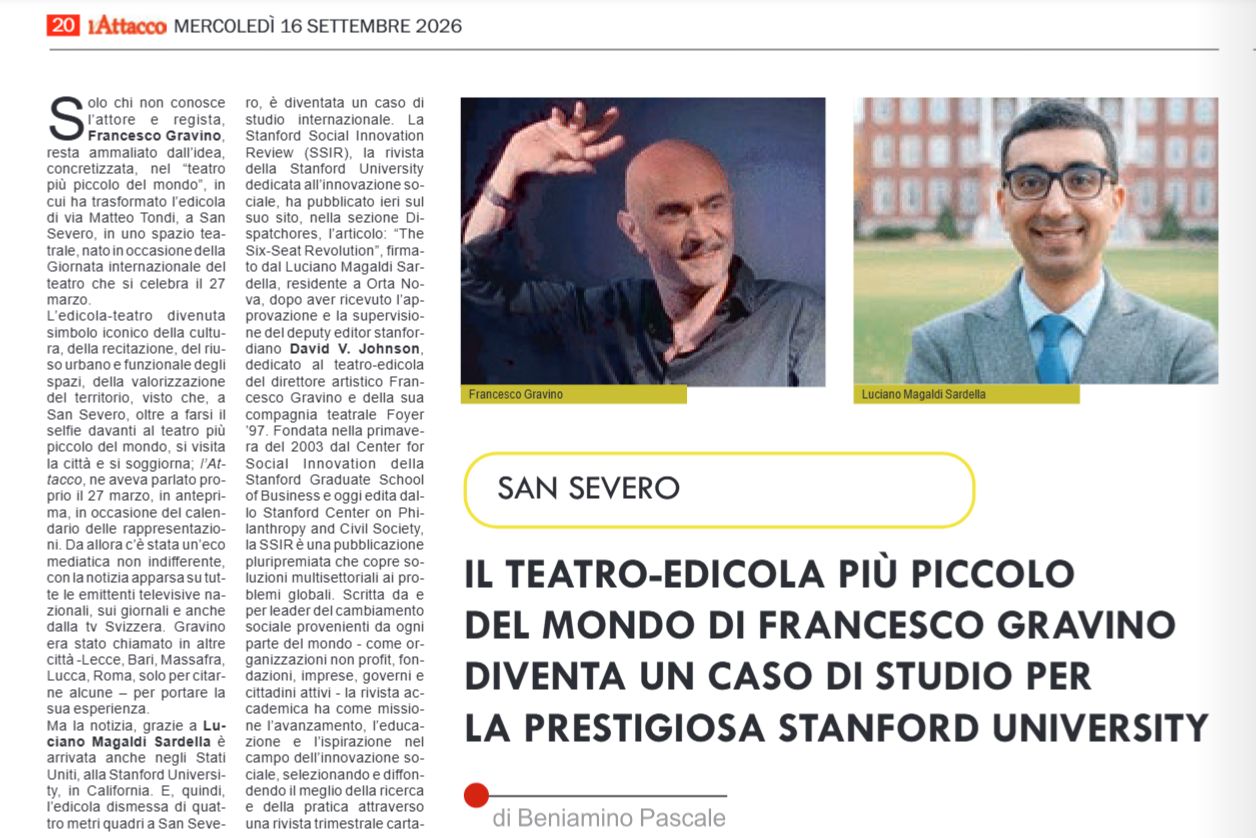
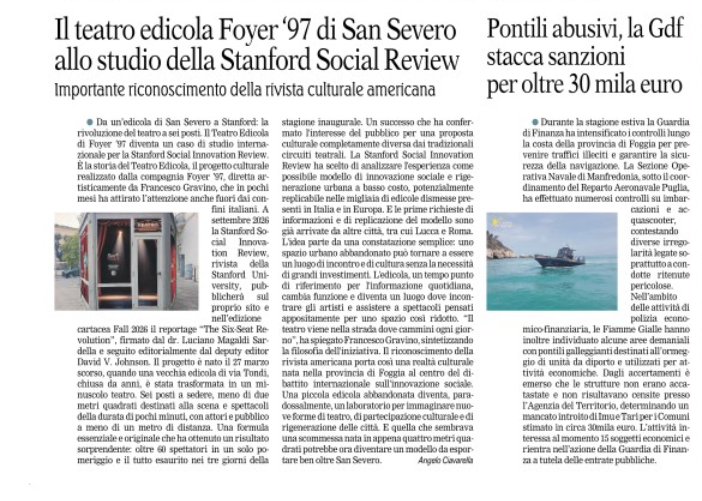
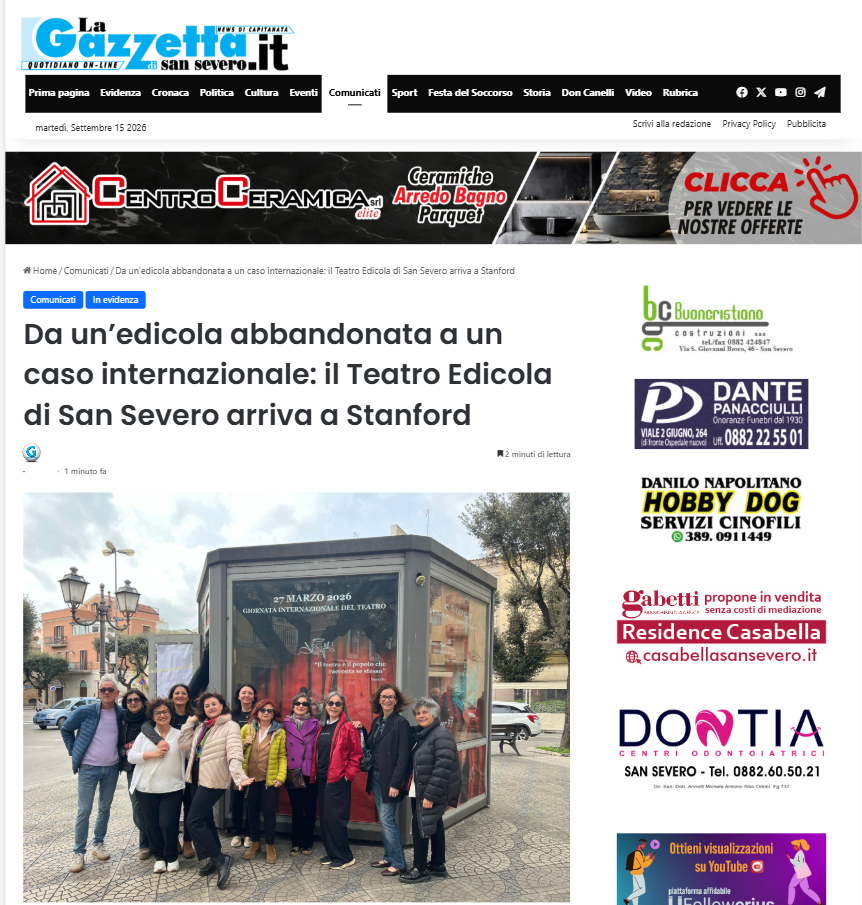
L'ATTACCO DI FOGGIA - IL TEATRO-EDICOLA PIU PICCOLO DEL MONDO DI FRANCESCO GRAVINA DIVENTA UN CASO STUDIO PER LA PRESTIGIOSA STANFORD UNIVERSITY Il Teatro-Edicola Foyer '97 diventa caso di studio internazionale per la Stanford Social Innovation Review SAN SEVERO, 16 settembre 2026 - Da un'edicola abbandonata di quattro metri quadrati in via Tondi a modello di innovazione sociale studiato dalla Stanford University. È la parabola del Teatro Edicola Foyer '97, il progetto culturale realizzato dalla compagnia Foyer '97 diretta artisticamente da Francesco Gravina, che in pochi mesi ha varcato i confini nazionali. La notizia, riportata oggi da La Gazzetta del Mezzogiorno, è che la prestigiosa Stanford Social Innovation Review, la rivista culturale della Stanford University dedicata all'innovazione sociale, pubblicherà a settembre sul proprio sito e nell'edizione cartacea Fall 2026 il reportage "The Six-Seat Revolution", firmato dal dr. Luciano Magaldi Sardella e seguito editorialmente dal deputy editor David V. Johnson. Il progetto è nato il 27 marzo scorso, in occasione della Giornata Mondiale del Teatro, quando una vecchia edicola chiusa da anni è stata trasformata in un minuscolo teatro: sei posti a sedere, meno di due metri quadrati di scena, spettacoli di pochi minuti con attori e pubblico a meno di un metro di distanza. Una formula essenziale e originale che ha sorpreso tutti: oltre 60 spettatori in un solo pomeriggio e tutto esaurito nei tre giorni della stagione inaugurale. Un successo che ha dimostrato l'interesse del pubblico per una proposta culturale fuori dai circuiti tradizionali. Per questo la SSIR ha scelto di analizzarla come possibile modello di rigenerazione urbana a basso costo, potenzialmente replicabile nelle migliaia di edicole dismesse in Italia e in Europa. Richieste di informazioni e di replica sono già arrivate da altre città, tra cui Lucca e Roma. Alla base, come spiega Gravina, un'idea semplice: "Il teatro viene nella strada dove cammini ogni giorno". L'edicola, un tempo punto di riferimento per l'informazione quotidiana, cambia funzione e diventa luogo di incontro con gli artisti. Un riconoscimento che porta una realtà nata nella provincia di Foggia al centro del dibattito internazionale sull'innovazione sociale. Quella che sembrava una scommessa di quattro metri quadrati, può ora diventare un modello da esportare ben oltre San Severo.

L' ATTACCO DI FOGGIA - FRANCESCO GRAVINA'S TEATRO-EDICOLA, THE WORLD'S SMALLEST THEATRE, BECOMES THE SUBJECT OF A CASE STUDY AT STANFORD UNIVERSITY The Teatro-Edicola Foyer '97 Becomes an International Case Study for the Stanford Social Innovation Review SAN SEVERO, 16 September 2026 - From a derelict newsstand of four square metres in Via Tondi to a paradigm of social innovation examined by Stanford University. Such is the trajectory of the Teatro Edicola Foyer '97, the cultural project realized by the Foyer '97 company under the artistic direction of Francesco Gravina, which in the space of a few months has transcended national boundaries. The news, reported today by La Gazzetta del Mezzogiorno, is that the prestigious "Stanford Social Innovation Review", the cultural journal of Stanford University dedicated to social innovation, will publish in September, both on its website and in its Fall 2026 print edition, the reportage "The Six-Seat Revolution", authored by Dr Luciano Magaldi Sardella and overseen editorially by Deputy Editor David V. Johnson. The project was inaugurated on 27 March last, on the occasion of World Theatre Day, when a former newsstand, shuttered for years, was transmuted into a diminutive theatre: six seats, a stage of fewer than two square metres, performances lasting but a few minutes, with actors and audience separated by less than a metre. A formula at once essential and original that has taken all by surprise: more than sixty spectators in a single afternoon and full houses throughout the three days of the inaugural season. A success that has evinced the public's appetite for a cultural proposition beyond the conventional circuits. It is for this reason that the SSIR has elected to analyse it as a potential model of low-cost urban regeneration, conceivably replicable across the thousands of disused newsstands throughout Italy and Europe. Enquiries regarding its replication have already been received from other cities, including Lucca and Rome. At its heart, as Gravina explains, lies a simple notion: "The theatre comes to the street where you walk every day". The newsstand, once a locus of daily information, changes its function and becomes a place of encounter with artists. An accolade that brings a reality born in the Province of Foggia to the centre of the international discourse on social innovation. What appeared to be a four-square-metre wager may now become a model to be exported far beyond San Severo.

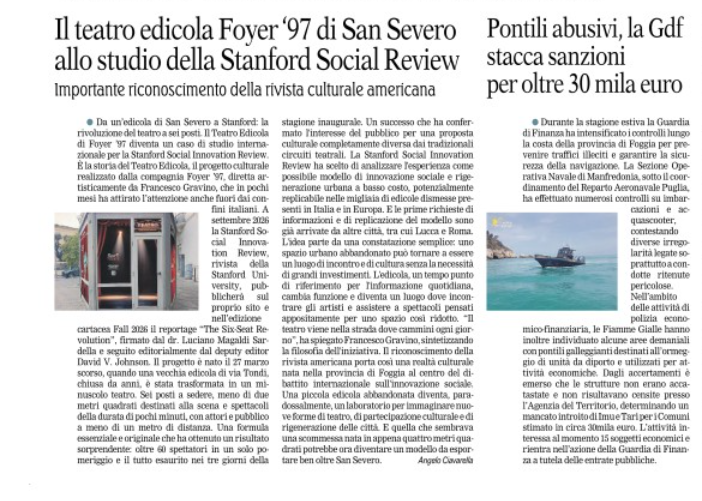
LA GAZZETTA DEL MEZZOGIORNO - IL TEATRO EDICOLA FOYER'97 DI SAN SEVERO ALLO STUDIO DELLA STANFORD SOCIAL I. REVIEW Il Teatro-Edicola Foyer '97 diventa caso di studio internazionale per la Stanford Social Innovation Review SAN SEVERO, 16 settembre 2026 - Da un'edicola abbandonata di quattro metri quadrati in via Tondi a modello di innovazione sociale studiato dalla Stanford University. È la parabola del Teatro Edicola Foyer '97, il progetto culturale realizzato dalla compagnia Foyer '97 diretta artisticamente da Francesco Gravina, che in pochi mesi ha varcato i confini nazionali. La notizia, riportata oggi da La Gazzetta del Mezzogiorno, è che la prestigiosa Stanford Social Innovation Review, la rivista culturale della Stanford University dedicata all'innovazione sociale, pubblicherà a settembre sul proprio sito e nell'edizione cartacea Fall 2026 il reportage "The Six-Seat Revolution", firmato dal dr. Luciano Magaldi Sardella e seguito editorialmente dal deputy editor David V. Johnson. Il progetto è nato il 27 marzo scorso, in occasione della Giornata Mondiale del Teatro, quando una vecchia edicola chiusa da anni è stata trasformata in un minuscolo teatro: sei posti a sedere, meno di due metri quadrati di scena, spettacoli di pochi minuti con attori e pubblico a meno di un metro di distanza. Una formula essenziale e originale che ha sorpreso tutti: oltre 60 spettatori in un solo pomeriggio e tutto esaurito nei tre giorni della stagione inaugurale. Un successo che ha dimostrato l'interesse del pubblico per una proposta culturale fuori dai circuiti tradizionali. Per questo la SSIR ha scelto di analizzarla come possibile modello di rigenerazione urbana a basso costo, potenzialmente replicabile nelle migliaia di edicole dismesse in Italia e in Europa. Richieste di informazioni e di replica sono già arrivate da altre città, tra cui Lucca e Roma. Alla base, come spiega Gravina, un'idea semplice: "Il teatro viene nella strada dove cammini ogni giorno". L'edicola, un tempo punto di riferimento per l'informazione quotidiana, cambia funzione e diventa luogo di incontro con gli artisti. Un riconoscimento che porta una realtà nata nella provincia di Foggia al centro del dibattito internazionale sull'innovazione sociale. Quella che sembrava una scommessa di quattro metri quadrati, può ora diventare un modello da esportare ben oltre San Severo.

LA GAZZETTA DEL MEZZOGIORNO - SAN SEVERO'S TEATRO EDICOLA FOYER '97 ON THE STANFORD SOCIAL INNOVATION REVIEW The Teatro-Edicola Foyer '97 Becomes an International Case Study for the Stanford Social Innovation Review SAN SEVERO, 16 September 2026 - From a derelict newsstand of four square metres in Via Tondi to a paradigm of social innovation examined by Stanford University. Such is the trajectory of the Teatro Edicola Foyer '97, the cultural project realized by the Foyer '97 company under the artistic direction of Francesco Gravina, which in the space of a few months has transcended national boundaries. The news, reported today by La Gazzetta del Mezzogiorno, is that the prestigious Stanford Social Innovation Review, the cultural journal of Stanford University dedicated to social innovation, will publish in September, both on its website and in its Fall 2026 print edition, the reportage "The Six-Seat Revolution", authored by Dr Luciano Magaldi Sardella and overseen editorially by Deputy Editor David V. Johnson. The project was inaugurated on 27 March last, on the occasion of World Theatre Day, when a former newsstand, shuttered for years, was transmuted into a diminutive theatre: six seats, a stage of fewer than two square metres, performances lasting but a few minutes, with actors and audience separated by less than a metre. A formula at once essential and original that has taken all by surprise: more than sixty spectators in a single afternoon and full houses throughout the three days of the inaugural season. A success that has evinced the public's appetite for a cultural proposition beyond the conventional circuits. It is for this reason that the SSIR has elected to analyse it as a potential model of low-cost urban regeneration, conceivably replicable across the thousands of disused newsstands throughout Italy and Europe. Enquiries regarding its replication have already been received from other cities, including Lucca and Rome. At its heart, as Gravina explains, lies a simple notion: "The theatre comes to the street where you walk every day". The newsstand, once a locus of daily information, changes its function and becomes a place of encounter with artists. An accolade that brings a reality born in the Province of Foggia to the centre of the international discourse on social innovation. What appeared to be a four-square-metre wager may now become a model to be exported far beyond San Severo.

Emma Lynn 14h

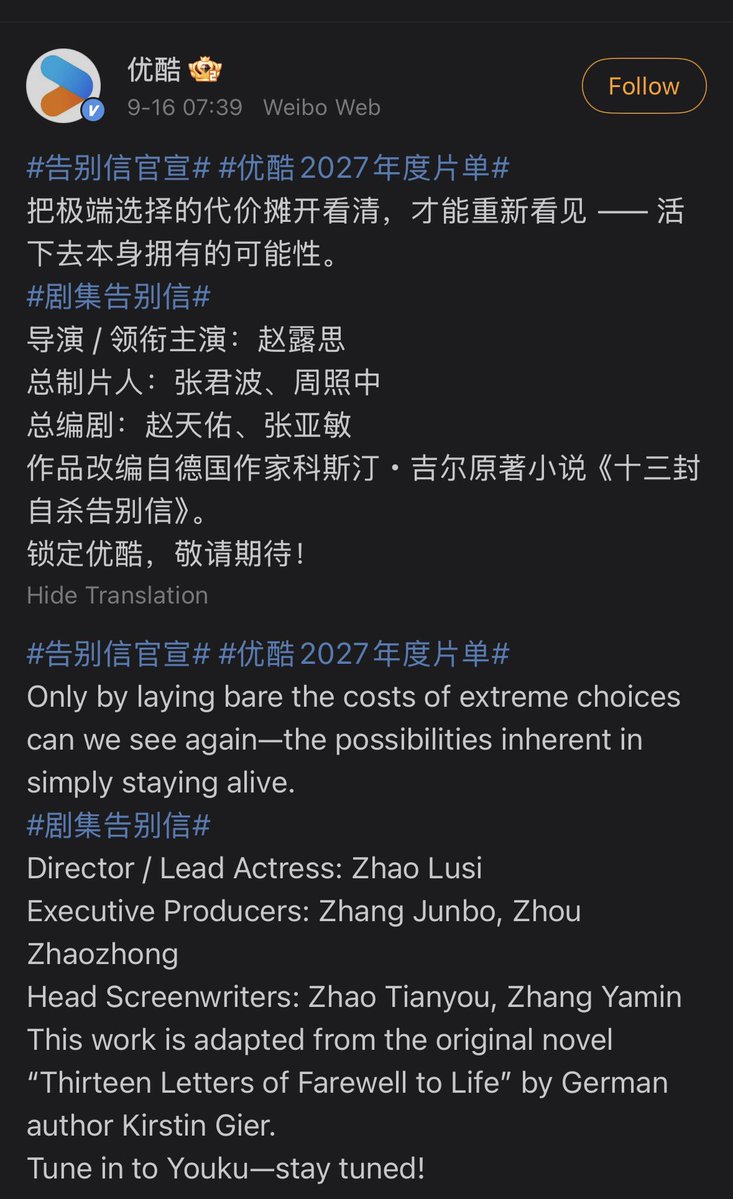
It’s Officially CONFIRMED!!! Our Baby #Zhaolusi #赵露思 #RosyZhao will return to filming the modern urban #CDrama *Farewell Letter* 《告别信》 (Gàobié Xìn / Farewell Letter), which is adapted from the German novel Für jede Lösung ein Problem by author Kerstin Gier Director/Lead Actress by: #ZhaoLusi Casts: Screenwriter: Zhao Tian You, Zhang Yamin Exec Producers: Zhang JunBo , Zhou ZhaoZhong Production Team: Youku Youxiang Studio The core creative team behind Hidden Love Drama This will mark the 1st drama and the first journey that lusi is going to be a director + lead actress .. yeah she’s just that insanely talented * I heard the drama is going to be really funny; honestly, this is the kind of genre I’ve been waiting for as Lusi’s comeback project, something lighthearted and funny. #ZhaoLusi #CDrama #FarewellLetter

E
EL MUNDO 17h

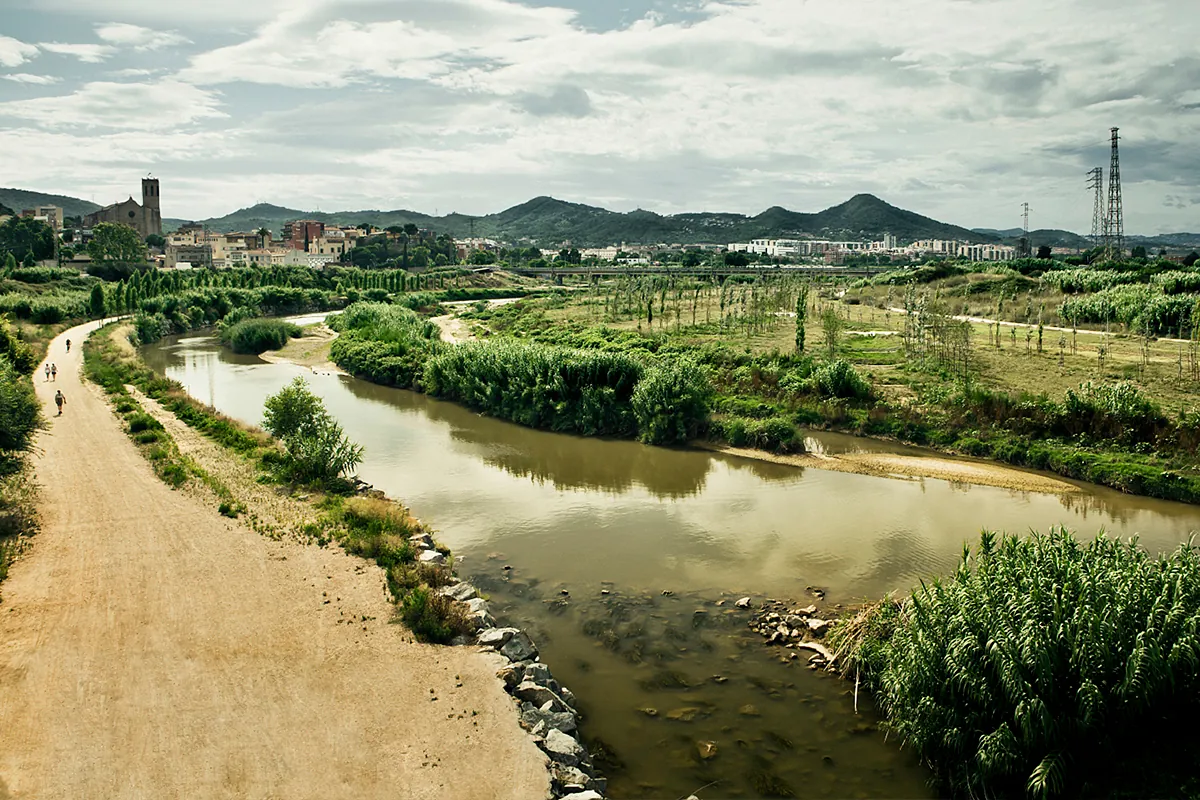
The article highlights the transformation of urban rivers in Spain, which went from being open sewer systems to becoming natural shelters and ecological corridors thanks to architectural projects and landscape recovery efforts. (translated)

De vertederos a oasis naturales, el imparable renacer de los ríos urbanos: "Durante décadas fueron cloacas a cielo abierto, pero serán los nuevos corredores ecológicos"

Michal Gasparik zrobił dużo dobrego dla Górnika Zabrze - to wiemy od dawna. A teraz przekonujemy się, że zrobił coś dobrego dla całej polskiej piłki - dał drugie piłkarskie życie Kacprowi Urbańskiemu. #GórnikZabrze #polskapiłka #piłkaNożna

Her name is Rocío Gómez and she was the urban planning councilor of the PP in Alicante. She is charged with awarding herself a public housing unit by the beach. Mayor Barcalá still does not respond when asked about the date he knew of this corruption plot from the PP. (translated)

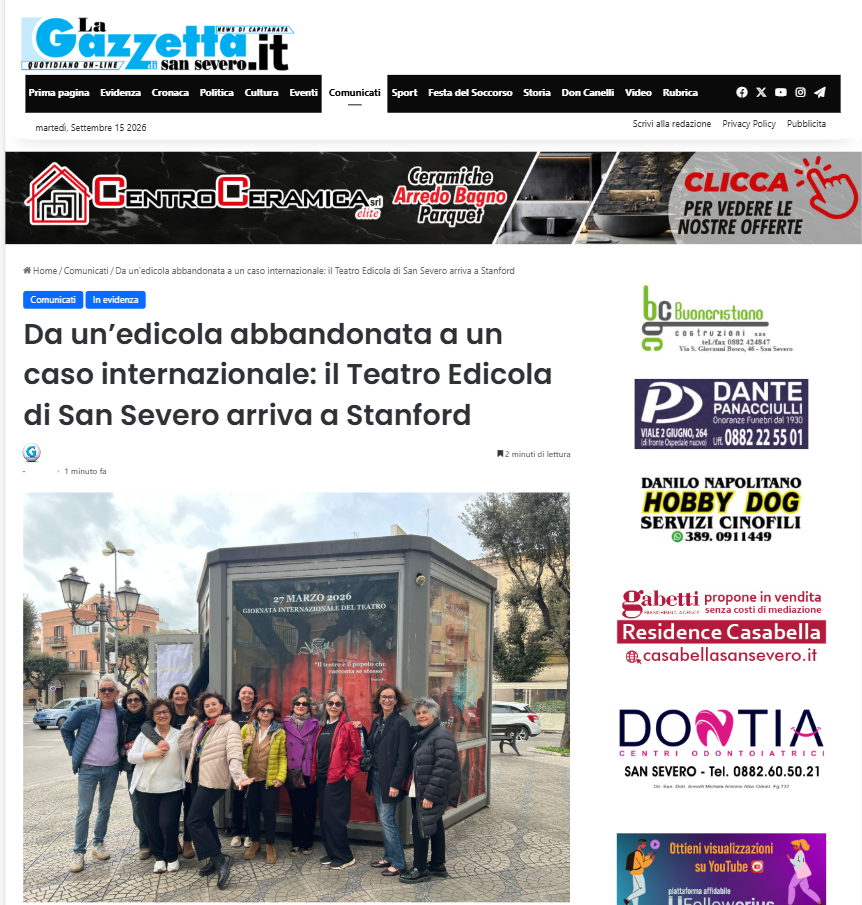
“TEATRO EDICOLA” OF SAN SEVERO BECOMES AN INTERNATIONAL CASE STUDY IN THE “STANFORD SOCIAL INNOVATION REVIEW (SSIR)” — STANFORD UNIVERSITY SOURCE: https://l1nq.com/rruntbb LA GAZZETTA DI SAN SEVERO SAN SEVERO (FG) — Six persons enter a news kiosk. Before them lie no newspapers, magazines, or tobacco, but a theatrical stage measuring less than two square metres. The actors stand but a few paces from the spectators, with scarce any separation betwixt those who perform and those who behold. It is in this manner that in San Severo a place abandoned for years hath begun to live anew. And today that diminutive theatrical experiment hath fallen beneath the glare of international attention. It is the story of the “Teatro Edicola”, the project realised by the company Foyer ’97, under the artistic direction of Francesco Gravino, which hath transformed an old news kiosk in Via Tondi into one of the smallest stages ever conceived. The project commenced on 27th March last, with a formula as simple as it is original: six seats, a stage of most exiguous dimensions, and performances lasting but a few minutes. A minimal distance betwixt public and performers that doth wholly alter the traditional relationship betwixt spectator and theatre. The wager, however, was forthwith rewarded by the public. More than 60 persons attended the performances in a single afternoon, and the three days of the inaugural season registered a complete sold-out. From a local experiment, the “Teatro Edicola” hath thus become a case capable of attracting attention far beyond the confines of the Province of Foggia. In September 2026, the Stanford Social Innovation Review (SSIR), the journal of Stanford University, shall publish upon its website and in its Fall 2026 print edition the reportage “The Six-Seat Revolution”, authored by Dr Luciano Magaldi Sardella and edited by Deputy Editor David V. Johnson. The interest of the American review concerneth not merely the originality of the theatrical proposition. The Teatro Edicola is, in fact, observed as a potential paradigm of social innovation and low-cost urban regeneration. Become a Medium member The idea is particularly compelling in a country such as Italy, wherein numerous news kiosks have ceased their activity and risk becoming vacant interstices within the urban fabric. The question, at bottom, is simple: can a place born to sell newspapers become once more a locus of encounter? In San Severo, the answer hath been entrusted to the theatre. The kiosk hath not been merely restored in a physical sense. It hath changed its function, transforming itself into a place where artists encounter the public directly and where the performance becometh part of the quotidian life of the street. “The theatre cometh into the street wherein thou walkest every day,” Francesco Gravino hath explained, thus synthesising the philosophy underpinning the project. And it is precisely this aspect that hath rendered the experience interesting also upon the plane of its potential replicability. Initial requests for information have already arrived from other cities, amongst them Lucca and Rome, interested in learning of the model and the modalities for its realisation. The strength of the Teatro Edicola resideth also in its apparent disproportion: a minimal investment and space to produce a cultural effect far greater. There is no need for a grand theatre, an auditorium of hundreds of seats, or complex structures. An unused space sufficeth, together with an idea and the will to restore it to the community. That old kiosk in Via Tondi, therefore, recounteth something that goeth beyond the theatre. It recounteth the possibility of rethinking the spaces of our cities, restoring a social function to places that seemed to have definitively lost it.

Encurtador de Link

IL “TEATRO EDICOLA” di SAN SEVERO DIVENTA “CASO STUDIO” INTERNAZIONALE sulla “STANFORD SOCIAL INNOVATION REVIEW (SSIR) — STANFORD UNIVERSITY” SOURCE: https://l1nq.com/rruntbb “LA GAZZETTA DI SAN SEVERO” SAN SEVERO (FG) — Sei persone entrano in un’edicola. Davanti a loro non ci sono giornali, riviste o tabacchi, ma una scena teatrale di meno di due metri quadrati. Gli attori sono a pochi passi dagli spettatori, quasi senza separazione tra chi recita e chi guarda. È così che a San Severo un luogo abbandonato da anni ha ricominciato a vivere. E oggi quella piccola esperienza teatrale è finita sotto i riflettori internazionali. È la storia del “Teatro Edicola”, il progetto realizzato dalla compagnia Foyer ’97, diretta artisticamente da Francesco Gravino, che ha trasformato una vecchia edicola di via Tondi in uno dei palcoscenici più piccoli probabilmente mai immaginati. Il progetto è partito il 27 marzo scorso con una formula tanto semplice quanto originale: sei posti a sedere, uno spazio scenico ridottissimo e spettacoli della durata di pochi minuti. Una distanza minima tra pubblico e interpreti che modifica completamente il tradizionale rapporto tra spettatore e teatro. La scommessa, però, è stata subito premiata dal pubblico. Più di 60 persone hanno assistito agli spettacoli in un solo pomeriggio e le tre giornate della stagione inaugurale hanno fatto registrare il tutto esaurito. Da esperimento locale, il “Teatro Edicola” è diventato così un caso capace di attirare l’attenzione ben oltre i confini della provincia di Foggia. A settembre 2026 la “Stanford Social Innovation Review (SSIR)”, rivista della Stanford University, pubblicherà sul proprio sito e nell’edizione cartacea Fall 2026 il reportage “The Six-Seat Revolution”, firmato dal dr. Luciano Magaldi Sardella e seguito editorialmente dal deputy editor David V. Johnson. L’interesse della rivista americana non riguarda soltanto l’originalità della proposta teatrale. Il Teatro Edicola viene infatti osservato come possibile esperienza di innovazione sociale e rigenerazione urbana a basso costo. L’idea è particolarmente interessante in un Paese come l’Italia, dove sono numerose le edicole che hanno cessato la propria attività e che rischiano di diventare spazi vuoti nel tessuto delle città. Subscribe to the Medium newsletter La domanda, in fondo, è semplice: può un luogo nato per vendere giornali diventare nuovamente un punto di incontro? A San Severo la risposta è stata affidata al teatro. L’edicola non è stata semplicemente recuperata dal punto di vista fisico. Ha cambiato funzione, trasformandosi in un luogo dove gli artisti incontrano direttamente il pubblico e dove lo spettacolo diventa parte della vita quotidiana della strada. “Il teatro viene nella strada dove cammini ogni giorno”, ha spiegato Francesco Gravino, sintetizzando la filosofia alla base del progetto. Ed è proprio questo aspetto ad aver reso l’esperienza interessante anche sul piano della possibile replicabilità. Le prime richieste di informazioni sono già arrivate da altre città, tra cui Lucca e Roma, interessate a conoscere il modello e le modalità per realizzarlo. La forza del Teatro Edicola sta anche nella sua apparente sproporzione: un investimento e uno spazio minimi per produrre un effetto culturale molto più grande. Non servono un grande teatro, una platea da centinaia di posti o strutture complesse. Basta uno spazio inutilizzato, un’idea e la volontà di restituirlo alla comunità. Quella vecchia edicola di via Tondi, dunque, racconta qualcosa che va oltre il teatro. Racconta la possibilità di ripensare gli spazi delle città, restituendo una funzione sociale a luoghi che sembravano averla definitivamente perduta.

Encurtador de Link
ANSA.it 2d

The Festival of Sustainable Mobility and Smart Cities returns to Rome on September 15 and 16, dedicated to changes in urban mobility and discussions on topics such as electric mobility and the fight against climate change. (translated)

Torna a Roma il Festival della mobilità sostenibile e delle città intelligenti