BETA nonprofit public democratic european moderated

Search

#arrest

Flavio Santoiemma's father, a 15-year-old Italian boy arrested in Malta for causing a bomb scare, reports that his son has been in isolation for 70 days in prison, claiming that the detention conditions are alarming and violate human rights. (translated)

«A Malta mio figlio 15enne in carcere da 70 giorni» per procurato allarme bomba a scuola: la denuncia del papà di Flavio Santoiemma
NRC 46m

The police have arrested a fourth suspect, an 18-year-old man from Kesteren, on suspicion of preparing a terrorist attack, following earlier arrests of three other men in Rotterdam, Eindhoven, and Alkmaar, two of whom had previously been convicted of terrorism. (translated)

Politie arresteert vierde verdachte op verdenking van voorbereiding van terreuraanslag

A Generation That Forgot the Shape of the Square On memory left to die alone By Adham Hasanin Egyptian journalist and political writer, based in the Netherlands In a house near mine, there is a boy of thirteen. Born in 2013 just a few months younger than the July coup itself, younger than the new republic under whose shadow we now live. I asked him once, with no preamble, no test, out of nothing more than passing curiosity: do you know what January was? He answered simply, without hesitation, without any sense that he was missing something: "An old revolution, against Mubarak, right?" Not entirely wrong. But it is everything he knows. The name Tahrir Square means nothing specific to him. The sound of the crowd chanting has no echo in his mind. He does not know that his own family whom he sees every day saying "thank God for stability," who warn him against "chaos" whenever a political headline crosses the screen once, at a moment two years before he was born, went down into the street, betting their entire lives on the possibility that something might change. This article is not about politics. It is about memory, and about who decides what gets told and what is left to die in silence. I. Who Erases the Picture? The first question that comes to mind is the easiest and most deceptive one: who erases this memory? And where do we begin holding them accountable? But the truth is too complex to reduce to a single actor. No one actually erases memory, in the literal sense of the act. There is no ministry called the "Ministry of Forgetting," no presidential decree ordering January struck from the collective consciousness. What happens is simpler than that, and more dangerous at once: the subject is simply never told. School says nothing. The textbook leaps from one period to another without pausing on January for more than two faded lines, composed with deliberate neutrality, devoid of any detail that might make the event feel alive to its young reader. Television no longer has any reason to return to it; the programmes that once hosted witnesses and activists stopped years ago, replaced by an official discourse that mentions January only in passing, as an unfortunate prelude to the "stability" that supposedly followed. And the home the most dangerous link of all has become afraid of the subject. Speech now carries a price, and many families, whether consciously or by sheer survival instinct, have decided that silence is safer than the story. The father who marched fears passing on to his son a curiosity that might one day lead him into trouble the family cannot afford. The mother who lost a friend in the events prefers not to reopen the wound before a child who does not yet grasp the weight of loss. And so, generation after generation, the circle of those who know shrinks, and the circle of those who do not even ask because they do not know there is anything worth asking widens. No one decided to erase the memory through an explicit decision. The memory was simply left to die alone, with no one tending it. And it is precisely this decentralised absence of responsibility that makes this kind of erasure more dangerous than any direct official ban: there is no single decision to challenge, no single body to hold accountable. Responsibility is distributed across thousands of small decisions made by thousands of individuals, each within their own context, each seeming reasonable when viewed in isolation. II. Why This Is More Dangerous Than Direct Repression An objection might be raised: is direct repression arrest, imprisonment, publishing bans not far more lethal than mere gradual forgetting? The answer is complex, and deserves calm unpacking. Direct repression can be seen. It can be documented, and the victim can know they are a victim, can tell their story, and their pain can become a testimony added to the collective memory, even if it never reaches justice. The political prisoner knows he is a political prisoner. The journalist banned from writing knows he is banned, and can tell the world he is banned. Direct repression, for all its cruelty, leaves a trace that can be followed. But a generation that has forgotten something happened at all does not even have a starting point from which to ask. This thirteen-year-old boy will never ask "why were we repressed?" because he does not know there is anything deserving that question in the first place. He feels no absence, because he does not know there is anything absent. He simply lives in a version of reality stripped of an entire chapter of his country’s history, and never for a moment suspects that this void is a void at all. Here lies the essence of the danger: direct repression creates victims who know they are victims. Erasure of memory, when it succeeds, creates a generation that does not even know it has been deprived of anything. And deprivation that is not felt cannot be resisted, because resistance always begins with an awareness of loss. The regime that came after 2013 does not need to convince the new generation that January was a mistake. That would be an arduous, costly task, requiring sustained propaganda and continuous effort to persuade each individual one by one. It is far easier, and strategically far more efficient, simply to ensure they never know it was anything at all. The void requires no defence; it requires only silence, and silence is free and always available. III. The Four Mechanisms of Erasure Four complementary mechanisms can be identified working together to produce this collective void not as an organised conspiracy, but as a system of incentives that pushes each party, consciously or not, to contribute to the same process. The first mechanism: formal education. The curriculum, as currently designed, treats January as a passing footnote rather than a founding event deserving detail and analysis. The student memorises two dates the start of the revolution and its presumed end without understanding why people took to the streets, what they were demanding, or how they felt in that pivotal moment. The second mechanism: broadcast media. The channels that once hosted live discussions on January, featuring varied perspectives, have gradually disappeared, or transformed their discourse entirely. Today’s televised image either ignores the anniversary altogether, or invokes it only to frame it as a prelude to chaos that must be avoided. The third mechanism: the silence of homes. This is the most dangerous of all, precisely because it is the most human and understandable. Parents who lived through the experience protect it with silence, not out of aversion to the story, but out of fear of its price. This silence, however legitimate its motives, achieves exactly the same effect as official censorship: it blocks the transmission of knowledge from one generation to the next. The fourth mechanism: the absence of alternative spaces. Even those among the new generation who wish to know cannot easily find places to look. Archives are scattered, trustworthy websites are blocked or require effort to reach, and personal testimonies are dispersed across corners of the internet that an ordinary student at an ordinary school will never stumble upon. These four mechanisms require no central coordination to work together. Each naturally serves the others, and all converge on a single result: a growing void in the consciousness of every new generation. IV. Memory as an Act of Resistance If erasure operates without a centre, then resisting it must also be decentralised. No one waits for a government decision to restore January to the curriculum, nor for a television programme to revive the testimonies. Resistance here is necessarily individual, happening in small details, in passing conversations, in the simple decision to tell rather than to stay silent. This is exactly what I try to do, without any claim to heroism, without any grand mission. I try, whenever I can, to tell the thirteen-year-old boy and others like him details that are never written in official reports or in schoolbooks: what the voices in the square sounded like, how someone felt the first time they realised change was possible, what that moment of hope was like before everything changed. The goal is not to bring back the past; the past cannot be brought back. The goal is that this boy, when he grows older and asks again and he will ask, because the questions always return at some point finds someone to tell him the full story, not two faded lines in a schoolbook. That he knows the stability he is told is the fruit of "wisdom" has a prior history, that this history carried other possibilities, and that real people bet their lives on those possibilities. V. Why This Matters Now Talking about the memory of a generation not yet aware might seem an intellectual luxury next to more urgent matters: arrests, a collapsing economy, regional wars. But the truth is that this issue is the foundation on which every other issue is built. A people who do not know they once rose up will not understand why they should ever think of rising again. A generation raised to believe "stability" is the only natural state possible will never ask itself what drove its own parents, shortly before it was born, to risk everything for an alternative that was never guaranteed. Memory is not a luxury; it is the reference point by which every generation measures its present, and through which it determines what is possible and what is not. And whoever understands this understands why erasing memory, not direct repression alone, is among the most important tools of any regime seeking to guarantee its permanence: because a people who have forgotten they were once free will not even know they are missing freedom. Memory, like the word, needs someone to tell it in order to survive. And when the tellers stop, memory does not die suddenly; it withers slowly, generation after generation, until the day comes when a boy asks an innocent question, and finds no one to answer him but two faded lines in a schoolbook.

Just found out that the man @KathViner paid to paint a target on Sophie Cunningham's back, Howard Bryant, was arrested for choking his wife in front of their son. #JusticeForSophie #StopDomesticViolence #Accountability #Nospecificcountrycodesarerelevanttothetweetprovided.

Just found out that the man @KathViner paid to paint a target on Sophie Cunningham's back, @hbryant42 was arrested for choking his wife in front of their son. #domesticviolence #arrest #justice #Thetweetdoesnotspecificallymentionanycountries.Therefore #therearenocountrycodestoreturn.

NOS 2h

In the context of an investigation into the preparation of a terrorist attack, an 18-year-old man from Kesteren has been arrested, bringing the number of suspects in the case to four, while previous arrests had already taken place in Rotterdam, Eindhoven, and Alkmaar. (translated)

Vierde verdachte opgepakt in terrorismeonderzoek

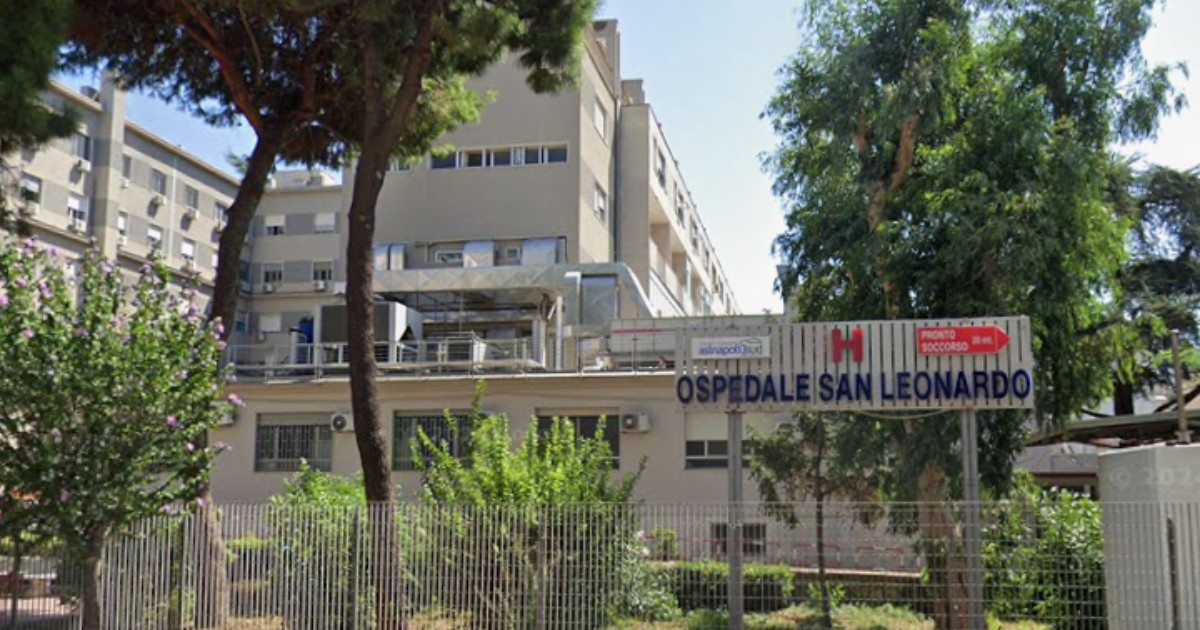
In the investigation into alleged mistreatment of people with disabilities at the Anffas day center in Modica, the Prosecutor's Office of Ragusa has investigated 13 people, leading to the arrest of the president and one operator, while five other operators are prohibited from working in the profession, with charges including mistreatment and administering medication by unqualified personnel. (translated)

Maltrattamenti su persone con disabilità in un centro diurno di Modica: 13 indagati, due arresti

A 15-year-old Italian boy, Flavio Santoiemma, has been in a juvenile detention center in Malta for 70 days after being arrested for causing alarm at school, and his father reports alarming detention conditions, with the support of the Italian Embassy that is following the case. (translated)

Un 15enne italiano in carcere minorile a Malta da 70 giorni. “L’Ambasciata segue il caso”
2

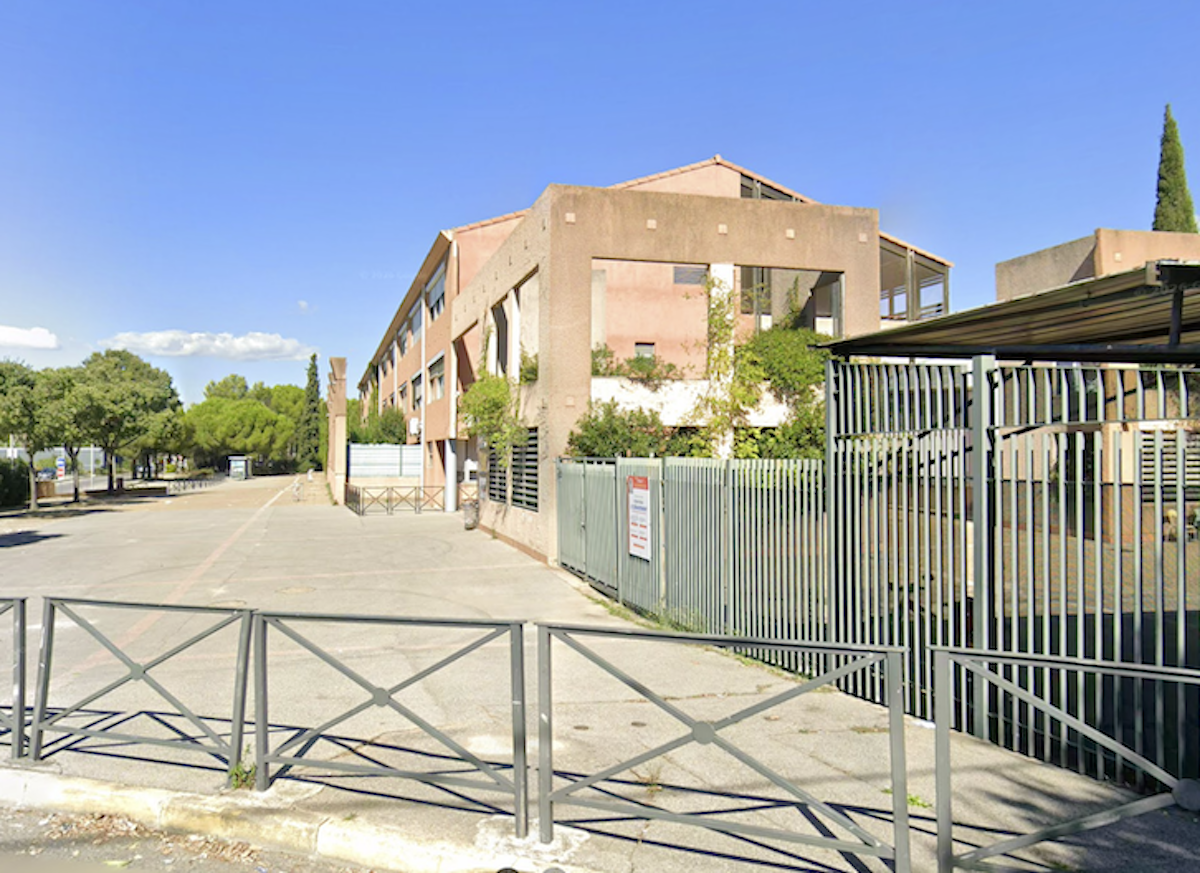
In Moselle, the police discovered an unhealthy apartment housing seven abused children, aged one to 18, after an intervention by the Raid following a call regarding public violence, which led to the arrest of the parents for violence and failure to meet their legal obligations. (translated)

Moselle : Sept enfants découverts dans un appartement insalubre après une intervention du Raid
L

A pilot from Malaysia Airlines has been arrested at Jakarta airport with over 70,000 ecstasy pills and faces the death penalty for drug trafficking. (translated)

Pilota arrestato a Jakarta, nella valigia 70 mila pasticche di ecstasy: rischia la pena di morte
ANSA.it 7h

The Chamber of Deputies approved the bill to establish a day for Enzo Tortora and the victims of judicial errors on June 17 of each year, in commemoration of the journalist's arrest in 1983, with the support of center-right groups and the abstention of Pd, M5s, and Avs, while the measure now moves to the Senate. (translated)

Ok della Camera alla giornata per Enzo Tortora e per le vittime di errori giudiziari
2

A 37-year-old man, Aaron Farnacci, was arrested in the United States, suspected of being responsible for a major fire in Washington State, as authorities struggle against several uncontrolled fires that have already destroyed between 700 and 1,100 buildings in the area. (translated)

États-Unis : Un homme suspecté d’être à l’origine d’un des mégafeux arrêté

Roma, Matteo Di Pietro, ex componente dei The Borderline, lascia gli arresti domiciliari e viene affidato ai servizi sociali. Condannato a 4 anni e 4 mesi per l’incidente di Casal Palocco in cui morì Manuel Proietti, 5 anni, seguirà un programma sulla sicurezza stradale - #Roma #Giustizia #SicurezzaStradale

Mirko Bertellini invested and killed Federico Venco, mistaking him for his ex's partner, whom he also attacked before being stopped by passersby, and is now under arrest on charges of voluntary manslaughter. (translated)

“Voleva ammazzare anche me”: parla l’ex di Mirko Bertellini che a Somma ha travolto e ucciso Federico Venco
ANSA.it 11h

A soldier in Sebastopol opened fire on comrades and civilians, causing four deaths, including three civilians, and several injuries, before being arrested. (translated)

Soldato russo spara contro commilitoni e civili, 4 morti
L

In a tragic sequence of events in Vescovato, Cremona, Mattia Miragli stabs and kills the twenty-four-year-old Nurjan Dalipaj and seriously injures his brother during a violent confrontation stemming from jealousy related to an ex-girlfriend, leading to Miragli's arrest for murder and attempted murder. (translated)

Trova la ex con un altro: nella lite uccide un ragazzo e ferisce a coltellate il fratello