WRLD

Search

#artists
Yaroslava 4d

A drone threat has been ongoing for 4 hours in Kyiv. Air defence is working hard. We have electricity back after an 11-hour outage. Schedules don’t work. At the artists’ studios I visited today, there was no electricity as well. But the windows gave us a gift: daylight. More to come.
2815
Irish writer

The author called for a universal basic income for writers and other artists, saying it could ease pressure to stop creating as AI-generated content flooded the market. They also pointed to the threat of an AI-identification program discovering that someone had been writing or creating.

2934
Mark Chadbourn 6d

“It is not often a European country votes to fully reset its political system overnight, and Serbians have voted to hand the task to a group of novice politicians, made up of intellectuals, professors, artists, athletes and as many as 12 medical doctors and surgeons.” Maybe a template?

www.bbc.co.uk
Serbia: Student-backed election winners demand sweeping resignations
3396
Michael Walsh 2w

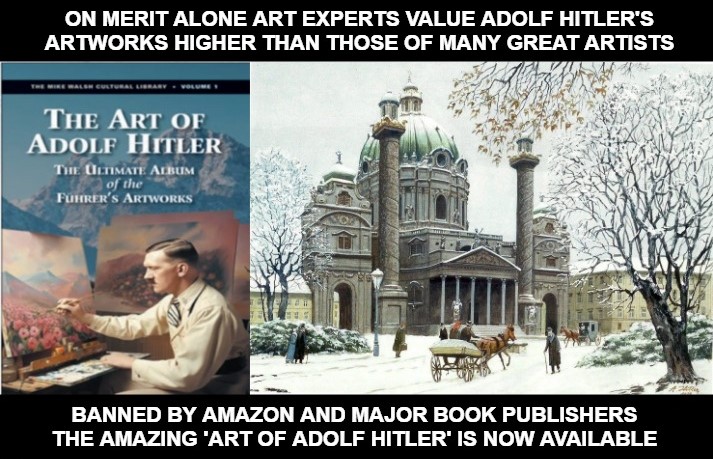
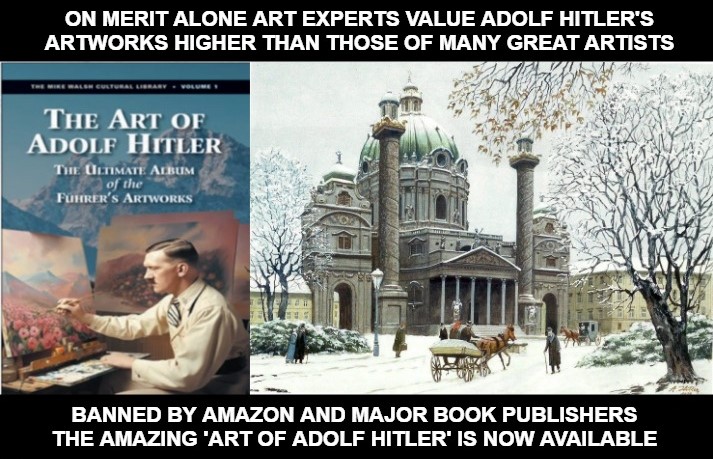
THE ART OF ADOLF HITLER by Michael Walsh commands higher prices than those of famous artists. Over 150 of Hitler’s paintings, watercolours, drawings, and sketches. Twenty-one chapters, many first-time captioned pictures published. Images include landscapes, architecture, exterior and interior, human figures, animals, still life, rural scenes, and portraits. $25. https://barnesreview.org/product/the-art-of-adolf-hitler/

575
Michael Walsh 2w

THE ART OF ADOLF HITLER by Michael Walsh commands higher prices than those of famous artists. Over 150 of Hitler’s paintings, watercolours, drawings, and sketches. Twenty-one chapters, many first-time captioned pictures published. Images include landscapes, architecture, exterior and interior, human figures, animals, still life, rural scenes, and portraits. $25. https://barnesreview.org/product/the-art-of-adolf-hitler/

345
Michael Walsh 2w

THE ART OF ADOLF HITLER by Michael Walsh commands higher prices than those of famous artists. Over 150 of Hitler’s paintings, watercolours, drawings, and sketches. Twenty-one chapters, many first-time captioned pictures published. Images include landscapes, architecture, exterior and interior, human figures, animals, still life, rural scenes, and portraits. $25. https://barnesreview.org/product/the-art-of-adolf-hitler/

921
subexile 3w

Our new artist service is available to all. Free to start with. No risk, no upfront cost. You only pay when you’re ready to rock. Convert Fans Into Day One Streams One workspace to launch a release, reach your audience, understand every click and keep the business organised. Built by SXR Music Group for the artists and music industry professionals who bring music to life. ➤ subexile.com/connect #MusicBusiness #ArtistResources #SXRMusicGroup #MusicTech #IndieArtist #MusicMarketing

578
x - Canadiens Montréal 3w

The Montreal Canadiens indicated that two Quebec players had anonymously ranked Quebec artists for the Quebec Evening. https://t.co/SYT7bouSV2 #Québec #Musique #ArtistesQuébécois (translated)

2780
Michael Walsh 4w

THE ART OF ADOLF HITLER. Michael Walsh. Art by Adolf Hitler commands higher prices than that of notable artists. A collection of over 150 of Hitler’s paintings, watercolours, drawings, and sketches. Twenty-one chapters, each picture captioned and many first-time published. Images include landscapes, architecture, exterior and interior, human figures, animals, still life, rural scenes, and portraits. Only $25. https://barnesreview.org/product/the-art-of-adolf-hitler/

814
subexile 4w

Season two is off to a flying start! August was up +9% and September +12% versus last year. We have currently released 6 singles + 1 album in 2026, and to back our artists even harder, we built SXR Connect, our own marketing hub. All twelve formulas are now live: early access, smart link, link in bio, pre-order, URL shortener, e-signature, genre finder, QR code maker, promo video studio, booking assistant, campaign funnel, and SXR Player. Free for everyone to use until you’re ready to rock! ➤ https://www.subexile.com/connect #musicbusiness #musicindustry #newmusic #musicmarketing #innovation

www.subexile.com
SXR Music Group
1048
Luciano Magaldi Sardella (PhD) Sep 29

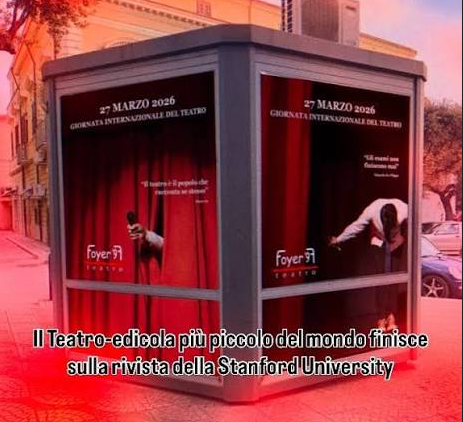
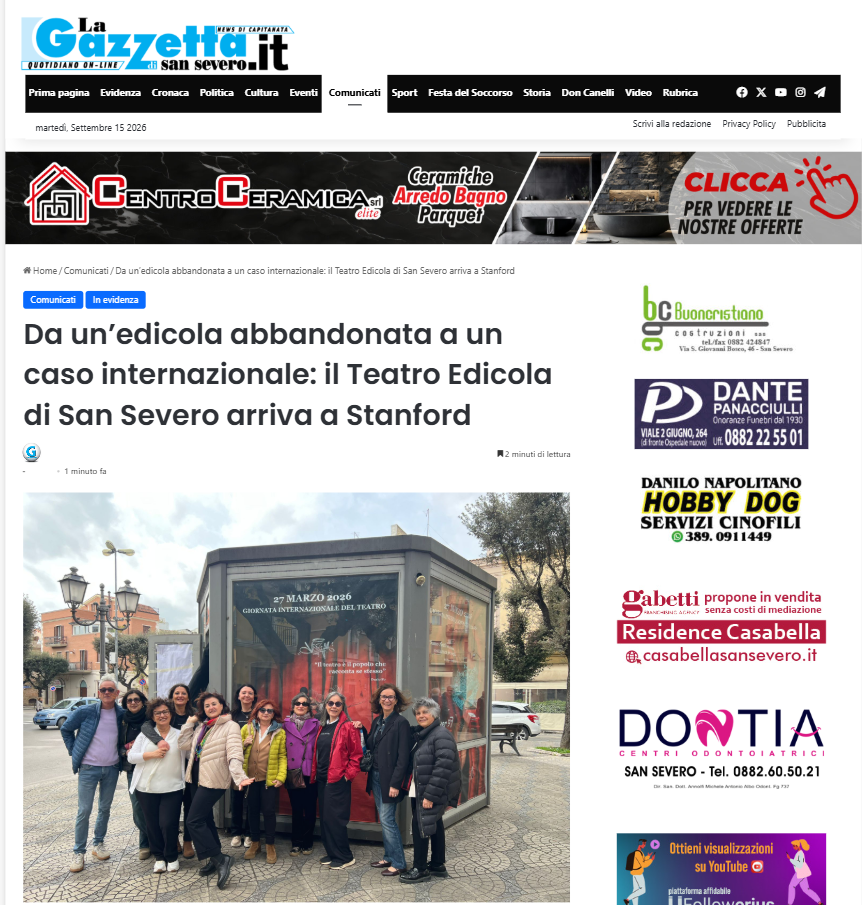
Mitico Magazine - The Teatro Edicola of San Severo: A Model of Cultural Revolution for Stanford University as Well Source: https://www.miticomagazine.com/territorio-e-sociale/teatro-edicola-di-san-severo-un-modello-di-rivoluzione-culturale-anche-per-la-stanford-university/ The Teatro Edicola in Via Tondi In San Severo, a singular metamorphosis has taken place: a newsstand abandoned for at least six years has found a new function and a new identity, transforming into one of the smallest and most unusual theatre stages in the world. An experiment born in the heart of the town which, in just a few months, has moved beyond local boundaries, attracting attention even overseas. It is called Teatro Edicola and it is a project conceived by the company Foyer '97, artistically directed by Francesco Gravino, which has brought the old newsstand in Via Tondi back to life through a formula that is both essential and surprising. Foyer '97 Foyer '97 APS was established as a formally constituted association active in the cultural sector in San Severo in 1997, born from the vocation of a group of actors, directors and theatre enthusiasts, with the aim of building a "living" and accessible theatre in the town. Over the years the company has developed a repertoire that includes texts from the classical tradition, contemporary dramaturgy, comedy and experimental projects, not limiting itself to the mere production of theatre shows, but also organising theatre courses and workshops and educational and cultural projects characterised by a strong inclusive ethos, particularly in schools. Foyer '97 does not always have a fixed artistic ensemble, but works with different performers and collaborators depending on the project; the only indispensable presence is that of Francesco Guido Gravino himself, actor, director and artistic director of the theatre company. The distinctive feature of Foyer '97 is certainly the value of social and cultural promotion attributed to theatre, the extremely close relationship with the audience and the search for a type of theatre outside conventional spaces, with cemeteries, trains, bell towers, and now a newsstand, as its backdrop. Six spectators, a few minutes and a minimal distance between stage and audience The project was launched on 27 March 2026, on the occasion of World Theatre Day, offering a theatrical experience built around a radical reduction of the conventional spaces and times of performance. The idea was born not only from the search for unconventional spaces, but also from "Edicola Fiore", the morning press review with a strongly ironic tone presented by Rosario Fiorello and Stefano Meloccaro, which was broadcast first only on Fiorello's social channels between 2011 and 2014, and then also on radio and television between 2016 and 2018. The review took its name from the diminutive of its founder, Fiore, and from the newsstand of a friend of Fiorello's in Via Flaminia Nuova in Rome, where the showman would meet early in the morning with a group of friends to read the newspapers. The San Severo newsstand was granted free of charge by its owner Pino Frau to the theatre group which, after obtaining temporary authorisation and institutional support from the Municipality of San Severo, refurbished it within two weeks at a cost of less than €3,000. Just six seats, a total surface area of 4 sq m, of which only 2 are for the stage area, less than a metre between actors and audience, a curtain, a lectern, two lights, performances lasting between 5 and 15 minutes, audience rotation every quarter of an hour: apparently minimal elements that end up subverting the usual relationship between stage and auditorium. Spectators, in fact, find themselves immersed in the stage action, in such proximity to the actors that every gesture, expression and word becomes immediately perceptible. In this way, theatre abandons its traditional spaces and insinuates itself into the everyday life of the street, becoming an intimate, concentrated and almost participatory experience. During the inaugural period admission was free with a subsequent voluntary donation from spectators; in the event of a more stable and longer-term concession, which could lead to seasonal theatre performances, the proposed ticket price would be €5. Audiences reward the experiment Foyer '97's gamble met with public interest right from the start: over 60 people attended the shows in a single afternoon, while the three days that inaugurated the season sold out. From a singular local experiment, the Teatro Edicola thus began to arouse curiosity even outside the province of Foggia, gradually transforming into a case of cultural and social interest, until it reached the American continent. From the province of Foggia to the "Stanford Social Innovation Review" The San Severo experience has now come under the international spotlight: in September 2026, the Stanford Social Innovation Review, an international journal and platform dedicated to social innovation published by the Stanford Center on Philanthropy and Civil Society at Stanford University in California, published on its website and in the Fall 2026 print edition the reportage "The Six-Seat Revolution", written by Dr Luciano Magaldi Sardella, independent journalist and researcher affiliated with the European Open University, and editorially supervised by deputy editor David V. Johnson. In the article, it is argued that the Teatro Edicola attracted attention overseas because the project concentrates cultural innovation, urban regeneration and proximity theatre into just a few square metres: starting from a real urban problem, it recovers an abandoned place with a modest investment, brings performance directly into public space and experiments with a much closer relationship between actors and spectators. From the point of view of theatrical representation, it also highlights how the format, based on micro-stories of five to twelve minutes, taken from great classics such as Goldoni, Chekhov, Ibsen, Euripides and Benni, and on audience rotation every fifteen minutes, transforms the physical limitations of the space into a precise dramaturgical choice, proving to be extremely innovative. All of this makes it possible to address some of the main critical issues in the sector: falling audience numbers, an exclusively elderly audience, reduced resources and distance from traditional cultural venues. The journal also highlights, however, the potential problems: economic sustainability, the need for stable institutional support and the difficulty of replicating the model, which is closely linked to the community and territory of San Severo. A model looking beyond San Severo Despite the difficulties, initial requests for information have already arrived from Lucca and Rome, where there is curiosity about the possibility of getting to know the model more closely and the steps needed to replicate it. The replicability formula, in fact, does not seem to require particularly costly infrastructure: an unused space, a targeted intervention, a cultural idea, in-depth knowledge of the surrounding area and a willingness to return that place to the community can be enough to trigger a new urban function. It is precisely in the disproportion between the modesty of the resources employed and the resonance generated by the initiative that perhaps the most original feature of the Teatro Edicola lies, certainly unique of its kind; there are, however, other examples in Italy of newsstands reused for other purposes: "Edicola 518", a twentieth-century kiosk abandoned in the centre of Perugia, now dedicated to independent publishing, art and cultural production; and in Rome itself, the abandoned newsstand in Piazza Testaccio used temporarily as a stage for a show by Fabio Morgan and the Erno newsstand in the Prati district, which almost every month offers a calendar of events, exhibitions, pop-ups and collaborations with artists and creative enterprises. Small revolutions, therefore, that tell stories of the reappropriation of urban spaces, of creativity and social innovation. And which, it is hoped, will take root in order to look ever further afield.

www.miticomagazine.com
Teatro Edicola di San Severo: un modello di rivoluzione culturale anche per la Stanford University
1051
Euronews English Sep 28

Göktaş's arrest was the latest in a widening crackdown on anyone seen as critical of Turkey's conservative government or its values, which has netted hundreds of politicians, artists, musicians, journalists and LGBTQ+ activists. #Turkey #Comedy #FreeSpeech

www.euronews.com
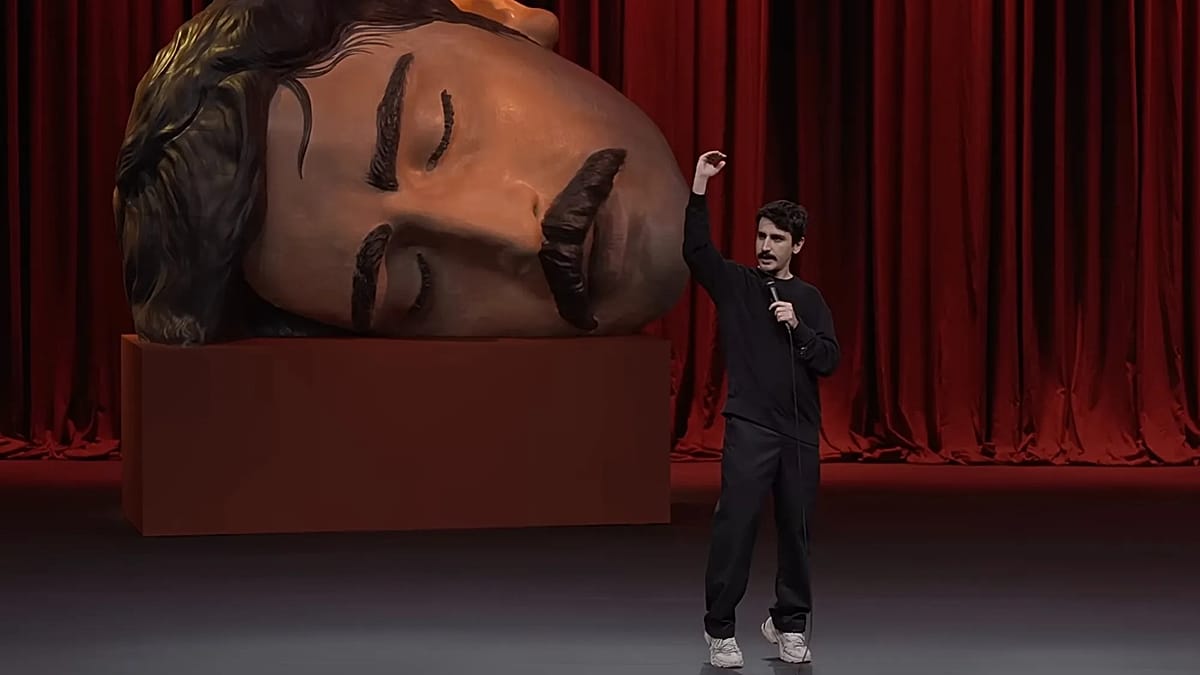
Turkish comedian Deniz Göktaş on trial for insulting President Erdoğan in standup show
1753
Dangiuz Sep 26
visual artist

No doubt AI is the single most powerful tool humans have ever made and it'll only get better here on out. But its evolution comes with the inability to consistently reproduce a certain output. That's a limit only humans can get past. Artists retaining full control will stand out. https://t.co/830OKmzVHX #AI #Creativity #Artistry #Therearenospecificcountriesmentionedinthetweet.

936
Luciano Magaldi Sardella (PhD) Sep 17

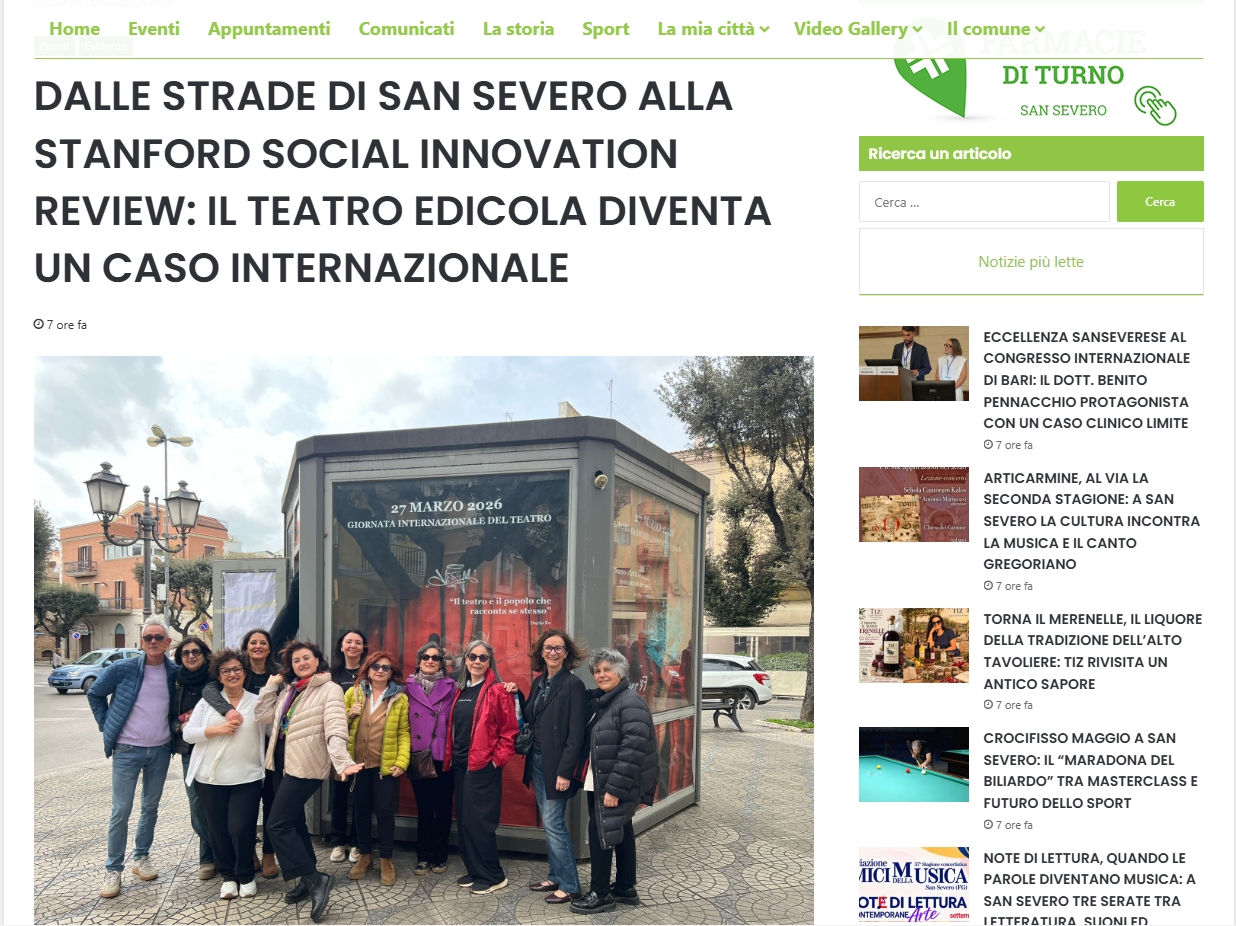
FROM THE STREETS OF SAN SEVERO TO THE "STANFORD SOCIAL INNOVATION REVIEW": "TEATRO EDICOLA" BECOMES AN INTERNATIONAL CASE STUDY SOURCE: https://www.sanseverocitta.it/dalle-strade-di-san-severo.../ SAN SEVERO (FG) - Six persons enter a newsstand. Before them there are no newspapers, periodicals, or tobacco, but rather a theatrical stage of less than two square metres. The actors stand but a few paces from the spectators, with scarcely any separation betwixt performer and beholder. It is thus that a place abandoned for years in San Severo hath been restored to life. And today that modest theatrical experiment hath come under the glare of international attention. This is the history of the Teatro Edicola, the project realised by the company Foyer '97, under the artistic direction of Francesco Gravino, which hath transformed a former newsstand in Via Tondi into one of the smallest stages hitherto conceived. The project commenced on 27th March last with a formula at once simple and singularly original: six seats, a most circumscribed scenic space, and performances of but a few minutes' duration. A minimal distance betwixt public and interpreters that doth wholly transfigure the traditional relation between spectator and theatre. The wager, however, was immediately rewarded by the public. More than sixty persons attended the performances in a single afternoon, and the three days of the inaugural season recorded a complete sold-out. From a local experiment, the Teatro Edicola hath thus become a case capable of attracting attention far beyond the confines of the Province of Foggia. In September 2026, the Stanford Social Innovation Review, the journal of Stanford University, shall publish upon its website and in its Fall 2026 print edition the reportage "The Six-Seat Revolution", authored by Dr Luciano Magaldi Sardella and overseen editorially by Deputy Editor David V. Johnson. The interest of the American review doth not concern merely the originality of the theatrical proposition. The Teatro Edicola is, indeed, observed as a potential exemplar of low-cost social innovation and urban regeneration. The notion is particularly compelling in a country such as Italy, wherein numerous newsstands have ceased their activity and risk becoming vacant interstices within the urban fabric. The question, at bottom, is simple: may a place born to vend newspapers become anew a locus of encounter? In San Severo the answer hath been entrusted to the theatre. The newsstand hath not been merely restored in corporeal terms. It hath changed its function, transmuting itself into a place wherein artists encounter the public directly and wherein the performance becometh part of the quotidian life of the street. "The theatre cometh into the street wherein thou walkest every day," explained Francesco Gravino, thereby synthesising the philosophy underpinning the project. And it is precisely this aspect which hath rendered the experiment compelling also upon the plane of its possible replicability. Initial requests for information have already arrived from other cities, amongst them Lucca and Rome, desirous of apprehending the model and the modalities for its realisation. The strength of the Teatro Edicola resideth also in its apparent disproportion: a minimal investment and space to produce a far greater cultural effect. There is no need for a grand theatre, an auditorium of hundreds of seats, or complex structures. An unused space, an idea, and the will to restore it to the community suffice. That former newsstand in Via Tondi, therefore, narrateth something that transcendeth theatre itself. It narrateth the possibility of reconceiving the spaces of our cities, restoring a social function to places that seemed to have lost it definitively.

www.sanseverocitta.it
DALLE STRADE DI SAN SEVERO ALLA STANFORD SOCIAL INNOVATION REVIEW: IL TEATRO EDICOLA DIVENTA UN CASO INTERNAZIONALE
1174
Tehran Tadhg Sep 16
Irish comedian

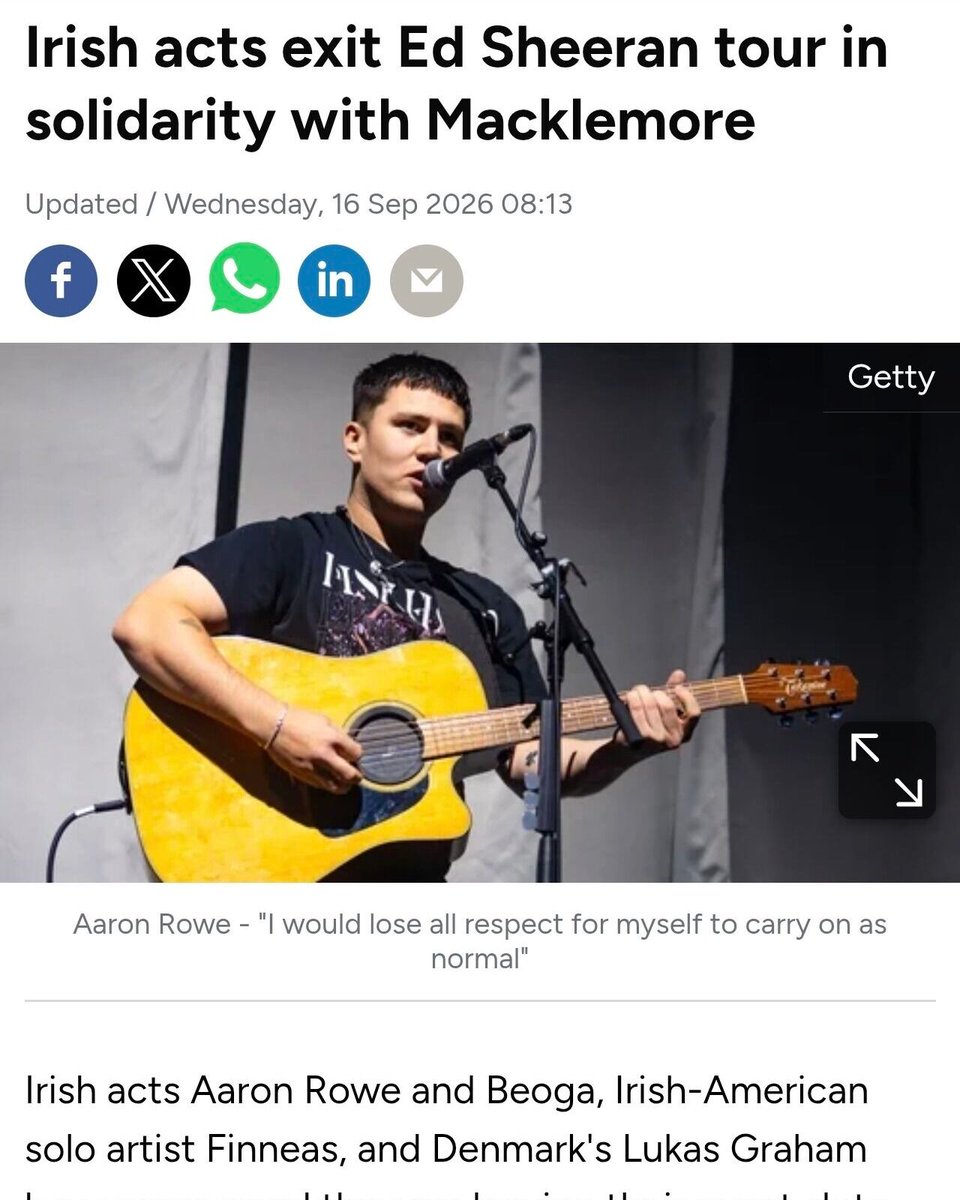
Irish artists leading the cultural boycott of 🇮🇱👏🏻 Now our football players MUST follow 🙏🇮🇪🇵🇸 #StopTheGame https://t.co/XGNwKnZPMn #CulturalBoycott #IrishArtists #StopTheGame #IE #IL #PS

3523
Tehran Tadhg Sep 16
Irish comedian

Irish artists leading the cultural boycott of 🇮🇱 Now our football players MUST follow 🙏🇮🇪🇵🇸 #stopthegame https://t.co/DPYiFzSjlN #CulturalBoycott #IrishArtists #StopTheGame #IE #IL #PS

822
Paul Murphy 🇵🇸 Sep 16
Irish politician

Great to see Irish artists taking a principled stand against genocide and the attempt by billionaires to shut up those who oppose it. The groundswell of support underlines the need to #StopTheGame. It's unconscionable that Ireland would play Israel in two weeks time. https://t.co/PWD4uVi2K4 #StopTheGame #Ireland #ArtAgainstGenocide #IE #IL

117
Luciano Magaldi Sardella (PhD) Sep 15

“TEATRO EDICOLA” OF SAN SEVERO BECOMES AN INTERNATIONAL CASE STUDY IN THE “STANFORD SOCIAL INNOVATION REVIEW (SSIR)” — STANFORD UNIVERSITY SOURCE: https://l1nq.com/rruntbb LA GAZZETTA DI SAN SEVERO SAN SEVERO (FG) — Six persons enter a news kiosk. Before them lie no newspapers, magazines, or tobacco, but a theatrical stage measuring less than two square metres. The actors stand but a few paces from the spectators, with scarce any separation betwixt those who perform and those who behold. It is in this manner that in San Severo a place abandoned for years hath begun to live anew. And today that diminutive theatrical experiment hath fallen beneath the glare of international attention. It is the story of the “Teatro Edicola”, the project realised by the company Foyer ’97, under the artistic direction of Francesco Gravino, which hath transformed an old news kiosk in Via Tondi into one of the smallest stages ever conceived. The project commenced on 27th March last, with a formula as simple as it is original: six seats, a stage of most exiguous dimensions, and performances lasting but a few minutes. A minimal distance betwixt public and performers that doth wholly alter the traditional relationship betwixt spectator and theatre. The wager, however, was forthwith rewarded by the public. More than 60 persons attended the performances in a single afternoon, and the three days of the inaugural season registered a complete sold-out. From a local experiment, the “Teatro Edicola” hath thus become a case capable of attracting attention far beyond the confines of the Province of Foggia. In September 2026, the Stanford Social Innovation Review (SSIR), the journal of Stanford University, shall publish upon its website and in its Fall 2026 print edition the reportage “The Six-Seat Revolution”, authored by Dr Luciano Magaldi Sardella and edited by Deputy Editor David V. Johnson. The interest of the American review concerneth not merely the originality of the theatrical proposition. The Teatro Edicola is, in fact, observed as a potential paradigm of social innovation and low-cost urban regeneration. Become a Medium member The idea is particularly compelling in a country such as Italy, wherein numerous news kiosks have ceased their activity and risk becoming vacant interstices within the urban fabric. The question, at bottom, is simple: can a place born to sell newspapers become once more a locus of encounter? In San Severo, the answer hath been entrusted to the theatre. The kiosk hath not been merely restored in a physical sense. It hath changed its function, transforming itself into a place where artists encounter the public directly and where the performance becometh part of the quotidian life of the street. “The theatre cometh into the street wherein thou walkest every day,” Francesco Gravino hath explained, thus synthesising the philosophy underpinning the project. And it is precisely this aspect that hath rendered the experience interesting also upon the plane of its potential replicability. Initial requests for information have already arrived from other cities, amongst them Lucca and Rome, interested in learning of the model and the modalities for its realisation. The strength of the Teatro Edicola resideth also in its apparent disproportion: a minimal investment and space to produce a cultural effect far greater. There is no need for a grand theatre, an auditorium of hundreds of seats, or complex structures. An unused space sufficeth, together with an idea and the will to restore it to the community. That old kiosk in Via Tondi, therefore, recounteth something that goeth beyond the theatre. It recounteth the possibility of rethinking the spaces of our cities, restoring a social function to places that seemed to have definitively lost it.

l1nq.com
Encurtador de Link
705
Luciano Magaldi Sardella (PhD) Sep 5

“BROADWAY WORLD” OF NEW YORK WELCOMES THE TEATRO MERCADANTE OF CERIGNOLA IN THE NAME OF THE MASCAGNI FESTIVAL SOURCE: https://www.linkedin.com/pulse/broadway-world-new-york-welcomes-teatro-mercadante-sardella-ph-d--i5mbe/ by Stephi Wild, New York City. SOURCE: https://www.broadwayworld.com/italy/article/Photos-Teatro-Mercadante-and-Teatro-Goldoni-Partner-on-SOUNDTRACK-MASCAGNI-20260827 The most influential theatrical portal in the world, with at least six million global visitors per month, consecrates the cultural twinning between Cerignola and Livorno and the historical restitution of a verismo born in Puglia, southern Italy: there exists a moment when a local history ceases to be peripheral and, by the mere fact of being recounted in the right place, becomes universal history. That moment, for the Teatro Mercadante di Cerignola, has arrived. Broadway World, the bible of international theatre read daily by producers, artistic directors and critics from New York to the West End, has welcomed into its pages the cultural pact between the Mercadante and the Fondazione Teatro Goldoni of Livorno, sealed in spring 2026 by Artistic Director Savino Zaba and the Municipal Administration in the person of the Deputy Mayor and Commissioner for Culture, Maria Dibisceglia. The piece is signed by New York editor Stephi Wild, under the title: “Photos: Teatro Mercadante and Teatro Goldoni Partner on SOUNDTRACK MASCAGNI”. It is no mere detail. Broadway World does not review provincial seasons. When it does, it is signalling to the American and global theatrical system that something, down there, deserves to be seen. The heart of this recognition is Soundtrack Mascagni: the music that inspired cinema, the cinema that celebrated Mascagni, the co-production chosen as the closing event of the VII edition of the Mascagni Festival. A hybrid work, a concert-reading for narrating voice, ensemble, images and sounds, with dramaturgy and text by Vittorio Giacci, performed by the Artists of the Mascagni Academy and the Orchestra of the Teatro Goldoni di Livorno “Massimo de Bernart” conducted by Maurizio Colasanti. On stage, in the guise of an imaginary Mascagni, as narrator and guide through his own musical universe, the actor-director Maurizio Nichetti. A production, as the Italian notes record, “born from the synergy between the Teatro Mercadante di Cerignola and the Teatro Goldoni di Livorno”, which will see on stage the great actor and director Maurizio Nichetti and the Orchestra of the Goldoni, conducted by Maestro Maurizio Colasanti, with direction entrusted to Marco Voleri and Savino Zaba. What Broadway World has intercepted, moreover, is not merely a production but also a historiographical thesis that at last forces the international literature to catch up. For decades, Anglophone biographies have dismissed Pietro Mascagni’s Apulian decade as “years of poverty and obscurity”: the documentary truth, preserved in the Polo Museale of Piano San Rocco, is of a different temper entirely. In December 1886, on tour with the Maresca company, Mascagni stopped in Cerignola, where the mayor then in office, Commendatore Cannone, invited him to remain to conduct the newly founded philharmonic. The composer would stay, save for brief absences, in the house in Via Assunta until 1895, composing no fewer than five operas: Cavalleria rusticana; L’amico Fritz; I Rantzau; Guglielmo Ratcliff; Silvano. A third of his entire operatic output, written in feverish poverty, in an agricultural town of the Ofantine plain. It was there, in July 1888, that the verses of Cavalleria reached him by postcard from Livorno, sent by his poet friends Giovanni Targioni-Tozzetti and Guido Menasci. There, on 27 May 1889, he completed the autograph. The envelope, that morning, bore the postmark of Cerignola. The world premiere at the Costanzi in Rome, on 17 May 1890 before Queen Margherita, was an earthquake. As Zaba has synthesised it, in a formula destined to endure: “Livorno gave Mascagni to the world. Cerignola inspired him and kept the deepest part of his soul.” In fact, the productive parabola sanctioned by BroadwayWorld is exemplary in the way it overturns the traditional North-South axis of cultural projects. It begins on 23 August at the Mascagni Festival in Livorno with Soundtrack Mascagni. Then its debut in Cerignola, in the course of the Mercadante’s forthcoming season. Indeed, with a date already fixed: “Soundtrack Mascagni” will be presented in Cerignola on 24 October as the opening production of the 2026/2027 theatrical season of the Teatro Mercadante. An idea as simple as it is revolutionary: cinema as a lens through which to re-read Mascagni. The composer plundered by Scorsese and Coppola, cited by Visconti as a tutelary deity, already possessed in his own writing — dense, symphonic, almost edited by cuts — a cinematic vocation. Soundtrack Mascagni does not merely celebrate that filiation; it interrogates it. That BroadwayWorld should have chosen to capture precisely this — a provincial theatre that does not seek hospitality but co-produces as an equal with a historic theatre such as the Goldoni — says much about the shifting of Italy’s cultural axis. No longer a South that imports, but a South that generates archives, that preserves autographs, caricatures, unpublished letters, and restores them to the international circuit. For Cerignola, accustomed to being narrated as a land of wheat and not of music, this arrival on Broadway World is more than a press clipping. It is the certification that its Mascagni story is no longer a local footnote, but a necessary chapter in the history of verismo. And that the Mercadante, from a provincial municipal theatre, has entered in full right the ranks of those Mascagni theatres upon which the whole world now looks, and with admiration.

www.linkedin.com
“BROADWAY WORLD” OF NEW YORK WELCOMES THE TEATRO MERCADANTE OF CERIGNOLA IN THE NAME OF THE MASCAGNI FESTIVAL
589