WRLD

Search

#căldură
Mediafax.ro 4d

Ukraine is working to restore electricity and water supply after Russian attacks, leaving about 240,000 people without heating in Odesa, while the situation in Kyiv is gradually improving. #Ucraina #energie #atacuriRusesti (translated)

www.mediafax.ro
Ucraina încearcă să restabilească alimentarea cu energie electrică și apă după atacurile rusești / 240.000 de oameni au rămas fără încălzire în Odesa
2696
Andy Burnham 7d
British politician (born 1970)

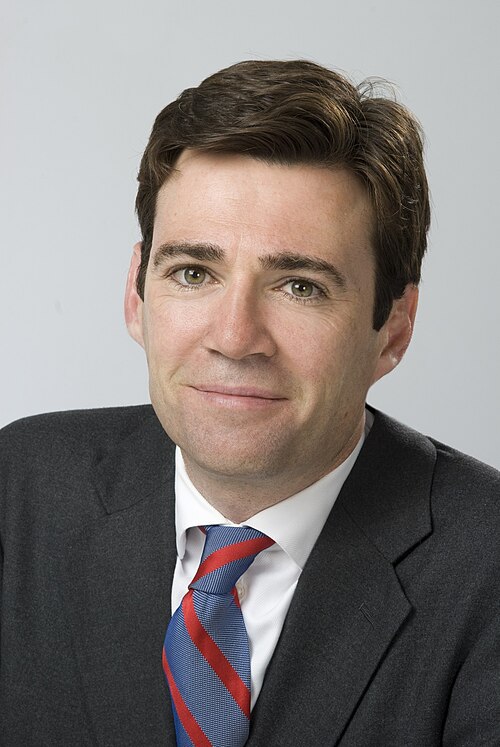
"The fact that he is throwing millions of Ukrainians into the winter cold, depriving them of warmth and comfort, will not help Putin win this war, but will only strengthen our resolve to support Ukraine," said British Prime Minister Andy Burnham. #Ucraina #Drone #Rusia (translated)

Regatul Unit va furniza 1.000 de drone de atac și sprijin suplimentar Ucrainei: „Putin foloseşte iarna ca armă în Ucraina"
stirileprotv.ro
2726
Andy Burnham 1w
British politician (born 1970)

"The fact that he is throwing millions of Ukrainians into the cold of winter, depriving them of warmth and comfort, will not help Putin win this war, but will strengthen our resolve to support Ukraine," said British Prime Minister Andy Burnham. #DroneDeAtac (translated)

Marea Britanie va trimite Ucrainei peste 1.000 de drone de atac. Pot lovi ținte rusești aflate la peste 1.000 km
www.digi24.ro
2728
edyrosen edyrosen 1w

With grace around the neck Political scientist Vladimir Tismaneanu has recently pinpointed one of the most subtle wounds of the unconscious, inflicted by communist totalitarianism; parasitic neuro-affective imprinting. Mental leveling through psychological conditioning techniques based on suggestion and neurolinguistic programming, through hymns, wooden language, and anchor symbols. The wound lies in the fact that, after decades of carrying it, the mask of a False Self has become entrenched in the flesh and can no longer be torn away without suffering. We are talking about a diversion of attachment, through post-hypnotic graft — a subtle trauma in which the very vitality and biological candor of the child have been turned against themselves, becoming the adhesive of their own captivity. In the terms of Richard Bandler and Robert Dilts, when an emotional anchor (the love for the Dictator, the Party, ideology) is installed at a time of maximum neuroplasticity, amidst a spike of cortisol and dopamine, it is no longer a simple reflex, but an identity imprint. The external symbol fuses with the chemistry of the joy of existence. Gregory Bateson (the mentor from whom R. Bandler and the studies on M. Erickson departed) explains why this wound hurts in adulthood: the conscious mind of the adult understands the ideological falsehood, but the body retains the post-hypnotic suggestion implanted through song and ritual. Reason sees the prison, but the limbic system still flinches warmly at the sound of the horn. It is a somatic double bind, favored by source amnesia. This is the classic hypnotic phenomenon in which the subject retains the emotion or conviction implanted during trance, but forgets it was induced from outside. This explains why many adults today sincerely defend their conditioned reflexes from communism, believing they are defending their own "happy childhood." If Aldous Huxley had had the curiosity — at least as a political entomology exercise — to visit a schoolyard in Romania in the 1980s, on a chilly autumn morning with fuzzy loudspeakers, he would likely have experienced a mixed feeling of authorial pride and slight humiliation. The pride of seeing his fiction in "Brave New World" confirmed on an industrial scale; the humiliation of realizing that his British imagination had, in fact, been too dull, erring on the side of politeness! For where Huxley imagined sterile laboratories of hypnopaedia, in which the axioms of social conformity were dripped beneath children's pillows during REM sleep, totalitarian pedagogy had succeeded in inducing the same hypnotic sleep in broad daylight, with eyes wide open, using only a triangular piece of red acetate, a transparent plastic ring, and a horn. If we look at things a little detached and without rosy nostalgia, we are faced with an astonishing early confiscation engineering. Totalitarianism quickly understood a truth that theology has known for millennia, and neuroscience has only recently begun to measure: whoever reaches the child’s synaptic architecture first no longer needs too many guards later on. The phenomenon did not arise from nothing, nor even from Lenin's imagination. Its historically documented archetype dates back to the 7th century B.C., in the Spartan Agoge — the first state system that decreed that a child does not belong to the family but to the city, taking them away at the age of seven to dissolve their private loyalty into a collective military pack reflex. However, modernity added a tragic irony to this ancient brutality. In 1907, British Lord Robert Baden-Powell invented scouting — a pedagogical system designed to cultivate autonomy, individual honor, and resourcefulness in nature. But the totalitarian regimes of the 20th century looked at the uniform, the badge, the salute, and the scout oath and had an instrumental revelation: the form was brilliant, it just needed to be emptied of freedom and filled with ideology. Thus, through reverse engineering, the Bolshevik Komsomol (1918) emerged, and in 1922, the Pioneer Organization in the USSR, designed by Nadezhda Krupskaia and Soviet ideologists — explicitly built on the confiscated skeleton of scouting. Mussolini immediately adopted the recipe in 1926 through Opera Nazionale Balilla, which even enlisted six-year-old children in Figli della Lupa — Sons of the She-Wolf… followed by the Nazi Hitlerjugend, where the mystique of the campfire was converted into an SS nursery. When the regime in Bucharest established the Pioneers in 1949, it unified the youth in UTC and, ultimately, through Nicolae Ceaușescu's decree in 1976, created the Falcons of the Fatherland for preschoolers aged four to seven, the assembly line had become airtight. The state no longer waited for the young person to gain discernment to convince them; it occupied their imagination before they even knew how to tie their shoelaces. Richard Bandler best explains how an anchor is established in the nervous system. In neurolinguistic programming (NLP), the ideological mystery evaporates and a disarmingly simple technical recipe remains. Today Bandler would tell us directly, without mincing words: "Stop asking why children believed in those nonsense. They didn’t believe in ideas; they responded to conditioned anchors!” How does emotional anchoring work in NLP? You take an intense physiological state — it doesn't matter if it's artificially produced — and, right at its peak, when the child's brain is swimming in dopamine, adrenaline, and cortisol, you attach a unique visual, auditory, and kinesthetic stimulus to it. Let’s remember how "the initiation into the Pioneers" was done. Not the whole class received the scarf at once. There was a learned economy of prestigious scarcity: the "first batch" was reserved for the top students, taken to a monumental setting — at the Mausoleum, at the museum, on a sunlit platform — while the rest remained in their seats, consumed by mimetic anxiety. For a seven or eight-year-old child, the horror of being excluded from the tribe and the euphoria of being chosen among "the good" represent a neurochemical tsunami. Right at the crest of this emotional wave, when the nervous system is wide open, the ritual intervenes: the adult's hand ties the red scarf around their neck (kinesthetic anchor at the larynx and plexus), the trumpet splits the air (auditory anchor), the hand rises to the forehead at a precise angle with three fingers fused (proprioceptive anchor), and the mouth utters the motto: “For the glory of the people and the flourishing of socialist Romania, forward!” From that moment, Bandler explains, the Pavlovian circuit is myelinated. The child's nervous system has fused the biological need for love and validation with the symbols of the Party. You no longer need to explain dialectical materialism; it is enough to show them the emblem or sound the horn, and their body will automatically deliver the thrill of solemn submission. Ideology did not enter through the front door of the intellect, but through the back window of the conditioned reflex. Milton Erickson explains what is up with "wooden language" hypnosis. Why did the texts of pioneers and youth organizations sound like a wooden incantation, filled with gerunds and abstract nouns? Wooden language was not a mere stylistic incompetence of the activists but an induction device for trance. Erickson demonstrated that the conscious mind can be bypassed through a few precise linguistic techniques: nominalization (turning active verbs into frozen nouns), presupposition, and cognitive oversaturation. When a student would utter phrases such as "full commitment to the construction of multi-laterally developed socialist society" or "unequivocal fulfillment of outlined tasks" during a UTC meeting, their brain would futilely attempt to sensorily represent what "unequivocal construction" meant. Failing to find a concrete reference in the real world, the analytical cortex would enter a micro-trance of semantic fatigue. Moreover, the mottos worked through what Erickson and linguists call presupposition frames. When the Falcon of the Fatherland said, "I am preparing to become a pioneer," and the pioneer swore to be ready for UTC, the fundamental question — "Do I want to be part of this machinery?" — was already grammatically abolished. The future was conjugated in the indicative mood, as a completed fact. Furthermore, wooden language practiced a systematic erasure of the human agent: things “were built,” the homeland “flourished,” history “advanced.” The individual was no longer the author of their own actions but a mere verb in the passive voice, in the phrase spoken by the Party and the tireless Leader. The acoustic Trojan horse; why does sung suggestion disable critical spirit? Why was there so much singing in communism? Why was every level — from kindergarten to artistic brigades in universities and to mammoth literary circles — soaked in marches, hymns, and bright refrains ("We in the year 2000, when we will no longer be children," "Three colors," "E-he-hei, dear comrade")? The answer lies in a structural vulnerability of the human brain. If you tell a person a lie in prose — for example, that they live in the happiest of worlds while waiting in line for chicken wings — their critical apparatus (housed in the dorsolateral prefrontal cortex, the seat of doubt and reality checking) immediately wakes up and formulates an internal counter-argument. But if you put the exact same lie to a major melody, in a 4/4 march or in an uplifting choral harmony, and have them sing it themselves, the critical sentinel is disarmed. The mechanism is double: neurologically and physiologically. Neurologically, melody and rhythm are massively processed in the right hemisphere and in the limbic system, the seat of pure emotion, while the ideological text travels clandestinely, like a stowaway, hidden in the hold of aesthetic emotion. The brain cannot reject the verse without also rejecting the pleasure of musical harmony; and since the human being longs for consonance, they accept the whole package. Physiologically, singing in chorus is an ancient technique of vagal synchronization: two hundred children singing the same refrain are forced to inhale at the same second, exhale in the same rhythm, and align their heartbeats. And when your diaphragm works in unison with that of the platoon to hold the high note on the word "Party," your critical ego has already dissolved into the acoustics of the mass. You cannot polemicize with a phrase that your own vocal cords are transforming into harmonic vibration. However, if we rise from Bandler's Pavlovian mechanics to the metaphysical diagnosis, the picture takes on the contours of an anthropological tragedy that Søren Kierkegaard prophesied as early as the mid-19th century, before the first pioneer was born. For Kierkegaard, the entire stake of human life is the passage from the aesthetic stage (of immediate sensation and squandering) to the ethical and, finally, to the religious, through the birth of the singular Individual (Den Enkelte) — the man who stands alone before their own conscience and before God. Therefore, Kierkegaard's warning falls like lightning over any collectivist utopia: "The crowd is the untruth" (Mængden er Usandheden). The crowd, says the Danish philosopher, is the place where responsibility evaporates through fraction: no one is guilty because everyone sings at the same time; no one chooses because the detachment has already voted unanimously. Communist youth organizations were, in Kierkegaardian terms, a gigantic prophylactic machine against anxiety and fertile solitude. They served to prevent the young person from ever being alone with themselves. They offered a simulacrum of the ethical stage — "duty" to the collective, "honor" of being a member — precisely to atrophy the organ of genuine conscience. Sin was no longer a moral fall before the Truth, but the stridency of not being in line, of singing off-key in the angelic chorus of the brigade. In the extension of Kierkegaard, Karl Jaspers — who in The Spiritual Situation of Our Time (1931) and in his famous essay on German guilt x-rayed the anatomy of totalitarian regimes — offers us the key to understanding this training. Jaspers makes the vital distinction between simple empirical being, framed in apparatus (Dasein), and Authentic Existence (Existenz), which awakens only in limit situations (Grenzsituationen): suffering, struggle, guilt, death, radical doubt. What did the Falcons of the Fatherland, the Pioneers, and the UTC do? They confiscated the biological thresholds of transition — the exit from childhood, puberty, adolescence — and replaced them with bureaucratic limit situations: receiving the scarf, exclusion in front of the square, self-criticism in meetings. Instead of allowing adolescents to discover transcendence through inner turmoil, the regime delivered them a cardboard, horizontal transcendence, where the Absolute had the retouched face of the General Secretary. More seriously, as Jaspers would observe, this pedagogy produced an early ontological complicity: by having the five-year-old recite homage poems and the fourteen-year-old raise their hand in meetings of denouncement, the system sickened them with a diffuse "moral guilt" before they had even reached the age of discernment. When you have applauded and sung since kindergarten, later rebellion demands not only civic courage but a painful amputation of your own affective memory. An epilogue for the "recent man"... Here, the circle closes between Aldous Huxley and our former youth with a red scarf. The drama is not that we were lied to; raw lies leave the spirit intact and provoke resistance. The drama is that the training used the noblest resources of childhood against the child itself: the need for beauty, the joy of singing together, the desire to be good, the thirst for ritual and meaning. And if today we no longer wear commander's cords over our shoulders, it doesn't mean that Huxley's hypnopaedia has gone dormant. It has simply been privatized. The pioneer horn has shifted to the algorithmic notification of the phone, the school square has become the instant validation flow of social networks, and the song that lulls the critical instance is no longer a patriotic march but an infinite loop of visual dopamine. The technique, however, remains unchanged from Sparta to the present: whoever succeeds in linking your need for belonging to an external symbol and putting your thinking to a pleasant melody no longer needs to lock you up in any prison — you will carry your own grace around your neck, convinced it is an ornament... Psychotherapy and psychoeducation, as well as the strengthening of political culture, are viable solutions for deconditioning and healing. Eduard Rosentzveig (translated)

570
Віталій Кличко Wrld summary 1w
Ukrainian boxer and politician (1971-)

Kliciko stated that the Russian attacks during the night damaged critical infrastructure, causing interruptions in the water and heating supply of the capital. #Kiev #AtacuriRusesti #Infrastructura (translated)

2625
Stirile ProTV 2w

A huge mass of cold water in the North Atlantic, known as the "cold blob," could trigger episodes of extreme weather in Europe, contributing to both intense heatwaves and significant cooling in the region. #VremeExtremă #SchimbăriClimatice #Atlantic (translated)

stirileprotv.ro
Episoade de vreme extremă în Europa. Scenariile grave pe care le aduce „pata rece” din Atlantic
2640
J
John Kennedy 2w

"Each indicator tells us the same story. The heat trapped by greenhouse gases is reflected in the oceans, in the atmosphere, in the melting of ice, and in the rising sea levels," said John Kennedy, head of the climate information department of the WMO, at a press conference in Geneva. #Omenireaasăseasecure (translated)

2537
Maia Sandu Wrld summary 3w
President of Moldova since 2020

"We have managed to solve a major problem. No one can blackmail us anymore, turn off the lights and shut off the heat," said Maia Sandu in her speech at the inauguration. #Energie #RepublicaMoldova #SecuritateEnergetică (translated)

3923
Maia Sandu Wrld summary 3w
President of Moldova since 2020

Every time Moldova dared to choose something other than what Moscow wanted, we were threatened that we would be left without light and heat. #RepublicaMoldova #energia #interconectare (translated)

3808
Віталій Кличко Wrld summary 3w
Ukrainian boxer and politician (1971-)

Kiev is facing serious difficulties regarding the supply of electricity, water, and heat, said Zelensky and the mayor of the Ukrainian capital, Vitali Klitschko, on Saturday. #Ucraina #Rusia #Energetică (translated)

2655
Mediafax.ro 4w

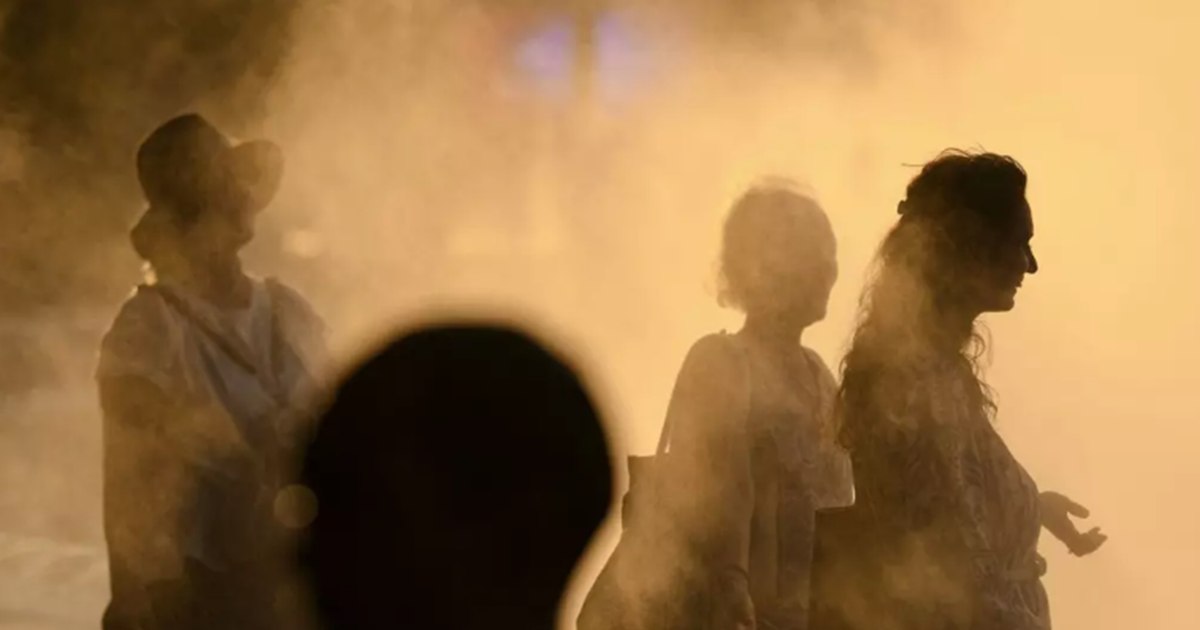
Heat-related deaths reached an alarming record of 710,000 in 2023, surpassing the number of malaria and HIV victims, and experts are calling for recognition of climate change as a global health emergency. #schimbăriClimatică #deceseCauzateDeCăldură #urgențăGlobalăDeSănătate (translated)

www.mediafax.ro
710.000 de morți într-un singur an. Decesele cauzate de căldură au depășit malaria și HIV
2444
adevarul.ro Oct 24

Over 50,000 heat-related deaths were estimated in European cities in the summer of 2026, and Romania is among the most affected countries, with an alarming mortality rate linked to heat waves caused by climate change. #schimbări_climatice #caniculă #mortalitate (translated)

adevarul.ro
Peste 50.000 de decese asociate căldurii în orașele europene, în vara anului 2026. România, printre cele mai afectate țări
2566
Digi24 Oct 21

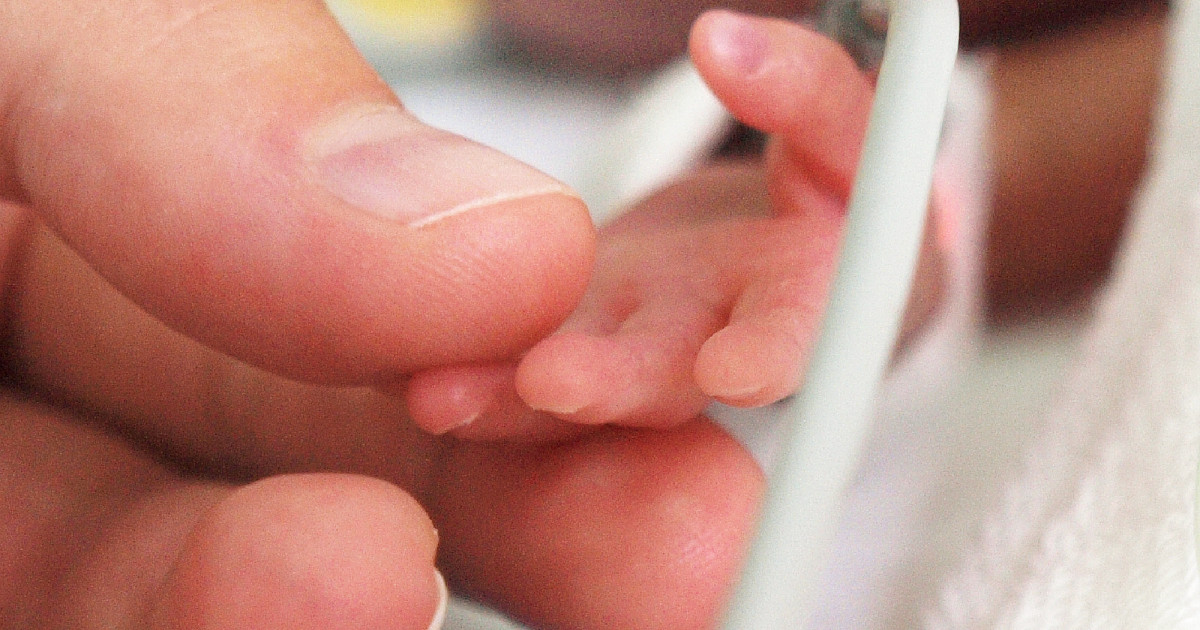
The World Health Organization warns that heat waves can increase the risk of premature birth by up to 26% for pregnant women, emphasizing the importance of monitoring certain indicators to protect vulnerable mothers and children. #caniculă #sănătate #naștere (translated)

www.digi24.ro
Avertismentul OMS: Valurile de căldură cresc riscul de naștere prematură și de avort spontan
3153
Mediafax.ro Oct 21

Europe is preparing to allow energy companies and critical infrastructure operators to neutralize drones that threaten strategic facilities, following concerns about possible attacks that could leave millions of people without power and heating. #securitateenergetică #atacuridrone #infrastructurăcritică (translated)

www.mediafax.ro
Europa se pregătește pentru atacuri cu drone care ar putea lăsa milioane de oameni fără curent și căldură. Cum schimbă autoritățile regulile de apărare
3271
Mediafax.ro Oct 17

Climate change is severely affecting European cities, causing a significant increase in heat-related deaths and exposure to toxic smoke from wildfires. #schimbări_climatice #mortalitate #sănătate (translated)

www.mediafax.ro
Schimbările climatice lovesc tot mai puternic orașele europene. Numărul deceselor provocate de căldură a crescut
2457
Digi24 Oct 17

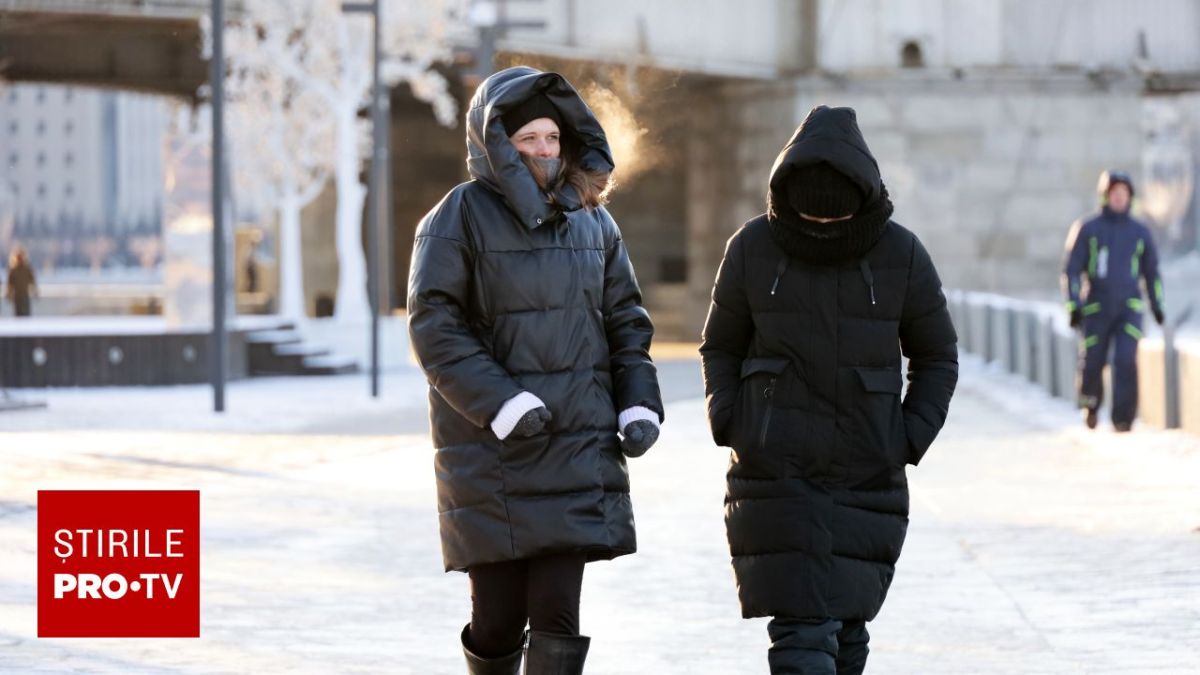
Romanians delay turning on the heating in their homes due to high bills, preferring to stay dressed to save money. #facturiMari #calorifereRec #economisireEnergie (translated)

www.digi24.ro
Facturile mari țin caloriferele reci. Românii amână să dea drumul la căldură, de teama costurilor: „Deocamdată, mai stăm îmbrăcați”
2575
Celeste Saulo Oct 8

"The El Niño phenomenon is already well established and is rapidly intensifying. According to WMO forecasts, the probability of it persisting until February 2027 is nearly 100%, which could make it one of the most intense episodes recorded at least since 1950," said WMO Secretary-General Celeste Saulo in a statement. "El Niño does not bring additional heat to the planet. It releases the heat that the ocean has already accumulated below the surface - that's why a high-intensity phenomenon so often leads to one of the warmest years ever recorded (as was the case in 2024)." "The ocean from which it draws this heat is the warmest we have ever observed. Simply put, there is more heat ready to be released." #ElNino #schimbăriClimatice #ONU (translated)

ONU: Fenomenul El Niño va continua să se intensifice până când va atinge apogeul în decembrie
www.digi24.ro
2231
S
Simon Stiell Oct 5

"The increase in temperatures is accompanied by an increased risk during pregnancy." Extreme heat poses a "higher risk during pregnancy," said Simon Stiell, head of the UN agency for Climate Change, on Monday in a speech at a meeting leading up to COP31 in Fiji, according to Le Figaro. #SchimbăriClimatice #FemeiÎnsărcinate #CăldurăExtremă (translated)

Șeful Comisiei ONU pentru Schimbări Climatice avertizează asupra pericolului crescut al căldurii extreme pentru femeile însărcinate
www.mediafax.ro
1998
Mediafax.ro Oct 5

The head of the UN Climate Change Commission, Simon Stiell, warned about the increased risks that extreme heat poses for pregnant women, including premature births and maternal complications, in a speech given before COP31. #SchimbăriClimatice #FemeiÎnsărcinate #CăldurăExtremă (translated)

www.mediafax.ro
Șeful Comisiei ONU pentru Schimbări Climatice avertizează asupra pericolului crescut al căldurii extreme pentru femeile însărcinate
1998
Digi24 Oct 4

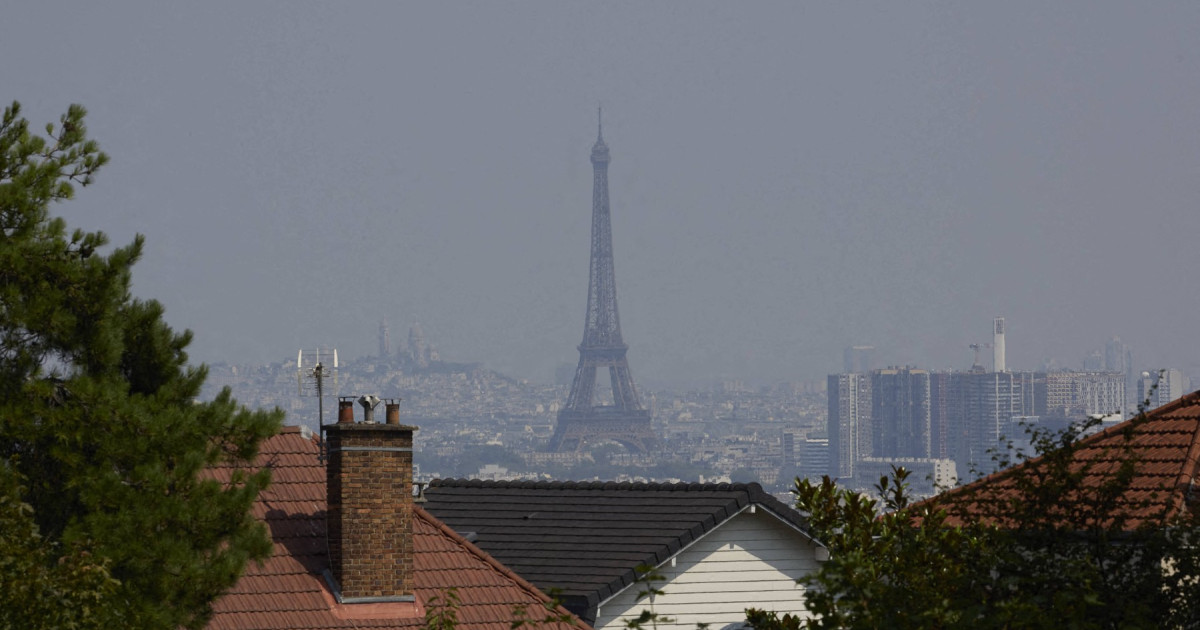
More than a third of the world's population was exposed in 2026 to dangerous levels of ozone pollution, which poses a major risk to health and the environment, especially due to heat waves and wildfires. #poluare #ozon #schimbari_climatice (translated)

www.digi24.ro
Peste o treime din populaţia lumii a fost expusă la niveluri periculoase de poluare cu ozon în 2026. Cum ne afectează acest gaz
2116