BETA nonprofit public democratic european moderated

Search

#host

🚨 URGENTE: EUA CANCELAM O VISTO DA EMBAIXADORA DO BRASIL EM WASHINGTON. A informação foi dada há pouco por um oficial sênior do Departamento de Estado, em ligação fechada com um grupo restrito de jornalistas convidados, da qual participei. A embaixadora Maria Luiza Viotti, chefe da missão brasileira nos Estados Unidos, teve o visto cancelado. A medida é retaliação direta à recusa do governo Lula em conceder o agrément a Daniel Perez, o embaixador americano indicado por Trump para Brasília. Perguntei diretamente ao oficial se novas ações de visto e novos cancelamentos estavam sendo considerados. A resposta foi curta e devastadora: outras ações "não estão descartadas". O governo americano descreve um padrão de hostilidade brasileira que se acumulou ao longo do ano: Darren Beattie, conselheiro sênior para o Brasil, foi barrado em uma visita anterior. Depois, o secretário-assistente Riley Barnes e o secretário-assistente adjunto Sam Samson tiveram os vistos negados para o que Washington classifica como uma visita de rotina. E agora o próprio embaixador americano está sendo bloqueado, com atrasos sucessivos e sem nenhum prazo prometido. A condição foi colocada de forma explícita: o visto de Viotti será restaurado no momento em que o Brasil conceder o agrément a Daniel Perez. Nas palavras do oficial, "reciprocidade é o nome do jogo". Se um governo não deixa o outro trabalhar, o mesmo será feito de volta. E aqui está a dimensão histórica que o Itamaraty não vai querer que você entenda: isto não tem precedente na história da relação Brasil-Estados Unidos. Em mais de 200 anos de relações diplomáticas ininterruptas, desde 1824, nunca um embaixador brasileiro em Washington teve o visto cancelado pelo governo americano. A última vez que os Estados Unidos aplicaram esta medida contra um país do hemisfério foi em dezembro de 2010, contra a Venezuela de Hugo Chávez. O motivo foi exatamente o mesmo: Caracas se recusou a aceitar Larry Palmer como embaixador americano, e Washington cancelou o visto do embaixador venezuelano Bernardo Álvarez Herrera. O resultado? Venezuela e Estados Unidos ficaram uma década inteira sem embaixadores, até a ruptura total das relações. É essa a companhia em que Lula acaba de colocar o Brasil. O Departamento de Estado fez questão de dizer que atribui grande importância ao Brasil e a qualquer governo eleito que o povo brasileiro escolher "DE FORMA LIVRE E JUSTA", e que deseja voltar à normalidade. Mas o recado foi inequívoco: o governo brasileiro deve uma resposta rápida e positiva, e o relógio está correndo. Tic. Tac. #Diplomacia #Brasil #EUA

A Generation That Forgot the Shape of the Square On memory left to die alone By Adham Hasanin Egyptian journalist and political writer, based in the Netherlands In a house near mine, there is a boy of thirteen. Born in 2013 just a few months younger than the July coup itself, younger than the new republic under whose shadow we now live. I asked him once, with no preamble, no test, out of nothing more than passing curiosity: do you know what January was? He answered simply, without hesitation, without any sense that he was missing something: "An old revolution, against Mubarak, right?" Not entirely wrong. But it is everything he knows. The name Tahrir Square means nothing specific to him. The sound of the crowd chanting has no echo in his mind. He does not know that his own family whom he sees every day saying "thank God for stability," who warn him against "chaos" whenever a political headline crosses the screen once, at a moment two years before he was born, went down into the street, betting their entire lives on the possibility that something might change. This article is not about politics. It is about memory, and about who decides what gets told and what is left to die in silence. I. Who Erases the Picture? The first question that comes to mind is the easiest and most deceptive one: who erases this memory? And where do we begin holding them accountable? But the truth is too complex to reduce to a single actor. No one actually erases memory, in the literal sense of the act. There is no ministry called the "Ministry of Forgetting," no presidential decree ordering January struck from the collective consciousness. What happens is simpler than that, and more dangerous at once: the subject is simply never told. School says nothing. The textbook leaps from one period to another without pausing on January for more than two faded lines, composed with deliberate neutrality, devoid of any detail that might make the event feel alive to its young reader. Television no longer has any reason to return to it; the programmes that once hosted witnesses and activists stopped years ago, replaced by an official discourse that mentions January only in passing, as an unfortunate prelude to the "stability" that supposedly followed. And the home the most dangerous link of all has become afraid of the subject. Speech now carries a price, and many families, whether consciously or by sheer survival instinct, have decided that silence is safer than the story. The father who marched fears passing on to his son a curiosity that might one day lead him into trouble the family cannot afford. The mother who lost a friend in the events prefers not to reopen the wound before a child who does not yet grasp the weight of loss. And so, generation after generation, the circle of those who know shrinks, and the circle of those who do not even ask because they do not know there is anything worth asking widens. No one decided to erase the memory through an explicit decision. The memory was simply left to die alone, with no one tending it. And it is precisely this decentralised absence of responsibility that makes this kind of erasure more dangerous than any direct official ban: there is no single decision to challenge, no single body to hold accountable. Responsibility is distributed across thousands of small decisions made by thousands of individuals, each within their own context, each seeming reasonable when viewed in isolation. II. Why This Is More Dangerous Than Direct Repression An objection might be raised: is direct repression arrest, imprisonment, publishing bans not far more lethal than mere gradual forgetting? The answer is complex, and deserves calm unpacking. Direct repression can be seen. It can be documented, and the victim can know they are a victim, can tell their story, and their pain can become a testimony added to the collective memory, even if it never reaches justice. The political prisoner knows he is a political prisoner. The journalist banned from writing knows he is banned, and can tell the world he is banned. Direct repression, for all its cruelty, leaves a trace that can be followed. But a generation that has forgotten something happened at all does not even have a starting point from which to ask. This thirteen-year-old boy will never ask "why were we repressed?" because he does not know there is anything deserving that question in the first place. He feels no absence, because he does not know there is anything absent. He simply lives in a version of reality stripped of an entire chapter of his country’s history, and never for a moment suspects that this void is a void at all. Here lies the essence of the danger: direct repression creates victims who know they are victims. Erasure of memory, when it succeeds, creates a generation that does not even know it has been deprived of anything. And deprivation that is not felt cannot be resisted, because resistance always begins with an awareness of loss. The regime that came after 2013 does not need to convince the new generation that January was a mistake. That would be an arduous, costly task, requiring sustained propaganda and continuous effort to persuade each individual one by one. It is far easier, and strategically far more efficient, simply to ensure they never know it was anything at all. The void requires no defence; it requires only silence, and silence is free and always available. III. The Four Mechanisms of Erasure Four complementary mechanisms can be identified working together to produce this collective void not as an organised conspiracy, but as a system of incentives that pushes each party, consciously or not, to contribute to the same process. The first mechanism: formal education. The curriculum, as currently designed, treats January as a passing footnote rather than a founding event deserving detail and analysis. The student memorises two dates the start of the revolution and its presumed end without understanding why people took to the streets, what they were demanding, or how they felt in that pivotal moment. The second mechanism: broadcast media. The channels that once hosted live discussions on January, featuring varied perspectives, have gradually disappeared, or transformed their discourse entirely. Today’s televised image either ignores the anniversary altogether, or invokes it only to frame it as a prelude to chaos that must be avoided. The third mechanism: the silence of homes. This is the most dangerous of all, precisely because it is the most human and understandable. Parents who lived through the experience protect it with silence, not out of aversion to the story, but out of fear of its price. This silence, however legitimate its motives, achieves exactly the same effect as official censorship: it blocks the transmission of knowledge from one generation to the next. The fourth mechanism: the absence of alternative spaces. Even those among the new generation who wish to know cannot easily find places to look. Archives are scattered, trustworthy websites are blocked or require effort to reach, and personal testimonies are dispersed across corners of the internet that an ordinary student at an ordinary school will never stumble upon. These four mechanisms require no central coordination to work together. Each naturally serves the others, and all converge on a single result: a growing void in the consciousness of every new generation. IV. Memory as an Act of Resistance If erasure operates without a centre, then resisting it must also be decentralised. No one waits for a government decision to restore January to the curriculum, nor for a television programme to revive the testimonies. Resistance here is necessarily individual, happening in small details, in passing conversations, in the simple decision to tell rather than to stay silent. This is exactly what I try to do, without any claim to heroism, without any grand mission. I try, whenever I can, to tell the thirteen-year-old boy and others like him details that are never written in official reports or in schoolbooks: what the voices in the square sounded like, how someone felt the first time they realised change was possible, what that moment of hope was like before everything changed. The goal is not to bring back the past; the past cannot be brought back. The goal is that this boy, when he grows older and asks again and he will ask, because the questions always return at some point finds someone to tell him the full story, not two faded lines in a schoolbook. That he knows the stability he is told is the fruit of "wisdom" has a prior history, that this history carried other possibilities, and that real people bet their lives on those possibilities. V. Why This Matters Now Talking about the memory of a generation not yet aware might seem an intellectual luxury next to more urgent matters: arrests, a collapsing economy, regional wars. But the truth is that this issue is the foundation on which every other issue is built. A people who do not know they once rose up will not understand why they should ever think of rising again. A generation raised to believe "stability" is the only natural state possible will never ask itself what drove its own parents, shortly before it was born, to risk everything for an alternative that was never guaranteed. Memory is not a luxury; it is the reference point by which every generation measures its present, and through which it determines what is possible and what is not. And whoever understands this understands why erasing memory, not direct repression alone, is among the most important tools of any regime seeking to guarantee its permanence: because a people who have forgotten they were once free will not even know they are missing freedom. Memory, like the word, needs someone to tell it in order to survive. And when the tellers stop, memory does not die suddenly; it withers slowly, generation after generation, until the day comes when a boy asks an innocent question, and finds no one to answer him but two faded lines in a schoolbook.

Loin de m'intimider, leur hostilité me motive. Nous ne laisserons pas les sbires du Kremlin ébranler notre démocratie

Présidentielle 2027 : Raphaël Glucksmann accuse les services russes de tentative de déstabilisation
www.20minutes.fr
Novinky 9h

A fire broke out near Šimanov and Kakánov in Šumava, which is spreading rapidly and has affected an area of approximately seven hectares, with firefighters requesting a helicopter and evacuating several residents and guests from the recreational area. (translated)

Hoří les v podhůří Šumavy. Oheň se rychle šíří

Zaregistrovala jsem výtku od paní senátorky Vildumetzové, jejíž kolegové z ANO paradoxně natáčí videa přes handsfree zcela bežně. Doufám tedy, že veřejně pokárá i je. Pokud to paní senátorku uklidní, slibuji, že to už raději nebudu dělat. Ona mi však na oplátku musí slíbit, že pokud se bude v budoucnu někdy znovu vdávat, nebude mít mezi pozvanými hosty nějaké další mafiány z Dozimetru, jako tomu bylo minule. #politika #vzkazy #mediálníetika

ERR 16h

Glasgow's British Commonwealth Games demonstrated that the event can survive with a smaller format, as it successfully hosted nearly 3,000 athletes from 74 nations despite facing criticism for its reduced scale and notable absences of top athletes, highlighting its importance for smaller countries and regional representation in international sports. #RahvasteÜhendus #Glasgow2023 #Spordivõistlused

Briti ajakirjanik: Glasgow tõestas, et Rahvaste Ühenduse mängud võivad ellu jääda
2
20minutes 17h

The tragic suicide of Joris Laurencin, aged 21, in North Isère revealed the alarming rise of racism in rural French areas, where many young people, victims of often trivialized racist insults, feel the need to flee to the big cities to escape an environment that has become hostile. (translated)

« J’ai le mot bougnoule ancré dans mon crâne »… Dans les villages du Nord Isère la montée du racisme inquiète
Novinky 17h

On the night of Tuesday, Moravia and Silesia experienced a tropical night with minimum temperatures above 20 °C, with a record high temperature of 27.9 °C measured in Bystřice pod Hostýnem, which could be one of the highest nightly minima in history, while neighboring countries such as Slovakia and Austria also exceeded temperature records. (translated)

Noc byla extrémně teplá

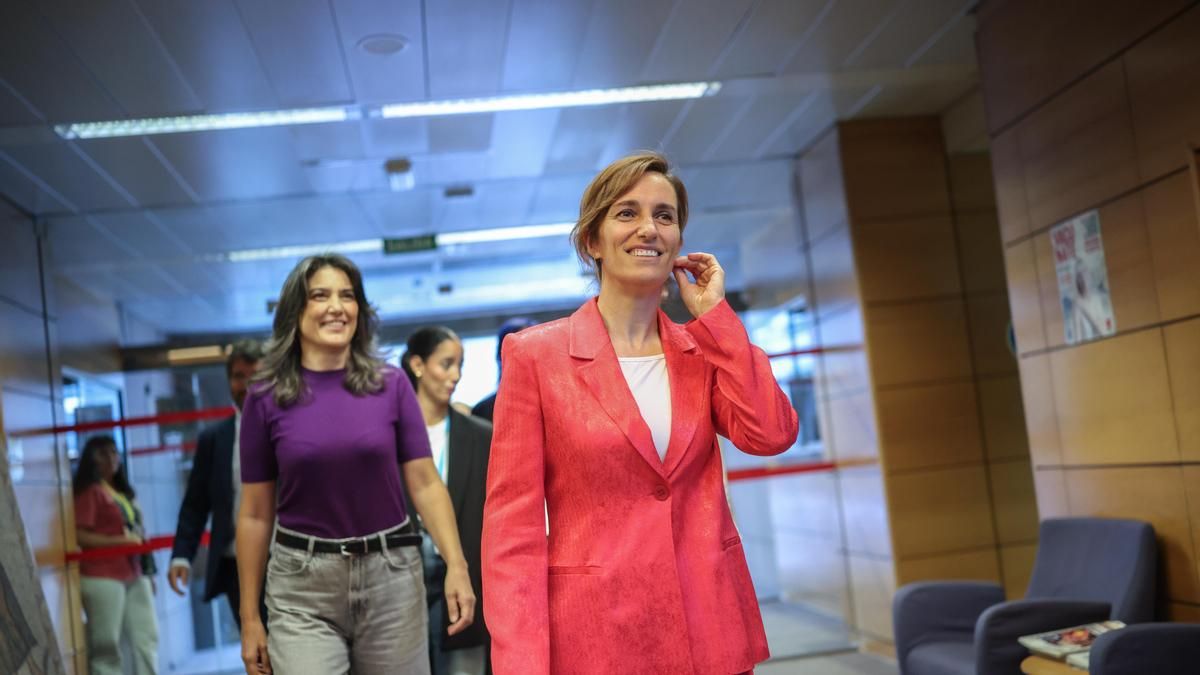
"MAR and the media: favors, punishments, and threats to control Ayuso's narrative. The chief of staff of the Madrid president has been Aznar's spokesperson, a talk show contributor, and a businessman. Now he combines 'rewards' for friendly media with hostility towards critics." (translated)

BFMTV 1d

Donald Trump's Peace Council stated that Israel will not withdraw from Gaza until Hamas is completely disarmed, raising concerns from Israel regarding the peace deal announced by Trump, as hostilities in the region continue. (translated)

Le "Conseil de Paix" de Donald Trump assure qu'Israël ne se retirera pas de Gaza avant le désarmement complet du Hamas

Pārdomas pēc pārbaudēm hostelī. Vide tiek degradēta, higēna ir ļoti zemā līmenī. Ne tikai šajā hostelī, bet arī citos hosteļos, arī mūsu universitāšu kopmītnēs. Kā RD Drošības un kārtības komitejas vadītājs saņemu daudz ziņojumu kā imigranti izspiež latviešus no daudzdzīvokļu ēkām, jo dzīvot tur paliek ļoti grūti - praktiski neiespējami. Mums Latvijā nevajag Mumbajas kvartālus. #hostelis #higēna #migrācija

A “new left” is forming in the United States, and it has very little in common with the traditional left. Its defining issue is foreign policy: hostility toward Israel and Ukraine, sympathy for Russia and Iran, and, among some, increasingly favorable views of China. This group https://t.co/vUH5zrCIw0 #NewLeft #ForeignPolicy #PoliticalShift #US #IL #UA #RU #IR #CN

V 17 letech odešel z Pardubic na hostování do Bragy, která následně využila opci na přestup. Přes mládež a béčko se propracoval do áčka, kde se z dvojky stal jedničkou a oporou týmu. A svými výkony Lukáš Horníček zaujal Newcastle, kam nyní přestoupil za 30 milionů eur.👌 https://t.co/zpb524yHgl #fotbal #přestup #sport

Na první domácí utkání ve 2. lize po 27 letech, v němž Arsenal hostil Slavii B, dorazilo včera na stadion v České Lípě 2 521 diváků.👍 https://t.co/OoMnFacEaj #fotbal #2liga #Arsenal

2

On Sunday, Russian strikes killed at least five people in Ukraine while Ukrainian attacks resulted in the deaths of nine people in Russia, illustrating an escalation of hostilities between the two countries more than four years after the start of the conflict. (translated)

EN DIRECT Guerre en Ukraine : Des frappes russes et ukrainiennes ont fait 14 morts dimanche…

Zítra máme jako hosta v #MestoSeTřese tohohle skvělýho chlapa a gentlemana ☺️ Máte na něj nějaké otázky, které by zítra mohly zaznít? Pište sem do commentů a několik nejlepších vyberem, točíme zítra dopo https://t.co/YILBI9r7RB #MestoSeTřese #host #dotazy

P

Červené koberce před ním pokládali a sypali na ně růžové okvětní lístky🤣. A hostesky chodily kolem a rozprašovaly vonné oleje🤣. Já už fakt nemůžu🤡. #ČervenýKoberec #Zábava #Rok2018

Continuemos a rezar pela paz, para que cessem as guerras no mundo e se encontrem soluções diplomáticas para os conflitos. Recordemos todas as vítimas das hostilidades, sobretudo os mais fracos e indefesos: crianças, idosos, doentes. Que o Senhor conforte aqueles que sofrem e abençoe a obra de quem leva ajuda e consolo. #Paz #Solidariedade #Diplomacia

Continuemos rezando por la paz, para que cesen las guerras en el mundo y se encuentren soluciones diplomáticas a los conflictos. Recordemos a todas las víctimas de las hostilidades, sobre todo a los más débiles e indefensos: los niños, los ancianos y los enfermos. Que el Señor consuele a quienes sufren y bendiga la labor de quienes llevan ayuda y consuelo. #Paz #Diplomacia #Solidaridad

The article analyzes how Christopher Nolan's film The Odyssey reflects the current European migration policy and shows that while the EU presents itself as hospitable, it actually creates hard borders for migrants, leading to a moral freeze, where the tragedies of migrants, such as in the case of Ceuta, go unnoticed. (translated)

Europäische Migrationspolitik: Die Toten werden nicht mal mehr erwähnt