BETA nonprofit public democratic european moderated

Search

#populace

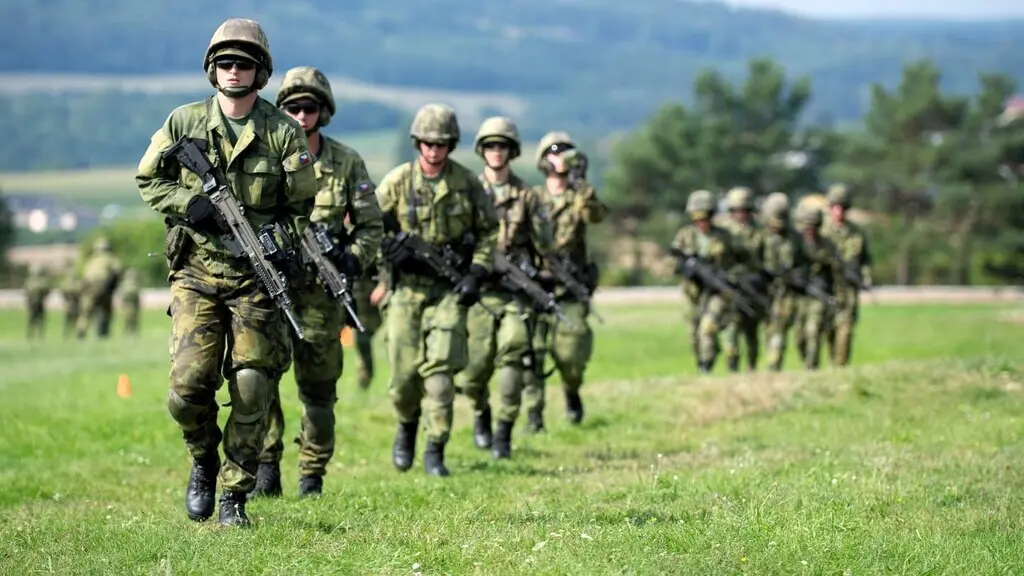
The number of Ukrainian refugees living in the Czech Republic is constantly rising and in some regions they already make up as much as a fifth of the population, while overall they constitute a dominant national minority with 614,330 individuals. (translated)

Ukrajinců v Česku neustále přibývá. Podívejte se, kolik jich žije právě u vás

The Czech labor market faces a deficit of 400 thousand workers by 2040 due to an aging population and insufficient lifelong education, with the most endangered professions including salespeople and assistant workers in manufacturing. (translated)

Seznam ohrožených profesí. Jsou na něm i prodavači

The Scottish town of Greenock is trying to attract immigrants and stop the population decline caused by a lack of jobs, while an African community and new African food shops are developing here. (translated)

Skotské město bojuje proti vylidňování. Láká imigranty
H

Why Weak Societies Choose Tyranny The pinnacle of tyranny would be a system that allows politicians, elites, and bureaucrats to control a population without force or coercion because the people love their servitude. Aldous Huxley wrote Brave New World, an eerily relatable dystopian novel, with this idea at the forefront. Unlike Orwell’s 1984, there is no overt oppression. The state does not have to stamp on human faces with its jackboots or erect an inescapable surveillance state. Rather, the people of Brave New World happily chain themselves with meaningless pleasure and distractions. The authorities do not rule through terror and rage, the central elements of 1984, but instead give the people everything they ever wanted. A pharmaceutical called Soma becomes the opiate of the masses. Mustapha Mond, the World Controller, likens it to Christianity without tears. While religion requires years of moral training, Soma allows citizens to achieve peace simply by swallowing tablets. It is the perfect escape from reality, a holiday from the facts. Lenina, the female counterpart to the protagonist Bernard, cannot comprehend why he refuses Soma, preferring discomfort to something that can remove it. When Bernard states, “I’d rather be myself, myself and nasty, not somebody else, however jolly,” Lenina sees this as a sort of pathology and repeatedly encourages him to take the wonder drug. Bernard explains, “I want to know what passion is.” He understands that there is more to life than merely being content, craving genuine experience, including suffering and intensity, rather than being emotionally regulated by the World State. Lenina’s bewilderment stems from her conditioning to regard unhappiness as a technical problem, encapsulated in the society’s common saying that “a gram is better than a damn.” The people of Brave New World are not captives but satisfied customers. Children are produced by the scientific state, relieving people of the responsibility of parenthood. This grants them the ability to engage in promiscuity, where everyone belongs to everyone else, while filling their free time with cheap entertainment and endless sporting events—what would be referred to as slop today. As Neil Postman observed, Orwell saw totalitarianism through the lens of fear, while Huxley saw it through pleasure. There was no need to ban a book in Brave New Worldbecause there was no one who wanted to read one. An abundance of low-quality information rendered censorship unnecessary because no one could hear the truth through all the noise. Huxley threw shade at civil libertarians who passionately opposed tyranny because they failed to take into account man’s almost infinite appetite for distractions. Humanity in its rawest form is portrayed by John the Savage, an outsider free from the World State’s conditioning. Upon coming face-to-face with this spiritually neutered society, he completely rejects it: “I don’t want comfort, I want God, I want poetry, I want real danger, I want freedom, I want goodness, I want sin.” Huxley’s dystopia is not imposed on an unwilling population but instead requested by a hollow one. Which leads us to the question: How do people become so weak that they get on their knees and beg for totalitarianism? Good times make bad times possible. Once a certain level of luxury and safety is achieved, people start to resemble the hobbits from the Shire. They are so far removed from evil that they forget it even exists and become defenseless in the face of it. Andrew Lobaczewski, who studied the psychology of totalitarianism from inside Poland’s communist takeover, wrote: “During good times, people progressively lose sight of the need for profound reflection. They lose the capacity to differentiate human nature, and emotion begins to dominate intellect. Once a critical mass starts operating on the pleasure principle, any excess mental effort seems like pointless labor.” Lobaczewski warned that it is not as simple as some people losing the ability to think rationally. It is worse, because those people then shame anyone capable of doing so. A clever, liberal, and merry individual is a good sport. A more far-sighted person predicting dire results becomes a wet blanket, a killjoy. The ability to have uncomfortable conversations without emotion taking over is, in Lobaczewski’s view, an indicator of whether a society’s future will be good or bad. It is easier to think about pleasant things. This leads people to eliminate any data or facts that cause them discomfort. That becomes a habit and eventually a custom accepted by society at large. Once the general populace accepts that inconvenient truths should be left unsaid, it becomes incapable of reaching correct conclusions. After all, how could you ever describe a picture that you refuse to look at? “Catastrophe waits in the wings of the communities that lose the capacity for psychological reason and moral criticism,” Lobaczewski wrote. “It is on the other side of this weakening of thought that the processes of the generation of evil are intensified at every social scale until they give rise to bad times.” It is precisely man’s dreams of happiness that can lead to chaos and suffering. This hedonistic view of happiness contains the seeds of misery, feeding the eternal cycle whereby good times give birth to bad times. Friedrich Nietzsche viewed socialism as demanding comfort for the greatest number of people possible. To question whether it is good for the masses to live in comfort has become a form of heresy. This reveals the spiritual atrophy that so many suffer from. Considering only the weak believe comfort to be a virtue, it is what Carl Jung would describe as the infantile dream state of mass dependency: the desire to gently slip back into the kingdom of childhood, into the paradise of parental care. Except this lack of friction has consequences. The perfect state destroys the soil in which great intellect grows. Genius, struggle, passion, strength, and wisdom are required to build a safe and abundant society. Yet once a certain level of comfort is achieved, it can destroy the very virtues required to obtain it. Nietzsche observed that it is the warmest heart that aims to alleviate suffering and hardship but fails to realize that it thereby wills the destruction of its own foundation. Comfort breeds mediocrity, which is then called good. Small people want one thing above all: that no one hurt them. We have taken this pathology to such a degree that we now obsess over hurt feelings and call this virtue. Pleasure, in its proper place, is a byproduct of meaningful goals, not a goal in itself. Aristotle saw that pleasure and comfort distort perception and proper judgment. While they do not cause us to misjudge something like geometry or mathematics, they can destroy our ability to decide what is worth pursuing and, therefore, what to do. Consider The Odyssey. Homer depicts Odysseus’ men on the island of the Lotus-Eaters, where they taste the fruit and lose all desire to go home. Much like Huxley’s Brave New World, they are not imprisoned. Rather, they simply stop wanting anything more. Odysseus has to drag his men back to the ships while they weep to stay. This is what comfort can do to men. It empties them of purpose. We intuitively understand this but fail to apply it to our own lives. We must make the same choice as Odysseus when he refuses Calypso’s offer of endless comfort and immortality. He knows she is more beautiful than his wife Penelope waiting at home. He knows that he and Penelope will grow old and die, a fate he could avoid by staying with Calypso. No one who reads these stories wishes he had stayed. We want him to choose the hard way home because if he took the offer, he would stop being admirable. Yet staying is exactly what our modern society asks of us. We are told that the island is the good life. But what happens to the man who caves to this temptation? In Thus Spoke Zarathustra, Nietzsche imagines a risk-averse society taken to its logical endpoint. The elimination of all struggle produces a man so diminished that he fails to possess even self-contempt or higher aspiration. Safety and sameness become the highest goals, creating “no shepherd in one herd.” Anyone who seeks to be anything more than normal becomes an aberration to be dealt with. Or, as Nietzsche puts it, they have “made the wolf a dog in man himself, man’s best domestic animal.”

Human populations differ, for example, in the amount of skin pigmentation. That difference is observable to the naked eye, it cannot be missed, even tiny infants can see it. And this is just the beginning. Different racial groups can be distinguished by their skeletons, they require different medications, have different physiologies, and more. (translated)

More than 1.19 million people in Mozambique received food and agricultural assistance in the first half of 2026, while only 16.16% of the required funding for the target population was actually covered, highlighting acute food security issues and the ongoing humanitarian crisis in the country. (translated)

Moçambique: um milhão de pessoas ajudadas na alimentação

I hope every Russian understands that our president has NO mandate from the Finnish populace to aggravate Russia this way. I consider @alexstubb to be very close to being complicit in high treason. #Finland #Russia #HighTreason #RU #FI

The USA reports the first two deaths from measles in Pennsylvania, with the number of cases of this disease reaching 2777 this year due to declining vaccination coverage. (translated)

USA mají první dvě úmrtí na nebývale rychle se šířící nákazu spalniček

The article discusses why there is a shortage of labor in some sectors in Spain, while there are over 160,000 unfilled job positions, despite the country recording 2.5 million unemployed people, with the main reasons being a lack of suitable candidates, low wages, an aging population, and regional disparities, especially in relation to the housing crisis. (translated)

Por qué hay falta de mano de obra en algunos sectores y vacantes sin cubrir en España con 2,5 millones de parados

The article highlights the alarming situation regarding the availability of medical care in the Czech Republic, where patients wait for specialists such as allergists or cardiologists for months, a consequence of an aging population and a shortage of doctors, which can have serious implications for patients' health. (translated)

„Začíná to být neúnosné.“ Na lékaře čekají lidé měsíce, na alergologa i celou sezonu

Almost all residents of the Gaza Strip need help securing shelter and basic household supplies. According to the UN, this concerns an estimated 1.98 million people, or 94% of the population. More than four out of five households live in conditions that the UN describes as critical or (translated)

E

PP voters to Vox express concerns that the 'grandchildren's law', allowing descendants of exiles to claim Spanish citizenship, aims to influence the outcomes of the upcoming elections, with more than half of the population agreeing with its fundamental concept, while the majority reject the possibility of new citizens being able to vote in any area. (translated)

'Pucherazo electoral': los votantes de PP y Vox creen que la 'ley de nietos' busca "influir en las próximas elecciones"
Bild 2w

As a result of ocean warming and climate change, the population of octopuses is rapidly spreading in the North Sea, leading to a significant increase in their occurrence in local fishing practices and changes in the local ecosystem. (translated)

Tiere breiten sich rasant aus - Kraken-Invasion in der Nordsee!
Novinky 2w

According to an analysis by the Czech Statistical Office, the trend of an aging population is deepening in the Czech labor market, where the number of people in their sixties already exceeds the number of people in their twenties twice, which brings challenges in focusing companies on older workers and the necessity for retraining, as the shortage of labor will increase with the departure of the strong generation born in the 1970s into retirement. (translated)

Šedesátníků mají firmy už dvakrát více než dvacátníků

In the Czech Republic, the number of new medical students and students in non-medical fields is increasing, but some critically endangered specializations, such as clinical oncology and surgery, are facing a serious shortage of specialists due to the aging population and retirement. (translated)

Mediků přibývá, kriticky ohrožené obory zůstávají. Někde vypomohou cizinci

The article states that the Finnish government's decision led to a decrease in the income of the poorest 5% of the population by an average of 828 euros per year, while the income of the richest 5% increased by 2137 euros per year, resulting in an increase in poverty, with nearly 99,000 people now falling into the category of low-income households, which has most affected workers whose social support has been significantly reduced. (translated)

Последствия решений правительства Финляндии: самые малообеспеченные беднеют, самые состоятельные богатеют
Novinky 2w

According to surveys, more than a million Czechs have experience with cryptocurrencies, with almost half of the population having some relationship with bitcoin, and the Czech Republic is one of the most advanced countries in Europe in terms of cryptocurrency adoption, with the biggest barriers to investment being concerns about risk and lack of knowledge. (translated)

Zkušenost s kryptoměnami má už přes milion Čechů
Bild 3w

The commentary warns of a possible economic decline in Germany due to an aging population and a drop in productivity, emphasizing the need for radical measures such as eliminating bureaucracy and using artificial intelligence to increase productivity and support young people in education and employment. (translated)

Kommentar - Für unseren Wohlstand – weg mit den Tabus!

Investor Václav Dejčmar suggests in the podcast "Ve vatě" that people in the last 18 years of life should not be allowed to participate in elections, because older voters often prioritize personal interests over the future of the country, and he also points out new business opportunities arising from population aging, climate change, and mental health. (translated)

Posledních 18 let života by se nemělo volit, říká investor Dejčmar

The article examines the slow collapse of the Weimar Republic, arguing that its failure was caused by a long-term loss of support from the German population and institutional deformation, warning current democratic systems of the danger of erosion and the normalization of states of emergency. (translated)

Weimarer Republik: Wann kippte es?