The author wrote that David Alandete, whom he described as well-informed, had said that Delcy Rodríguez was at Trump Tower in 2017, days before the president took office for the first time. #DelcyRodríguez #Trump #Venezuela #VE #US (translated)
The author wrote that David Alandete, whom he described as well-informed, had said that Delcy Rodríguez was at Trump Tower in 2017, days before the president took office for the first time. #DelcyRodríguez #Trump #Venezuela #VE #US (translated)
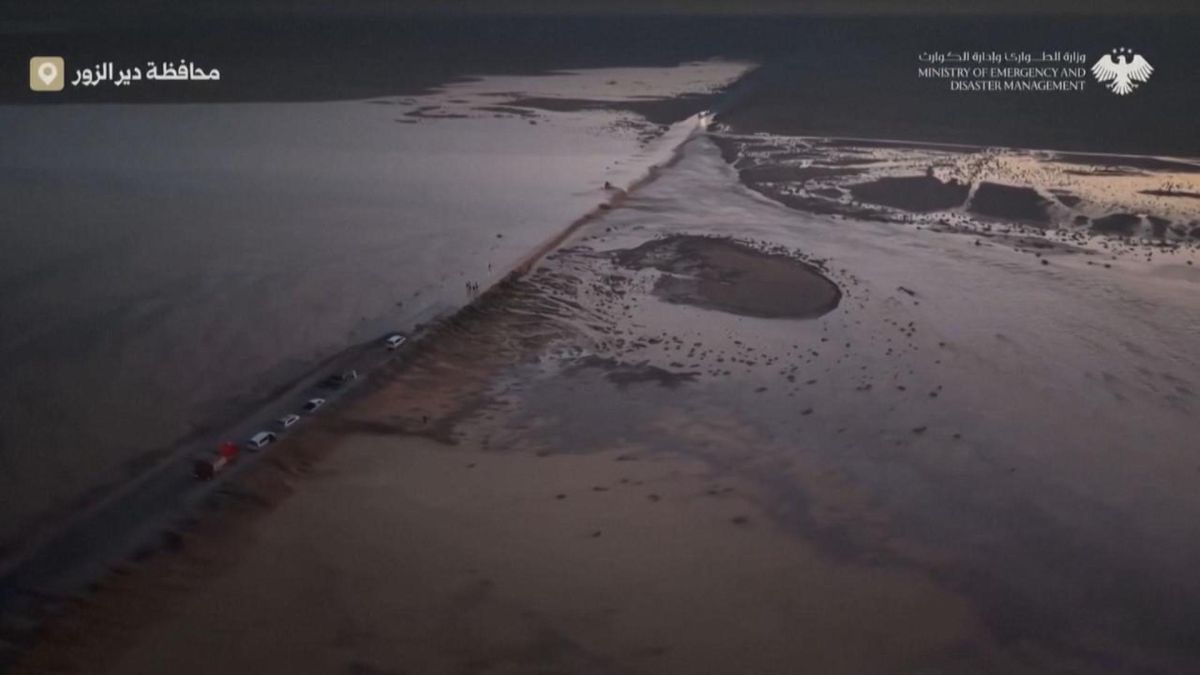
In Syria, torrential rains have turned roads into rivers, causing floods that have led to 8 casualties, including 5 children, and severe infrastructural damage in the Deir ez-Zor governorate and other provinces. #Siria #Inondazioni #EmergenzaMaltempo (translated)

We wonder why there are houses built in torrents, slums in broom closets, delayed investments in large infrastructures, very tight energy or transport networks... And the answer comes by itself. Here it is. Here are those responsible. (translated)


Actu Foot noted, citing L’Équipe, that Ferran Torres experienced a drop in effectiveness at PSG after the international break. The account specified that he scored seven goals in six matches before this, with a decisive action every 46 minutes, then no goals in five matches and one assist in 329 minutes played. According to Actu Foot, his entourage was not worried and Luis Enrique remained satisfied with his striker, particularly with his movement and pressing. #FerranTorres #PSG #Football (translated)

The author wrote about what Antonio De La Cruz said about Judge Torres, who, according to the publication, took on the trial against Maduro after the death of her predecessor. #Justicia #Maduro #Venezuela #VE (translated)

João Nuno has been appointed as the coach of Torreense, succeeding Luís Tralhão, and will lead the team until 2028, with his debut being a match against Portimonense on October 31. #Futebol #Torreense #JoãoNuno (translated)


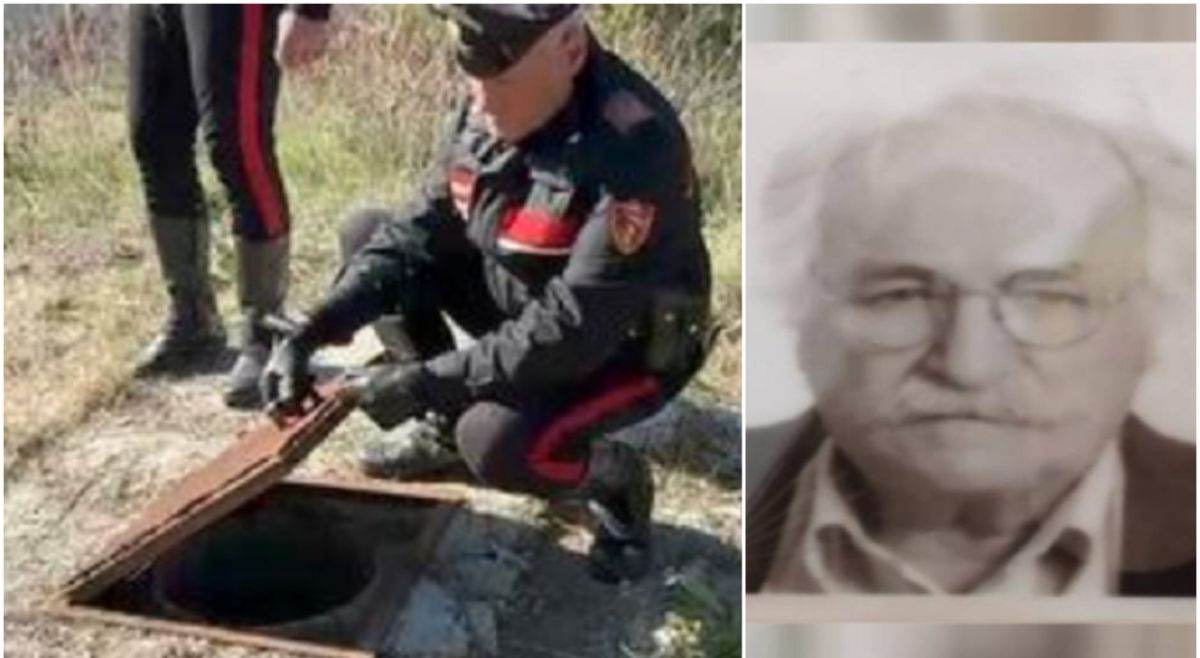
Antimo Mazzotta, a 78-year-old retiree, was found dead in the well of his home in Torre Rinalda after an argument with a 33-year-old plumber, Emmanuel Greco, over a refund of 300 euros for unsatisfactory work. #Omicidio #Lecce #Giustizia (translated)
Actu Foot reported that Samir Nasri would not have chosen Harry Kane for the Ballon d'Or, but Lamine Yamal. Nasri believed that Kane was not the best player in the Bundesliga, a role he attributed to Olise, and that he was also not the best player on the England team during the World Cup. He disputed the importance given to goals scored and felt that Kane had won a championship where he was, in his opinion, the only one playing. To illustrate his point, he mentioned the hypothesis of Ferran Torres scoring 50 goals with PSG and winning Ligue 1 and the Coupe de France before receiving the Ballon d'Or. #BallonDor #Football #SamirNasri (translated)

Actu Foot reported that a Croatian journalist from Večernji list admitted to making a mistake by ranking Harry Kane sixth in his Ballon d'Or vote. He explained that the results and performances in the World Cup had weighed decisively in his choice, considering that Rodri was the best player of the tournament. He also mentioned wanting to pay tribute to the Norwegians and stated that Lionel Messi had led Argentina to the final. The journalist indicated that he knew the absence of Lamine Yamal from his top 10 would spark controversy, while judging that the player's role had been minor in Spain's victories. His ranking placed Rodri first, Erling Haaland second, Lionel Messi third, Ferran Torres fourth, Kylian Mbappé fifth, Harry Kane sixth, Pau Cubarsí seventh, Vitinha eighth, Ousmane Dembélé ninth, and Jude Bellingham tenth. #BallonDor #CoupeDuMonde #Football (translated)

Actu Foot reported that the vote from the Croatian journalist published by Večernji list for the 2026 Ballon d'Or placed Rodri in first position, ahead of Erling Haaland and Lionel Messi. Ferran Torres was fourth, Kylian Mbappé fifth, Harry Kane sixth, Pau Cubarsí seventh, Vitinha eighth, Ousmane Dembélé ninth, and Jude Bellingham tenth. Lamine Yamal was not included in the ranking. #BallonDor #Football #Sport (translated)
The photograph allegedly of protests in front of the Eiffel Tower is actually an image of celebrations of Paris Saint-Germain fans after the Champions League victory in June, not corresponding to the current protests in France. #FactCheck #Protestos #França (translated)


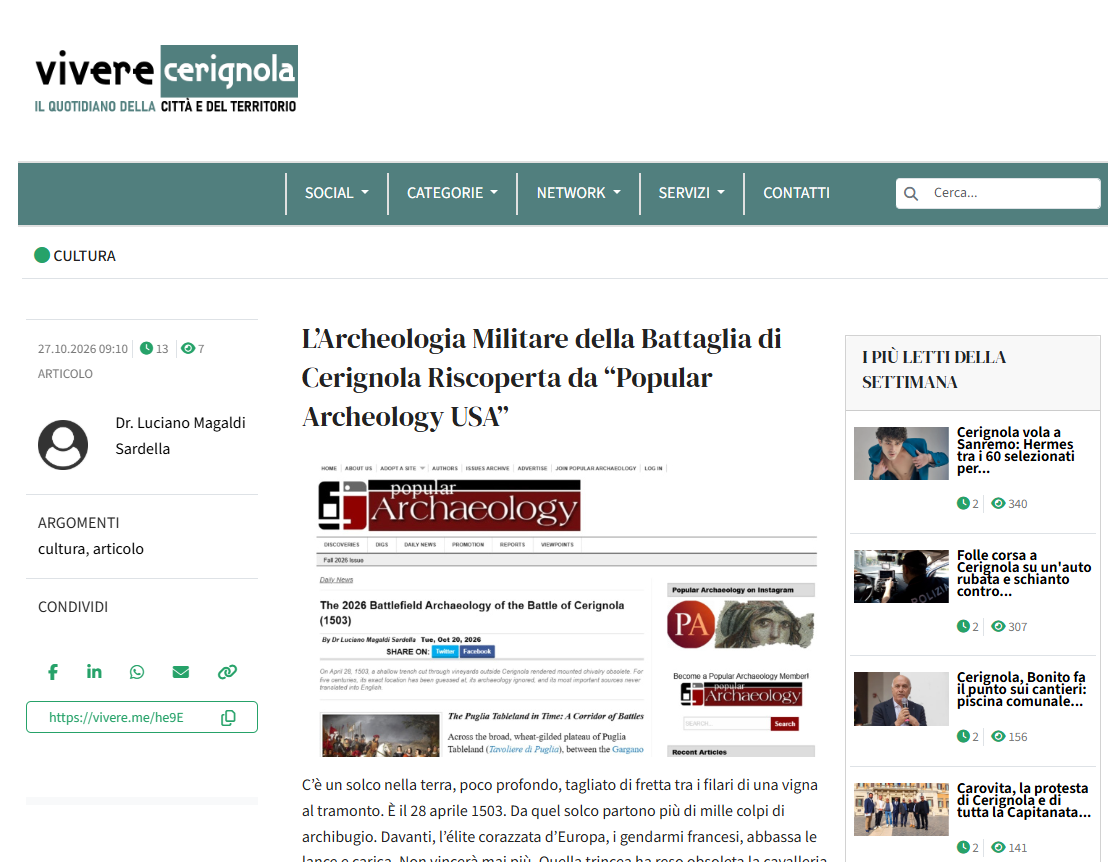
LIVING CERIGNOLA: THE MILITARY ARCHAEOLOGY OF THE BATTLE OF CERIGNOLA ARRIVES ON "POPULAR ARCHAEOLOGY USA" CERIGNOLA (FG) - The Battle of Cerignola on April 28, 1503, returns to the center of international debate. The prestigious American magazine Popular Archaeology has dedicated an extensive in-depth article to the battle that changed European military history: the first in which over 1,000 Spanish arquebusiers under Gonzalo Fernández de Córdoba, sheltered behind a trench reinforced with vineyard posts, stopped the charge of the elite heavy cavalry of the Duke of Nemours. A trench that, in fact, rendered cavalry obsolete and inaugurated the era of infantry armed with fire, determining control of the Mediterranean for the next 160 years. The article highlights the decades-long microhistorical research work of the Torre Alemanna Study and Research Center in Cerignola led by Dr. Matteo Stuppiello: from the letter of Consalvo de Cordoba to the Kings of Spain (April 29, 1503), to the graffiti of 1503 in the Church of Santa Maria delle Grazie, to the land registries of the State Archive of Naples that explain the agrarian origin of that trench. A battlefield still lacking a map and protection, but scientifically rediscoverable thanks to technologies such as LiDAR ISPRA, magnetometry, and ground-penetrating radar. An important recognition for Cerignola, for the Tavoliere, and for all historical research in Puglia, which today deserves a systematic project for the archaeology of battlefields. (translated)
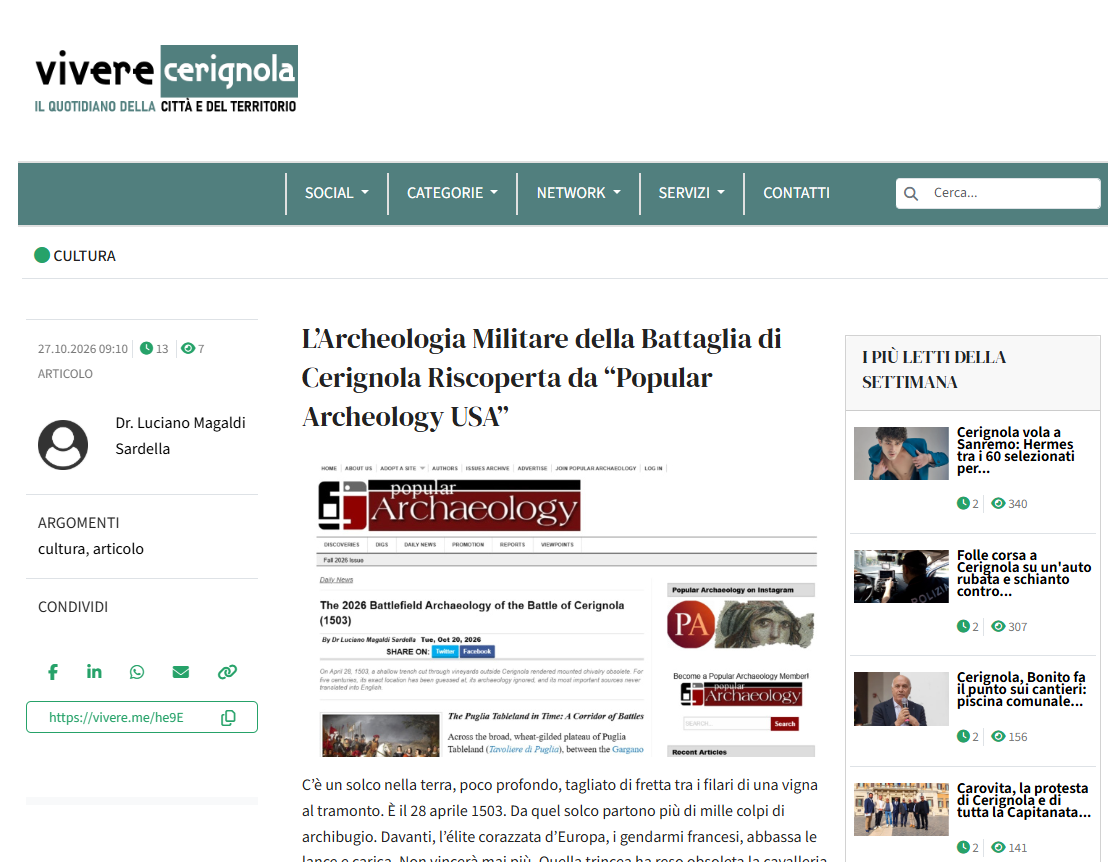
VIVERE CERIGNOLA: THE MILITARY ARCHAEOLOGY OF THE BATTLE OF CERIGNOLA FEATURED IN “POPULAR ARCHAEOLOGY USA” SOURCE: https://www.viverecerignola.it/2026/10/27/larcheologia-militare-della-battaglia-di-cerignola-riscoperta-da-popular-archeology-usa/194456/?utm_medium=Link&utm_campaign=Facebook&utm_source=Social __________________________________________________________________ CERIGNOLA (FG) - The Battle of Cerignola of 28 April 1503 has returned to the centre of the international debate. The prestigious American journal Popular Archeology has devoted an extensive in-depth analysis to the battle that changed the course of European military history: the first in which more than 1,000 Spanish arquebusiers under Gonzalo Fernández de Córdoba, entrenched behind a ditch reinforced with vine stakes, halted the charge of the élite of the French heavy cavalry led by the Duke of Nemours. A ditch that, in effect, rendered cavalry obsolete and inaugurated the era of infantry armed with firearms, determining control of the Mediterranean for the subsequent 160 years. The article highlights the decades-long micro-historical research undertaken by the Centro Studi e Ricerche Torre Alemanna of Cerignola, led by Dr Matteo Stuppiello: from Consalvo da Cordova’s letter to the Catholic Monarchs of Spain (29 April 1503), to the 1503 graffito in the Church of S. Maria delle Grazie, to the land registers of the State Archive of Naples which explain the agrarian origin of that trench. A battlefield still without a map and without legal protection, yet scientifically recoverable through technologies such as ISPRA LiDAR, magnetometry and ground-penetrating radar. An important recognition for Cerignola, for the Tavoliere and for all Apulian historical research, which today deserves a systematic battlefield archaeology project.
Actu Foot presented as official the ranking of the Ballon d'Or 2026, from 11th to 30th place: Jude Bellingham (11th), Pau Cubarsí (12th), Achraf Hakimi (13th), Vitinha (14th), Declan Rice (15th), Ferran Torres (16th), Vinícius Júnior (17th), Marc Cucurella (18th), João Neves (19th), Willian Pacho (20th), Gabriel (21st), Lautaro Martínez (22nd), Nuno Mendes (23rd), Luis Díaz (24th), Marquinhos (25th), Dayot Upamecano (26th), Bruno Fernandes (27th), Julián Quiñones (28th), William Saliba (29th) and Sadio Mané (also listed 29th). The account asked which of them deserved a better position. #BallonDor #Football #Classement (translated)
WWF has launched the second phase of the We Love Solutions project, which aims to engage citizens of Torres Vedras, Sintra, and Loulé in creating more sustainable and climate-resilient cities, allowing them to vote on proposals developed by local youth. #Sustentabilidade #CidadesVerdes #WWF (translated)
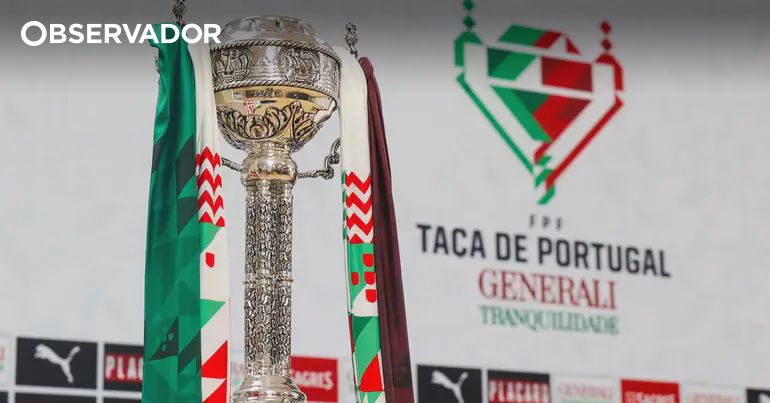
Benfica will face the defending champion Torreense, while FC Porto and Sporting will play at home in the fourth round of the Taça de Portugal. #TaçadePortugal #Futebol #Desporto (translated)
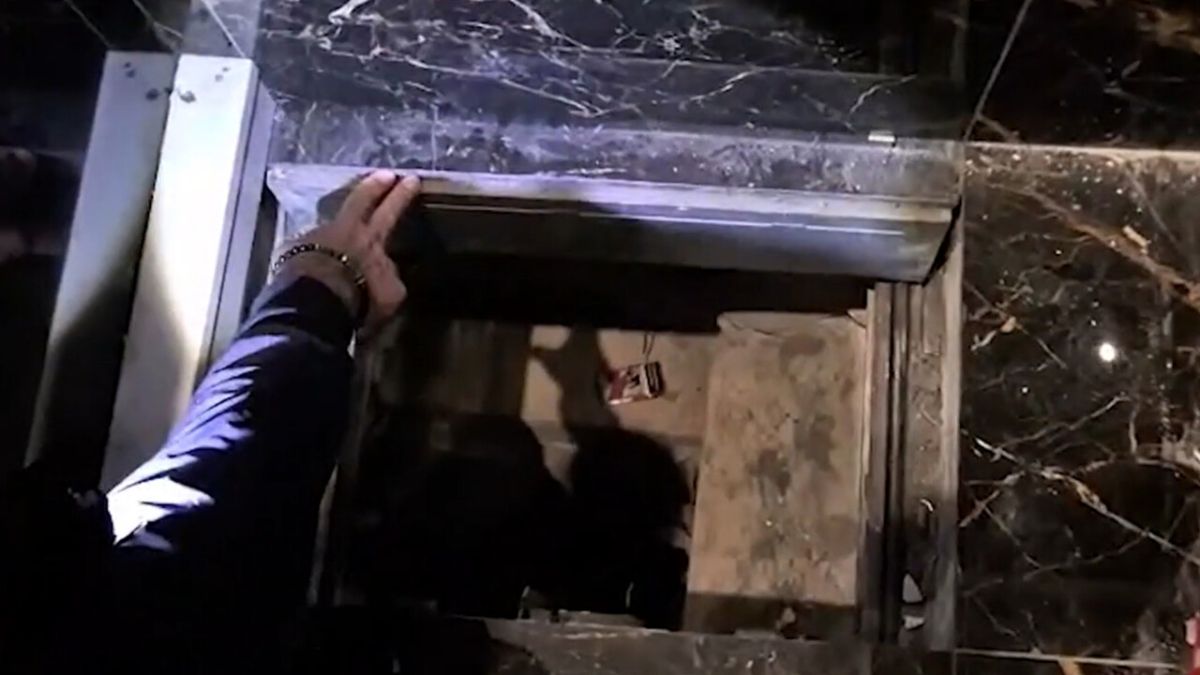
Valentino Gionta Jr, 35 years old and the grandson of a notorious mafia boss, has been arrested by the police in Naples after being found in a secret bunker inside his home, accessible via a remote control from the bathroom and equipped with a TV, PlayStation, and an emergency exit. #ValentinoGionta #ClanGionta #TorreAnnunziata (translated)
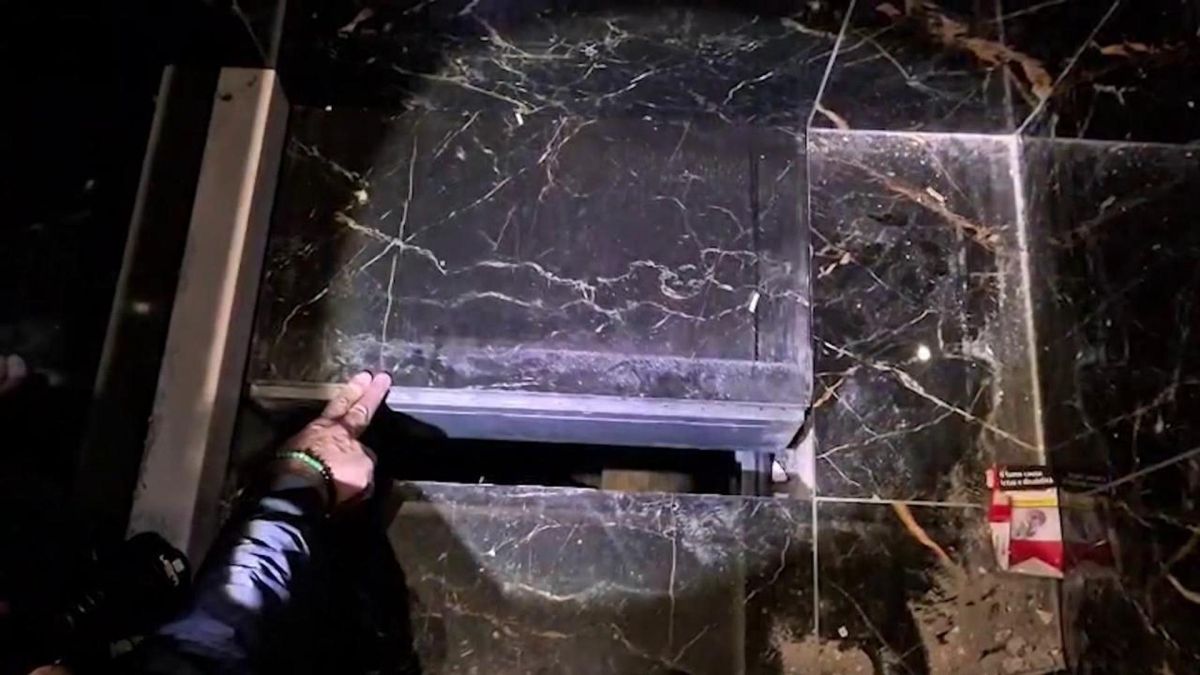

Valentino Gionta Jr. was found in a bunker under his house in Torre Annunziata. #Bulgaria #Elezioni #Ballottaggio (translated)
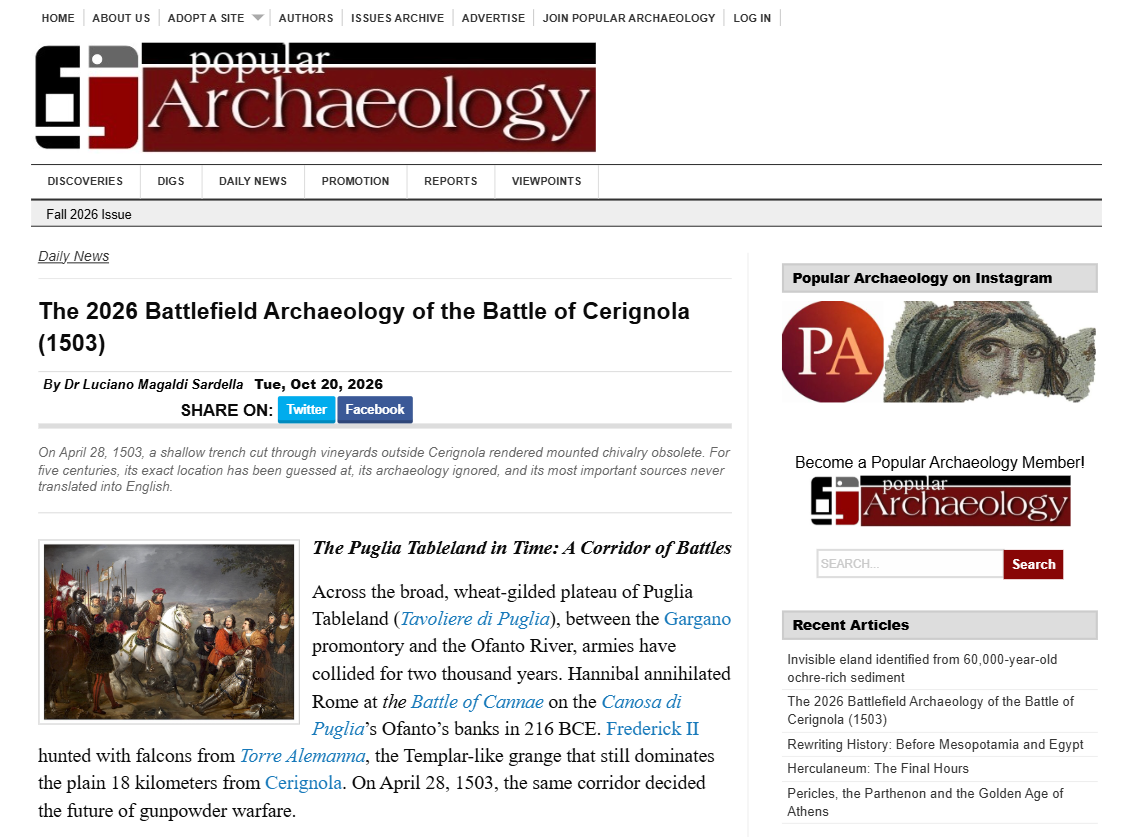
THE "BATTLE OF CERIGNOLA (1503)" ON "POPULAR ARCHAEOLOGY USA" (by LUCIANO MAGALDI SARDELLA) SOURCE 1: https://popular-archaeology.com/author/sardella/ SOURCE 2: https://popular-archaeology.com/article/the-2026-battlefield-archaeology-of-the-battle-of-cerignola-1503/ -------------------------------------------------------------------- CERIGNOLA (FG) — On April 28, 1503, at sunset, a shallow trench cut between the vineyards outside Cerignola rendered heavy cavalry obsolete. For five centuries, its exact location has only been conjectured, its archaeology ignored, its most important sources never translated into English. We are on the Tavoliere of Puglia, a corridor of battles for two thousand years: from Cannae in 216 BC to the falcon hunt of Frederick II from Torre Alemanna. Cerignola, at that time, was not a city but a rural village of 350 families at 120 meters above sea level, custodian of the Mena della Dogana delle Pecore, the great pastoral system of transhumance that financed the Kingdom of Naples. Its possession was fiercely contested. Facing each other were two worlds. Louis d’Armagnac, Duke of Nemours, Viceroy of Naples for Louis XII, in his thirties, splendidly armored, confident of victory. On the other side was Gonzalo Fernández de Córdoba, the Gran Capitán, who on April 27-28 marched from Barletta with about 9,000 exhausted men and decided to settle on a low ridge. He deepened what was already there: not an invention, but an agricultural ditch. The French gendarmes, the last heirs of the medieval knight, lowered their lances and never reached the line. From behind a parapet reinforced with vine stakes, over 1,000 Spanish arquebusiers opened fire. Nemours fell, almost certainly the first European army commander to die from a portable firearm. With him, the charge of cavalry as a dominant tactic died. And here is the scandal denounced by the article: no cartographer of the 17th-18th centuries ever mapped the battlefield. No monument commemorates it. It is not protected as a cultural landscape under the Code of Cultural Heritage. Every deep plowing of the Tavoliere, standard practice since the Bourbon reforms, destroys an archaeology never recorded. Yet the perimeter can be reconstructed. By cross-referencing the 16th-century descriptions of "vine-covered slopes fifteen miles north of the Ofanto" with the Via Traiana, the engagement area is a rectangle of 3-4 square kilometers northeast of the current settlement. With the 1m LiDAR DTM from ISPRA, it could reveal anomalous linear depressions, and the lower filling of a ditch 2-3 meters deep, under the plowed layer, is still readable with magnetometry and ground radar. Why did we arrive late? Not for lack of sources, but for lack of translation. The Municipality of Cerignola and the Torre Alemanna Research and Study Center of Prof. Matteo Stuppiello, who in 1978 obtained the first monumental protection for Torre Alemanna, have digitized a corpus that has never entered Anglophone historiography. Here are the 3 pillars: 1. The letter that still smells of gunpowder. The “Letter from Consalvo de Córdoba to the Spanish royals dated April 29, 1503,” edited by Stuppiello in 2003 and updated to 2025 on comune.cerignola.fg.it/biblioteche-digitali. A handwritten page written in Cerignola the day after the battle, “rich in flashes, twilight lights, and gunfire.” Not a polished chronicle like that of Giovio, but a field dispatch: the fatigue of the night march, the decision to entrench upon arrival, the recovery and honorable burial of Nemours, the intact capture of the French artillery. 2. The graffiti, a monument inside the monument. In the 14th-century church of Santa Maria delle Grazie, known as the Incoronatella, on the Via Trinitapoli Vecchia, where tradition holds that the body of Nemours was brought. On the triumphal arch, a 1503 graffiti gives, in almost notarized form, the date, sixth indiction, Friday at the hour XXIII-XXIIII. It was indeed Friday, as confirmed by the perpetual calendar of Cappelli. Decoded in 1995 by Prof. Francesco Magistrale, Latin paleographer at the University of Bari, in *The Battle of Cerignola (1993)* and in the municipal monograph *S.M. delle Grazie (1999)*. Today it is fading due to humidity and neglect. 3. The land registry that explains the ditch. The Survey of 1672 preserved at the State Archive of Naples, Pignatelli Aragona Cortes fund, Scanzia 63, fasc.1: “At the time of the battle, thick vineyards covered the hill reaching to the plain, and were distinctly separated from the rest of the countryside by a not very deep ditch.” Córdoba did not improvise; he adapted. This is confirmed by the catasti of the Giustiniani: 277 households in 1532, 699 in 1595. The landscape of 1503 was intensely horticultural, not the deeply plowed monoculture of today. In addition to these, there is the first monograph by Vincenzo Buonassisi, *The Battle of Cerignola* (1908, died in Via Fanfulla 10 on June 27, 1928), and the first modern military analysis by Piero Pieri, “Consalvo de Córdoba and the Battle of Cerignola,” Archivio Storico Pugliese 1952, which 30 years before the Anglophone rediscovery of the “pike-and-shot” defined Cerignola as an engineered killing ground. While Cerignola forgot, others remembered. The “Regimiento de Infantería Cerinola n.42”, later “Fuerteventura n.56”, carried the name of Cerignola until the 20th century. The coat of arms, described in *Heraldica e Historiales del Ejercito, Tomo V” (Madrid, 1981): silver field, dying white swan entangled in a hedge, golden wall crown, with the scroll “Cerignola.” Dossier officially transmitted on April 30, 1986, prot. 4565/509, from the Servicio Histórico Militar of Madrid to the Torre Alemanna Center thanks to Col. Alessio Antonutti and Gen. José Cifuentes. And in Amsterdam, at the Rijksmuseum, the anonymous bronze commemorative medal: Hercules with lion skin and club and Janus with the keys next to an eagle-armed coat of arms, legend “Consalvus Agidarius… Janum clausit,” on the reverse a battle scene “Consalvi Agidari Victoria de Gallis ad Cannas,” an artist's mistake that confuses Cerignola with Cannae. It belonged to Mrs. J.M. van Gelder-Nijhoff, donated in 1885. The author's conclusion is clear: Gonzalo's ditch is the most consequential earthwork in European military history. It inaugurates the infantry armed with firearm and conditions the Mediterranean for 160 years. It may still be there, filled, plowed, invisible to the naked eye but accessible to a magnetometer. It is not a matter of medieval archaeology but of the will to protect. (translated)
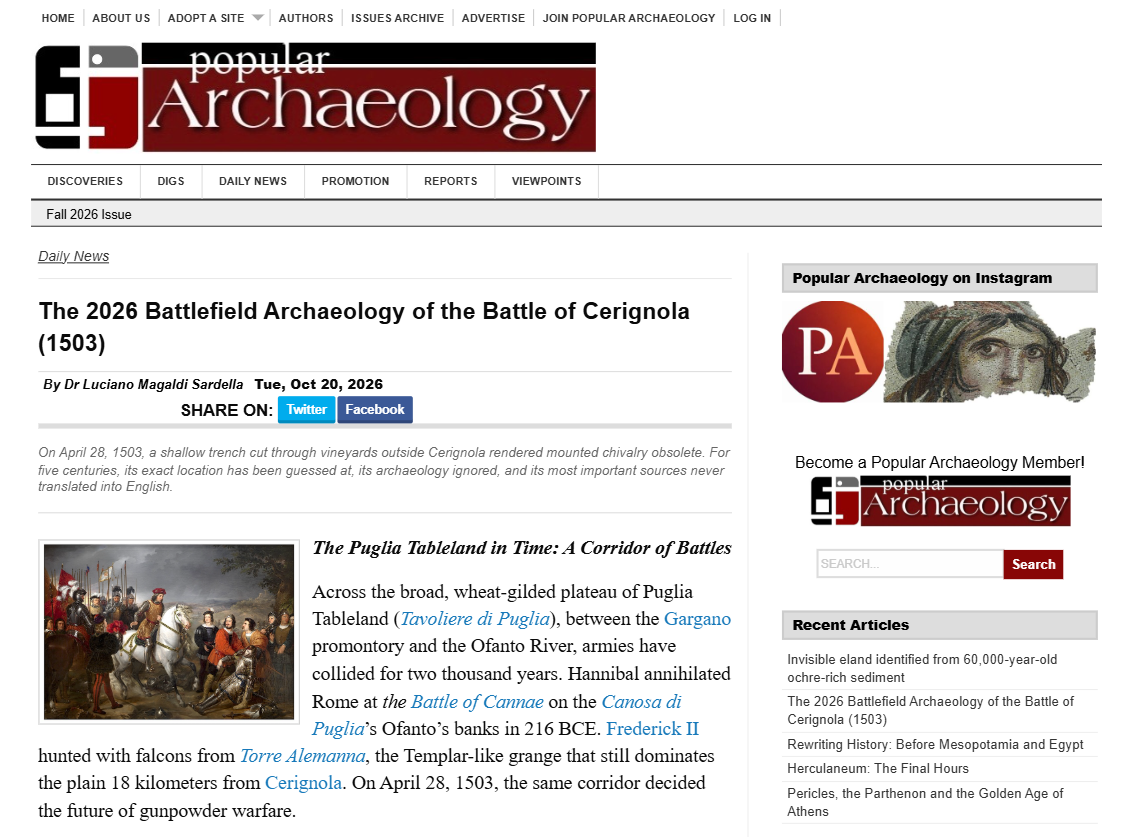
THE “BATTLE OF CERIGNOLA (1503)” ON “POPULAR ARCHAEOLOGY USA” (by LUCIANO MAGALDI SARDELLA) SOURCE 1: https://popular-archaeology.com/author/sardella/ SOURCE 2: https://popular-archaeology.com/article/the-2026-battlefield-archaeology-of-the-battle-of-cerignola-1503/ __________________________________________________________________ CERIGNOLA (FG) — On 28 April 1503, at sunset, a shallow trench cut through the vineyards outside Cerignola rendered heavy cavalry obsolete. For five centuries its exact position has been merely conjectured, its archaeology ignored, its most important sources never translated into English. We are on the Puglian Tablelanda, a corridor of battles for two thousand years: from Cannae in 216 BC to Frederick II’s falconry from Torre Alemanna. Cerignola, at that time, was not a town but a rural hamlet of 350 families at 120 metres above sea level, guardian of the Mena of the Dogana delle Pecore, the great customs system of transhumance that financed the Kingdom of Naples. It was for its possession that the battle was fought. Opposed, two worlds. Louis d’Armagnac, Duke of Nemours, Viceroy of Naples for Louis XII, thirty years old, splendidly armed, certain of victory. On the other side, Gonzalo Fernández de Córdoba, the Great Captain, who on 27–28 April marches from Barletta with some 9,000 exhausted men and decides to entrench himself upon a low ridge. In front of it he has deepened what was already there: not an invention, but an agrarian ditch. The French gendarmes, the last heirs of the mediaeval knight, lower their lances and never reach the line. From behind an embankment reinforced with vine stakes, more than 1,000 Spanish arquebusiers open fire. Nemours falls, almost certainly the first European army commander to die by a portable firearm. With him dies the cavalry charge as a dominant tactic. And here lies the scandal denounced by the article: no cartographer of the seventeenth or eighteenth century ever mapped the field. No memorial stone recalls it. It is not protected as a cultural landscape under the Code of Cultural Heritage. Every deep ploughing of the Tavoliere, standard practice since the Bourbon reforms, destroys an archaeology never recorded. Yet the perimeter is reconstructable. By cross-referencing sixteenth-century descriptions of “slopes covered with vineyards fifteen miles north of the Ofanto” with the Via Traiana, the engagement zone is a rectangle of 3–4 sq km to the north-east of the present settlement. With ISPRA’s 1m DTM LiDAR, anomalous linear depressions could be revealed, and the lower fill of a 2–3 metre ditch, beneath the ploughed layer, is still legible by magnetometry and ground-penetrating radar. Why have we arrived so late? Not for lack of sources, but for lack of translation. The Comune di Cerignola and the Centro Studi e Ricerche Torre Alemanna of Prof. Matteo Stuppiello, who in 1978 obtained the first monumental protection for Torre Alemanna, have digitised a corpus that has never entered Anglophone historiography. Here are the 3 pillars: 1. The letter that still smells of powder. The “Letter of Consalvo da Cordova to the Sovereigns of Spain of 29 April 1503,” edited by Stuppiello in 2003 and updated in 2025 on comune.cerignola.fg.it/biblioteche-digitali. A manuscript page written at Cerignola the day after the battle, “rich in flashes, twilight gleams, and gunfire.” Not a polished chronicle à la Giovio, but a field dispatch: the exhaustion of the night march, the decision to entrench upon arrival, the recovery and honourable burial of Nemours, the intact capture of the French artillery. 2. The graffito, a monument within the monument. In the fourteenth-century church of Santa Maria delle Grazie, known as the Incoronatella, on the Via Trinitapoli Vecchia, where tradition holds the body of Nemours was taken. On the triumphal arch, a graffito of 1503 gives in quasi-notarial form the date, sixth indiction, Friday at the twenty-third to twenty-fourth hour. It truly was a Friday, as confirmed by Cappelli’s perpetual calendar. Deciphered in 1995 by Prof. Francesco Magistrale, Latin palaeographer at the University of Bari, in La Battaglia di Cerignola (1993) and in the municipal monograph S.M. delle Grazie (1999). It is now fading through damp and neglect. 3. The cadastre that explains the ditch. The Apprezzo of 1672 preserved in the Archivio di Stato di Napoli, fondo Pignatelli Aragona Cortes, Scanzia 63, fasc.1: “At the time of the battle, dense vineyards covered the hill reaching down to the plain, and were clearly separated from the rest of the countryside by a not very deep ditch”. Córdoba did not improvise; he adapted. This is confirmed by the Giustiniani cadastres: 277 hearths in 1532, 699 in 1595. The landscape of 1503 was one of intensive horticulture, not the deep-ploughed cereal monoculture of today. To these are added the first monograph by Vincenzo Buonassisi, La Battaglia di Cerignola (1908, died at Via Fanfulla 10 on 27 June 1928), and the first modern military analysis by Piero Pieri, “Consalvo di Cordova e la battaglia di Cerignola”, Archivio Storico Pugliese 1952, which 30 years before the Anglophone rediscovery of “pike-and-shot” defined Cerignola as an engineered killing ground. While Cerignola forgot, others remembered. The “Regimiento de Infantería Cerinola n.42”, later “Fuerteventura n.56”, bore the name of Cerignola until the twentieth century. Its coat of arms, described in Heráldica e Historiales del Ejército, Tomo V (Madrid, 1981): argent field, a dying white swan entangled in a hedge, a gold mural crown, with scroll “Cerignola”. Dossier officially transmitted on 30 April 1986, prot. 4565/509, by the Servicio Histórico Militar in Madrid to the Centro Torre Alemanna through Col. Alessio Antonutti and Gen. José Cifuentes. And in Amsterdam, in the Rijksmuseum, the anonymous commemorative bronze medal: Hercules with lion-skin and club and Janus with keys beside an eagled coat of arms, legend “Consalvus Agidarius… Janum clausit”, on the reverse a battle scene “Consalvi Agidari Victoria de Gallis ad Cannas” — an error by the artist who confuses Cerignola with Cannae. It belonged to Mrs J.M. van Gelder-Nijhoff, donated in 1885. The author’s conclusion is unequivocal: Gonzalo’s ditch is the most consequential earthwork in European military history. It inaugurates the infantryman armed with a firearm and conditions the Mediterranean for 160 years. It may still be there, infilled, ploughed over, invisible to the naked eye but accessible to a magnetometer. It is not a question of mediaeval archaeology but of the will to protect.