
German economist and statistician
The author wrote that 23% of adults worldwide spent much of a typical day feeling lonely, and said the share was often higher in poorer countries.

This profile is not managed by Max Roser.
Wrld compiles it automatically from public sources:

The author wrote that 23% of adults worldwide spent much of a typical day feeling lonely, and said the share was often higher in poorer countries.
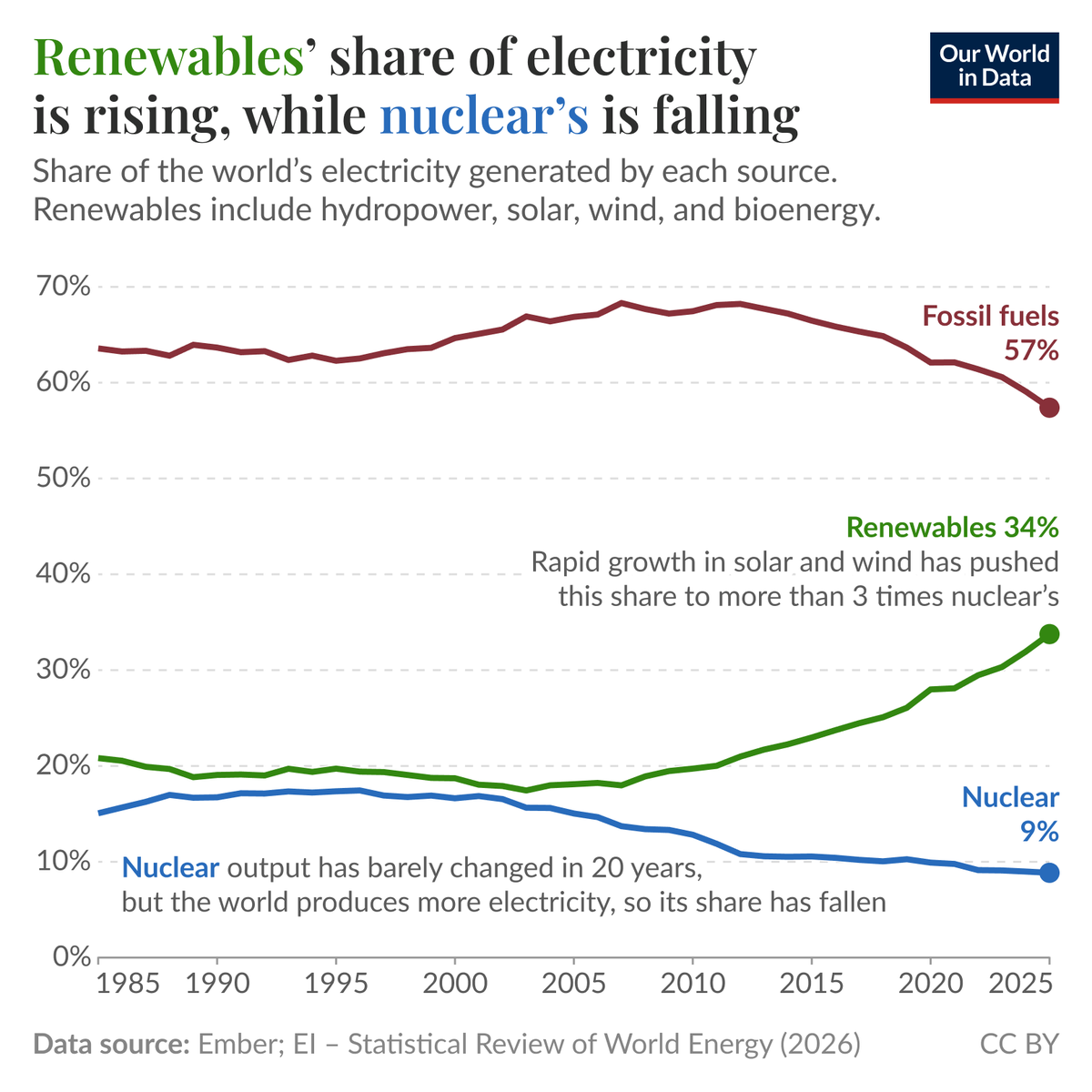
The author wrote that fossil fuels had supplied more than 60% of global electricity for decades, while rising renewable energy use had been offset by declining nuclear power. They said this was now changing, with fossil fuels’ share falling.
The author described the AI weather model as an application that could improve people’s lives, writing that a Nature paper said it could provide people in a hurricane’s path with one extra day of warning compared with the leading physics-based weather model.
The author wrote that public concerns about AI extended to extreme risks, citing a figure that 73% of Americans believed AI could threaten humanity’s survival. The post linked to an article on the subject. https://t.co/l2QPq3HGVn #AI #Riesgos #Humanidad #US
The author said preliminary estimates from the Global Carbon Project, published that day, projected that global CO₂ emissions from fossil fuels would fall in 2026.

The author wrote that nearly all growth in global coal use since the late 1980s had come from China. https://t.co/0gSqeFLuPM #China #煤炭 #全球变暖 #CN

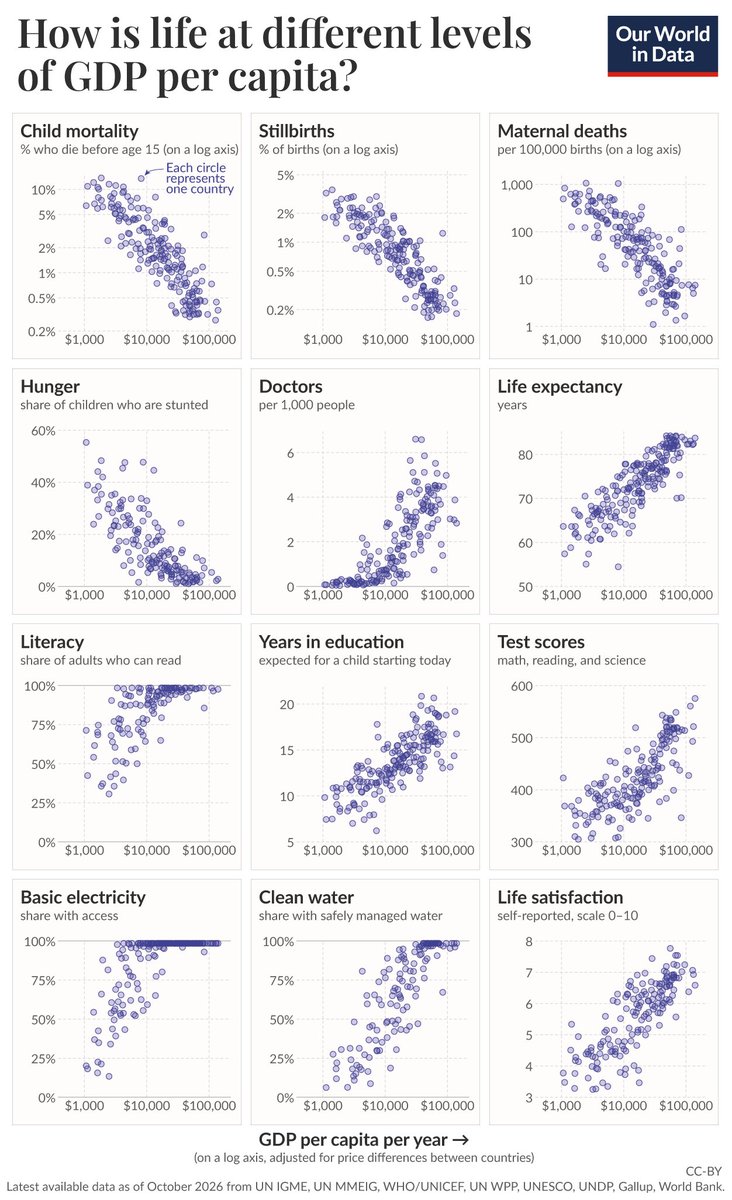
The author said a new chart visualised what life was like at different levels of GDP per capita across 12 dimensions.
The author wrote that the global share of people living below the poverty line had declined over their lifetimes, regardless of which poverty threshold was used.

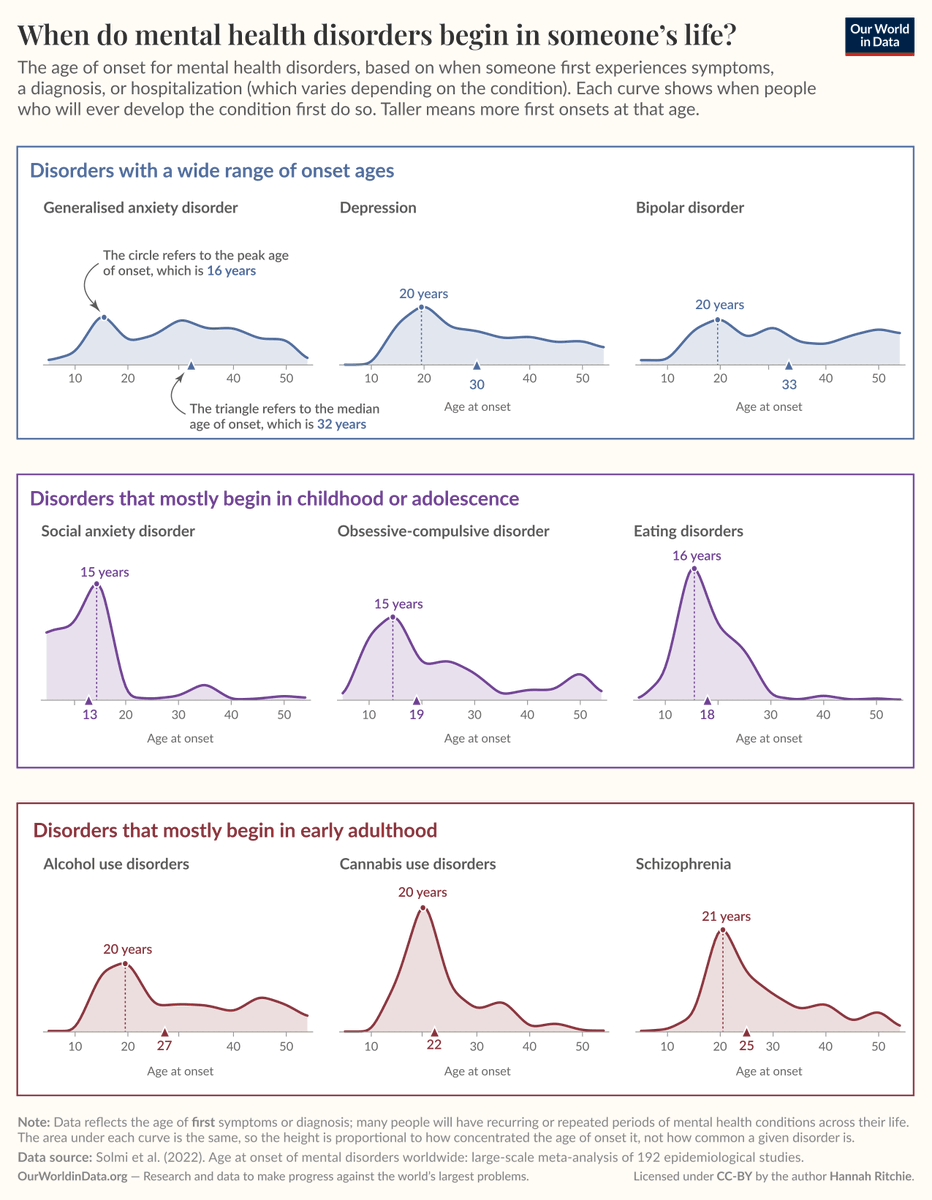
The author drew attention to a chart in Hannah Ritchie’s new Our World in Data article, which examined when people first experienced mental health conditions.
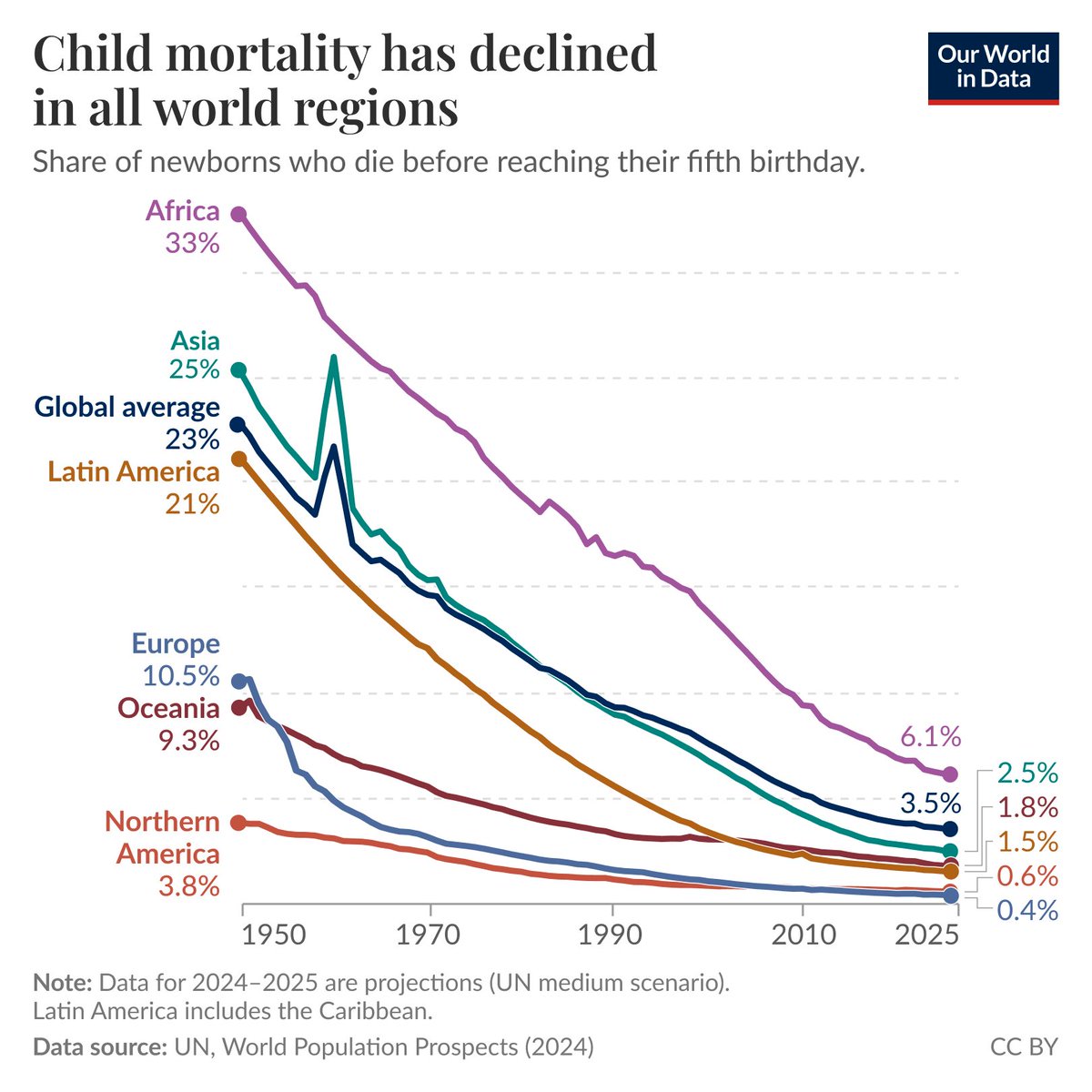
The post compared the share of children who died before age five in 1950 with the share 75 years later. It said the figures fell from 33% to 6% in Africa, 25% to 2.5% in Asia, 9.3% to 2% in Oceania, 21% to 1.5% in Latin America, 3.8% to 0.6% in Northern America, 10.5% to 0.4% in Europe, and 23% to 3.5% globally. https://t.co/QMO6XHjp52 #InfantMortality #ChildHealth #GlobalStatistics #AF #AS #OC #LA #NA #EU
The author wrote that population projections assume fertility rates will stop declining and broadly stabilize, but said a new NBER paper found no evidence for that expectation. The author added that, according to the paper, fertility had tended to keep falling in places and periods where it had already reached low levels.
The poorest economies in the world are not achieving economic growth. The consequence is that progress against the very worst poverty is coming to a halt. This is one of the worst problems in the world today, but hardly gets any attention. https://t.co/yXVgf3otHu #Poverty #EconomicGrowth #GlobalIssues #Nospecificcountrycodesarementionedinthetweet.

Here is the article: Five million children die every year — what do they die from? https://t.co/EVyt3QgZHk #ChildHealth #GlobalIssues #PreventChildDeaths #Nospecificcountrycodesarepresentinthetweet.
From our latest article on @OurWorldInData. The interactive visualization lets you see what causes the deaths of children around the world. https://t.co/BWPpZEpOIM #ChildHealth #DataVisualization #GlobalWellbeing #Thetweetdoesnotmentionanyspecificcountries.Therefore #therearenocountrycodestoreturn.
A way to see the amazing history of economic growth and declining poverty over the last two centuries. https://t.co/IV3EWRO43G #EconomicGrowth #PovertyReduction #History #Therearenospecificcountrycodesmentionedinthetweet.

Much of his recent thinking has focused on what to do as AI becomes rapidly more powerful. This makes his book useful for all of us right now.. His article, "How not to lose your job to AI" gives you an idea of whether you want to buy his book. https://t.co/CJM1OkhO0k #AI #JobSecurity #BookRecommendation #Nospecificcountrycodescanbeidentifiedfromthetweetprovided.
How will your country's demographics change this century? At Our World in Data we built a tool to let you see for yourself. The UN's assumptions are the starting point. But then you can adjust the three drivers of change — births, deaths, and migration — to what you expect. https://t.co/r8gMsEmlf2 #Demographics #PopulationGrowth #DataVisualization #Nospecificcountrycodesarementionedinthetweet.
Anthropic's new model, Claude Mythos, is so powerful that they're not releasing it. They must have good reasons. They're willing to forgo a lot of revenue. @robertwiblin on what we know so far about how dangerous the current situation is. https://t.co/yPYqYI7nt6 #AI #MachineLearning #Ethics #Nospecificcountriesarementionedinthearticle.Therefore #theresultisanemptyresponse.
Claim it. Contact us at [email protected]