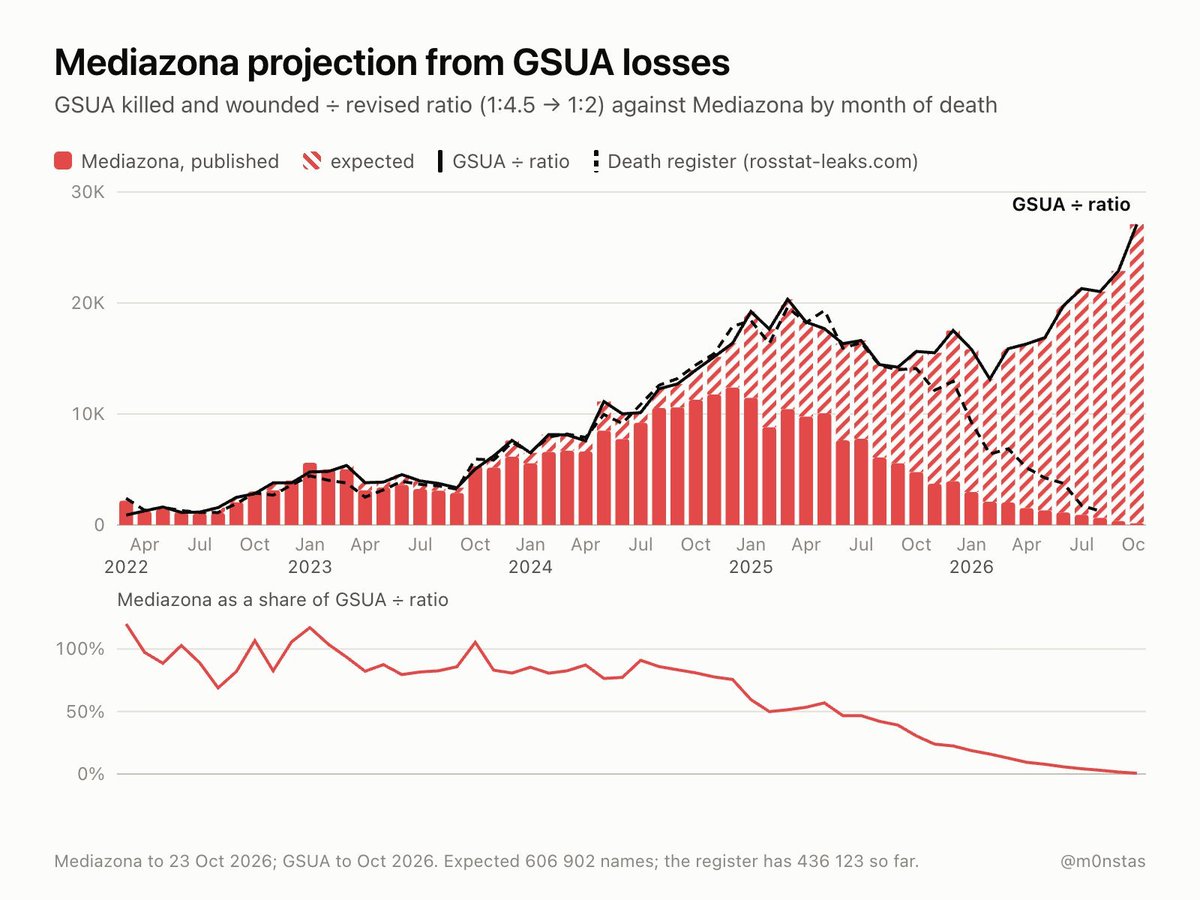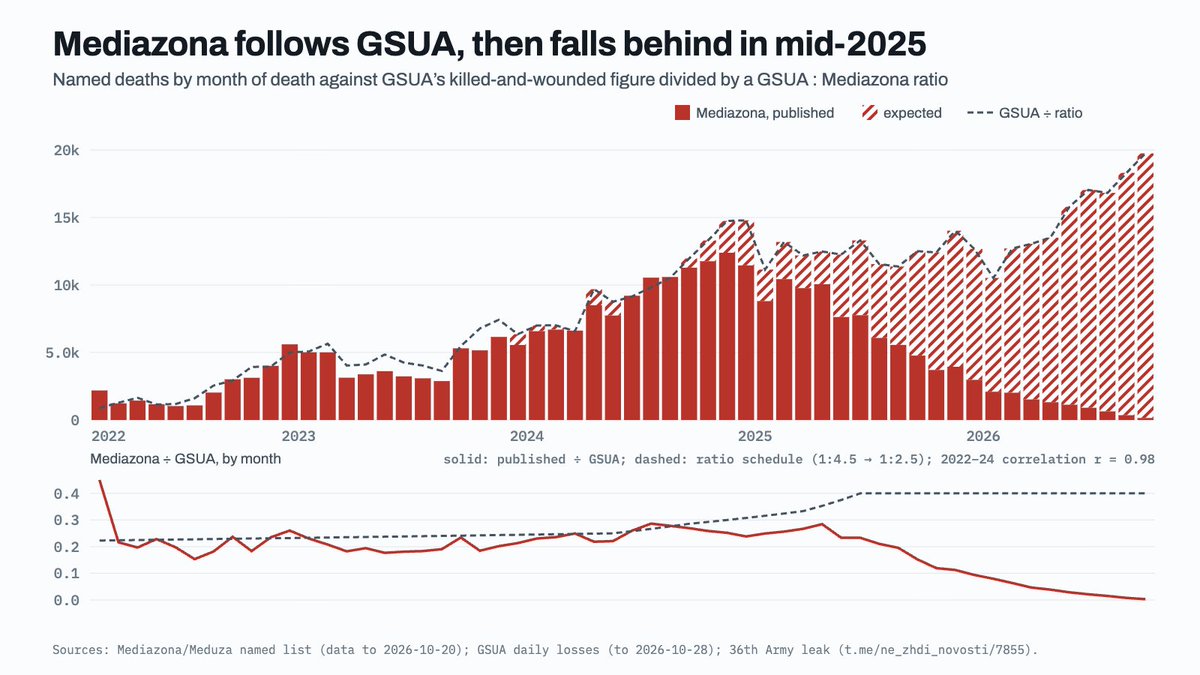
Clément Molin described the war in Ukraine as a conflict that has led to massive human losses. He estimated that about 3% of men aged 18 to 60 in government-controlled Ukrainian territories had been killed, and that an additional 2 to 3% were likely severely injured, amputated, or traumatized. For Russia, he suggested that 1.5% of men in this age group had been killed, and at least 2% more had suffered serious injuries or trauma. On a broader scale of the conflict, Molin assessed the number of dead or severely injured men to be between 1.5 and 2 million, along with a minority of women, mainly Europeans, and some volunteers or mercenaries from other regions. He also mentioned the departure of hundreds of thousands of young men from both countries, declining birth rates, and grieving families. Molin estimated that in Russia, despite probably 600,000 deaths, the war was little contested and the shock remained silent, in contrast to the war in Afghanistan. He suggested two explanations: the dead would mainly be poor, older, non-conscripted men, and the war in Afghanistan occurred in a much more difficult economic and social context. He wrote that Russia was sacrificing its future for villages in Donbass, while imposing the consequences of war on the Ukrainian people, whom he described as being attacked. He added that Ukrainians remained mostly determined to defend their freedom after Russian and then Soviet oppression, the annexation of Crimea, the war in Donbass, and the large-scale invasion. Molin also cited a graph by M0nstas on Russian losses. According to the estimate presented, which compared the 284,000 verified deaths by Mediazona, over 400,000 deaths from a leak from Rosstat, and data from the Ukrainian army, with a ratio of killed to wounded adjusted according to the years, the toll was between 580,000 and 620,000 dead. #Ukraine #Guerre #Conflit (translated)