WRLD

Luciano Magaldi Sardella (PhD)

@lucianomagaldisardella wrld.org
x-Google IE/Apple EU HQ/Amazon SL, LSE ContrAcademicBookCritic, OxfordUniv ContrAcademicAuthor, Aspire Institute Harvard Business School alumnus.
74 following
Mention
Luciano Magaldi Sardella (PhD) 2d

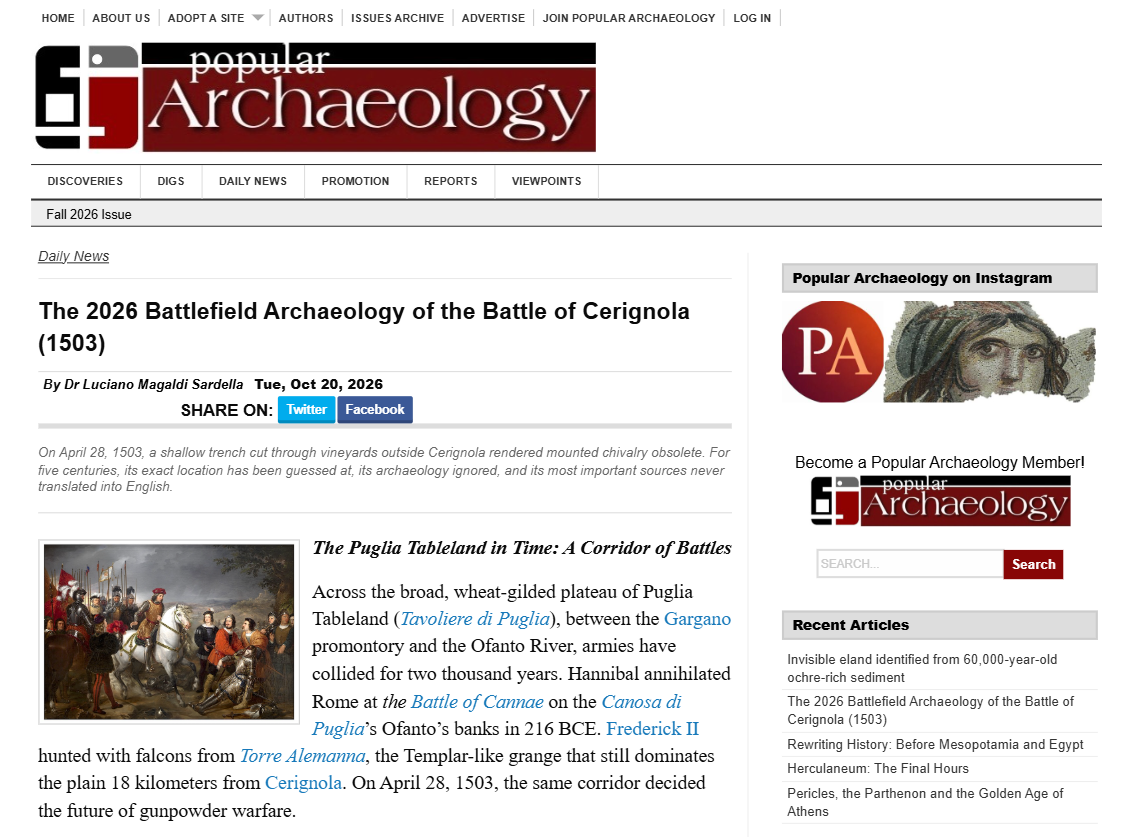
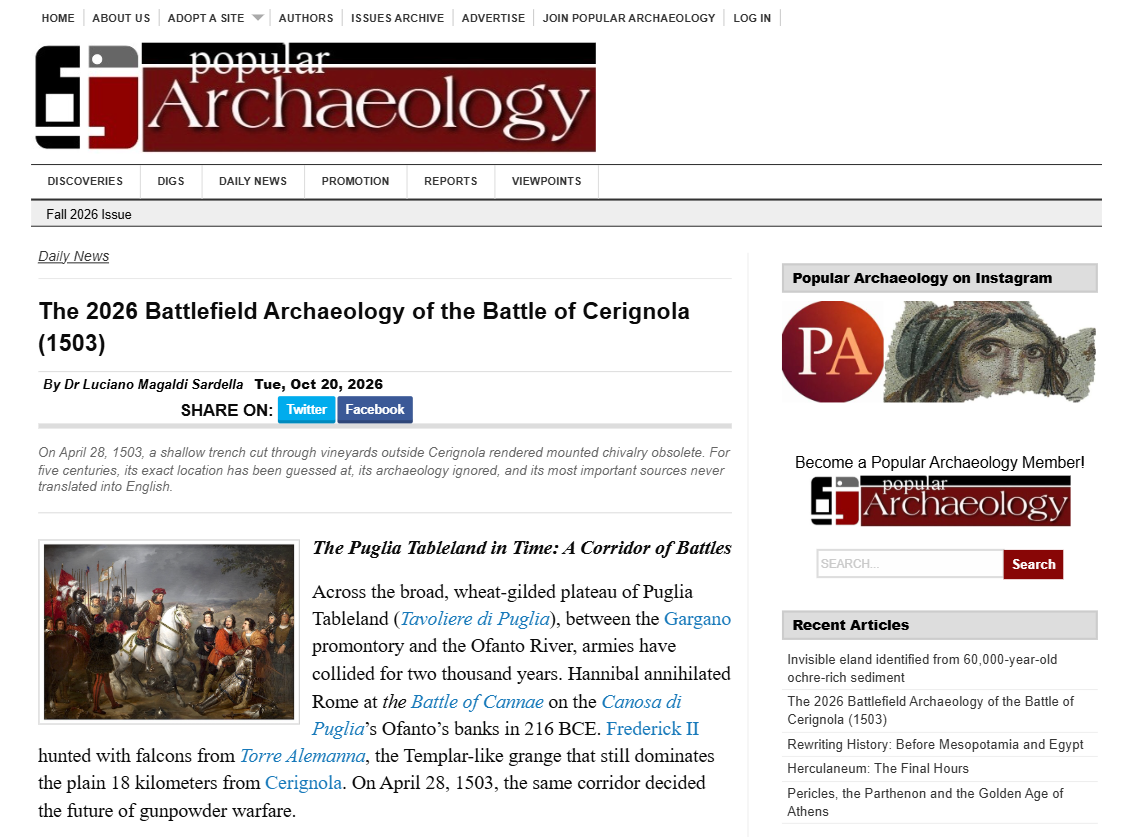
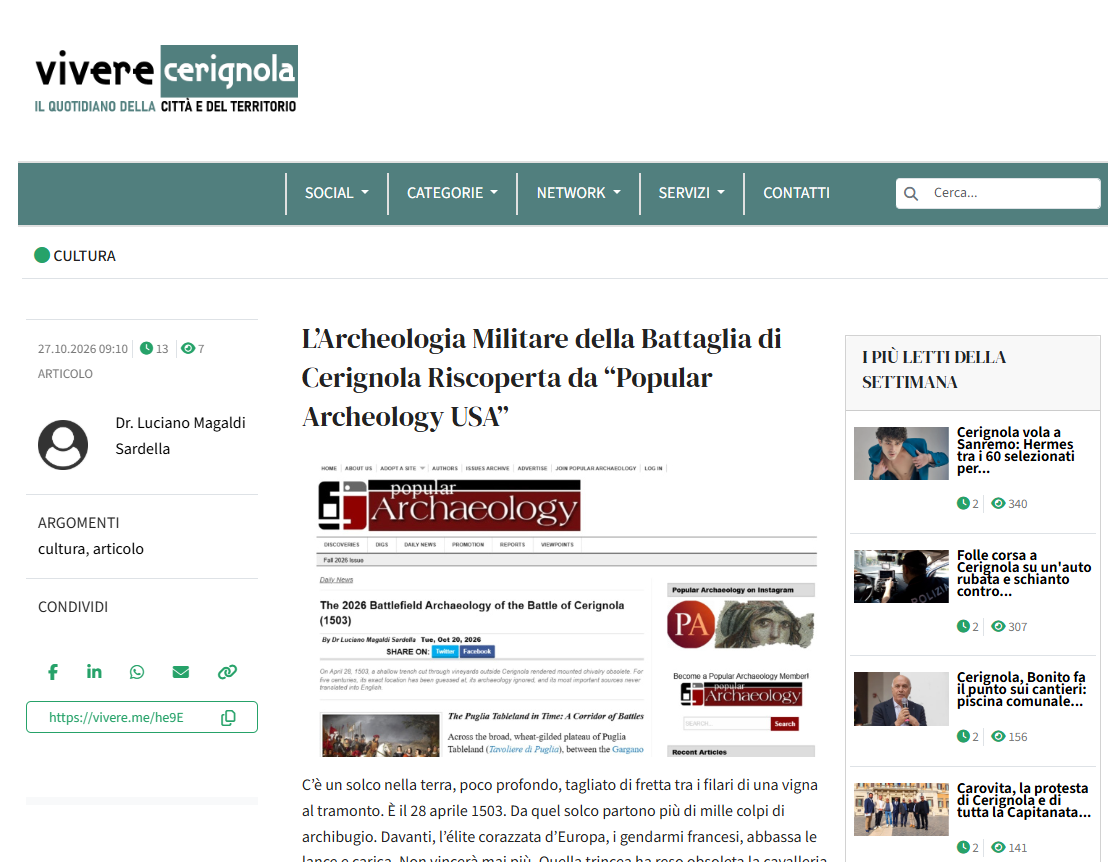
LIVING CERIGNOLA: THE MILITARY ARCHAEOLOGY OF THE BATTLE OF CERIGNOLA ARRIVES ON "POPULAR ARCHAEOLOGY USA" CERIGNOLA (FG) - The Battle of Cerignola on April 28, 1503, returns to the center of international debate. The prestigious American magazine Popular Archaeology has dedicated an extensive in-depth article to the battle that changed European military history: the first in which over 1,000 Spanish arquebusiers under Gonzalo Fernández de Córdoba, sheltered behind a trench reinforced with vineyard posts, stopped the charge of the elite heavy cavalry of the Duke of Nemours. A trench that, in fact, rendered cavalry obsolete and inaugurated the era of infantry armed with fire, determining control of the Mediterranean for the next 160 years. The article highlights the decades-long microhistorical research work of the Torre Alemanna Study and Research Center in Cerignola led by Dr. Matteo Stuppiello: from the letter of Consalvo de Cordoba to the Kings of Spain (April 29, 1503), to the graffiti of 1503 in the Church of Santa Maria delle Grazie, to the land registries of the State Archive of Naples that explain the agrarian origin of that trench. A battlefield still lacking a map and protection, but scientifically rediscoverable thanks to technologies such as LiDAR ISPRA, magnetometry, and ground-penetrating radar. An important recognition for Cerignola, for the Tavoliere, and for all historical research in Puglia, which today deserves a systematic project for the archaeology of battlefields. (translated)
445
Luciano Magaldi Sardella (PhD) 2d

VIVERE CERIGNOLA: THE MILITARY ARCHAEOLOGY OF THE BATTLE OF CERIGNOLA FEATURED IN “POPULAR ARCHAEOLOGY USA” SOURCE: https://www.viverecerignola.it/2026/10/27/larcheologia-militare-della-battaglia-di-cerignola-riscoperta-da-popular-archeology-usa/194456/?utm_medium=Link&utm_campaign=Facebook&utm_source=Social __________________________________________________________________ CERIGNOLA (FG) - The Battle of Cerignola of 28 April 1503 has returned to the centre of the international debate. The prestigious American journal Popular Archeology has devoted an extensive in-depth analysis to the battle that changed the course of European military history: the first in which more than 1,000 Spanish arquebusiers under Gonzalo Fernández de Córdoba, entrenched behind a ditch reinforced with vine stakes, halted the charge of the élite of the French heavy cavalry led by the Duke of Nemours. A ditch that, in effect, rendered cavalry obsolete and inaugurated the era of infantry armed with firearms, determining control of the Mediterranean for the subsequent 160 years. The article highlights the decades-long micro-historical research undertaken by the Centro Studi e Ricerche Torre Alemanna of Cerignola, led by Dr Matteo Stuppiello: from Consalvo da Cordova’s letter to the Catholic Monarchs of Spain (29 April 1503), to the 1503 graffito in the Church of S. Maria delle Grazie, to the land registers of the State Archive of Naples which explain the agrarian origin of that trench. A battlefield still without a map and without legal protection, yet scientifically recoverable through technologies such as ISPRA LiDAR, magnetometry and ground-penetrating radar. An important recognition for Cerignola, for the Tavoliere and for all Apulian historical research, which today deserves a systematic battlefield archaeology project.

445
ANSA.it 2d

Youssef Siher, creator of the social channels of the October 17 Movement, exercised his right not to answer during the interrogation in the Milanese prison of San Vittore, after being arrested for incitement to commit a crime aggravated by terrorism and organized violence. #Movimento17ottobre #Terrorismo #Rivoluzione (translated)

www.ansa.it
Scontri a Milano, Youssef Siher non risponde al gip
2447
BBC 2d

The BBC's diplomatic correspondent James Landale reports from Jerusalem as ballots are cast. #IsraelElection #Gaza #MiddleEastPolitics

www.bbc.co.uk
What does Israel's election mean for Gaza - and the world
3225
Luciano Magaldi Sardella (PhD) 4d

THE "BATTLE OF CERIGNOLA (1503)" ON "POPULAR ARCHAEOLOGY USA" (by LUCIANO MAGALDI SARDELLA) SOURCE 1: https://popular-archaeology.com/author/sardella/ SOURCE 2: https://popular-archaeology.com/article/the-2026-battlefield-archaeology-of-the-battle-of-cerignola-1503/ -------------------------------------------------------------------- CERIGNOLA (FG) — On April 28, 1503, at sunset, a shallow trench cut between the vineyards outside Cerignola rendered heavy cavalry obsolete. For five centuries, its exact location has only been conjectured, its archaeology ignored, its most important sources never translated into English. We are on the Tavoliere of Puglia, a corridor of battles for two thousand years: from Cannae in 216 BC to the falcon hunt of Frederick II from Torre Alemanna. Cerignola, at that time, was not a city but a rural village of 350 families at 120 meters above sea level, custodian of the Mena della Dogana delle Pecore, the great pastoral system of transhumance that financed the Kingdom of Naples. Its possession was fiercely contested. Facing each other were two worlds. Louis d’Armagnac, Duke of Nemours, Viceroy of Naples for Louis XII, in his thirties, splendidly armored, confident of victory. On the other side was Gonzalo Fernández de Córdoba, the Gran Capitán, who on April 27-28 marched from Barletta with about 9,000 exhausted men and decided to settle on a low ridge. He deepened what was already there: not an invention, but an agricultural ditch. The French gendarmes, the last heirs of the medieval knight, lowered their lances and never reached the line. From behind a parapet reinforced with vine stakes, over 1,000 Spanish arquebusiers opened fire. Nemours fell, almost certainly the first European army commander to die from a portable firearm. With him, the charge of cavalry as a dominant tactic died. And here is the scandal denounced by the article: no cartographer of the 17th-18th centuries ever mapped the battlefield. No monument commemorates it. It is not protected as a cultural landscape under the Code of Cultural Heritage. Every deep plowing of the Tavoliere, standard practice since the Bourbon reforms, destroys an archaeology never recorded. Yet the perimeter can be reconstructed. By cross-referencing the 16th-century descriptions of "vine-covered slopes fifteen miles north of the Ofanto" with the Via Traiana, the engagement area is a rectangle of 3-4 square kilometers northeast of the current settlement. With the 1m LiDAR DTM from ISPRA, it could reveal anomalous linear depressions, and the lower filling of a ditch 2-3 meters deep, under the plowed layer, is still readable with magnetometry and ground radar. Why did we arrive late? Not for lack of sources, but for lack of translation. The Municipality of Cerignola and the Torre Alemanna Research and Study Center of Prof. Matteo Stuppiello, who in 1978 obtained the first monumental protection for Torre Alemanna, have digitized a corpus that has never entered Anglophone historiography. Here are the 3 pillars: 1. The letter that still smells of gunpowder. The “Letter from Consalvo de Córdoba to the Spanish royals dated April 29, 1503,” edited by Stuppiello in 2003 and updated to 2025 on comune.cerignola.fg.it/biblioteche-digitali. A handwritten page written in Cerignola the day after the battle, “rich in flashes, twilight lights, and gunfire.” Not a polished chronicle like that of Giovio, but a field dispatch: the fatigue of the night march, the decision to entrench upon arrival, the recovery and honorable burial of Nemours, the intact capture of the French artillery. 2. The graffiti, a monument inside the monument. In the 14th-century church of Santa Maria delle Grazie, known as the Incoronatella, on the Via Trinitapoli Vecchia, where tradition holds that the body of Nemours was brought. On the triumphal arch, a 1503 graffiti gives, in almost notarized form, the date, sixth indiction, Friday at the hour XXIII-XXIIII. It was indeed Friday, as confirmed by the perpetual calendar of Cappelli. Decoded in 1995 by Prof. Francesco Magistrale, Latin paleographer at the University of Bari, in *The Battle of Cerignola (1993)* and in the municipal monograph *S.M. delle Grazie (1999)*. Today it is fading due to humidity and neglect. 3. The land registry that explains the ditch. The Survey of 1672 preserved at the State Archive of Naples, Pignatelli Aragona Cortes fund, Scanzia 63, fasc.1: “At the time of the battle, thick vineyards covered the hill reaching to the plain, and were distinctly separated from the rest of the countryside by a not very deep ditch.” Córdoba did not improvise; he adapted. This is confirmed by the catasti of the Giustiniani: 277 households in 1532, 699 in 1595. The landscape of 1503 was intensely horticultural, not the deeply plowed monoculture of today. In addition to these, there is the first monograph by Vincenzo Buonassisi, *The Battle of Cerignola* (1908, died in Via Fanfulla 10 on June 27, 1928), and the first modern military analysis by Piero Pieri, “Consalvo de Córdoba and the Battle of Cerignola,” Archivio Storico Pugliese 1952, which 30 years before the Anglophone rediscovery of the “pike-and-shot” defined Cerignola as an engineered killing ground. While Cerignola forgot, others remembered. The “Regimiento de Infantería Cerinola n.42”, later “Fuerteventura n.56”, carried the name of Cerignola until the 20th century. The coat of arms, described in *Heraldica e Historiales del Ejercito, Tomo V” (Madrid, 1981): silver field, dying white swan entangled in a hedge, golden wall crown, with the scroll “Cerignola.” Dossier officially transmitted on April 30, 1986, prot. 4565/509, from the Servicio Histórico Militar of Madrid to the Torre Alemanna Center thanks to Col. Alessio Antonutti and Gen. José Cifuentes. And in Amsterdam, at the Rijksmuseum, the anonymous bronze commemorative medal: Hercules with lion skin and club and Janus with the keys next to an eagle-armed coat of arms, legend “Consalvus Agidarius… Janum clausit,” on the reverse a battle scene “Consalvi Agidari Victoria de Gallis ad Cannas,” an artist's mistake that confuses Cerignola with Cannae. It belonged to Mrs. J.M. van Gelder-Nijhoff, donated in 1885. The author's conclusion is clear: Gonzalo's ditch is the most consequential earthwork in European military history. It inaugurates the infantry armed with firearm and conditions the Mediterranean for 160 years. It may still be there, filled, plowed, invisible to the naked eye but accessible to a magnetometer. It is not a matter of medieval archaeology but of the will to protect. (translated)

450
Luciano Magaldi Sardella (PhD) 4d

THE “BATTLE OF CERIGNOLA (1503)” ON “POPULAR ARCHAEOLOGY USA” (by LUCIANO MAGALDI SARDELLA) SOURCE 1: https://popular-archaeology.com/author/sardella/ SOURCE 2: https://popular-archaeology.com/article/the-2026-battlefield-archaeology-of-the-battle-of-cerignola-1503/ __________________________________________________________________ CERIGNOLA (FG) — On 28 April 1503, at sunset, a shallow trench cut through the vineyards outside Cerignola rendered heavy cavalry obsolete. For five centuries its exact position has been merely conjectured, its archaeology ignored, its most important sources never translated into English. We are on the Puglian Tablelanda, a corridor of battles for two thousand years: from Cannae in 216 BC to Frederick II’s falconry from Torre Alemanna. Cerignola, at that time, was not a town but a rural hamlet of 350 families at 120 metres above sea level, guardian of the Mena of the Dogana delle Pecore, the great customs system of transhumance that financed the Kingdom of Naples. It was for its possession that the battle was fought. Opposed, two worlds. Louis d’Armagnac, Duke of Nemours, Viceroy of Naples for Louis XII, thirty years old, splendidly armed, certain of victory. On the other side, Gonzalo Fernández de Córdoba, the Great Captain, who on 27–28 April marches from Barletta with some 9,000 exhausted men and decides to entrench himself upon a low ridge. In front of it he has deepened what was already there: not an invention, but an agrarian ditch. The French gendarmes, the last heirs of the mediaeval knight, lower their lances and never reach the line. From behind an embankment reinforced with vine stakes, more than 1,000 Spanish arquebusiers open fire. Nemours falls, almost certainly the first European army commander to die by a portable firearm. With him dies the cavalry charge as a dominant tactic. And here lies the scandal denounced by the article: no cartographer of the seventeenth or eighteenth century ever mapped the field. No memorial stone recalls it. It is not protected as a cultural landscape under the Code of Cultural Heritage. Every deep ploughing of the Tavoliere, standard practice since the Bourbon reforms, destroys an archaeology never recorded. Yet the perimeter is reconstructable. By cross-referencing sixteenth-century descriptions of “slopes covered with vineyards fifteen miles north of the Ofanto” with the Via Traiana, the engagement zone is a rectangle of 3–4 sq km to the north-east of the present settlement. With ISPRA’s 1m DTM LiDAR, anomalous linear depressions could be revealed, and the lower fill of a 2–3 metre ditch, beneath the ploughed layer, is still legible by magnetometry and ground-penetrating radar. Why have we arrived so late? Not for lack of sources, but for lack of translation. The Comune di Cerignola and the Centro Studi e Ricerche Torre Alemanna of Prof. Matteo Stuppiello, who in 1978 obtained the first monumental protection for Torre Alemanna, have digitised a corpus that has never entered Anglophone historiography. Here are the 3 pillars: 1. The letter that still smells of powder. The “Letter of Consalvo da Cordova to the Sovereigns of Spain of 29 April 1503,” edited by Stuppiello in 2003 and updated in 2025 on comune.cerignola.fg.it/biblioteche-digitali. A manuscript page written at Cerignola the day after the battle, “rich in flashes, twilight gleams, and gunfire.” Not a polished chronicle à la Giovio, but a field dispatch: the exhaustion of the night march, the decision to entrench upon arrival, the recovery and honourable burial of Nemours, the intact capture of the French artillery. 2. The graffito, a monument within the monument. In the fourteenth-century church of Santa Maria delle Grazie, known as the Incoronatella, on the Via Trinitapoli Vecchia, where tradition holds the body of Nemours was taken. On the triumphal arch, a graffito of 1503 gives in quasi-notarial form the date, sixth indiction, Friday at the twenty-third to twenty-fourth hour. It truly was a Friday, as confirmed by Cappelli’s perpetual calendar. Deciphered in 1995 by Prof. Francesco Magistrale, Latin palaeographer at the University of Bari, in La Battaglia di Cerignola (1993) and in the municipal monograph S.M. delle Grazie (1999). It is now fading through damp and neglect. 3. The cadastre that explains the ditch. The Apprezzo of 1672 preserved in the Archivio di Stato di Napoli, fondo Pignatelli Aragona Cortes, Scanzia 63, fasc.1: “At the time of the battle, dense vineyards covered the hill reaching down to the plain, and were clearly separated from the rest of the countryside by a not very deep ditch”. Córdoba did not improvise; he adapted. This is confirmed by the Giustiniani cadastres: 277 hearths in 1532, 699 in 1595. The landscape of 1503 was one of intensive horticulture, not the deep-ploughed cereal monoculture of today. To these are added the first monograph by Vincenzo Buonassisi, La Battaglia di Cerignola (1908, died at Via Fanfulla 10 on 27 June 1928), and the first modern military analysis by Piero Pieri, “Consalvo di Cordova e la battaglia di Cerignola”, Archivio Storico Pugliese 1952, which 30 years before the Anglophone rediscovery of “pike-and-shot” defined Cerignola as an engineered killing ground. While Cerignola forgot, others remembered. The “Regimiento de Infantería Cerinola n.42”, later “Fuerteventura n.56”, bore the name of Cerignola until the twentieth century. Its coat of arms, described in Heráldica e Historiales del Ejército, Tomo V (Madrid, 1981): argent field, a dying white swan entangled in a hedge, a gold mural crown, with scroll “Cerignola”. Dossier officially transmitted on 30 April 1986, prot. 4565/509, by the Servicio Histórico Militar in Madrid to the Centro Torre Alemanna through Col. Alessio Antonutti and Gen. José Cifuentes. And in Amsterdam, in the Rijksmuseum, the anonymous commemorative bronze medal: Hercules with lion-skin and club and Janus with keys beside an eagled coat of arms, legend “Consalvus Agidarius… Janum clausit”, on the reverse a battle scene “Consalvi Agidari Victoria de Gallis ad Cannas” — an error by the artist who confuses Cerignola with Cannae. It belonged to Mrs J.M. van Gelder-Nijhoff, donated in 1885. The author’s conclusion is unequivocal: Gonzalo’s ditch is the most consequential earthwork in European military history. It inaugurates the infantryman armed with a firearm and conditions the Mediterranean for 160 years. It may still be there, infilled, ploughed over, invisible to the naked eye but accessible to a magnetometer. It is not a question of mediaeval archaeology but of the will to protect.

562
DocGaby 4d

The cruelty of ICE is becoming standard practice in the USA. Trump's deportation agency is opening up new opportunities for ordinary citizens to threaten, torment, and punish their neighbors. Adrian Carrasquillo (translated)

www.thebulwark.com
ICE’s Cruelty Is Becoming America’s M.O.
2925
BBC 6d

The French prime minister says an individual is in police custody after a "serious event" in Trappes. #ParisShooting #BreakingNews #FranceViolence

www.bbc.co.uk
At least one dead and four injured in Paris suburb shooting
2718
Ketan Joshi 6d

About one third of claimed carbon capture just dumped secretly into the atmosphere by chevron

2944
Luciano Magaldi Sardella (PhD) 1w

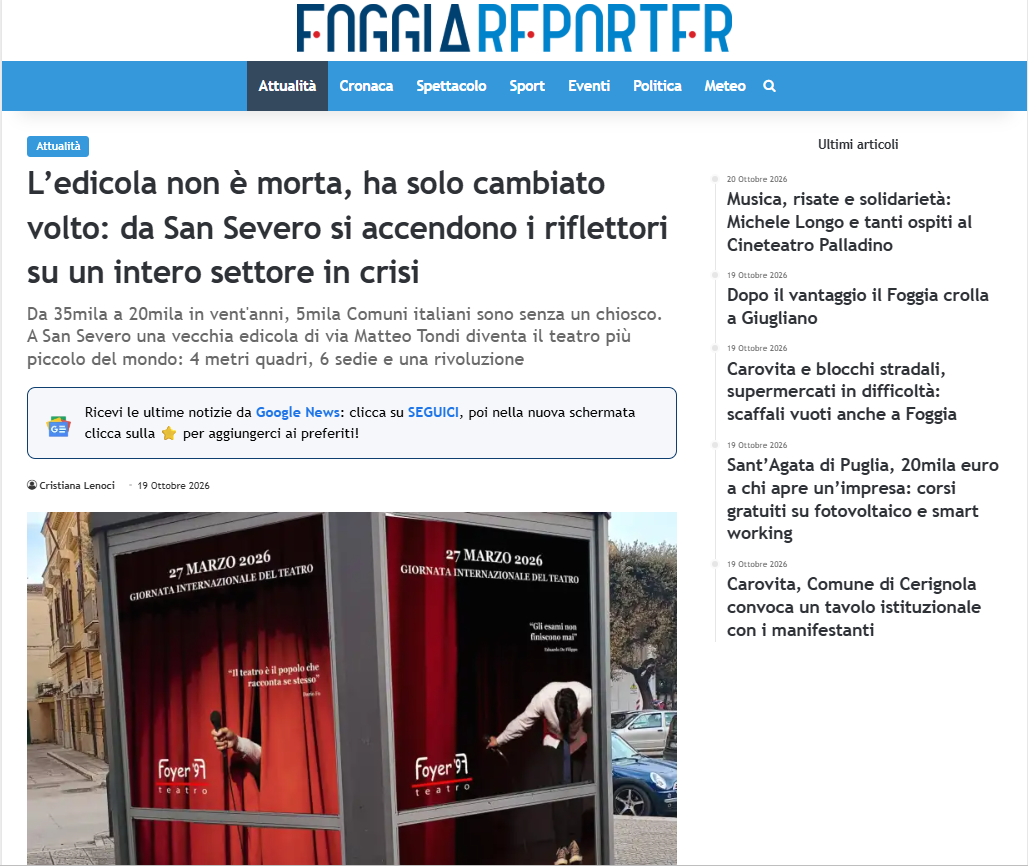
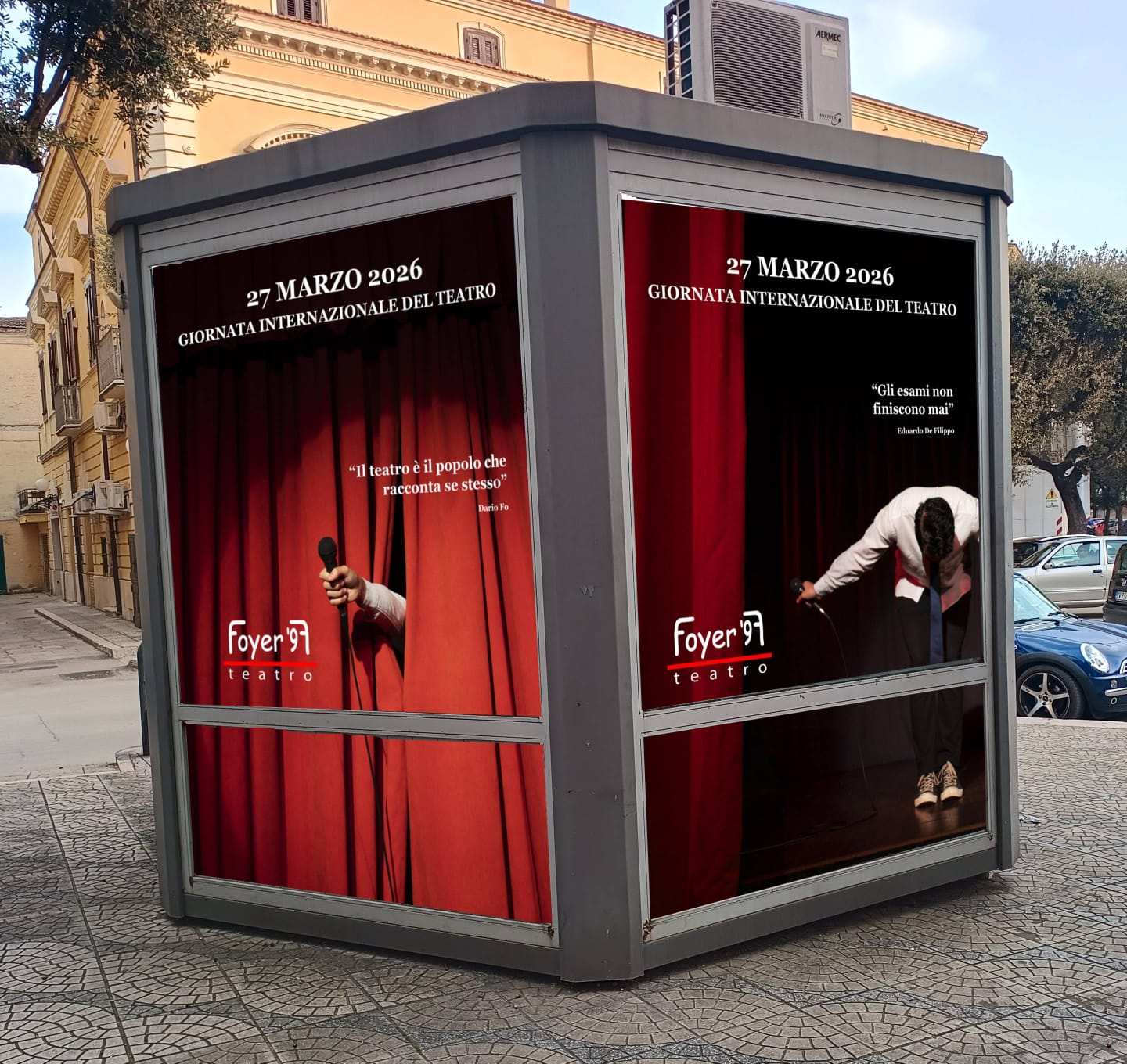
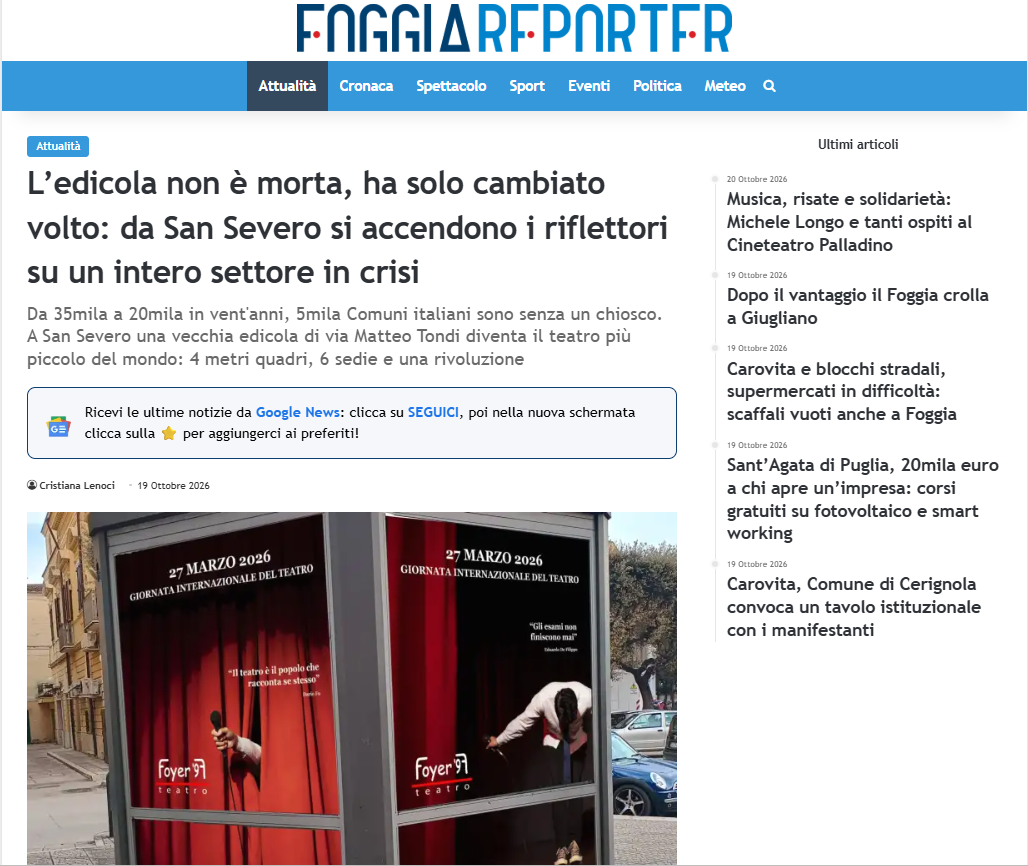
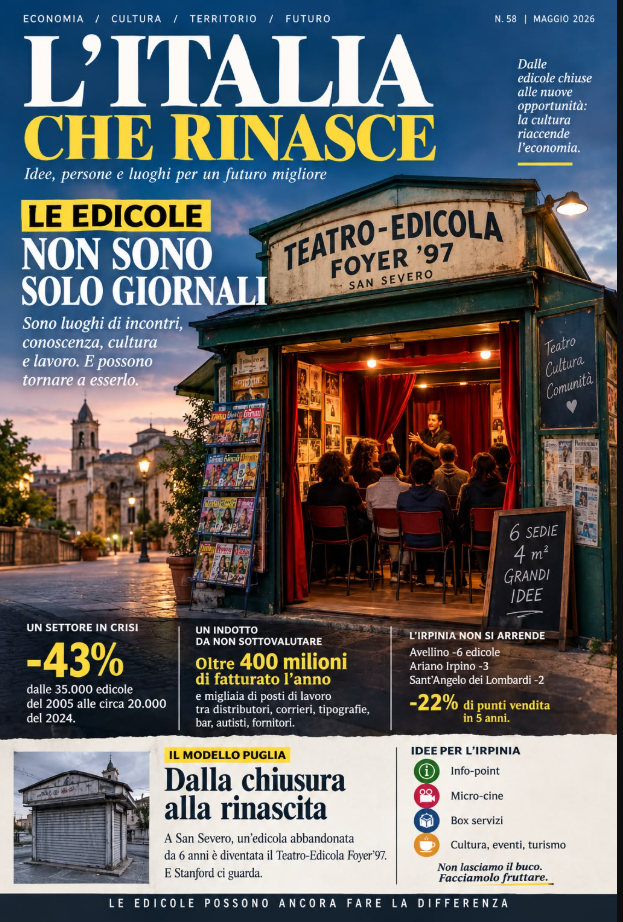
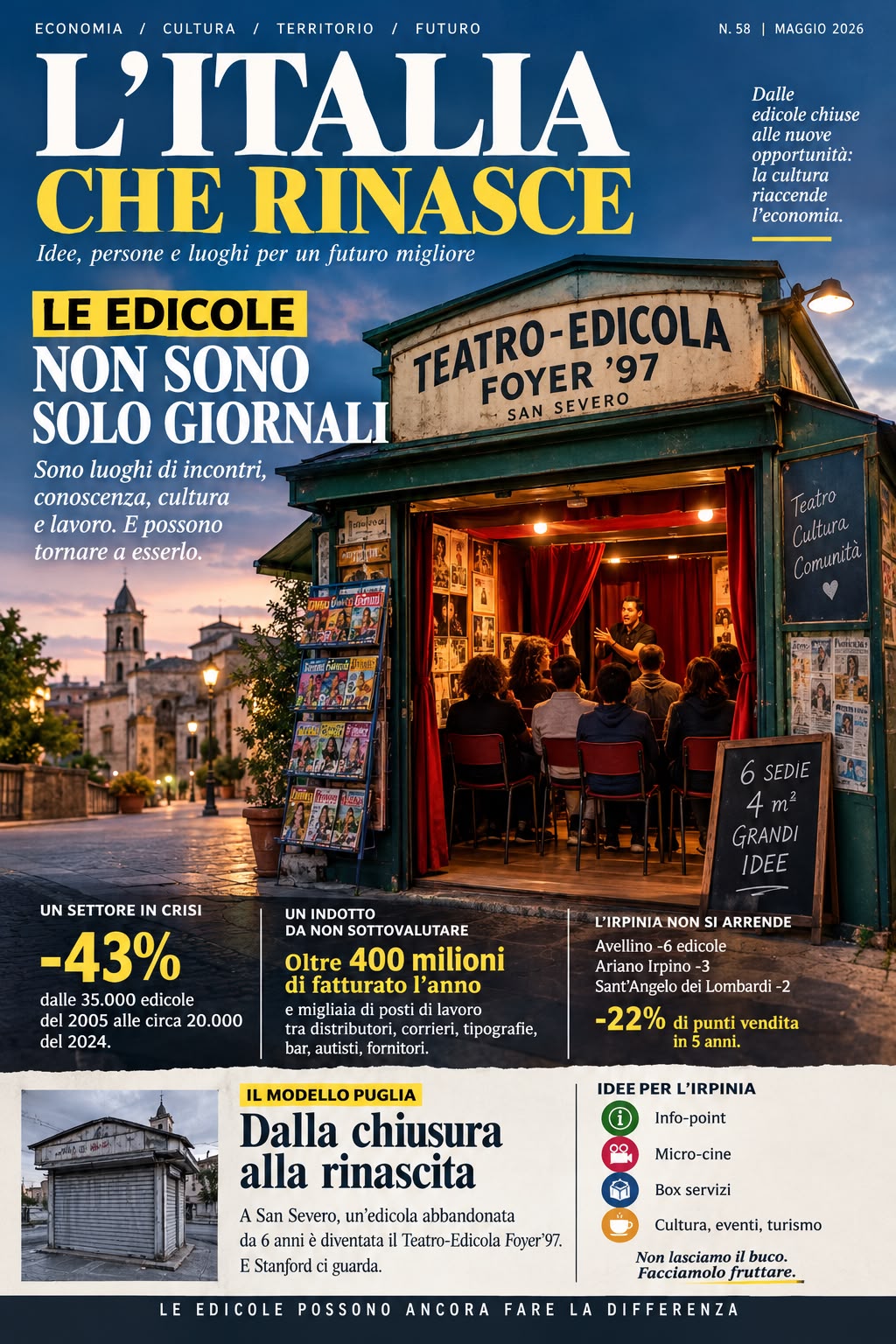
FOGGIA REPORTER: "THE NEWSSTAND IS NOT DEAD, IT HAS ONLY CHANGED ITS FACE: SAN SEVERO SHEDS LIGHT ON AN ENTIRE SECTOR IN CRISIS" by CRISTIANA LENOCI SOURCE: https://www.foggiareporter.it/ledicola-non-e-morta-ha-solo-cambiato-volto-da-san-severo-si-accendono-i-riflettori-su-un-intero-settore-in-crisi.html SAN SEVERO (FG) — From 35,000 to 20,000 in twenty years, 5,000 Italian municipalities are without a newsstand. In San Severo, an old newsstand on via Matteo Tondi becomes the smallest theater in the world: 4 square meters, 6 chairs, and a revolution. For sixty years, it was the place to pick up the newspaper, ask about the results of the game, leave keys with a neighbor. Then the shutter went down, the glass became opaque, the sign faded. This is how newsstands are ending in Italy today. But sometimes, this is how they are reborn. In San Severo, on via Matteo Tondi, an abandoned newsstand for six years became on March 27, 2026, World Theater Day, the Teatro Edicola Foyer ’97. Four square meters, six chairs, fifteen-minute shows. An idea by director and artistic director Francesco Gravino and his company Foyer ’97. They have called it “the smallest theater in the world,” and the news has circulated among international agencies, becoming a case study for the Stanford Social Innovation Review with the report “The Six-Seat Revolution.” An old newsstand that returns to being what it has always been: a place of knowledge, culture, and work. Only now it distributes stories instead of newspapers. A sector at risk of disappearing The story of San Severo sheds light on a silent hemorrhage. We had 35,000 newsstands in 2005, and we have about 20,000 in 2024: -43%. According to FENAGI data released in 2026, the points of sale in 2025 were about 19,500, but only 6,000 were exclusive traditional newsstands. The most painful statistic is geographic: nearly 5,000 Italian municipalities no longer have a newsstand. In two out of three municipalities, there is no longer a point of sale for newspapers and magazines. Other tallies, those from Sinagi, report a collapse from 38,000 exclusive newsstands to about 11,000 still active. In the last four years, from 2019 to 2023, almost 2,700 newsstands have disappeared, of which 2,327 were individual businesses. Rome lost 303, Turin 138, Milan 129. Isernia lost more than a third of its newsstands in four years. Why? Decline in paper sales, digital subscriptions, rising management costs, reduced profitability. In economics, it's called a "falling demand sector." On the street, it is simply called the end of a habit. Not just newspapers Yet the newsstand has never been only about newspapers. In the past, it was an information outpost, a reference point, the guardian of a neighborhood. It was self-employment, often familial, involving early mornings at 4 a.m. to be ready when the city wakes up. Today, those who resist reinvent themselves: local bookstore, service point, package pickup, ticket sales, coffee corner. Those who can't make it, close. The example of Foyer 97 in San Severo tells us one simple and uncomfortable truth: we cannot save all newsstands as newsstands. But we can save their essence. A 4-square-meter kiosk in Puglia becoming a theater reminds us that those few square meters are worth more than the rent they no longer pay. They are valuable because they are already where people pass by. They are already recognized as a public place. They are already culture, even when they no longer sell culture on paper. If newsstands stop selling newspapers, they do not necessarily have to stop selling knowledge. (translated)

www.foggiareporter.it
L'edicola non è morta, ha solo cambiato volto: da San Severo si accendono i riflettori su un intero settore in crisi - Foggia Reporter
684
Luciano Magaldi Sardella (PhD) 1w

FOGGIA REPORTER: “THE NEWSSTAND IS NOT DEAD, IT HAS ONLY CHANGED ITS FACE: FROM SAN SEVERO, THE SPOTLIGHT IS TURNED ON AN ENTIRE SECTOR IN CRISIS” by CRISTIANA LENOCI SOURCE: https://www.foggiareporter.it/ledicola-non-e-morta-ha-solo-cambiato-volto-da-san-severo-si-accendono-i-riflettori-su-un-intero-settore-in-crisi.html SAN SEVERO (FG) — From 35,000 to 20,000 in twenty years, 5,000 Italian municipalities are without a kiosk. In San Severo an old newsstand in Via Matteo Tondi is becoming the smallest theatre in the world: 4 square metres, 6 chairs and a revolution. For sixty years it was the place where you went to collect the newspaper, to ask for the football score, to leave your keys with a neighbour. Then the shutter down, the opaque glass, the faded sign. That is how newsstands in Italy end today. But that, sometimes, is how they are reborn. In San Severo, in Via Matteo Tondi, a newsstand abandoned for six years became, on 27 March 2026, World Theatre Day, the Teatro Edicola Foyer ’97. Four square metres, six chairs, fifteen-minute performances. An idea by director and artistic director Francesco Gravino and his company Foyer ‘97. They have called it “the smallest theatre in the world” and the news has gone round the international agencies, until it became a case study for the Stanford Social Innovation Review with the report “The Six-Seat Revolution”. An old newsstand that is returning to being what it has always been: a place of knowledge, culture and work. Only instead of newspapers, it distributes stories. A sector at risk of disappearing The story of San Severo sheds light on a silent haemorrhage. There were 35,000 newsstands in 2005, there are about 20,000 in 2024: -43%. According to FENAGI data released in 2026, there were about 19,500 sales points in 2025, but only 6,000 were exclusive traditional newsstands. The most painful figure is geographical: almost 5,000 Italian municipalities no longer have a newsstand. In two out of three municipalities there is no longer a sales point for newspapers and magazines. Other counts, those of Sinagi, speak of a collapse from 38,000 exclusive newsstands to about 11,000 still active. In the last four years, from 2019 to 2023, almost 2,700 newsstands have disappeared, of which 2,327 were sole traders. Rome has lost 303, Turin 138, Milan 129. Isernia has lost over a third of its newsstands in four years. Why? Falling paper sales, digital subscriptions, rising operating costs, reduced margins. In economics it is called a “sector in demand decline”. On the street it is simply called the end of a habit. Not just newspapers And yet the newsstand has never been just newspapers. In the past it was an information outpost, a point of reference, the guardian of a neighbourhood. It was self-employment, often family-run, made of early starts at 4 a.m. to be ready when the city wakes up. Today those who hold out reinvent themselves: neighbourhood bookshop, service point, parcel collection, ticket office, coffee corner. Those who cannot manage it, close. The example of Foyer 97 in San Severo tells us a simple and uncomfortable truth: we cannot save all newsstands as newsstands. But we can save their purpose. A 4-square-metre kiosk in Puglia that becomes a theatre reminds us that those few square metres are worth more than the rent they no longer pay. They matter because they are already where people pass. They are already recognized as a public place. They are already culture, even when they no longer sell culture on paper. If newsstands stop selling newspapers, they do not necessarily have to stop selling knowledge.

www.foggiareporter.it
L'edicola non è morta, ha solo cambiato volto: da San Severo si accendono i riflettori su un intero settore in crisi - Foggia Reporter
1027
Anton Gerashchenko 1w

The WSJ reports that Putin has proposed to Trump a trilateral summit with Xi Jinping on the war in Ukraine,to be held on the sidelines of APEC in China on November 18–19 For Moscow,what matters is not only the outcome of the talks but also being recognised as an equal member of the great-power club⤵️

3540
Luciano Magaldi Sardella (PhD) 1w

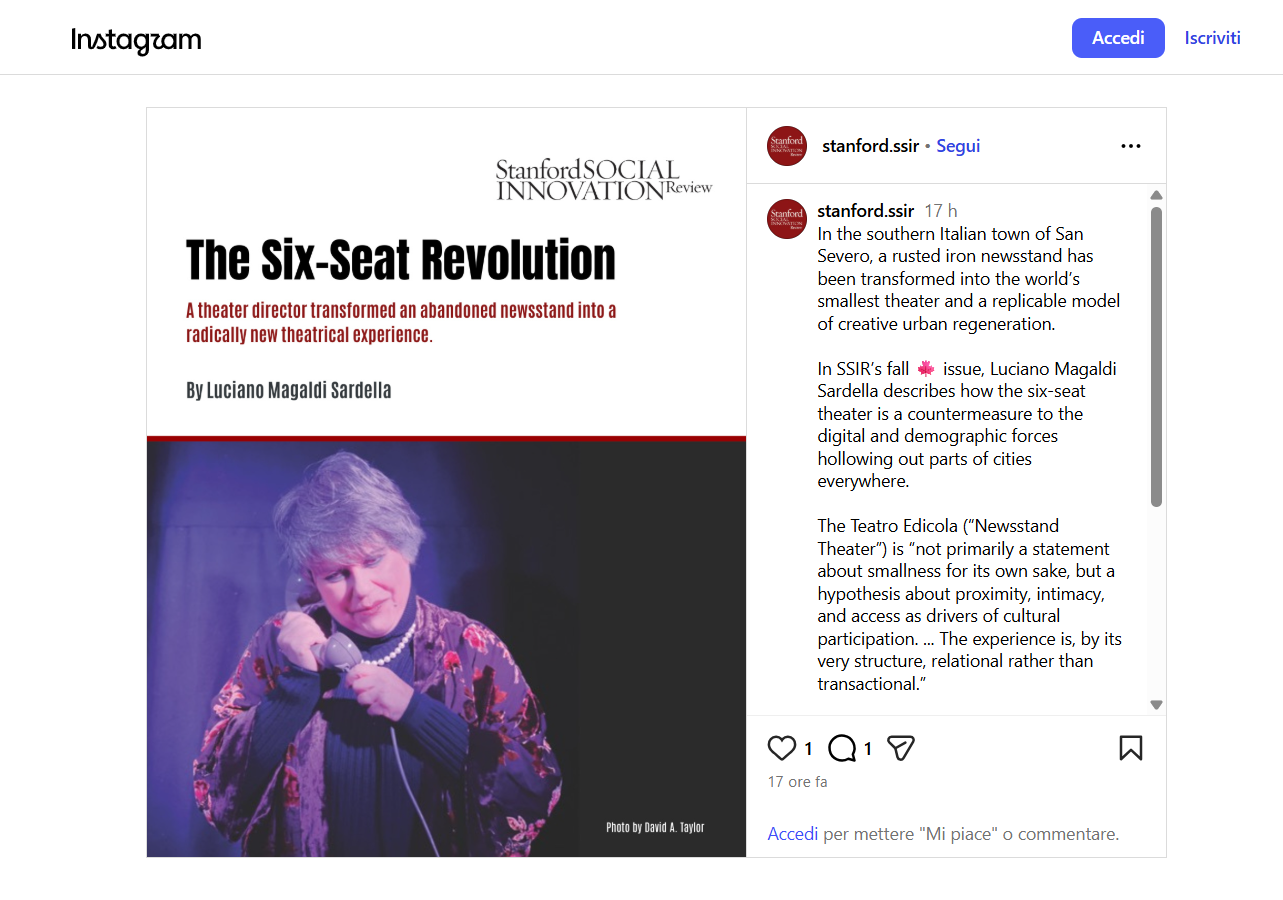
“STANFORD SOCIAL INNOVATION REVIEW (INSTAGRAM)” — “LA RIVOLUZIONE A SEI POSTI: UN REGISTA TEATRALE (FRANCESCO GRAVINO) HA TRASFORMATO UN’EDICOLA ABBANDONATA IN UN’ESPERIENZA TEATRALE RADICALMENTE NUOVA” by LUCIANO MAGALDI SARDELLA https://ssir.org/bios/luciano-magaldi-sardella SOURCE: https://www.instagram.com/p/Deor7xKlwNH/ Nella città di San Severo, nel sud Italia, un’edicola arrugginita è stata trasformata nel teatro più piccolo del mondo e in un modello replicabile di rigenerazione urbana creativa. Nel numero autunnale di SSIR, Luciano Magaldi Sardella descrive come questo teatro da sei posti sia una risposta alle forze digitali e demografiche che stanno svuotando intere parti di città ovunque. Il “Teatro-Edicola” è “non tanto una dichiarazione sulla piccolezza fine a sé stessa, quanto un’ipotesi sulla prossimità, l’intimità e l’accesso come motori della partecipazione culturale. … L’esperienza è, per sua stessa struttura, relazionale piuttosto che transazionale. (Francesco Gravino)”.

800
Luciano Magaldi Sardella (PhD) 1w

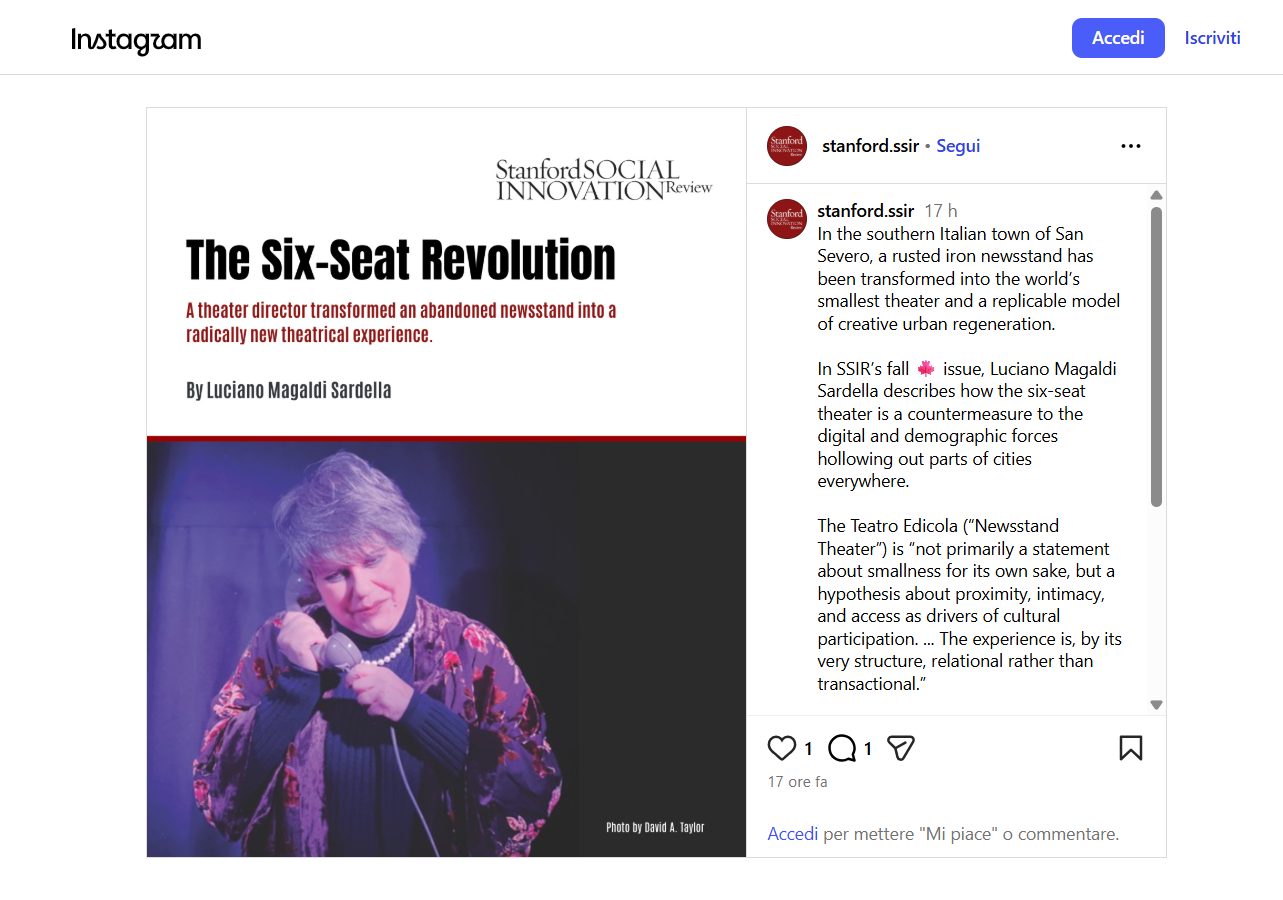
“STANFORD SOCIAL INNOVATION REVIEW (INSTAGRAM)” — “THE SIX-SEAT REVOLUTION: A THEATRE DIRECTOR (FRANCESCO GRAVINO) TRANSFORMED AN ABANDONED NEWSSTAND INTO A RADICALLY NEW THEATRICAL EXPERIENCE” by LUCIANO MAGALDI SARDELLA https://ssir.org/bios/luciano-magaldi-sardella SOURCE: https://www.instagram.com/p/Deor7xKlwNH/ In the southern Italian town of San Severo, a rusted iron newsstand has been transformed into the world’s smallest theater and a replicable model of creative urban regeneration.⁠ ⁠In SSIR’s fall issue, Luciano Magaldi Sardella describes how the six-seat theater is a countermeasure to the digital and demographic forces hollowing out parts of cities everywhere. ⁠ ⁠The Teatro Edicola (“Newsstand Theater”) is “not primarily a statement about smallness for its own sake, but a hypothesis about proximity, intimacy, and access as drivers of cultural participation. … The experience is, by its very structure, relational rather than transactional (Francesco Gravino).”

686
Luciano Magaldi Sardella (PhD) 1w

RADIO ARC 101:“EDICOLE, “RAZZE IN ESTINZIONE” COME I BAR: SOLDI PERSI E SPERANZE DA STANFORD” by NANDO SILVESTRI SOURCE: https://radioarc.it/edicole-razze-in-estinzione-come-i-bar-soldi-persi-e-speranze-da-stanford/ Le edicole sono un altro scrigno di umanità e conoscenza per molti versi simili ai bar, almeno per quanto concerne l’infausto epilogo che riguarda molte di esse. L’odore di carta stampata, di cartoncini colorati, copertine variopinte, buste a sorpresa e cellophane, era una melassa olfattiva che un tempo inebriava grandi e piccini e rappresentava, al contempo un’ ambita meta di passeggiate e pause giornaliere. Passare per l’edicola significava attingere alla conoscenza, allo svago, alla cultura, alla fantasia e alla creatività. Tutte prerogative perse a causa dei surrogati informi e amorfi diffusi dal web. E’ questo il motivo principale della chiusura cunulata e ricorrente di moltissime edicole italiane: in economia si parla di comparto a caduta della domanda. Ma non chiude solo un’edicola, chiude un pezzo di economia locale e nazionale. Da 35000 edicole nel 2005 a circa 20000 nel 2024: -43%. Con loro se ne va un fatturato diretto di oltre 400 milioni l’anno, ma il vero buco è l’indotto che non si calcola mai. Ogni edicola media in un paese generava distribuzione per 15000€/anno di margini per distributori locali, corrieri, tipografie. Inoltre, il cliente che comprava il giornale prendeva il caffè, il biglietto del pullman, la schedina. Write on Medium Si deve pensare che senza edicola, il cinema di paese perde il suo unico punto promo fisico, senza parlare delle perdite in materia di pubblicità. Quando chiude, non perde solo l’edicolante. Perde il bar, perde l’autista, perde il tipografo. In Irpinia negli ultimi 5 anni Avellino ha perso 6 edicole, Ariano Irpino 3, Sant’Angelo dei Lombardi 2. La perdita totale in Irpinia ammonta a circa il 22% di punti vendita. Tutto ciò significa che molte delle chiusure succitate hanno sottratto ai bar irpini diverse decine di clienti danneggiando lavoratori, distributori e fornitori. Sono posti di lavoro che non fanno notizia, ma esistono. Un altro duro colpo inferto all’economia locale e nazionale in nome di un finto progresso che favorisce quasi sempre gli affari dei faccendieri e dei soliti noti. Tuttavia, ciò che accade in Puglia, a pochi chilometri dall’Irpinia, apre scenari di rinnovamento basati proprio sulla riconversione delle edicole dismesse. Si tratta di prospettive talmente uniche ed innovative da aver suscitato l’interesse di tutto il mondo, in special modo dell’Università di Stanford. Si tratta di notizie di enorme portata che pochi notiziari hanno divulgato in nome di una perenne prelazione delle tecnologie sprezzanti di buonsenso, tradizioni e arte. A San Severo (Foggia), a 40 km dall’Alta Irpinia un’edicola abbandonata da 6 anni in via Matteo Tondi è diventata il 27 marzo 2026 il Teatro-Edicola Foyer’97: 6 sedie, 4mq, idea di Francesco Gavino. Gli apprezzati spettacoli di 10/15 minuti hanno incuriosito l’università di Stanford. La sua rivista accademica Stanford Social Innovation Review (SSIR), ha scelto il Teatro Edicola di San Severo come caso di studio internazionale con il reportage “The Six-Seat Revolution”. Perché Stanford ci guarda? Perché ha capito che quei 4 mq possono tornare a generare indotto. Difatti, 60 spettatori in un pomeriggio possono diventare 60 caffè al bar vicino. Con un biglietto simbolico di 5€ si parla di micro economia culturale. Senza contare l’indotto di turisti e giornalisti che arrivano e frequentano B&B e ristoranti. È il modello che serve all’Irpinia: non lasciare il buco, ma riconvertirlo virtuosamente. Ogni edicola chiusa può diventare info-point, micro-cine, box servizi. Altrimenti continuiamo a contare solo le saracinesche abbassate, senza contare i soldi che non girano più.

radioarc.it
Edicole, "razze in estinzione" come i bar: soldi persi e speranze da Stanford - Arc Rete 101
686
Luciano Magaldi Sardella (PhD) 1w

RADIO ARC 101:“NEWSSTANDS, ‘ENDANGERED SPECIES’ LIKE CAFÉS: MONEY LOST AND HOPES FROM STANFORD” by NANDO SILVESTRI SOURCE: https://radioarc.it/edicole-razze-in-estinzione-come-i-bar-soldi-persi-e-speranze-da-stanford/ Newsstands are another repository of humanity and knowledge, in many respects similar to cafés, at least as far as the unfortunate fate that has befallen many of them is concerned. The smell of printed paper, coloured card, variegated covers, surprise packets and cellophane was an olfactory molasses that once intoxicated young and old alike and represented, at the same time, a sought-after destination for daily walks and pauses. Stopping by the newsstand meant drawing upon knowledge, entertainment, culture, imagination and creativity. All prerogatives lost on account of the shapeless and amorphous surrogates disseminated by the web. This is the principal reason for the cumulative and recurring closure of a great many Italian newsstands: in economics, one speaks of a sector in demand collapse. But it is not merely a newsstand that closes; a piece of the local and national economy closes with it. From 35,000 newsstands in 2005 to about 20,000 in 2024: -43%. With them goes direct turnover of over €400 million per year, but the real hole is the indirect economy that is never calculated. Each average newsstand in a small town generated distribution worth €15,000 per year in margins for local distributors, couriers, and printers. Moreover, the customer who bought the newspaper would have a coffee, buy a bus ticket, place a bet. Download the Medium App One must consider that without a newsstand, the village cinema loses its only physical promotional outlet, not to mention the losses in terms of advertising. When it closes, it is not only the newsagent who loses. The café loses, the driver loses, the printer loses. In Irpinia, over the last five years, Avellino has lost six newsstands, Ariano Irpino three, Sant’Angelo dei Lombardi two. The total loss in Irpinia amounts to about 22% of outlets. All this means that many of the closures mentioned above have deprived Irpinian cafés of several dozen customers, harming workers, distributors and suppliers. These are jobs that do not make the news, but they exist. Another hard blow inflicted upon the local and national economy in the name of a false progress that almost always favours the business of fixers and the usual suspects. However, what is happening in Puglia, a few kilometres from Irpinia, opens up scenarios of renewal based precisely upon the reconversion of disused newsstands. These are prospects so unique and innovative as to have aroused interest worldwide, especially at Stanford University. This is news of enormous significance that few news programmes have disseminated, in the name of a perennial pre-emption by technologies contemptuous of common sense, tradition and art. In San Severo, 40 km from Upper Irpinia, a newsstand abandoned for six years in Via Matteo Tondi became, on 27 March 2026, the Teatro-Edicola Foyer’97: six chairs, four square metres, an idea by Francesco Gavino. The well-received 10- to 15-minute shows have piqued the curiosity of Stanford University. Its academic journal, the Stanford Social Innovation Review [SSIR], has chosen the Teatro Edicola in San Severo as an international case study with the reportage “The Six-Seat Revolution”. Why is Stanford watching us? Because it has realised that those four square metres can once again generate indirect economic activity. Indeed, 60 spectators in an afternoon can become 60 coffees at the neighbouring café. With a symbolic ticket price of €5, we are talking about a cultural micro-economy. Not to mention the indirect income from tourists and journalists who arrive and frequent B&Bs and restaurants. It is the model Irpinia needs: not to leave the void, but to reconvert it virtuously. Every closed newsstand can become an information point, a micro-cinema, a service hub. Otherwise we shall continue to count only the lowered shutters, without counting the money that no longer circulates.

radioarc.it
Edicole, "razze in estinzione" come i bar: soldi persi e speranze da Stanford - Arc Rete 101
1257
Luciano Magaldi Sardella (PhD) 2w

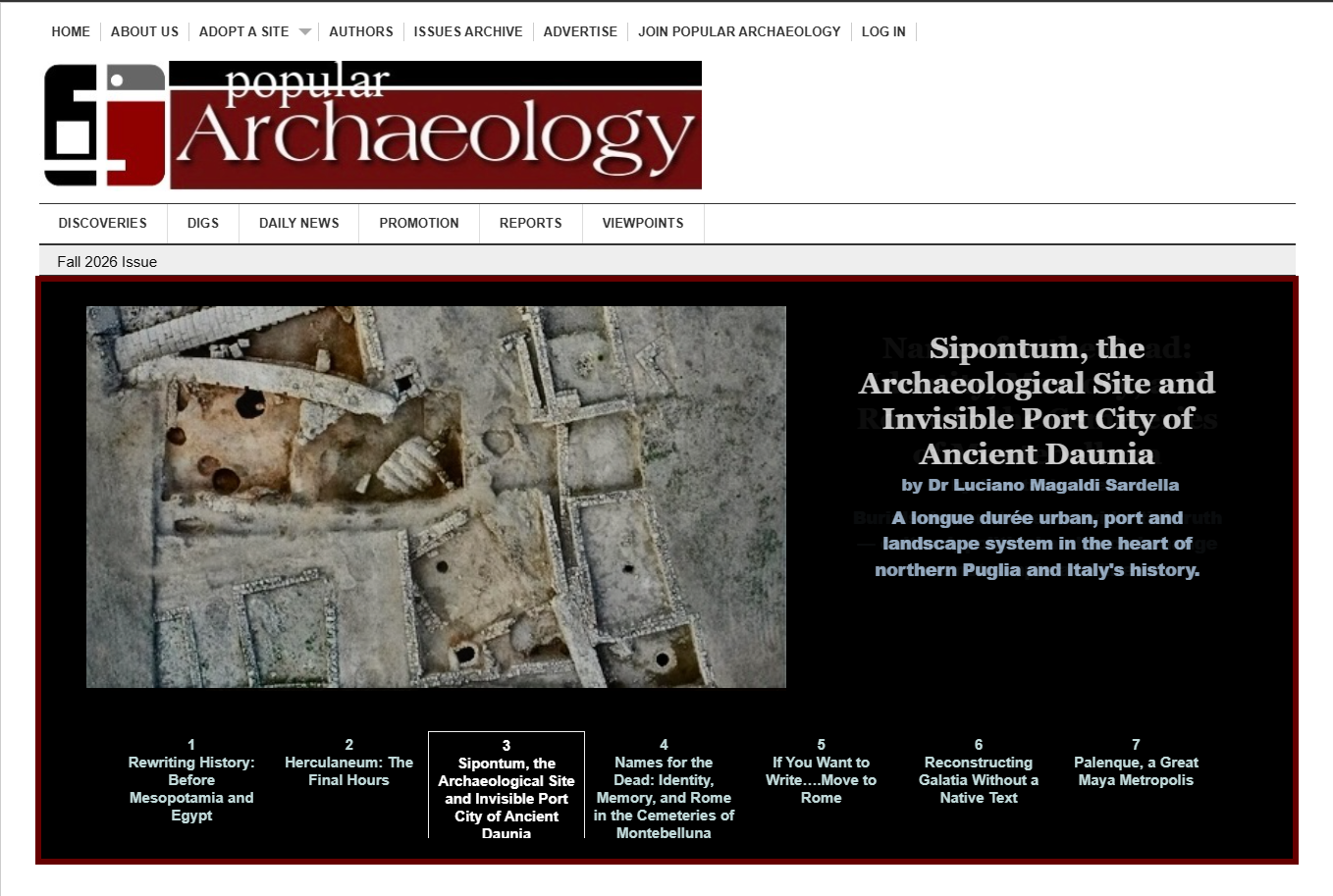
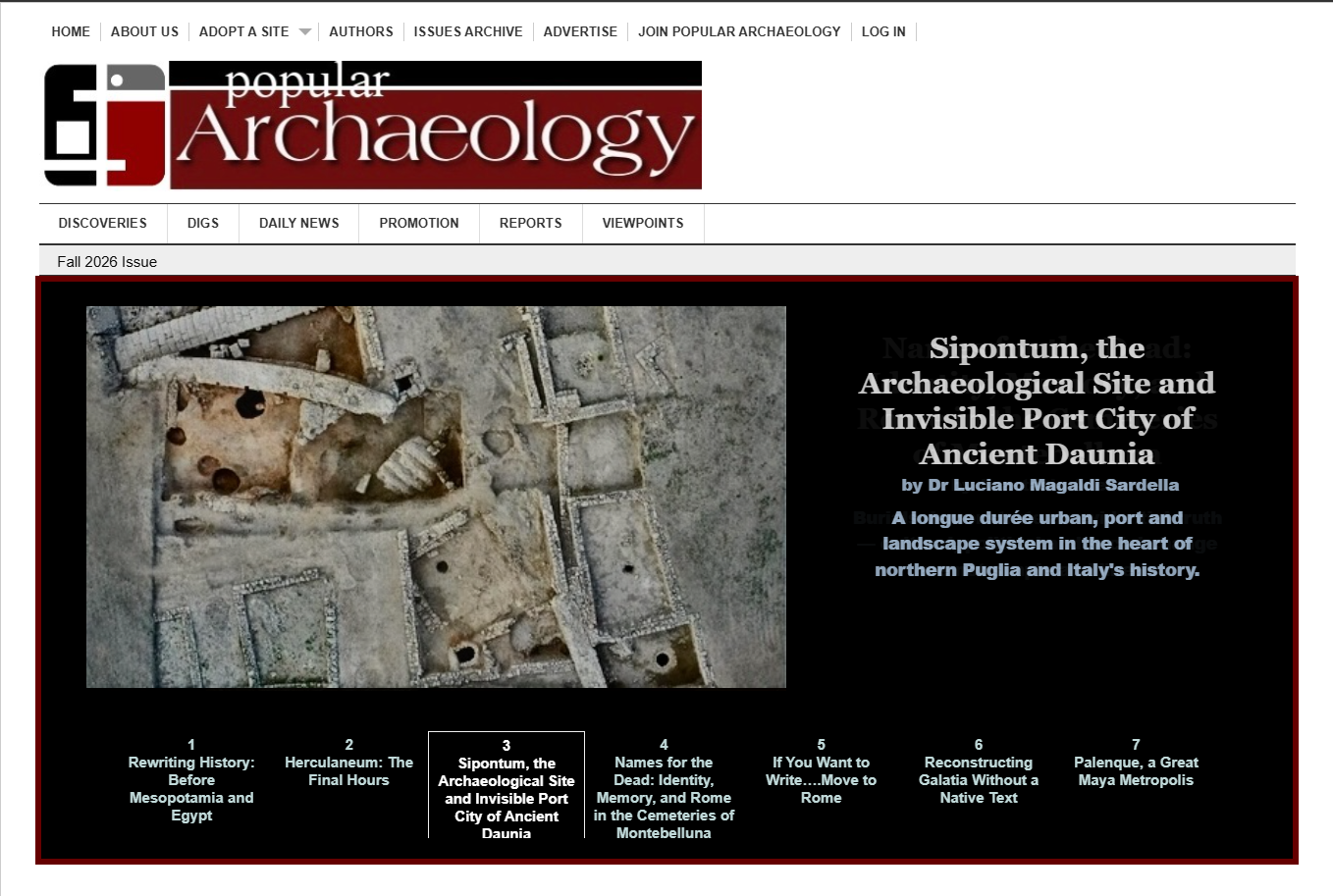
SIPONTO (MANFREDONIA) PUBBLICATA SU "POPULAR ARCHAEOLOGY USA" by LUCIANO MAGALDI SARDELLA "SIPONTUM, THE ARCHAELOGICAL SITE AND INVISIBLE PORT CITY OF ANCIENT DAUNIA" SOURCE: https://popular-archaeology.com/author/sardella/ Finalmente Siponto parla al mondo. È uscito su Popular Archaeology USA il primo grande racconto divulgativo in inglese dedicato a Sipontum, la città portuale invisibile della Daunia. Per chi lavora sul patrimonio archeologico di Foggia e provincia era un paradosso: l’Encyclopaedia Britannica liquidava Siponto in due righe come “città abbandonata per le lagune”, ma non esisteva ancora una sintesi completa della sua storia in lingua inglese per il pubblico internazionale. Questo articolo colma finalmente quel vuoto. Racconta una storia di longue durée che attraversa 7.000 anni: dalla laguna dell’Età del Bronzo alla colonia marittima romana del 194 a.C. il cui decumano massimo è ancora oggi la SS89 Garganica, dal porto granario citato da Cassiodoro alla basilica resa visibile da Edoardo Tresoldi, fino all’abbandono per malaria e al trasferimento voluto da Manfredi di Svevia che fondò Manfredonia nel 1256–1263. E soprattutto racconta il presente: le campagne 2021–2025 di Archeologia Globale delle Università di Bari e Foggia con Roberto Goffredo, Maria Turchiano e Giuliano Volpe, e il nuovo Parco Archeologico del Gargano. Un passo fondamentale per dare a uno dei siti più sottovalutati d’Italia la visibilità internazionale che merita.

919
Luciano Magaldi Sardella (PhD) 2w

SIPONTUM (MANFREDONIA), PUBLISHED IN POPULAR ARCHAEOLOGY USA by LUCIANO MAGALDI SARDELLA "SIPONTUM, THE ARCHAELOGICAL SITE AND INVISIBLE PORT CITY OF ANCIENT DAUNIA" SOURCE: https://popular-archaeology.com/author/sardella/ At last, Siponto speaks to the world. The first major popular account in English devoted to Sipontum, the invisible port city of Daunia, has been published in Popular Archaeology USA. For those who work on the archaeological heritage of Foggia and its province, it has long been a paradox: the Encyclopaedia Britannica dismissed Siponto in two lines as a “city abandoned owing to the encroachment of lagoons”, yet no comprehensive synthesis of its history in English existed for an international readership. This article at last fills that lacuna. It narrates a longue durée history spanning 7,000 years: from the Bronze Age lagoon to the Roman maritime colony of 194 BC, whose decumanus maximus survives today as the SS89 Garganica; from the grain port cited by Cassiodorus to the basilica rendered visible by Edoardo Tresoldi; through to abandonment through malaria and the transfer ordained by Manfred of Swabia, who founded Manfredonia in 1256–1263. And, above all, it recounts the present: the 2021–2025 campaigns of Global Archaeology by the Universities of Bari and Foggia, led by Roberto Goffredo, Maria Turchiano, and Giuliano Volpe, and the new Archaeological Park of the Gargano. A fundamental step towards affording one of Italy’s most underrated sites the international visibility it deserves.

689
Fonsi Loaiza 2w

Today, the police have violently beaten this antifascist elderly man in Navarra. While protecting the far-right Vito Quiles and his neo-Nazi bodyguards. (translated)
2527
Magdalena Adamowicz 2w
Polish politician

Giorgia Meloni said today in the Italian Senate that the capitulation of Ukraine would not bring peace, but conquest. She stated that if Ukraine stopped defending itself, the consequence would be the occupation of a European state and the return of imperialism. #Ukraina #Polityka #Imperializm #IT #UA #EU (translated)

3565