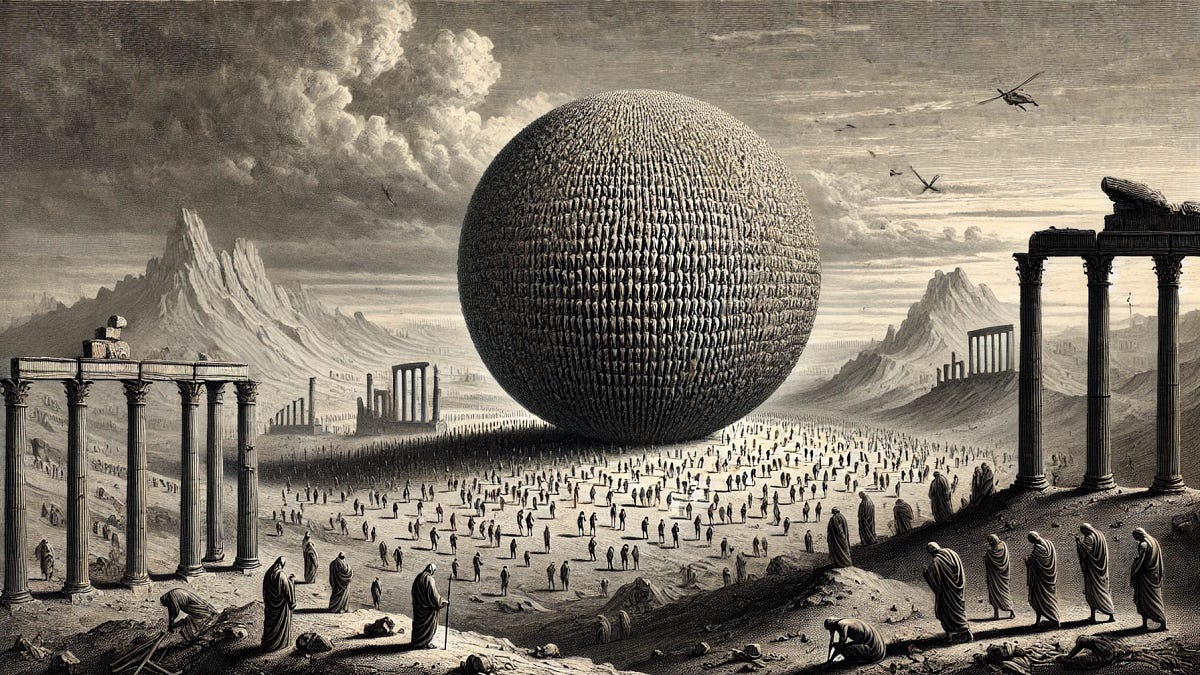
“When Terrorism Becomes “Resistance”: What the Statistics Actually Show Do most Muslims oppose Islamist terrorism? The available evidence does not support either a simple “yes” or “no.” It shows a more complicated pattern: many Muslims reject attacks on civilians, while attitudes toward political violence can change substantially depending on the conflict, the perpetrators and the victims. A 2013 Pew Research Center survey found that 89% of Pakistani Muslims, 81% of Indonesian Muslims and 77% of Tunisian Muslims said suicide bombing and violence against civilians could never be justified in defence of Islam. But the figure was only 38% in the Palestinian territories; 62% said such violence could sometimes or often be justified (Pew Research Center, 2013). Jordan provides another revealing example. After al-Qaeda’s 2005 hotel bombings in Amman, support for Osama bin Laden’s al-Qaeda as a legitimate resistance organisation fell from 67% to 20%, while those calling it a terrorist organisation rose from 10.6% to 48.9% (Jamestown Foundation, 2005). The fact that attacks on Muslim civilians dramatically changed attitudes suggests that perceptions of political violence can depend partly on who is being targeted. More recently, an Arab Center survey across 16 Arab countries found that 67% considered Hamas’s October 7 operation a legitimate resistance operation, while another 19% considered it flawed but legitimate (Arab Center for Research and Policy Studies, 2024). These figures cannot, however, be equated directly with support for terrorism: respondents were asked about legitimacy and Hamas, not specifically whether they supported terrorism or attacks on civilians. The evidence therefore does not establish that most Muslims support terrorism. It does show something more precise and important: opposition to Islamist violence is not necessarily consistent across circumstances. Some people who reject terrorism in principle may regard violence as legitimate when it is framed as resistance against a perceived enemy. The statistics cited by FrontPage Magazine therefore raise a legitimate question(Greenfield, 2026)” - ChatGPT
ೀ ran.



#0182 — Frysk Archimedes siet by syn tablet doe’t in Romeinske soldaat him fermoarde. Klinkt dat natuerlik? Net echt. En dochs, as wy it ferline genôch “bywurkje”, kinne wy krekt dêr telâne komme. Hast elke kultuer hat modernisearre útjeften fan âldere skriuwers, mei diskusjes oer stavering, wurdskat, redaksjonele notysjes en oanpassing oan de hjoeddeiske lêzer. In antikwêr sei ris tsjin my dat “de patina fan ’e tiid wearde jout” en it ferskil meitsje kin tusken in orizjineel en in goedkeape kopy. Ik iepenje de “Sneinsessays” fan Constantin Noica, kom by it foarwurd fan de útjouwer yn de Humanitas-edysje fan 1992 en lês dat “de stavering bywurke is”. Noica lêze hie in kuier troch de jierren 1930–1940 wêze kinnen. Ynstee meitsje wy dy kuier mei moderne bril op, noflik sitten yn in Uber, sûnder eangst om te ferdwalen — dus sûnder it risiko dat wy de wurden fan dy tiid net begripe, wurden dy’t gewoan yn fuotnoaten “oerset” wurde koene. Wat as wy ek de kranten fan dy tiid namen en dy “bywurken”? En miskien koene wy ek in rebranding dwaan fan de reklames fan doe, sadat ús neuronen net te hurd hoege te wurkjen, as sieten wy yn in escape room. Wêrom dêr ophâlde? Wy koene ek de skiednisboeken bywurkje en skriuwe dat Archimedes fan Syrakuse fermoarde waard troch in Romeinske soldaat wylst er wiskunde die op syn tablet. It basisidee bliuwt itselde, net? Allinnich it tiidrek ferdwynt. En noch wat: wêrom “wurkje” wiskundigen Pythagoras net “by”? Se kinne de notaasje feroarje. Se kinne it bewiis oars útlizze. Se kinne sels de tekening online opbouwe mei in animaasje dy’t foar de eagen fan de learlingen ûntstiet. Mar de stelling fan Pythagoras bliuwt de stelling fan Pythagoras. Dus, as wy in âldere skriuwer lêze, wêrom soene wy dan net ek de taal fan syn tiid bewarje — en de moderne útlis yn notysjes sette? En in lêste fraach oan Humanitas en oan dyjingen dy’t wurkje oan universiteiten yn literatuer en filology: as de skoalbern fan hjoed jimme oer in pear desennia mei # en emoji “bywurkje”, soene jimme dat moai fine? #0182 #Humanitas #ConstantinNoica #Noica #Sneinsessays #Archimedes #Pythagoras #Hashtag #Emoji #MrStorywise #BywurkeStavering #TaalSkiednis #20260921 #Frysk #Frisian #Fryslân #Netherlands #Literatuer #Skiednis

The Transitional Logic of Political Violence A recurring problem in revolutionary and religious political movements is that violence may be justified as a temporary measure for establishing a new political order, while the institutions created to suppress perceived enemies can become permanent. In Marxist-Leninist theory, the transition from capitalism to communism involved a “dictatorship of the proletariat.” The coercive state was ultimately expected to “wither away” once class conflict disappeared. In practice, however, revolutionary governments developed extensive systems of repression. The Russian Revolution was followed by the Red Terror, Stalin’s purges institutionalized persecution of alleged internal enemies, and Mao’s Cultural Revolution demonstrated how political repression could re-emerge long after revolutionary power had been established. A comparable dynamic can be examined in some interpretations of Islamic political thought, although the ideological foundations are different. Ridda (apostasy) has, in certain historical contexts, been associated with both religious and political disloyalty. The early Ridda Wars illustrate how religious and political boundaries could become intertwined. In modern history, the 1988 executions of political prisoners in Iran provide another example of religious or ideological accusations being used to justify state violence. The important question is not whether these traditions are identical—they are not—but whether their political applications can create similar institutional dynamics. When governments define groups as existential threats, extraordinary measures may initially be presented as temporary. Once institutionalized, however, the definition of the “enemy” can expand. The fundamental risk is that a transitional period of coercion may lack a mechanism for returning to normal political conditions. If authorities can continually redefine internal enemies, emergency powers can become permanent. The broader lesson is universal: political systems should be judged not only by the order they promise, but also by the safeguards that prevent temporary coercive powers from becoming permanent.
“Publics are evoked, even shaped, by [the] techniques that represent them.” https://www.programmablemutter.com/p/were-getting-the-social-media-crisis?publication_id=1745679&post_id=154328417&isFreemail=true&r=5idqii&triedRedirect=true&utm_source=substack&utm_medium=email