BETA nonprofit public democratic european moderated

Search

#Admiration
ju. 1d

“te admiro mucho. realmente, eres EL ejemplo de todas las que un día queremos ser superestrellas” lo bonito que es toda la admiración y reconocimiento y lo que fue este momento con dos mujeres y artistas increíbles compartiendo música en un mismo escenario https://t.co/imxyqe98b9 #Admiration #Música #Artistas

🚨 𝗘𝗡 𝗡𝗢𝗥𝗩𝗘̀𝗚𝗘, 𝗘𝗥𝗟𝗜𝗡𝗚 𝗛𝗔𝗔𝗟𝗔𝗡𝗗 𝗙𝗔𝗜𝗧 𝗘𝗫𝗣𝗟𝗢𝗦𝗘𝗥 𝗟𝗘𝗦 𝗩𝗘𝗡𝗧𝗘𝗦... 𝗗𝗘 𝗖𝗔𝗥𝗢𝗧𝗧𝗘𝗦 ! 😅🥕 Le norvégien a été vu plusieurs fois mangeant des carottes, ce qui a fait exploser les ventes en Norvège ! 🇳🇴 En admiration devant leur star, les jeunes norvégiens en consomment de plus en plus. Les agriculteurs du pays confirment cet engouement et en sont ravis ! 😅 (@lequipe) #Norvège #ErlingHaaland #Agriculture

Message from September 11: "But in the days that followed, we also felt something else. Pride for the rescuers who rushed to the scene, and for the passengers who had tried to regain control of the cockpit. Admiration for these. (translated)

Buďto se konečne rozhejbem, nebo to bude zlý. Němčouři vypadaj, že už se rozhodli. Co zbytek? "Admiration for Ukrainian resilience is not a strategy," Schmidt concludes. Over four years, Ukraine has bought the West time "with the blood of its soldiers and the ingenuity of its engineers." Courage alone is not enough to defend cities and win the war: the West must turn that time into industrial superiority. #Ukraina #Válka #Odvaha

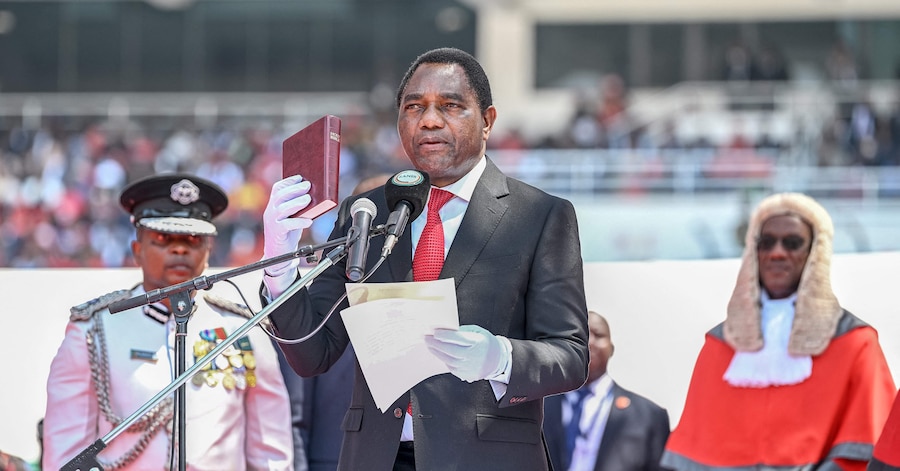
The article describes the transformation of the political image of Hakainde Hichilema, the Zambian president, who, after initially managing to stabilize the economy and gain international admiration, saw his reputation tarnished by accusations of a lack of transparency and crackdowns on the opposition during his recent re-election. (translated)

Hakainde Hichilema, l’ange de Lusaka devenu démon
L
Le Soir 1w

Bart De Wever contributes to normalizing Giorgia Meloni, a far-right leader, by expressing his admiration for her, a process that could lead Belgians into a toxic relationship. (translated)

De Wever-Meloni : une amitié douteuse

“BROADWAY WORLD” OF NEW YORK WELCOMES THE TEATRO MERCADANTE OF CERIGNOLA IN THE NAME OF THE MASCAGNI FESTIVAL SOURCE: https://www.linkedin.com/pulse/broadway-world-new-york-welcomes-teatro-mercadante-sardella-ph-d--i5mbe/ by Stephi Wild, New York City. SOURCE: https://www.broadwayworld.com/italy/article/Photos-Teatro-Mercadante-and-Teatro-Goldoni-Partner-on-SOUNDTRACK-MASCAGNI-20260827 The most influential theatrical portal in the world, with at least six million global visitors per month, consecrates the cultural twinning between Cerignola and Livorno and the historical restitution of a verismo born in Puglia, southern Italy: there exists a moment when a local history ceases to be peripheral and, by the mere fact of being recounted in the right place, becomes universal history. That moment, for the Teatro Mercadante di Cerignola, has arrived. Broadway World, the bible of international theatre read daily by producers, artistic directors and critics from New York to the West End, has welcomed into its pages the cultural pact between the Mercadante and the Fondazione Teatro Goldoni of Livorno, sealed in spring 2026 by Artistic Director Savino Zaba and the Municipal Administration in the person of the Deputy Mayor and Commissioner for Culture, Maria Dibisceglia. The piece is signed by New York editor Stephi Wild, under the title: “Photos: Teatro Mercadante and Teatro Goldoni Partner on SOUNDTRACK MASCAGNI”. It is no mere detail. Broadway World does not review provincial seasons. When it does, it is signalling to the American and global theatrical system that something, down there, deserves to be seen. The heart of this recognition is Soundtrack Mascagni: the music that inspired cinema, the cinema that celebrated Mascagni, the co-production chosen as the closing event of the VII edition of the Mascagni Festival. A hybrid work, a concert-reading for narrating voice, ensemble, images and sounds, with dramaturgy and text by Vittorio Giacci, performed by the Artists of the Mascagni Academy and the Orchestra of the Teatro Goldoni di Livorno “Massimo de Bernart” conducted by Maurizio Colasanti. On stage, in the guise of an imaginary Mascagni, as narrator and guide through his own musical universe, the actor-director Maurizio Nichetti. A production, as the Italian notes record, “born from the synergy between the Teatro Mercadante di Cerignola and the Teatro Goldoni di Livorno”, which will see on stage the great actor and director Maurizio Nichetti and the Orchestra of the Goldoni, conducted by Maestro Maurizio Colasanti, with direction entrusted to Marco Voleri and Savino Zaba. What Broadway World has intercepted, moreover, is not merely a production but also a historiographical thesis that at last forces the international literature to catch up. For decades, Anglophone biographies have dismissed Pietro Mascagni’s Apulian decade as “years of poverty and obscurity”: the documentary truth, preserved in the Polo Museale of Piano San Rocco, is of a different temper entirely. In December 1886, on tour with the Maresca company, Mascagni stopped in Cerignola, where the mayor then in office, Commendatore Cannone, invited him to remain to conduct the newly founded philharmonic. The composer would stay, save for brief absences, in the house in Via Assunta until 1895, composing no fewer than five operas: Cavalleria rusticana; L’amico Fritz; I Rantzau; Guglielmo Ratcliff; Silvano. A third of his entire operatic output, written in feverish poverty, in an agricultural town of the Ofantine plain. It was there, in July 1888, that the verses of Cavalleria reached him by postcard from Livorno, sent by his poet friends Giovanni Targioni-Tozzetti and Guido Menasci. There, on 27 May 1889, he completed the autograph. The envelope, that morning, bore the postmark of Cerignola. The world premiere at the Costanzi in Rome, on 17 May 1890 before Queen Margherita, was an earthquake. As Zaba has synthesised it, in a formula destined to endure: “Livorno gave Mascagni to the world. Cerignola inspired him and kept the deepest part of his soul.” In fact, the productive parabola sanctioned by BroadwayWorld is exemplary in the way it overturns the traditional North-South axis of cultural projects. It begins on 23 August at the Mascagni Festival in Livorno with Soundtrack Mascagni. Then its debut in Cerignola, in the course of the Mercadante’s forthcoming season. Indeed, with a date already fixed: “Soundtrack Mascagni” will be presented in Cerignola on 24 October as the opening production of the 2026/2027 theatrical season of the Teatro Mercadante. An idea as simple as it is revolutionary: cinema as a lens through which to re-read Mascagni. The composer plundered by Scorsese and Coppola, cited by Visconti as a tutelary deity, already possessed in his own writing — dense, symphonic, almost edited by cuts — a cinematic vocation. Soundtrack Mascagni does not merely celebrate that filiation; it interrogates it. That BroadwayWorld should have chosen to capture precisely this — a provincial theatre that does not seek hospitality but co-produces as an equal with a historic theatre such as the Goldoni — says much about the shifting of Italy’s cultural axis. No longer a South that imports, but a South that generates archives, that preserves autographs, caricatures, unpublished letters, and restores them to the international circuit. For Cerignola, accustomed to being narrated as a land of wheat and not of music, this arrival on Broadway World is more than a press clipping. It is the certification that its Mascagni story is no longer a local footnote, but a necessary chapter in the history of verismo. And that the Mercadante, from a provincial municipal theatre, has entered in full right the ranks of those Mascagni theatres upon which the whole world now looks, and with admiration.

“BROADWAY WORLD” OF NEW YORK WELCOMES THE TEATRO MERCADANTE OF CERIGNOLA IN THE NAME OF THE MASCAGNI FESTIVAL

The "Edicola Teatro" of San Severo (Francesco Gravino / Foyer ’97) Featured by Swiss Italian Radio/Television! SOURCE: https://www.linkedin.com/posts/luciano-magaldi-s-05a4a71b3_the-edicola-teatro-of-san-severo-francesco-ugcPost-7479198091301027841-1k_H/ In the intimate heart of Via Matteo Tondi, San Severo, Puglia, southern Italy, where a modest news kiosk has been restored to life through the artistic vision of Francesco Gravino and the San Severo theatre company Foyer ’97, the Swiss Italian Radio and Television (Radio Svizzera Italiana) service has now cast its gaze upon this extraordinary cultural experiment, offering a portrait imbued with refinement, curiosity, and civic admiration. The world’s smallest theatre—conceived from an idea that once appeared quixotic and now recognised as a radiant emblem of Puglia-based creativity—has been presented to an international audience through RSI’s video reportage, which captures both its poetic fragility and its audacious spirit. The feature stands as a tribute to San Severo itself: to its artistic pulse, to the enduring legacy of Andrea Pazienza, and to all who believe that beauty may flourish in the most unexpected places, even within the wooden frame of a former kiosk. RSI’s coverage underscores a truth that Gravino and Foyer ’97 have long embodied: culture does not depend on grand auditoria, but on grand visions—on the courage to imagine differently, and on the tenacity to transform imagination into lived space. Warm congratulations to Gravino, to Foyer ’97, and to all who nurture this urban jewel which continues not only to astonish Italy, but now to intrigue and inspire viewers beyond its borders!

The "Edicola Teatro" of San Severo (Francesco Gravino / Foyer ’97) Featured by Swiss Italian Radio/Television In the intimate heart of Via Matteo Tondi, San Severo, Puglia, southern Italy, where a… | Luciano Magaldi S.

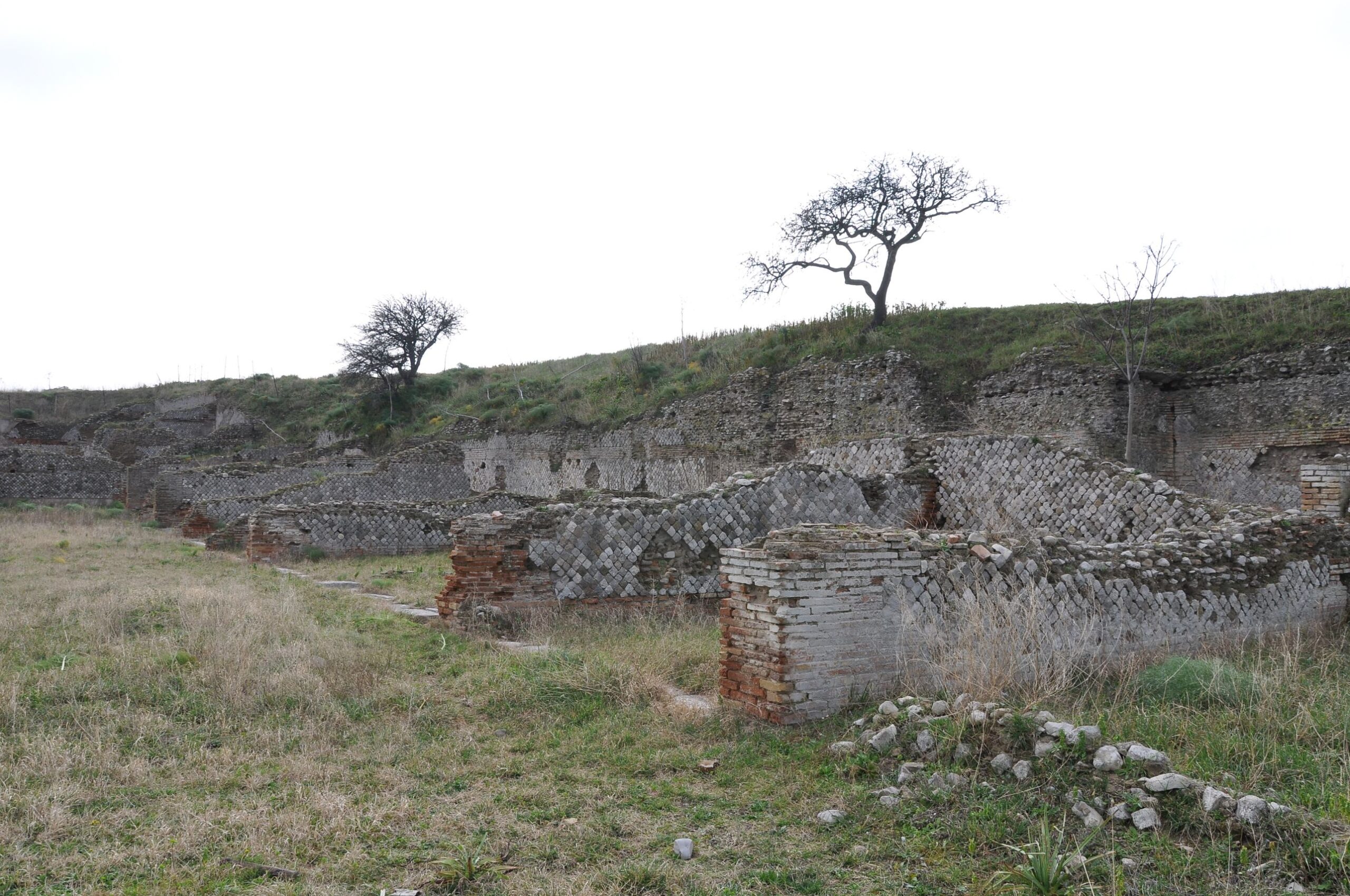
IlSipontino.net: Herdonia, the “Pompeii of Apulia”, featured on Popular Archaeology (USA) SOURCE: https://www.ilsipontino.net/herdonia-la-pompei-di-puglia-in-un-articolo-pubblicato-oggi-su-popular-archaeology-usa/ In the golden heart of the Tavoliere delle Puglie, where the wheat still ripples beneath the very sky that once witnessed the passage of Hannibal’s armies and Trajan’s legions, Herdonia at last emerges onto the international stage: the ancient city that scholars, with equal admiration and regret, have long described as “the Pompeii of Puglia". Published in Popular Archaeology, the article by Dr Luciano Magaldi Sardella retraces, with both passion and scholarly rigour, the entire epic of this extraordinary site: from its Daunian origins in the Iron Age, marked by its celebrated anthropomorphic stelae and the earliest textile embroideries known in Italy, through the tragedy of the Punic Wars – two battles of Herdonia in the aftermath of Cannae – the Roman refoundation along the Via Traiana, and finally the hunting retreat of Frederick II of Swabia of the Hohenstaufen dynasty. Only 20 per cent of its 20–24 hectares has been brought to light over sixty years of Belgian (Joseph Mertens, 1962–1992) and Italo‑Belgian excavations (University of Bari, Giuliano Volpe, 1993–2000). The remaining 80 per cent, preserved intact beneath the thin Puglian mantle, constitutes a living archive of history that could occupy archaeologists for the next century. After twenty‑two years of enforced silence due to a protracted legal dispute, the year 2022 marked a decisive turning point: the State acquired the entire area, allocating more than €2.7 million for restoration, enhancement, and the creation of the Archaeological Park of Herdonia. The HerMA Museum, inaugurated in 2017 just a short distance from the site, already welcomes thousands of visitors with its Daunian and Roman masterpieces, while the Polytechnic University of Bari has produced the first complete 3D model of the ruins. “Herdonia is not merely a site of the past; it is a place capable of narrating the whole of Italy, from prehistory to the Middle Ages, without being overlaid by a modern city,” writes Magaldi Sardella. “It now finally possesses the conditions to become one of the great archaeological parks of our country.” The field lies open. Puglia has rediscovered its Pompeii. It is now for the world to uncover it.

Herdonia, la Pompei di Puglia, in un articolo pubblicato oggi su Popular Archaeology Usa

SanGiovanniRotondoFree.it — Herdonia, the “Pompeii of Apulia”, Captivates America: Popular Archaeology Shines a Spotlight on the Tavoliere’s Hidden Treasure SOURCE: https://sangiovannirotondofree.it/2026/02/28/herdonia-la-pompei-di-puglia-conquista-lamerica-riflettori-di-popular-archaeology-sul-tesoro-nascosto-del-tavoliere/ In the golden heart of the Tavoliere delle Puglie, where the wheat still ripples beneath the very sky that once witnessed the passage of Hannibal’s armies and Trajan’s legions, Herdonia at last emerges onto the international stage: the ancient city that scholars, with equal admiration and regret, have long described as “the Pompeii of Puglia”. Published in Popular Archaeology, the article by Dr Luciano Magaldi Sardella retraces, with both passion and scholarly rigour, the entire epic of this extraordinary site: from its Daunian origins in the Iron Age, marked by its celebrated anthropomorphic stelae and the earliest textile embroideries known in Italy, through the tragedy of the Punic Wars – two battles of Herdonia in the aftermath of Cannae – the Roman refoundation along the Via Traiana, and finally the hunting retreat of Frederick II of Swabia of the Hohenstaufen dynasty. Only 20 per cent of its 20–24 hectares has been brought to light over sixty years of Belgian (Joseph Mertens, 1962–1992) and Italo‑Belgian excavations (University of Bari, Giuliano Volpe, 1993–2000). The remaining 80 per cent, preserved intact beneath the thin Puglian mantle, constitutes a living archive of history that could occupy archaeologists for the next century. After twenty‑two years of enforced silence due to a protracted legal dispute, the year 2022 marked a decisive turning point: the State acquired the entire area, allocating more than €2.7 million for restoration, enhancement, and the creation of the Archaeological Park of Herdonia. The HerMA Museum, inaugurated in 2017 just a short distance from the site, already welcomes thousands of visitors with its Daunian and Roman masterpieces, while the Polytechnic University of Bari has produced the first complete 3D model of the ruins. “Herdonia is not merely a site of the past; it is a place capable of narrating the whole of Italy, from prehistory to the Middle Ages, without being overlaid by a modern city,” writes Magaldi Sardella. “It now finally possesses the conditions to become one of the great archaeological parks of our country.” The field lies open. Puglia has rediscovered its Pompeii. It is now for the world to uncover it.

Herdonia, la Pompei di Puglia conquista l’America: riflettori di Popular Archaeology sul tesoro nascosto del Tavoliere - San Giovanni Rotondo Free

StatoQuotidiano.it — Herdonia, the “Pompeii of Apulia”, Captivates America SOURCE: https://www.statoquotidiano.it/28/02/2026/herdonia-la-pompei-di-puglia-conquista-lamerica/1289894/ The site, renowned for its millennia‑old history and its extraordinary archaeological heritage, takes centre stage in an in‑depth feature published today in Popular Archaeology by Dr Luciano Magaldi Sardella. In the golden heart of the Tavoliere delle Puglie, where the wheat still ripples beneath the very sky that once witnessed the passage of Hannibal’s armies and Trajan’s legions, Herdonia at last emerges onto the international stage: the ancient city that scholars, with equal admiration and regret, have long described as “the Pompeii of Puglia”. Published in Popular Archaeology, the article by Dr Luciano Magaldi Sardella retraces, with both passion and scholarly rigour, the entire epic of this extraordinary site: from its Daunian origins in the Iron Age, marked by its celebrated anthropomorphic stelae and the earliest textile embroideries known in Italy, through the tragedy of the Punic Wars – two battles of Herdonia in the aftermath of Cannae – the Roman refoundation along the Via Traiana, and finally the hunting retreat of Frederick II of Swabia of the Hohenstaufen dynasty. Only 20 per cent of its 20–24 hectares has been brought to light over sixty years of Belgian (Joseph Mertens, 1962–1992) and Italo‑Belgian excavations (University of Bari, Giuliano Volpe, 1993–2000). The remaining 80 per cent, preserved intact beneath the thin Puglian mantle, constitutes a living archive of history that could occupy archaeologists for the next century. After twenty‑two years of enforced silence due to a protracted legal dispute, the year 2022 marked a decisive turning point: the State acquired the entire area, allocating more than €2.7 million for restoration, enhancement, and the creation of the Archaeological Park of Herdonia. The HerMA Museum, inaugurated in 2017 just a short distance from the site, already welcomes thousands of visitors with its Daunian and Roman masterpieces, while the Polytechnic University of Bari has produced the first complete 3D model of the ruins. “Herdonia is not merely a site of the past; it is a place capable of narrating the whole of Italy, from prehistory to the Middle Ages, without being overlaid by a modern city,” writes Magaldi Sardella. “It now finally possesses the conditions to become one of the great archaeological parks of our country.” The field lies open. Puglia has rediscovered its Pompeii. It is now for the world to uncover it.

Herdonia, la 'Pompei di Puglia' conquista l’America

FoggiaReporter.it: Ordona, the “Pompeii of Apulia”: Dr Luciano Magaldi Sardella’s contribution on Popular Archaeology USA SOURCE: https://www.foggiareporter.it/ordona-la-pompei-di-puglia-su-popular-archaeology-lintervento-del-dr-luciano-magaldi-sardella.html Destined to become one of the largest archaeological parks in Italy. In the golden heart of the Tavoliere delle Puglie, where the wheat still ripples beneath the very sky that once witnessed the passage of Hannibal’s armies and Trajan’s legions, Herdonia at last emerges onto the international stage: the ancient city that scholars, with equal admiration and regret, have long described as “the Pompeii of Puglia”. Published in Popular Archaeology, the article by Dr Luciano Magaldi Sardella retraces, with both passion and scholarly rigour, the entire epic of this extraordinary site: from its Daunian origins in the Iron Age, marked by its celebrated anthropomorphic stelae and the earliest textile embroideries known in Italy, through the tragedy of the Punic Wars — two battles of Herdonia in the aftermath of Cannae — the Roman refoundation along the Via Traiana, and finally the hunting retreat of Frederick II of Swabia of the Hohenstaufen dynasty. Only 20 per cent of its 20–24 hectares has been brought to light over sixty years of Belgian (Joseph Mertens, 1962–1992) and Italo‑Belgian excavations (University of Bari, Giuliano Volpe, 1993–2000). The remaining 80 per cent, preserved intact beneath the thin Puglian mantle, constitutes a living archive of history that could occupy archaeologists for the next century. After twenty‑two years of enforced silence due to a protracted legal dispute, the year 2022 marked a decisive turning point: the State acquired the entire area, allocating more than €2.7 million for restoration, enhancement, and the creation of the Archaeological Park of Herdonia. The HerMA Museum, inaugurated in 2017 just a short distance from the site, already welcomes thousands of visitors with its Daunian and Roman masterpieces, while the Polytechnic University of Bari has produced the first complete 3D model of the ruins. “Herdonia is not merely a site of the past; it is a place capable of narrating the whole of Italy, from prehistory to the Middle Ages, without being overlaid by a modern city,” writes Magaldi Sardella. “It now finally possesses the conditions to become one of the great archaeological parks of our country.” The field lies open. Puglia has rediscovered its Pompeii. It is now for the world to uncover it.

Ordona, la Pompei di Puglia: su “Popular Archaeology” l’intervento del Dr. Luciano Magaldi Sardella - Foggia Reporter

FOGGIASERA.it, HERDONIA SU POPULAR ARCHAEOLOGY USA SOURCE: https://foggiasera.it/2026/02/27/the-archaeological-site-of-herdonia-the-pompeii-of-puglia-su-popular-archaeology-usa/ In the golden heart of the Tavoliere delle Puglie, where the wheat still sways beneath the very sky that once witnessed the passage of Hannibal’s armies and Trajan’s legions, Herdonia at last steps onto the international stage: the ancient city that scholars, with equal admiration and regret, have long described as “the Pompeii of Puglia". Published in Popular Archaeology, the article by Dr Luciano Magaldi Sardella retraces with both passion and scholarly rigour the full epic of this extraordinary site: from its Daunian origins in the Iron Age, with its celebrated anthropomorphic stelae and the earliest textile embroideries known in Italy, through the tragedy of the Punic Wars (two battles of Herdonia following Cannae), the Roman refoundation along the Via Traiana, and finally the hunting retreat of Frederick II of Swabia. Only 15-20 per cent of its twenty-twenty-five hectares has been brought to light across sixty years of Belgian (Joseph Mertens, 1962–1992) and Italo‑Belgian excavations (University of Bari, Giuliano Volpe, 1993–2000). The remaining 80 per cent, preserved intact beneath the thin Apulian mantle, constitutes an archive of living history that could occupy archaeologists for the next century. After twenty‑two years of enforced silence due to a protracted legal dispute, the year 2022 marked a decisive turning point: the State acquired the entire area, allocating more than €2.7 million for restoration, enhancement, and the creation of the Archaeological Park of Herdonia. The HerMA Museum, inaugurated in 2017 a short distance from the site, already welcomes thousands of visitors with its Daunian and Roman masterpieces, while the Polytechnic University of Bari has produced the first complete 3D model of the ruins. “Herdonia is not merely a site of the past: it is a place capable of narrating the whole of Italy, from prehistory to the Middle Ages, without being overlaid by a modern city,” writes Magaldi Sardella. “It now finally possesses the conditions to become one of the great archaeological parks of our country.” The field lies open. Puglia has rediscovered its Pompeii. It is now for the world to uncover it.

2

The article explores how admiration for Céline Dion, once viewed as a stigma for heterosexual men, has evolved to include a growing diversity of her audience, thanks to elements such as nostalgia, resilience in the face of illness, and the perception of her strength and intensity as an artist. (translated)

Comment les hommes hétéros sont (aussi) devenus fans de Céline Dion
Scipion 2w

Le témoignage de Loëtitia, la femme d'Éric Roy dans le Parisien du jour, faut s'accrocher. Ça renforce l'admiration pour la personne et le coach avec tout ce qu'il a enduré pendant 4 ans La dignité jusqu'au bout, une grosse pensée pour Eric The King https://t.co/eNmYzXexsS #Dignité #Admiration #Résilience

BFMTV 2w

During the inauguration of the Bayeux tapestry exhibition at the British Museum, King Charles III expressed his admiration by declaring Wonderful! Very special!, while celebrating Franco-British ties alongside Emmanuel Macron and other dignitaries. (translated)

Tapisserie de Bayeux: "Merveilleux! Très spécial!", les mots du roi Charles III à BFMTV lors de l'inauguration de l'exposition à Londres

🚨 Le FC Barcelone va recruter un jeune défenseur gaucher. Il suscite l'admiration du club. Il joue du pied gauche, possède une grande capacité à sortir le ballon, et est capable de briser les lignes depuis l'arrière. Deco travaille sur le transfert. (@monfortcarlos) #FCBarcelona #transfert #football

🎙️Davide Ancelotti 🇮🇹: « Le PSG est dans mon histoire, c’est un club avec lequel j’ai beaucoup d’amitiés. J’ai beaucoup d’admiration pour Luis Enrique. Je connais aussi Fabian de l’époque du Napoli. » https://t.co/BdwmMQOiTD #PSG #Football #LuisEnrique

2

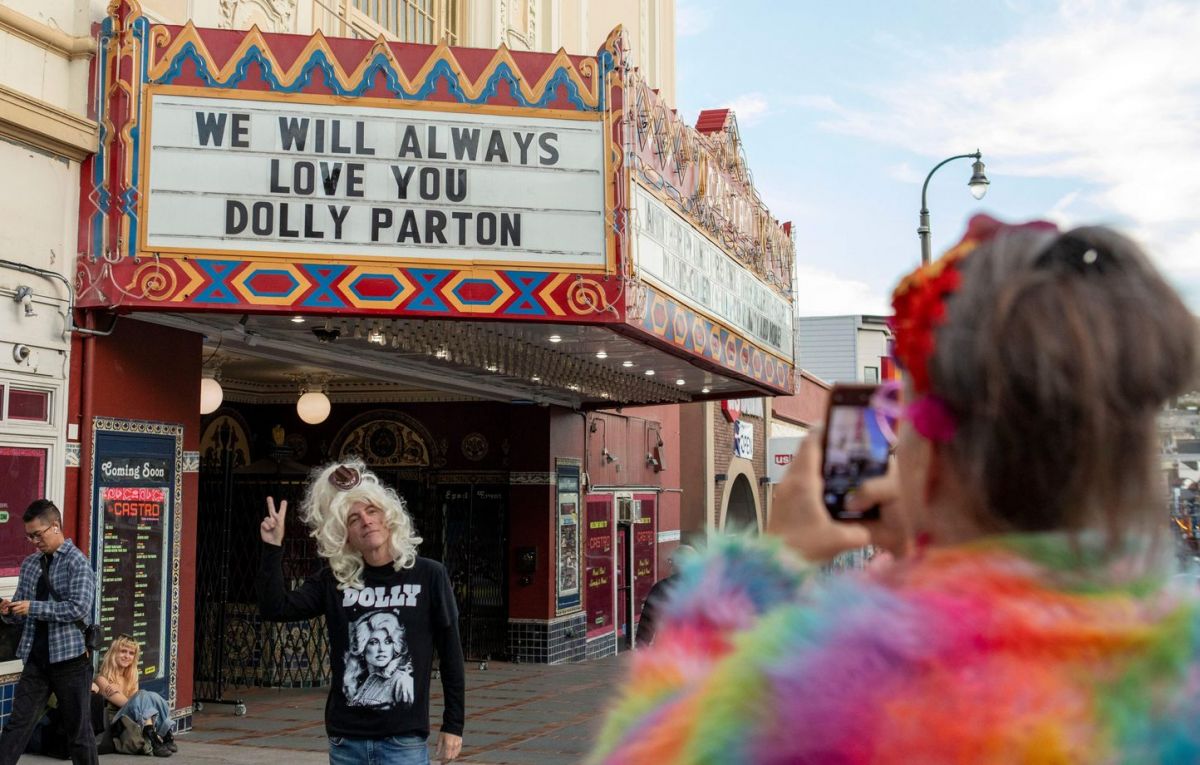
Dolly Parton, who passed away at the age of 80, was a valuable ally of the LGBT+ community throughout her career, opposing homophobia and transphobia and affirming her support for the rights of queer individuals, thereby earning the admiration of many artists and fans, as evidenced by the wave of tributes that followed her passing. (translated)

« On perd une alliée en or »… Pourquoi Dolly Parton est une icône de la communauté LGBT+
L
Le Soir 3w

Several personalities, including Taylor Swift and Beyoncé, paid tribute to Dolly Parton following her death at 80 years old, praising her indelible impact on music and the world, while political and musical figures also expressed their sorrow and admiration for the country legend. (translated)

Beyonce, Taylor Swift : plusieurs personnalités rendent hommage à Dolly Parton