WRLD

Search

#Déclin
Ultimora.net 6h

Ultimora.net reported that Miguel Ángel Félix Gallardo had died at the age of 80. According to the publication, he founded the Guadalajara cartel, had been in prison since 1989, and contributed to the emergence of the major international drug trafficking cartels. His life and decline, it added, inspired the television series "Narcos: Mexico." #Narcos #Droghe #Cartelli (translated)


1818
Il Fatto Quotidiano 11h

The dilemma of the Campo Largo leaders regarding participation in Atreju, the Fratelli d’Italia festival, intensifies with Giuseppe Conte announcing his presence to highlight the mistakes of the right, while Elly Schlein and Nicola Fratoianni decline the invitation. #Atreju #GiuseppeConte #EllySchlein (translated)

www.ilfattoquotidiano.it
Atreju o non Atreju? Il dilemma dei leader del Campo Largo. Conte: “Io ci vado per ricordare gli errori della destra”
1771
Le Monde.fr 11h

In Cambodia, where the summit of the International Organization of La Francophonie is held, the French language is experiencing a significant decline. #ProblemasDeConexión #Navegador #ExtensionesDeNavegador (translated)

www.lemonde.fr
Au Cambodge, qui organise le sommet de l’Organisation internationale de la francophonie, le long déclin de la langue française
1698
David Roberts 1d

The EIA says that, Trump's efforts notwithstanding, coal burn in the US continues to decline, and most new power demand is going to be met by renewables.

www.utilitydive.com
As coal burn declines, rising power demand will be primarily met by renewables: EIA
2342
Le Monde.fr 2d

France has decided to ban recreational fishing of the yellow eel in order to combat the decline of this endangered species. #browserissues #networkproblems #adblockers (translated)

www.lemonde.fr
La France interdit la pêche de loisir de l’anguille jaune, pour contrer l’effondrement de cette espèce
2860
Le Parisien 2d

The article explains that France prohibits fishing for yellow eels due to the need to preserve this endangered species and to combat its decline. #Pêche #LanguilleJaune #Environnement (translated)

www.leparisien.fr
« On ne peut pas continuer comme ça » : pourquoi la France interdit la pêche à l’anguille jaune
2874
Luigi Marattin 2d

Luigi Marattin has defined the government’s decision, led by Meloni, to forgo the reduction of nearly 5,000 positions in the school staff as profoundly wrong. He wrote that over the last ten years, the number of students in state schools had decreased by 800,000, which is 10%, while the number of teachers had increased by 135,000, or 16%. He added that the average number of students per class in Italy was lower than the EU and OECD average and that, in his opinion, there were no reasons to continue increasing the teaching staff. Marattin argued that Italian teachers were paid half compared to their German counterparts and much less than those in most other European countries. On behalf of the Liberal Democratic Party, he stated that he preferred staff levels appropriate to needs, with better-paid teachers who are trained and valued based on merit. He accused some of viewing schools as a social buffer, with many teachers poorly paid and little respected. Finally, he wrote that Italy would not be able to avoid decline without resisting populist and demagogic media waves. #Scuola #Educazione #Politica (translated)

3369
Gunther Fehlinger-Jahn 2d
Austrian economist

The post said Russia’s Foreign Ministry had claimed the Baltic states declined after leaving the USSR, and described Maria Zakharova as mocking them. It said Alyona Popova responded by citing monthly salaries of €2,628 in Lithuania, €2,243 in Estonia, €1,946 in Latvia and €516 in Russia. https://t.co/CUYNhpuLIY #Baltics #Russia #Economy #LT #EE #LV #RU

2669
rsvp 2d

House prices have declined in 11 towns across Ireland over the past year while national prices continue to rise, with significant drops noted in areas such as Carrickmacross and Ballinrobe. #HousePrices #Ireland #RealEstate

www.rsvplive.ie
Eleven towns in Ireland where house prices fell over the past year
2782
Luciano Magaldi Sardella (PhD) 2d

"GAZZETTA H24": STREET ART, STORNARA JOINS THE WIPO REPORT ALONGSIDE THE GREAT CITIES OF THE WORLD SOURCE: https://www.gazzettah24.it/street-art-stornara-entra-nel-rapporto-wipo-accanto-alle-grandi-citta-del-mondo/ ------------------------------------------------------------------- From "ghost town" to global model cited in Geneva: the cultural bet of Stornara Life APS captures the attention of WIPO. --------------------------------------------------------------------  STORNARA (FG) - There is a Southern Italy that makes little noise. It lies among the fields of wheat and rural roads of Capitanata, far from the main routes of mass tourism. Until a few years ago, Stornara, in the province of Foggia, was the typical town that statistics dismiss with a cruel adjective: "peripheral." Today, its name appears in an analysis from WIPO, the "World Intellectual Property Organization", the United Nations Agency in Europe based in Geneva. "Stornara Life APS" alongside Berlin, New York, Los Angeles, Paris, and Melbourne. ------------------------------------------------------------------ A report that looks at the walls of the world The text is titled "From Local Scenes to Global Recognition: Talent Mobility in Street Art". It is authored by three WIPO economists, Egbert Amoncio, Alexander Cuntz, and Alessio Muscarnera, and has been published in the "Creative Industries Insights" series. To build it, the authors started from data from the "Street Art Cities" platform. The technical note talks about approximately 74,000 geolocated works, collected and shared by street art enthusiasts worldwide. The fundamental questions are simple. Where does street art originate? Who travels to paint it? Which cities manage to attract outside talent? The first answer dismantles a common misconception. Street art is a profoundly local phenomenon. About one in five artists also works abroad, while the vast majority paint in their own city or in nearby ones. Among the few who cross borders, almost 40 percent are "highly mobile": they build an international artistic brand without severing their roots. These include the cases of Banksy, Os Gemeos, and Invader, whose walls appear on multiple continents. The authors use an effective term: street art is "glocal," rooted in its territory but capable of generating global circuits of talent and recognition. -------------------------------------------------------------------- The magnets of the world When asked which cities attract the most foreign artists, the map is fascinating. North America weighs heavily, with New York, Los Angeles, and Miami. Western Europe offers a dense network of opportunities, from Berlin to Amsterdam, from Vienna to Ghent, from Basel to Rotterdam, favored by the festival circuit and the freedom of movement within the Schengen area. Lisbon and Barcelona have focused on municipal support policies. Melbourne is the only representative from Oceania, and Northern Europe relies on Bergen, London, Belfast, and Stavanger. In this scenario of capitals and metropolises, the report includes an Italian exception, from Puglia, Foggia: Stornara, a small agricultural town of about 6,000 inhabitants, has been a destination for mural talents since 2018. It shows how street art can spark the rebirth of a community: thanks to the annual "Stramurales International Street Art Festival," born in 2017 from the strong will to combat urban and socio-economic decline by the founders of the social promotion association "Stornara Life APS,” Lino Lombardi and his local "Banda dei Fischietti," it has accumulated over 173 murals. About fifty of these are works by high-level international artists, with Google Trends data since 2017 showing notable interest in the mural tourism destination, indicating that the international festival has now captured national and international attention. It has also become the first academic case study in the world on a street art festival, "Street Art as Public Health Infrastructure," published in the prestigious academic journal "Harvard Health and Human Rights Journal" from Harvard University. Written by researcher Luciano Magaldi Sardella from Orta Nova and professor Matteo Mantuano from Lucera, this corresponds to the demonstration that an idea, an association, and the willingness of a community can change the identity of a place "forgotten by God." This is also recounted by those who have followed the story from the outside: the town, once little accustomed to visitors, now welcomes international tourists, individuals, groups, and schoolchildren who come to see its over 173 murals. ----------------------------------------------------------------- The secret is in density The data that has sparked pride in Stornara is this: it's not the volume that matters, it's the proportion. The organizers propose a simple indicator: works by foreign artists divided by the number of residents, multiplied by 100,000. With about over 50 international works and a population of a few thousand residents, Stornara reaches several hundred foreign works for every 100,000 inhabitants. This is a value that metropolises, with millions of residents, cannot approach. The meaning must be read accurately, and this is where the beauty of the matter lies. No one claims that Stornara has more foreign murals than New York. The point is that, in relation to its scale, few places in the world concentrate so much international art per inhabitant. The impact does not disperse in a megalopolis: it settles in every street, on every facade, in the daily life of those who live there. The most interesting part of the report looks beyond the ranking. The authors write that the value of street art extends well beyond the painted surfaces. Cities like Stornara demonstrate how urban art attracts tourism, generates media coverage, and can stimulate local businesses while strengthening community bonds and restoring the psychosocial well-being that could counter the perpetual Southern decline. However, the report adds a valuable warning: success depends on careful implementation and the involvement of artistic communities. Top-down initiatives risk being perceived as "predatory" by artists who care about the credibility of street art. The global model Stramurales appears to have avoided this pitfall. Field studies tell of walls donated by residents, week-long artist residences, and public discussions on the themes to be addressed. -------------------------------------------------------------------- The lesson of a town The report concludes with an idea that holds true for both Stornara and Berlin: the vitality of street art sinks its roots in local contexts. It arises from communities, speaks of their problems, and is made by artists immersed in their urban environments. The artistic family of "Stornara Life APS" understood this before many regional and local politicians, creating their walls into an open-air museum, a promise, and opening them to the world without ceasing to be themselves. In this official report from the Geneva Agency of the United Nations in Europe that measures the ability to attract talent, this results in, perhaps, the most precious value. Being cited alongside the great capitals of urban art while remaining, after all, a rural provincial town where every wall tells a colorful world of glocal stories. (translated)

www.gazzettah24.it
Street art, Stornara entra nel rapporto WIPO accanto alle grandi città del mondo
223
Luciano Magaldi Sardella (PhD) 2d

"GAZZETTA H24": STREET ART, STORNARA ENTERS THE WIPO REPORT ALONGSIDE THE GREAT CITIES OF THE WORLD SOURCE: https://www.gazzettah24.it/street-art-stornara-entra-nel-rapporto-wipo-accanto-alle-grandi-citta-del-mondo/ -------------------------------------------------------------------- From 'ghost town' to global model cited in Geneva: the cultural wager of Stornara Life APS wins the attention of WIPO. STORNARA (FG) - There is a Southern Italy that makes no little noise. It stands among the wheat fields and the rural roads of the Capitanata, far from the great routes of mass tourism. Until a few years ago Stornara, in the province of Foggia, was the typical town that statistics dismiss with a cruel adjective: 'peripheral'. Today its name appears in an analysis by WIPO, the 'World Intellectual Property Organization', the United Nations Agency of Europe headquartered in Geneva. 'Stornara Life APS' alongside Berlin, New York, Los Angeles, Paris, and Melbourne. -------------------------------------------------------------------- A report that looks at the walls of the world The text is entitled 'From Local Scenes to Global Recognition: Talent Mobility in Street Art'. It bears the signature of three WIPO economists, Egbert Amoncio, Alexander Cuntz, and Alessio Muscarnera, and was published in the series 'Creative Industries Insights'. To build it the authors started from the data of the platform 'Street Art Cities'. The technical note speaks of about 74,000 geolocalized works, collected and shared by street-art enthusiasts all over the world. The underlying questions are simple. Where is street art born? Who travels to paint it? Which cities manage to attract talent from outside? The first answer dismantles a commonplace. Street art is a profoundly local phenomenon. About one artist in five also works abroad, whereas the great majority paints in its own city or in those nearby.  Among the few who cross the borders, almost 40 per cent are 'highly mobile': they build an international artistic brand without severing their roots. They are the cases of Banksy, Os Gemeos, and Invader, whose walls appear on more than one continent. The authors use an effective term: street art is 'glocal', rooted in its own territory but capable of generating global circuits of talent and recognition. ---------------------------------------------------------------- The magnets of the world When one asks which cities attract foreign artists most, the map is fascinating. North America weighs by size, with New York, Los Angeles, and Miami. Western Europe offers a dense network of opportunities, from Berlin to Amsterdam, from Vienna to Ghent, from Basel to Rotterdam, favoured by the festival circuit and by freedom of movement of the Schengen area. Lisbon and Barcelona have staked on municipal policies of support. Melbourne is the sole representative of Oceania, and Northern Europe relies on Bergen, London, Belfast, and Stavanger. In this scenario of capitals and metropolises, the report inserts an Italian, Apulian, Foggian exception: Stornara, a small agricultural town of about 6,000 souls, since 2018 has been a destination for mural talent. It shows how street art can trigger the rebirth of a community: thanks to the annual festival 'Stramurales International Street Art Festival', born in 2017 from the iron will to combat urban and socio-economic decline on the part of the founders of the social promotion association 'Stornara Life APS', Lino Lombardi and his Stornarese 'Banda dei Fischietti', it has accumulated more than 173 murals. About fifty of them are works by high-level international artists, with Google Trends data which since 2017 have shown a remarkable interest in the tourist-mural destination, a sign that the international festival has by now captured national and international attention. It has also become the first monographic academic case study in the world on a street-art festival, 'Street Art as Public Health Infrastructure', published in the prestigious journal of world academic standing, the 'Harvard Health and Human Rights Journal' of Harvard University. Through the work of the researcher Luciano Magaldi Sardella of Orta Nova and of Professor Matteo Mantuano of Lucera, all this corresponds to the demonstration that an idea, an association, and the availability of a community can change the identity of a place 'forgotten by God'. He who has followed the affair from outside also tells it: the town, once little accustomed to visitors, today welcomes international tourists, individuals, groups, and school parties come to see its more than 173 murals. -------------------------------------------------------------------- The secret is in density The datum which has kindled Stornarese pride is this: volume does not count, proportion counts. The organizers propose a simple indicator: works by foreign artists divided by inhabitants, multiplied by 100,000.  With about over 50 international works and a population of a few thousand residents, at Stornara one arrives at several hundred foreign works per 100,000 inhabitants. It is a value which the metropolises, with millions of residents, cannot approach. The meaning must be read with precision, and precisely here stands the beauty of the thing. No one maintains that Stornara has more foreign murals than New York. The point is that, in relation to its scale, few places in the world concentrate so much international art per inhabitant.  The impact does not disperse itself in a megalopolis: it deposits itself in every street, on every façade, in the everyday life of those who inhabit it. The most interesting part of the report is that which looks beyond the ranking. The authors write that the value of street art extends well beyond the painted surfaces. Cities such as Stornara demonstrate how urban art attracts tourism, generates media coverage, and can stimulate local commercial activities, strengthening the sense of community and restoring the psychosocial well-being which would distance the imperishable southern decline.  The report adds, however, a precious warning: success depends on careful implementation and on the involvement of the artistic communities. Initiatives dropped from above risk being perceived as 'predatory' by artists who have street credibility at heart. The global Stramurales model seems to have avoided the snare. Field studies tell of walls donated by residents, one-week artists' residencies, and public discussion of the themes to be addressed. ----------------------------------------------------------------- The lesson of a town The report closes itself with an idea which holds for Stornara as much as for Berlin: the vitality of street art sinks in local roots. It is born from communities, speaks of their problems, is made by artists immersed in their urban contexts. The artistic family of 'Stornara Life APS' understood it before many regional and local politicians, making of its own walls an open-air museum, a promise, and opening them to the world without ceasing to be itself. In this official report of the Genevan Agency of the United Nations of Europe which measures the capacity to attract talent, this turns out to be, probably, the most precious result:. To be cited alongside the great capitals of urban art and to remain, after all, a rural provincial town in which every wall tells a variegated world of glocal stories.

www.gazzettah24.it
Street art, Stornara entra nel rapporto WIPO accanto alle grandi città del mondo
111
rsvp 3d

Research indicates that Alzheimer's disease may present early warning signs through physical changes in motor function, such as balance and coordination issues, years before noticeable memory decline occurs. #Alzheimer #Dementia #HealthResearch

www.rsvplive.ie
Alzheimer's may have 'early warning sign' - and it's not memory loss
3347
Oliver 3d

"Microsoft 365 crashes and everyone panics. Meanwhile, Planet Earth's life-support systems are approaching critical failure. Seven of nine planetary boundaries have been breached. Monitored wildlife populations have declined by an average of 73% since 1970 ..." www.facebook.com/permalink.ph...

2232
El Español 3d

Jordi Wild has published full interviews with Pedro Sánchez, Alberto Núñez Feijóo, and Ada Colau, while Santiago Abascal declined to participate after the controversy in the program 'La Revuelta'. #JordiWild #AlbertoNúñezFeijóo #EntrevistasPolíticas (translated)

www.elespanol.com
Vea las entrevistas completas de Jordi Wild a Sánchez, Feijóo y Colau
2679
Luciano Magaldi Sardella (PhD) 3d

"VIVERE PUGLIA": STRAMURALES: STORNARA IN THE “GLOBAL TOP 20” OF THE REPORT BY THE UNITED NATIONS AGENCY IN EUROPE” From “ghost town” to global model cited in Geneva: the cultural gamble of Stornara Life APS wins the attention of WIPO There is a southern Italy that is making quite a noise. It lies among the wheat fields and rural roads of the Capitanata, far from the great routes of mass tourism. Until a few years ago Stornara, in the province of Foggia, was the typical town that statistics dismiss with a cruel adjective: “peripheral”. Today its name appears in an analysis by WIPO, the “World Intellectual Property Organization”, a United Nations agency in Europe based in Geneva. So Stornara alongside Berlin, New York, Los Angeles, Paris, and Melbourne. A report that looks at the walls of the world The text is entitled “From Local Scenes to Global Recognition: Talent Mobility in Street Art. It is signed by three WIPO economists, Egbert Amoncio, Alexander Cuntz, and Alessio Muscarnera, and was published in the “Creative Industries Insights” series. To construct it, the authors started from data from the “Street Art Cities” platform. The technical note speaks of about 74,000 geolocated works, collected and shared by street art enthusiasts around the world. The underlying questions are simple. Where is street art born? Who travels to paint it? Which cities succeed in attracting talent from outside? The first answer dismantles a commonplace. Street art is a profoundly local phenomenon. About one artist in five also works abroad, while the great majority paint in their own city or in nearby ones. Among the few who cross borders, almost 40 per cent are “highly mobile”: they build an international artistic brand without severing their roots. These are the cases of Banksy, Os Gemeos, and Invader, whose walls appear on several continents. The authors use an effective term: street art is “glocal”, rooted in its own territory but capable of generating global circuits of talent and recognition. The magnets of the world When one asks which cities most attract foreign artists, the map is fascinating. North America weighs in by size, with New York, Los Angeles, and Miami. Western Europe offers a dense network of opportunities, from Berlin to Amsterdam, from Vienna to Ghent, from Basel to Rotterdam, favoured by the festival circuit and by freedom of movement in the Schengen area. Lisbon and Barcelona have focused on supportive municipal policies. Melbourne is the sole representative of Oceania, and Northern Europe relies on Bergen, London, Belfast, and Stavanger. In this scenario of capitals and metropolises, the report inserts an Italian, Apulian, Foggia exception: Stornara, a small agricultural town of about 6,000 souls, has since 2018 been a destination for mural talent. It shows how street art can trigger the rebirth of a community: thanks to the annual festival “Stramurales International Street Art Festival”, born in 2017 from the iron will to combat urban and socio-economic decline on the part of the founders of the social promotion association Stornara Life APS, Lino Lombardi and his Stornara-based Banda dei Fischietti, it has accumulated more than 173 murals. About fifty of them are works by high-level international artists, with Google Trends data since 2017 having shown remarkable interest in the tourist-mural destination, a sign that the international festival has now captured national and international attention. Having also become the world’s first single-case academic study on a street art festival, “Street Art as Public Health Infrastructure”, published in the prestigious world-level academic journal, the “Harvard Health and Human Rights Journal” of Harvard University, by the researcher Luciano Magaldi Sardella from Orta Nova and Professor Matteo Mantuano from Lucera, all this amounts to proof that an idea, an association, and the willingness of a community can change the identity of a place “forgotten by God”. Those who have followed the story from outside tell it too: the town, once little accustomed to visitors, today welcomes international tourists, individuals, groups, and school parties who have come to see its more than 173 murals. The secret lies in density The figure that has ignited Stornara pride is this: volume does not count, proportion does. The organizers propose a simple indicator: works by foreign artists divided by inhabitants, multiplied by 100,000. With more than 50 international works and a population of a few thousand residents, Stornara reaches several hundred foreign works per 100,000 inhabitants. It is a value that metropolises, with millions of residents, cannot approach. The meaning must be read precisely, and precisely here lies the beauty of the thing. Nobody claims that Stornara has more foreign murals than New York. The point is that, in relation to its scale, few places in the world concentrate so much international art per inhabitant. The impact is not dispersed in a megalopolis: it settles in every street, on every façade, in the daily life of those who live there. The most interesting part of the report is the one that looks beyond the ranking. The authors write that the value of street art extends far beyond painted surfaces. Cities like Stornara show how urban art attracts tourism, generates media coverage, and can stimulate local commercial activities, strengthening the sense of community and restoring psychosocial well-being that would drive away the perennial southern decline. The report adds, however, a valuable warning: success depends on careful implementation and on the involvement of artistic communities. Top-down initiatives risk being perceived as “predatory” by artists who care about street credibility. The global Stramurales model seems to have avoided the pitfall. Field studies tell of walls donated by residents, week-long artist residencies, and public discussion of the themes to be addressed. The lesson of a town The report closes with an idea that holds for Stornara as much as for Berlin: the vitality of street art is rooted in local roots. It is born from communities, speaks of their problems, and is made by artists immersed in their urban contexts. The artistic family of Stornara Life APS understood this before many regional and local politicians, making its own walls an open-air museum, a promise, and opening them to the world without ceasing to be itself. In this official report by the Geneva-based United Nations agency in Europe that measures the capacity to attract talent, this turns out to be, probably, the most precious result: to be cited alongside the great capitals of urban art and to remain, after all, a rural provincial town in which every wall tells a colourful world of glocal stories. (translated)

447
Luciano Magaldi Sardella (PhD) 3d

“VIVERE PUGLIA”: STRAMURALES: STORNARA IN THE “GLOBAL TOP 20” OF THE REPORT OF THE UNITED NATIONS AGENCY OF EUROPE SOURCE: https://www.viverepuglia.it/2026/11/12/stramurales-stornara-nella-global-top-20-del-rapporto-dellagenzia-delle-nazioni-unite-deuropa/207030/ ------------------------------------------------------------------- From “ghost town” to global model cited in Geneva: the cultural bet of Stornara Life APS captures the attention of WIPO There is a South Italy that does not make much noise. It lies among the wheat fields and rural roads of Capitanata, far from the main routes of mass tourism. Until a few years ago, Stornara, in the province of Foggia, was the typical town that statistics dismiss with a cruel adjective: “peripheral.” Today its name appears in a WIPO analysis, the “World Intellectual Property Organization,” a United Nations agency in Europe based in Geneva. So, Stornara stands alongside Berlin, New York, Los Angeles, Paris, and Melbourne. ------------------------------------------------------------------- A report that looks at the walls of the world The text is titled From Local Scenes to Global Recognition: Talent Mobility in Street Art. It is authored by three WIPO economists, Egbert Amoncio, Alexander Cuntz, and Alessio Muscarnera, and has been published in the “Creative Industries Insights” series. To build it, the authors started from data from the “Street Art Cities” platform. The technical note discusses about 74,000 geolocated works collected and shared by street art enthusiasts worldwide. The underlying questions are simple. Where does street art originate? Who travels to paint it? Which cities manage to attract talent from outside? The first answer dismantles a common misconception. Street art is a profoundly local phenomenon. About one in five artists also works abroad, while the vast majority paint in their own city or nearby ones. Among the few who cross borders, nearly 40 percent is “highly mobile”: they build an international artistic brand without severing their roots. These include cases like Banksy, Os Gemeos, and Invader, whose works appear on multiple continents. The authors use an effective term: street art is “glocal,” rooted in its territory yet capable of generating global circuits of talent and recognition. -------------------------------------------------------------------- The magnets of the world When asked which cities most attract foreign artists, the map is fascinating. North America weighs in terms of size, with New York, Los Angeles, and Miami. Western Europe offers a dense network of opportunities, from Berlin to Amsterdam, from Vienna to Ghent, from Basel to Rotterdam, fueled by the festival circuit and the freedom of movement within the Schengen area. Lisbon and Barcelona have focused on municipal support policies. Melbourne is the only representative from Oceania, while Northern Europe relies on Bergen, London, Belfast, and Stavanger. In this landscape of capitals and metropolises, the report includes an Italian, Apulian, Foggian exception: Stornara, a small agricultural town of about 6,000 residents, has been a destination for mural talent since 2018. It shows how street art can trigger a community's revival: thanks to the annual “Stramurales International Street Art Festival,” born in 2017 from the determined will to combat urban and socio-economic decline by the founders of the social promotion association Stornara Life APS, Lino Lombardi and his local Banda dei Fischietti, it has accumulated over 173 murals. About fifty are works by high-level international artists, with Google Trends data since 2017 showing a remarkable interest in the tourism-mural destination, indicating that the international festival has now captured national and international attention. It has also become the first monographic academic case study in the world on a street art festival, “Street Art as Public Health Infrastructure,” published in the prestigious global academic journal “Harvard Health and Human Rights Journal” of Harvard University, by researcher Luciano Magaldi Sardella from Orta Nova and professor Matteo Mantuano from Lucera. All this corresponds to the demonstration that an idea, an association, and a community's willingness can change the identity of a place “forgotten by God.” This is also told by those who have followed the story from the outside: the town, once unaccustomed to visitors, now welcomes international tourists, individuals, groups, and school classes coming to see its over 173 murals. ----------------------------------------------------------------- The secret lies in density The data that has ignited pride in Stornara is this: it’s not the volume that matters, but the proportion. The organizers propose a simple indicator: the works of foreign artists divided by the population, multiplied by 100,000. With about over 50 international works and a population of a few thousand residents, Stornara reaches several hundred foreign works per 100,000 inhabitants. It’s a value that metropolises, with millions of residents, cannot approach. The significance must be read accurately, and here lies the beauty of the thing. No one claims that Stornara has more foreign murals than New York. The point is that, relative to its scale, few places in the world concentrate so much international art per inhabitant. The impact does not dissipate in a megalopolis: it settles in every street, on every façade, in the daily lives of those who live there. The most interesting part of the report looks beyond the ranking. The authors note that the value of street art extends well beyond painted surfaces. Cities like Stornara demonstrate how urban art attracts tourism, generates media coverage, and can stimulate local commercial activities while strengthening community bonds and restoring the psychosocial well-being that could fend off enduring southern decline. However, the report adds a valuable warning: success depends on careful implementation and the involvement of artistic communities. Top-down initiatives risk being perceived as “predatory” by artists who care about street credibility. The global Stramurales model seems to have avoided this pitfall. Field studies recount walls donated by residents, week-long artist residencies, and public discussions on issues to address. ----------------------------------------------------------------- The lesson from a town The report concludes with an idea that applies to Stornara as much as to Berlin: the vitality of street art is rooted in local foundations. It arises from communities, speaks of their problems, and is made by artists immersed in their urban contexts. The artistic family of Stornara Life APS understood this before many regional and local politicians, turning their walls into an open-air museum, a promise, and opened them to the world while remaining true to themselves. In this official report from the Geneva-based United Nations agency in Europe that measures the capacity to attract talent, this is likely the most valuable outcome: being mentioned alongside the great capitals of urban art while remaining, after all, a rural provincial town where every wall tells a colorful world of glocal stories. (translated)

559
Carlos Cuerpo 3d
Spanish economist

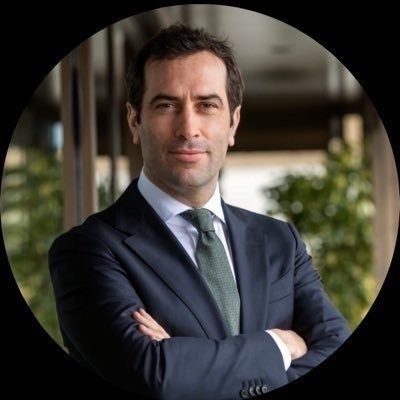
Sources close to the Spanish government decline to comment on this matter and refer to what was expressed earlier this week by the first vice president, Carlos Cuerpo, who made it clear that the Executive has sought to present a candidacy "strong enough, powerful enough to have realistic chances," which leads them to feel optimistic that Spain "for the first time, could have someone at the helm of the European Central Bank." #BCE #Macron #Merz (translated)

3249
2
20minutes 4d

The Made in France fair in Paris highlights the disparities between winning sectors, such as energy and manufacturing, which are experiencing a slight rebound, and losing sectors, notably financial services and agriculture, whose share of made in France continues to decline. #MadeInFrance #Industrie #Énergie (translated)

www.20minutes.fr
Made in France : Quels sont les secteurs gagnants et les perdants de la relance du « Made in France » ?
2804
Le Monde.fr 4d

In the declining Aral Sea, the artemia shrimp becomes a valuable resource for global aquaculture, offering a fascinating but temporary phenomenon. #ProblemasDeCarga #ConexiónInternet #ExtensionesDeNavegador (translated)

www.lemonde.fr
Dans la mer d’Aral en voie d’assèchement, le « miracle » éphémère de la crevette artémia, ressource prisée de l’aquaculture mondiale
2244
Luciano Magaldi Sardella (PhD) 4d

"VIVERE CERIGNOLA": FROM THE FIELDS OF CAPITANATA TO THE UNITED NATIONS: THIS IS HOW THE MURALS OF STORNARA CHALLENGE THE WORLD’S CAPITALS SOURCE: https://www.viverecerignola.it/2026/11/12/dai-campi-della-capitanata-alle-nazioni-unite-cos-i-murales-di-stornara-sfidano-le-capitali-mondiali/207189/ STORNARA (FG) - The UN agency for Intellectual Property includes the Foggia village among the most attractive global hubs for urban art. Thanks to a grassroots festival that managed to turn around the fate of a small agricultural center. Neither the skyscrapers of New York nor the grand boulevards of Paris are needed to become a global reference point for contemporary culture. Sometimes, all it takes are the plastered facades of a village of six thousand souls, surrounded by the wheat fields of the province of Foggia, and the tenacity of a community that decides not to succumb to marginality. This is the story told in Geneva by the World Intellectual Property Organization (WIPO), which in its latest report on creative industries has spotlighted the artistic miracle of Stornara. ------------------------------------------------------------------- An Italian exception among metropolises The document, titled From Local Scenes to Global Recognition: Talent Mobility in Street Art, examines the global geography of murals, analyzing over 74,000 works mapped on a planetary scale. The goal of the economists behind the study - Egbert Amoncio, Alexander Cuntz, and Alessio Muscarnera - was to understand where international artists are active and which places can attract talent from abroad. In the map of cultural "magnets," giants like Los Angeles, Berlin, London, Barcelona, and Melbourne appear. Yet, amid these major capitals, the virtuous anomaly of Stornara stands out: a rural center that, thanks to the power of ideas, has managed to enter the select global elite of public art. -------------------------------------------------------------------- The winning bet of Stornara Life APS It all began in 2017, when the Stornara Life APS association, driven by Lino Lombardi and the "Whistleblowers' Band," launched Stramurales. The aim was not only aesthetic but deeply social: to counter economic decline and cultural isolation through shared beauty. In less than a decade, the village has transformed into an open-air gallery with over 173 wall works, including about fifty creations by international masters in the field. An open-air laboratory whose social impact has already been certified in the international academic realm, thanks to a study published in the "Harvard Health and Human Rights Journal" by researchers from Apulia, Luciano Magaldi Sardella and Matteo Mantuano, who analyzed urban art as a genuine infrastructure for public well-being. -------------------------------------------------------------------- The value of the human scale What impresses UN analysts is the proportional impact of the project. Relating the number of foreign works to the population, Stornara achieves an inconceivable per capita artistic concentration for any metropolis. Here, art is not confined to a peripheral neighborhood but inhabits every street and accompanies residents' daily actions. The WIPO report finally indicates the secret formula that makes this model replicable elsewhere: authenticity. Unlike top-down regeneration operations, often viewed with suspicion by the artists themselves, in Stornara, it is the residents who donate the walls of their homes, welcoming muralists into week-long artist residencies and participating in the selection of themes. A lesson in civic participation that demonstrates how even small villages in the South can speak to the world without losing their soul. (translated)

449