WRLD

Search

#Donation
George Monbiot 3h

The trade unions resisting a political donations cap in the UK are ragged-trousered philanthropists. Thanks to their delusion that a system allowing limitless donations enhances their power, they're in danger of handing the country to the far-right parties that billionaires support. Burnham must act


1303
Dividend King 👑 3h

Dividend King wrote that Elon Musk announced his intention to give a SpaceX share to every American child next year. According to the author, who estimated the number of minors in the United States at 72 million, this donation would represent around 10 billion dollars, or 1.12% of the shares owned by Musk. He added that this would be the beginning of a series of donations, then compared this announcement to events in France and expressed regret for not being born in the right country. #ElonMusk #SpaceX #donation (translated)

1792
Östgöta Correspondenten 5h

Elon Musk has announced that all children in the USA will receive a share in Space X as part of a large donation worth over 100 billion kronor, which will be implemented next year. #ElonMusk #SpaceX #barnaktier (translated)

www.corren.se
Musk: Alla barn i USA ska få en Space X-aktie
1765
Peter Geoghegan 22h

This right here is the power of Elon Musk to completely warp politics without *giving a penny* as a political donation Without X, Lowe would be a no hoper independent MP Instead he’s spreading ethnic cleansing chat to normies. Wild

1497
BFMTV 3d

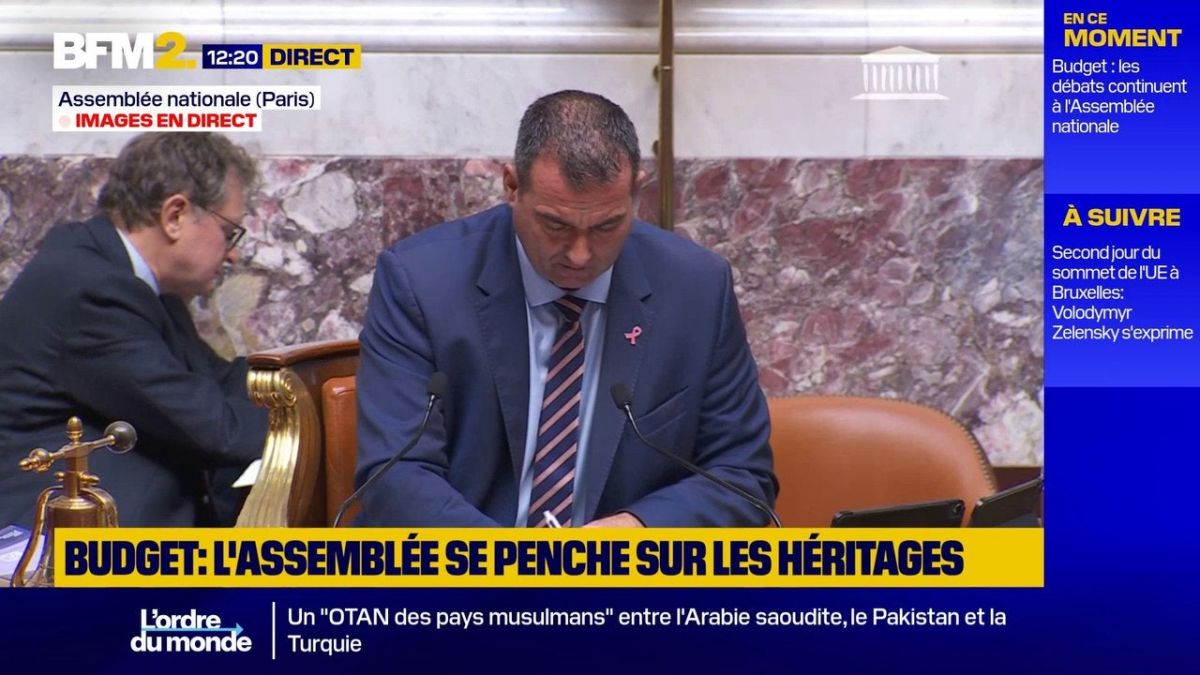
The National Assembly voted on an article of the 2027 budget introducing temporary measures to modify the taxation of donations. #Budget2027 #LaFranceInsoumise #Fiscalité (translated)

www.bfmtv.com
Budget 2027: l'Assemblée vote l'article prévoyant des mesures temporaires pour aller la fiscalité des donations
2911
Nick Alinia 5d

Nick Alinia wrote that Andreas Klominek was acquitted in the district court after allegedly kneeing him in the head on May 1, when he was sitting down. Alinia described Klominek as a left-wing extremist with connections to AFA. He stated that the chairman of the court wanted to convict Klominek for assault, but that the three lay judges voted to acquit him. Alinia also wrote that one of the lay judges later turned out to be employed at Expo and connected to AFA. #Misshandel #Rättvisa #Expo (translated)

2933
Le Monde.fr 6d

The article discusses the proposed changes in the finance law for 2027 concerning tax deductions for retirees, donations, and life insurance. #ProblemasDeConexión #Navegador #ExtensionesDeNavegador (translated)

www.lemonde.fr
Fiscalité : abattement pour les retraités, donations, assurance-vie… Ce que changerait la loi de finances pour 2027
2831
Di.se 1w

Businessman Christer Gardell's donation of 100 million kronor to Swedish tennis begins with an initial disbursement of 20 million in October, which gives hope for future development within the sport. #SvenskTennis #ChristerGardell #Tennisbidrag (translated)

www.di.se
Nu börjar Gardells miljonregn över svensk tennis
2969
Lilith Wittmann 1w

The author said hundreds of people were funding their investigations through monthly Patreon pledges and one-time donations, making independent, long-term reporting possible.

2970
Dividend King 👑 1w

Dividend King provided an update on the amendments concerning investors and entrepreneurs reviewed by the finance committee as part of the 2027 budget. He indicated that nearly all proposals aimed at increasing the flat tax had been rejected, such as the proposals to abolish the single flat-rate tax. A final amendment was supposed to be submitted for a vote that very day, but it had little chance of being adopted. According to his report, the committee had rejected all amendments aimed at tightening the Exit Tax, particularly those seeking to extend its duration from 2 to 15 years. However, it had adopted proposals to include portfolios of cryptocurrencies exceeding €800,000 in this scheme, to tax capital gains realized during conversions into stablecoins, and to impose a declaration to the tax authorities for self-hosted crypto portfolios of at least €100,000. Failure to declare could result in a fine of up to €10,000, he specified. Dividend King also stated that an amendment aimed at extending the 2% tax on holdings to financial investments had been withdrawn and that amendment I-CF1440, which proposed to abolish the tax on certain non-professional assets of wealth management holdings, had not been supported. He added that the amendment on contribution-disposition put forward by the general budget rapporteur, Philippe Juvin, had been adopted. This included stricter controls on donations of holding shares and changes to the taxation deferral regime, with transitional provisions for contributions made before October 7, 2026. The author believed that cryptocurrency holders were, at this stage, the main losers. He emphasized, however, that these results only concerned the finance committee and that the amendments still needed to be examined in a public session. He also reminded that amendments rejected in committee could return during debates and that the government could have its original version of the budget adopted through Article 49.3 or through ordinances. #Budget2027 #Cryptomonnaies #Finances (translated)

3543
Paul Vannier 2w

Paul Vannier wrote that the National Rally voted against eight measures examined the day before in the finance committee, which, according to him, would have made the wealthiest contribute to the financing of public services. He cited the creation of a universal tax aimed at the very wealthy residing abroad, the elimination of the flat tax on dividends, two proposals to raise this tax, the tripling of the surcharge on very high incomes, an increase in the minimum tax rate on large fortunes, a measure against circumventing inheritance rights through the spreading of donations, and the deindexation of the highest tax brackets from inflation. Vannier added that the RN had voted with the Macronists. #JusticeFiscale #Richesse #ServicesPublics (translated)

2974
Sébastien Lecornu 2w

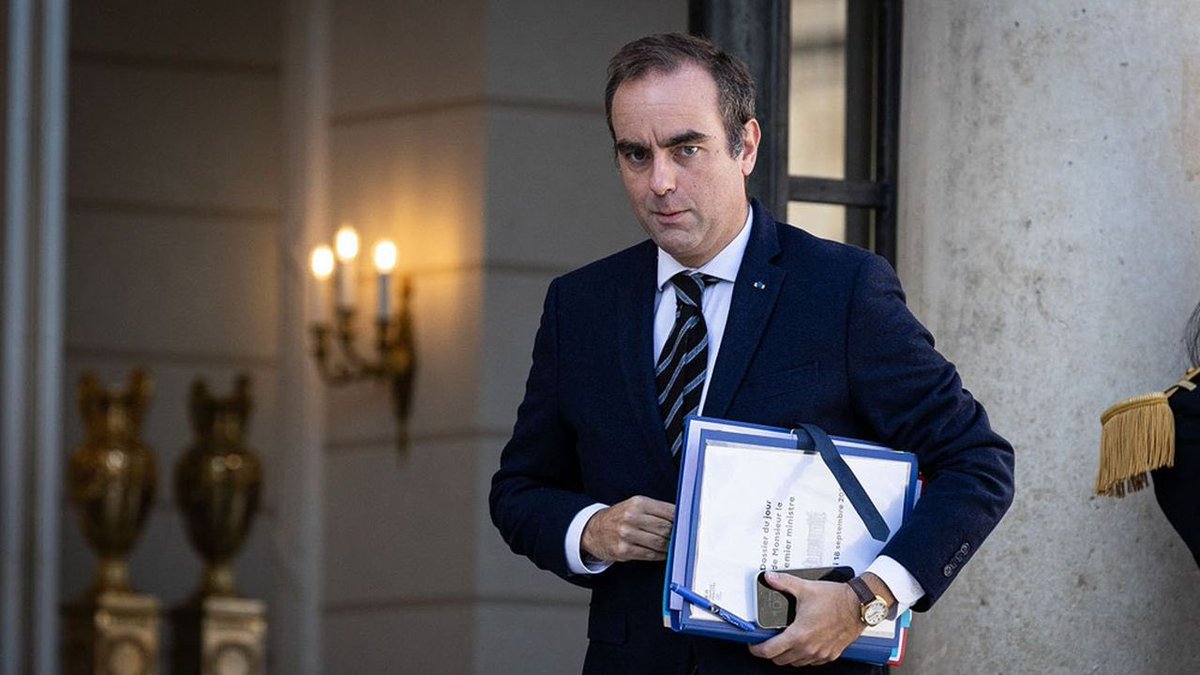
On the other hand, another article announced by Sébastien Lecornu to encourage family donations, by raising the exemption limit from 31,865 to 50,000 euros, has been approved and even extended over time. #Budget2027 #Économie #Politique (translated)

Budget 2027 : Isolé, un député macroniste défend le plafonnement de l’abattement fiscal aux retraités
www.20minutes.fr
1832
Euronews English 2w

Shiranthi Rajapaksa has been jailed pending investigation into alleged corruption. Authorities accuse her of misusing donation funds during her time as first lady of the island nation. #SriLanka #Corruption #Rajapaksa

www.euronews.com
Former Sri Lankan first lady Shiranthi Rajapaksa arrested on charges of misusing donation funds and corruption
2061
BBC 2w

The 73-year-old has been arrested over allegations that a charity she is linked to misused donations. #SriLanka #Corruption #CharityMisuse

www.bbc.co.uk
Sri Lanka's ex-first lady arrested over alleged misuse of children's hospital donations
1948
BBC 2w

The 73-year-old has been arrested over allegations that a charity she is linked to misused donations. #SriLanka #Corruption #Rajapaksa

www.bbc.co.uk
Sri Lanka's ex-first lady arrested over alleged misuse of children's hospital donations
1949
Dividend King 👑 3w

I just read in detail the 2027 finance bill that was submitted this morning by the Prime Minister ✅ Let's overlook the fact that the proposed savings are clearly insufficient. What I noted regarding taxation: • No general increase in capital taxation • No direct attack concerning the PEA • No change regarding the Exit Tax (and this is what interested me the most) • Reduction of 30% of the exceptional surtax on large companies (positive for the large groups concerned, including several companies in the CAC 40) • No new tax or tightening announced specifically targeting wealth management holdings • Indexation of the income tax scale to inflation • No cuts to the Dutreil pact (business transmission) • No increase in donation/succession rights (but no decrease either) • Several measures favorable to the transmission and productive investment of businesses We will now have to remain vigilant about the modifications that could be made by parliamentarians, But in any case, the Government's proposal remains quite timid regarding tax increases, which is an excellent thing ✅ #Fiscalité #Économie #DroitFiscal (translated)

13733
Luciano Magaldi Sardella (PhD) 3w

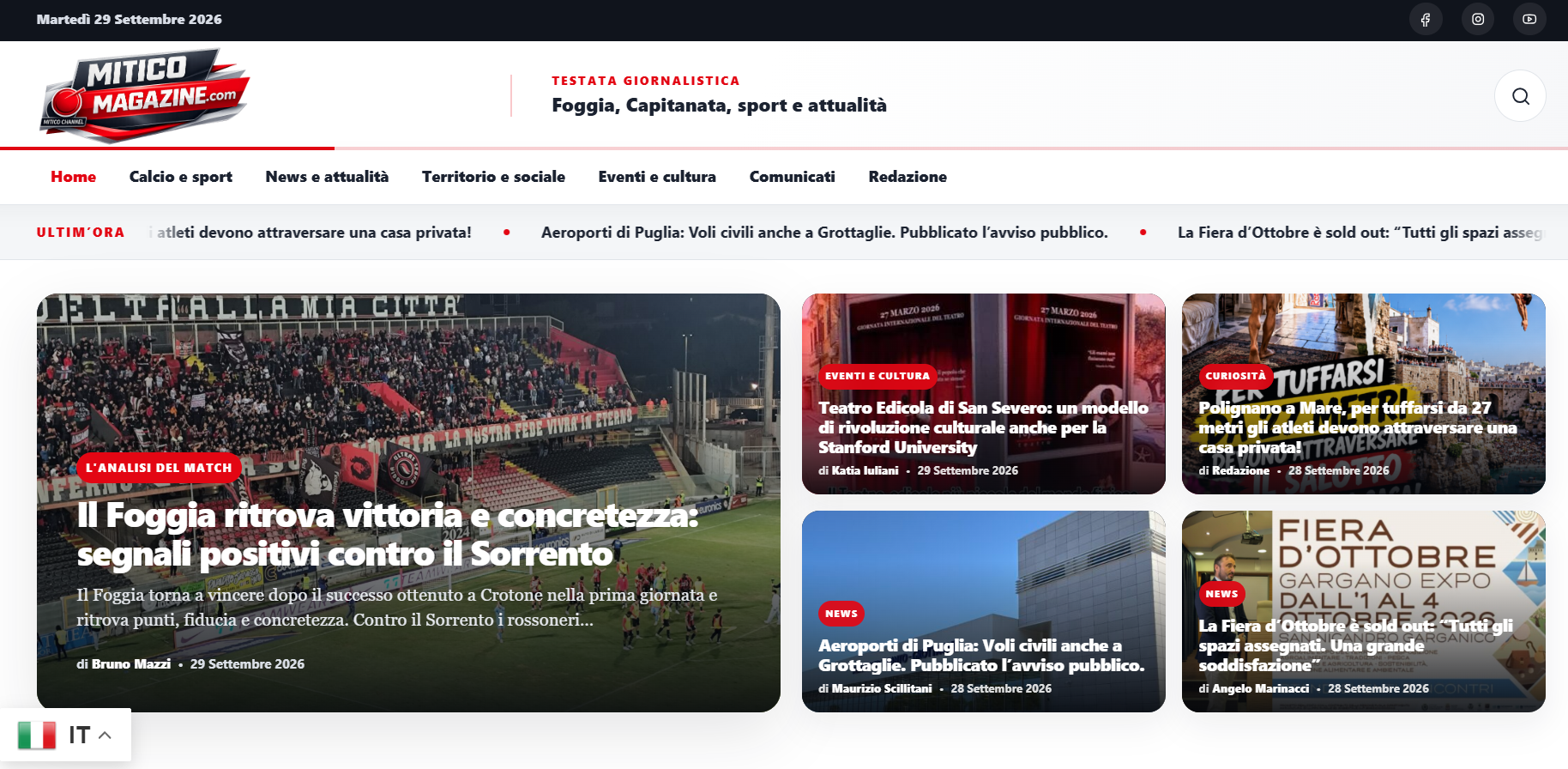
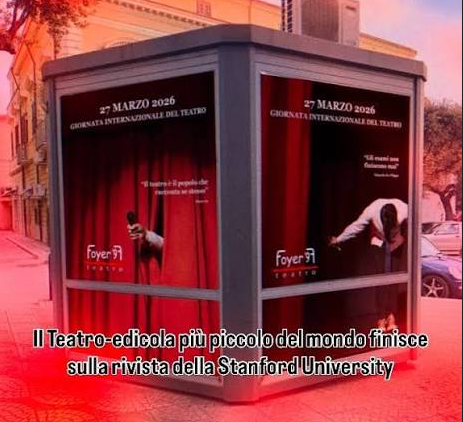
Mitico Magazine - The Teatro Edicola of San Severo: A Model of Cultural Revolution for Stanford University as Well Source: https://www.miticomagazine.com/territorio-e-sociale/teatro-edicola-di-san-severo-un-modello-di-rivoluzione-culturale-anche-per-la-stanford-university/ The Teatro Edicola in Via Tondi In San Severo, a singular metamorphosis has taken place: a newsstand abandoned for at least six years has found a new function and a new identity, transforming into one of the smallest and most unusual theatre stages in the world. An experiment born in the heart of the town which, in just a few months, has moved beyond local boundaries, attracting attention even overseas. It is called Teatro Edicola and it is a project conceived by the company Foyer '97, artistically directed by Francesco Gravino, which has brought the old newsstand in Via Tondi back to life through a formula that is both essential and surprising. Foyer '97 Foyer '97 APS was established as a formally constituted association active in the cultural sector in San Severo in 1997, born from the vocation of a group of actors, directors and theatre enthusiasts, with the aim of building a "living" and accessible theatre in the town. Over the years the company has developed a repertoire that includes texts from the classical tradition, contemporary dramaturgy, comedy and experimental projects, not limiting itself to the mere production of theatre shows, but also organising theatre courses and workshops and educational and cultural projects characterised by a strong inclusive ethos, particularly in schools. Foyer '97 does not always have a fixed artistic ensemble, but works with different performers and collaborators depending on the project; the only indispensable presence is that of Francesco Guido Gravino himself, actor, director and artistic director of the theatre company. The distinctive feature of Foyer '97 is certainly the value of social and cultural promotion attributed to theatre, the extremely close relationship with the audience and the search for a type of theatre outside conventional spaces, with cemeteries, trains, bell towers, and now a newsstand, as its backdrop. Six spectators, a few minutes and a minimal distance between stage and audience The project was launched on 27 March 2026, on the occasion of World Theatre Day, offering a theatrical experience built around a radical reduction of the conventional spaces and times of performance. The idea was born not only from the search for unconventional spaces, but also from "Edicola Fiore", the morning press review with a strongly ironic tone presented by Rosario Fiorello and Stefano Meloccaro, which was broadcast first only on Fiorello's social channels between 2011 and 2014, and then also on radio and television between 2016 and 2018. The review took its name from the diminutive of its founder, Fiore, and from the newsstand of a friend of Fiorello's in Via Flaminia Nuova in Rome, where the showman would meet early in the morning with a group of friends to read the newspapers. The San Severo newsstand was granted free of charge by its owner Pino Frau to the theatre group which, after obtaining temporary authorisation and institutional support from the Municipality of San Severo, refurbished it within two weeks at a cost of less than €3,000. Just six seats, a total surface area of 4 sq m, of which only 2 are for the stage area, less than a metre between actors and audience, a curtain, a lectern, two lights, performances lasting between 5 and 15 minutes, audience rotation every quarter of an hour: apparently minimal elements that end up subverting the usual relationship between stage and auditorium. Spectators, in fact, find themselves immersed in the stage action, in such proximity to the actors that every gesture, expression and word becomes immediately perceptible. In this way, theatre abandons its traditional spaces and insinuates itself into the everyday life of the street, becoming an intimate, concentrated and almost participatory experience. During the inaugural period admission was free with a subsequent voluntary donation from spectators; in the event of a more stable and longer-term concession, which could lead to seasonal theatre performances, the proposed ticket price would be €5. Audiences reward the experiment Foyer '97's gamble met with public interest right from the start: over 60 people attended the shows in a single afternoon, while the three days that inaugurated the season sold out. From a singular local experiment, the Teatro Edicola thus began to arouse curiosity even outside the province of Foggia, gradually transforming into a case of cultural and social interest, until it reached the American continent. From the province of Foggia to the "Stanford Social Innovation Review" The San Severo experience has now come under the international spotlight: in September 2026, the Stanford Social Innovation Review, an international journal and platform dedicated to social innovation published by the Stanford Center on Philanthropy and Civil Society at Stanford University in California, published on its website and in the Fall 2026 print edition the reportage "The Six-Seat Revolution", written by Dr Luciano Magaldi Sardella, independent journalist and researcher affiliated with the European Open University, and editorially supervised by deputy editor David V. Johnson. In the article, it is argued that the Teatro Edicola attracted attention overseas because the project concentrates cultural innovation, urban regeneration and proximity theatre into just a few square metres: starting from a real urban problem, it recovers an abandoned place with a modest investment, brings performance directly into public space and experiments with a much closer relationship between actors and spectators. From the point of view of theatrical representation, it also highlights how the format, based on micro-stories of five to twelve minutes, taken from great classics such as Goldoni, Chekhov, Ibsen, Euripides and Benni, and on audience rotation every fifteen minutes, transforms the physical limitations of the space into a precise dramaturgical choice, proving to be extremely innovative. All of this makes it possible to address some of the main critical issues in the sector: falling audience numbers, an exclusively elderly audience, reduced resources and distance from traditional cultural venues. The journal also highlights, however, the potential problems: economic sustainability, the need for stable institutional support and the difficulty of replicating the model, which is closely linked to the community and territory of San Severo. A model looking beyond San Severo Despite the difficulties, initial requests for information have already arrived from Lucca and Rome, where there is curiosity about the possibility of getting to know the model more closely and the steps needed to replicate it. The replicability formula, in fact, does not seem to require particularly costly infrastructure: an unused space, a targeted intervention, a cultural idea, in-depth knowledge of the surrounding area and a willingness to return that place to the community can be enough to trigger a new urban function. It is precisely in the disproportion between the modesty of the resources employed and the resonance generated by the initiative that perhaps the most original feature of the Teatro Edicola lies, certainly unique of its kind; there are, however, other examples in Italy of newsstands reused for other purposes: "Edicola 518", a twentieth-century kiosk abandoned in the centre of Perugia, now dedicated to independent publishing, art and cultural production; and in Rome itself, the abandoned newsstand in Piazza Testaccio used temporarily as a stage for a show by Fabio Morgan and the Erno newsstand in the Prati district, which almost every month offers a calendar of events, exhibitions, pop-ups and collaborations with artists and creative enterprises. Small revolutions, therefore, that tell stories of the reappropriation of urban spaces, of creativity and social innovation. And which, it is hoped, will take root in order to look ever further afield.

www.miticomagazine.com
Teatro Edicola di San Severo: un modello di rivoluzione culturale anche per la Stanford University
1040
Chrissie Brandkamp 3w

😎🤠👀And please do follow me... I may not be famous (yet 🙃), but I have lots of opinions and a bunch of brain tumours... You can read my DizzyChipmunk story on Substack, I've been told it is quite entertaining - and generous donations are very welcome, writers do like to be rewarded for their hard work 😉: https://chrissieb.substack.com/p/please-help-the-dizzychipmunk-beat?r=2apocv&utm_campaign=post&utm_medium=email

chrissieb.substack.com
Please Help The DizzyChipmunk Beat Those Invaders In The Brain
696