BETA nonprofit public democratic european moderated

Search

#Experiment

Lito Sousa passed away at the age of 59. Lito became known for transforming his decades of knowledge in aviation into accessible content for millions of people, explaining accidents, procedures, and curiosities about the sector in a didactic and relaxed manner. His channel became one of the main references on aviation in Brazil. The influencer, pilot, and aviation expert was facing Creutzfeldt-Jakob disease (CJD), a rare and aggressive neurodegenerative disease. In recent weeks, Lito underwent experimental treatment and remained under medical care due to the rapid progression of the disease. Rest in peace, Lito. We wish comfort to the family, friends, and fans. (translated)


Florian 2h

I found Treu very good against Holland and today he has again convinced very much. I will never understand why Nagelsmann permanently refused to simply put a nominal right-back on the field and continued to make experiments. In any case, Treu is one of the winners of the LSP. (translated)

The man in the picture survived Auschwitz, the pseudomedical experiments of German doctors - his name is Karol Tendera. Many years later, he sued the German television station ZDF for using the term "Polish extermination camps," through which the Germans tried to cover up their responsibility for these crimes. (translated)

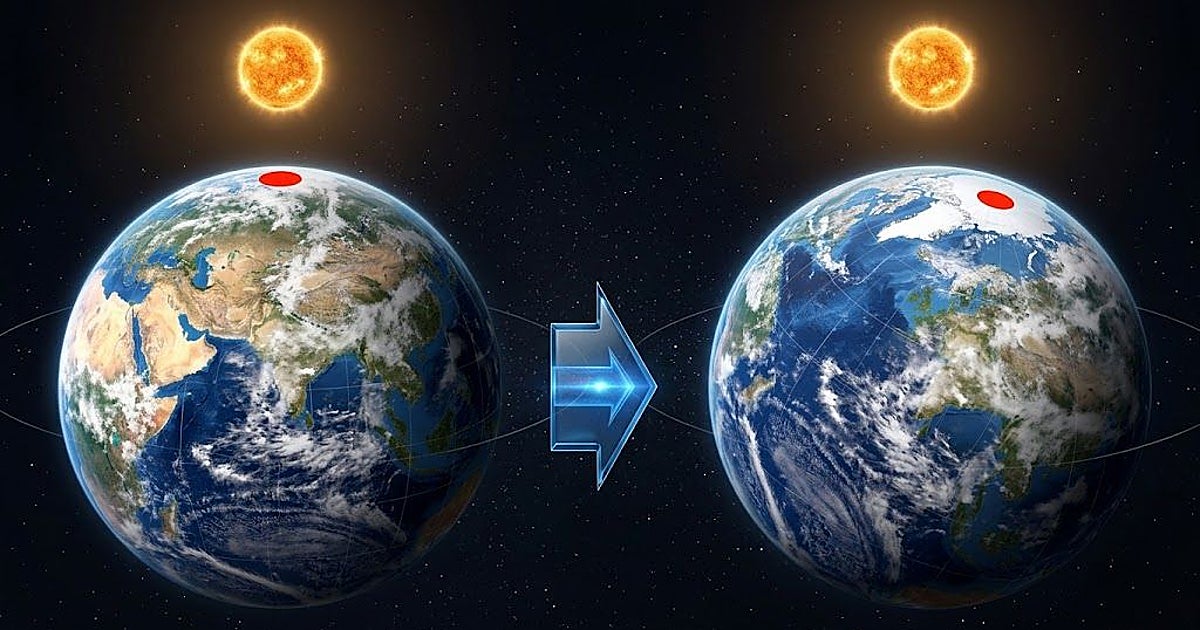
A new study reveals that the Earth's crust and mantle experienced four episodes of rapid displacement on its axis, which drastically altered the global climate and suggests that extreme geophysical phenomena have had a significant impact on the planet's configuration throughout its history. (translated)

Los cuatro 'resbalones' de la Tierra que cambiaron el mundo

A recent review in 'Science' reveals that women experience pain more intensely than men due to biological differences related to hormones, the immune system, and gut microbiota, challenging the prevailing notion that their symptoms are psychosomatic. (translated)

Las mujeres sufren el dolor más intensamente que los hombres: este es el motivo biológico

Here you will experience firsthand my prison policy: a living hell awaits you! Among those who have hardened their words against the attacker is Itamar Ben-Gvir, the Minister of National Security, who stated on his social media that he will ask the Cabinet for the pilot to be extradited to Israel. (translated)

El copiloto que atentó contra el vuelo a Israel recibió «adoctrinamiento islamista radical»
www.abc.es

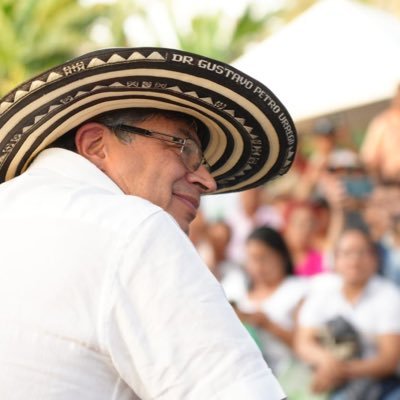
My stupid recipe, Doctor Restrepo, achieved the highest employment rate, the lowest rates of hunger and poverty of the 21st century, and some of the highest levels of per capita income in the last quarter of my government in the entire history of Colombia. You and Abelardo today, just as you did in Duque's government during the first month of his administration, shot up unemployment almost to the double-digit figures that you handed over to my government. That's called a step back! It's unfortunate that a part of the Colombian electorate believes that Colombia's destiny is to go backward. Again the IMF, again over-indebtedness that you promoted, Dr. Restrepo, by giving subsidies to the rich and imposing a gasoline subsidy paid with the budget. These days, that is called economic ignorance and anachronism. I propose my support from the opposition to make a great agreement for the equitable progress of Colombia. What allowed us to have the best social economic figures of the century was: 1. Leaving hydrocarbon extraction and moving to real production in industry, commerce, and tourism. Prioritizing production, that is, the transformation of materials to make other materials for a good life for people, automatically raises employment levels and overall productivity. 2. Raising the minimum wage every year to the level of the vital basket for a family. This was demanded by the social doctrine of the Catholic Church in the encyclical "Rerum Novarum" by Leo XIII, and you, as a fervent Catholic, should apply it. In that encyclical and in that of Francis I about the "common home," and in that of Leo XIV about "a dignified Humanity," you would find a comprehensive agreement with the progressivism I lead. 3. A leading role of the state in the economy in strategic matters such as tariffs for industrialization, abundant and cheap credit for small and medium-sized industries, cheap credit for industry, food production, exports, and zero-interest credit for any national industry that produces an increase in Colombia’s computational capacity, energy, and railroads. 4. Leading the decarbonization of the economy through a 100% clean electricity generation matrix, replacing the prohibitively expensive gas with extremely cheap and abundant solar energy in Colombia. Remember that in my government I managed to increase growth in the four years by 500% in the naval industry and 200% in the electric automotive industry. 5. Redistributing another million hectares among farmers and doubling food production in the country to lower the prices of the family basket and increase real wages. You and we can lower the interest rate set by the Board of the Bank of the Republic by configuring another majority in the board that is friendly to production and work. 5. And if you don’t want, Mr. Restrepo, to reach agreements given the mind-numbing sectarianism that predominates, then just remember my advice: work and nature are the sources of wealth, and in Colombia, the real wage as an expression of the value of work allows the expansion of the internal market, both formal and informal, and increases the number of companies and workforce. When the country decides to return to legitimate institutions, it might be too late for you, but these will be the economic bases already experienced with positive data for a national agreement. (translated)

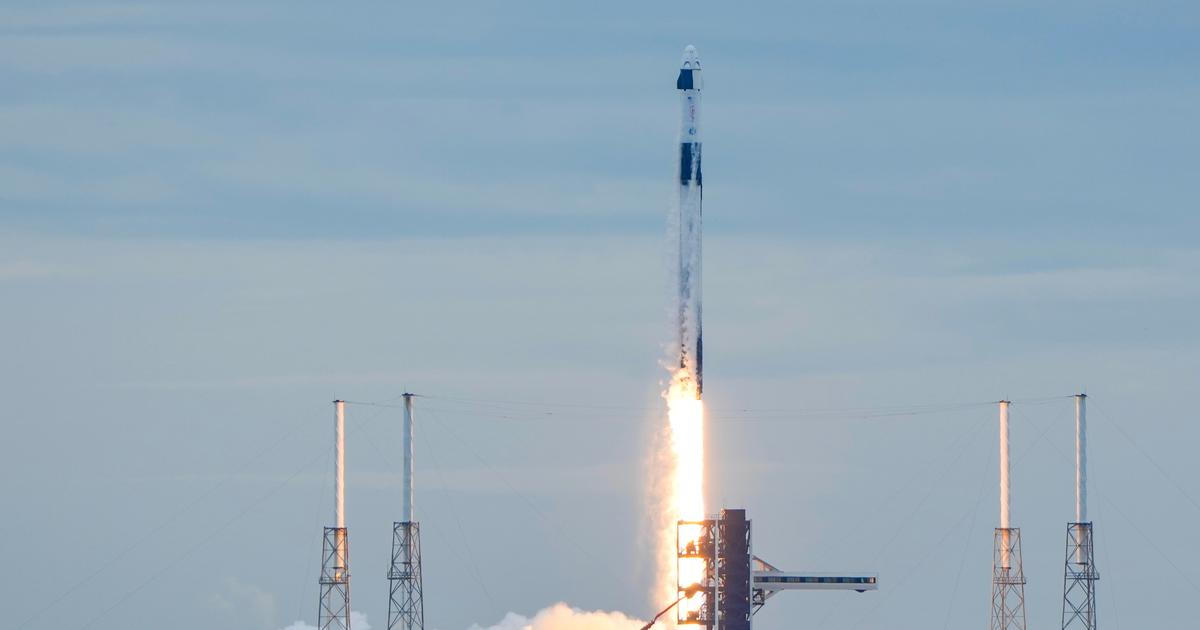
The new four-member crew of the Crew-13 mission, led by NASA astronaut Jessica Watkins, launched from Florida for a six-month stay at the International Space Station with the goal of conducting biomedical and research experiments. (translated)

K ISS vyrazila nová čtyřčlenná posádka. Povede ji astronautka NASA

Shein has had a difficult debut on the stock market, with a 36% drop in its stock value during its first month, while the company attributes the increase in logistics costs to geopolitical tensions and decides to absorb those costs instead of passing them on to consumers. (translated)

Primer mes en bolsa de Shein: su acción cae un 36% y admite un alza de los "costes logísticos" por "las tensiones geopolíticas"

Logical choice for M8, MAGNUM is a framework No matter the project he joins, he brings a lot of balance and stability to the whole Beyond the existing synergy with Kozzy, he is an ultra-experienced profile who is always eager to prove his worth (translated)

The article highlights that although artificial intelligence has the potential to create 3 billion euros for the Belgian economy, its actual integration into industrial processes is still limited, with most companies in the experimentation phase and little significant impact on revenue. (translated)

Un magot de déjà 3 milliards d'euros grâce à l'IA: voulez-vous vraiment passer à côté ?
Pri 2d

"We are already experiencing much more force than the institutional bed." A request made at night by a deputy for a wing of the Supreme Court to dismiss the TSE. It has legal clothing, but it is force. It is an act of force. Society needs to regain the ability to call these acts by their name." (translated)

D

Novo Nordisk hat einen 2,6 Milliarden Dollar schweren Deal mit dem chinesischen Unternehmen Jiangsu Hengrui Pharmaceuticals unterzeichnet, um die Rechte an einer experimentellen Abnehmpille zu erwerben und somit seine Produktpipeline im umkämpften Markt für Gewichtsreduktions- und Diabetesmedikamente zu erweitern. #NovoNordisk #Abnehmmedikamente #Pharmaindustrie

Kampf um Abnehmpille – Novo Nordisk schließt Milliarden-Deal mit China

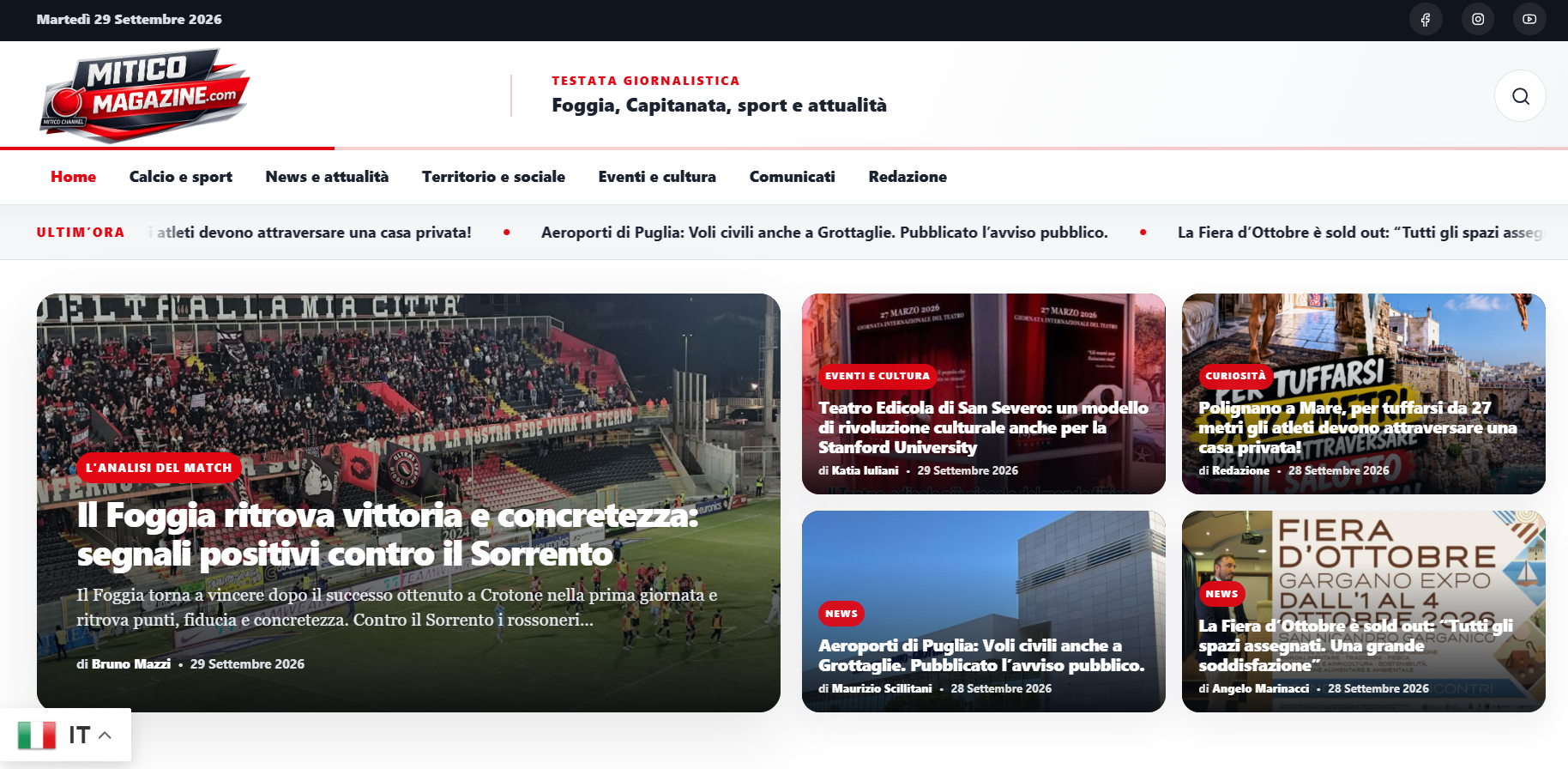
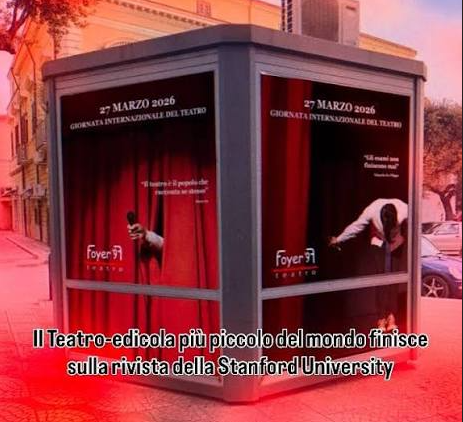
Mitico Magazine - The Teatro Edicola of San Severo: A Model of Cultural Revolution for Stanford University as Well Source: https://www.miticomagazine.com/territorio-e-sociale/teatro-edicola-di-san-severo-un-modello-di-rivoluzione-culturale-anche-per-la-stanford-university/ The Teatro Edicola in Via Tondi In San Severo, a singular metamorphosis has taken place: a newsstand abandoned for at least six years has found a new function and a new identity, transforming into one of the smallest and most unusual theatre stages in the world. An experiment born in the heart of the town which, in just a few months, has moved beyond local boundaries, attracting attention even overseas. It is called Teatro Edicola and it is a project conceived by the company Foyer '97, artistically directed by Francesco Gravino, which has brought the old newsstand in Via Tondi back to life through a formula that is both essential and surprising. Foyer '97 Foyer '97 APS was established as a formally constituted association active in the cultural sector in San Severo in 1997, born from the vocation of a group of actors, directors and theatre enthusiasts, with the aim of building a "living" and accessible theatre in the town. Over the years the company has developed a repertoire that includes texts from the classical tradition, contemporary dramaturgy, comedy and experimental projects, not limiting itself to the mere production of theatre shows, but also organising theatre courses and workshops and educational and cultural projects characterised by a strong inclusive ethos, particularly in schools. Foyer '97 does not always have a fixed artistic ensemble, but works with different performers and collaborators depending on the project; the only indispensable presence is that of Francesco Guido Gravino himself, actor, director and artistic director of the theatre company. The distinctive feature of Foyer '97 is certainly the value of social and cultural promotion attributed to theatre, the extremely close relationship with the audience and the search for a type of theatre outside conventional spaces, with cemeteries, trains, bell towers, and now a newsstand, as its backdrop. Six spectators, a few minutes and a minimal distance between stage and audience The project was launched on 27 March 2026, on the occasion of World Theatre Day, offering a theatrical experience built around a radical reduction of the conventional spaces and times of performance. The idea was born not only from the search for unconventional spaces, but also from "Edicola Fiore", the morning press review with a strongly ironic tone presented by Rosario Fiorello and Stefano Meloccaro, which was broadcast first only on Fiorello's social channels between 2011 and 2014, and then also on radio and television between 2016 and 2018. The review took its name from the diminutive of its founder, Fiore, and from the newsstand of a friend of Fiorello's in Via Flaminia Nuova in Rome, where the showman would meet early in the morning with a group of friends to read the newspapers. The San Severo newsstand was granted free of charge by its owner Pino Frau to the theatre group which, after obtaining temporary authorisation and institutional support from the Municipality of San Severo, refurbished it within two weeks at a cost of less than €3,000. Just six seats, a total surface area of 4 sq m, of which only 2 are for the stage area, less than a metre between actors and audience, a curtain, a lectern, two lights, performances lasting between 5 and 15 minutes, audience rotation every quarter of an hour: apparently minimal elements that end up subverting the usual relationship between stage and auditorium. Spectators, in fact, find themselves immersed in the stage action, in such proximity to the actors that every gesture, expression and word becomes immediately perceptible. In this way, theatre abandons its traditional spaces and insinuates itself into the everyday life of the street, becoming an intimate, concentrated and almost participatory experience. During the inaugural period admission was free with a subsequent voluntary donation from spectators; in the event of a more stable and longer-term concession, which could lead to seasonal theatre performances, the proposed ticket price would be €5. Audiences reward the experiment Foyer '97's gamble met with public interest right from the start: over 60 people attended the shows in a single afternoon, while the three days that inaugurated the season sold out. From a singular local experiment, the Teatro Edicola thus began to arouse curiosity even outside the province of Foggia, gradually transforming into a case of cultural and social interest, until it reached the American continent. From the province of Foggia to the "Stanford Social Innovation Review" The San Severo experience has now come under the international spotlight: in September 2026, the Stanford Social Innovation Review, an international journal and platform dedicated to social innovation published by the Stanford Center on Philanthropy and Civil Society at Stanford University in California, published on its website and in the Fall 2026 print edition the reportage "The Six-Seat Revolution", written by Dr Luciano Magaldi Sardella, independent journalist and researcher affiliated with the European Open University, and editorially supervised by deputy editor David V. Johnson. In the article, it is argued that the Teatro Edicola attracted attention overseas because the project concentrates cultural innovation, urban regeneration and proximity theatre into just a few square metres: starting from a real urban problem, it recovers an abandoned place with a modest investment, brings performance directly into public space and experiments with a much closer relationship between actors and spectators. From the point of view of theatrical representation, it also highlights how the format, based on micro-stories of five to twelve minutes, taken from great classics such as Goldoni, Chekhov, Ibsen, Euripides and Benni, and on audience rotation every fifteen minutes, transforms the physical limitations of the space into a precise dramaturgical choice, proving to be extremely innovative. All of this makes it possible to address some of the main critical issues in the sector: falling audience numbers, an exclusively elderly audience, reduced resources and distance from traditional cultural venues. The journal also highlights, however, the potential problems: economic sustainability, the need for stable institutional support and the difficulty of replicating the model, which is closely linked to the community and territory of San Severo. A model looking beyond San Severo Despite the difficulties, initial requests for information have already arrived from Lucca and Rome, where there is curiosity about the possibility of getting to know the model more closely and the steps needed to replicate it. The replicability formula, in fact, does not seem to require particularly costly infrastructure: an unused space, a targeted intervention, a cultural idea, in-depth knowledge of the surrounding area and a willingness to return that place to the community can be enough to trigger a new urban function. It is precisely in the disproportion between the modesty of the resources employed and the resonance generated by the initiative that perhaps the most original feature of the Teatro Edicola lies, certainly unique of its kind; there are, however, other examples in Italy of newsstands reused for other purposes: "Edicola 518", a twentieth-century kiosk abandoned in the centre of Perugia, now dedicated to independent publishing, art and cultural production; and in Rome itself, the abandoned newsstand in Piazza Testaccio used temporarily as a stage for a show by Fabio Morgan and the Erno newsstand in the Prati district, which almost every month offers a calendar of events, exhibitions, pop-ups and collaborations with artists and creative enterprises. Small revolutions, therefore, that tell stories of the reappropriation of urban spaces, of creativity and social innovation. And which, it is hoped, will take root in order to look ever further afield.

Teatro Edicola di San Severo: un modello di rivoluzione culturale anche per la Stanford University

Mitico Magazine - The Teatro Edicola of San Severo: A Model of Cultural Revolution for Stanford University as Well Source: https://www.miticomagazine.com/territorio-e-sociale/teatro-edicola-di-san-severo-un-modello-di-rivoluzione-culturale-anche-per-la-stanford-university/ The Teatro Edicola in Via Tondi In San Severo, a singular metamorphosis has taken place: a newsstand abandoned for at least six years has found a new function and a new identity, transforming into one of the smallest and most unusual theatre stages in the world. An experiment born in the heart of the town which, in just a few months, has moved beyond local boundaries, attracting attention even overseas. It is called Teatro Edicola and it is a project conceived by the company Foyer '97, artistically directed by Francesco Gravino, which has brought the old newsstand in Via Tondi back to life through a formula that is both essential and surprising. Foyer '97 Foyer '97 APS was established as a formally constituted association active in the cultural sector in San Severo in 1997, born from the vocation of a group of actors, directors and theatre enthusiasts, with the aim of building a "living" and accessible theatre in the town. Over the years the company has developed a repertoire that includes texts from the classical tradition, contemporary dramaturgy, comedy and experimental projects, not limiting itself to the mere production of theatre shows, but also organising theatre courses and workshops and educational and cultural projects characterised by a strong inclusive ethos, particularly in schools. Foyer '97 does not always have a fixed artistic ensemble, but works with different performers and collaborators depending on the project; the only indispensable presence is that of Francesco Guido Gravino himself, actor, director and artistic director of the theatre company. The distinctive feature of Foyer '97 is certainly the value of social and cultural promotion attributed to theatre, the extremely close relationship with the audience and the search for a type of theatre outside conventional spaces, with cemeteries, trains, bell towers, and now a newsstand, as its backdrop. Six spectators, a few minutes and a minimal distance between stage and audience The project was launched on 27 March 2026, on the occasion of World Theatre Day, offering a theatrical experience built around a radical reduction of the conventional spaces and times of performance. The idea was born not only from the search for unconventional spaces, but also from "Edicola Fiore", the morning press review with a strongly ironic tone presented by Rosario Fiorello and Stefano Meloccaro, which was broadcast first only on Fiorello's social channels between 2011 and 2014, and then also on radio and television between 2016 and 2018. The review took its name from the diminutive of its founder, Fiore, and from the newsstand of a friend of Fiorello's in Via Flaminia Nuova in Rome, where the showman would meet early in the morning with a group of friends to read the newspapers. The San Severo newsstand was granted free of charge by its owner Pino Frau to the theatre group which, after obtaining temporary authorisation and institutional support from the Municipality of San Severo, refurbished it within two weeks at a cost of less than €3,000. Just six seats, a total surface area of 4 sq m, of which only 2 are for the stage area, less than a metre between actors and audience, a curtain, a lectern, two lights, performances lasting between 5 and 15 minutes, audience rotation every quarter of an hour: apparently minimal elements that end up subverting the usual relationship between stage and auditorium. Spectators, in fact, find themselves immersed in the stage action, in such proximity to the actors that every gesture, expression and word becomes immediately perceptible. In this way, theatre abandons its traditional spaces and insinuates itself into the everyday life of the street, becoming an intimate, concentrated and almost participatory experience. During the inaugural period admission was free with a subsequent voluntary donation from spectators; in the event of a more stable and longer-term concession, which could lead to seasonal theatre performances, the proposed ticket price would be €5. Audiences reward the experiment Foyer '97's gamble met with public interest right from the start: over 60 people attended the shows in a single afternoon, while the three days that inaugurated the season sold out. From a singular local experiment, the Teatro Edicola thus began to arouse curiosity even outside the province of Foggia, gradually transforming into a case of cultural and social interest, until it reached the American continent. From the province of Foggia to the "Stanford Social Innovation Review" The San Severo experience has now come under the international spotlight: in September 2026, the Stanford Social Innovation Review, an international journal and platform dedicated to social innovation published by the Stanford Center on Philanthropy and Civil Society at Stanford University in California, published on its website and in the Fall 2026 print edition the reportage "The Six-Seat Revolution", written by Dr Luciano Magaldi Sardella, independent journalist and researcher affiliated with the European Open University, and editorially supervised by deputy editor David V. Johnson. In the article, it is argued that the Teatro Edicola attracted attention overseas because the project concentrates cultural innovation, urban regeneration and proximity theatre into just a few square metres: starting from a real urban problem, it recovers an abandoned place with a modest investment, brings performance directly into public space and experiments with a much closer relationship between actors and spectators. From the point of view of theatrical representation, it also highlights how the format, based on micro-stories of five to twelve minutes, taken from great classics such as Goldoni, Chekhov, Ibsen, Euripides and Benni, and on audience rotation every fifteen minutes, transforms the physical limitations of the space into a precise dramaturgical choice, proving to be extremely innovative. All of this makes it possible to address some of the main critical issues in the sector: falling audience numbers, an exclusively elderly audience, reduced resources and distance from traditional cultural venues. The journal also highlights, however, the potential problems: economic sustainability, the need for stable institutional support and the difficulty of replicating the model, which is closely linked to the community and territory of San Severo. A model looking beyond San Severo Despite the difficulties, initial requests for information have already arrived from Lucca and Rome, where there is curiosity about the possibility of getting to know the model more closely and the steps needed to replicate it. The replicability formula, in fact, does not seem to require particularly costly infrastructure: an unused space, a targeted intervention, a cultural idea, in-depth knowledge of the surrounding area and a willingness to return that place to the community can be enough to trigger a new urban function. It is precisely in the disproportion between the modesty of the resources employed and the resonance generated by the initiative that perhaps the most original feature of the Teatro Edicola lies, certainly unique of its kind; there are, however, other examples in Italy of newsstands reused for other purposes: "Edicola 518", a twentieth-century kiosk abandoned in the centre of Perugia, now dedicated to independent publishing, art and cultural production; and in Rome itself, the abandoned newsstand in Piazza Testaccio used temporarily as a stage for a show by Fabio Morgan and the Erno newsstand in the Prati district, which almost every month offers a calendar of events, exhibitions, pop-ups and collaborations with artists and creative enterprises. Small revolutions, therefore, that tell stories of the reappropriation of urban spaces, of creativity and social innovation. And which, it is hoped, will take root in order to look ever further afield.

Teatro Edicola di San Severo: un modello di rivoluzione culturale anche per la Stanford University

Novo Nordisk ha alcanzado un acuerdo de hasta 2.600 millones de dólares para obtener los derechos de HRS-1596, un medicamento experimental para la obesidad desarrollado por la farmacéutica china Jiangsu Hengrui, que se administraría en una dosis oral una vez a la semana. #Obesidad #Semaglutida #Medicamentos

Frenética carrera contra la obesidad: 2.600 millones por una pastilla que se toma una vez a la semana
H

Researchers proved AI has deleted every reason universities exist. Harvard University ran a controlled experiment pitting a custom AI against their own top-tier classrooms. And the results are going to collapse the higher education bubble. They took 194 undergraduates and split them up. One group learned physics in one of Harvard’s best hands-on, active-learning physical classrooms. Group work. Instructor support. The premium university experience. The other group went home and learned the exact same material with an AI tutor. The AI didn't just win. It embarrassed the institution. Students using the AI learned more than twice as much as the students in the elite Harvard classroom. They scored 30% higher on the final assessment. And they did it in less time. Let that sink in. A piece of software sitting on a laptop outperformed a world-class faculty in one of the most elite learning environments on Earth. Universities have always justified their exorbitant tuition with two things: access to elite knowledge and the physical classroom experience. This study just proved both of those moats are gone. When software can teach you complex physics twice as well as a $60,000-a-year institution, the math of higher education breaks permanently. The AI didn't just give the students answers. It used strict pedagogical guardrails. It guided. It questioned. It forced the students to do the cognitive work. It offered perfect, one-to-one tutoring, personalized to the exact moment a student misunderstood a concept. That level of attention is mathematically impossible to scale in a physical lecture hall. For a thousand years, the university was the only place to get a premium education. Now, it’s the bottleneck. If AI can double your learning speed for a fraction of the cost, what exactly are students taking on decades of debt to pay for? https://x.com/thesupermannx/status/2104519995292344521

Superman (@thesupermannx) on X

Headphone (1) Pro launches today, and V of BTS is joining Nothing as our new Global Brand Ambassador. Here are a few moments from our shoot in Seoul with an artist whose instinct for fearless experimentation is exactly what we built this product for. https://t.co/J4D0te94ID #NothingHeadphones #BTS #GlobalAmbassador #KR

H

“Where Is the Global Cost-Benefit Account of the Green Transition? It is striking that we lack a comprehensive global cost-benefit account of the green transition. Global accounts are otherwise entirely common. The UN, World Bank, IMF, IEA and other international organisations routinely compile global figures for GDP, trade, investment, energy consumption, public finances, debt, population, health and many other areas. The methodologies, institutions and vast amounts of data needed to produce global accounts already exist. Yet, as far as I can determine, there is no equivalent, simple and transparent historical account that brings together global investment in renewable energy and compares it with the economic value that those investments have created. How much has the world collectively spent on research and development, subsidies, wind turbines, solar panels, power grids, energy storage and system integration? And what economic value have these investments collectively generated through energy production, avoided fuel costs and other measurable benefits? There are, of course, numerous individual calculations and cost-benefit analyses. But that is not the same as having a single, comprehensive global account. This is particularly striking because renewable energy is no longer a marginal technological experiment. It has become a central part of the world’s energy system and represents an enormous historical investment. The point is not to assume in advance that the balance must be positive or negative. The point is to apply the same kind of accounting that we already use for so many other global areas. How much has the world invested – what has the world received in return – and what is the net result? That should be one of the most fundamental questions in the debate over the green transition” - ChatGPT