BETA nonprofit public democratic european moderated

Search

#Guidance

Sie wussten es. Sie schrieben es auf. Sie taten es trotzdem. Die Bombe ist nun geplatzt Die freigegebenen BfArM-Akten zeigen: Deutschland hat die Grundrechte von 83 Millionen Menschen an ein Laborsignal gekoppelt, dessen Aussagekraft die eigene Zulassungsbehörde nie prüfen konnte. Das war kein Betriebsunfall. Es war bewusst und gewollt gewählte Systemarchitektur. Am 19. November 2021 segnete das Bundesverfassungsgericht die „Bundesnotbremse“ ab: Ausgangssperren, Kontaktverbote, Schulschließungen, Ladenschließungen – automatisch ausgelöst durch eine einzige Zahl, die Sieben-Tage-Inzidenz. Am selben Tag schrieb eine Mitarbeiterin des Bundesinstituts für Arzneimittel und Medizinprodukte (BfArM) in einer internen E-Mail einen Satz, den das Gericht nie zu sehen bekam: „wir haben keine belastbaren Daten zur Qualität der POC-PCR.“ [BfArM-Akten T1, S. 346; 19.11.2021] Der erste Satz schob das Land in einen Lockdown und in alle Zwangsmaßnahmen, während die verantwortliche Bundesbehörde im zweiten nachgeschobenen Satz wusste, dass es überhaupt keine Evidenz für die Tauglichkeit der Grundlage aller Maßnahmen - den PC - Test - gab. I. Die Akten liegen nun auf dem Tisch und es sollte in allen Nachrichtensendern eigentlich heute knallen Seit wenigen Tagen sind sie öffentlich: die nach dem Informationsfreiheitsgesetz freigegebenen Akten des BfArM-Fachgebiets 93 („COVID“) – fünf Konvolute mit Berichten, Vermerken und dem E-Mail-Verkehr mit dem Bundesgesundheitsministerium. Es sind keine Papiere von Kritikern. Es sind die eigenen Worte der Behörde. Und diese Worte bestätigen, Punkt für Punkt, was Prof. Dr. Ulrike Kämmerer in ihrem Gutachten zur RT-qPCR (Stand 01.01.2023) seit Jahren als methodische Kritik formuliert hat: kein Referenzstandard, keine vergleichbaren Ct-Werte, keine belastbaren Daten für ganze Gerätekategorien, Testkits „nur für Forschungszwecke“ in der Regelversorgung, Ringversuche ohne Verbindlichkeit. Jahrelang hieß es: Verschwörungstheorie. Jetzt ist die Gewißheit da und verfügt über ein Aktenzeichen - sie wussten alle, dass die Evidenz für den Test fehlt. II. Was schiefging, erstens: Ein Test ohne Maßstab Anfang April 2020 erteilte das BfArM die ersten Sonderzulassungen für SARS-CoV-2-PCR-Tests (Qiagen, Cepheid) nach § 11 Abs. 1 MPG. Im Lagebild für das Kanzleramt vom 6. April 2020 meldet die Behörde: 76 Corona-Tests angezeigt, davon 38 auf RNA/DNA, zwei Sonderzulassungen beschieden, drei weitere Anträge in Bearbeitung [BER, S. 933]. Womit hat die Behörde geprüft? Sie sagt es selbst. Am 12. Februar 2021 – zehn Monate später – formuliert das BfArM in einem eigenen Entwurf: „(1) Zur Festlegung einer analytischen Mindestsensitivität ist derzeit kein internationaler Standard für SARS-CoV-RNA oder für SARS-CoV-2 Antigen verfügbar. (2) Ct-Werte von PCR-Systemen bieten zwar Anhaltspunkte für die zugrundeliegende Viruskonzentration, sind aber zwischen unterschiedlichen PCR-Verfahren nur mit Einschränkungen vergleichbar …“ [BfArM-Akten T2, S. 431; 12.02.2021] Kein Standard. Keine Vergleichbarkeit. Aber im Blindflug Sonderzulassungen. Der internationale WHO-Standard für SARS-CoV-2-RNA (NIBSC 20/146) wurde erst im Dezember 2020 etabliert. Zur verbindlichen Referenz für die Leistungsbewertung von PCR-Tests in der EU machte ihn erst die Leitlinie MDCG 2021-21 – im August 2021, sechzehn Monate nach den ersten Sonderzulassungen [T1, S. 8–20]. Und selbst diese Leitlinie legt für PCR-Tests keine prozentuale Mindest-Sensitivität und keine Mindest-Spezifität fest. Für Antigentests tut sie das (über 80 Prozent Sensitivität, über 98 Prozent Spezifität), für Antikörpertests ebenfalls (mindestens 90 bzw. über 99 Prozent). Für den „Goldstandard“ selbst: nichts. Wer Goldstandard ist, wird nicht gemessen. Die Bescheide der Sonderzulassungen? Nicht veröffentlicht. Im Protokoll einer Bund-Länder-Besprechung hält das BfArM fest, dass „nur die Sonderzulassungen, nicht aber die Sonderzulassungsbescheide“ veröffentlicht werden – und schlägt vor, sie den Landesbehörden auf einer geschützten Website zugänglich zu machen [T2, S. 328]. Selbst die Länder, die auf Basis dieser Tests Quarantänen verhängten, bekamen die Bescheide nur hinter Zugangsschranke. Dennoch wussten sie damit, dass sie Maßnahmen auf einer Grundlage verhängten, die keinerlei Evidenzwert besaß. Das sollten möglicherweise nicht alle wissen, weshalb die Sonderzulassungsbescheide vermutlich auch so gut wie keiner sah. In den fünf freigegebenen Konvoluten findet sich zu keinem einzigen sonderzugelassenen PCR-Test ein Bewertungsbericht, ein Bescheid im Volltext oder ein konkreter Sensitivitäts- oder Spezifitätswert. Für 38 angezeigte RNA/DNA-Tests: keine Marktüberwachungsauswertung, kein Post-Market-Bericht eines Herstellers. Dafür anderes. Das weltweit am meisten ausgelieferte Testkit (TIB Molbiol) trug im Beipackzettel den Vermerk „Not tested for use in diagnostic procedures“ – was so viel heißt, dass es nicht für Diagnoseverfahren getestet worden war. Dieser Test lief über Großautomaten millionenfach in der deutschen Regelversorgung [Kämmerer-Gutachten, S. 34–35]. Ein Hersteller fragte das BfArM ausdrücklich, ob er seinen Test „unter RUO“ – Research Use Only – vertreiben dürfe, bevor die Leistungsbewertung abgeschlossen sei, um ihn schnell verfügbar zu machen [V93, S. 14, 64]. Ein Facharzt für Laboratoriumsmedizin schrieb der Behörde, ohne Ringversuchsergebnisse und Vergleichsstudien „wäre es nach meiner Einschätzung nicht anzuwenden“ [T1, S. 348; 19.11.2021]. Eine Pflicht zur Teilnahme an Ringversuchen? Im Zulassungspfad nicht vorgesehen. Sie wurde mit dem Ministerium als „Vorschlag“ diskutiert – im Dezember 2021, nach zwei Wintern Lockdown [T1, S. 415]. Der erste Ringversuch vom April 2020 wertete nur vier von sieben Proben, weil Probeneigenschaften vorab bekannt geworden waren; bei einer Probe lagen trotzdem 6,8 Prozent der Labore daneben [Kämmerer-Gutachten, S. 31]. Und die Point-of-Care-PCR, die in Arztpraxen, Apotheken und Testzentren lief? Die Behörde zitiert selbst eine Cochrane-Analyse: 76,8 Prozent Sensitivität bei Abbott ID NOW gegenüber 99,4 Prozent bei Cepheid Xpert Xpress – 22,6 Prozentpunkte Unterschied zwischen zwei sonderzugelassenen Systemen [T1, S. 346]. Im Ringversuch 409 (2021) streuten die Messwerte bei derselben Probe zwischen null und über zwei Millionen Kopien pro Milliliter [T1, S. 427–428]. Der Kontrast im selben Aktenbestand ist die eigentliche Pointe. Antigentests wurden strukturiert vergleichend evaluiert – RKI, PEI, Konsiliarlabor, Bundeswehr [T3, S. 26; T2, S. 432]. Ivermectin bekam eine detaillierte Evidenzprüfung mit klarer Ablehnung [BER, S. 306]. Nur der Test, an dem alles hing, der Test, der die Inzidenz erzeugte, der Test, gegen den alle anderen Tests gemessen wurden – der bekam überhaupt keine Prüfschwelle und alle sahen trotz Warnungen und immer wieder kehrenden Fragen alle weg. III. Was schiefging, zweitens: Der Kategoriefehler Eine PCR weist RNA-Fragmente nach. Nicht eine Infektion. Nicht eine Erkrankung. Nicht Ansteckungsfähigkeit. Das ist keine These von Kritikern. Das ist die Arbeitsgrundlage der Bundesbehörden. Der Präsident des Paul-Ehrlich-Instituts beschreibt am 6. November 2020 das eigene Evaluationsverfahren: Vermehrung in Zellkultur „als mögliches Korrelat für Infektiosität“, und zwar „unter der Annahme einer Korrelation zwischen Virusvermehrung in Zellkultur und der potenziellen Infektiosität“ [T3, S. 26, 141]. Doppelt konditioniert. Die Behörde, die Tests bewertet, weiß: positiver Molekülnachweis ist nicht gleich ansteckender Mensch. Das Gesundheitsministerium schreibt in der Nationalen Teststrategie über positive Testergebnisse: „Es ist noch keine Diagnose einer SARS-CoV-2 Infektion.“ Die Diagnose werde erst durch PCR „sowie die ärztliche Beurteilung“ gestellt [T1, S. 33, 143]. Vortest, Bestätigung, Arzt. So steht es im Papier. Bis heute erlebe ich es in den Gerichtsprozessen anders, dass jede festgehaltene positive PCR Test eine Corona Infektion gewesen sei, weshalb nie die Impfung, sondern immer die nach der Impfung erfolgte Infektion (wogegen ja die Impfung zu 95% schützen sollte) die gesundheitlichen Schäden verursacht habe. Ein Test, ein Eintrag in der Patientenakte, eine Abrechnung, die in der Krankenakte festgehalten wurde hat heut noch mehr Macht über den Ausgang eines Verfahrens, weil in den Köpfen der Richter fest verankert ist, dass ein positiver PCR - Test gesichert die Infektion nachweise. Und so stand es im Gesetz: Nach § 7 IfSG löste der bloße Labornachweis die Meldung aus. Nach § 28b IfSG wurden diese Meldungen als „Neuinfektionen pro 100.000 Einwohner“ addiert. Ab 100: Ausgangssperre. Ab 150: Läden zu. Ab 165: Schulen zu. Ein Rachenabstrich mit Ct-Wert 38 zählte wie einer mit Ct-Wert 18. Ein Symptomloser zählte wie ein Schwerkranker. Kein Ct-Wert wurde gemeldet, kein Symptom abgefragt, kein Arzt gehört. Bei einem Feldversuch heute wette ich, dass sie wieder alles dicht machen würden, weil sich an den äußeren Werten übehaupt nichts geändert hat. Den Ct-Wert, den das PEI intern als Marker für „hohe Viruslast“ nutzte (unter 25) [T3, S. 141], hat niemand in die Meldekette übernommen. Ob ein bestimmter Ct-Wert die Quarantäne verkürzen könne, steht in einem Bund-Länder-Protokoll – als offene Frage. Sie blieb offen [T3, S. 187]. Repressalien gingen vor Aufklärung einer solchen Frage. Der Staat hat ein hochpräzises Laborinstrument, das Moleküle findet, eins zu eins mit einer medizinischen Diagnose gleichgesetzt und darauf sein gesamtes Maßnahmenregime bewusst und gewollt aufgebaut. Die eigenen Fachbehörden haben die Grenzen dieses Instruments schriftlich dokumentiert. Die pharmaorientierte Politik hatte diese Warnungen beiseite zu drücken und anschließend wurde die Rechtsordnung gezwungen sie zu ignorieren, weil ihr eine unvollständige aber wesentliche Tatsache nicht mitgeteilt wurde, dass ein PCR - Test keine Infektion nachweisen kann und so, wie das System aufgebaut war geradezu für extrem hohe Fehlerzahlen gewollt empfänglich war. Es war eine Testplandemie. Keiner wollte es damals gerne hören und galt als Verschwörungstheoretiker. Die Akten sprechen nun eine deutliche Sprache. Die IFG Anfrage hat mehr Tatsachen zu Tage gefördert als es die ganze Enquette Kommission bisher als Selbsbeweihräucherungsverein, die keine Tatsachen zur Kenntnis nehmen wollen. Die Kartellparteien beschlossen zudem, dass die Feststellung eine Tatsachengrundlage, insbesondere die Auswertung der kassenärztlichen Daten oder die Vorstellung der Pharmakovigilanzdaten ebenso unerwünscht sei, wie die Darstellung von Statistiken zur Untermauerung des eigenen Vortages. Tatsachenvermeidung ist seither das Spiel der Enquetekommission. IV. Was schiefging, drittens: Das Gericht sah die Akten nicht Der Beschluss des Bundesverfassungsgerichts vom 19. November 2021 (1 BvR 781/21 u. a.) ist die einzige Hauptsacheentscheidung zur Bundesnotbremse. Wen hat der Senat als sachkundige Dritte gehört? Das Robert Koch-Institut – ja. Das Paul-Ehrlich-Institut, zuständig für die Evaluation der Tests – nein (später zuständig für die Prozessfinanzierung der Impfhersteller). Das BfArM, zuständig für die Sonderzulassungen – nein. Das PEI wird im gesamten Beschluss nicht erwähnt. Wonach hat der Senat gefragt? Ob die Sieben-Tage-Inzidenz ein geeigneter Indikator ist. Nicht danach, was das Signal aussagt, aus dem die Inzidenz gemacht wird. Die Wörter „Sensitivität“, „Spezifität“ und „Ct-Wert“ kommen in der Entscheidung nicht vor, womit beim Bundesverfassungsgericht die gleiche Attitüde der Enquetekommission bestand und zwar in jeder Hinsicht die Tatsachenaufklärung zu vermeiden, weshalb auch nicht die Quelle, sondern zur Sicherheit Dritte gefragt wurden ohne auch nur das Kernthema anzureißen. Was hat das RKI dem Gericht gesagt? Die Inzidenz sei ein „geeigneter Indikator“, ein Frühindikator mit sieben bis zehn Tagen Vorlauf. Kein Wort davon, dass das Meldesignal von Testfrequenz, Teststrategie und Testverfahren abhängt. Kein Wort davon, dass die Schwesterbehörde PEI die Gleichung „positiv = infektiös“ intern nur „unter der Annahme einer Korrelation“ führte. Das Gutachten von Prof. Matthias Schrappe, im selben Verfahren vorgelegt, hatte genau diese Lücke benannt: Die „Inzidenz“ sei keine Inzidenz, sondern eine Melderate, nicht reliabel, nicht valide. Es fand im Beschluss keinen Widerhall. Es lässt entweder auf intellektuelle Unterbelichtung schließen, was ausgeschlossen werden kann oder Vorsatz. Der eine Beschwerdeführer, der ausdrücklich rügte, ein positiver PCR-Befund sage nichts über Infektiosität aus – seine Beschwerde wurde aus formalen Gründen verworfen. Die Rüge wurde nie in der Sache geprüft. Stattdessen der Maßstab, der alles trägt: Der Gesetzgeber müsse sich bei „Unwägbarkeiten der wissenschaftlichen Erkenntnislage“ nur an einer „sachgerechten und vertretbaren Beurteilung der ihm verfügbaren Informationen“ orientieren. Vertretbarkeitskontrolle. Mehr nicht. Gegenteilig vorliegende Tatsachen konnten und durften ignoriert werden. Hier liegt der Kern. Die selbst produzierte „Unwägbarkeit“ war keine Naturgewalt. Sie war von der Exekutive selbst erzeugt – durch Sonderzulassungen ohne Standard, ohne Vergleichbarkeit, ohne Prüfschwelle – und von der Exekutive selbst hervorgerufen und dokumentiert. Das Gericht hat die Vertretbarkeit staatlichen Handelns auf einer Aktenlage geprüft, die der Staat zuvor in Halbwahrheiten zugeschnitten hatte: durch die Auswahl der Geladenen, durch den Zuschnitt der Fragen und durch die Selbstdarstellung des RKI. Eine Unsicherheit, die die Verwaltung selbst hergestellt hat, kann aber heute den Gesetzgeber nicht entlasten. Das Bundesverfassungsgericht konnte das nicht wissen - hätte es aber wissen können. Die Behörden wussten es definitiv, weshalb alle anderen in der Wissenschaftswelt, die es auch wussten diffamiert werden mussten, völlig gleich wie sehr ihre wissenschaftlichen Aufsätze alle stimmten. Das ist Prof. Dr. Kämmerer leider auch widerfahren. Die Pharmaindustrie und ihre Anwälte setzen das System bis heute fort: "Vermeide stets die Auseinandersetzung in der Sache indem Du die Autoren angreifst" Ad hominem Angriffe sind nun juristischer Alltag. V. Warum es so kommen musste: Der Plan stand im Amtsblatt Man braucht keine Verschwörung, um zu verstehen, warum das alles so lief. Man muss nur die Rechtsgrundlage lesen. Die bedingte Zulassung eines Arzneimittels nach Art. 14-a der Verordnung (EG) Nr. 726/2004 in Verbindung mit Art. 4 der Verordnung (EG) Nr. 507/2006 setzt vier Dinge voraus: 1. ein positives Nutzen-Risiko-Verhältnis, 2. die Fähigkeit des Herstellers, die fehlenden Daten später nachzuliefern, 3. einen „ungedeckten medizinischen Bedarf“ – 4. und dass der Nutzen sofortiger Verfügbarkeit das Risiko unvollständiger Daten überwiegt. „Ungedeckter medizinischer Bedarf“ heißt nach der Verordnung: Es gibt keine zufriedenstellende Methode der Diagnose, Vorbeugung oder Behandlung – oder das neue Produkt bringt einen „bedeutenden therapeutischen Vorteil“. Das ist das Highlander-Prinzip des Arzneimittelrechts: Es darf nichts anderes geben. Ich stellt es in einem anderen Kontext schon die letzten Tage vor. Damit erklärt sich der Doppelstandard, der sich durch die Akten zieht. Comirnaty erhielt auf ihren Zulassungantrag bei der FDA im August 2018 am 21. Dezember 2020 die bedingte Zulassung, ausdrücklich trotz unvollständiger Daten – dafür ist das Instrument gebaut. Ivermectin lief anschließend in dieselbe Behördenlandschaft und kam anders heraus: Im Oktober 2020 bittet ein deutscher Hersteller das BfArM um Beratung für eine COVID-19-Indikation. Im Januar 2021 kritisiert die Behörde methodische Schwächen. Im März 2021 fragen Politiker nach Behandlungsalternativen. Im April 2021 lehnt ein Initiativbericht die bedingte Zulassung ab – und vermerkt: „Das Vorgehen ist hierbei eng mit dem Bundesministerium für Gesundheit abgestimmt.“ [BfArM-Akten, Ivermectin-Vorgang, BER ab S. 306] Für das billige Generikum galt der strenge Evidenzmaßstab. Für die Impfstoffe die gesetzliche Ausnahme vom Evidenzmaßstab, für die die Alternative gestört hätte, weil es die Zulassung zunichte gemacht hätte. Für die PCR gar kein Maßstab. Drei Produkte, drei Regulierungsstile, ein Muster: Entscheidend war nicht eine einheitliche Evidenzschwelle, sondern die politische Nachfrage nach Verfügbarkeit. Was die PCR konnte oder nicht war egal. Und jetzt die Kette, die alles zusammenhält: Das PCR-Signal erzeugt die Inzidenz. Die Inzidenz erzeugt die Notlage. Die Notlage rechtfertigt die Maßnahmen – und sie rechtfertigt die bedingte Zulassung für den jeweiligen Impfhersteller. Die bedingte Zulassung verlangt den ungedeckten Bedarf, also die Abwesenheit von Alternativen. Die Vorbestellungen – EU-Verträge über Hunderte Millionen Dosen, dazu deutsche Bilateralbestellungen, aber keine einzige staatliche Bestellung eines Altmedikaments als Alternative – hätte dann Zulassungsdruck erzeugt. Je mehr investiert war, desto weniger durfte hinterfragt werden und desto weniger Alternativen durfte es geben und desto höher musste die mediale Not hochgepuscht werden, um den Absatz der Impfstoffe zu ermöglichen. Wer die Grenzen des PCR-Signals eingeräumt hätte, hätte die Inzidenz relativiert – und mit ihr die Notlage, die alles trug und es hätte niemals bedingte Zulassungen gegeben. Deshalb müssen unbedingt alle PCR Tester den Bundesverdienstorden bekommen, da sie der Pharmaindustrie mit Evidenzlosigkeit Wissenschaftlichkeit vorgaukeln konnten. Das löst heute noch bei den neuen Milliardären sicher Schenkelklopfer aus, wie sie die völlig verblödete Bevölkerung derart hinters Licht führen konnten. Wer eine günstige, verfügbare Frühbehandlung mit Vitamin D, Zingpräparaten oder gar anderen Medikamenten (die es gab) anerkannt hätte, hätte den Nachweis des ungedeckten Bedarfs mindestens erschwert, wenn nicht gar unmöglich gemacht – und damit am Fundament der eigenen Zulassungen gesägt. Beides durfte nicht sein. Also geschah beides nicht. Und unsere gänzlich unbestechlichen Behörden taten nur das, was die künftigen Zulassungsinhaber bedingter Zulassungen gerne wollten. Die Behörde, die prüfen sollte, wurde zur Partei in eigener Sache. Und ein Interessenkonflikt wird nicht dadurch geheilt, dass die Entscheidung zufällig richtig gewesen sein könnte. Das ist mit „planvoll“ gemeint. Nicht der finstere Plan im Hinterzimmer. Sondern eine Rechtsarchitektur, in der jede Instanz genau das tat, was ihre Anreize verlangten: Das BfArM ließ zu, was gebraucht wurde, und prüfte nicht, was nicht geprüft werden durfte. Das RKI lieferte dem Gericht die Steuerungslogik und verschwieg die Messunsicherheit. Das Ministerium stimmte ab. Und das Gericht prüfte die Vertretbarkeit – auf der Aktenlage, die man ihm ließ und das PEI wurde über das ZEPAI zum Prozessfinanzierer, um zu verstehen, warum es sinnvoll ist keine gesetzeskonforme Pharmakovigilanz zu betreiben, wenn man Zivilprozesse gewinnen will. VI. Was jetzt zu geschehen hat Erstens: Die Enquete-Kommission des Bundestages, die bis Mitte 2027 ihren Abschlussbericht vorlegen soll, muss die freigegebenen BfArM-Akten – und die entsprechenden Bestände von PEI und RKI – zum Gegenstand ihrer Arbeit machen. Eine Aufarbeitung, die diese Vermerke nicht kennt, ist keine. Dabei hat sie auch die Pharmakovigilanzberichte des PEI als Tatsachen vollständig zu sichten. Zweitens: Alle Sonderzulassungsbescheide für SARS-CoV-2-Tests sind zu veröffentlichen. Mit Bewertungsgrundlage. Vollständig. Drittens: Das RKI hat zu erklären, warum es dem Bundesverfassungsgericht die behördenintern bekannten Grenzen des Meldesignals nicht mitgeteilt hat. Viertens: Es ist zu prüfen, welche Folgen es hat, dass die verfassungsgerichtliche Bewertung der Bundesnotbremse auf einer unvollständigen Tatsachengrundlage erging – für laufende Verfahren, für die Amtshaftung und für jede künftige Regelung, die einen Grundrechtseingriff an einen Laborwert koppelt. Fünftens: Nie wieder ein Grundrechtsschalter ohne Ct-Wert, ohne Symptom, ohne ärztliche Beurteilung. Die Akten sind da. Die Entschuldigung „das konnte man damals nicht wissen“ ist damit erledigt. Man konnte es wissen. Man hat es gewusst. Man hat es sogar alles aufgeschrieben. Quellen und Zitierschlüssel BER = Covid-Berichte_geschwarzt.pdf; T1 / T2 / T3 = Teil1v3 / Teil2v3 / Teil3v3_EMails-an-93-COVID-von-BMG_geschwarzt.pdf; V93 = Emails-von-93-an-oder-cc-BMG_geschwarzt.pdf (BfArM, Fachgebiet 93, freigegeben nach IFG, September 2026). Kämmerer, Ulrike: Bewertung der Eignung der RT-qPCR Technik zum Nachweis einer möglichen Infektion und Infektiosität von Personen bezüglich SARS-CoV-2, Gutachten, Stand 01.01.2023, 65 S. MDCG 2021-21: Guidance on performance evaluation of SARS-CoV-2 in vitro diagnostic medical devices, August 2021 (Tabellen 1, 4, 5). WHO Expert Committee on Biological Standardization: 1st WHO International Standard for SARS-CoV-2 RNA (NIBSC 20/146), etabliert Dezember 2020. BVerfG, Beschluss vom 19.11.2021 – 1 BvR 781/21 u. a. (Bundesnotbremse I), insbesondere zur Anhörung sachkundiger Dritter, zum Vertretbarkeitsmaßstab und zur Anknüpfung an die Sieben-Tage-Inzidenz. Schrappe, Matthias: Wissenschaftliches Fachgutachten, 1. Teilgutachten Fragenkomplex III, Köln, 06.08.2021 (vorgelegt in 1 BvR 781/21). Verordnung (EG) Nr. 726/2004, Art. 14-a; Verordnung (EG) Nr. 507/2006, Art. 4 (bedingte Zulassung, ungedeckter medizinischer Bedarf). § 7, § 28b IfSG in der Fassung vom 22.04.2021; § 11 Abs. 1 MPG a. F.; Richtlinie 98/79/EG (IVDD); Verordnung (EU) 2017/746 (IVDR). #COVID19 #PCRTest #Grundrechte

WSJ confirm that Iran is using “manoeuvrable warheads” fired on ballistic missiles. That’s the closest admission you are going to get from official sources that they’re using terminal guidance on an anti-ship MRBM. Photographic evidence suggests the Qassem Basir. 🇮🇷 https://t.co/eGeUOJaKh7 #Iran #BallisticMissiles #MilitaryTechnology #IR

Unclear if these ships were definitely hit BUT in the video released by the IRGC you can clearly see a Qassem Basir being launched. If these missiles have terminal infrared guidance I see no reason why they couldn’t hit a moving vessel. 🚀🚢 https://t.co/XjEcNimQTY #missiles #IRGC #navalconflict #IR #QA

The CEP for the Qassem Basir is apparently 3 metres. It cannot only lock onto a moving ship with infrared terminal guidance. It can target structurally vulnerable parts of the ship. If the Americans try to enforce the blockade and Iran bucks, things are going to get hot! 🇺🇸🇮🇷 https://t.co/47d0ab38Zv #Iran #USMilitary #Blockade #US #IR

If this report is true we are about to see huge developments in the Strait. Some of us have been debating for months whether advanced guidance can be use to make a hypersonic missile chase a ship. For the record, I think it can. That question may soon be answered. 🚀🛳️ https://t.co/zBwex3Yo1A #HypersonicMissile #StraitDevelopments #MilitaryTech #Nospecificcountriesarementionedinthetweet.

Freeman of the City of London: An Ordinary Honour for All, an Honorary One for Few SOURCE: https://www.linkedin.com/pulse/freeman-city-london-ordinary-honour-all-honorary-one-sardella-ph-d--m1alf/ Abstract The Freedom of the City of London is an institution of mediaeval origin, attested as far back as 1237, originally conceived to afford freeborn citizens protection from feudal obligations, the right to trade, and the ownership of property within the bounds of the Square Mile — the territory of the City of London proper. Having evolved progressively from a concrete economic privilege into a civic and symbolic distinction, it has preserved its relevance over the centuries through successive legislative reforms — most notably the extension of eligibility to all nationalities in 1996 — and today records approximately 1,800 to 2,000 new admissions annually. The present article examines the historical and juridical evolution of the title, sets out the several routes of access provided by current regulation (by servitude through apprenticeship, by patrimony, by redemption through direct nomination, by presentation through the Livery Companies, and by registration on the electoral roll), and analyses the contemporary profile of the Freemen in the light of recent admissions of prominent figures from the worlds of finance, culture, sport, and public life. Contrary to the elitist image surrounding many British honours, the ordinary Freedom proves accessible to any person whatsoever, regardless of nationality or financial standing, upon the satisfaction of minimal requirements and the payment of an administrative fee of £180–185. The article concludes by reflecting upon the contemporary significance of the institution: not in the residual privileges, now largely ceremonial, but in its identity-forming, civic-participatory function and its connection to the long history of the oldest and most venerable city in Europe. Keywords: Freedom of the City of London; Livery Companies; City of London Corporation; British honours; urban civic identity. Contenuto dell’articolo Introduction Amongst the historic honours of Britain, few institutions evoke an imaginative world as rich as the Freedom of the City of London. Cited in films, novels, and articles on manners and custom with tones of exclusivity and mystery, it is frequently associated with figures of the very highest standing: sovereigns, heads of state, military commanders returning from the wars. Yet, upon closer and more methodical scrutiny, a markedly different picture emerges: that of a title which, in its ordinary and non-honorary dimension, is today accessible to a considerable number of persons each year, without the requirement of extraordinary merit or elevated financial means. The present contribution aims to examine the institution in its twofold aspect, historical and contemporary, with the object of dispelling the most prevalent misconception: that which confounds the ordinary Freedom with the Honorary Freedom — the latter genuinely rare and reserved for figures of international standing. This article traces the mediaeval origins and legislative evolution (§ 2), sets out the current routes of access (§ 3), discusses requirements, costs, and procedure (§ 4), analyses the contemporary composition of the body of Freemen (§ 5), examines rights, privileges, and obligations (§ 6), reviews the most distinguished recipients of recent decades (§ 7), and concludes with some reflections upon the contemporary significance of the institution (§ 8). Origins and Historical Development of the Institution The Freedom of the City of London is attested from 1237, during the reign of Henry III, as a form of civic status designating individuals not subject to a feudal lord, and therefore entitled to the protections guaranteed by the City's charters. In this original sense, the term freeman denoted the free man in the fullest sense of the word: one who might trade freely within the perimeter of the Square Mile, hold property, and join the trade guilds without external interference. The practical privileges were of concrete scope and directly functional to the mediaeval economy: exemption from certain tolls, including the celebrated right to drive flocks of sheep across London Bridge without payment — a concession rooted in the wool trade that dominated the English economy — protection against arbitrary arrest beyond the jurisdiction of the City, and access to the markets regulated by the guilds. As confirmed by the subsequent reissues of Magna Carta by Henry III in 1225, such liberties were intrinsically bound to the self-governance of the City, which defended them against royal and baronial interference. The progressive codification of the institution took place through royal ordinances from the fourteenth century onwards. In 1319, Edward II issued constitutions restricting access to the Freedom to members of the trade guilds, prohibiting the admission of unaffiliated outsiders, and thereby formalising servitude through apprenticeship as the principal route for new entrants, whilst the patrimonial route ensured continuity for established families. Subsequent monarchs, from Edward III onwards, repeatedly confirmed the civic liberties through charters granted often in exchange for financial loans, consolidating the City's autonomy and its role as creditor to the Crown. In the nineteenth century, with industrialisation and the demographic expansion of London, corporate control over trade proved increasingly unenforceable. The Municipal Corporations Act of 1835 extended eligibility to any person living, working in, or having a significant connection with London, partially detaching the title from corporate membership and progressively transforming it into an honorary distinction of a civic character. During the twentieth century, further reforms rendered access more inclusive. Women, already admitted informally as widows by inheritance in earlier periods but formally excluded from the standard routes, saw their right to ordinary admission recognised — Angela Burdett-Coutts having already received the Honorary Freedom in 1872, and Florence Nightingale in 1908 — while formal equality was consolidated in the twentieth century. Finally, in 1996, the requirement of British or Commonwealth citizenship was abolished, opening the title to any nationality whatsoever. Routes of Access: The Current Regulatory Framework The current regulations, administered by the Court of the Lord Chamberlain of the City of London Corporation, provide for five principal modes of access to the Freedom of the City of London, each reflecting different historical ties between the individual and the City's institutions. By servitude confers the title upon the completion of a formal apprenticeship under the Custom of London, traditionally of seven years' duration, under a master freeman of a Livery Company. This route, the oldest and of the greatest historical significance, verifies merit through practical competence and loyalty to the guild. Completing apprentices are admitted without the need for approval by the Court of Common Council, provided they have been registered on the City's electoral roll for at least one year, and in such cases no financial contribution is required. By patrimony confers automatic eligibility upon the children of Freemen, provided the parent held the title at the time of the candidate's birth and appropriate documentation is furnished. Historically restricted to sons, it was extended to daughters by the Municipal Corporations Act of 1835. The candidate must have attained the age of eighteen, must not be an undischarged bankrupt, and must not have relevant unspent criminal convictions. By redemption constitutes the route open to any person whatsoever. The candidate submits an application to the Court of the Lord Chamberlain, supported by two sponsors — Common Councillors, Aldermen, or Liverymen of at least one year's standing who attest to their reputation — and the matter is examined by the Freedom Applications Sub-Committee and approved by the Court of Common Council. The administrative fee (the Freedom Fine) amounts to £180 following the tariff revision of 1 April 2024 (£185 in the case of direct nomination). For candidates registered on the Ward List, the City's electoral roll, the procedure is free of charge. By presentation through a Livery Company is the route most frequently taken in contemporary practice. The candidate first becomes a member of their relevant guild, following a procedure that varies amongst each of the 113 Livery Companies currently active, and subsequently submits an online application to the Court of the Lord Chamberlain for admission to the Freedom of the City, with approval in the vast majority of cases being a matter of routine. Requirements, Costs, and Procedure The requirements for access to the ordinary Freedom are of a simplicity that may well surprise, given the aura of exclusivity surrounding the title. The candidate must have attained the age of eighteen, must not be an undischarged bankrupt, and must not have unspent criminal convictions within the meaning of the Rehabilitation of Offenders Act of 1974. No requirement of nationality, residence, educational attainment, or financial standing is imposed. The documentation required is of a standard biographical character: a full birth certificate, a marriage certificate or name-change document where applicable, and, where admission is by presentation, the certificate of membership issued by the relevant Livery Company. The application is submitted online through the City of London Corporation's portal. The admission ceremony is held at the Guildhall in London, in the Court Room of the Lord Chamberlain, on every working day between 10.30 and 12.00, and between 14.00 and 15.30. The newly admitted Freeman is invited to read aloud the Declaration of a Freeman and to sign the Admissions' Book, receiving upon its conclusion a calligraphed certificate on vellum and a copy of the Rules for the Conduct of Life — the eighteenth-century document of moral guidance that enjoins the holder to lead a life of rectitude, compassion, and social engagement. For those unable to attend in person, the City Corporation has retained the option of conducting the ceremony virtually, a facility introduced during the pandemic and subsequently preserved. The Contemporary Composition of the Body of Freemen One significant empirical datum serves to diminish the elitist dimension of the title: between 1,800 and 2,000 new persons are admitted each year, within a body that counts over 300,000 documented admissions across the centuries. As the City of London Corporation itself observes, contemporary Freemen comprise 'a broad cross-section of the population', encompassing professionals, students, craftspeople, entrepreneurs, military personnel, and foreign nationals. The growing contribution of university students, frequently presented in groups by their academic institutions, and of international professionals, has further broadened the demographic base. The group ceremony of 2024, in which 40 individuals drawn from fields ranging from science and medicine to entrepreneurship and diversity initiatives received the title simultaneously, is illustrative of this openness. A fundamental distinction must, however, be emphasised. The Honorary Freedom of the City of London constitutes an entirely separate institution of radically different scope. Granted by the Court of Common Council by special resolution, it is reserved for figures of exceptional international stature — typically fewer than a dozen conferred annually — and represents, in the words of the City Corporation itself, the highest honour it is able to bestow. It is this Freedom that has been enjoyed by Winston Churchill, Her Majesty Queen Elizabeth II, and, more recently, the television presenter Rachel Riley (October 2025), in recognition of her commitment to Holocaust education and the combating of antisemitism. The confusion between the two forms is the principal source of the distorted public perception of the institution. The Contemporary Significance: Between Identity and Participation While the great majority of the practical privileges once associated with the condition of Freeman have today disappeared or been reduced to solemn ceremonial form, what persists is the powerful symbolic and identity-forming value of the title. The ceremony retains elements of ritual solemnity — the reading of the Declaration, the signing of the historic Admission Register, the receipt of the calligraphed certificate on vellum — which inscribe the new Freeman within a chain of continuity of nearly eight centuries, linking diverse figures through a shared bond with the history of the Square Mile. This venerable London institution also performs a cohesive function within the ecosystem of the City and the Livery Companies. The 113 active guilds collectively disbursed over £81 million in charitable activities in 2024, through programmes of vocational training, scholarships, and technical apprenticeships that preserve specialist skills in economically significant sectors. Being a Freeman constitutes a formal prerequisite for advancement to Liveryman, and therefore for the exercise of voting rights in the governance of the City: a vestige of corporate democracy which, however distant from the models of universal suffrage, retains its own institutional logic within the unique legal architecture of the London Square Mile. Critics of a progressive persuasion have observed that the system favours established networks and access by hereditary or professional routes, potentially excluding broader strata of the London population, with the pool of living Freemen well below one per cent of the nine million residents of Greater London. Nevertheless, the data on recent admissions — encompassing recognition spanning African entrepreneurship, community sport, broadcasting, and medicine — suggest a trajectory of progressive opening which, whilst falling short of full demographic representativeness, attests to the institutional will to maintain the institution as a living tradition rather than an exclusive relic. Conclusions The foregoing analysis permits the formulation of several concluding observations. The Freedom of the City — the ordinary Freedom — is today an honour accessible to a far wider audience than the collective imagination suggests. The admission requirements are minimal, the costs modest, the procedures relatively streamlined and open to any nationality. The persistent confusion with the Honorary Freedom, reserved for figures of exceptional international eminence, is the principal source of a distorted perception that merits correction. The contemporary value of the title resides not in the residual privileges, now largely solemn and ceremonial, but in three complementary dimensions: the identity-forming, which connects the holder to nearly eight centuries of institutional history; the civic-participatory, which through access to the Livery Companies and the City's electoral system inserts the Freeman into genuinely operative networks; and the communitarian, which through the mechanisms of honorary recognition celebrates contributions of an ever more varied scope and provenance. In this respect, the Freedom represents an instructive case study in how historic institutions may reinvent themselves without losing authenticity, preserving their significance through inclusion rather than exclusion. References and Sources: City of London Corporation. (2024). Freedom of the City of London. https://www.cityoflondon.gov.uk/about-us/law-historic-governance/freedom-of-the-city Guild of Freemen of the City of London. (2025). Freedom of the City. https://www.guild-freemen-london.co.uk/freedom-of-the-city Livery Committee. (2025). Freedom of the City. https://liverycommittee.org/about/membership-freedom-and-livery-clothing/freedom-of-the-city/ Municipal Corporations Act 1835. UK Parliament. Rehabilitation of Offenders Act 1974. UK Parliament. Grokipedia. (2025). Freedom of the City of London. https://grokipedia.com/page/Freedom_of_the_City_of_London City Solicitors' Educational Trust. (2025). Applying for the Freedom of the City of London. LondradaVivere.com. (2025). La 'Freedom of the City of London': un'antica libertà ancora viva. City of London Corporation. (2023). Livery Companies: Charitable Activities Report 2024. ONS / City of London Corporation. (2023). Financial Services Contribution to UK GDP.

Freeman of the City of London: An Ordinary Honour for All, an Honorary One for Few

What was the first Social Network in History? In Italy: Dada or InterNetWork City? SOURCE: https://www.linkedin.com/pulse/what-first-social-network-history-italy-dada-city-sardella-ph-d--ngw2f/ When discussing technological primacy, historical precision is fundamental. Particularly when too many narratives from the web risk generating confusion. Contenuto dell’articolo Abstract This article critically analyses contemporary narratives on the origin of social networks, distinguishing between journalistic reconstructions and academic historiography. It clarifies that platforms such as Internetwork City and Dada/SuperEva, whilst innovative, cannot be defined as "first Italian social networks" according to criteria recognised by international research. The text reconstructs the genealogy of social media from early digital communities (Usenet, BBS) through to modern social networks, highlighting the anticipatory role of systems such as Plato. Finally, it demonstrates how certain Italian publications have attributed primacy unsupported by historical sources, underlining the necessity for a rigorous and documented approach. Keywords: digital historiography, Italian proto-social platforms, Internetwork City, Dada/SuperEva, origins of social networks In recent years, various narratives have circulated regarding the origin of social networks, some of which attribute primacy to projects that, while innovative, do not correspond to the effectively documented chronology. To reconstruct with precision the history of global social networks, it is necessary to begin with academic sources and verifiable testimonies, excluding retrospective reconstructions devoid of historical corroboration. But first and foremost, let us provide an encyclopaedic British definition: social media constitute a form of communication on online platforms through which users share information, ideas, personal messages and other textual and audio-visual content. This should not be confused with social networking, that is to say, the modalities by which Internet users construct virtual communities amongst themselves by sharing their textual and audio-visual content; social media, conversely, concerns web-based platforms that enable one to build a friendly, familial and professional audience. The earliest forms of social media appeared almost as soon as technology could support them: electronic mail and chat programmes débuted in the early 1970s, but the first virtual communities did not emerge. They did not emerge until the creation of the Usenet discussion group network in 1979: these permitted users to post and receive messages within thematic areas called newsgroups. Usenet and other discussion forums, such as privately hosted Bulletin Board Systems (BBS), allowed individuals to interact, but each was essentially a closed system. With the release in 1993 of the Mosaic web browser, those systems were provided with an easy-to-use graphical interface. Furthermore, the architecture of the World Wide Web made it possible to navigate from one site to another with a click, and faster Internet connections permitted richer multimedia content than that which could be found in text-heavy newsgroups. The First Modern Global Social Network: SixDegrees.com Contenuto dell’articolo As the prestigious Encyclopaedia Britannica cites, the first globally known companies to create modern social networks based on web technology were Classmates.com and SixDegrees.com. Between these two, in truth, the academic community and historians of digital media concur in identifying SixDegrees.com as the first true modern social network: it was the first to introduce the fundamental characteristics that would define the sector: personal profiles, friends lists and an integrated private messaging system. Indeed, Classmates.com, founded earlier in 1995, employed an aggressive advertising campaign with pop-ups to attract web browsers to its site based upon connections between students from secondary school and/or university classes, branches of the armed forces and places of work. SixDegrees.com was launched after it, in 1997, but with most of the functionalities that would characterise such social networks: members could create profiles for themselves, maintain friends lists and contact one another through the site's private messaging system. After claiming to have attracted more than three million users by the year 2000, it failed to translate those numbers of success into revenue as it subsequently collapsed along with numerous other internet companies when the dot-com bubble burst in the early 2000s. The First Italian Social Network: Which One? Contenuto dell’articolo In recent years, a widespread narrative has emerged on the web according to which the first Italian social network would have been Internetwork City, a project born in May 1995 from the intuition of Claudio Cecchetto with the technical guidance of Perl and Java programmer Marco Camisani Calzolari. Other sources from the websphere (the totality of all globally accessible websites) narrate of the Dada/SuperEva group as the first Italian social network. In the first case, it was certainly, for the era, a story of radio and digital innovation made in Italy: in this interview with Giornalettismo from 29 June 2022 given to Gianmichele Laino (https://www.giornalettismo.com/marco-camisani-calzolari-internetwork-city/), Internetwork City is defined as the "first social network in history made in Italy". Contenuto dell’articolo And reading further, the interviewee, Marco Camisani Calzolari, a contract university lecturer and radio-television communicator on digital themes, states: "In May 1995, in a basement in Via Melzi D'Eril, a truly revolutionary idea was being born. Behind it was the intuition of Claudio Cecchetto and the guidance of Marco Camisani Calzolari: Internetwork City is the first social network in the world, a space within which users managed to interact, in an era when the network was a place where possibilities for interchange were still a futuristic eventuality." And whilst in the pioneering basement of Via Melzi D'Eril in May 1995 Internetwork City was being born, perhaps unbeknownst to its inventors, in January 1995, a full four months earlier, DADA (Design Architettura Digitale Analogico) had already been born, another entirely Italian social network, founded by four young Florentine architects (Paolo Barberis, Alessandro Sordi, Jacopo Marello and Angelo Falchetti), as one reads on the ZeroUnoWeb portal. The four Florentine friends transformed their architecture studio into a company in which Barberis and Sordi drew in the other two entrepreneurs, spending all their savings on the purchase of computers and multimedia equipment. It was not simply a matter of creating yet another web portal but a true digital ecosystem that anticipated many functions of contemporary social networks: profiles, communities, interaction and shared content. This narrative of DADA, however, is "once again refuted" if we read the journalistic article in La Repubblica of 27 May 2021 bearing the signature of journalist Riccardo Luna, entitled "In Milan, Claudio Cecchetto (and Marco Camisani Calzolari) launch a social network," readable by clicking the following link: https://www.repubblica.it/tecnologia/2021/05/27/news/a_milano_claudio_cecchetto_e_marco_camisani_calzolari_lanciano_un_social_network-302961639/ Contenuto dell’articolo The subtitle echoes: "It was the first social network in history and it was born in Italy. And in 1995 the web had practically only just been born," in addition to "In May 1995 the first social network in history was born and it was born in Italy. Perhaps the first. Who knows. But if one considers that Facebook is from 2004, Second Life and MySpace from 2003, one understands perfectly well the enormity of what I have just written. In 1995 the web had practically only just been born." But here, strangely, the discourse is not entirely clear: if in the subtitle one asserts decisively "it was the first social network in history," why does one then read: "Perhaps the first. Who knows." It seems to me a contradiction, quite frankly. But let us leave the arduous decisional task to impartial readers. Therefore, let us proceed with the rest of the article: "In the meantime, in Italy someone constructs a social network. Who? Claudio Cecchetto. Yes, him, the author of Gioca Jouer, the inventor of Radio Deejay and of another way of making radio. He was also a pioneer of the Internet. In May 1995 he launches a social network called Internetwork City, the city of the Internet network. It had been built, one line of code after another, by a young programmer who, thanks to this story, would become a brilliant communicator of digital matters (for some time he has been one of the faces of Striscia la Notizia): Marco Camisani Calzolari. When he thinks back to those times, MCC becomes enthusiastic: 'It was a social network in every respect. A place where one could register, have a profile and speak with others. It was one of the first in the history of the web, and Claudio Cecchetto had invented it. He had conceived it whilst navigating with Videotel, but then the World Wide Web had arrived. At the time I worked as a programmer for a fashion company: I had learnt to do it by downloading the instructions for writing code in Perl and in Java from the BBSs that were on the network'." Contenuto dell’articolo From this it emerges that the idea for the project was supported by the media personality of Claudio Cecchetto and brought to fruition by programmer Marco Camisani Calzolari: the two pioneers of the Italian web have (also in this journalistic article) confirmed how InterNetwork City was, in their opinion, the first social network in the world created precisely in the Belpaese. But will this be objectively and impartially true according to the historical historiography of Internet history? To ascertain this, we must analyse academic historiographical sources: these lead us back to the surprising computational history of a great (and semi-unknown) precursor of social networks present as early as the 1960s and 1970s: Plato. PLATO: The Precursor of All Social Networks in the World Contenuto dell’articolo PLATO (Programmed Logic for Automatic Teaching Operations) represents one of the most fascinating cases of anticipatory technology in the history of computing: developed at the University of Illinois at Urbana-Champaign from 1960 by Donald L. Bitzer, this system initially had purely didactic purposes, but evolved rapidly, becoming a true digital social ecosystem decades before the advent of the Internet as we know it. It introduced the concept of "Personal Notes" in 1973, a system of forums organised by subject where users could post messages, reply and create structured discussions. This anticipated by over twenty years web forums and Usenet newsgroups in accessible form. The "Talkomatic" system, created in 1973 by Doug Brown, permitted simultaneous conversations between multiple users in separate channels. Each user saw the letters of other participants appear character by character as they were typed, creating an unprecedented immediate communication experience. "Personal Notes" functioned essentially as an internal email system, permitting private communications between system users, with storage and reply capabilities. Users could create "term-talk," personal messages visible to others, sharing thoughts, updates or information: a conceptual precursor of modern social media posts. Plato was not merely technology: it was a true community. Thousands of users, primarily university students, teachers and researchers, connected through dedicated terminals with characteristic plasma screens: To play: it hosted some of the first multiplayer video games in history, such as "Empire" (a precursor of space games), "Moria" (one of the first dungeon crawlers) and "Airfight" (multiplayer aerial combat). To socialise: friendships, romantic relationships and communities formed around shared interests. To collaborate: study groups, research projects and academic discussions flourished on the platform. Despite its innovative capabilities, Plato remained confined principally to the academic environment and to certain business applications for several reasons: Plato terminals were extremely costly and the system required powerful mainframes; and unlike the Internet, it was a closed system, centrally controlled; dedicated terminals or specialised connections were required, not available to the general public; and whilst the Internet developed on open protocols, Plato remained an isolated ecosystem. In conclusion: even though the unknown Community Memory (1973) preceded Plato as a publicly accessible social system but with more limited functionalities, Plato had social functionalities as early as 1973. It was the first true precursor of modern social networks, but in a technological context that was solely academic, not mass-market, owing to prohibitive costs and the extremely rare and extraordinarily slow computer connections of those years. Therefore, all the first prototypes and first social networks born from the 1990s onwards (including the Florentine project Dada/SuperEva and the InterNetwork City of Claudio Cecchetto and Marco Camisani Calzolari) reinvented the same concepts in a technological and economic context that permitted their planetary diffusion shortly before the advent of the new millennium. Now, given that we live in a context of great development of large language models upon which artificial intelligence is based, just out of curiosity, I shall ask Microsoft's chatbot, Copilot (in my opinion, the most reliable to date) what it thinks about the journalistic narrative of Giornalettismo and La Repubblica in favour of InterNetwork City; therefore, this is my question: "Is it correct to assert, impartially, that Internetwork City of Cecchetto and Camisani Calzolari was the 'first social network in history Made in Italy'?" The answer emerges from the following photographs. Contenuto dell’articolo Contenuto dell’articolo I now report word for word the text generated by the large language model (LLM) Copilot: "Here is the most balanced and rigorous answer that can be given today, based on available sources and digital historiography. Is it correct to define it as 'first social network in history Made in Italy'? 🧭 Brief answer No: it is not correct to assert it impartially as an ascertained historical fact. It is, however, correct to say that certain publications and certain protagonists of the era present it as such, while the academic community and international historiography on social networks do not recognise Internetwork City as 'first social network in history'. 🔍 What the sources say The Italian journalistic sources consulted present Internetwork City as: "the first social network in the world" (Giornalettismo) "the first social network in history and it was born in Italy... perhaps the first. Who knows." (La Repubblica) "the first social network" (Giornalettismo) These are, however, journalistic narratives, not historical classifications shared by international research. 🧠 Why it is not possible to assert it as an impartial historical fact To be recognised as 'first social network in history', a project must satisfy criteria shared by the scientific community, for example: technical definition of social network (user profile, network of contacts, persistent interaction, user-generated content, etc.) international academic recognition verifiable technical and historical documentation comparison with previous platforms (e.g. The WELL, 1985; Usenet, 1979; Minitel, 1982; GeoCities, 1994) Internetwork City does not appear in any international academic taxonomy of social networks, nor in reference works on the history of the web. The sources that define it as 'first social network' are interviews, popular articles and narrative reconstructions, not historical studies. 📌 What can be correctly asserted An impartial and accurate formulation could be: Internetwork City (1995), conceived by Claudio Cecchetto and developed by Marco Camisani Calzolari, is one of the first Italian experiments in interactive online community. Certain journalistic publications have described it as 'the first social network in history Made in Italy', but this definition is not recognised by international historiography on social networks. This sentence is balanced, truthful and does not attribute undemonstrable historical certainties." In summary: in the impartial opinion of Microsoft Copilot, the assertion according to which InterNetwork City "was the first social network in history and was born in Italy" is enunciated only as a journalistic narrative but has no corroboration in reality whatsoever, not being in any way supported by international academic historiography of the history of social networks. Now, however, other articles taken from websphere publications assert that the first (and true) Italian social network was, instead, conceived and created by the Dada group and subsequently through SuperEva in January 1995, anticipating by four months the aforementioned Milanese InterNetwork City. But let us read it all directly in the StartUp Italia article bearing the signature of writer Aldo V. Pecora, which I shall report from this link: https://startupitalia.eu/education/scuola/quando-prima-di-facebook-4-italiani-avevano-inventato-un-social-network-la-storia-di-dada-e-di-supereva/#:~:text=Alla%20base%20di%20questa%20visione,il%20valore%20aggiunto%20del%20sito. Contenuto dell’articolo "When Zuckerberg was still at college there were those who, in Italy, had already invented social networks. A story, that of SuperEva and, above all, of those four 'madmen' of Dada, that would truly deserve a film. A story that we today attempt to recount by making a leap backwards of twenty years, whilst those who wrote it, or rather, designed it, had with every evidence made a journey into the future. Dada, the Martians come from the future The 'back to the future' of Paolo Barberis and Alessandro Sordi begins in the early 1990s, as young students at the University of Florence. It is 1992 when they decide to go before the examination board without even a sheet of paper, a drawing, nothing. Only a computer and a multimedia project, one of the first in Italy and perhaps in Europe developed in 3D. 'The board remained closeted for over an hour — recalls Sordi today — and we didn't know whether shortly thereafter they would send us packing.' Instead it was a success and the beginning of an adventure. Barberis and Sordi involve two other friends, Jacopo Marello and Angelo Falchetti, spend all their savings on the purchase of PCs and multimedia equipment and together open an architecture studio: Dada, acronym for Design Architettura Digitale Analogica. How Dada connected Florence to the Internet Year 1995. Things change. Dada becomes a limited company: 20 million initial investment (the computers purchased for the architecture studio). And the project of creating a multimedia city, Florence, becomes that of bringing the city online. Few know it, but it was precisely Dada that connected the Tuscan capital to the Internet. ADSL and so-called broadband connections did not yet exist. What years, those years. Whilst Alessandro Sordi reviews them, on the telephone he betrays a little emotion: 'Commercial internet was beginning, the first nodes in Rome and Milan, but in Tuscany there was nothing. We decided to purchase the cable and brought the first CDN to Florence.' It is the era of providers, or rather, ISPs, and anyone who manages to make a client dialogue with a server can sell dial-up connection services. Sordi and partners involve family and friends. Everyone does everything: Barberis answers the telephone and provides help desk support, the others concern themselves with making professionals and companies understand the potential of the Internet and sell annual subscriptions at 249 thousand lire. The web that found (and changed) Dada These are the years of a single browser, Netscape Navigator. It was conceived by that same Marc Andreessen who today can be called literally papa by people like Zuckerberg and half of Silicon Valley. It is web 0.0, that before Google, where the search engines are Lycos, AltaVista, Yahoo. In Italy for a couple of years a gentleman from Cagliari by the name of Nichi Grauso, founder of Video On Line, has been putting tremendous amounts of money into the Internet, whilst in Milan Marco Negri and Stefano Quintarelli launch I.Net and Joy Marino ITNet. The national telephone company, SIP, is reborn under the acronym Telecom Italia. A monopoly that begins to creak with the launch by Olivetti of Italia Online and, above all, of the first Italian search engine, Arianna, which will soon find itself duelling with Virgilio, the first creation of the Matrix of Paolo Ainio, Carlo Gualandri and Marco Benatti. Dada understood before others in which direction the web would go. 'From there a business model was born — recounts Sordi — because the provider collected network subscription fees in advance and we used that money to finance research on web services, something that was science fiction for those years.' 'One world alone, one network alone' Science fiction that was the fortune of the group of Tuscan architects. After a year turnover rises to 500 million and Barberis's company delineates the future of the web: content and, above all, community. On the Internet there are not only professionals and companies but people, who begin to use it daily and to focus on groups, first in mailing lists and newsgroups, but shortly thereafter also on websites. Dada intuited before others that there is a market, certainly formless, like water, but immediately monetisable, thanks to advertising. A large public company, SMA 2002, enters the capital of the Florentine company, and together the two entities found one of the very first Italian advertising concessionaire companies entirely focused on the Internet. 1997: Dada's phase 2 begins. The government passes new communications regulation and the Florence provider obtains authorisation to scale its core business of Internet access across the entire national territory. Sordi recalls, smiling. These are the years in which one thinks of monetising another business, that of so-called 'housing'. In the meantime, someone already has his head in the future. It is Paolo Barberis, who imagines a network where beyond computers being connected, people above all can be connected amongst themselves. 'I had something of a mania for putting things in the right place with respect to the order they would have in the future,' he tells us. An order that according to Barberis passes through the 'desk metaphor'. 'Many years ago — he recalls — it was clear to me that soon we would move from our desktop, with file management, archive, rubbish bin et cetera towards a map. What today we call "map as a service". We started from connectivity but then gave services, and as architects we wanted to construct the new places. Design the house imagining the use that must be made of it every day, how many people will pass through it, with attention also to the smallest particular, to individual objects. Those who design must focus, because a house must be beautiful but must above all make us live well and better.' From SuperEva to the Stock Exchange At the base of this vision the birth, in 1999, of a website that would make the history of the Italian web: SuperEva. The first embryo of Dada's portal comprised a search engine and the famous guides, which would become the backbone and added value of the site. Because, as always, the true novelty at the beginning of every great experience is camouflaged in a little corner. Through the guides, Dada begins to create thematic micro-communities that stand thanks to advertising. From there onwards Dada will begin to churn out millions upon millions. Of euros and no longer of lire. The Dada ecosystem counts more or less one-fifth of Italian web traffic, has consolidated its own technological asset and encounters various investors along its path: 'Today we would call them angels — says Sordi — but at the time they were enlightened entrepreneurs.' It is they who will help the Tuscan company take the great step: the Stock Exchange. It is 29 June 2000 when Dada SpA is listed on the Nuovo Mercato index of Piazza Affari. An injection of liquidity that brings tens of millions into the coffers of the Florentine internet company. In a few months the employees become 400, and there is almost no longer room to keep them all, in what was once the headquarters of Libreria Cima. Meanwhile, Barberis & Co. also begin to keep an eye on the foreign market, searching for partnerships to internationalise. Always keeping their feet on the ground. It survives (magnificently) the dot-com bubble 'At the time — recalls Alessandro Sordi, who in Dada was Vice President — they told us "spend everything, spend everything immediately". The tendency was to spend all the money that the stock exchange had given you. We were prudent but at the same time aware that we should not buy to satisfy the stock exchange.' And they did well, because shortly thereafter the so-called dot-com bubble would burst, which saw illustrious giants like Cisco lose in one blow something like 86% of their own value. In parallel, many Italian ISPs were forced to close their doors, crushed by Telcos, which in the meantime took control of the connections market, sweeping away with one stroke of the sponge the 'old' dial-ups in favour of broadband. Few know, however, that there was also a gift that Dada had given to all employees: stock options. They were given to all, but truly all, from secretaries, to developers, to graphic designers, to sales. Today for startups they are called equity; at the time the options of quoted companies like Dada were real money. From provider to internet company But the vision, the maniacal passion for the creation and consolidation of vertical communities and the development of a second asset dedicated to B2B services allow Dada to sleep soundly. Sordi recalls: 'In large companies the concept of pivot is not a rigid thing. It was very natural to ask oneself daily "what is the best thing to do today".' Because it is a large startup where things happen, before others. And where you can make them happen. If the BlackBerry arrives in Italy, for example, it is thanks to them, who had direct contacts with RIM as well as with the greatest tech companies in the world. The startups conceived by employees They experiment, they have fun, and greatly so. They launch themselves into the market of paid services (music, ringtones, WAP), which will become the third pillar of the new Dada, and constitute a small internal incubator, Dada Lab: 'We didn't know it was called an incubator. Every six months we set up a process where employees could propose new ideas. Pitches were made but they weren't called pitches. We decided to carry forward the best project,' recounts Sordi. Projects that, once launched, were followed scrupulously: 'We received an hourly email, with the metrics of all the business models. There were systems hooked to the models that recorded every hour. In short, a sort of automatic Analytics that informed us constantly and in real time of the progress of individual projects. Something that we maintain today, albeit in different form (monitors attached to the walls, editor's note), in Nana Bianca.' The Dada ecosystem, recounted by those who lived it We are in the middle of the first decade of the 2000s. At that time Dada experiences the epoch of maximum splendour. It enters the digital asset of the RCS Group, and acquires various startups and companies, such as Register.it, the first Italian registrar, the Wireless Solutions of Massimo Ciociola (now CEO of Musixmatch), free hosting communities like Freeweb.org and then the Clarence portal, and then the first Italian blog platform, Splinder, the Blogo network and so many other companies that, all together, will compose the galaxy of the Dada Group. It is the startup that becomes increasingly 'a platform from which to launch services. There were people of great talent, with whom you enjoyed working, stimulating changes,' recalls Paolo Barberis, who when he goes back with memory transmits even telephonically a mixture of emotions between nostalgia and pride: 'Marco Argenti, who in Seattle at Amazon is head of AWS mobile, Amazon's store, Max Pellegrini, now head, in New York, of mobile entertainment at Real Networks (those of the noted Real Player, editor's note), and then again Antonio Tomarchio (founder of Beintoo), Francesca Lerario, Mariano Di Benedetto, Roberto Barberis (now CEO of 4W), Filippo Satolli (COO of Instal.com), Stefano Sordi (marketing director of Aruba), Carlo Meglio (CEO of Moqu Adv), David Casalini...' Disclaimer: David Casalini, a name that is not new to us at Startupitalia, given that he is also our publisher. At this point a telephone call with him is obligatory. 'I was 23 years old when I arrived at Dada,' recalls Casalini. 'I was truly in another world: I had my office in Empoli, which for me was already the office of a lifetime, a 16th-century tower with my beautiful Linux server... The dream of my life was to be able to run the Empoli provider (Empoli Net, editor's note).' Then, one day, the telephone call from Angelo Falchetti arrives. 'In short order I found myself managing a team of 30 people. All talents with whom working was a spectacle. Dada was doing what today startups are not doing; it grew continuously, 40–50–60 million. There was a moment in which Dada was hiring people all over the world, like Brian Buschmann, who today is head of the UX unit of Gucci.' David is truly a torrent in flood, he begins to reel off on the telephone (and then on Messenger) a series of names and anecdotes that becomes truly difficult even to manage to note down, let alone recount them all. When Dada was truly scaling, in the USA Much abroad, USA, above all. In 2005 Dada had already consolidated for at least a couple of years what without fear of contradiction can be considered the first Italian social network, amongst the largest in Europe: Incontri di SuperEva, a community for lonely hearts with 2 million members, when the various Facebooks and, above all, Tinder did not yet exist. Social networks are discussed, and we have proof in the slides (see above) that Marco Argenti and Paolo Barberis will bring to Dada-Day 2004 and 2005. Precisely when, across the ocean, an unknown Harvard student by the name of Mark Zuckerberg was attempting to explain, to an empty hall, a website called The Facebook. And again through Dada passes one of the first experiments in competition with iTunes and iPods. A joint venture, in the United States, with Sony: 'Dada US — recalls Barberis — made a merger uniting its own mobile assets with those of Sony.' A deal that generated turnover only in the USA of something like 100 million dollars. The Dada model: 'design it as if you were already living it' The former twenty-year-olds of Dada, in short, had become adults and seemed almost to transmit the idea of being a group of Martians come from the future: 'I believe — recalls Barberis — that our difference with respect to that historical moment lies in what then consolidated itself in the broader reasoning of design thinking: having answers in the short term, whilst you are executing things, with visionary work. Imagining how the world will be in a few years and trying to design it as if you were already living it. Making certain, in short, that things respond to a vision and do not remain circumscribed to something imminent and nothing more. A bit like making the digital agenda today: you can set yourself the objective of 10 things to do, or else first imagine how the country will be in 10 years and then begin to do things, to create the conditions that will take you there.' However, like every most beautiful love story, that of Dada with its founders will also end. From the progressive farewell of those who had given it birth to the sale to the Buongiorno group, passing through the dismemberments of the various assets. Thus it happens that, by a strange trick of fate, today what remains of SuperEva coexists under the same roof as historical competitors like Virgilio and Libero, reunited in the new Italiaonline galaxy. But that is another story. Now, for intellectual objectivity, I shall pose the same question that I posed earlier to Copilot, but regarding the Florentine narrative of Dada/SuperEva: "Is it correct to assert, impartially, that Dada/SuperEva was the 'first social network in Italy'?" The answer emerges from the following photographs. Contenuto dell’articolo Contenuto dell’articolo I now report word for word the text generated by the large language model (LLM) Copilot: "Here is the most balanced, rigorous and historically founded version of the answer — with punctual citations to the sources you requested. Is it correct to assert, impartially, that Dada/SuperEva was 'the first social network in Italy'? 🧭 Brief answer No: it is not correct to assert it as an objective historical fact. It is, however, correct to say that certain journalistic sources and communications of the era presented SuperEva as a 'social network', but international historiography and academic studies do not classify it as such, nor as 'first Italian social network'. 🔍 What the sources say The available sources show two levels of narrative: 1. Journalistic and corporate narrative (post-2004) In 2004 a Marketpress communiqué announced: 'The social network lands in Italy: it is called SuperEva.com and bears the Dada marque' This is a communicative and promotional definition, not a historical classification. StartupItalia, in an article from 2016, recounts the story of Dada and SuperEva as Italian pioneers of the social web, but in narrative tone: 'When Zuckerberg was still at college there were those who, in Italy, had already invented social networks.' Here too: narrative, not historiography. 2. Historical and academic sources International historical reconstructions of social networks (Boyd & Ellison, 2007; History of the Web; Internet Histories) do not include SuperEva amongst the foundational social networks. Furthermore, Dada itself — in corporate reconstructions — describes SuperEva as: • a portal • a community • a content aggregator • a system of personal spaces and web services but not as a social network in the technical sense (profile, network of contacts, feed, structured interaction). Example: ZeroUno defines Dada as 'the most important Italian player for communities and social networks', but referring to the subsequent period and to the overall ecosystem, not to SuperEva as 'first social network'. 🧠 Why it is not correct to define it as 'first Italian social network' To be recognised as such, the following would be required: • technical criteria (profile, explicit social network, feed, internal messaging, declared relationships) • academic recognition • comparison with previous platforms (Clarence, 1996; C6, 1997; Digiland, 1999; Italian IRC and BBS communities already active from the 1980s–1990s) SuperEva does not satisfy these criteria and is not recognised as 'first Italian social network' by any academic or historical source. 📌 What can be asserted in an impartial and correct manner A balanced formulation could be: SuperEva (1999), developed by Dada, was one of the largest Italian portals and communities of the era. Certain journalistic sources and corporate communications presented it as a 'social network', but this definition is not recognised by international historiography nor can it be considered, in the technical sense, the first Italian social network. This sentence is accurate, documentded and does not attribute unsupported historical certainties." In summary: neither the Dada/SuperEva project nor InterNetwork City can be individually classified as "the world's (or Italy's) first social network", given that precursors to such platforms already existed, such as the aforementioned case of PLATO in the 1970s. Moreover, internet history confirms that Dada.it (1995) and SuperEva (1999) came to serve over 30 million private users and 500,000 companies across 11 countries: SuperEva became a veritable "mythical place" of the Italian web, one of the first major communities in the Bel Paese, while Dada transformed into a multinational corporation listed on the Stock Exchange from 2000 to 2018. Conversely, InterNetwork City (1995), created by Marco Camisani Calzolari with Claudio Cecchetto, remained a pioneering, experimental project, without a diffusion comparable to the major portals that followed, and never achieved the scale or notoriety of SuperEva. In this context, finally, we return to the matter of official digital historiography and the international academic taxonomy of social networks, which have never officially recognised the respective journalistic/corporate narratives that we have sought to document impartially in this article. In conclusion, at the international academic and digital historiographical level: The first social network in the pioneering computing history of the 1960s–1970s was Plato. The first modern social network was SixDegrees.com. In Italy in the 1990s, both InterNetwork City and Dada/SuperEva can be defined as the first two pioneering experiments of the Italian social web (of precocious, innovative and anticipatory nature in the Belpaese), whilst not being recognised by international historiography as 'true and proper social networks' in the modern sense.

What was the first Social Network in History? In Italy: Dada or InterNetWork City?

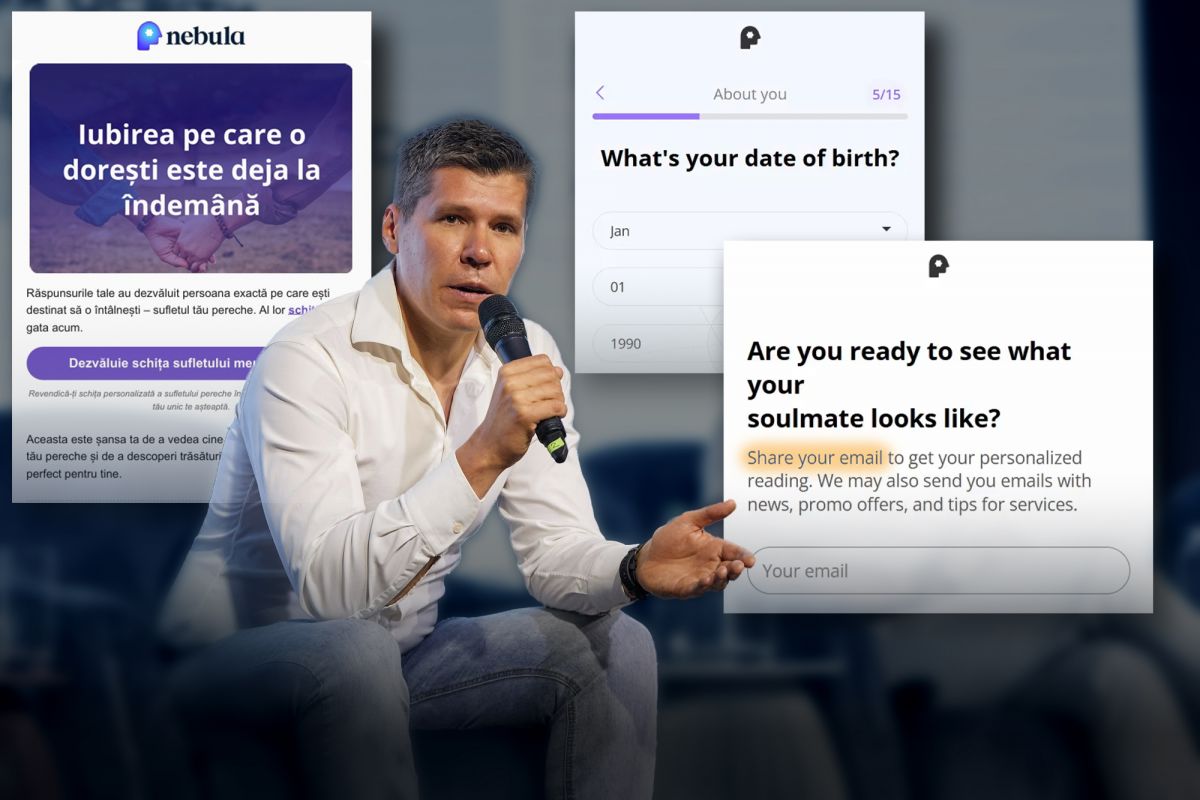
A company from Ukraine, Genesis Tech, is being investigated by the US for collecting personal data about Romanians through the astrology app "Nebula: Spiritual Guidance," which was promoted through online ads targeting gullible users. (translated)

INVESTIGAȚIE. O companie din Ucraina investigată de SUA strânge date personale despre români printr-o aplicație de astrologie / Ce spune Vasile Tofan, actualul premier al Republicii Moldova, care a investit în companie

❗ ΣΗΜΕΡΑ, ΣΤΟΝ ΒΟΑΚ, ΣΤΑΜΑΤΗΣΑΜΕ ΓΙΑ ΝΑ ΣΩΣΟΥΜΕ ΜΙΑ ΖΩΗ. ❗ Κινούμενος σήμερα στον ΒΟΑΚ, στο Ρέθυμνο, αντίκρισα ένα Όρνιο καταμεσής στον δρόμο. Ένα υπέροχο άγριο πλάσμα, εμφανώς εξαντλημένο, ενώ γύρω του τα αυτοκίνητα περνούσαν με μεγάλη ταχύτητα. ❗ Σταμάτησα αμέσως. Μαζί με άλλους ανθρώπους που βρέθηκαν στο σημείο, διακόψαμε για λίγο την κυκλοφορία και, με μεγάλη προσοχή, καταφέραμε να το απομακρύνουμε από το οδόστρωμα πριν συμβεί το χειρότερο. ❗ Είχα μαζί μου μόνο λίγο νερό και λίγη γατοτροφή. Του έβαλα νερό και του έδωσα λίγη τροφή, κυρίως για να παραμείνει στο ασφαλές σημείο και να μην ξαναβγεί στον δρόμο. Και μείναμε εκεί μαζί του, προσπαθώντας να το προστατεύσουμε από τα διερχόμενα αυτοκίνητα. ❗ Επικοινώνησα αμέσως με την ΑΝΙΜΑ στην Αθήνα και, κατόπιν της καθοδήγησής τους, κάλεσα τη Δασική Υπηρεσία Ρεθύμνου. ❗ Η ανταπόκρισή τους ήταν πραγματικά άμεση. Έφτασαν πολύ γρήγορα, παρέλαβαν το Όρνιο με ασφάλεια και μας ενημέρωσαν ότι φαίνεται εξαντλημένο και πιθανότατα χρειάζεται ενυδάτωση και ηλεκτρολύτες. Θα λάβει την απαραίτητη φροντίδα και, όταν είναι έτοιμο, θα απελευθερωθεί ξανά εκεί όπου πραγματικά ανήκει: στη φύση. Ελεύθερο. ❗ Δεν μπορώ να γνωρίζω τι ακριβώς το έφερε σε αυτή την κατάσταση. Η ζέστη, η έλλειψη νερού ή τροφής, κάποιος αποπροσανατολισμός ή ακόμη και οι πρόσφατες φωτιές στην περιοχή μπορεί να έχουν παίξει κάποιον ρόλο. Αυτό θα το γνωρίζουν οι ειδικοί. ❗ Εκείνο όμως που ξέρω είναι ότι για αρκετή ώρα άνθρωποι που δεν γνωρίζαμε ο ένας τον άλλον μείναμε στο ίδιο σημείο για έναν και μόνο λόγο: ❗ ΝΑ ΜΗ ΧΑΘΕΙ ΜΙΑ ΖΩΗ. ❗ Ένα μεγάλο ευχαριστώ σε όλους τους ανθρώπους που σταμάτησαν και βοήθησαν και ιδιαίτερα στη Δασική Υπηρεσία Ρεθύμνου για την εξαιρετικά άμεση ανταπόκριση και την ασφαλή παραλαβή του πουλιού. ❗ Και τελικά ίσως αυτό είναι το σημαντικότερο: ❗ Για να σωθεί μια ζωή δεν χρειάζεται πάντα να κάνεις κάτι σπουδαίο. Χρειάζεται, μερικές φορές, απλώς να μην την προσπεράσεις. ❤️ ❗ TODAY, ON CRETE’S NORTHERN HIGHWAY, WE STOPPED TO SAVE A LIFE. ❗ While driving today on the BOAK highway near Rethymno, I came across a Griffon Vulture standing in the middle of the road. A magnificent wild creature, visibly exhausted, while cars were passing by at high speed. ❗ I stopped immediately. Together with other people who happened to be there, we temporarily stopped the traffic and, very carefully, managed to guide the bird away from the road before the worst could happen. ❗ I only had some water and a little cat food with me. I offered it some water and a small amount of food, mainly to encourage it to remain in a safe place and prevent it from returning to the road. We then stayed beside it, making sure it remained protected from the passing traffic. ❗ I immediately contacted ANIMA Wildlife Rescue in Athens and, following their guidance, called the Rethymno Forestry Service. ❗ Their response was remarkably fast. They arrived shortly afterwards, safely collected the vulture and told us that it appeared to be exhausted and would probably need hydration and electrolytes. It will now receive the care it needs and, once it has recovered, it will be released again where it belongs: back into the wild. Free. ❗ We cannot know exactly what caused its condition. Heat, lack of water or food, disorientation, or even the recent fires in the area may have played a role. The experts will determine that. ❗ What I do know is that, for quite some time, people who had never met one another stayed together at that roadside for one single reason: ❗ TO MAKE SURE A LIFE WAS NOT LOST. ❗ A heartfelt thank you to everyone who stopped to help and especially to the Rethymno Forestry Service for their exceptionally swift response and the safe rescue of the bird. ❗ And perhaps this is what matters most: ❗ Saving a life does not always require something extraordinary. Sometimes, it simply requires us not to pass it by. ❤️ #Όρνιο #ΆγριαΖωή #ΠροστασίαΖώων #Κρήτη #Ρέθυμνο #GriffonVulture #WildlifeRescue #Crete #AnimalProtection #ΆγριαΖωή #ΠροστασίαΖώων #WildlifeRescue

Short rates in Japan are starting to get away from Bank of Japan guidance. The authorities can deny that inflation is coming all they want; the markets aren’t buying it. 🇯🇵 #Japan #Inflation #BankOfJapan #JP

NIC NEVIM Jul 30

Nový předseda Fedu zatím nic moc. Reakce trhů včera jednoznačně negativní. Padl dolar, akcie a hlavně dluhopisy. 30. leté jsou po včerejšku nejníž za posledních 16 let. Reakce na dluhopisovém trhu jasně říká, že trh nevěří těm jeho siláckým řečem o zkrocení inflace. Mluvit umí hezky, ale skutek utek. Ve skutečnosti může jít dál na ruku svému kamarádovi Trumpovi, který dlouhodobě tlačí na uvolněnou monetární politiku. Bývalo zvykem, že předseda Fedu dopředu signalizoval další kroky. Warsch to dělat odmítá, což by čistě hypoteticky vytvářelo skvělé prostředí pro insider trading. Kdyby třeba dopředu dával guidance jen vyvoleným… #Fed #ekonomie #dluhopisy

🇬🇧 *#BOE LEAVES KEY RATE AT 3.75%; EST. 3.750% - BBG *BOE SAYS GREENE, MANN AND PILL VOTED FOR QUARTER-POINT HIKE *BOE: UK INFLATION PEAKS AT 3.2% IN 4Q '26 IN CENTRAL PROJECTION *BOE GUIDANCE: COMMITTEE `STANDS READY TO ACT AS NECESSARY' #BOE #InterestRates #UKInflation #GB

30 czerwca, po wielogodzinnej akcji górskiej, zdobyłem szczyt i wykonałem pełny zjazd narciarski z Nanga Parbat. Ponad 3700 m deniwelacji Drogą Messnera do poziomu bazy. Tym samym zamknąłem swój projekt: zdobyłem i w pełni zjechałem na nartach ze wszystkich ośmiotysięczników w Pakistanie🇵🇰 Ogromnie się cieszę, że ten wyjątkowy moment na szczycie mogłem dzielić z Januszem Gołąbem, który towarzyszył mi i wspierał mnie podczas całego ataku szczytowego. Janusz, wielkie dzięki! 🤜🤛 Ogromne podziękowania należą się całemu naszemu zespołowi: @KGzela, Pawlikowski Media, Darek Załuski i Pasang Rinzee Sherpa – Wasza pomoc w nawigacji i wsparcie na każdym kroku były kluczowe. — On June 30, after a long summit push, I reached the top of Nanga Parbat and completed a full ski descent from the summit via the Messner Route, skiing over 3,700 vertical meters all the way to Base Camp. With this descent, I completed a project that has been years in the making: climbing and skiing all of Pakistan’s 8,000-meter peaks 🇵🇰 I’m truly grateful that I could share this summit with Janusz Gołąb, who climbed alongside me and supported me throughout the entire ascent. Janusz, thank you! 🤜🤛 My deepest thanks also go to the team: @KGzela, Pawlikowski Media, Darek Załuski, and Pasang Rinzee Sherpa. Your route guidance, weather updates, and constant support were an essential part of this success. — Partnerzy wyprawy: partner strategiczny @GrupaMurapol oficjalny sponsor @ComarchGroup oficjalny partner @totalizator_sp #DAVISFabrics partner sportowy @redbull oficjalny bank @BNPParibas_PL partner wspierający @IMMonitoring 🎥 @KGzela #współpracareklamowa #andrzejbargiel #suntleones #nangaparbatskichallenge #NangaParbat #AlpineClimbing #Skiing

🇨🇳 #China A-Share Profit Preview Flags Signs of Robust Growth - Securities Daily ➡ China’s A-share companies are beginning to release first-half earnings guidance, with early disclosures pointing to robust growth in select sectors, Securities Daily reports, citing analysts. #China #AShares #EarningsGrowth #CN

🇺🇸 Bessent applauds reduction in Fed guidance, says 'dot plot' should be abandoned - Reuters https://t.co/VKTWhSAGpN #FederalReserve #Economy #Finance #US

Vatnik Soup Jun 21

Washington Post reports that Tulsi Gabbard's decisions as the director of national intelligence was heavily influenced by her Hare Krishna cult leader Chris Butler. The report alleges that Butler provided detailed guidance on policy, media appearances, and messaging through https://t.co/6enZogTwgq #TulsiGabbard #HareKrishna #NationalIntelligence #US

Helen Joyce Jun 10

We're in court next Tuesday to challenge abusive police searching guidance. The law which governs police searching requires an officer of the same sex, no exceptions. But the gender ideologues have tried to find a loophole #PoliceReform #GenderEquality #LegalChallenge #Nospecificcountrycodescanbeidentifiedinthetweetprovided.

Ukrainian missiles vs Russian industrial facility making missile guidance systems in Cheboksary. https://t.co/3hr2FYACv1 #Ukraine #Russia #MissileTechnology #UA #RU

Uganda has closed its border with the Democratic Republic of Congo amid a surge in suspected cases of a rare Ebola type, despite World Health Organization guidance against such measures, as local health workers face increased risk due to exposure from Congolese patients. #EbolaOutbreak #Uganda #DRCongo

Uganda shuts border with DR Congo as cases of rare Ebola type surge