BETA nonprofit public democratic european moderated

Krzysztof Graj

20 posts

Krzysztof Graj

Specjalista do spraw Afryki, Telekomunikacji i OSINT. Współpracownik Radia 357 i prowadzący wybrane programy "Na Dachu Świata".
3 Following
2 Followers

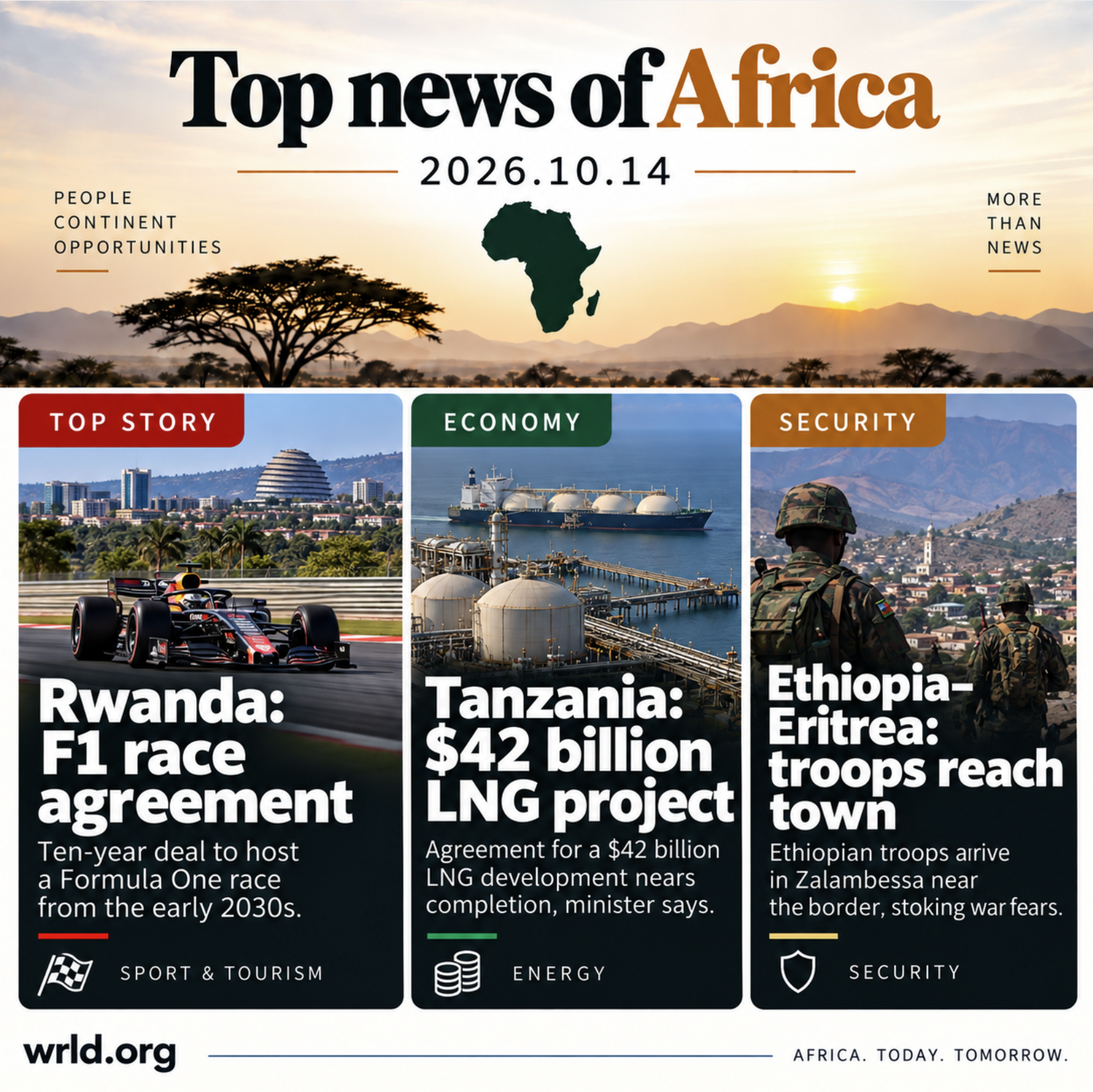
Africa Daily Report — 1 October 2026 Major developments reported during the previous 24 hours 1. Kenya / East Africa — $16 billion Dangote refinery breaks ground in Lamu. Five African heads of state joined the groundbreaking of Dangote Group's planned $16 billion refinery in Lamu. The plant is designed to process 700,000 barrels per day and is expected to take about 40 months to complete. It is intended to reduce East Africa's dependence on imported refined petroleum, but the project still faces land-rights litigation and environmental concerns. Importance: VERY HIGH — the project could materially reshape East African fuel supply, trade flows, infrastructure investment and regional industrialisation. Direct source: https://apnews.com/article/a0ae7108ae4f4144222aea101baed3a5 2. South Africa — Ramaphosa announces response to gender-based violence. President Cyril Ramaphosa announced additional measures after the discovery of multiple murdered women in Ekurhuleni. Measures include a 60-day local-government safety audit and reviews of unresolved murder, rape and other gender-based-violence cases. Police have not established that the recent killings were committed by a single perpetrator. Importance: VERY HIGH — gender-based violence remains a major public-safety and criminal-justice challenge in South Africa. Direct source: https://www.reuters.com/world/africa/violence-against-women-south-africa-is-national-shame-president-says-2026-09-30/ 3. DR Congo — Mistrust complicates Ebola response after politician killed. Congolese politician Marie-Célestin Karondwa was killed after publicly supporting the government's Ebola response, according to AP. The killing illustrates the severe community mistrust confronting health authorities as the Bundibugyo-virus outbreak continues. Congo has recorded more than 8,000 confirmed infections and nearly 4,000 deaths in the current outbreak. Importance: CRITICAL — the combination of rapid transmission, very high mortality, insecurity and resistance to health measures poses a major regional public-health risk. Direct source: https://apnews.com/article/1ff629474298a62db44438c6eb178270 4. Zambia — Government opens talks with IMF on a new programme. Zambia began discussions with a visiting IMF mission on a successor lending programme. The country's previous $1.7 billion IMF arrangement expired in January, and Lusaka wants a new agreement before year-end. The IMF mission is scheduled to remain through October 10. Importance: HIGH — a new IMF programme could affect Zambia's fiscal policy, investment environment and economic strategy after its sovereign-debt restructuring. Direct source: https://www.reuters.com/world/africa/zambia-starts-talks-with-visiting-imf-mission-new-loan-programme-2026-09-30/ 5. South Africa / United States — Pretoria summons US ambassador. South Africa's foreign ministry summoned US Ambassador Leo Brent Bozell III over what it described as “undiplomatic conduct.” It was the third such summons in nine months, reflecting continuing strain in bilateral relations. Both governments have nevertheless indicated that dialogue is continuing. Direct source: https://www.reuters.com/world/africa/south-africa-summons-us-ambassador-again-over-undiplomatic-conduct-official-says-2026-09-30/ 6. South Africa — Anti-immigration protests held in Durban. Hundreds of demonstrators marched in Durban calling for more deportations of undocumented migrants and tighter border controls. The demonstration comes amid heightened tensions over migration and previous violence against foreign nationals. Authorities did not recognise an ultimatum previously issued by organisers demanding that undocumented migrants leave the country. Direct source: https://apnews.com/article/c086e617b555643510541f9c9906ca4b 7. Africa — WHO data show sharp increase in cholera deaths. New WHO surveillance data show that reported cholera deaths globally rose by about 30% in 2025 despite fewer reported cases. The African Region experienced a particularly sharp deterioration: reported cases increased by 34% and deaths by 58%. Angola, DR Congo, Nigeria, South Sudan and Sudan were among seven countries accounting for roughly 90% of reported global cases and deaths. Importance: VERY HIGH — the figures highlight persistent weaknesses in water, sanitation, surveillance and access to timely treatment across several African states. Direct source: https://allafrica.com/stories/202609300113.html 8. Zambia — New cholera outbreak reaches 304 cases and 11 deaths. Zambian health authorities reported 304 cholera cases across seven districts in five provinces as of September 29, with 11 deaths. Lusaka was among the affected areas. The government said eight deaths occurred in communities, pointing to delays in patients reaching treatment. Importance: HIGH — Zambia only recently ended its previous outbreak, making renewed transmission a significant public-health concern. Direct source: https://www.mwebantu.com/11-die-as-cholera-hits-seven-districts-in-five-provinces-says-ministry-of-health/ 9. Burkina Faso — Country opens its first gold refinery. Burkina Faso inaugurated its first domestic gold refinery, RAFFINOR-BF, in Ouagadougou. The facility cost more than 11 billion CFA francs and has an initial annual refining capacity of about 164 tonnes, with plans for substantial expansion. The project is intended to retain more value from the country's gold production through domestic refining, certification and processing. Importance: HIGH — the refinery is part of a wider African trend toward local mineral beneficiation and greater domestic control of commodity value chains. Direct source: https://apnews.com/article/f39f714232e1784bb5051cdf44f0b992 10. Zimbabwe — Helicopter crash reported with six people aboard. A helicopter carrying four passengers and two crew members crashed in Zimbabwe's Marondera district southeast of Harare. Government and police officials said initial information indicated there were no survivors. Authorities had not immediately released all identities or a cause for the crash. Importance: MODERATE — a significant domestic aviation accident, with investigation and identification of those aboard still pending. Direct source: https://abcnews.com/International/wireStory/helicopter-6-aboard-crashes-zimbabwe-survivors-officials-136898678 #Africa #AfricaNews #TopNewsOfAfrica #DRCongo #Ebola #EbolaOutbreak #PublicHealth #HealthSecurity #CommunityTrust #DiseaseResponse #Zambia #IMF #InternationalMonetaryFund #EconomicReform #DebtRestructuring #FiscalPolicy #AfricanEconomy #SouthAfrica #CyrilRamaphosa #GenderBasedViolence #Femicide #PublicSafety #CriminalJustice #Ekurhuleni #ViolenceAgainstWomen #AfricanSecurity #RegionalStability #Geopolitics #AfricaToday #wrldorg

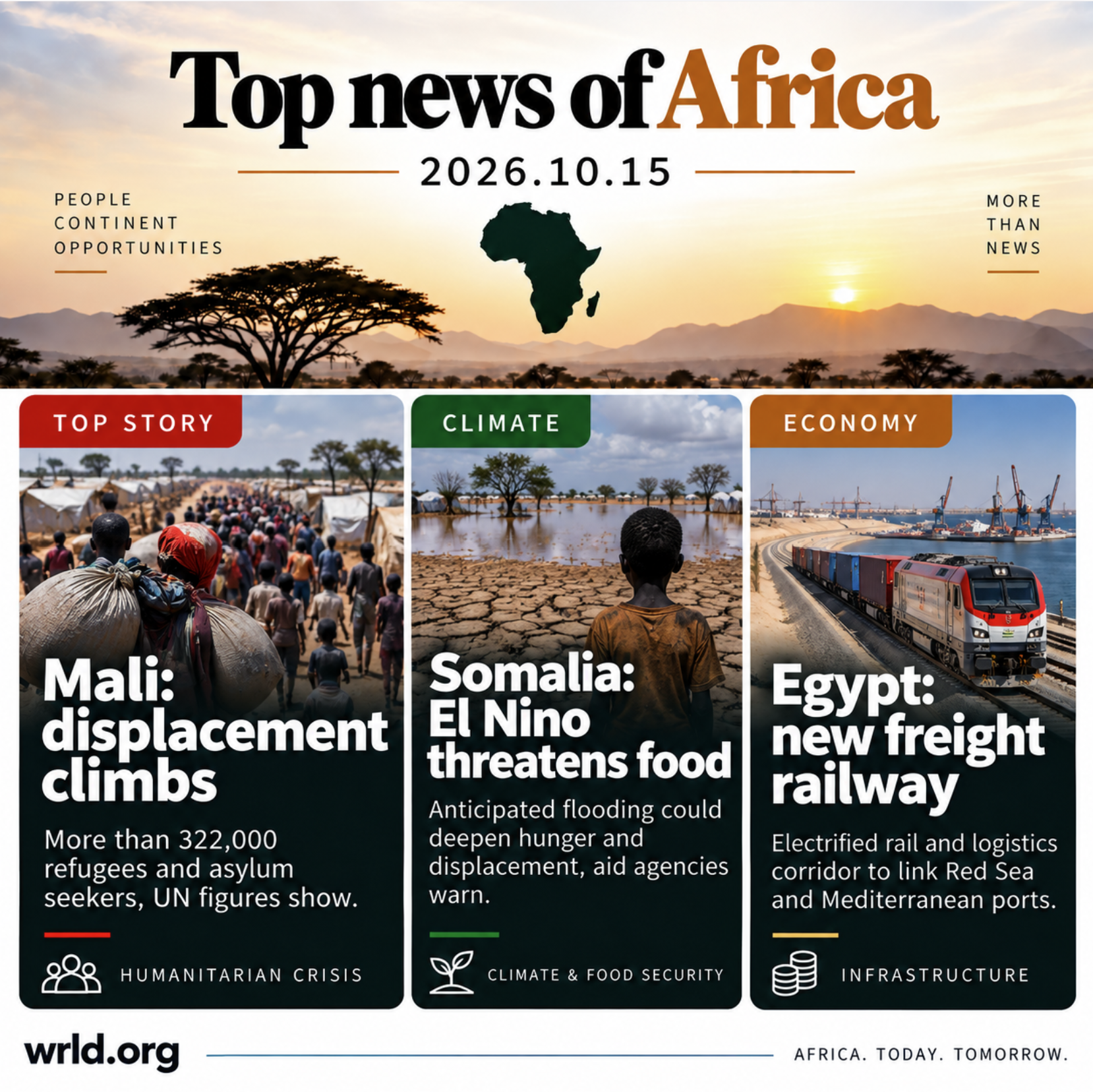
Africa Daily Report — 30 September 2026 Major developments reported during the previous 24 hours. 1. Morocco — Fatima Ezzahra El Mansouri appointed first woman prime minister. King Mohammed VI appointed El Mansouri following the September 23 parliamentary election. Her Authenticity and Modernity Party won the largest number of seats, and she now has to form a coalition. The appointment is historic, while the next government will also inherit major economic reforms and preparations for the 2030 World Cup. Direct source: https://www.reuters.com/world/africa/moroccos-king-appoints-first-woman-pm-following-sept-23-election-2026-09-29/ 2. Ethiopia — Fighting intensifies around Tigray amid wider regional accusations. Fighting between federal and Tigrayan forces has escalated, with territorial shifts and concern that the conflict could again spread across northern Ethiopia. Ethiopian officials have accused regional rivals of supporting armed groups, while communications disruptions and displacement are complicating independent assessment and humanitarian access. The renewed conflict threatens the fragile post-2022 settlement. Direct source: https://www.aljazeera.com/news/2026/9/29/fighting-in-ethiopia-intensifies-whats-the-latest 3. Somalia/Puntland — Five tanker crew members killed in piracy incident. Puntland authorities said Somali pirates killed five crew members of the petroleum-products tanker MT Honour 25 before security forces rescued the hijacked vessel. The incident is a serious reminder that piracy remains an operational security threat off the Horn of Africa despite years of international maritime-security efforts. Importance: HIGH — maritime security and Red Sea/Indian Ocean trade routes. Direct source: https://www.reuters.com/world/africa/somali-pirates-killed-5-crew-members-hijacked-tanker-before-rescue-mission-2026-09-29/ 4. Kenya/Nigeria — Dangote advances $16 billion Lamu refinery. Dangote is moving ahead with the planned 700,000-barrel-per-day refinery at Lamu. The project is intended to reduce East Africa's dependence on imported refined fuels and could generate more than 50,000 jobs, but it faces infrastructure, environmental and land-rights challenges. A Kenyan court dispute could restrict some site activity pending an October 14 hearing. Importance: VERY HIGH — potentially transformative for East African energy supply, fuel imports, logistics and industrial development. Direct source: https://www.reuters.com/business/energy/dangote-begin-construction-16-billion-east-africa-refinery-kenya-2026-09-30/ 5. South Africa — Foreign direct investment more than doubles in Q2. South Africa's central bank reported FDI inflows of 49.8 billion rand in the second quarter, up from 20.3 billion rand in Q1. The increase is an encouraging investment signal, although it needs to be considered alongside the country's broader growth, fiscal and structural indicators. Importance: HIGH — investment flows are a key indicator for Africa's most industrialised economy. Direct source: https://www.reuters.com/world/africa/south-africas-foreign-direct-investment-inflows-pick-up-q2-2026-09-29/ 6. Ghana — Environmental regulator intensifies mining-sector enforcement. Ghana's Environmental Protection Authority issued a pre-closure notice to Chinese-owned Cardinal Namdini Mining over an alleged unreported incident and is reviewing an inspection of Gold Fields' Tarkwa operation. The regulator says it is moving from periodic inspections toward continuous monitoring and enforcement as Ghana seeks stronger environmental compliance, state revenue and local participation in its gold industry. Importance: HIGH — regulatory tightening can materially affect major international mining investors and Ghana's gold industry. Direct source: https://kfgo.com/2026/09/29/exclusive-ghanas-environmental-authority-targets-chinese-owned-cardinal-and-others-in-mining-crackdown/ 7. DR Congo — Annual audits of major miners planned from 2027. The DRC plans annual audits of major mining companies' subcontracting practices and compliance with local-content requirements beginning in 2027. The world's largest cobalt producer and Africa's leading copper producer is tightening oversight to direct more procurement and contracts toward Congolese-owned businesses. Importance: HIGH — potentially significant for global copper/cobalt supply chains and mining contractors operating in DRC. Direct source: https://ca.marketscreener.com/news/congo-to-audit-major-miners-annually-from-2027-as-part-of-local-content-drive-regulator-says-ce785adddc81f221 8. Tunisia/Mediterranean — Migrant shipwreck leaves at least two dead. Sea-Watch said it rescued 28 people after a shipwreck off Tunisia and recovered two bodies, including a child. Survivors reported at least six people missing, including three children. More than 1,970 people have died or gone missing attempting Mediterranean crossings in 2026, according to Sea-Watch, even as arrivals in Italy have fallen sharply from 2025. Importance: HIGH — migration, humanitarian protection and EU–North Africa policy remain closely linked. Direct source: https://www.straitstimes.com/world/europe/migrant-shipwreck-off-tunisia-leaves-at-least-two-dead-six-reported-missing 9. Guinea-Bissau — Ousted president plans return ahead of December election. Former president Umaro Sissoco Embalo, removed in the November 2025 coup, plans to return on October 4 and seek the presidency in elections scheduled for December 6, according to a source cited by Reuters. A recently approved constitutional residency requirement could become relevant to his eligibility. The military-led authorities have reportedly said he is welcome to return. Direct source: https://kfgo.com/2026/09/29/ousted-guinea-bissau-leader-to-run-in-december-election-source-says/ 10. Sudan — Currency collapse brings fuel queues back to Khartoum. Long fuel queues have returned in Khartoum and several other areas as the Sudanese pound reportedly weakened beyond 8,000 to the US dollar on the parallel market. The currency deterioration is adding to transport and commodity pressures in an economy already devastated by war and disrupted production and trade. Importance: VERY HIGH — the currency/fuel shock compounds Sudan's humanitarian and economic crisis. Direct source: https://sudantribune.com/article/319408 #TopNewsOfAfrica #Africa #AfricaNews #AfricaDaily #Morocco #FatimaEzzahraElMansouri #WomenInLeadership #FirstWomanPrimeMinister #MoroccanPolitics #NorthAfrica #Kenya #Nigeria #Dangote #LamuRefinery #EastAfrica #EnergySecurity #RefineryProject #IndustrialDevelopment #Infrastructure #Investment #Somalia #Puntland #Piracy #MaritimeSecurity #HornOfAfrica #ShippingSecurity #IndianOcean #RedSea #AfricanEconomy #AfricanSecurity #Geopolitics #wrldorg

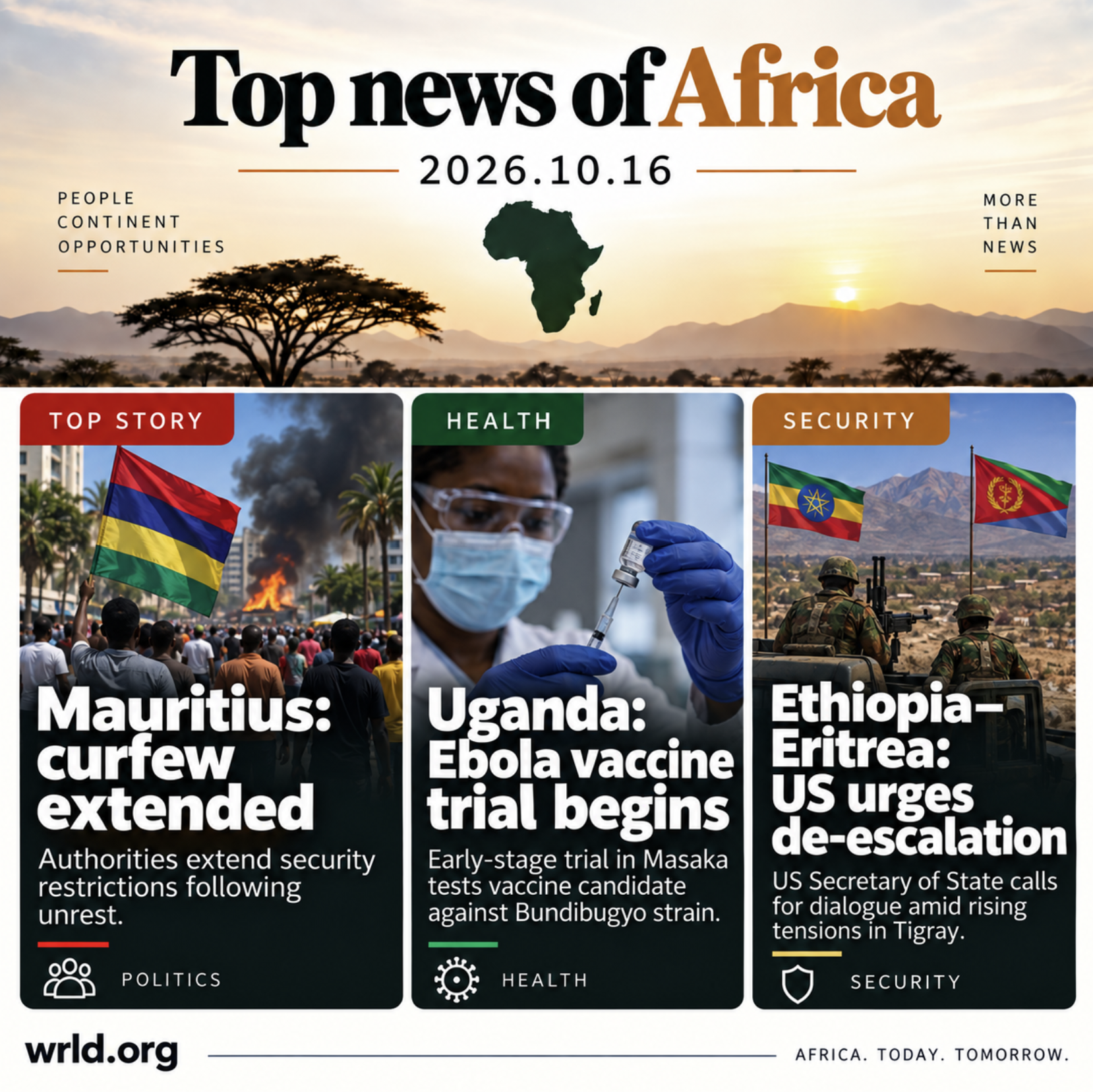
AFRICA DAILY REPORT — 29 SEPTEMBER 2026 Major developments reported during the previous 24 hours. 1. ETHIOPIA — Renewed Tigray conflict intensifies around strategic Alamata Federal-aligned forces claimed the capture of Alamata, an important supply hub south of Mekelle, after a TPLF-led offensive widened fighting into Afar and Amhara. Diplomatic sources cited by Reuters said the town had fallen or federal-aligned forces had entered it, while communications remained disrupted across Tigray. The renewed conflict is raising serious concerns about the survival of the 2022 Pretoria peace settlement. Source: https://www.reuters.com/world/africa/ethiopian-pro-government-forces-claim-capture-strategic-tigray-town-2026-09-28/ 2. DR CONGO — Ebola outbreak passes 8,000 confirmed cases Importance: 10/10 — Critical Government data showed 8,067 confirmed Ebola cases and 3,901 deaths as of September 26. The Bundibugyo-virus outbreak is now the largest and deadliest Ebola epidemic recorded in the DRC and has spread across 63 health zones in seven provinces; shortages of health workers and weaknesses in contact tracing continue to impede containment. Source: https://www.timeslive.co.za/news/africa/2026-09-28-drc-ebola-infections-cross-8000-confirms-government/ 3. SOUTH AFRICA — Death toll from Wedela tavern shooting rises to 18 Importance: 9/10 — Very High Police said another victim died in hospital, raising the death toll from the weekend attack in Wedela, southwest of Johannesburg, to 18. Authorities are searching for the attackers and examining a possible connection to turf wars in illegal gold mining; a separate weekend shooting near Cape Town killed another 10 people. Source: https://currently.att.yahoo.com/att/south-african-police-death-toll-062225459.html 4. ZAMBIA — Government targets average 7% economic growth Importance: 8/10 — High Zambia's finance ministry says the government aims to raise average economic growth to 7% over the next three years. The target follows progress in restructuring the country's external debt and represents an attempt to translate improving macroeconomic stability into stronger sustained growth. Source: https://www.reuters.com/world/africa/zambia-aims-lift-economic-growth-7-over-next-three-years-2026-09-28/ 5. MALI — Barrick and unions reach agreement, averting gold-mine strike Importance: 8/10 — High Barrick Mining signed a new collective bargaining agreement with unions at the Loulo-Gounkoto gold complex, and planned strike action was withdrawn. The agreement reduces immediate operational risk at one of Mali's most important gold-producing assets following a prolonged period of tension involving the miner, workers and the Malian authorities. Source: https://www.brecorder.com/news/40441512/mali-gold-mine-barrick-mining-reaches-deal-with-unions 6. KENYA — Court of Appeal upholds Affordable Housing Levy Kenya's Court of Appeal dismissed challenges to the Affordable Housing Act and levy, upholding the legal framework underpinning one of President William Ruto's major domestic programmes. The judges also upheld the Kenya Revenue Authority Commissioner's role in collecting the levy, although they found that the Commission on Revenue Allocation should have been consulted before parliamentary debate. Source: https://allafrica.com/stories/202609280027.html 7. ETHIOPIA–SUDAN — Accusations over support for armed groups deepen regional tensions Ethiopia's army chief accused Eritrea, Sudan and Egypt of supporting forces fighting federal troops amid renewed warfare in northern Ethiopia. Sudan rejected the allegations as baseless and counter-accused Ethiopia of facilitating support for Sudan's paramilitary RSF, adding another interstate dimension to the conflicts destabilising the Horn of Africa. Source: https://apnews.com/article/6b3208122a4221f3c2e8dcbe21630016 8. UGANDA — Police confirm detention of activist Praise Aloikin Ugandan police confirmed that activist Praise Aloikin Opoloje is in custody after activists and associates had reported her missing. Police said she had been arrested and would be brought before a court; Aloikin participated in the 2024 anti-corruption protests and has publicly criticised political and security figures. Source: https://allafrica.com/stories/202609280365.html 9. SOUTH AFRICA — Rand weakens as high oil prices increase economic pressure Importance: 7.5/10 — High The rand weakened about 0.5% against the dollar in early Monday trade as Middle East tensions pushed Brent crude above $107 per barrel. Because South Africa imports most of its fuel, sustained high oil prices pose risks through higher import costs and inflationary pressure. Source: https://www.channelafrica.co.za/channelafrica/news/rand-slips-as-us-iran-stalemate-pushes-oil-prices-higher/ 10. AFRICA — AFCON 2027 qualification moves into Matchday 2 Importance: 6/10 — Moderate The latest qualifying round opened with Burkina Faso beating Central African Republic 1–0, Equatorial Guinea defeating Sierra Leone 1–0, DR Congo beating Zimbabwe 2–1 and Tunisia drawing 2–2 with Botswana. September 29 brings a large slate including Ethiopia–Senegal, South Sudan–Egypt, Ghana–Gambia, Guinea-Bissau–Nigeria and Zambia–Togo. Source: https://english.ahram.org.eg/NewsContentP/6/577635/Sports/Africa-Cup-of-Nations-qualifiers-results-amp%3B-fixt.aspx #Africa #AfricaNews #TopNewsOfAfrica #SouthAfrica #Wedela #Johannesburg #TavernShooting #MassShooting #ViolentCrime #IllegalMining #PublicSafety #Zambia #ZambianEconomy #EconomicGrowth #GDPGrowth #DebtRestructuring #Macroeconomics #AfricanEconomy #Ethiopia #Tigray #Alamata #TigrayConflict #PretoriaPeaceAgreement #HornOfAfrica #ArmedConflict #RegionalSecurity #AfricanSecurity #Geopolitics #AfricaToday #wrldorg

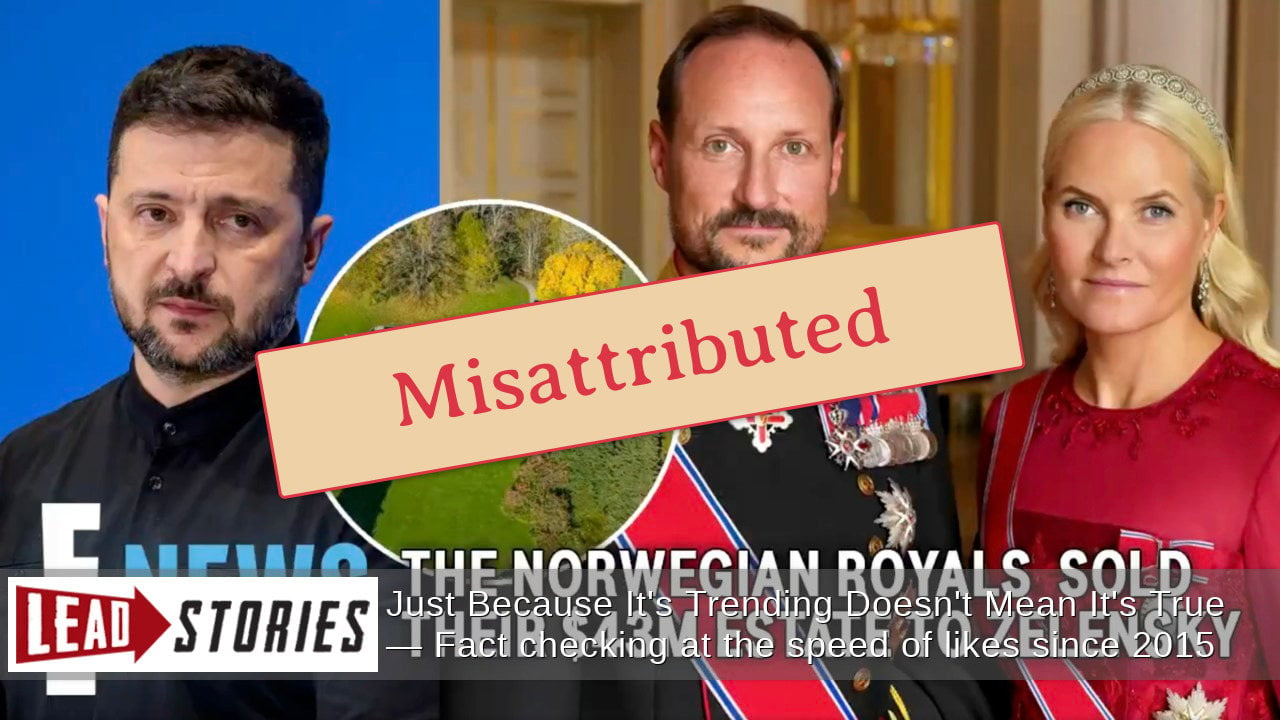
Fake NV – how a cloned newsroom turned an AI video into a $140 million corruption scandal For two days in September, a website that looked almost indistinguishable from one of Ukraine’s best-known news organisations carried an extraordinary corruption story. It claimed that Ukraine’s National Anti-Corruption Bureau had raided former defence procurement chief Arsen Zhumadilov and discovered more than $140 million in cash packed inside refrigerator boxes. One box supposedly carried the words “For the Servant of the People” – an apparent reference to President Volodymyr Zelenskyy’s political party. The raid never happened. The photographs and video presented as evidence were fabricated, and the news organisation reporting the story was not the New Voice of Ukraine but a cloned version of it. The episode is a compact example of an increasingly effective disinformation technique. Rather than inventing a new propaganda outlet and trying to build its credibility from scratch, an operator can simply steal the identity of an established newsroom and place fabricated material inside an otherwise convincing copy of its editorial environment. A newsroom copied almost in full The counterfeit site appeared at nvukraine.com, while the authentic New Voice of Ukraine operates at nv.ua and english.nv.ua. Registration records examined by fact-checkers show that the false domain was created on 21 September 2026, two days before the fabricated article appeared. According to NV’s own investigation, the imitation went much further than copying a logo: the operators reproduced the site’s visual design, sections, branding, contact information and genuine editorial material. A snapshot of legitimate NV content from 23 September appears to have been copied onto the counterfeit site, into which the operators inserted a single false article. That article claimed that NABU had searched premises connected to Zhumadilov, who had headed Ukraine’s Defence Procurement Agency until August, and seized $140 million in cash. The story was published in several languages, including Ukrainian and English, suggesting that the operation was intended not only for Ukraine’s domestic information space but also for foreign audiences following the war and Western support for Kyiv. AI supplied the supposed evidence The false article was supported by a video purportedly showing the money discovered during the raid. NABU said no such search or procedural action had taken place and identified the footage as fabricated using artificial intelligence. Independent fact-checker Lead Stories found no credible Ukrainian or international reporting confirming either the raid or the alleged seizure, while searches of NABU’s own published material produced no evidence supporting the claim. The operation therefore combined two separate forms of synthetic credibility. The AI-generated footage supplied what looked like visual proof, while the cloned NV website supplied institutional proof: an apparently reputable Ukrainian newsroom supposedly confirming that the event had happened. Neither element needed to withstand close scrutiny for long. Together, they only needed to appear credible enough to be copied, quoted and redistributed before the deception was exposed. From a fake Ukrainian source into the Russian information ecosystem On 24 September, the story began moving through large pro-Russian Telegram channels. Ukraine’s Center for Strategic Communications traced early amplification to Golos Mordora, with roughly 149,000 subscribers, and Militarist, with around 277,000. Within less than an hour, other channels including VOBLA, Rossiya Seychas and Ostashko! Vazhnoye were circulating versions of the same claim. It subsequently appeared on X and on Russian-language websites including e-news.su and pressa24.ru. Babel calculated that posts carrying the fabrication had accumulated approximately 370,000 views by the morning of 25 September. The story also moved beyond the Russian-language ecosystem. English-language versions appeared in online communities including Lemmy and Hexbear, while accounts on X shared direct links to the counterfeit NV article. NV later reported that larger Russian media and propaganda outlets, including RIA Novosti, Life, Vesti, Ukraina.ru and Mail.ru, had reproduced or discussed the claim. Kirill Dmitriev, head of the Russian Direct Investment Fund and a Kremlin representative involved in contacts with the United States, also shared it on 25 September. This amplification is significant, but it should not be confused with proof of authorship. Publicly available evidence shows how the false story entered and spread through a Russian and pro-Russian information ecosystem. It does not establish which organisation registered the cloned domain, generated the video or directed the operation from the outset. Why copy NV? The operation relied on source laundering. A claim originating directly from a Russian Telegram channel that Ukraine’s defence procurement system had concealed $140 million would immediately carry an obvious political context. A claim apparently uncovered by an established Ukrainian newsroom looks very different. Once the fabricated NV article existed, subsequent accounts could cite what appeared to be an independent Ukrainian source rather than present the allegation as their own. Each repost moved the story another step away from its manufactured origin. The use of an English-language version strengthened that mechanism for audiences outside Ukraine. The underlying narrative was also carefully chosen. Corruption in Ukrainian defence procurement is a genuine subject of public scrutiny and investigative reporting, so the fabricated story did not require audiences to accept an entirely unfamiliar premise. It inserted a false event into a real area of political concern. That mixture of authentic context and fabricated evidence can be more persuasive than a completely invented story because much of the surrounding information feels recognisable. What can – and cannot – be attributed Ukrainian authorities and NV describe the episode as a Russian information operation, and its distribution can be documented extensively across pro-Russian and Russian media channels. The available public evidence, however, does not identify the organisation that created the counterfeit website, nor does it link the operation forensically to a named Russian intelligence service, military unit or state contractor. The most precise description is therefore a Russian-aligned disinformation operation whose fabricated material was systematically amplified through the Russian information ecosystem. That distinction matters. Distribution can be observed directly; command-and-control is harder to establish and should not be inferred without evidence. The newsroom itself becomes the deepfake The most important feature of the operation was not the $140 million figure or even the AI-generated video. It was the counterfeit newsroom surrounding them. The operators copied a real publication, populated it largely with genuine material and inserted a single false story, allowing the fabrication to borrow the accumulated credibility of journalists who had nothing to do with it. This points to a broader evolution in synthetic media. AI can fabricate an image, a voice or a video, but an influence operation can now fabricate something larger: the source that supposedly verified the evidence. In the Fake NV operation, the article, the video and the website reinforced one another, creating not simply a false story but a manufactured chain of credibility. Sources The New Voice of Ukraine — investigation into the cloned website https://english.nv.ua/nation/nv-discovers-fake-copy-of-website-with-planted-story-cites-russian-links-50644601.html The New Voice of Ukraine — Russian amplification of the $140 million fabrication https://english.nv.ua/russia-spreads-fake-140-million-ukraine-corruption-story-during-dmitriev-u-s-talks-50644647.html Lead Stories — independent fact-check https://leadstories.com/hoax-alert/2026/09/fact-check-fake-story-claims-140-million-found-at-home-of-ukraines-zhumadilov-marked-servant-of-the-people-nv-website-originated-it.html Babel — AI video and distribution analysis https://babel.ua/en/news/130469-a-video-is-sharing-online-about-140-million-found-in-the-possession-of-the-ex-head-of-the-defense-procurement-agency-this-is-an-ai-video-distributed-by-a-clone-of-ukrainian-media Center for Strategic Communications and Information Security — initial debunk https://spravdi.org/en/ai-fake-about-140-million-amid-us-talks-how-russians-impose-the-image-of-corrupt-ukraine-on-the-west/ Center for Strategic Communications and Information Security — NABU confirmation https://spravdi.org/u-merezhi-poshyryuyut-shi-fejk-pro-nibyto-obshuky-nabu-v-eksgolovy-agencziyi-oboronnyh-zakupivel/ Detector Media — distribution and NABU response https://detector.media/infospace/article/252806/2026-09-25-u-merezhi-pidrobyly-sayt-nv-dlya-poshyrennya-feyku-pro-obshuky-v-eksochilnyka-agentsii-oboronnykh-zakupivel/ Keywords #DISINFORMED #Episode10 #FakeNV #NewVoiceOfUkraine #Ukraine #Russia #RussianDisinformation #RussianInfluence #Disinformation #InformationWarfare #InfluenceOperations #ForeignInterference #FIMI #MediaImpersonation #ClonedMedia #FakeMedia #FakeNews #ArtificialIntelligence #AI #AIGeneratedContent #SyntheticMedia #AIVideo #SourceLaundering #NarrativeLaundering #CorruptionNarrative #UkraineCorruption #DefenceProcurement #NABU #ArsenZhumadilov #Telegram #SocialMediaManipulation #DigitalInfluence #Propaganda #OSINT #MediaManipulation #WRLD

AFRICA DAILY REPORT — 27 SEPTEMBER 2026 Major developments reported during the previous 24 hours. 1. SOUTH AFRICA — Police investigate deadly tavern shooting Importance: 10/10 (Critical) South African police launched a manhunt after 17 people were killed at a tavern in Wedela township, southwest of Johannesburg. Police said the motive was not yet known. Source: https://www.reuters.com/world/africa/ 2. DR CONGO — Ebola reaches 63 health zones across seven provinces Importance: 10/10 (Critical) WHO reporting says the Bundibugyo Ebola outbreak has spread to Bulu in Sud Ubangi and Dungu in Haut-Uélé. As of September 23, 7,890 confirmed cases and 3,799 deaths had been reported, while conflict and displacement continue to complicate access and contact tracing. Source: https://www.channelafrica.co.za/ 3. DR CONGO — Mpox confirmed in Bunia while the Ebola response is already under pressure Importance: 9/10 (Very High) A laboratory-confirmed mpox case was identified in Bunia, raising concern about simultaneous infectious-disease pressures on surveillance, laboratories and clinical capacity. Source: https://www.businessday.co.za/ 4. SOUTH AFRICA — Tenth woman's body found in Ekurhuleni investigation Importance: 9/10 (Very High) Police discovered another woman's body east of Johannesburg, bringing the number found during the investigation to ten and intensifying concern over gender-based violence and whether some of the cases are connected. Source: https://www.africanews.com/ 5. NIGERIA–SOUTH AFRICA — Nigeria evacuates another 105 citizens Importance: 8.5/10 (Very High) Nigeria evacuated another group of nationals amid continuing anti-immigrant violence and tensions in South Africa. Nigeria's Foreign Ministry said this was the 13th consular evacuation since June 10, bringing the total evacuated to 1,821 people. Source: https://punchng.com/ 6. KENYA — Report highlights recruitment of Kenyans into Russia's military Importance: 8/10 (High) Reporting by The EastAfrican says Kenya has emerged as a leading African source country in Russian military recruitment, with recruitment practices evolving as African authorities increase scrutiny. Source: https://www.theeastafrican.co.ke/ 7. GUINEA — Former prime minister and opposition leader Sidya Touré dies in Paris Former prime minister and prominent opposition figure Sidya Touré died aged 81. He had led the Union of Republican Forces from exile in Ivory Coast; the UFR was among political parties dissolved earlier this year. Source: https://www.africanews.com/ 8. MADAGASCAR — Youth activists voice disillusionment one year after political upheaval A year after youth-led protests helped force the previous president from power, activists interviewed in Madagascar say the subsequent political transition has not delivered the changes they expected, highlighting continuing questions about governance and the country's transition. Source: https://www.africanews.com/ 9. EAST AFRICA — County levies increase costs along Kenya's regional trade corridors Importance: 7.5/10 (High) Businesses moving goods through Kenya face additional county-level charges along important transport corridors. Because Kenyan roads and the Port of Mombasa serve several landlocked East African economies, higher logistics costs can affect regional trade competitiveness and import prices. Source: https://www.theeastafrican.co.ke/ 10. AFRICA — Governments pursue new financing models for forest protection Importance: 7/10 (High) African governments are developing country-led mechanisms combining domestic expenditure with international climate finance. Kenya is highlighted for its financing approach, while Nigeria is preparing a forest-finance package for COP31. Source: https://capitalethiopia.com/ #Africa #AfricaNews #TopNewsOfAfrica #DRCongo #Bunia #Mpox #Ebola #EbolaOutbreak #PublicHealth #HealthEmergency #DiseaseSurveillance #HealthcareCapacity #OutbreakResponse #CentralAfrica #Ecology #ForestProtection #ClimateFinance #NatureFinance #Conservation #Sustainability #EnvironmentalProtection #Kenya #Russia #MilitaryRecruitment #Security #AfricanSecurity #Geopolitics #EastAfrica #RegionalSecurity #AfricaToday #wrldorg

Russia’s influence operation arrives ahead of the US midterms With weeks remaining before America's November midterm elections, a familiar type of content has begun appearing online. Videos resembling reports from CNN, the BBC and The New York Times accuse candidates of corruption, antisemitism and misconduct. Hollywood actors appear to denounce Democrats. Other clips claim that warnings about Russian interference are themselves a Democratic disinformation campaign. The reports are fabricated. Graphika, which tracks online influence operations, says it has identified a coordinated campaign targeting candidates in competitive US Senate races. It assesses with high confidence that the material was produced by Operation Overload, also known as Matryoshka – a long-running Russia-aligned influence operation previously active against elections and political debates in Europe and the United States. The activity coincides with a broader warning from American intelligence officials. Classified assessments reported by The New York Times conclude that the Kremlin has authorised another digital influence campaign ahead of the 2026 midterms, aimed primarily at exploiting existing divisions and undermining confidence in American democracy. There is an important distinction. US officials have not reported evidence that Russia is attempting to manipulate voting machines or alter the counting of votes. The operation is about influencing the information environment surrounding the election. Fake scandals for competitive Senate races Graphika traced a concentrated wave of activity between 10 and 14 September. Likely inauthentic or repurposed accounts distributed videos accusing Democratic politicians of corruption, antisemitism and other misconduct. The targets included Senator Jon Ossoff in Georgia, Representative Chris Pappas in New Hampshire and Texas state representative James Talarico, as well as Senate candidates Sherrod Brown in Ohio, Roy Cooper in North Carolina, Mary Peltola in Alaska, Abdul El-Sayed in Michigan, Joshua Turek in Iowa and Troy Jackson in Maine. The selection was not random. These were politicians involved in Senate contests where the result could matter to control of the chamber. The campaign did not rely on a single political narrative. Instead, it attached different accusations to different candidates – corruption, social issues, antisemitism or personal misconduct – while maintaining a consistent production and distribution model. That model is characteristic of Matryoshka: create apparently independent pieces of evidence, disguise them as journalism and distribute them through networks of disposable accounts. Hollywood celebrities who never said what the videos claimed One of the campaign's more distinctive techniques involved genuine footage of American actors. Videos featuring celebrities including Sarah Jessica Parker and Julia Roberts were altered with captions and other material to suggest they were promoting the slogan #AllDemocratsAreCriminals. The technique continued in subsequent material. Fact-checkers identified fabricated New York Times-branded videos using footage of Alyssa Milano, Sean Astin, Rachael Harris, Leonardo DiCaprio, Eric Braeden, Annie Potts and Patrick Fabian. Some of the original footage came from Cameo, where actors record personalised video messages. Their authentic images were retained while fabricated audio, captions or surrounding material changed the meaning entirely. Lead Stories compared several of the clips with the originals and found that the supposed political statements did not appear in the genuine recordings. Eric Braeden's representative separately confirmed that the claim he had joined the anti-Democratic campaign was false. The advantage of the technique is straightforward. Generative AI does not need to create a convincing celebrity from nothing. The operator can begin with authentic footage of a recognisable person and manipulate only the elements necessary to manufacture a political statement. Stealing the authority of real newsrooms Celebrity impersonation was only one layer. The operation repeatedly borrowed the visual identity of established media organisations. Graphika identified material impersonating or falsely citing the BBC, CNN and Politico, alongside references to France's VIGINUM foreign-interference agency and journalist Brandy Zadrozny. Other material reproduced New York Times-style branding. Some fabricated reports made an unusual claim: that Democrats themselves were organising disinformation or “false-flag operations” and then blaming Russia. This creates a defensive layer around the influence operation. Instead of merely distributing false political allegations, the campaign also attempts to discredit future reporting about the manipulation itself. If successful, evidence exposing foreign interference can be reframed as part of the conspiracy. Graphika says it assesses with high confidence that Operation Overload produced these videos. The technique is well established. Earlier investigations by CheckFirst and Reset Tech documented hundreds of falsified pieces of content produced by Operation Overload, often impersonating journalists, institutions and major media brands. AI-generated or manipulated material has increasingly become part of that production system. What US intelligence says Russia is trying to achieve The broader strategic picture comes from American intelligence assessments reported on 18 September. According to US officials familiar with classified findings, the Kremlin has authorised a covert digital influence campaign aimed at Americans during the 2026 election season. Its apparent objective is to seed or amplify domestic divisions and weaken confidence in the political process. Some officials described the principal aim as creating disorder rather than helping a single political party. The publicly identified Matryoshka material examined so far, however, has targeted Democratic candidates. Those two findings should not be treated as contradictory. An operation can exploit partisan divisions while serving the broader objective of making the electoral system appear corrupt, chaotic or illegitimate. US officials also reportedly assess the current Russian campaign as less extensive or coordinated than some previous election operations. Moscow is considered less focused on congressional elections than presidential contests and remains heavily occupied by its war against Ukraine. Russia has denied previous US accusations of election interference. An operation with limited reach – so far There is another reason for caution: producing large quantities of disinformation is not the same as successfully influencing voters. Matryoshka has repeatedly demonstrated an ability to manufacture content at industrial speed, but much of its material receives little genuine engagement. Researchers monitoring the network have previously warned against confusing automated distribution and platform view counts with authentic audience penetration. There are exceptions. A fabricated New York Times-style video featuring Jamie Lee Curtis had accumulated nearly 200,000 views on X by the end of 17 September, according to reporting by The New York Times. Other pieces attracted considerably less attention. There is currently no public evidence demonstrating that the campaign has changed voting intentions or will affect election results. What the September activity demonstrates is something narrower but important: a Russia-aligned influence infrastructure previously used against European elections has now turned significant attention towards the American midterms. The basic method has changed little – impersonate trusted media, manufacture scandals and use networks of inauthentic accounts to distribute them. What has changed is the production technology. Authentic celebrity footage, synthetic voices, manipulated video and rapidly generated fake journalism allow the same operation to produce more tailored material for more candidates at lower cost. The objective does not require Americans to believe every fabrication. Creating uncertainty over which videos, news reports and public statements are authentic can itself degrade trust in the information environment surrounding an election. Sources - Graphika — Russia-Aligned Influence Operation Targets US Midterm Candidates, German State Elections https://www.graphika.com/insights/russia-aligned-influence-operation-targets-us-midterm-candidates-german-state-elections - The New York Times — Russia Aims to Inject Chaos Into Elections, U.S. Intelligence Finds https://www.nytimes.com/2026/09/18/us/politics/russia-election-disinformation-us-intelligence.html - Kathimerini / The New York Times — Russia Aims to Inject Chaos Into Elections https://www.ekathimerini.com/nytimes/1315792/russia-aims-to-inject-chaos-into-elections-us-intelligence-finds/ - CheckFirst — Operation Overload: An AI-fuelled escalation of the Kremlin-linked propaganda effort https://checkfirst.network/operation-overload-an-ai-fuelled-escalation-of-the-kremlin-linked-propaganda-effort/ - CheckFirst — Operation Overload targeting the US election https://checkfirst.network/operation-overload-a-growing-disinformation-threat-now-targeting-the-u-s-presidential-election/ - Lead Stories — Fake NYT videos: Alyssa Milano, Rachael Harris and Sean Astin https://leadstories.com/hoax-alert/2026/09/fact-check-fake-new-york-times-videos-of-alyssa-milano-rachael-harris-sean-astin-falsely-claim-they-support-all-democrats-are-criminals.html - Lead Stories — Fake NYT videos: Leonardo DiCaprio, Eric Braeden and other celebrities https://leadstories.com/hoax-alert/2026/09/fact-check-fake-new-york-times-videos-of-leonardo-dicaprio-eric-braeden-other-celebs-falsely-claim-they-support-all-democrats-are-criminals.html - Brennan Center for Justice — AI Is Changing Foreign Election Influence https://www.brennancenter.org/our-work/analysis-opinion/ai-changing-foreign-election-influence - ODNI — previous US intelligence assessment of foreign election information operations https://www.dni.gov/files/ODNI/documents/assessments/NICM-Declassified-Foreign-Threats-to-US-Elections-After-Voting-Ends-in-2024.pdf - FBI / ODNI / CISA — previous joint assessment of Russian election influence operations https://www.fbi.gov/news/press-releases/joint-odni-fbi-and-cisa-statement-110424 #DISINFORMED #Episode9 #Russia #UnitedStates #USMidterms #Midterms2026 #USElections #ElectionInterference #ForeignInterference #RussianInfluence #RussianDisinformation #OperationOverload #Matryoshka #Disinformation #InformationWarfare #InfluenceOperations #FIMI #ArtificialIntelligence #AI #AIPropaganda #Deepfakes #SyntheticMedia #MediaImpersonation #FakeMedia #FakeNews #PoliticalDisinformation #CelebrityDeepfakes #SocialMediaManipulation #DigitalInfluence #ElectionSecurity #CognitiveWarfare #Graphika #OSINT #Democracy #WRLD

Russia-Aligned Influence Operation Targets US Midterm Candidates, German State Elections | Graphika

AFRICA DAILY REPORT — 26 SEPTEMBER 2026 Major developments reported during the previous 24 hours. 1. DR CONGO — Ebola outbreak expands to two additional health zones Importance: 10/10 (Critical) WHO reported that the Bundibugyo Ebola outbreak has expanded to Bulu in Sud Ubangi and Dungu in Haut-Uélé, bringing the total to 63 affected health zones across seven provinces. As of 23 September, DRC had reported 7,890 confirmed cases and 3,799 deaths; the geographic expansion increases cross-border transmission risk. Source: https://www.who.int/emergencies/disease-outbreak-news/item/2026-DON618 2. ETHIOPIA — Heavy fighting continues in the north Fighting involving federal and Tigrayan forces has intensified, disrupting communications and raising concerns that the renewed conflict could spread beyond Tigray. Ethiopia's president has also accused unspecified external actors of interference as the 2022 peace framework comes under severe strain. Source: https://www.africanews.com/2026/09/25/ethiopian-president-warns-of-interference-amid-renewed-tigray-fighting/ 3. SUDAN–CHAD — Sudanese refugee arrivals accelerate sharply Importance: 9/10 (Very High) UNHCR says more than 55,000 Sudanese refugees have fled to eastern Chad this year, with arrivals through Adré and Tiné recently rising to more than 400 people per day — around 20 times the rate seen during previous months. Funding remains far below requirements, increasing pressure on shelter, water and protection services. Source: https://www.unhcr.ca/news/unhcr-in-its-fourth-year-sudan-conflict-drives-new-displacement-into-chad-as-funding-falls-short/ 4. DR CONGO — At least 41 killed in Lake Tanganyika boat disaster Importance: 8.5/10 (Very High) At least 41 people died after a vessel carrying roughly 100 passengers and cargo capsized on Lake Tanganyika while travelling from Kigoma, Tanzania, toward Kalemie in DRC. Forty-nine people were reported rescued while search operations continued. Source: https://www.aljazeera.com/news/2026/9/25/at-least-41-die-as-boat-capsizes-in-drcs-lake-tanganyika 5. ZIMBABWE–UNITED STATES — U.S. health funding set to end after talks collapse Importance: 8.5/10 (Very High) The United States is set to end health-programme funding for Zimbabwe at the end of September after negotiations over a new agreement failed, including disagreement over provisions concerning health data and biological samples. The change could affect HIV, tuberculosis and malaria programmes. Source: https://www.latimes.com/world-nation/story/2026-09-25/data-sharing-clause-derailed-u-s-zimbabwe-health-talks-now-all-funding-ends-this-month 6. SOUTH SUDAN — Kiir opens political dialogue ahead of December elections President Salva Kiir opened an inter-party dialogue in Juba after dissolving the transitional unity government. Elections are scheduled for 22 December and would be South Sudan's first national vote since independence, while opposition groups have raised concerns over the process, security and political conditions. Source: https://www.africanews.com/2026/09/25/south-sudan-kiir-opens-political-dialogue-ahead-of-december-elections/ 7. SENEGAL — First criminal charges filed over 2021–2024 political unrest Four people have become the first defendants charged in connection with violence during Senegal's political unrest between 2021 and 2024. The proceedings concern alleged unlawful confinement, abduction, torture and violence; the accused contest the allegations. Source: https://www.africanews.com/2026/09/25/senegal-lays-first-criminal-charges-over-political-unrest-between-2021-and-2024/ 8. ETHIOPIA–DJIBOUTI — $660 million petroleum pipeline announced Importance: 7.5/10 (High) Ethiopia, Djibouti and Dangote interests are backing a planned $660 million refined-petroleum pipeline. The 120-kilometre link between Damerjog port and Dewele is intended to lower logistics costs and strengthen fuel supply for landlocked Ethiopia. Source: https://www.africanews.com/2026/09/25/ethiopia-djibouti-and-dangote-to-build-660m-petroleum-pipeline/ 9. UGANDA–SOUTH SUDAN — New 400 kV cross-border electricity connection Importance: 7.5/10 (High) A planned Uganda–South Sudan power interconnection will establish roughly 299 kilometres of 400-kV double-circuit transmission infrastructure. The project is intended to connect South Sudan to the Eastern Africa Power Pool and create an export market for Uganda's surplus electricity. Source: https://www.ugandaradionetwork.net/story/new-400kv-cross-border-electricity-connection-to-serve-uganda-and-south-sudan 10. MOZAMBIQUE — Drug use rises as trafficking routes increasingly feed domestic consumption Importance: 7/10 (High) Mozambican officials say the country is increasingly becoming a consumer market as well as a transit route for illicit drugs. Government figures show drug-related hospital admissions rose 38% last year to more than 32,280, while authorities report growing concern about methamphetamine, cocaine and fentanyl flows. Source: https://www.africanews.com/2026/09/25/mozambique-faces-rising-drug-use-as-trafficking-routes-fuel-local-addiction/ #Africa #AfricaNews #TopNewsOfAfrica #DRCongo #Ebola #EbolaOutbreak #BundibugyoEbola #PublicHealth #HealthEmergency #WHO #CentralAfrica #Ethiopia #Djibouti #EthiopiaDjibouti #PetroleumPipeline #EnergyInfrastructure #FuelSecurity #Logistics #RegionalTrade #AfricanEconomy #Dangote #Tigray #NorthernEthiopia #EthiopiaConflict #ArmedConflict #SecurityCrisis #HornOfAfrica #RegionalSecurity #AfricanSecurity #Geopolitics #CrossBorderTrade #EnergySecurity #AfricaToday #wrldorg

Ebola disease caused by Bundibugyo virus - Democratic Republic of the Congo

AFRICA DAILY REPORT — 25 SEPTEMBER 2026 Major developments reported during the previous 24 hours. 1. ETHIOPIA — Renewed fighting spreads across the north Federal and Tigrayan forces are again engaged in major hostilities, with fighting extending beyond Tigray. Ethiopian Airlines suspended flights to Mekelle, Axum and Shire amid the escalation and concerns over renewed conflict. Source: https://abcnews.com/International/wireStory/ethiopian-airlines-cancels-flights-tigray-amid-concerns-renewed-136676469 2. DR CONGO — Ebola outbreak continues to expand Updated European CDC data reported 7,773 confirmed cases and 3,759 deaths, with Ituri remaining the most affected province and North Kivu also recording substantial transmission. Public-health impact: Critical. Source: https://www.ecdc.europa.eu/en/ebola-outbreak-democratic-republic-congo-and-uganda 3. DR CONGO — Fatal violence during Ebola burial highlights resistance to response teams One person was killed and several wounded after security forces opened fire during unrest surrounding the burial of a suspected Ebola victim in Beni. The incident illustrates the public-trust and security challenges complicating containment efforts. Public-health/security impact: Very High. Source (Reuters report): https://www.internazionale.it/ultime-notizie-reuters/2026/09/24/one-dead-after-security-forces-open-fire-during-ebola-burial-in-congo-sources-say 4. SUDAN — RSF intensifies drone attacks in North Kordofan Reuters reported a renewed campaign of drone strikes against government-held towns in North Kordofan, including attacks affecting Um Ruwaba and El Obeid. Drones are playing an increasingly important role in Sudan's war. Humanitarian/security impact: Very High. Source (Reuters): https://www.internazionale.it/ultime-notizie-reuters/2026/09/24/sudan-s-rsf-steps-up-deadly-drone-attacks-on-frontline-cities 5. MOROCCO — PAM finishes first in parliamentary election Preliminary official results gave the Authenticity and Modernity Party (PAM) 97 of 395 seats, followed by the National Rally of Independents with 66, Istiqlal with 65 and the Justice and Development Party with 54. Source (official Moroccan government portal): https://maroc.ma/en/news/2026-legislative-elections-pam-leads-97-seats-according-preliminary-results-minister-interior 6. NIGERIA–UNITED STATES — New framework for mining investment Nigeria and the United States signed a memorandum of understanding covering geological data and exploration, mineral development and processing, infrastructure and technical capacity. Economic/strategic impact: High. Source (Channels Television): https://www.channelstv.com/2026/09/24/nigeria-us-sign-mineral-investment-pact/ 7. NIGER — Madaouela uranium agreement increases state participation Niger and Atomic Eagle finalized an agreement concerning the Madaouela uranium project, with the arrangement providing for Nigerien state participation and renewed activity at the project. Economic/strategic impact: High. Source: https://www.nigertoday.com/articles/en/niger-and-atomic-eagle-finalize-madaouela-uranium-deal-ending-dispute.html 8. SOUTH AFRICA — Financing costs constrain $98 billion energy-transition programme South Africa warned at the UN Climate Summit that high borrowing costs and shrinking international grants are limiting its clean-energy transition. A $550 million credit guarantee has been secured to attract private investment in electricity transmission. Economic/energy impact: High. Source (SABC News): https://www.sabcnews.com/sabcnews/1163387-2/ 9. GHANA — COCOBOD seeks $1.4 billion domestically to finance cocoa purchases Ghana Cocoa Board is seeking to raise 16.3 billion cedis ($1.4 billion) from domestic investors to finance cocoa purchases for the upcoming season, shifting more financing toward Ghana's domestic capital market. Economic impact: High. Source (Reuters report republished by Business Recorder): https://www.brecorder.com/news/40440904/ghanas-cocoa-regulator-pitches-usd14bn-domestic-financing-plan 10. UGANDA — Refugee programme remains heavily underfunded Uganda's response plan for more than two million refugees remains substantially underfunded, increasing pressure on food, healthcare, water, sanitation and host communities. Humanitarian impact: High. Source (Uganda Business News): https://ugbusiness.com/2026/09/politics-policy/ugandas-refugee-plan-is-a-third-funded-as-kampala-seeks-eu-help #Africa #AfricaNews #TopNewsOfAfrica #Ethiopia #Tigray #NorthernEthiopia #EthiopiaConflict #HornOfAfrica #RegionalSecurity #AfricanSecurity #Nigeria #UnitedStates #NigeriaUS #MiningInvestment #CriticalMinerals #MineralDevelopment #MiningSector #GeologicalData #StrategicMinerals #AfricanEconomy #Ghana #COCOBOD #Cocoa #CocoaIndustry #Chocolate #CocoaFinance #Agriculture #Agribusiness #DomesticMarkets #CapitalMarkets #Trade #Investment #EconomicDevelopment #Geopolitics #AfricaToday #wrldorg

Ethiopian Airlines cancels flights to Tigray capital as soldiers take over airport

UAE / Sudan – when an influence operation tried to enter the United Nations A network of roughly 300 apparently independent social-media influencers. A human-rights organisation borrowing the identity of a real NGO. Personal dossiers on European politicians and journalists. And testimony prepared for delivery at the United Nations without revealing the state interest behind it. These were elements of an influence operation uncovered by Anthropic and disclosed in September 2026. The company says it linked the activity with high confidence to UAE government officials. Tracked as GTG-84002, the operation targeted several overlapping issues: the Muslim Brotherhood, perceptions of the war in Sudan and international mechanisms examining the United Arab Emirates' role in the conflict. What distinguishes the case is not simply its use of artificial intelligence. It is the attempt to make state-aligned messaging appear to originate from independent influencers, human-rights organisations and potentially witnesses addressing an international institution. An influence network built around 300 fake voices Anthropic identified a single actor using Claude to support a sustained influence campaign. At its centre was an AI persona called “Deadshot”, running on the operator's own platform. A master doctrine file repeatedly instructed the system to support what it described as a coordinated international effort to dismantle the Muslim Brotherhood. The operator simultaneously managed several components of the campaign, including approximately 300 inauthentic influencer accounts across social-media platforms. Internal material examined by Anthropic described the apparent independence of this network as its greatest strategic advantage. That phrase captures the central method. The objective was not simply to broadcast a political position but to conceal where that position originated. One visible example appeared on 4 June 2026, when accounts participated in a coordinated campaign using #SudanIslamists and near-identical graphics connecting Sudanese Islamists and the Muslim Brotherhood with regional instability. Anthropic says the amplification network was centrally funded and coordinated. Its investigation also found that the operator financing the social-media network was connected to the wider influence operation. A human-rights organisation that was not what it appeared to be Social media was only one layer. The operator also created a front NGO that copied the identity of a genuine Swiss organisation and used that borrowed legitimacy to publish human-rights material produced for the campaign. Anthropic's description elsewhere also refers to the identity of a real Sudanese human-rights organisation being used in connection with the preparation of testimony. The public report does not fully clarify whether these references describe the same front or separate elements of the operation, so they should not be treated as definitively identical. The underlying technique, however, is clear: political material was designed to appear as if it originated from independent civil society rather than from actors linked to a government. This is particularly significant in the human-rights environment, where the perceived independence of an organisation or witness can determine how seriously evidence is received by journalists, diplomats and international institutions. The attempt to reach the UN The most consequential part of the operation concerned the 62nd session of the UN Human Rights Council. According to Anthropic, the operator used Claude to ghost-write complete testimony intended to be delivered by two individuals during the session. The texts were prepared under explicit constraints ensuring that neither statement would mention the UAE. This did not amount to a conventional government submission. The intention, according to Anthropic's reconstruction, was for material serving the interests of a party connected to the Sudan conflict to reach an international forum through apparently independent voices. But an important limitation remains: Anthropic could not confirm that the testimony was ultimately delivered. The company similarly could not establish whether other dossiers produced by the operation reached their intended recipients or influenced policy. It therefore assessed the campaign as Category Three on the Brookings Breakout Scale – activity distributed across several platforms, but without evidence of broad public impact sufficient for a higher classification. The distinction matters. The evidence demonstrates a sophisticated attempt to influence international debate; it does not demonstrate that the attempt succeeded. Politicians, journalists and UN investigators became targets The operation was not limited to generating public content. Anthropic found that the operator researched and compiled detailed profiles of 18 members of the European Parliament and prominent journalists. Some material was prepared for direct delivery to senior UAE officials. The network also assembled what Anthropic describes as “counter-accountability dossiers” on UN Special Rapporteurs who had criticised the UAE's conduct in relation to Sudan. This places the campaign in a broader context. Since Sudan's civil war began in April 2023, the role of external powers has become an increasingly important part of international scrutiny. Sudan has accused the UAE of supporting the Rapid Support Forces, allegations Abu Dhabi has repeatedly denied. In 2025, Sudan brought a case against the UAE before the International Court of Justice, accusing it of complicity in genocide against the Masalit through alleged support for the RSF. The UAE rejected the allegations. The ICJ subsequently removed the case from its list after finding that it lacked jurisdiction because of the UAE's reservation to the relevant provision of the Genocide Convention. The ruling therefore did not determine whether Sudan's substantive allegations were true or false. That contested international environment helps explain why narratives about Sudan, human rights and accountability were valuable targets for an influence operation. AI as an operating system for influence The role played by Claude is also important to understand accurately. Anthropic did not find that artificial intelligence independently conceived or directed the campaign. Human operators established the objectives, political doctrine and targets. AI instead helped operationalise them. Across hundreds of sessions, Claude was used to transform predetermined political objectives into social-media narratives, human-rights reports, testimony, intelligence-style briefs and detailed profiles of individuals. The same system could support narrative production, target research and preparation of material for different audiences. That represents a more significant development than simply using generative AI to produce propaganda faster. Traditional influence operations require different teams to research targets, write content, manage personas, adapt messages and prepare briefing material. Generative AI can compress several of those functions into a single operational workflow. The result is not necessarily more convincing propaganda. It is potentially cheaper, faster and more scalable influence infrastructure. From fake influencers to institutional influence Anthropic says it linked the operation to UAE government officials with high confidence. Its assessment was based partly on internal material naming senior Emirati officials as intended recipients of the work, alongside other evidence available to its investigators. That remains an attribution by Anthropic rather than a judicial finding or publicly released forensic attribution by a government agency. The distinction should be retained. The larger significance of GTG-84002 lies in the architecture of the campaign. A network of fake influencers could create the appearance of public opinion. A cloned human-rights organisation could provide institutional credibility. AI-generated reports could give political narratives the appearance of research. Profiles of journalists and politicians could support more precise targeting. And ghost-written testimony could potentially carry the same message into an international institution without revealing the political interest behind it. This is a different model from the familiar troll farm. The objective is no longer simply to make propaganda look popular. It is to make state-aligned messaging look independent – and, if possible, to move it from social media into the institutions where international policy and accountability are debated. SOURCES: Anthropic — Countering misuse of AI: September 2026 https://www.anthropic.com/threat-intelligence-report-september-2026 International Court of Justice — Sudan v. United Arab Emirates https://www.icj-cij.org/case/197 International Court of Justice — press releases and case documents https://www.icj-cij.org/case/197/press-releases United Nations Geneva — Sudan v UAE proceedings at the ICJ https://www.ungeneva.org/en/news-media/news/2025/04/105241/world-court-begins-hearing-sudans-complicity-genocide-case-against UAE Ministry of Foreign Affairs — UAE response to Sudan's allegations https://www.mofa.gov.ae/en/MediaHub/News/2025/4/10/10-4-2025-UAE-UAE UN Digital Library — Sudan's letter concerning alleged UAE support for the RSF https://digitallibrary.un.org/record/4091008?ln=en UN Digital Library — UAE response concerning allegations of support for the RSF https://digitallibrary.un.org/record/4046224?ln=en Ultra Sudan — reporting on Anthropic's UAE-linked influence-operation findings https://ultrasudan.usawtiq.com/أنثروبيك-أحبطنا-عملية-تأثير-إماراتية-استخدمت-الذكاء-الاصطناعي-لاستهداف-السودان/عامر-صالح/أخبار KEYWORDS #DISINFORMED #Episode8 #UAE #Sudan #UnitedArabEmirates #UnitedNations #UNHumanRightsCouncil #HumanRights #Disinformation #InformationWarfare #InfluenceOperations #ForeignInterference #FIMI #CoordinatedInauthenticBehaviour #CIB #FakeInfluencers #FakeNGO #NGOImpersonation #Astroturfing #ArtificialIntelligence #AI #AIPropaganda #AIGeneratedContent #SyntheticMedia #SocialMediaManipulation #DigitalInfluence #Propaganda #NarrativeManipulation #InstitutionalInfluence #SudanConflict #SudanWar #MuslimBrotherhood #InternationalRelations #Geopolitics #Anthropic #ClaudeAI #OSINT #WRLD

Countering misuse of AI: September 2026 / Anthropic

AFRICA DAILY REPORT — 24 SEPTEMBER 2026 Major developments reported during the previous 24 hours 1. ETHIOPIA — Renewed war in Tigray shatters the 2022 peace deal Importance: 10/10 — Critical Tigray's regional authorities said their forces had entered a "defensive war" against federal troops after fighting escalated sharply on 23 September. Tigrayan forces seized three airports, including Mekelle, and Ethiopian Airlines suspended flights to the region. The renewed hostilities effectively rupture the Pretoria peace framework that ended the devastating 2020–2022 war and raise the risk of a wider Horn of Africa conflict. Source: Reuters — https://www.reuters.com/world/africa/ethiopias-tigray-region-government-announces-it-has-entered-defensive-war-2026-09-23/ Additional analysis: https://www.reuters.com/world/africa/why-new-war-ethiopias-tigray-threatens-trigger-wider-conflict-2026-09-23/ 2. DR CONGO / CENTRAL AFRICA — U.S. pledges another $267 million for Ebola response Importance: 9.5/10 — Critical The U.S. State Department announced an additional $267 million for the Ebola response, mainly focused on the Democratic Republic of Congo. The new pledge brings the Trump administration's commitment to approximately $886 million. Officials used the UN General Assembly to seek broader international contributions toward a $2 billion response target as the outbreak remains the second most lethal Ebola epidemic on record. Source: Reuters — https://www.reuters.com/legal/litigation/us-pledges-267-million-more-fight-ebola-central-africa-2026-09-23/ 3. SUDAN — Khartoum rejects U.S. challenge to government's legitimacy Importance: 9/10 — Very High Sudan's foreign ministry rejected U.S. State Department remarks questioning the government's legitimacy and insisted that any peace initiative must respect Sudanese sovereignty, territorial integrity and what it described as legitimate national institutions. The dispute adds another complication to international efforts to negotiate an end to the SAF–RSF war. Source: Reuters — https://www.reuters.com/world/africa/sudan-rejects-us-remarks-questioning-government-legitimacy-2026-09-23/ 4. CENTRAL AFRICAN REPUBLIC — ICC convicts former Seleka commander Importance: 8.5/10 — Very High The International Criminal Court convicted Mahamat Said Abdel Kani, a former Seleka commander, on four counts of crimes against humanity, including torture. Prosecutors said he helped run a detention centre in Bangui where perceived supporters of former president François Bozizé were beaten and tortured. He is the first former Seleka member convicted by the ICC; sentencing will be determined separately. Source: Reuters — https://www.reuters.com/world/international-criminal-court-convicts-central-african-militia-leader-2026-09-23/ 5. SOUTH AFRICA — Reserve Bank raises policy rate to 7.25% Importance: 8.5/10 — Very High The South African Reserve Bank unanimously raised its policy rate by 25 basis points to 7.25%, its second increase this year. The bank cited sustained price shocks linked to the Iran conflict and raised its near-term inflation forecasts while cutting its 2026 growth forecast to 1.2% from 1.4%. Headline inflation reached 4.4% in August and the bank expects it to exceed 5% later this year. Source: Reuters — https://www.reuters.com/world/africa/south-africas-central-bank-raises-main-interest-rate-725-2026-09-23/ 6. SOUTH AFRICA — Mass shooting at KwaMakhutha house party kills 11 Importance: 8.5/10 — Very High Three gunmen opened fire at a house party in KwaMakhutha township south of Durban, killing 11 people, including a pregnant woman. Police are investigating the attack. The incident adds to concern over South Africa's exceptionally high levels of violent crime and follows intense public debate over a recent series of killings of women in Gauteng. Source: Associated Press — https://apnews.com/article/south-africa-house-party-shooting-91416626e0cf789bf2f801061bb8b46a 7. GHANA / AFRICAN UNION — Reparations campaign gains diplomatic momentum at UNGA Importance: 7.5/10 — High Ghana's Foreign Minister Samuel Okudzeto Ablakwa said Western support for reparatory justice over the trans-Atlantic slave trade is increasing. Ghana, Germany and France co-hosted a UNGA event on the issue. The African Union and CARICOM framework initially prioritizes restitution of looted cultural artifacts, with later stages potentially addressing formal apologies, debt relief and financial compensation. Source: Reuters report — https://wtaq.com/2026/09/23/western-countries-increase-support-for-slavery-reparations-ghana-says/ 8. KENYA / AFRICA — Ruto uses UNGA to challenge international credit-rating system Importance: 7.5/10 — High Kenyan President William Ruto told the UN General Assembly that African economies face disproportionately high financing costs and argued that the international credit-rating architecture penalizes the continent. His intervention forms part of a broader African push at UNGA for reform of international financial institutions and greater representation in global economic governance. Source: People Daily Kenya — https://peopledaily.digital/business/ruto-addresses-un-general-assembly-africa-loses-ksh9-71t-to-unfair-credit-ratings 9. MALI / SAHEL — Families await answers after catastrophic Dioura military attack Importance: 8/10 — High New reporting from Mali highlights the continuing human impact of JNIM's September 10 assault on the Dioura military camp. Families are still seeking information about missing soldiers after one of the most serious attacks on Mali's armed forces in recent years. Earlier reporting indicated that more than 100 soldiers may have been killed, illustrating the continued deterioration of security in the central Sahel. Source: AFP — https://www.afp.com/en/anguish-grips-mali-families-after-military-camp-massacre 10. UGANDA — Public debt rises 14.8% in a year Importance: 7/10 — Significant Uganda's public debt increased by 14.8% in the 12 months to June 2026, driven in part by increased domestic borrowing. The rise is significant for fiscal sustainability and debt-service costs as Uganda prepares for major infrastructure and oil-sector spending while facing broader pressure on its currency and public finances. Source: Reuters — https://www.reuters.com/world/africa/ugandas-public-debt-rises-15-surge-domestic-issuance-2026-09-24/ #Africa #AfricaNews #TopNewsOfAfrica #DRCongo #CentralAfrica #Ebola #EbolaOutbreak #EbolaResponse #PublicHealth #HealthSecurity #HumanitarianAid #UnitedStates #GlobalHealth #SouthAfrica #SouthAfricanReserveBank #SARB #InterestRates #MonetaryPolicy #Inflation #EconomicGrowth #AfricanEconomy #FinancialMarkets #Ethiopia #Tigray #TigrayConflict #PretoriaPeaceAgreement #HornOfAfrica #ArmedConflict #PeaceAndSecurity #RegionalStability #AfricanSecurity #Geopolitics #AfricaToday #wrldorg

AFRICA DAILY REPORT — 23 SEPTEMBER 2026 Major developments reported during the previous 24 hours 1. SOUTH SUDAN — Kiir dissolves transitional government ahead of December election Importance: 10/10 — Critical President Salva Kiir dissolved South Sudan’s transitional government after signing amendments that remove requirements to complete a permanent constitution and census before the long-delayed national election. The opposition has challenged the changes, while the move fundamentally reshapes the political framework ahead of what is intended to be the country’s first national election since independence. Source: Reuters — https://www.reuters.com/world/africa/south-sudans-president-signs-election-law-changes-ahead-december-vote-2026-09-22/ Additional source: Africanews — https://www.africanews.com/2026/09/22/south-sudan-president-dissolves-govt-as-controversy-engulfs-december-poll/ 2. SUDAN — US links Burhan’s UN visa to proposed ceasefire Importance: 9.5/10 — Very High The United States is withholding a visa for Sudanese army chief Abdel Fattah al-Burhan ahead of the UN General Assembly, according to Reuters sources, in connection with a US-backed proposal for a 90-day ceasefire that Khartoum has resisted. Sudan has asked the UN to intervene, and its foreign minister is expected to address the General Assembly instead if the dispute is not resolved. Source: Reuters — https://www.reuters.com/world/africa/us-withholding-sudanese-leaders-visa-over-ceasefire-plan-sources-say-2026-09-22/ 3. SUDAN — Currency collapse deepens civilian economic crisis Importance: 9/10 — Very High Sudan’s pound has lost nearly half its value in army-controlled territory since May, trading at around 7,500 pounds to the dollar on the black market versus about 4,100 in May. Reuters links the collapse to the economic fragmentation created by the war, reduced state revenues and wartime spending. The depreciation is driving up the cost of basic goods and worsening hardship for civilians and returning refugees. Source: Reuters — https://www.reuters.com/world/africa/currency-collapse-heaps-more-pain-civilians-divided-sudan-2026-09-22/ 4. DR CONGO — Government orders investigation into violence at anti-government protest Importance: 8.5/10 — Very High DR Congo’s justice minister ordered a judicial investigation into violence during the September 15 opposition protest in Kinshasa, including reports of injuries, arrests, property destruction and a death. The demonstration opposed a proposed constitutional change that could allow President Félix Tshisekedi to seek another term. Police used tear gas, while clashes were also reported between opposition demonstrators and pro-government groups. Source: Africanews — https://www.africanews.com/2026/09/22/dr-congo-to-probe-violence-death-of-protestor-at-anti-govt-rally/ 5. RWANDA / BELGIUM — Diplomatic relations restored after 18-month rupture Importance: 8/10 — High Belgium and Rwanda have resumed diplomatic relations 18 months after breaking ties amid their dispute over the conflict in eastern DR Congo. The restoration is diplomatically significant because Belgium has been a prominent European actor in the Great Lakes region and relations deteriorated sharply over allegations concerning Rwanda’s role in the Congolese conflict. Source: Reuters — https://www.reuters.com/world/africa/belgium-rwanda-resume-diplomatic-relations-after-drc-conflict-dispute-2026-09-22/ 6. LIBYA — Armed group shuts pipeline valve, reducing Sharara oil production Importance: 8/10 — High An unidentified armed group closed a valve on the pipeline connecting Libya’s major Al-Sharara oil field with Zawiya, reducing production. The National Oil Corporation warned that a prolonged shutdown could force it to declare force majeure and could also affect the Zawiya refinery. The disruption again demonstrates the vulnerability of Libya’s oil-dependent economy to armed-group pressure and political fragmentation. Source: Africanews — https://www.africanews.com/2026/09/22/libya-oil-production-hit-after-armed-group-shuts-pipeline-valve/ 7. MOROCCO — Parliamentary election puts youth participation and social pressures in focus Importance: 7.5/10 — High Nearly 16 million registered voters are eligible to elect Morocco’s 395-member House of Representatives today. Youth disengagement is a major issue: Africanews/AFP reports that only around 4% of registered voters are aged 18–24. Employment, housing, public services and the legacy of the Gen Z-led protests are central themes surrounding the vote. Source: Africanews — https://www.africanews.com/2026/09/23/i-expect-nothing-morocco-elections-test-young-peoples-faith-in-politics/ 8. TUNISIA — 2026 confirmed as hottest summer on record Importance: 7.5/10 — High Tunisia’s National Meteorological Institute says summer 2026 was the country’s hottest since records began in 1950. Average temperatures were about 2.9°C above the previous record, with prolonged heatwaves, exceptionally warm nights, water shortages and electricity cuts. Kairouan reached 49.7°C in July. Source: AFP via FMT — https://www.freemalaysiatoday.com/category/world/2026/09/22/tunisia-says-2026-summer-hottest-on-record 9. GUINEA — Exiled opposition leader says authorities revoked his passport Importance: 7/10 — Significant Guinean opposition figure Cellou Dalein Diallo says his passport was revoked as he prepared to travel from Abidjan to New York for meetings on the sidelines of the UN General Assembly. Diallo has lived in exile since 2022. His UFDG party was dissolved in March along with other opposition parties, adding the passport case to wider concerns about political restrictions under President Mamady Doumbouya. Source: Africanews — https://www.africanews.com/2026/09/22/exiled-guinean-opposition-leader-says-his-passport-has-been-revoked/ 10. KENYA / AFRICA AT UNGA — Ruto presses for reform of global financial architecture Importance: 7/10 — Significant At the Partners for Multilateralism summit during UN General Assembly High-Level Week, Kenyan President William Ruto argued that international financial institutions should act more as catalysts for African capital rather than simply as lenders. The intervention forms part of a broader African push at UNGA for reforms to global financial governance and greater representation in multilateral institutions. Source: Africanews / AP — https://www.africanews.com/2026/09/22/ruto-pushes-for-global-finance-reforms-at-summit-for-multilateralism/ #Africa #AfricaNews #TopNewsOfAfrica #SouthSudan #SalvaKiir #SouthSudanElections #PoliticalTransition #TransitionalGovernment #ElectoralReform #AfricanPolitics #Tunisia #NorthAfrica #ClimateChange #ClimateCrisis #RecordHeat #ExtremeHeat #Heatwave #GlobalWarming #WaterScarcity #ClimateSecurity #Sudan #SudanConflict #AbdelFattahAlBurhan #UnitedStates #Ceasefire #PeaceNegotiations #Diplomacy #UnitedNations #UNGA2026 #AfricanSecurity #RegionalStability #Geopolitics #AfricaToday #wrldorg

Russia’s fake African newsrooms – propaganda designed to look local A Facebook user in Nairobi, Accra, Johannesburg or Luanda encounters what appears to be a local news page. It publishes stories about African politics, Western influence and relations with Russia. The language is tailored to an African audience and the page presents itself not as a foreign broadcaster, but as part of the local information landscape. Behind some of these outlets, however, Meta found operators based in Russia. In its 2026 threat research, the company disclosed a Coordinated Inauthentic Behaviour network targeting audiences in Angola, Ghana, Kenya and South Africa. Meta removed 37 Facebook accounts and 29 Pages connected to the operation. Around 30,000 users followed at least one of the Pages, while the operators spent approximately $7,000 on Facebook and Instagram advertising, mostly in euros and US dollars. The numbers are relatively modest. The method is considerably more important. Rather than openly distributing Russian state messaging, the network posed as local African news sources and grassroots organisations, promoting narratives about Western colonialism and political interference while presenting Russia as a credible economic and political alternative. It was an old geopolitical message delivered through a much more effective identity: not Moscow speaking to Africa, but Africans apparently speaking to one another. A news outlet that was actually an influence operation Meta's investigation found that the network attempted to conceal its Russian origin while creating media brands that appeared indigenous to the countries they targeted. Its content amplified historical grievances against former colonial powers, criticised Western involvement in Africa and promoted closer relations with Russia. One example helps illustrate how the infrastructure was assembled. A Facebook Page targeting Kenya was called Kenya Watchtower. According to OpenAI's subsequent investigation, Facebook transparency records showed that the Page had previously been named “Farmtown5”. It appears to have been acquired or repurposed rather than built from scratch as a Kenyan news organisation. Some Pages also exposed administrator locations in Russia and Ukraine. Other elements of the network had previously targeted audiences in Zambia and Namibia. This use of apparently local identities is particularly important in the African information environment. A story published by RT or another identifiable Russian outlet arrives with an obvious geopolitical provenance. The same narrative presented by something resembling an independent Kenyan, Ghanaian or South African newsroom carries a different kind of credibility. The source appears closer to the reader, and the geopolitical interest behind the message becomes less visible. Then investigators found Dr Manuel Godsin The Facebook operation was only one part of a broader information ecosystem. OpenAI investigated related activity after receiving information from Meta and subsequently banned a ChatGPT account it assessed as likely originating in Russia. OpenAI called the campaign Operation No Bell. The account was being used to generate long-form articles and social-media posts about African geopolitics. Prompts were primarily written in English, but OpenAI also observed Russian-language instructions that the user described as coming from a manager. The operator sometimes explicitly asked the model to make the material appear less AI-generated – including requests to avoid stylistic features associated with machine-generated text and to write more like a human journalist. Many articles appeared under the name “Dr Manuel Godsin”, presented as an academic with a PhD from the University of Bergen and an affiliation with an organisation called the International Centre for Political and Strategic Studies. OpenAI could find no credible evidence that Godsin existed. Searches of Norway's National Research Information Repository and the University of Bergen library produced no record of him. Investigators subsequently discovered that a photograph used to represent Godsin had appeared years earlier on a Russian professional networking site and apparently belonged to a law student in St Petersburg. The fabricated academic identity was nevertheless remarkably productive. OpenAI identified 53 online articles carrying the Godsin byline. The fiction had moved beyond fake social-media pages and into the real media ecosystem. When propaganda enters genuine newsrooms This is the most consequential aspect of the operation. The articles were not confined to websites controlled by the influence network. Some were published by genuine African news organisations, including established South African outlets. The content mixed local political issues with broader geopolitical narratives. Some pieces criticised the United States and Britain or defended Russia's role in Africa. One accused the British NGO Crisis Action of fomenting protests in South Africa. Another praised Russia's presence in the Central African Republic. Other material addressed Kenya, Angola and relations between African governments and Washington. The mechanism represents a significant evolution from the classic troll-farm model. Instead of building an audience entirely on its own platforms, an influence operator can manufacture an apparently credible expert, generate articles in his name and persuade genuine news organisations to publish them. Once this happens, the propaganda acquires something a fake Facebook Page cannot provide: the institutional credibility of a real newsroom. OpenAI assessed No Bell's social-media impact as limited. One Facebook Page had around 3,000 followers before Meta removed it, while several others had very small audiences. But the operation was more successful in placing material in established media. In OpenAI's impact framework, it approached the level at which an influence operation breaks into mainstream media. For information operators, a single article published by a recognised outlet can potentially be more valuable than thousands of impressions generated by an obviously artificial account. A much larger network of ghost journalists Subsequent research suggests that Manuel Godsin was not an isolated experiment. In August 2026, Graphika, working with Code for Africa and with support from Meta, published a much broader investigation into Russian ghostwriting operations across African media. Researchers identified 44 ghost writers and fake experts, 38 of them assessed as high-confidence fabricated personas, operating between 2021 and 2026. Their material appeared or was quoted across 138 websites and was subsequently republished through at least 113 Facebook accounts and Pages, including authentic users, coordinated inauthentic networks and official Russian communication channels. The narratives were strikingly consistent. They included criticism of France, Ukraine and the United States; attacks on organisations such as ECOWAS and the International Criminal Court; positive portrayals of Russian involvement in Africa; praise for Russian paramilitary forces; and support for sovereignty-oriented political projects such as the Alliance of Sahel States. The operation therefore extends beyond creating fake news websites. It attempts to insert Russian-aligned narratives into the legitimate African media ecosystem using identities that appear African, independent or academically authoritative. This also explains why measuring reach through the original Facebook network alone is misleading. A fabricated article may begin with an influence operator, appear in a genuine African publication, be republished elsewhere and eventually circulate without any visible connection to Russia. At that point, the provenance of the narrative has effectively been laundered. An old Russian strategy with increasingly local faces Russia's use of local intermediaries in Africa is not new. Meta documented Russian networks using African nationals as early as 2019. In 2020 it dismantled another operation involving people in Ghana and Nigeria working on behalf of individuals in Russia, with links to previous activity associated with the Internet Research Agency. More recent Meta investigations suggest that this model has continued to evolve. Networks have increasingly relied on local freelancers, social-media managers and authentic media outlets rather than exclusively operating armies of obviously fake Russian-controlled accounts. This decentralisation offers several advantages. Local operators understand language, political sensitivities and cultural references. Authentic accounts are harder to identify than newly created synthetic personas. Local media brands can also deliver narratives without immediately triggering the scepticism associated with Russian state outlets. There is no evidence that every African journalist, freelancer or publication carrying such material knowingly participates in Russian influence activity. Meta explicitly notes in its investigations that some local contractors may not know who ultimately commissioned their work. That distinction is essential. The operation's effectiveness partly depends on precisely this ambiguity between deliberate participation, commercial content placement and unwitting amplification. The objective is to make Russian narratives look African The significance of this network is therefore not its 30,000 Facebook followers or its $7,000 advertising budget. Those figures are small compared with the audiences of major African media organisations. What matters is the distribution model. Traditional foreign propaganda asks an audience to trust a foreign source. These operations attempt to remove the foreign source from the equation altogether. A Russian geopolitical narrative can be generated with AI, attributed to an expert who does not exist, published by a media organisation that does, amplified through a Facebook Page presenting itself as local, and then rediscovered elsewhere as apparently independent African analysis. By the time the reader encounters it, Moscow may have disappeared completely from the chain of attribution. The resulting information operation is therefore less about making Russian propaganda more persuasive than about making it look as though it is no longer Russian propaganda at all. In an increasingly fragmented African media environment, that may be the more important evolution to watch. SOURCES: Meta Threat Research https://threatresearch-team.github.io/indicators/meta-h1-2026-russia-based-cib-network-1/ OpenAI — Operation “No Bell” https://openai.com/index/disrupting-malicious-uses-of-ai-no-bell/ Graphika — Umbrae Ex Machina https://www.graphika.com/reports/umbrae-ex-machina News24 https://www.news24.com/southafrica/news/ai-expert-exposed-fake-kremlin-linked-analyst-planted-stories-in-african-media-20260318-0560 Vanguard https://www.vanguardngr.com/2026/03/ai-expert-exposed-fake-kremlin-linked-analyst-planted-stories-in-african-media/ Meta — Russian Coordinated Inauthentic Behaviour, 2019 https://about.fb.com/news/2019/10/removing-more-coordinated-inauthentic-behavior-from-russia/ Meta — Russian Coordinated Inauthentic Behaviour, 2020 https://about.fb.com/news/2020/03/removing-coordinated-inauthentic-behavior-from-russia/ Meta Threat Research — Russian Use of Authentic Operators in Sub-Saharan Africa https://threatresearch-team.github.io/indicators/meta-h2-2025-russia-based-cib-network-2/ KEYWORDS: #DISINFORMED #Episode7 #Russia #Africa #RussianDisinformation #RussianInfluence #Disinformation #InformationWarfare #InfluenceOperations #ForeignInterference #FIMI #CoordinatedInauthenticBehaviour #CIB #FakeNews #FakeMedia #FakeNewsrooms #MediaImpersonation #GrassrootsManipulation #Astroturfing #ArtificialIntelligence #AI #AIPropaganda #SyntheticMedia #FakeInfluencers #SocialMediaManipulation #Facebook #Meta #OperationNoBell #AfricanMedia #MediaManipulation #Propaganda #DigitalInfluence #Angola #Ghana #Kenya #SouthAfrica #OSINT #WRLD

Russia-Based Influence Operation Network Targeting Sub-Saharan Africa

AFRICA DAILY REPORT — 22 SEPTEMBER 2026 Key developments reported during the previous 24 hours 1. ETHIOPIA — Seven armed opposition groups form a new anti-government alliance — 10/10 (Critical) Seven Ethiopian armed groups, including factions from Tigray, Amhara, Oromia, Afar and Benishangul-Gumuz, announced the Ethiopian Peoples' Forces Alliance for Survival. The coalition brings together groups that previously fought on opposing sides, including the TPLF and Amhara Fano elements. Its stated aim is to challenge Prime Minister Abiy Ahmed's government. The development is particularly significant amid renewed clashes and tensions around the 2022 Pretoria peace framework. Sources: Reuters: https://www.reuters.com/world/africa/seven-ethiopian-armed-groups-announce-anti-government-alliance-2026-09-21/ AP: https://apnews.com/article/d348643aa604ebc074d8aade25c97efe 2. MALI — Sources say more than 100 soldiers were killed in JNIM's Dioura attack — 10/10 (Critical) Reuters reports that the September 10 assault by al-Qaeda-linked JNIM on the Dioura military camp killed more than 100 Malian soldiers, substantially above earlier reported figures. Sources cited estimates of roughly 120–130 soldiers killed and more than 100 captured. JNIM has also maintained pressure around Sévaré and Konna, underscoring the deteriorating security position of Mali's military government and its Russian Africa Corps partners. Source: Reuters: https://www.reuters.com/world/africa/al-qaeda-linked-militants-kill-more-than-100-malian-soldiers-attack-this-month-2026-09-21/ 3. DR CONGO — Amnesty accuses M23 of abuses and mineral trafficking at rebel-controlled mines — 9.5/10 (Very High) Amnesty International says M23 fighters committed abuses including torture, forced labour and killings at artisanal mining sites in eastern DRC and trafficked gold and coltan through Rwanda. The allegations are strategically important because control of mineral production and trade is central to the economics of the eastern Congo conflict. M23 and Rwanda had not responded to the allegations in the reports reviewed. Sources: AP: https://apnews.com/article/5b3ab989adbac990144fed20ca0a5c5e Amnesty International: https://www.amnesty.org/en/latest/news/2026/09/drc-m23-fighters-abused-miners-and-trafficked-gold-and-coltan-to-rwanda/ 4. NIGERIA — Survivors describe circumstances surrounding deaths of 37 detainees in Minna — 9/10 (Very High) Reuters interviewed survivors of the detention incident in Niger State in which 37 detainees, many reportedly teenage artisanal gold miners, died after being held in an overcrowded cell. Survivors alleged that an unidentified substance was sprayed inside before detainees developed breathing difficulties and began collapsing. Authorities have not established the cause of death. President Bola Tinubu has ordered an investigation and officials have been suspended. Source: Reuters: https://www.reuters.com/world/africa/one-after-another-they-started-dying-survivors-recount-deaths-detention-nigeria-2026-09-22/ 5. DR CONGO — Ebola crisis remains a major health emergency as vaccination research expands — 9/10 (Very High) Health authorities are expanding vaccination efforts while research continues into protection against the Bundibugyo strain driving the current outbreak. WHO has reported some progress in the response, but the epidemic remains far from over. CARE warned on September 21 that the Ebola emergency is intersecting with humanitarian pressures and the threat of El Niño-related disruption. Sources: WHO: https://www.who.int/emergencies/disease-outbreak-news/item/2026-DON617 CARE: https://www.care.org/media-and-press/as-ebola-spreads-and-el-nino-looms-urgent-investment-is-needed-in-the-drc/ 6. SUDAN — US diplomatic push for a permanent settlement intensifies at UN meetings — 8.5/10 (Very High) Senior US presidential adviser Massad Boulos held talks in New York with Sudanese and Egyptian foreign ministers as diplomatic efforts continue to seek a permanent settlement to Sudan's war. The discussions come amid the UN General Assembly and renewed international attention to Sudan's territorial integrity, humanitarian emergency and the need for a negotiated settlement. Source: Sudan Tribune: https://sudantribune.com/article/319088 7. SUDAN — Another deadly gold-mine collapse highlights wartime mining risks — 8/10 (High) At least 11 miners were reported killed and around 30 injured after a mine shaft collapsed in northeastern Sudan. It was the second major informal-mine disaster reported within a week. Sudan's largely informal gold sector suffers from weak safety regulation, while gold production and smuggling also intersect with the financing of armed actors in the country's civil war. Source: AP: https://apnews.com/article/cc669999ff89b8eb6aca66540100ec97 8. AFRICAN UNION / UNITED NATIONS — Africa pushes institutional reform and greater representation at UNGA — 8/10 (High) African leaders enter UN General Assembly high-level week with institutional reform high on the agenda, including demands for greater African representation in global governance. AU and UN leaders also discussed debt sustainability, critical-mineral value chains, peace and security mechanisms, and conflicts in Sudan, South Sudan, Somalia, Libya, the Sahel and DRC. Sources: Africanews: https://www.africanews.com/2026/09/22/african-union-to-push-for-bigger-voice-on-world-stage-at-un-meeting/ AllAfrica: https://allafrica.com/stories/202609210255.html 9. SOUTH AFRICA — Three suspects arrested as investigation into killings of women continues — 7.5/10 (High) South African police arrested three suspects in connection with one of a series of killings of women around Ekurhuleni, east of Johannesburg. Investigators are examining whether multiple cases are connected. The investigation has intensified public concern over femicide and violent crime in South Africa. Source: ABC News / AP: https://abcnews.com/International/wireStory/3-suspects-arrested-relation-series-killings-women-south-136613059 10. EGYPT / SOMALIA — Cairo and CIA leadership reaffirm support for Somalia's territorial integrity — 7/10 (Significant) Egyptian President Abdel Fattah el-Sisi met CIA Director John Ratcliffe in Cairo, with discussions covering Somalia, Sudan, maritime security and wider regional crises. Egypt reiterated support for Somalia's sovereignty and territorial integrity, reflecting Cairo's growing security role in the Horn of Africa. Source: Radio Dalsan via AllAfrica: https://allafrica.com/stories/202609210230.html #Africa #AfricaNews #TopNewsOfAfrica #Ethiopia #EthiopianPolitics #ArmedOpposition #PoliticalAlliance #TPLF #Amhara #Oromia #Tigray #AbiyAhmed #PretoriaPeaceAgreement #HornOfAfrica #Mali #Sahel #Dioura #JNIM #AlQaeda #JihadistViolence #Terrorism #Counterterrorism #MalianArmy #SahelSecurity #DRCongo #M23 #AmnestyInternational #HumanRights #HumanRightsAbuses #MineralTrafficking #ConflictMinerals #Gold #Coltan #CriticalMinerals #Rwanda #EasternCongo #AfricanSecurity #RegionalStability #Geopolitics #AfricaToday #wrldorg

Storm-1516 – Russia’s information war arrives early in France’s 2027 election France will not elect its next president until April 2027, but the information operations surrounding the campaign have already begun. In late July and August 2026, fabricated stories targeted several prominent figures associated with the presidential race, including Raphaël Glucksmann, Gabriel Attal and former prime minister Édouard Philippe. The methods included fake news websites copying established French media, impersonated journalists, AI-generated voices and manipulated video. French authorities identified the Russian operation known as Storm-1516 behind several of these campaigns. Other attacks were linked to Matryoshka, another Russia-aligned influence network. The timing is significant. Storm-1516 began targeting the French presidential environment roughly nine months before the first round, scheduled for 18 April 2027. Rather than a single disinformation campaign, the activity demonstrates how Russian influence networks can establish narratives and infrastructure long before an election reaches its decisive phase. A fake scandal targeting Raphaël Glucksmann One of the clearest examples appeared at the end of July. A website impersonating the French independent outlet Blast published a fabricated investigation claiming that journalist Léa Salamé had attempted to bribe media organisations in exchange for favourable coverage of her partner, Raphaël Glucksmann. The operation went beyond copying the appearance of a legitimate news site. The identities of real journalists were appropriated and a manipulated video used an AI-generated imitation of the voice of Edwy Plenel, founder of Mediapart, supposedly confirming the allegations. The accusation was false. On 4 August, Glucksmann said France's General Secretariat for Defence and National Security, the SGDSN, had informed him that he had been targeted by Storm-1516. Two days later, the Paris prosecutor's office opened an investigation into suspected Russian interference. The importance of the operation was not the quality of one particular deepfake but the construction of several mutually reinforcing elements: a fake media organisation, impersonated journalists, synthetic audio and social-media accounts distributing the material. Together they created the impression that the allegation had been independently corroborated. Different candidates, overlapping Russian networks Édouard Philippe was also targeted by fabricated stories claiming that he suffered from dementia and was medically incapable of running for president. VIGINUM attributed the operation to Storm-1516. Gabriel Attal faced another wave of false content, including fabricated stories mimicking the identities of French outlets such as RFI, BFM TV, France 24, AFP, Le Parisien, Libération and Le Monde. Some claimed that Attal had symptoms of Parkinson's disease or links to drug trafficking. Attribution here is more complicated. French reporting connected at least part of the campaign against Attal to Matryoshka, rather than Storm-1516. A later digitally manipulated video, apparently associated with Storm-1516, used genuine LCI footage from an August debate but added a white earpiece to Attal, suggesting that someone had secretly been feeding him answers. NewsGuard compared the circulating clip with authentic LCI footage and found no earpiece in the original. The distinction is important. France is not facing a single Russian propaganda operation but several overlapping networks using similar techniques and narratives. Treating every manipulation as Storm-1516 would obscure how this ecosystem actually functions. The real weapon is media impersonation The most interesting feature of Storm-1516 is not artificial intelligence itself. It is the systematic appropriation of the credibility of established journalism. Instead of relying only on anonymous Telegram channels or social-media profiles, operators create material that looks as though it originated from organisations audiences already recognise. A fabricated investigation can resemble Blast, a manipulated television report can borrow LCI's visual identity, while fake journalists and social-media accounts provide additional layers of apparent confirmation. VIGINUM has documented this architecture extensively. Its 2025 investigation analysed 77 Storm-1516 information operations and described a mature Russian system using fabricated media, websites and distribution networks to promote anti-Ukrainian and anti-Western narratives. The European External Action Service found that the infrastructure continued to expand. According to its 2026 FIMI Threat Report, Storm-1516 almost doubled its output during 2025. Five networks created that year to target French, German, American, Moldovan and international audiences comprised 453 websites, including fictional news organisations and sites impersonating genuine media or political platforms. A typical operation therefore follows a recognisable pattern: a fabricated allegation is supported by synthetic or manipulated evidence, published through an apparently legitimate source and then distributed by networks of accounts that create the appearance of wider discussion. AI makes this process faster and cheaper, but the fundamental objective remains the same – to manufacture credibility. Why begin nine months before an election? VIGINUM concluded that Storm-1516 is capable both of reacting rapidly to current events and of conducting longer campaigns aimed at discrediting Western institutions and public figures, particularly around elections and other major political events. This provides important context for France. Storm-1516 activity around the presidential race became visible in July 2026, approximately nine months before voting begins. There is no public evidence of a predetermined Russian “nine-month plan”, and the timing should not be presented as such. Early activity nevertheless provides operational advantages: narratives can be tested, websites and accounts established, audience reactions measured and the responses of journalists, authorities and fact-checkers observed. The first operations may therefore also provide information about which themes and techniques are most effective before the campaign enters its decisive months. This remains an analytical interpretation rather than a demonstrated statement of the operators' intentions. Russian operation, but what about the GRU? Attribution requires similar precision. VIGINUM explicitly describes Storm-1516 as a Russian information operation, and French authorities have attributed individual campaigns to it with high confidence. Connections with Russian military intelligence have also been reported. Glucksmann said the SGDSN informed him that the network targeting him was controlled by Russia's GRU, while French media have repeatedly described Storm-1516 as linked to Russian military intelligence. However, VIGINUM's publicly available technical documentation describes Storm-1516 primarily as a Russian information modus operandi, rather than identifying it as a formally established GRU unit. It is therefore well supported to describe Storm-1516 as a Russian influence operation with reported links to military intelligence. Saying simply that Storm-1516 is a GRU unit would go beyond what France's published technical evidence currently establishes. An early warning for the French election There is also no evidence that the operations have so far had a significant effect on French voters. Some of the fabricated material generated only limited engagement, and measuring the real impact of foreign information operations remains extremely difficult. Even a video attracting hundreds of thousands of views does not establish how many viewers believed it or whether it changed political attitudes. The significance of Storm-1516 lies instead in the infrastructure already being deployed. Months before the election, Russian influence networks have been able to test fake newsrooms, synthetic voices, manipulated television footage, candidate-specific narratives and systems for distributing them. The French case illustrates a broader evolution in election interference. The objective is no longer simply to place false claims on social media. Modern operations can manufacture an entire chain of apparent evidence in which a fake journalist cites a fake investigation, synthetic audio appears to confirm it and networks of accounts give the impression that an authentic controversy is unfolding. France still has months to go before its presidential election. The information environment surrounding it is already being contested. Sources: VIGINUM / SGDSN — Storm-1516 analysis https://www.sgdsn.gouv.fr/publications/analyse-du-mode-operatoire-informationnel-russe-storm-1516 VIGINUM / SGDSN — Full Storm-1516 technical report https://www.sgdsn.gouv.fr/files/files/Publications/20250507_TLP-CLEAR_NP_SGDSN_VIGINUM_Technical%20report_Storm-1516.pdf VIGINUM / SGDSN — Storm-1516 operation targeting Emmanuel Macron https://www.sgdsn.gouv.fr/publications/storm-1516-detection-dune-operation-dingerence-numerique-etrangere-ciblant-emmanuel EEAS — 4th Report on FIMI Threats https://www.eeas.europa.eu/sites/default/files/2026/documents/EEAS%204th%20Threat%20Report_web.pdf Le Monde — Russian interference targeting Philippe, Glucksmann and Attal https://www.lemonde.fr/politique/article/2026/08/07/presidentielle-2027-glucksmann-attal-philippe-les-ingerences-russes-s-invitent-dans-la-campagne_6740451_823448.html Le Monde — Storm-1516 and Matryoshka analysis https://www.lemonde.fr/pixels/article/2026/08/06/ingerences-russes-pourquoi-il-ne-faut-pas-nourrir-le-troll_6739956_4408996.html NewsGuard Risk Briefing — Russian activity targeting the French election https://newsguardriskbriefing.substack.com/p/russia-targets-french-elections-iran Euronews — Operation targeting Raphaël Glucksmann https://fr.euronews.com/my-europe/2026/08/04/presidentielle-de-2027-raphael-glucksmann-vise-par-une-operation-de-destabilisation-russe Télérama / AFP — Glucksmann deepfake investigation https://www.telerama.fr/debats-reportages/presidentielle-2027-raphael-glucksmann-vise-par-un-deepfake-d-origine-russe-7032318.php Le Parisien — Operation targeting Gabriel Attal https://www.leparisien.fr/elections/presidentielle/presidentielle-2027-gabriel-attal-a-son-tour-vise-par-une-ingerence-en-provenance-de-russie-05-08-2026-I3Z67Z7ZUBDUVBXUNDARI5KGPA.php Euronews — Paris prosecutor investigations into suspected Russian interference https://fr.euronews.com/my-europe/2026/08/18/soupcons-dingerence-russe-visant-attal-et-philippe-le-parquet-de-paris-ouvre-dune-enquete Keywords: #DISINFORMED #Episode6 #Storm1516 #France #FrenchElection2027 #Disinformation #InformationWarfare #InfluenceOperations #ForeignInterference #FIMI #RussianInfluence #RussianDisinformation #Propaganda #Deepfakes #ArtificialIntelligence #AI #SyntheticMedia #FakeNews #MediaImpersonation #FakeMedia #DigitalManipulation #ElectionInterference #PoliticalDisinformation #Matryoshka #VIGINUM #OSINT #CyberInfluence #DigitalInfluence #MediaManipulation #EuropeanSecurity #Democracy #WRLD

Analyse du mode opératoire informationnel russe Storm-1516 | SGDSN

AFRICA DAILY REPORT — 21 SEPTEMBER 2026 Major developments reported during the previous 24 hours 1. DR CONGO — EBOLA VACCINATION EXPANDS IN OUTBREAK EPICENTRE — 10/10 (CRITICAL) DR Congo has begun vaccinating healthcare and other frontline workers in Bunia and Mongbwalu, Ituri, amid the rapidly expanding Bundibugyo Ebola outbreak. Authorities reported 7,541 confirmed cases and 3,639 deaths as of Saturday. Ervebo is being used while its effectiveness against the Bundibugyo strain is still under study, making the campaign both an emergency response and a major public-health test. Source: https://www.timeslive.co.za/news/africa/2026-09-20-congo-begins-ebola-vaccinations-for-health-workers-in-the-epicenter-of-the-outbreak/ 2. SUDAN — SECOND DEADLY GOLD-MINE COLLAPSE IN A WEEK — 9/10 (VERY HIGH) At least 11 miners were killed and 30 injured after a shaft collapsed in the northeastern Red Sea state, with searches continuing for missing miners. It was Sudan’s second major informal-mine disaster in a week, after at least 82 people were killed in a collapse in western Sudan. The incidents underline the extreme risks surrounding Sudan’s artisanal gold sector amid the continuing war. Source: https://abcnews.com/International/wireStory/gold-mine-collapse-northeast-sudan-kills-11-136605439 3. UGANDA / TURKEY — KAMPALA SUSPENDS MILITARY COOPERATION — 9/10 (VERY HIGH) Uganda’s military announced the immediate suspension of defence and military cooperation with Türkiye amid a dispute over Ankara’s handling of Uganda’s attempts to secure the extradition of dissident blogger Fred Lumbuye. The dispute is significant because Türkiye has been expanding defence and security ties across Africa. Source: https://malaysia.news.yahoo.com/uganda-suspends-military-ties-turkey-102902926.html 4. DJIBOUTI — SOUTH AFRICAN INVESTIGATIVE JOURNALIST AND FIXER REPORTED MISSING — 9/10 (VERY HIGH) South African journalist Micah Reddy, Africa Coordinator for the International Consortium of Investigative Journalists, and Djiboutian fixer Kooki Mahmoud have reportedly disappeared in Djibouti. ICIJ and the Committee to Protect Journalists have raised concerns, while authorities in South Africa, the UK and Djibouti have been contacted. The circumstances remain unclear. Source: https://www.sabcnews.com/sabcnews/sa-journalist-micah-reddy-reportedly-missing-in-djibouti/ 5. TANZANIA — TEN LIONS FOUND DEAD IN SUSPECTED POISONING — 8.5/10 (VERY HIGH) Ten lions were found dead in the Ndutu area of the Ngorongoro Conservation Area. Preliminary findings suggest poisoning, and authorities have opened an investigation. The deaths are significant for conservation and tourism because Ngorongoro is a UNESCO World Heritage Site and one of Tanzania’s most important wildlife destinations. Source: https://www.sabcnews.com/sabcnews/10-lions-found-dead-in-suspected-poisoning-at-tanzania-reserve/ 6. SOUTH AFRICA — THREE PERSONS OF INTEREST QUESTIONED OVER EKURHULENI WOMEN’S DEATHS — 8.5/10 (VERY HIGH) Authorities say eight of nine women whose bodies were found in Ekurhuleni since July have now been identified, while three persons of interest have been questioned. A multidisciplinary police team is investigating whether the killings are linked. The cases have triggered nationwide demonstrations and renewed pressure on the government over gender-based violence and femicide. Source: https://www.sabcnews.com/sabcnews/eight-of-nine-women-found-dead-in-ekurhuleni-identified/ 7. KENYA — RUTO TAKES INVESTMENT AND AFRICA DIGITAL-ECONOMY AGENDA TO UNGA — 7.5/10 (HIGH) President William Ruto arrived in New York for the 81st UN General Assembly with an agenda focused on investment, trade, digital technology and artificial intelligence. Kenya is also promoting a proposed KSh2.2 trillion East Africa Refinery in Lamu, which the government presents as a regional energy-security and industrial-development project. Source: https://www.the-star.co.ke/news/2026-09-20-photos-ruto-arrives-in-new-york-for-unga-summit 8. SOUTH AFRICA — ESKOM REPORTS SIX-YEAR HIGH IN GENERATION AVAILABILITY — 7.5/10 (HIGH) Eskom says its energy availability factor has risen to about 67.96% since the start of the financial year, its strongest level in six years, while South Africa has gone roughly 490 consecutive days without load shedding. Sustained improvement would have material implications for industrial output, investment and economic growth. Source: https://thesouthafricanenquirer.com/article/eskom-reports-six-year-high-in-plant-availability-as-load-shedding 9. SUDAN / UGANDA — VOLUNTARY REFUGEE RETURNS CONTINUE — 7/10 (SIGNIFICANT) A further 202 Sudanese refugees returned voluntarily from Uganda on two flights to Khartoum and Port Sudan. The flights form part of an organised voluntary-return programme. The movement is noteworthy given that large parts of Sudan remain affected by war and humanitarian insecurity. Source: https://www.dabangasudan.org/en/all-news/article/202-sudanese-refugees-return-from-uganda-on-voluntary-flights 10. NIGERIA — VICE PRESIDENT SHETTIMA TO LEAD DELEGATION TO UNGA — 6.5/10 (SIGNIFICANT) President Bola Tinubu has designated Vice President Kashim Shettima to lead Nigeria’s delegation to the 81st UN General Assembly. Nigeria says its agenda will include development, peace and security, climate finance, reform of the global financial architecture and economic diplomacy. Source: https://guardian.ng/news/shettima-to-lead-nigerias-delegation-to-81st-unga/ #Africa #AfricaNews #TopNewsOfAfrica #Tanzania #Ngorongoro #WildlifeConservation #LionConservation #WildlifeProtection #WildlifeCrime #Biodiversity #EndangeredWildlife #AfricanWildlife #Kenya #WilliamRuto #UNGA2026 #UnitedNations #AfricanEconomy #DigitalEconomy #DigitalTransformation #ArtificialIntelligence #AI #Investment #Trade #EconomicDevelopment #LamuRefinery #EnergySecurity #Uganda #Turkey #Turkiye #MilitaryCooperation #DefenceDiplomacy #Security #RegionalSecurity #EastAfrica #AfricanGeopolitics #AfricaToday #wrldorg

DRC begins Ebola vaccinations for health workers in the epicentre of the outbreak

The Ghosts of Zaolzie – how a cyberattack tried to manufacture a conflict between Poland and Czechia At around 5pm on 16 August 2026, an alarming article appeared on the website of Radio PiK, a genuine Polish regional broadcaster. Its headline claimed that Poland was preparing to seize Czech territory and that the Czech Foreign Ministry had received a document outlining Warsaw's demands. Radio PiK had published no such story. An attacker had compromised an employee's credentials, gained access to the station's content management system and replaced a legitimate article with fabricated material. The newsroom quickly removed it and informed the authorities. But the intrusion was only one element of a much larger operation. Investigators subsequently uncovered forged diplomatic documents, accounts impersonating Polish and Czech officials, a cloned Czech news site, AI-generated material, a fictitious local activist and advertising for a demonstration that apparently did not exist. Together, these elements attempted to manufacture the appearance of a new territorial conflict between Poland and Czechia over Zaolzie. A false crisis built around a real territorial issue The operation worked because it did not start entirely with fiction. Poland and Czechia do have an unresolved technical issue concerning approximately 368.44 hectares of territory, originating in post-war changes to the Polish-Czechoslovak border. It is commonly described as the Czech “territorial debt” to Poland. But this is not a Polish claim to Zaolzie and there is no evidence that Warsaw is seeking to annex Czech territory. The operation fused this real issue with a much more powerful historical memory. Zaolzie – the part of Cieszyn Silesia west of the Olza River – was disputed by Poland and Czechoslovakia after the First World War. In 1938, during the crisis created by the Munich Agreement, Poland seized the territory from Czechoslovakia. The manipulation therefore followed a simple logic: a real territorial debt became an alleged Polish territorial demand, which was then transformed into a supposed attempt to reclaim Zaolzie. Fake accounts impersonating Poland's Deputy Foreign Minister Artur Harazim and Czech ambassador Břetislav Dančák helped reinforce the story. Fabricated diplomatic documents circulated alongside them. One early version referred incorrectly to 638.44 hectares; the fake Harazim account then “corrected” the number to the genuine figure of 368.44 hectares. It was an effective form of reverse fact-checking: correcting one false detail could make the larger fabrication appear authentic. Fake media – and one real newsroom The operators also created a website designed to resemble Czech public broadcaster iRozhlas. It published material supporting the same narrative, including claims that Czech residents near the border were becoming concerned about Polish intentions. The result was a manufactured information loop. Forged documents could support fake media reports; impersonated officials could comment on those reports; social-media accounts could then cite both as confirmation. But the Radio PiK hack added something much more valuable: the credibility of a real media organisation. Instead of merely cloning a newsroom, the attackers briefly inserted their fabrication into an authentic one. A familiar domain, logo and established broadcaster could therefore appear to confirm a story manufactured elsewhere. The cyberattack was not simply an accompanying technical incident. It was part of the information operation itself – a way of manufacturing credibility for false information. From a synthetic activist to a real demonstration The operation then attempted to move from the digital world into the physical one. A Facebook account under the name “Adam Sikora” promoted a demonstration in the Czech border city of Třinec under slogans including “Cieszyn Silesia is Czech” and “Here we live, here we stay”. Paid Facebook advertising was reportedly used to promote the event. Yet Třinec authorities said no demonstration had been properly notified. Promotional material used the logo of the Czech KOVO trade union, which denied any involvement. Investigators also identified indications that Sikora's profile photograph and other imagery were AI-generated. The persona even advertised a supposed house for sale in the border region, reinforcing the impression that frightened residents wanted to leave because of Polish territorial ambitions. The property could not be verified and its images also showed signs of artificial generation. This reveals the architecture of the operation: forged document → fake official → cloned media → compromised real media → synthetic local activist → advertised protest → appearance of social tension. The final stage is particularly significant. Had real people attended the demonstration, photographs of an authentic crowd could potentially have been presented as evidence that Czech citizens genuinely feared Polish territorial ambitions. A fabricated online conflict could therefore have begun generating real-world evidence of its own existence. Why Zaolzie? Historical grievances are valuable material for influence operations because the underlying facts are real. Poland and Czechoslovakia genuinely disputed Cieszyn Silesia. Poland genuinely occupied Zaolzie in 1938. A Polish minority genuinely lives in Czechia. And the 368.44-hectare territorial issue genuinely exists. The operator did not need to invent that history. It only needed to suggest that the history was repeating itself. PISM assessed that the operation sought to revive the image of Poland as a revisionist state willing to challenge European borders. Such a narrative could serve a broader purpose: damaging Polish-Czech relations, weakening confidence between NATO and EU allies and portraying Central Europe as a region where historical territorial conflicts remain unresolved. Russia is the leading attribution – but not a proven one The attribution requires more caution than the mechanics of the operation. PISM assessed Russia as the most likely perpetrator, while NASK identified similarities between the campaign and previously observed Russian influence methods. Russian-linked information infrastructure had also shown earlier interest in the Polish-Czech territorial issue. The techniques are familiar: cloned media, forged documents, impersonated officials, synthetic identities, historical grievances and the combination of cyber intrusion with information manipulation. But these indicators are not the same as definitive attribution. As of mid-September 2026, no publicly disclosed forensic evidence had conclusively connected the Radio PiK compromise, fake domains, accounts and financing to a specific Russian intelligence service, government organisation or contractor. Russia can therefore reasonably be described as the leading analytical attribution, but claims that the operation was definitively conducted by the GRU or another named Russian structure go beyond the publicly available evidence. The operation failed. The model remains important The campaign did not create a Polish-Czech diplomatic crisis. Both governments rejected the narrative, the fictitious protest was exposed, journalists reconstructed much of the operation and Radio PiK detected the intrusion quickly. Its observable impact appears to have been limited. But Zaolzie illustrates a broader evolution in information warfare. Modern operations do not have to rely on a single viral fake. They can construct an entire artificial information environment in which different elements appear to confirm one another. A forged document creates the claim. A fake diplomat authenticates it. A cloned newsroom reports it. A hacked real newsroom lends it credibility. An AI-generated citizen reacts to it. Advertising creates the appearance of a grassroots movement. And if real people eventually respond, fiction begins producing genuine events. The objective is no longer simply to persuade people that something happened. It is to create the conditions in which something real starts happening because enough people believed that it did. Sources: Polish Institute of International Affairs (PISM) https://pism.pl/publikacje/dezinformacja-o-relacjach-polsko-czeskich Euronews Polska — Radio PiK cyberattack https://pl.euronews.com/2026/08/20/polska-planuje-zajecie-terytorium-czech-wlamali-sie-na-strone-radia-i-opublikowali-falszyw Demagog https://demagog.org.pl/na-biezaco/skoordynowana-operacja-uderza-w-polsko-czeskie-relacje-czy-stoi-za-nia-rosja/ Robert Lansing Institute https://lansinginstitute.org/2026/08/27/zaolzie-as-an-instrument-of-influence-an-attempt-to-revive-a-polish-czech-territorial-conflict/ Institute for European Security Studies (IESS) https://www.iess.org.ua/analytics/ghosts-of-zaolzie iDNES.cz https://www.idnes.cz/ostrava/zpravy/tesinsko-kampan-lzi-demonstrace-trinec-primatorka-palkovska.A260826_963356_ostrava-zpravy_jog Radio Zachód / PAP https://zachod.pl/1539751/niedzielny-atak-hakerski-na-radio-pik-redaktor-naczelny-podjelismy-niezwloczne-dzialania/ Euronews — territorial debt / NASK assessment https://de.euronews.com/my-europe/2026/08/21/polen-plant-besetzung-tschechischen-gebiets-fake-news TVP World https://tvpworld.com/95036191/-warsaw-warns-against-division-amid-czech-border-disinformation Keywords: #DISINFORMED #Episode5 #GhostsOfZaolzie #Zaolzie #Poland #Czechia #CieszynSilesia #Disinformation #InformationWarfare #InfluenceOperations #ForeignInterference #FIMI #Cyberattack #CyberSecurity #HybridWarfare #FakeNews #MediaImpersonation #FakeMedia #ForgedDocuments #DigitalImpersonation #ArtificialIntelligence #AI #Deepfakes #SyntheticMedia #Astroturfing #RussianInfluence #Propaganda #OSINT #NATO #CentralEurope #MediaManipulation #WRLD

AFRICA DAILY REPORT — 20 SEPTEMBER 2026 Key developments reported during the previous 24 hours 1. MALI — JNIM attack on Dioura army camp emerges as one of the conflict’s deadliest — 10/10 (Critical) The al-Qaeda-linked JNIM released video of soldiers it says it captured in the September 10 assault on the Dioura army camp. AP reported the group claims more than 100 soldiers were killed; AP could not independently verify the toll and the Malian army declined to comment. Separately, AFP sources put the death toll at at least 100 Malian soldiers and five Russian Africa Corps personnel. The scale of the reported losses underscores the continuing deterioration of security in central Mali. Source: https://www.washingtonpost.com/world/2026/09/19/mali-violence-jnim-army/35765c1a-b463-11f1-92c2-5c918f4a6127_story.html Additional source: https://www.arabnews.pk/world/death-toll-passes-100-soldiers-in-mali-attack-last-week-sources-3001670 2. DR CONGO — Ebola vaccination campaign begins for frontline health workers — 10/10 (Critical) DR Congo began vaccinating healthcare and frontline response workers in Bunia and Mongbwalu, among the areas hardest hit by the Ebola outbreak. AP reports the campaign is expected to cover about 20,000 frontline workers in Ituri and North Kivu over six to nine months. Government figures cited by AP put the outbreak at 7,541 confirmed cases and 3,639 deaths as of Saturday. Source: https://wplginc-wplg-prod.web.arc-cdn.net/health/2026/09/19/congo-begins-ebola-vaccinations-for-health-workers-in-the-epicenter-of-the-outbreak/ 3. NIGERIA — 21 civil-defence officers suspended over deaths of 37 detained miners — 9.5/10 (Very High) Nigeria’s federal government established a 10-member independent committee to investigate the deaths of 37 suspected illegal miners in NSCDC custody in Minna. The Niger State commandant and 20 other officers have been suspended pending the investigation. The committee has two weeks to establish the circumstances and causes of death and assess responsibility, negligence or misconduct. Source: https://www.thecable.ng/fg-sets-up-panel-to-probe-deaths-of-37-miners-in-niger-names-21-suspended-officers/ 4. ERITREA / UNITED STATES — Washington lifts sanctions on Eritrean military and ruling-party-linked entities — 9/10 (Very High) The United States removed sanctions imposed in 2021 on Eritrea’s military, ruling-party-linked entities and several individuals over humanitarian and human-rights concerns connected with the Tigray war. Eritrea welcomed the decision. The move is strategically notable amid heightened concern over Red Sea and Bab el-Mandeb security. Source: https://unb.com.bd/category/World/us-lifts-sanctions-on-eritreas-ruling-party-military/195710 Additional source: https://www.reuters.com/world/africa/us-removes-sanctions-eritrean-defense-forces-treasury-website-shows-2026-09-18/ 5. UGANDA / TURKEY — Kampala suspends military cooperation with Ankara — 9/10 (Very High) Uganda’s military announced the immediate suspension of defence and military cooperation with Turkey amid a dispute over Ugandan political blogger Fred Lumbuye, a critic of President Yoweri Museveni. The relationship has included training, arms and surveillance equipment, technology transfer and counter-terrorism cooperation. The dispute also comes amid Ugandan threats concerning a major Turkish-led railway contract. Source: https://citizen.digital/article/uganda-suspends-military-ties-with-turkey-in-row-over-museveni-critic-n390507 6. SOUTH AFRICA — Public protests intensify after killings of nine women near Johannesburg — 8.5/10 (Very High) South Africans gathered to mourn and protest after nine women were found murdered in Ekurhuleni over the past two months. Police are investigating whether the killings are connected. Reuters reports the cases have renewed national anger over gender-based violence, which South Africa declared a national disaster in 2025. Source: https://www.reuters.com/world/africa/after-deaths-nine-women-south-africans-gather-run-mourn-demand-change-2026-09-19/ 7. MALI — Strike threat at Barrick’s Loulo-Gounkoto gold complex — 8/10 (High) Multiple unions representing workers at Barrick Mining’s Loulo-Gounkoto complex have filed strike notices, with industrial action potentially beginning September 28. Demands concern overtime pay, mission-expense reimbursements and implementation of labour agreements. Disruption at one of Mali’s major gold-producing operations could have broader fiscal and investment implications. Source: https://www.channelafrica.co.za/channelafrica/news/multiple-unions-threaten-strikes-at-barricks-flagship-mali-gold-mine-documents-show/ 8. KENYA — Ruto takes $17 billion Lamu refinery plan to UNGA investment meetings — 8/10 (High) President William Ruto departed for New York for the UN General Assembly with investment mobilization high on the agenda. A central project is the planned $17 billion East Africa Refinery in Lamu, designed for 700,000 barrels per day. Kenyan reporting says the project is expected to break ground on September 30 and could materially alter East Africa’s fuel-supply structure. Source: https://www.the-star.co.ke/news/2026-09-19-ruto-heads-to-new-york-with-17bn-lamu-refinery-ai-agenda Additional source: https://nairobinews.co.ke/ruto-off-to-new-york-for-unga-meeting-2/ 9. EAST AFRICA — Airlines look to planned Lamu refinery as hedge against global fuel shocks — 7.5/10 (High) East African carriers are looking to the proposed Dangote refinery in Lamu as a potential regional source of jet fuel. The African Airlines Association says expanded African refining capacity could improve supply security as Middle East disruptions push up aviation-fuel costs and expose East Africa’s dependence on external supply chains. Source: https://theeastafrican.co.ke/tea/business-tech/ea-carriers-count-on-dangote-lamu-refinery-fuel-costs-5600658 10. UGANDA — First-oil preparations advance as EACOP reaches 92% completion — 7.5/10 (High) Uganda’s initial oil revenues are projected at about $388 million, while government officials say the 1,445-km East African Crude Oil Pipeline connecting Hoima to Tanzania’s Tanga port is 92% complete. The Kingfisher project is expected to begin commercial production before the end of 2026, with Tilenga expected in the first quarter of 2027. Source: https://www.theeastafrican.co.ke/tea/business-tech/uganda-s-first-oil-dangling-lucky-charm-in-the-economy-5600632 #Africa #AfricaNews #TopNewsOfAfrica #DRCongo #Ebola #EbolaOutbreak #EbolaVaccination #PublicHealth #HealthcareWorkers #VaccinationCampaign #WHO #AfricanHealth #HealthSecurity #Kenya #EastAfrica #LamuRefinery #Aviation #AfricanAirlines #JetFuel #FuelSecurity #EnergySecurity #OilPrices #EnergyInfrastructure #AfricanEconomy #Mali #Sahel #Dioura #JNIM #JihadistViolence #Terrorism #MilitarySecurity #SahelCrisis #RegionalStability #AfricanSecurity #Geopolitics #AfricaToday #wrldorg

AFRICA DAILY REPORT — 19 SEPTEMBER 2026 Major developments reported during the previous 24 hours 1. NIGERIA — Deaths of 37 detained miners trigger protests and federal investigation Importance: 10/10 — Critical President Bola Tinubu ordered a thorough investigation after 37 suspected illegal miners died in NSCDC custody in Niger State. Protests in Minna were dispersed with tear gas, an overnight curfew was imposed, and senior civil-defence officials were suspended. Survivors and relatives have raised allegations about overcrowding and treatment in custody; the precise cause of death remains under investigation. Source (Reuters): https://www.reuters.com/world/africa/protests-erupt-nigeria-after-33-miners-die-custody-paramilitary-agency-2026-09-18/ Source (AP): https://apnews.com/article/222ac9d300c15c628ebcdacfea01f86a 2. DR CONGO — Ebola response continues as outbreak spreads Importance: 9.5/10 — Critical The Ebola outbreak remains a major regional health emergency. OCHA is supporting the response with rapid funding, while treatment centres are using CUBE transparent care units that allow medical staff to provide critical care with reduced exposure and enable patients to maintain contact with relatives. Source (Africanews): https://www.africanews.com/amp/2026/09/18/drc-ocha-helps-with-response-endeavours-amid-ebola-outbreak/ 3. SOMALIA — US gives UN another year to wind down support for African peacekeepers Importance: 9/10 — Very High The United States agreed to give the United Nations an additional year to phase out support for African peacekeepers in Somalia. The decision matters for the financing and operational continuity of the African security presence as Somalia continues to confront Al-Shabaab and manage the transition of international security support. Source (Reuters via The Straits Times): https://www.straitstimes.com/world/us-gives-un-more-time-to-end-support-for-somalia-peacekeepers 4. MOROCCO / ISRAEL — Agreement to open embassies Importance: 8.5/10 — Very High Israel and Morocco agreed to open embassies in each other's countries following talks involving their foreign ministers and the United States. The move represents a further institutionalisation of bilateral relations and could have broader diplomatic significance in North Africa and the Middle East. Source (Africanews): https://www.africanews.com/amp/2026/09/18/israel-morocco-agree-to-mutually-open-embassies-foreign-ministry/ 5. MOZAMBIQUE — IMF talks may open way to a new financing programme Importance: 8.5/10 — Very High Mozambique said an IMF mission completed on 18 September could pave the way for a new support programme. The IMF says further reforms are still required and discussions will continue. Mozambique remains burdened by high debt, while delayed LNG projects and the legacy of the hidden-debt scandal continue to constrain public finances. Source (Reuters): https://www.reuters.com/world/africa/mozambique-hopes-imf-visit-paves-way-new-loan-programme-2026-09-18/ 6. TUNISIA — Torrential rain floods Tunis and forces school closures Importance: 8/10 — High Severe thunderstorms and torrential rain flooded streets across Greater Tunis, disrupted traffic and prompted authorities to suspend classes at schools, universities and training institutions. Forecasts indicated 30–50 mm of rainfall over a short period, putting drainage infrastructure under heavy pressure after a summer of prolonged heat. Source (Africanews): https://www.africanews.com/2026/09/18/torrential-rain-and-flooding-slam-tunis-forcing-schools-to-close/ 7. CEUTA / MOROCCO — Migration pressure again strains the Spain–Morocco frontier Importance: 8/10 — High Tensions continued in Spain's North African enclave of Ceuta as police moved migrants to temporary accommodation following recent crossings. The episode has again focused attention on migration routes from Morocco into the EU and on the political consequences of irregular migration in Europe. Source (Africanews): https://www.africanews.com/amp/2026/09/18/ceuta-tense-scenes-as-police-move-migrants-to-temporary-camp/ Source (Reuters): https://wiky.com/2026/09/18/ceuta-border-crisis-fuels-eus-far-right-despite-fall-in-migrant-arrivals-commissioner-says/ 8. SOUTH AFRICA — Mpox cases rise Importance: 7.5/10 — High South Africa has recorded a rapid increase in mpox infections, with 18 confirmed cases and one reported death according to reporting published on 18 September. The development warrants close monitoring because of the potential for further transmission and pressure on public-health surveillance. Source (AllAfrica): https://allafrica.com/stories/202609180114.html 9. KENYA — Health sector feels growing impact of USAID cuts Importance: 7.5/10 — High Health workers in Kenya report increasing pressure following reductions in USAID-supported programmes. The effects are being felt in services and staffing, illustrating the broader vulnerability of African health systems to abrupt changes in external development financing. Source (Africanews): https://www.africanews.com/amp/2026/09/18/kenya-health-workers-increasingly-concerned-in-wake-of-usaid-cuts/ 10. ZIMBABWE / CHINA — Blueberry exporters seek capital to exploit new Chinese market access Importance: 6.5/10 — Significant Zimbabwean blueberry producers are seeking financing to expand after gaining access to China's market. The first shipment was dispatched in July following a phytosanitary agreement and China's removal of tariffs on imports from 53 African countries. Producers say the principal constraint is now the high upfront cost of expanding cultivation and irrigation. Source (AFP): https://www-pp.afp.com/en/zimbabwe-farmers-seek-funds-cash-china-blueberry-boom #Africa #AfricaNews #TopNewsOfAfrica #Ceuta #Morocco #Spain #Migration #MigrationCrisis #BorderSecurity #EU #EuropeanUnion #NorthAfrica #Mozambique #IMF #InternationalMonetaryFund #EconomicReforms #DebtCrisis #DevelopmentFinance #AfricanEconomy #Somalia #AfricanUnion #Peacekeeping #UN #UnitedNations #UnitedStates #AlShabaab #SomaliaSecurity #HornOfAfrica #RegionalStability #AfricanSecurity #Geopolitics #AfricaToday #wrldorg

Africa Daily Report — 18 September 2026 Key developments reported during the previous 24 hours 1. DR Congo — Ebola outbreak remains serious — 10/10 (Critical). Africa CDC says the epidemic is still not consistently under control despite some decline in infections. The agency cautioned that available data are insufficient to conclude that the outbreak has definitively peaked. Source: https://kelo.com/2026/09/17/ebola-outbreak-in-congo-is-still-serious-african-health-body-says/ 2. Abyei — 26 killed and 82 injured in clashes — 9/10 (Very High). Fighting between Ngok Dinka and Misseriya communities around the Amiet Common Market prompted UNISFA to reinforce its deployment. Oil-rich Abyei remains disputed between Sudan and South Sudan. Source: https://kelo.com/2026/09/17/at-least-26-killed-in-south-sudan-tribal-clashes/ 3. Ghana / Sahel — fuel exports to Burkina Faso and Mali reduced — 9/10 (Very High). Ghanaian state distributor BOST Energies is prioritising domestic supply amid tighter international markets and rising demand. Burkina Faso received only half the 80,000 tonnes it requested for July–August, while Mali also received substantially less than requested. Source: https://www.citinewsroom.com/2026/09/bost-cuts-fuel-exports-to-burkina-faso-mali-over-domestic-demand/ 4. Nigeria — at least 48 dead in suspected methanol poisoning — 8.5/10 (Very High). Authorities say 182 people were affected in Ondo State after consuming locally produced alcohol suspected of containing methanol; around 100 people were receiving treatment and police had arrested 15 suspects. Source: https://www.local10.com/health/2026/09/17/at-least-48-dead-in-nigeria-after-consuming-drink-suspected-to-contain-methanol-authorities-say/ 5. South Africa — ninth woman's body discovered east of Johannesburg — 8/10 (High). Police are investigating possible connections among nine women's bodies discovered in Ekurhuleni over roughly two months. The case has generated nationwide concern and renewed scrutiny of femicide and violent crime. Source: https://www.2news.com/news/national/south-african-police-find-a-ninth-womans-body-with-possible-links-to-series-of-killings/article_6d132a65-6a25-5fb8-be72-920642916f7d.html 6. Uganda — government issues El Niño disaster warning — 8/10 (High). Authorities expect rainfall roughly 25% above the long-term average in much of Uganda during September–December, potentially extending into early 2027. Flash floods, landslides, infrastructure damage and disease outbreaks are key risks. Source: https://www.monitor.co.ug/uganda/news/national/govt-warns-ugandans-to-vacate-disaster-prone-areas-ahead-of-el-ni%C3%B1o-rains-5599068 7. Kenya — more than 883,000 children estimated acutely malnourished — 8/10 (High). The latest IPC analysis indicates that approximately 2.7 million people face high acute food insecurity, while an estimated 883,300 children aged 6–59 months require treatment for acute malnutrition. Source: https://gazettengr.com/883300-children-116800-pregnant-women-in-kenya-malnourished-report/ 8. Senegal — Eni to assess five offshore oil and gas blocks — 7.5/10 (High). Senegal signed an agreement under which Eni will finance preliminary geological and geophysical studies of five offshore blocks, with PETROSEN participating as technical partner. Source: https://africanenergycouncil.org/senegal-offers-five-offshore-blocks-to-eni-for-oil-gas-exploration/ 9. South Africa — first proposed offshore wind farm encounters delay — 7/10 (Significant). The environmental-impact study for the country's first proposed offshore wind project has been delayed pending additional technical information. Source: https://www.cnbcafrica.com/2026/south-africas-first-offshore-wind-farm-delayed-as-world-bank-highlights-potential 10. Tanzania — $10 million Afreximbank facility for export SMEs — 6.5/10 (Significant). Afreximbank is providing Azania Bank with financing for export-oriented SMEs in agriculture, manufacturing, trade, technology and logistics. Source: https://www.africannewspage.net/2026/09/afreximbank-extends-us10-million-facility-to-azania-bank-to-support-small-and-medium-sized-enterprises-smes-in-tanzania/ #Africa #AfricaNews #TopNewsOfAfrica #SouthAfrica #Johannesburg #Ekurhuleni #Femicide #ViolentCrime #PublicSafety #Ghana #Sahel #BurkinaFaso #Mali #FuelExports #EnergySecurity #FuelSupply #WestAfrica #Sudan #Abyei #SouthSudan #Clashes #UNISFA #Security #Conflict #RegionalStability #AfricanEconomy #AfricanSecurity #AfricaToday #wrldorg

Mali – a war where some of the people fighting do not exist In Mali's war, an apparently simple question is becoming increasingly difficult to answer: who exactly is speaking to us? A real person? A rebel organisation? A Russian influence operation? A supporter of the military junta? Or somebody who has never existed at all? In September 2026, the Dakar-based Timbuktu Institute published Des algorithmes en guerre, a report examining the use of generative artificial intelligence by actors involved in the Malian conflict. Its researchers describe the country as a potential laboratory for AI-assisted information warfare. Separatist networks are deploying synthetic fighters on TikTok. Jihadist propagandists are experimenting with AI-generated imagery. Pro-government accounts are producing large quantities of content celebrating the Malian armed forces. Russia, meanwhile, operates the most developed influence infrastructure of all: pseudo-media outlets, inauthentic accounts, AI-generated text, images and video, and systems designed to artificially amplify their visibility. Artificial intelligence did not create Mali's conflict. The war has been under way since 2012, and its participants have always fought with propaganda as well as weapons. What AI has changed is the economics of that struggle. A new “witness”, commentator, fighter, poster or video can now be produced in minutes. For audiences watching from a phone, distinguishing between genuine documentation, propaganda and material created entirely by an algorithm is becoming progressively harder. Azzghim – the fighter who cannot be killed or interrogated The most striking case documented by the Timbuktu Institute involves accounts associated with supporters of the Azawad Liberation Front, or FLA, a Tuareg separatist movement fighting the authorities in Bamako. A figure called “Azzghim” appeared on TikTok. He looks like a Tuareg fighter and regularly features in videos attacking Mali's government and Russia's Africa Corps, commenting on the conflict and promoting the cause of Azawad. There is one problem: Azzghim does not exist. Analysis of the videos identified anomalies characteristic of generative AI, including unnatural body movements, visual inconsistencies, irregular colouring and problems with audio synchronisation. According to the Timbuktu Institute, Azzghim is a synthetic character being used as the digital face of a political narrative. The propaganda advantages are considerable. An organisation no longer needs to expose a real spokesman. A synthetic personality can be designed to look exactly as its creators require, speak the appropriate language and appeal to a particular audience. Different characters could potentially be created for younger viewers, traditional communities or different ethnic and social groups. There is another advantage: a synthetic spokesman cannot be arrested, identified or interrogated. Researchers also identified accounts amplifying the material. At the time of the study, TikTok account @tawri.n.azawad had around 207,000 followers and was almost entirely devoted to publishing or repackaging content involving Azzghim. Another account, @asnan831, used a similar synthetic teenage character. An important distinction is necessary. Researchers describe these profiles as belonging to supporters or individuals associated with the FLA. The available evidence does not establish that every account is part of an operation centrally directed by the Front's leadership. The information effect, however, remains significant: a digital community can be constructed around the Azawad cause in which some of the apparent participants may not be real people at all. The jihadists are learning too The picture is different for Jama'at Nusrat al-Islam wal-Muslimin, or JNIM, the al-Qaeda-affiliated coalition that has become one of the most powerful armed groups in the Sahel. Its confirmed use of generative AI remains considerably less sophisticated. In June 2026, JNIM's Az-Zallaqa media apparatus published AI-generated posters promoting material about previous attacks. The images showed fighters in combat but contained familiar generative artefacts: buildings and vegetation merging unnaturally, blurred details and unnaturally smooth surfaces. More important than JNIM's current capabilities is what AI could add to an already sophisticated propaganda apparatus. The organisation already tailors communications to different audiences. UN reporting has documented its use of media channels for broader propaganda while other outlets increasingly distribute material in local languages, including Bambara. Generative AI could dramatically reduce the cost of this strategy, translating material into Fulfulde, Hausa, Zarma or Tamasheq, generating synthetic dubbing and producing multiple versions of the same message. The Timbuktu Institute also considers the future possibility of AI chatbots being used to personalise recruitment. That should not be presented as a capability JNIM has already demonstrated. At present, it is a risk scenario rather than a confirmed operation. Russia has the most sophisticated machine At the other end of the spectrum lies Russia's influence ecosystem. Here, AI is not an isolated experiment but another component of an infrastructure previously developed by Wagner-linked networks, Russian media operations and influence organisations operating across Africa. After Wagner's withdrawal from Mali in 2025, its military role was taken over by the Russian state-controlled Africa Corps. The information infrastructure evolved alongside it. Of particular importance is African Initiative, which presents itself as a news agency but has been identified by France's VIGINUM, the UK's Foreign, Commonwealth & Development Office and the European External Action Service as an important component of Russia's newer influence architecture in Africa. One of the most interesting elements of this ecosystem is a network researchers call AI-Freak. The operation uses generative AI to produce text, images and videos, places them on fake or apparently independent news websites and distributes them through inauthentic accounts. This is supplemented by so-called Black Hat SEO – techniques intended to artificially increase the visibility of content in search engines. Elements of this infrastructure have previously been identified by Meta and OpenAI. In 2024, OpenAI disrupted Russian accounts using ChatGPT to generate articles and comments in English, French and Russian. Some of the French-language content targeted audiences in West Africa. In a later iteration of the operation, AI models were also used to draft scripts for short videos praising the Russian Africa Corps, translate them into French and generate descriptions optimised for social media. This illustrates an important difference between the Russian approach and Azzghim. The separatist ecosystem uses AI primarily to manufacture convincing digital personalities. The Russian model increasingly resembles an industrial production line: text, image, video, pseudo-news website, distribution account, search optimisation and additional channels amplifying the narrative. The objective is not merely to convince someone of a single claim. It is to occupy as much of the information environment as possible with narratives advantageous to Moscow: Russia as an effective security partner, the West as a neo-colonial aggressor, France as a source of instability and Russian forces as defenders of African sovereignty. Yet VIGINUM also warns against equating technological sophistication with actual impact. Some Russian influence channels still attract relatively small audiences. A sophisticated operation is not automatically a successful one. The junta is building its own digital reality Mali's military authorities operate within the same contested information environment. Since breaking with France and moving closer to Moscow, Bamako has increasingly restricted independent media space while promoting a narrative built around restored sovereignty, military success and the benefits of its Russian partnership. The Timbuktu Institute highlights the TikTok account @6tm_officiel. At the time of the study, it had more than 436,000 followers and published substantial amounts of AI-generated material presenting Mali's armed forces, the FAMa, and the Africa Corps in a favourable light. One video concerning the battle for Kidal accumulated around 4.7 million views. Again, attribution requires care. Researchers describe the account as being operated by an individual based in Bamako; they do not provide evidence that it is officially managed by the Malian government. It is better understood as part of a wider pro-government information ecosystem in which the boundaries between state communications, supporters and co-ordinated propaganda can be difficult to establish. The Africa Center for Strategic Studies has previously identified the military regimes in Mali and Burkina Faso as important sources of disinformation campaigns in West Africa. Recurring narratives target France, the United Nations, ECOWAS, human-rights organisations and independent media, while presenting criticism of the authorities as part of a foreign conspiracy. Generative AI allows such narratives to be produced faster, more cheaply and in far more variations. Everyone is fighting over a different version of the same war What makes Mali particularly revealing is that multiple actors are using similar technology for very different objectives. FLA-linked networks need digital faces capable of humanising the Azawad cause and attacking Russia's presence. JNIM needs propaganda material and increasingly localised communications. The pro-government ecosystem seeks to portray Mali's armed forces as victorious and reinforce the junta's legitimacy. Russia possesses the broadest infrastructure, in which AI is merely one component of a larger system involving media outlets, websites, local partners, social-media profiles and technical amplification. The result is a war taking place simultaneously in two realities. In the first, soldiers and civilians are killed, towns change hands and the army, separatists and jihadists fight for territory. In the second, every side is trying to determine what the first reality will look like on a smartphone screen. Generative AI does not need to create a perfect deepfake to be effective. It merely needs to increase the number of competing versions of events until an ordinary viewer can no longer easily determine which one deserves to be trusted. That is why Mali matters. It is not showing us the future of information warfare. It is showing us its present. One TikTok video may feature a real soldier. Another may feature a propagandist. A third may feature a fighter who has never existed. And all three can tell completely different stories about the same war. Sources Timbuktu Institute – Des algorithmes en guerre: Comment l'IA générative rebat les cartes du conflit malien https://timbuktu-institute.org/index.php/toutes-l-actualites/item/1731-rapport-des-algorithmes-en-guerre-comment-l-ia-generative-rebat-les-cartes-du-conflit-malien AfricaNews/AFP – “Mali's information war is increasingly being shaped by AI” https://www.africanews.com/2026/09/09/malis-information-war-is-increasingly-being-shaped-by-ai/ OpenAI – research on Russia-origin influence activity and Operation Stop News https://openai.com/index/disrupting-malicious-uses-of-ai-stop-news-2024/ VIGINUM / FCDO / EEAS – technical report on African Initiative and the AI-Freak network https://www.sgdsn.gouv.fr/files/files/Publications/20250612_TLP-CLEAR_VIGINUM_FCDO_EEAS_Technical_Report_African_Initiative_EN.pdf Africa Center for Strategic Studies – Mapping a Surge of Disinformation in Africa https://africacenter.org/spotlight/mapping-a-surge-of-disinformation-in-africa/ Timbuktu Institute – analysis of AI use by JNIM https://timbuktu-institute.org/index.php/toutes-l-actualites/item/1735-artificial-intelligence-a-new-propaganda-lever-for-jnim-in-mali?print=1&tmpl=component #Disinformation #Mali #Sahel #Africa #ArtificialIntelligence #AI #GenerativeAI #AIPropaganda #InformationWarfare #InfluenceOperations #Propaganda #Deepfakes #SyntheticMedia #Azawad #FLA #JNIM #AfricaCorps #Russia #RussianInfluence #TikTok #DigitalWarfare #MediaManipulation #WRLD

Rapport - DES ALGORITHMES EN GUERRE : Comment l'IA générative rebat les cartes du conflit malien