BETA nonprofit public democratic european moderated

Search

#JNIM

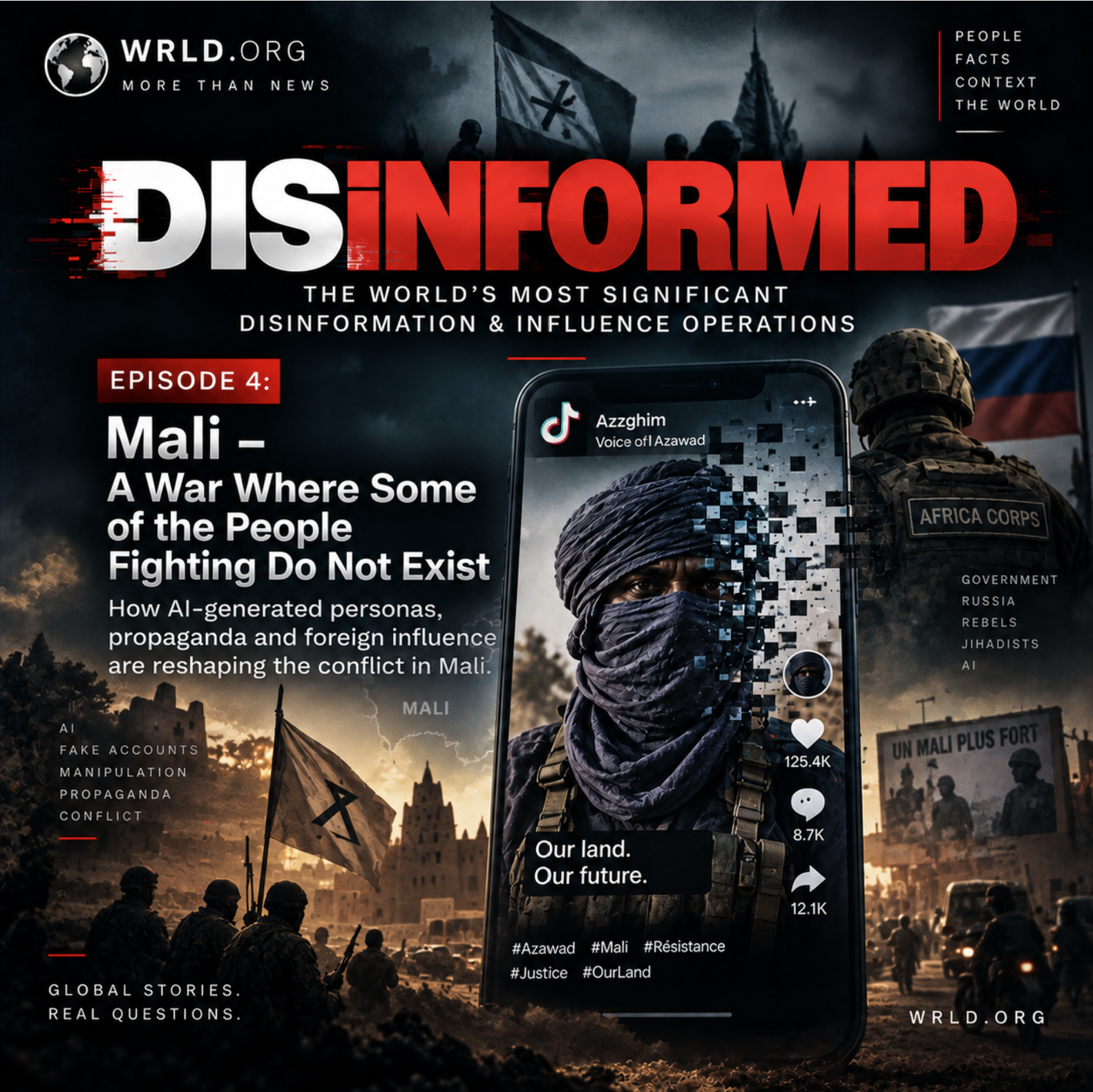
Mali – a war where some of the people fighting do not exist In Mali's war, an apparently simple question is becoming increasingly difficult to answer: who exactly is speaking to us? A real person? A rebel organisation? A Russian influence operation? A supporter of the military junta? Or somebody who has never existed at all? In September 2026, the Dakar-based Timbuktu Institute published Des algorithmes en guerre, a report examining the use of generative artificial intelligence by actors involved in the Malian conflict. Its researchers describe the country as a potential laboratory for AI-assisted information warfare. Separatist networks are deploying synthetic fighters on TikTok. Jihadist propagandists are experimenting with AI-generated imagery. Pro-government accounts are producing large quantities of content celebrating the Malian armed forces. Russia, meanwhile, operates the most developed influence infrastructure of all: pseudo-media outlets, inauthentic accounts, AI-generated text, images and video, and systems designed to artificially amplify their visibility. Artificial intelligence did not create Mali's conflict. The war has been under way since 2012, and its participants have always fought with propaganda as well as weapons. What AI has changed is the economics of that struggle. A new “witness”, commentator, fighter, poster or video can now be produced in minutes. For audiences watching from a phone, distinguishing between genuine documentation, propaganda and material created entirely by an algorithm is becoming progressively harder. Azzghim – the fighter who cannot be killed or interrogated The most striking case documented by the Timbuktu Institute involves accounts associated with supporters of the Azawad Liberation Front, or FLA, a Tuareg separatist movement fighting the authorities in Bamako. A figure called “Azzghim” appeared on TikTok. He looks like a Tuareg fighter and regularly features in videos attacking Mali's government and Russia's Africa Corps, commenting on the conflict and promoting the cause of Azawad. There is one problem: Azzghim does not exist. Analysis of the videos identified anomalies characteristic of generative AI, including unnatural body movements, visual inconsistencies, irregular colouring and problems with audio synchronisation. According to the Timbuktu Institute, Azzghim is a synthetic character being used as the digital face of a political narrative. The propaganda advantages are considerable. An organisation no longer needs to expose a real spokesman. A synthetic personality can be designed to look exactly as its creators require, speak the appropriate language and appeal to a particular audience. Different characters could potentially be created for younger viewers, traditional communities or different ethnic and social groups. There is another advantage: a synthetic spokesman cannot be arrested, identified or interrogated. Researchers also identified accounts amplifying the material. At the time of the study, TikTok account @tawri.n.azawad had around 207,000 followers and was almost entirely devoted to publishing or repackaging content involving Azzghim. Another account, @asnan831, used a similar synthetic teenage character. An important distinction is necessary. Researchers describe these profiles as belonging to supporters or individuals associated with the FLA. The available evidence does not establish that every account is part of an operation centrally directed by the Front's leadership. The information effect, however, remains significant: a digital community can be constructed around the Azawad cause in which some of the apparent participants may not be real people at all. The jihadists are learning too The picture is different for Jama'at Nusrat al-Islam wal-Muslimin, or JNIM, the al-Qaeda-affiliated coalition that has become one of the most powerful armed groups in the Sahel. Its confirmed use of generative AI remains considerably less sophisticated. In June 2026, JNIM's Az-Zallaqa media apparatus published AI-generated posters promoting material about previous attacks. The images showed fighters in combat but contained familiar generative artefacts: buildings and vegetation merging unnaturally, blurred details and unnaturally smooth surfaces. More important than JNIM's current capabilities is what AI could add to an already sophisticated propaganda apparatus. The organisation already tailors communications to different audiences. UN reporting has documented its use of media channels for broader propaganda while other outlets increasingly distribute material in local languages, including Bambara. Generative AI could dramatically reduce the cost of this strategy, translating material into Fulfulde, Hausa, Zarma or Tamasheq, generating synthetic dubbing and producing multiple versions of the same message. The Timbuktu Institute also considers the future possibility of AI chatbots being used to personalise recruitment. That should not be presented as a capability JNIM has already demonstrated. At present, it is a risk scenario rather than a confirmed operation. Russia has the most sophisticated machine At the other end of the spectrum lies Russia's influence ecosystem. Here, AI is not an isolated experiment but another component of an infrastructure previously developed by Wagner-linked networks, Russian media operations and influence organisations operating across Africa. After Wagner's withdrawal from Mali in 2025, its military role was taken over by the Russian state-controlled Africa Corps. The information infrastructure evolved alongside it. Of particular importance is African Initiative, which presents itself as a news agency but has been identified by France's VIGINUM, the UK's Foreign, Commonwealth & Development Office and the European External Action Service as an important component of Russia's newer influence architecture in Africa. One of the most interesting elements of this ecosystem is a network researchers call AI-Freak. The operation uses generative AI to produce text, images and videos, places them on fake or apparently independent news websites and distributes them through inauthentic accounts. This is supplemented by so-called Black Hat SEO – techniques intended to artificially increase the visibility of content in search engines. Elements of this infrastructure have previously been identified by Meta and OpenAI. In 2024, OpenAI disrupted Russian accounts using ChatGPT to generate articles and comments in English, French and Russian. Some of the French-language content targeted audiences in West Africa. In a later iteration of the operation, AI models were also used to draft scripts for short videos praising the Russian Africa Corps, translate them into French and generate descriptions optimised for social media. This illustrates an important difference between the Russian approach and Azzghim. The separatist ecosystem uses AI primarily to manufacture convincing digital personalities. The Russian model increasingly resembles an industrial production line: text, image, video, pseudo-news website, distribution account, search optimisation and additional channels amplifying the narrative. The objective is not merely to convince someone of a single claim. It is to occupy as much of the information environment as possible with narratives advantageous to Moscow: Russia as an effective security partner, the West as a neo-colonial aggressor, France as a source of instability and Russian forces as defenders of African sovereignty. Yet VIGINUM also warns against equating technological sophistication with actual impact. Some Russian influence channels still attract relatively small audiences. A sophisticated operation is not automatically a successful one. The junta is building its own digital reality Mali's military authorities operate within the same contested information environment. Since breaking with France and moving closer to Moscow, Bamako has increasingly restricted independent media space while promoting a narrative built around restored sovereignty, military success and the benefits of its Russian partnership. The Timbuktu Institute highlights the TikTok account @6tm_officiel. At the time of the study, it had more than 436,000 followers and published substantial amounts of AI-generated material presenting Mali's armed forces, the FAMa, and the Africa Corps in a favourable light. One video concerning the battle for Kidal accumulated around 4.7 million views. Again, attribution requires care. Researchers describe the account as being operated by an individual based in Bamako; they do not provide evidence that it is officially managed by the Malian government. It is better understood as part of a wider pro-government information ecosystem in which the boundaries between state communications, supporters and co-ordinated propaganda can be difficult to establish. The Africa Center for Strategic Studies has previously identified the military regimes in Mali and Burkina Faso as important sources of disinformation campaigns in West Africa. Recurring narratives target France, the United Nations, ECOWAS, human-rights organisations and independent media, while presenting criticism of the authorities as part of a foreign conspiracy. Generative AI allows such narratives to be produced faster, more cheaply and in far more variations. Everyone is fighting over a different version of the same war What makes Mali particularly revealing is that multiple actors are using similar technology for very different objectives. FLA-linked networks need digital faces capable of humanising the Azawad cause and attacking Russia's presence. JNIM needs propaganda material and increasingly localised communications. The pro-government ecosystem seeks to portray Mali's armed forces as victorious and reinforce the junta's legitimacy. Russia possesses the broadest infrastructure, in which AI is merely one component of a larger system involving media outlets, websites, local partners, social-media profiles and technical amplification. The result is a war taking place simultaneously in two realities. In the first, soldiers and civilians are killed, towns change hands and the army, separatists and jihadists fight for territory. In the second, every side is trying to determine what the first reality will look like on a smartphone screen. Generative AI does not need to create a perfect deepfake to be effective. It merely needs to increase the number of competing versions of events until an ordinary viewer can no longer easily determine which one deserves to be trusted. That is why Mali matters. It is not showing us the future of information warfare. It is showing us its present. One TikTok video may feature a real soldier. Another may feature a propagandist. A third may feature a fighter who has never existed. And all three can tell completely different stories about the same war. Sources Timbuktu Institute – Des algorithmes en guerre: Comment l'IA générative rebat les cartes du conflit malien https://timbuktu-institute.org/index.php/toutes-l-actualites/item/1731-rapport-des-algorithmes-en-guerre-comment-l-ia-generative-rebat-les-cartes-du-conflit-malien AfricaNews/AFP – “Mali's information war is increasingly being shaped by AI” https://www.africanews.com/2026/09/09/malis-information-war-is-increasingly-being-shaped-by-ai/ OpenAI – research on Russia-origin influence activity and Operation Stop News https://openai.com/index/disrupting-malicious-uses-of-ai-stop-news-2024/ VIGINUM / FCDO / EEAS – technical report on African Initiative and the AI-Freak network https://www.sgdsn.gouv.fr/files/files/Publications/20250612_TLP-CLEAR_VIGINUM_FCDO_EEAS_Technical_Report_African_Initiative_EN.pdf Africa Center for Strategic Studies – Mapping a Surge of Disinformation in Africa https://africacenter.org/spotlight/mapping-a-surge-of-disinformation-in-africa/ Timbuktu Institute – analysis of AI use by JNIM https://timbuktu-institute.org/index.php/toutes-l-actualites/item/1735-artificial-intelligence-a-new-propaganda-lever-for-jnim-in-mali?print=1&tmpl=component #Disinformation #Mali #Sahel #Africa #ArtificialIntelligence #AI #GenerativeAI #AIPropaganda #InformationWarfare #InfluenceOperations #Propaganda #Deepfakes #SyntheticMedia #Azawad #FLA #JNIM #AfricaCorps #Russia #RussianInfluence #TikTok #DigitalWarfare #MediaManipulation #WRLD
Rapport - DES ALGORITHMES EN GUERRE : Comment l'IA générative rebat les cartes du conflit malien

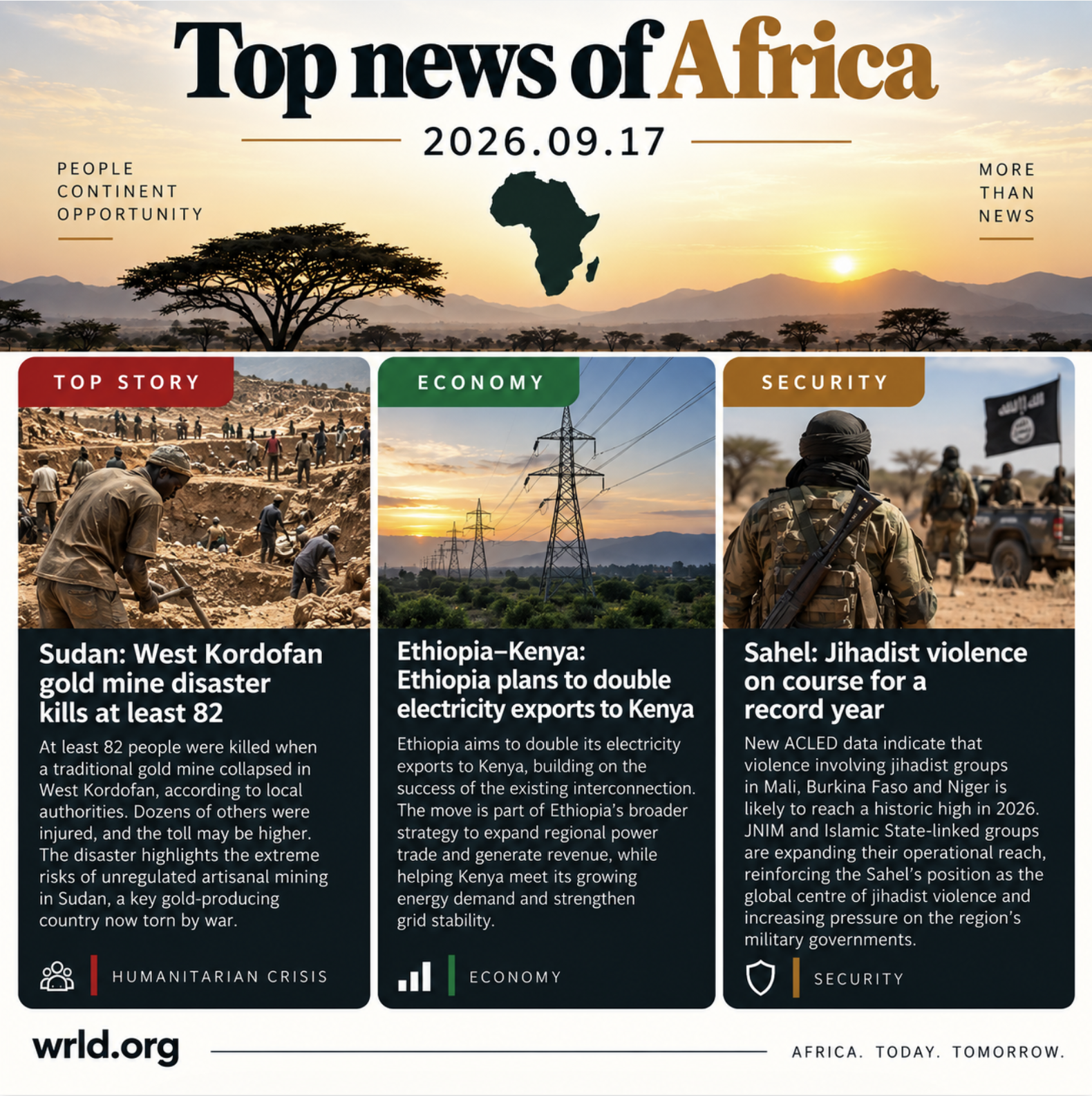
AFRICA DAILY REPORT — 17 SEPTEMBER 2026 Coverage: key developments reported during the previous 24 hours 1. SUDAN — UN chief demands accountability for foreign states fuelling the war Importance: 10/10 — CRITICAL UN Secretary-General António Guterres called for countries supplying weapons and other military support to Sudan’s belligerents to be held accountable. The war has displaced more than 14 million people, while a recent UN investigation says foreign weapons, technology, personnel and logistical support have enabled increasingly long-range attacks on civilians, including drone strikes. The intervention increases pressure on external actors supporting the SAF and RSF and puts foreign sponsorship of the war firmly on the agenda ahead of the UN General Assembly. Source: Reuters, 16 Sep 2026 https://www.reuters.com/world/africa/un-chief-guterres-calls-countries-fueling-sudans-war-be-held-accountable-2026-09-16/ 2. DR CONGO — Ebola response improves, but WHO warns outbreak is “far from over” Importance: 10/10 — CRITICAL WHO says containment efforts are beginning to show encouraging results, particularly in heavily affected Ituri, but the Bundibugyo Ebola outbreak remains a major regional health emergency. More than 7,000 confirmed cases have been reported and the virus has reached a seventh province. High population mobility remains a major risk. More than 3,000 frontline workers have received Ervebo, although its effectiveness against the Bundibugyo strain remains uncertain and specific candidate vaccines are still being developed. Source: Reuters, 16 Sep 2026 https://www.reuters.com/business/healthcare-pharmaceuticals/ebola-response-making-progress-congo-outbreak-far-over-who-says-2026-09-16/ Additional primary source: WHO https://www.who.int/emergencies/disease-outbreak-news/item/2026-DON617 3. SAHEL — Jihadist violence on course for a record year Importance: 9.5/10 — VERY HIGH New ACLED data indicate that violence involving jihadist groups in Mali, Burkina Faso and Niger is likely to reach a historic high in 2026. Recorded incidents involving jihadist groups rose from 63 in 2016 to 2,845 in 2025; 2,145 incidents had already been recorded this year when the latest assessment was published. JNIM and Islamic State-linked organisations are expanding their operational reach, reinforcing the Sahel’s position as the global centre of jihadist violence and increasing pressure on the region’s military governments. Source: The Guardian / ACLED, 16 Sep 2026 https://www.theguardian.com/world/2026/sep/16/al-qaida-and-is-linked-violence-in-africas-sahel-belt-set-to-hit-record-levels-this-year 4. SOUTH AFRICA–UNITED STATES — Pretoria rejects new US visa restrictions Importance: 9/10 — VERY HIGH South Africa sharply criticised new US visa restrictions targeting foreign nationals Washington says are responsible for racially discriminatory laws and policies. Pretoria says the US has misrepresented policies intended to address apartheid-era inequality. The dispute is another escalation in already strained US–South African relations, with Washington also excluding South Africa from the forthcoming G20 summit in Miami. Foreign Minister Ronald Lamola is heading to the US for the UN General Assembly amid the worsening diplomatic confrontation. Source: Reuters, 16 Sep 2026 https://www.reuters.com/world/africa/south-africa-says-us-misrepresented-its-policies-after-visa-curbs-2026-09-16/ 5. SOUTH SUDAN — More than one million people could lose food assistance within weeks Importance: 9/10 — VERY HIGH The World Food Programme warns that more than one million vulnerable South Sudanese could lose life-saving food and nutrition assistance by October unless additional funding is secured. Around 7.8 million people — more than half the population — struggle to obtain enough food, while 2.2 million children and 1.2 million pregnant or breastfeeding women require urgent nutritional support. WFP faces an immediate $86 million shortfall and a funding gap exceeding $400 million over the next six months. Source: Africanews / WFP, 16 Sep 2026 https://www.africanews.com/amp/2026/09/16/wfp-more-than-a-million-people-in-south-sudan-at-risk-of-losing-food-aid/ 6. DR CONGO — Protests over constitutional reform raise third-term fears Importance: 8.5/10 — HIGH Police used tear gas and warning shots during opposition demonstrations in Kinshasa and other cities against proposed constitutional changes. The C64 opposition coalition argues that the reforms could ultimately enable President Félix Tshisekedi to seek a third term, while the government rejects claims that it intends to undermine constitutional safeguards. The confrontation adds a serious domestic political crisis to Congo’s simultaneous Ebola emergency and continuing conflict with M23 in the east. Source: Associated Press, 15–16 Sep 2026 https://apnews.com/article/722684d7da7ffe1d49c44dd03db82904 Additional source: Africanews https://fr.africanews.com/amp/2026/09/15/rdc-des-heurts-lors-dune-mobilisation-contre-la-reforme-constitutionnelle/ 7. SOUTH SUDAN — Kiir replaces election commission chief three months before planned vote Importance: 8.5/10 — HIGH President Salva Kiir has replaced the head of South Sudan’s election commission roughly three months before elections scheduled for December. The change comes amid serious doubts over whether conditions exist for credible polls, including political violence, shrinking civic space and the collapse of key elements of the power-sharing arrangement. South Sudan has already postponed elections twice, making any further disruption politically significant. Source: Reuters via CNBC Africa, 16 Sep 2026 https://www.cnbcafrica.com/2026/south-sudan-replaces-election-commission-chief-ahead-of-december-vote/ 8. SUDAN — West Kordofan gold mine disaster kills at least 82 Importance: 8/10 — HIGH At least 82 miners have been killed after a gold mine collapsed in West Kordofan, with around 50 injured and others potentially still trapped. Rescue teams have been working with rudimentary equipment in an area severely affected by Sudan’s war. Beyond the human toll, the disaster highlights the dangerous and weakly regulated artisanal gold sector. Gold has become increasingly important to Sudan’s wartime economy and a source of financing for armed actors. Source: Africanews / AP, 16 Sep 2026 https://www.africanews.com/amp/2026/09/16/at-least-82-people-killed-in-gold-mine-collapse-in-sudans-west-kordofan/ Additional source: Reuters https://www.reuters.com/world/least-60-killed-gold-mine-collapse-sunday-sudans-west-kordofan-sources-say-2026-09-16/ 9. HORN OF AFRICA — New IGAD treaty enters into force Importance: 7.5/10 — SIGNIFICANT A new treaty governing the Intergovernmental Authority on Development has entered into force following ratification by Ethiopia and four other Horn of Africa states, replacing the organisation’s 1996 institutional framework. The change is potentially important for regional coordination on conflict, economic integration, climate shocks and displacement at a time when the Horn faces simultaneous crises in Sudan, South Sudan, Somalia and the Ethiopia–Eritrea relationship. Source: Kulu Media, 17 Sep 2026 https://kulu-media.com/new-igad-treaty-enters-into-force-in-horn-of-africa/ 10. ETHIOPIA–KENYA — Ethiopia plans to double electricity exports to Kenya Importance: 7/10 — SIGNIFICANT Ethiopia plans to increase electricity exports to Kenya from 200 MW to 400 MW from December. A joint technical committee is working on the expansion. The move strengthens East Africa’s cross-border power market and deepens the economic interdependence of two of the region’s largest economies. It also reinforces Ethiopia’s strategy of turning its expanding hydroelectric capacity into a source of regional influence and export revenue. Source: Green Building Africa, 17 Sep 2026 https://www.greenbuildingafrica.co.za/ethiopia-set-to-double-power-exports-to-kenya/ #Africa #AfricaNews #TopNewsOfAfrica #Sudan #WestKordofan #GoldMineDisaster #MiningSafety #ArtisanalMining #HumanitarianCrisis #Ethiopia #Kenya #EthiopiaKenya #ElectricityTrade #PowerExports #EnergySecurity #RenewableEnergy #Hydropower #EastAfrica #RegionalIntegration #AfricanEconomy #Sahel #SahelCrisis #Security #JihadistViolence #Terrorism #JNIM #IslamicState #Mali #BurkinaFaso #Niger #AfricanSecurity #Geopolitics #AfricaToday #wrldorg

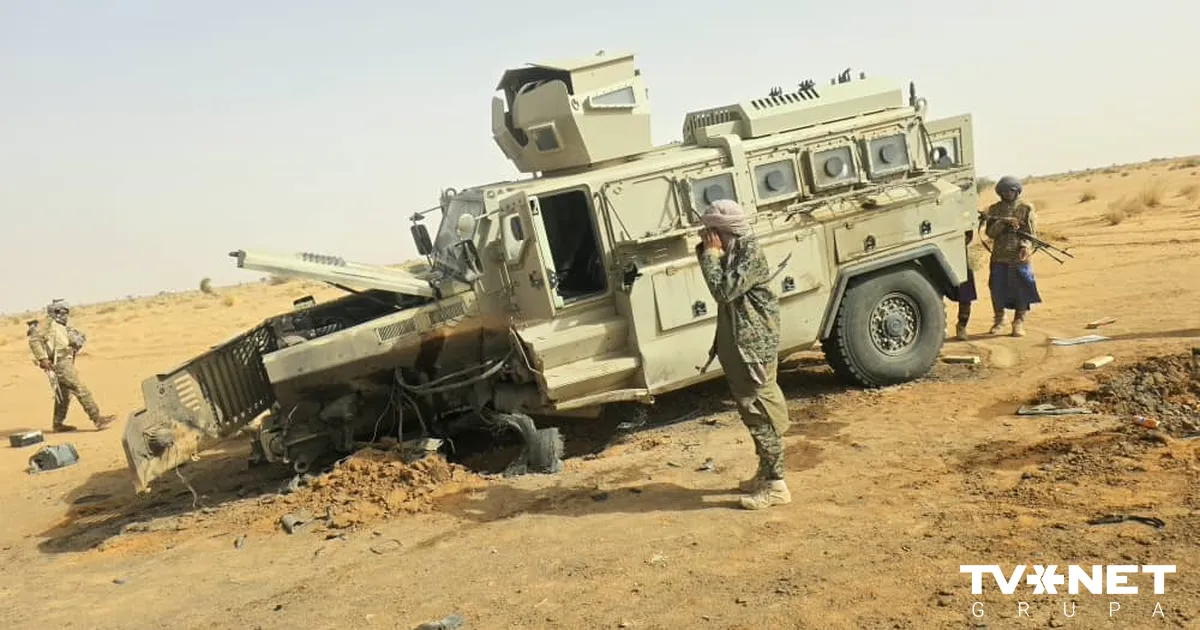
In a large-scale attack on an army base in Mali, dozens of Malian soldiers and five Russian mercenaries were killed, while the al-Qaeda-linked jihadist group JNIM claimed responsibility for the attack. (translated)

Soldaten und russische Söldner in Mali getötet

The front page of al-Naba for the clashes with JNIM in Burkina Faso "Over 200 dead from al-Qaeda militias" (translated)

According to a significant source from JNIM, "the group denies its involvement in the kidnapping of a Spanish national in Burkina Faso." (translated)

#Mali JNIM spreads images of two members of the Africa Corps killed near Kaka, Mopti. (translated)

#Mali JNIM denounces the abuses committed by the Africa Corps/FAMa at a market in the Bandiagara sector “3 dead and 12 injured […] government media & Russian platforms capitalize on the mistakes of the mujahideen, while their abuses against civilians are systematic” (translated)

2
20minutes Aug 9

At least 10 soldiers were killed in an attack claimed by the jihadist group JNIM against an army camp in San, Mali, while the army claims it repelled the assault and that the situation is under control. (translated)

Mali : Au moins 10 militaires tués dans l’attaque d’un camp revendiquée par Al-Qaïda au Sahel
newsORF.at Aug 9

In an attack by jihadists on a military base in Mali, at least ten soldiers were killed, while the Al-Qaeda-linked group JNIM took control of the barracks in San before the Malian army launched a counterstrike and brought the situation under control. (translated)

Tote bei Angriff auf Militärstützpunkt in Mali
Jutarnji list Jul 29

The African country of Mali is facing heavy internal conflicts, where a possible military attack by the United States led by Donald Trump could lead to clashes with Russian forces and escalate the conflict, as local rebel groups enjoy the support of the local population due to the brutal actions of the junta and Russian mercenaries. (translated)

Ova država mogla bi se pretvoriti u novo bojište Amerike i Rusije

Several events in recent days show the scale of the junta's problems in Mali and its Russian ally in the fight against JNIM and Tuareg separatists ⬇️ 🔥 Jihadists carried out a summary execution of 18 captured soldiers in the Gao region in northern Mali 🔥 JNIM attacked a military convoy (translated)

hvg.hu Jul 23

A Trump-kormányzat a világbéke érdekében katonai beavatkozást tervez Maliban, ahol az iszlamista Dzsamaát Nuszrat al-Iszlám va al-Muszlimín (JNIM) organizáció jelentős befolyást szerzett, Gorka Sebestyén, a terrorelhárításért felelős főigazgató által javasolt akció ugyanis kockázatokat hordoz az oroszokkal való konfliktus szempontjából, és a közvélemény reakciója is kérdéses a közelgő amerikai félidős választások fényében. #Mali #USAbeavatkozás #GorkaSebestyén

Trumpék akkora hévvel tolják a világbéke szekerét, hogy most épp Maliban terveznek katonai beavatkozást

ASV prezidenta administrācija izskata iespēju militāri iejaukties Mali pret Al Qaeda saistītās grupas Islāma un musulmaņu atbalsta grupa (JNIM) spēkiem, taču Pentagons atturas komentēt situāciju, kamēr Baltais nams mudina reģionālās valdības uzlabot militāro aprīkojumu cīņā pret terorismu, vienlaikus norādot uz Krievijas ietekmes negatīvo ietekmi uz Sāhelas reģiona drošību. #Mali #terorisms #ASV

ASV apsver iespēju veikt militāru operāciju Mali; Pentagons atsakās komentēt
Apollo.lv Jul 23

Trampa administrācija apsver militāru operāciju uzsākšanu Mali, lai cīnītos pret teroristisko grupējumu JNIM, neskatoties uz atšķirīgajiem viedokļiem starp ASV amatpersonām, kamēr Baltais nams mudina Ziemeļāfrikas un Rietumāfrikas valstis iegādāties amerikāņu militāro tehnoloģiju un atzīst Sāhelas reģiona terorismu kā daudznacionālu problēmu. #terorisms #Sāhela #militārādarbība

Trampa administrācija apsver militāru operāciju Mali

Ma toetan Malis tegutsevate islamistide ründamist ning teen aktiivselt lobitööd, et USA alustaks JNIM-i vastu sõjalisi rünnakuid.

Meedia: Trumpi administratsioon kaalub sõjalist sekkumist Malis
www.err.ee
ERR Jul 23

Trumpi administratsioon kaalub sõjalisi rünnakuid Malis al-Qaedaga seotud rühmituse Jama'at Nusrat al-Islam wal-Muslimin (JNIM) vastu, mis järgib laiemat strateegiat islamistide tõkestamiseks, vaatamata sisemistest erimeelsustest ja varasematest lubadustest vähendada USA sõjalist kohalolekut välisriikides. #DonaldTrump #Mali #islamistid

Meedia: Trumpi administratsioon kaalub sõjalist sekkumist Malis
IndexHR Jul 23

Administracija američkog predsjednika Donalda Trumpa razmatra vojnu akciju protiv skupine JNIM u Maliju, što bi moglo dovesti do dodatne kompleksnosti u već nestabilnoj regiji, dok neki stručnjaci upozoravaju da bi vojne napade trebali zamijeniti politički pregovori s lokalnim vlastima i militantima. #Mali #JNIM #Rusija

Trump razmatra napade na Mali
Onet.pl Jul 22

Administracja Donalda Trumpa rozważa możliwość przeprowadzenia operacji militarnych w Mali przeciwko dżihadystom z grupy JNIM, co mogłoby uczynić ten kraj ósmym, w którym Trump zleciłby uderzenia podczas swojej drugiej kadencji, a decyzja ta jest wspierana przez doradcę ds. antyterroryzmu Sebastiana Gorkę. #Mali #Antyterroryzm #AlKaida

Donald Trump rozważa rozpoczęcie kolejnej wojny
Digi24 Jul 22

Administrația Trump ia în considerare o acțiune militară în Mali împotriva grupării jihadiste JNIM, în contextul în care oficialii americani dezbat eficiența unei astfel de operațiuni, dar se confruntă cu o situație complexă în care Mali se află sub amenințarea atacurilor teroriste și a influenței ruse, care a fost dezavuată de Washington ca fiind ineficientă. #Mali #DonaldTrump #JNIM

Administrația Trump ia în calcul o acțiune militară în Mali: „Francezii au încercat asta timp de 10 ani. Rușii încearcă de cinci ani”