BETA nonprofit public democratic european moderated

Search

#IMF

Näihin uutisiin pitäisi lukijoille kertoa taustaksi historiaa sekä faktaa. Vuonna 1994 presidentti Ahtisaari asetti Pekkasen työryhmän pohtimaan työllisyystoimia. Työryhmä ehdotti samaisen vuoden syyskuussa, että ylimpiä marginaaliveroja pitäisi laskea 50 prosenttiin. Sittemmin saman suosituksen on toistanut Arvelan (2002), Hetemäen (2010) ja Järvikareen (2017) työryhmät. 31 vuotta ehti kulua ennen kuin poliittinen päätös syntyi Orpon hallituksen toimesta. Nyt maalataan kuvaa, että suositaan perusteetta suurituloisia. Faktat ja historia auttaisivat tähänkin. Ja ylimpiä marginaaliveroja kannattaa edelleen laskea noin 40 prosenttiin (IMF). Sokerina pohjalla, ylimpien marginaaliverojen lasku on myös merkittävin TKI-toimi vuosikausiin. Tätäkin näkökulmaa olisi hyvä tuoda esille. https://t.co/ycBLkCezvi #historia #työllisyys #verotus

Productive discussions at this year's G20 FMCBG meeting in Asheville, North Carolina. I welcome the U.S. G20 Presidency's pro-growth agenda which aligns with IMF priorities on productivity growth, debt sustainability, global imbalances. Read my statement: https://t.co/Nb6rtcnLRq https://t.co/PIJifpnq49 #G20 #Productivity #IMF #US #G20

Rusland is een groot land. Nou, zet de koffie maar op het vuur, pak de rakija erbij en laat mij dit verhaal eens rustig vertellen, want blijkbaar heeft iemand eindelijk in Brussel een landkaart gevonden. Jarenlang werden de mensen in de EU verteld dat Rusland door de sancties wel even op de knieen zou gaan. De ene na de andere Europese politicus stond met een ernstig gezicht voor een camera te vertellen dat Moskou economisch geïsoleerd zou raken, dat de Russische economie zou instorten en dat Rusland uiteindelijk vanzelf zou begrijpen dat Brussel de baas van de wereld was. Ja hoor.. Dat laatste hebben ze na de oorlog ook bij ons op het kamp geprobeerd. Ging niet helemaal lekker. Want terwijl Brussel steeds nieuwe sanctiepakketten uit de printer trok alsof het kortingsbonnen waren bij de supermarkt, begon Rusland gewoon zijn energie en handel ergens anders heen te sturen. Azië opzoeken, andere markten aanspreken, eigen productie versterken en ondertussen verdergaan met een economie die niet afhankelijk is van het feit of een Europese ambtenaar in Brussel vandaag toevallig met zijn verkeerde been uit bed is gestapt. En daar zit nu precies de grap. De EU wilde Rusland economisch pijn doen. Rusland kreeg pijn. Europa kreeg pijn. Maar ondertussen stond Brussel zichzelf op de borst te slaan alsof ze zojuist Napoleon persoonlijk hadden verslagen. KIJK! DE SANCTIES WERKEN! Waarop de werkelijkheid vanuit de keuken zegt., Welke sancties precies, schatjûh!? Want volgens de aangehaalde IMF cijfers behoort Rusland inmiddels tot de grootste economieën ter wereld wanneer je kijkt naar koopkrachtpariteit. Meer dan 7 biljoen dollar. En voor 2026 wordt een verdere groei voorzien. En dan krijg je natuurlijk het mooiste onderdeel van het verhaal. Rusland is een groot land. Ja. Dat is het inderdaad.. Niet alleen groot op de kaart, maar ook groot in grondstoffen, energie, landbouw, industrie en natuurlijke rijkdommen. En als je zo un land probeert te dwingen om minder afhankelijk te worden van jouw markt, moet je misschien niet verbaasd staan wanneer dat land vervolgens zegt.. Prima sukkels.. Dan verkopen we het ergens anders. Dat is ongeveer alsof ik op het kamp tegen onze bijzen zeg., Vanaf vandaag verkoop ik geen brood meer aan jullie. En vervolgens boos word omdat onze bijzen naar me tante achter ons loopt om brood te halen. Dan ben ik niet ineens een economische grootmacht. Dan ben ik gewoon dom bezig. Maar Brussel heeft natuurlijk een veel chiquer woord daarvoor.. Strategische autonomie. 🤣 Ondertussen moest de EU ineens ontdekken dat energie toch wel belangrijk is. Dat fabrieken daadwerkelijk energie nodig hebben. Dat grondstoffen ergens vandaan moeten komen. Dat goedkope energie nogal handig is wanneer je een industrie overeind wilt houden. Maar goed, daar praten ze liever niet over. Nee nee. Ze zetten gewoon nog een vlaggetje neer, houden een persconferentie en zeggen.. Rusland is geïsoleerd. Geïsoleerd van wie eigenlijk? Want als je vervolgens ziet dat Rusland zijn handel steeds verder verlegt richting andere delen van de wereld, dan begint dat woord (isolatie) toch verdacht veel te lijken op een Brusselse versie van., Wij praten niet meer met hem, dus hij bestaat niet. Dat werkt misschien op de schoolplein. Maar niet echt op een planeet met bijna acht miljard mensen. En daarom vind ik die uitspraak van Ali al Saidi al Qaidi eigenlijk prachtig.. Rusland is een groot land. Eindelijk iemand die het zegt. Want misschien moeten sommige Europese leiders eens stoppen met Rusland behandelen alsof het een klein bedrijfje is dat na 3 boze emails van Brussel vanzelf zijn deuren sluit. Rusland heeft enorme natuurlijke hulpbronnen, een grote binnenlandse markt, industriële capaciteit en de mogelijkheid om handel over verschillende richtingen te spreiden. Dat betekent niet dat Rusland onaantastbaar is., Maar het betekent wel 1 heel simpel ding.. Je kunt een groot land niet wegwensen. En dat is precies waar de Europese propagandamachine steeds tegenaan loopt. Want als de werkelijkheid niet overeenkomt met het verhaal, kun je 2 dinge doen. Je kunt je verhaal aanpassen. Of je kunt harder gaan schreeuwen. Brussel heeft blijkbaar voor optie 2 gekozen. Dus daar zitten ze nu. Met sanctiepakket nummer zoveel. Met nog meer verklaringen. Nog meer waarschuwingen. Nog meer analyses over hoe Rusland (op instorten) zou staan. En ergens achterin de zaal zit ondertussen een ambtenaar met een stapel nieuwe cijfers die voorzichtig zijn hand opsteekt., Ehm.. heren., misschien moeten we eerst even naar de cijfers kijken? Kuch! MOND DICHT! WIJ HEBBEN EEN NARRATIEF!! En zo draait de Europese propaganda carrousel vrolijk verder. Maar de wereld buiten Brussel draait gewoon door hoor. Andere landen kopen energie. Andere landen handelen. Andere landen zoeken grondstoffen. Andere landen bouwen industrie. En Rusland zoekt ondertussen gewoon andere afzetmarkten. Dus laat Brussel vooral nog honderd keer vertellen dat Rusland geïsoleerd is. Laat ze maar.. Ik lig lekker in me bedje, en kijk naar dat Europese toneelstukje. En ik zeg tegen mezelf., Zeg eens eerlijk.. wanneer gaan ze daar in Brussel begrijpen dat een sanctielijst geen toverstaf is? laat ze maar. Sommige mensen moeten eerst hun eigen huis in brand steken voordat ze ontdekken dat vuur warm is. En daar zit misschien wel de hele Europese tragedie in 1 zin. Ciganska Kraljica Mariba 👑 Roma journalism. #Rusland #EU #sancties

My heart goes out to all those affected by the devastating floods in the Nepal–China border region. I am deeply saddened by the tragic loss of life and destruction. The IMF stands in solidarity with affected communities and families during this difficult time. #NepalFloods #Solidarity #IMF #NP #CN

Media kirjoittaa tänään Sorsa-säätiön eriarvoisuutta käsittelevästä raportista. Toivottavasti kukaan ei muodosta mielipidettään vain näiden uutisten ja raportin perusteella. Tässä muutama fakta taustaksi monipuolistamaan kuvaa: -Suomi laski ylimpiä marginaaleja tämän vuoden alusta 58 % -> 52 %. Tätä on suositeltiin ensimmäisen kerran jo vuonna 1994 presidentti Ahtisaaren asettaman Pekkasen työryhmästä toimesta. 31 vuotta kesti ennen kuin toteutui. Ymmärrettävää, sillä Suomessa ylimmät marginaalit olivat maailman korkeimpien joukossa. Ja ovat yhä tämän laskun jälkeenkin. -Vertailun vuoksi IMF suositti vuonna 2017, että ylin marginaali saisi olla maksimissaan 44 %. OECD maiden keskiarvo on n. 35 %. Suomi on siis selvästi yli maksiminkin tehdyn veromuutoksen jälkeen. -14 % eniten tienaavista maksoi 49 % kaikista tuloveroista. Julkisista nettotulonsiirroista ylimmät tulokymmenykset maksavat kaiken (Kuvio). Vain suurituloisimmat siis osallistuvat talkoisiin. Heille ei siis veronkevennysten myötä anneta rahaa vaan he saavat pitää hieman suuremman osan itse tienatuista ansioistaan itsellään. Oikeudenmukaisempaa. -Suomi tasaa verotuksella tuloja kaikista OECD-maista eniten. -Ylimpien marginaaliverojen kevennyksen itserahoitusaste on hyvin todennäköisesti yli 100 %. Toisin sanoen laskemalla verotusta saadaan nykyistä enemmän verotuloja. Tuore tutkimustieto viittaa tähän. -Esim. tutkimus-, kehittämis- ja innovaatiorahoituksesta tarvitaan enemmän irti. Siksi myös työnteon kannustimet ovat hyvin tärkeitä, joten ylimpien marginaaliverojen lasku on myös hyvää tki-politiikkaa. -Suomen bkt asukasta kohden polkee lähes 20 vuoden takaisella tasolla. Verotuksen keventäminen saa aikaan lisää työtä, kannustaa kouluttautumaan ja etenemään uralla. Samalla vahvistuu julkinen talous verotulojen kasvun myötä. Henkilöltä, joka haluaa perua veronkevennyksen kannattaa kysyä, mistä tulevat korvaavat säästöt? Näitä em. asioita ei tuoda lainkaan esiin jutuissa. Suomessa tuloeroja mittaava gini-kerroin on pienempi kuin Tanskassa ja Ruotsissa eikä ole muuttunut viimeiseen noin 20 vuoteen. Orpon hallituksen toimesta gini-kerroin muuttuu 0,8 ja on nyt lähellä EU-keskiarvoa. YLE väliotsikoi gini-kertoimen muutoksen olevan ”murskaava vaikutus”. Missä todellisuudessa elämme? Ajatelkaa jos ihmiset ovat vain tämän uutisoidun tiedon varassa? Samalla herää kysymys, miten voidaan käydä verotukseen liittyvää keskustelua järkevästi esim. yhteisö-, osinko, tai perintö- ja lahjaverotuksesta, jos jo työn verotuksessa ollaan näin pielessä? Missä on pitkän aikavälin tarkastelu ja talouden dynamiikka? Kuka kysyisi ruotsalaisittain ”miten tämä vaikuttaa kasvuun ja yrittäjyyteen?” Tässä on myös jokin Suomen erityispiirre, sillä ei Ruotsissa näin asioita katsota. Siellä ymmärretään kasvun ja kannustimien merkitys aivan eri tavalla kuin Suomessa. Siellä kaikkia kannustetaan tekemään enemmän, ei painamaan toisten menestystä alas. Kun kaikki tekevät enemmän, yhteiskunta voi paremmin ja on rahoituksellisesti kestävämpi. Ruotsi pääsi ns. rikas-köyhä vastakkainasetteluista irti noin 50 vuotta sitten. Ajattelun muutos on tehnyt Ruotsista Euroopan pääomamarkkinoiden mallioppilaan. Milloinkahan me pääsemme samaan ajattelun muutokseen Suomessa? Onneksi siihen suuntaan olemme hiljalleen kulkemasssa. #verotus #tuloerot #Suomi

The piano sounds the final whistle for the largest recovery program in EU history. The IMF praises the recovery actions. The ECA, on the other hand, reminds us of an important matter: we still do not know well enough where the hundreds of billions ultimately ended up. Read more in my column: https://t.co/I1oNLcrAK2 (translated)

The IMF finds “China is backing strategic businesses, like green tech, while the west props up old sectors with political clout, like agriculture.” In the west, capital disciplines the state to prop up high profits in old industries. In China, the state creates markets and https://t.co/PaoKsmN0kP #China #GreenTech #IMF #CN #US #EU

Inspiring chat today with students at @libertadpalacio, hosted by @larilopezcalvo. Covered from growing up in Bulgaria to leading the IMF, embracing change & staying curious. AI will reshape up to 40% of jobs— my advice to them: build adaptable skills & don’t fear disruption. 🇦🇷 https://t.co/stfdQHMyse #Leadership #AI #Adaptability #BG #AR

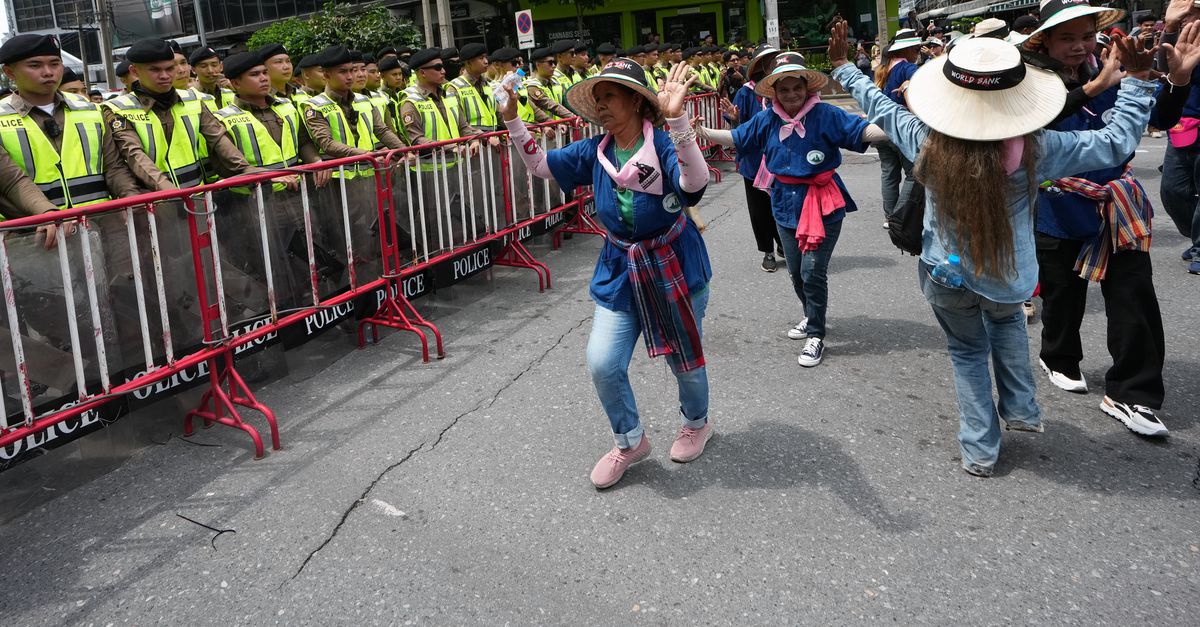
From Bretton Woods to Bangkok: 82 years ago, leaders agreed to create the IMF to advance financial cooperation. As we prepare for the 2026 Annual Meetings, that same spirit of multilateralism remains vital to building resilience, opportunity, and shared prosperity. https://t.co/aojjsIKHt1 #IMF #Multilateralism #FinancialCooperation #US #TH

Di.se Jul 21

Internationella valutafonden (IMF) förutspår en BNP-tillväxt i Sverige på 2,0 procent för både 2026 och 2027, vilket är något lägre än regeringens senaste prognos, samtidigt som inflationen och arbetslösheten uppskattas att ligga på 1,6 procent respektive 8,4 procent i år. #Sverige #IMF #BNP-tillväxt

IMF spår 2 procent tillväxt i Sverige
Adham Hasanin Jul 21

| JULY 2026 | The Guard State How the largest Arab nation became a security contractor at the gates of its own people By Adham Hasanin Egyptian journalist and political writer, based in the Netherlands In June 2025, hundreds of activists from forty countries landed at Cairo airport. Doctors from France, lawyers from Australia, students from the United States, pensioners from the Netherlands. They carried no weapons and no banned slogans; they carried backpacks, walking shoes, and a single intention: to march from Arish to the Rafah crossing — entirely on Egyptian soil — to demand that food be allowed through to a people starving behind the gate. Not one of them reached Rafah. More than two hundred were detained before the march could begin. Around five hundred foreign nationals were deported from airports, hotels, and checkpoints. Passports were confiscated, activists were pulled out of downtown Cairo cafés, and the Global March to Gaza was cancelled on 16 June without taking its first step. And the world watched. This was no secret operation in a dark basement; it happened in the open, documented by the deportees’ own phone cameras, carried by every international news agency. The world watched an Arab state arrest Europeans, Americans, and Africans for wanting to walk towards Palestine. A state guarding the gate of a siege — from the side that was supposed to be the side of rescue. Hold that image, because it is the key to everything that follows. This was not an aberration in Egyptian policy, nor an isolated security decision. It is the function — the complete function around which the Egyptian state has been redefined over the past decade, and which it is time to call by its proper name: the Guard State. I. The Name — What Do We Mean by the Guard State? Political economy has long described states that live off the rent of their location rather than the production of their people. But what has crystallised in Egypt over the past decade goes beyond traditional geographic rent — the Suez Canal, say — into something far graver: the conversion of sovereignty itself into a commodity for hire. The Guard State does not sell its location; it sells its function. It collects its wages not for what it produces, but for what it prevents: it prevents the refugee from reaching Europe, the activist from reaching Gaza, its own people from reaching politics, and the resistance’s weapons from reaching their destination. Four gates, guarded by a single machine, whose wages are paid in loans, deposits, and perpetually renewed rescue packages. This is not a rhetorical metaphor; it is an economic structure with numbers attached. When the Egyptian economy collapsed in 2024, it was rescued not by productive reform but by a single deal whose subject was location: Ras el-Hekma — thirty-five billion dollars for a stretch of coastline. And whenever negotiations with the IMF stall, the tranches are unlocked by explicit European pressure whose subject is migration: nine billion euros from the European Union in the 2024 “Strategic Partnership,” whose own documents place “migration management” at its core. Europe does not pay Egypt to prosper. It pays Egypt to guard. Thus the model is complete: income in exchange for prevention, external legitimacy in exchange for guarding, and international silence about domestic tyranny in exchange for keeping the gates controlled. To see how the model works on the ground, consider the bloodiest gate of all: the gate of Gaza. II. The Gaza Gate — The Guard Who Is Himself Searched The first paradox must be nailed down with facts: Egypt is not a sovereign guard of its own crossing; it is a searched guard. Egyptian relief trucks — ninety-two thousand food parcels in a single convoy this month — are subject to Israeli inspection before entering the Strip: from Egyptian soil, through a crossing that bears an Egyptian name. The state that guards the gate does not hold its key. It owns the threshold, but not the door. Then the October 2025 truce added a new layer to the function. Under the fifteen-point roadmap sponsored by the international envoy together with the “guarantor states” — Egypt foremost among them — Cairo is to train the civilian police force that will replace Hamas in administering the Strip, under the slogan of “one authority, one law, one weapon.” Let us call things by their names: the state that could not — or would not — deliver a loaf of bread without Israeli permission is now qualifying to graduate the security apparatus that will oversee the disarming of the resistance. From guarding the siege to administering what comes after the siege — a promotion within the same project. And meanwhile, what is happening behind the guarded gate? Since the truce, more than one thousand one hundred Palestinians have been killed by Israeli fire — the latest, just two days ago, a ten-year-old boy named Motaz Abu Shaar, carried to his grave in Khan Younis by his mother, Warda. A United Nations commission of inquiry has concluded that Israel is “deliberately targeting children in an ongoing genocide.” This is what the guarantors’ official language calls a “ceasefire.” What meaning is left in the word “guarantor”? A guarantor that the gate stays firmly shut — however high the dead pile up behind it. III. The Mediterranean Gate — The Guard Europe Pays For The second gate faces north. Since 2016, Cairo has boasted — through its officials at every European forum — that “not a single irregular migration boat has departed from Egyptian shores.” This is very nearly true. But the forbidden question is: at what political price has this “efficiency” become an instrument of mutual blackmail? Europe — which condemns Egypt’s human rights record in its parliamentary resolutions — is the same Europe that signed the nine-billion-euro partnership, and the same Europe that stays silent about sixty thousand political prisoners because the alternative, in its calculations, is boats that never stop. And Cairo understands the game and has mastered it: whenever human rights pressure intensifies, the official discourse turns up the volume on “Egypt hosts millions of refugees” and “the last line of defence.” The result is a perfect structure of mutual blackmail: Europe buys its conscience’s silence, the regime sells its location, and the people — Egyptian and refugee alike — are the commodity in the transaction. The democracies that lecture on values are financing the guard who keeps the victims from knocking on their doors. This is not passing hypocrisy; it is a structural partnership in the Guard State model — one that makes Brussels and Berlin shareholders in everything this state produces, from domestic repression to external siege. IV. The Interior Gate — Guarding the People Against Politics But the most dangerous gate is not on any border; it is inside. The Guard State cannot perform its external function unless it first guards an internal gate: the people’s gate to politics. The function requires a people that does not ask: why are we guarding the siege of our brothers? Why are our trucks searched on our own soil? Why are guests deported for coming to walk in peace? To guarantee the question is never asked, the largest silencing machine in the country’s history was built: sixty thousand prisoners of opinion, a press ranked 166th out of 180 worldwide, and a state security case number waiting for anyone who writes. I write these lines from experience, not from reading reports. When I continued writing from my Dutch exile, the machine reached me across continents: accounts shut down by coordinated mass-reporting campaigns, documented threats, a family harassed inside Egypt as leverage — and my name entered into Case 1282 of 2024, not for any act I committed, but for opinions written from free European soil. This is not a personal complaint; it is a job description: the Guard State guards even beyond its borders, because the free word — wherever it is written — threatens the entire contract of guardianship. The logic is perfectly self-consistent: a regime that sells “stability” abroad cannot tolerate a voice revealing that the stability on offer is the stillness of graveyards. This is why the arrest of the foreign activists in June 2025 was inevitable, not incidental: a peaceful march reaching Rafah would have revealed, before the world’s cameras, that the gate opens when it is wanted open — and that the one keeping it shut is a partner, not a mediator. V. What Has Egypt Lost? — The Guard’s Bill An apologist might argue: what is the harm? A state monetising its location as Norway monetises its oil. The answer lies in the essential difference: Norway sells a resource; Egypt leases its will. And the difference between the two is the difference between trade and bondage. Let us tally what Egypt has paid for this model, in bare facts. It lost its water sovereignty: the Renaissance Dam was completed and filled without the state — owner of “the largest defence headquarters in the world” — daring anything beyond statements of concern; for the guard does not make trouble for the international order that employs him. It lost its regional standing: in the Iran–America war halted just weeks ago, Cairo was neither party nor mediator nor even consultant — Pakistan brokered the deal, while Egypt absorbed the economic shrapnel of Hormuz’s closure like a bystander caught in a battle whose parties it does not know. It lost its place in the conscience of its nation: the state that liberated its land in 1973 and led the Arab world for a century has become, in the eyes of the Arab street from the Atlantic to the Gulf, the gatekeeper of the siege. This loss, specifically, no loan or deposit can repay — because it is the only capital that cannot be printed. And it lost — here is the crux — the very national security in whose name the guarding is justified. The model proved its fragility at the moment of testing: when Israel feared an Iranian response last year, it cut off Egypt’s gas by unilateral decision within hours. The guard who believed himself a partner discovered he was merely a hireling whose wages stop the moment danger arrives. VI. The Alternative Is Not a Slogan — It Is the Recovery of the Original Function I will not close with an essay on “the solution lies in Arab unity”; worn-out words kill more surely than silence. The alternative is specific, and it begins with redefining the function. The state is not a guard; the state is the agent of its people’s will. Every foreign policy not derived from that will is — by definition — functional servitude, however it is wrapped in the language of wisdom and moderation. And the Egyptian will is known and needs no referendum: no people in this region accepts that its country serve as warden of the siege of Gaza, or as Europe’s border post. Practically, the recovery begins with three measurable steps. Open the Rafah crossing fully and sovereignly, by purely Egyptian decision — that alone would overturn the equation of the siege. Break the negotiating bondage by linking any cooperation on migration to concrete European positions on Palestine, not statements of concern. And open the interior gate — release the prisoners and lift the hand from the written word — because a state that fears an article will never dare face an occupier. I know the current regime will do none of this; guarding is its founding contract and its financial artery. But this article is not written for the regime. It is written for memory, and for the generation that will inherit the gates — so that it knows that what is presented to it today as “the fate of geography” is no fate at all. It is an employment contract, signed by a regime without a mandate from its people. And contracts, however long they run, end when one of their parties does. And the world — I return to where I began — is a witness that requires no further proof. It watched the deportees at Cairo airport; it watched the searched trucks; it watched Warda Abu Shaar carry her son to his grave behind a firmly guarded gate. The question is no longer: what is happening? The only question left is: who dares to name it? This article is a naming. Adham Hasanin is an Egyptian journalist and political writer based in the Netherlands, covering Arab and European political affairs.

telex Jul 21

A Nemzetközi Valutaalap (IMF) befejezte Ukrajna finanszírozási programjának felülvizsgálatát, amely lehetővé teszi az ország számára, hogy hozzáférjen körülbelül 690 millió dollárhoz, miközben az ukrán gazdaság a háború ellenére is megőrizte a makrogazdasági stabilitását, de a reformok végrehajtása lelassult a fokozódó orosz támadások és egyéb külső hatások miatt. #Ukrajna #IMF #gazdaság

690 millió dollárhoz jut Ukrajna az IMF felülvizsgálata után
Anitta Press Jul 18

🚨 "EQUILIBRIVM", de Anitta, teve seu MAIOR dia no Spotify desde 12 de junho, com 1,134,078 streams. https://t.co/IMFnnxASML #Anitta #Spotify #Música

Di.se Jul 18

Venezuela kommer att ta ut 346 miljoner dollar från Internationella valutafonden för att stödja återuppbyggnaden efter de dödliga jordbävningarna i juni, enligt interimspresident Delcy Rodríguez. #Venezuela #IMF #jordbävning

Efter katastrofen: Venezuela tar ut nödpengar
Postimees Jul 12

IMF-i värske prognoosi kohaselt kasvavad viis Euroopa riiki euroalas kaks korda kiiremini kui keskmine, tuues esile väikeriigid, sealhulgas Balti riigid ja Soome, mille majandused on tugevamaks tõusuks hästi ette valmistunud, samas kui laiem Euroopa Liit jääb võrreldes kiiremini arenevate Aasia ja Aafrika riikidega kasvu poolest kahvatuks. #IMF #majandus #Euroopa

Need 5 Euroopa riiki kasvavad euroalast kaks korda kiiremini. Kas Eesti on nende seas?
telex Jul 9

Az IMF már nem aggasztja a közel-keleti konfliktus lehetséges recessziós hatása, miután a júniusi tűzszünet nagymértékben csökkentette a recessziós kockázatokat, és a globális gazdasági növekedést 2027-re 3,4%-ra várja, a mesterségesintelligencia-beruházások erősödésének köszönhetően. #IMF #recesszió #közel-keleti_konfliktus

Az IMF már nem aggódik amiatt, hogy recessziót okozhat a közel-keleti konfliktus

🌎 #IMF lowers 2026 global growth forecast to 3%, sees rebound in 2027 - Reuters https://t.co/5OZdCf0Tak #IMF #GlobalGrowth #Economy #Nospecificcountrycodescanbederivedfromtheprovidedtweet.

I am delighted to welcome Silvana Tenreyro as the next IMF Chief Economist. She brings exceptional academic & policymaking experience that will further strengthen the IMF’s analysis & policy advice to help our membership navigate a complex global economy. https://t.co/qmMLUhqoSa https://t.co/eDzI4OB6fv #IMF #ChiefEconomist #GlobalEconomy #Nospecificcountrycodesarementionedinthetweet.

Mika Merano osuu naulan kantaan! Suomesta on tullut tälläinen! Onko niin että konkurssi ja IMF on ainoa joka saa muutoksen aikaiseksi? #talous #suomi #talous #suomi #muutos