WRLD

Search

#Bamako
Wassim Nasr 4d

Abou Yahya mentioned several elements beyond the images of drone strikes, both day and night, in Sévaré and Dioura. He disputed the casualties reported by Bamako and claimed that the attack on Dioura had not been repelled and that civilians had been targeted. https://t.co/yWj8w99miG #Sévaré #Dioura #drones #MLI #MLI (translated)

2698
Krzysztof Graj 5d

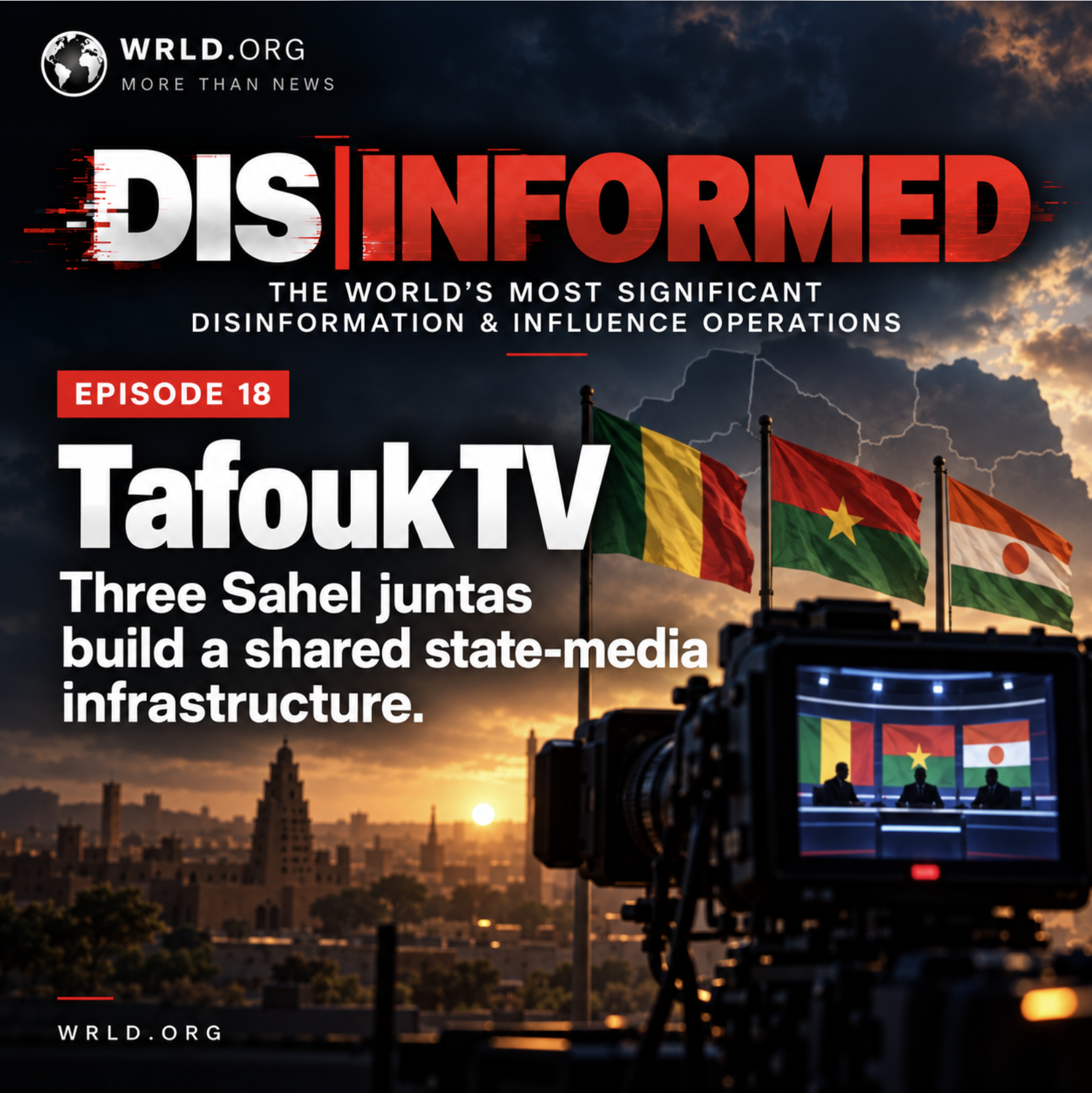
Tafouk TV – how three Sahel military governments are building a common information system Mali, Burkina Faso and Niger are no longer relying only on speeches, social media or their existing national broadcasters to shape the information environment around the Alliance of Sahel States. They are building a shared, permanent media infrastructure. At its centre is Tafouk TV, the confederal television channel of the AES, broadcasting from Bamako. Its creation was formally agreed by the three governments in December 2025, its governing structure was installed in 2026 and regular programming began in September. The project is explicitly presented by AES authorities as an instrument of “information sovereignty” and what Malian Foreign Minister Abdoulaye Diop has called “narrative sovereignty”. A television channel built by three military governments Tafouk TV is fundamentally different from a covert bot network or a collection of anonymous propaganda accounts. Its ownership and political purpose are public. It is an institutional broadcaster created by the governments of Mali, Burkina Faso and Niger, all currently led by military authorities. Malian government documents describe the channel as a common media instrument intended to strengthen communication across the confederation, promote regional identities and respond to what the AES sees as hostile narratives and disinformation. The project sits alongside Daandè Liptako, a shared radio service, and broader plans to develop common information structures across the three states. That institutional architecture is important. A social-media influence network can disappear when accounts are suspended. A television channel, radio network and future news agency can develop journalists, archives, correspondents, distribution agreements and continuous daily output. The result is not a temporary campaign but potentially a long-term information system. Russia enters through RT The Russian connection is also public. In July 2026, Tafouk TV signed a cooperation agreement with RT, the Russian state-funded international broadcaster. The memorandum was signed by Tafouk TV director-general Salif Sanogo and Natalia Lebedeva, director of RT en français. It provides for content exchange, expertise-sharing and joint coverage of major events in Russia and the Sahel. RT described itself as Tafouk TV's first international partner. This makes Tafouk part of a much broader geopolitical realignment in the Sahel. Mali, Burkina Faso and Niger have reduced cooperation with France and other Western partners while deepening political, diplomatic and security relations with Moscow. But the distinction is important: there is no public evidence that Russia owns Tafouk TV, finances the entire channel or directly controls its editorial decisions. The most precise description is therefore a state-owned AES broadcaster with a formal partnership with Russian state media, rather than a Russian-controlled television station. The battle over the narrative AES officials make little attempt to hide the strategic role they expect the channel to play. During a visit to Tafouk TV shortly after regular broadcasting began, Abdoulaye Diop described communication as another strategic front alongside defence, diplomacy and development. He spoke of a geopolitical environment characterised by a “war of narratives” and said the AES needed its own media to defend its interests and strengthen its narrative sovereignty. Mali's government has similarly described Tafouk TV as an instrument of information sovereignty, regional cohesion and Sahelian identity. The first governing-board meetings emphasised digital distribution, national languages and the creation of a new generation of Sahelian journalists capable of carrying the confederation's message at home and abroad. Early reporting examined by the Financial Times found patriotic programming, interviews with officials and positive reporting from conflict zones. The newspaper described the project in the context of the three governments' attempts to challenge Western media narratives and strengthen their legitimacy while facing continuing jihadist insurgencies. Why this is not simply another disinformation operation It is important not to use propaganda and disinformation as synonyms. A state broadcaster can systematically promote the government's preferred interpretation of events without every story being false.Tafouk TV's significance therefore lies less in individual fabricated claims than in the information architecture being created around it: three governments operating a shared broadcaster, common radio infrastructure and potentially other confederal media, while cooperating with Russia's international state-media system. This development is taking place while independent media conditions across the three countries are deteriorating. Reporters Without Borders ranked Burkina Faso 110th, Niger 120th and Mali 121st in its 2026 World Press Freedom Index, pointing to arbitrary detentions, restrictions on journalists and suspensions of media outlets across the AES states. That context changes the importance of Tafouk TV. A new state broadcaster entering a diverse and competitive media environment is one thing. A common government-controlled broadcaster expanding while alternative sources face restrictions is another. From influence campaigns to permanent infrastructure Tafouk TV illustrates an important evolution in the information contest in the Sahel. Russian and pro-Russian influence in Africa has often relied on social-media networks, influencers, fake experts, local partners or apparently independent media outlets. Tafouk represents something more durable: formal state institutions can now carry many of the same geopolitical narratives openly and continuously. The audience figures are not yet sufficiently established to demonstrate how influential Tafouk TV will become. It may eventually reach far fewer people than some viral online operations, or its television, radio and digital infrastructure may give it far greater long-term significance. Sources Government of Mali — Tafouk TV governing board and strategic mission https://gouvernement.ml/conseil-dadministration-de-tafouk-tv-installe-a-bamako-le-ministre-alhamdou-ag-ilyene-trace-les-orientations-strategiques-de-la-chaine-confederale/ Government of Mali — Abdoulaye Diop and “narrative sovereignty” https://gouvernement.ml/communication-confederale-de-laes-sem-abdoulaye-diop-a-la-decouverte-de-tafouk/ Government of Mali — creation of Tafouk TV and Daandè Liptako https://gouvernement.ml/conseil-national-de-la-transition-le-cnt-adopte-deux-textes-majeurs-relatifs-a-la-creation-de-tafouk-tv-et-de-la-radio-daande-liptako/ Government of Mali — ratification and information-sovereignty objectives https://gouvernement.ml/2026/05/30/ Government of Mali — Tafouk TV board and Prime Minister Abdoulaye Maïga https://gouvernement.ml/television-de-lalliance-des-etats-du-sahel-tafouk-tv-les-membres-du-conseil-dadministration-prennent-les-orientations-et-conseils-du-premier-ministre-abdoulaye-maiga/ RT en français — cooperation agreement between RT and Tafouk TV https://rtenfrance.tv/news/136036-rt-devient-premier-partenaire-international-tafouk-tv-chaine-commune-aes APA News — Tafouk TV and Daandè Liptako common AES media infrastructure https://fr.apanews.net/communication/tafouk-tv-et-daande-liptako-le-mali-consolide-les-medias-communs-de-laes/ APA News — Tafouk TV begins regular programming https://fr.apanews.net/communication/aes-tafouk-tv-demarre-ses-programmes/ Financial Times — Sahel juntas launch Tafouk TV with Russian backing https://www.ft.com/content/259b49a1-8eda-4e8d-84c7-45323988b07b Reporters Without Borders — 2026 Press Freedom Index: Africa https://rsf.org/en/classement/2026/afrique Keywords #DISINFORMED #Episode18 #TafoukTV #AES #AllianceOfSahelStates #Sahel #Mali #BurkinaFaso #Niger #Russia #RussianInfluence #RussianMedia #RT #RussiaToday #StateMedia #StatePropaganda #InformationSovereignty #NarrativeSovereignty #InformationWarfare #InfluenceOperations #StrategicCommunication #MediaInfluence #MediaControl #Propaganda #Disinformation #ForeignInfluence #FIMI #Africa #WestAfrica #MilitaryGovernment #MilitaryRule #SahelMedia #DaandeLiptako #MediaInfrastructure #NarrativeControl #PressFreedom #MediaFreedom #Geopolitics #OSINT #WRLD

451
WA 3w

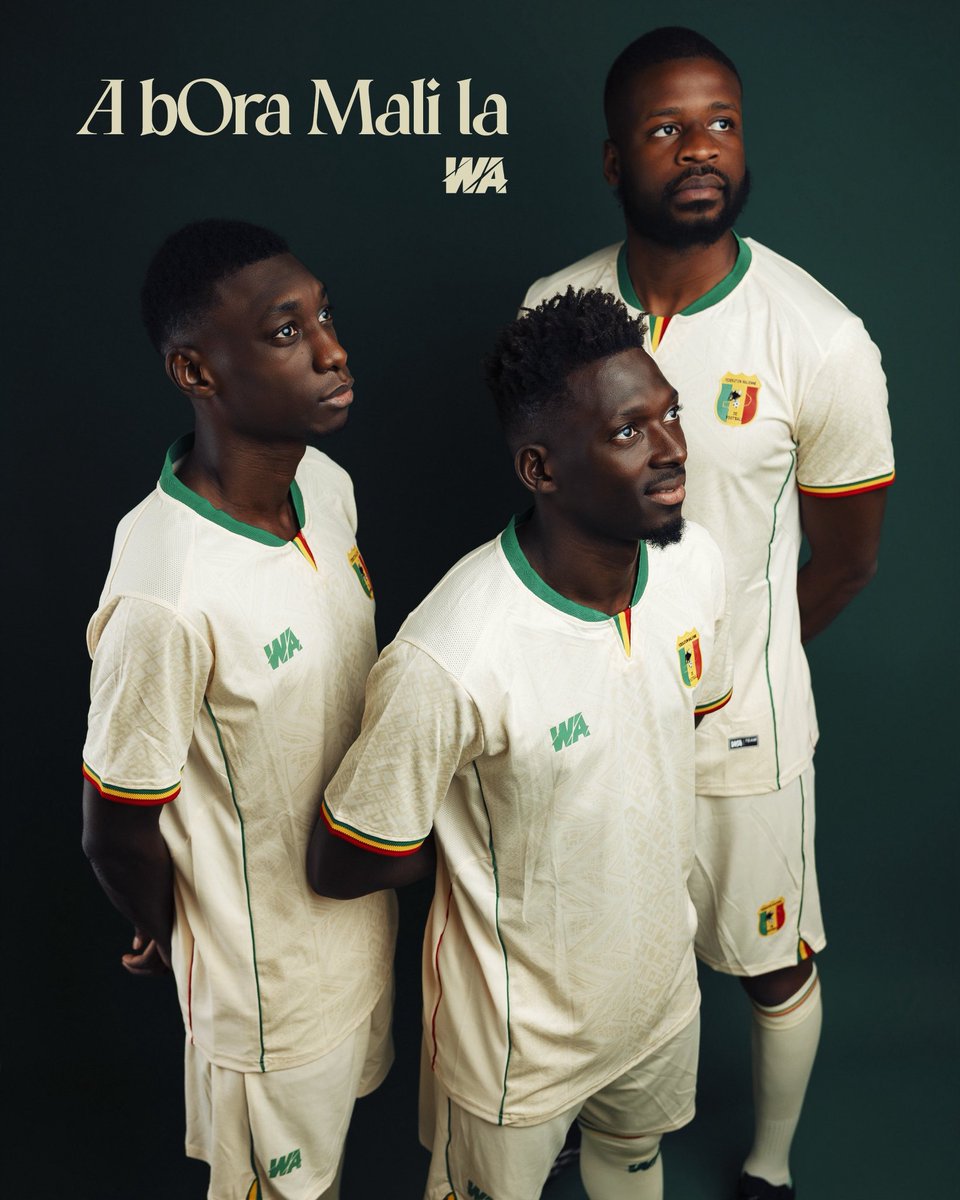
A Bora Mali la 🇲🇱🫶🏾 Vos maillots sont disponibles sur : https://t.co/W8O77tAv3j Et physiquement : 📍Au complexe Wati B de Badalabougou (Bamako) 🇲🇱 📍FootKorner Chatelet (Paris) , Saint-Denis (93) 🇫🇷, Aéroville Roissy en France (95) 🇫🇷 https://t.co/z0PzIrFKcB #BoraMali #Maillots #Sport

14490
Wassim Nasr 4w

#Mali Au moins 150 morts dans le centre du pays, qu’est ce qu’on retient des attaques du JNIM à Dioura et Sévaré, l’Africa Corps russe qui s’embourbe, des dizaines de militaires otages appellent depuis la brousse… et une réunion à Bamako @julienfanciulli @France24_fr #Mali #JNIM #Bamako #ML

232
Krzysztof Graj 4w

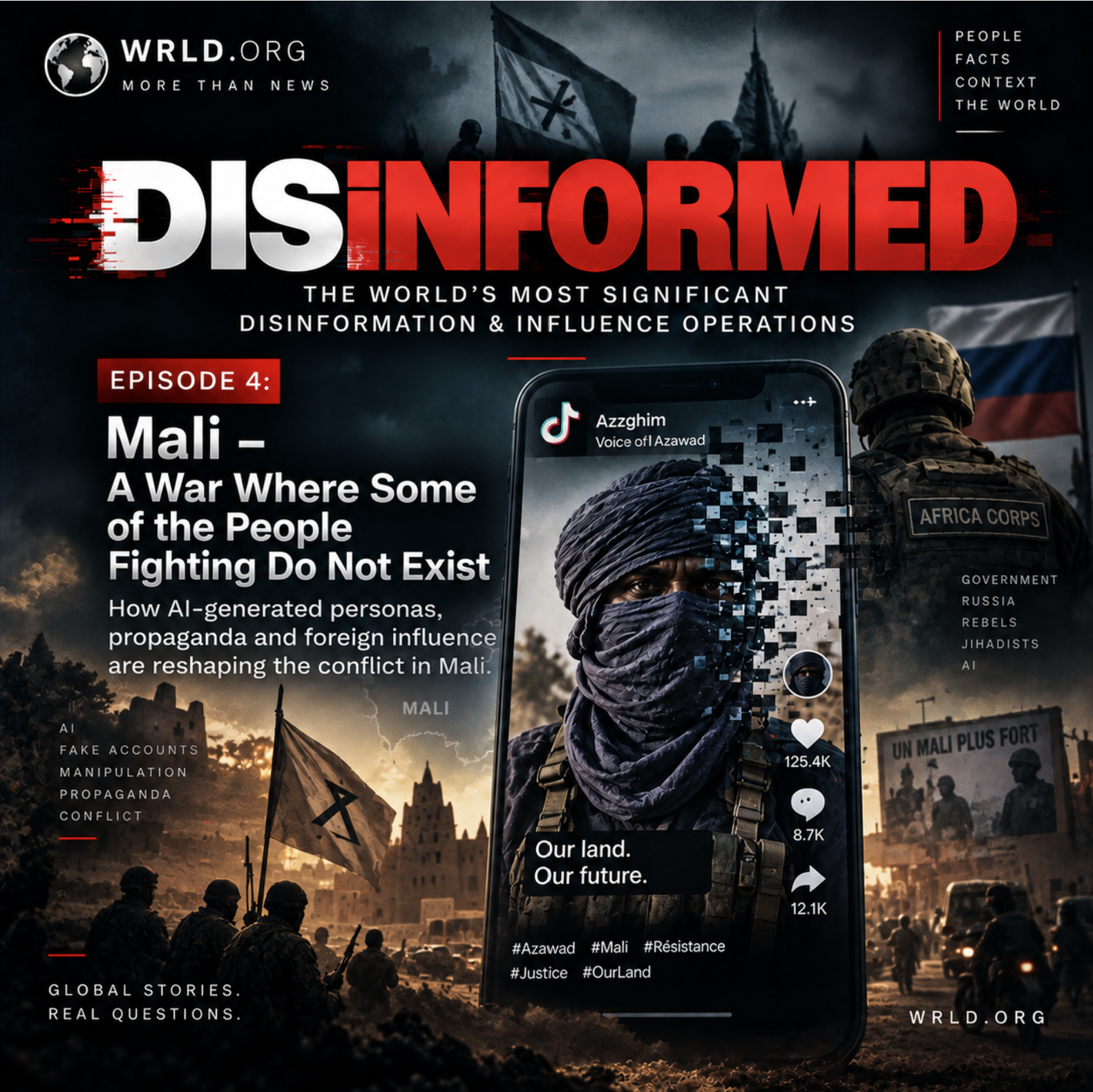
Mali – a war where some of the people fighting do not exist In Mali's war, an apparently simple question is becoming increasingly difficult to answer: who exactly is speaking to us? A real person? A rebel organisation? A Russian influence operation? A supporter of the military junta? Or somebody who has never existed at all? In September 2026, the Dakar-based Timbuktu Institute published Des algorithmes en guerre, a report examining the use of generative artificial intelligence by actors involved in the Malian conflict. Its researchers describe the country as a potential laboratory for AI-assisted information warfare. Separatist networks are deploying synthetic fighters on TikTok. Jihadist propagandists are experimenting with AI-generated imagery. Pro-government accounts are producing large quantities of content celebrating the Malian armed forces. Russia, meanwhile, operates the most developed influence infrastructure of all: pseudo-media outlets, inauthentic accounts, AI-generated text, images and video, and systems designed to artificially amplify their visibility. Artificial intelligence did not create Mali's conflict. The war has been under way since 2012, and its participants have always fought with propaganda as well as weapons. What AI has changed is the economics of that struggle. A new “witness”, commentator, fighter, poster or video can now be produced in minutes. For audiences watching from a phone, distinguishing between genuine documentation, propaganda and material created entirely by an algorithm is becoming progressively harder. Azzghim – the fighter who cannot be killed or interrogated The most striking case documented by the Timbuktu Institute involves accounts associated with supporters of the Azawad Liberation Front, or FLA, a Tuareg separatist movement fighting the authorities in Bamako. A figure called “Azzghim” appeared on TikTok. He looks like a Tuareg fighter and regularly features in videos attacking Mali's government and Russia's Africa Corps, commenting on the conflict and promoting the cause of Azawad. There is one problem: Azzghim does not exist. Analysis of the videos identified anomalies characteristic of generative AI, including unnatural body movements, visual inconsistencies, irregular colouring and problems with audio synchronisation. According to the Timbuktu Institute, Azzghim is a synthetic character being used as the digital face of a political narrative. The propaganda advantages are considerable. An organisation no longer needs to expose a real spokesman. A synthetic personality can be designed to look exactly as its creators require, speak the appropriate language and appeal to a particular audience. Different characters could potentially be created for younger viewers, traditional communities or different ethnic and social groups. There is another advantage: a synthetic spokesman cannot be arrested, identified or interrogated. Researchers also identified accounts amplifying the material. At the time of the study, TikTok account @tawri.n.azawad had around 207,000 followers and was almost entirely devoted to publishing or repackaging content involving Azzghim. Another account, @asnan831, used a similar synthetic teenage character. An important distinction is necessary. Researchers describe these profiles as belonging to supporters or individuals associated with the FLA. The available evidence does not establish that every account is part of an operation centrally directed by the Front's leadership. The information effect, however, remains significant: a digital community can be constructed around the Azawad cause in which some of the apparent participants may not be real people at all. The jihadists are learning too The picture is different for Jama'at Nusrat al-Islam wal-Muslimin, or JNIM, the al-Qaeda-affiliated coalition that has become one of the most powerful armed groups in the Sahel. Its confirmed use of generative AI remains considerably less sophisticated. In June 2026, JNIM's Az-Zallaqa media apparatus published AI-generated posters promoting material about previous attacks. The images showed fighters in combat but contained familiar generative artefacts: buildings and vegetation merging unnaturally, blurred details and unnaturally smooth surfaces. More important than JNIM's current capabilities is what AI could add to an already sophisticated propaganda apparatus. The organisation already tailors communications to different audiences. UN reporting has documented its use of media channels for broader propaganda while other outlets increasingly distribute material in local languages, including Bambara. Generative AI could dramatically reduce the cost of this strategy, translating material into Fulfulde, Hausa, Zarma or Tamasheq, generating synthetic dubbing and producing multiple versions of the same message. The Timbuktu Institute also considers the future possibility of AI chatbots being used to personalise recruitment. That should not be presented as a capability JNIM has already demonstrated. At present, it is a risk scenario rather than a confirmed operation. Russia has the most sophisticated machine At the other end of the spectrum lies Russia's influence ecosystem. Here, AI is not an isolated experiment but another component of an infrastructure previously developed by Wagner-linked networks, Russian media operations and influence organisations operating across Africa. After Wagner's withdrawal from Mali in 2025, its military role was taken over by the Russian state-controlled Africa Corps. The information infrastructure evolved alongside it. Of particular importance is African Initiative, which presents itself as a news agency but has been identified by France's VIGINUM, the UK's Foreign, Commonwealth & Development Office and the European External Action Service as an important component of Russia's newer influence architecture in Africa. One of the most interesting elements of this ecosystem is a network researchers call AI-Freak. The operation uses generative AI to produce text, images and videos, places them on fake or apparently independent news websites and distributes them through inauthentic accounts. This is supplemented by so-called Black Hat SEO – techniques intended to artificially increase the visibility of content in search engines. Elements of this infrastructure have previously been identified by Meta and OpenAI. In 2024, OpenAI disrupted Russian accounts using ChatGPT to generate articles and comments in English, French and Russian. Some of the French-language content targeted audiences in West Africa. In a later iteration of the operation, AI models were also used to draft scripts for short videos praising the Russian Africa Corps, translate them into French and generate descriptions optimised for social media. This illustrates an important difference between the Russian approach and Azzghim. The separatist ecosystem uses AI primarily to manufacture convincing digital personalities. The Russian model increasingly resembles an industrial production line: text, image, video, pseudo-news website, distribution account, search optimisation and additional channels amplifying the narrative. The objective is not merely to convince someone of a single claim. It is to occupy as much of the information environment as possible with narratives advantageous to Moscow: Russia as an effective security partner, the West as a neo-colonial aggressor, France as a source of instability and Russian forces as defenders of African sovereignty. Yet VIGINUM also warns against equating technological sophistication with actual impact. Some Russian influence channels still attract relatively small audiences. A sophisticated operation is not automatically a successful one. The junta is building its own digital reality Mali's military authorities operate within the same contested information environment. Since breaking with France and moving closer to Moscow, Bamako has increasingly restricted independent media space while promoting a narrative built around restored sovereignty, military success and the benefits of its Russian partnership. The Timbuktu Institute highlights the TikTok account @6tm_officiel. At the time of the study, it had more than 436,000 followers and published substantial amounts of AI-generated material presenting Mali's armed forces, the FAMa, and the Africa Corps in a favourable light. One video concerning the battle for Kidal accumulated around 4.7 million views. Again, attribution requires care. Researchers describe the account as being operated by an individual based in Bamako; they do not provide evidence that it is officially managed by the Malian government. It is better understood as part of a wider pro-government information ecosystem in which the boundaries between state communications, supporters and co-ordinated propaganda can be difficult to establish. The Africa Center for Strategic Studies has previously identified the military regimes in Mali and Burkina Faso as important sources of disinformation campaigns in West Africa. Recurring narratives target France, the United Nations, ECOWAS, human-rights organisations and independent media, while presenting criticism of the authorities as part of a foreign conspiracy. Generative AI allows such narratives to be produced faster, more cheaply and in far more variations. Everyone is fighting over a different version of the same war What makes Mali particularly revealing is that multiple actors are using similar technology for very different objectives. FLA-linked networks need digital faces capable of humanising the Azawad cause and attacking Russia's presence. JNIM needs propaganda material and increasingly localised communications. The pro-government ecosystem seeks to portray Mali's armed forces as victorious and reinforce the junta's legitimacy. Russia possesses the broadest infrastructure, in which AI is merely one component of a larger system involving media outlets, websites, local partners, social-media profiles and technical amplification. The result is a war taking place simultaneously in two realities. In the first, soldiers and civilians are killed, towns change hands and the army, separatists and jihadists fight for territory. In the second, every side is trying to determine what the first reality will look like on a smartphone screen. Generative AI does not need to create a perfect deepfake to be effective. It merely needs to increase the number of competing versions of events until an ordinary viewer can no longer easily determine which one deserves to be trusted. That is why Mali matters. It is not showing us the future of information warfare. It is showing us its present. One TikTok video may feature a real soldier. Another may feature a propagandist. A third may feature a fighter who has never existed. And all three can tell completely different stories about the same war. Sources Timbuktu Institute – Des algorithmes en guerre: Comment l'IA générative rebat les cartes du conflit malien https://timbuktu-institute.org/index.php/toutes-l-actualites/item/1731-rapport-des-algorithmes-en-guerre-comment-l-ia-generative-rebat-les-cartes-du-conflit-malien AfricaNews/AFP – “Mali's information war is increasingly being shaped by AI” https://www.africanews.com/2026/09/09/malis-information-war-is-increasingly-being-shaped-by-ai/ OpenAI – research on Russia-origin influence activity and Operation Stop News https://openai.com/index/disrupting-malicious-uses-of-ai-stop-news-2024/ VIGINUM / FCDO / EEAS – technical report on African Initiative and the AI-Freak network https://www.sgdsn.gouv.fr/files/files/Publications/20250612_TLP-CLEAR_VIGINUM_FCDO_EEAS_Technical_Report_African_Initiative_EN.pdf Africa Center for Strategic Studies – Mapping a Surge of Disinformation in Africa https://africacenter.org/spotlight/mapping-a-surge-of-disinformation-in-africa/ Timbuktu Institute – analysis of AI use by JNIM https://timbuktu-institute.org/index.php/toutes-l-actualites/item/1735-artificial-intelligence-a-new-propaganda-lever-for-jnim-in-mali?print=1&tmpl=component #Disinformation #Mali #Sahel #Africa #ArtificialIntelligence #AI #GenerativeAI #AIPropaganda #InformationWarfare #InfluenceOperations #Propaganda #Deepfakes #SyntheticMedia #Azawad #FLA #JNIM #AfricaCorps #Russia #RussianInfluence #TikTok #DigitalWarfare #MediaManipulation #WRLD

timbuktu-institute.org
Rapport - DES ALGORITHMES EN GUERRE : Comment l'IA générative rebat les cartes du conflit malien
1629
Wassim Nasr Sep 2

Les dessous de la libération d'Inkinane, commandant FLA, détenu à Niamey depuis 2025. Qui était il, qui a œuvré pour sa libération, dans quelles conditions, pourquoi Bamako ne s'est pas opposé et qu'est-ce que Niamey a obtenu? @julienfanciulli @France24_fr https://t.co/8CVRPoHWyR #Inkinane #libération #Niamey #NE #ML #FR

234
Wassim Nasr Aug 29

Après une longue attente et une demande officielle l’Africa Corps est intervenu et a tourné la situation en faveur de la Garde présidentielle à Niamey. Après Bamako en avril, c’est la 2ème fois que la Russie rempli sa mission 1ère: préserver le pouvoir en place https://t.co/52ul6pc0ep #Afrique #GardePrésidentielle #Russie #NE #ML #RU

1644
BeFootball Aug 17

🚨🚨 LE BARÇA, CHELSEA, SALZBURG, MANCHESTER UNITED LE VOULAIENT… MAIS IL A CHOISI REIMS !!!! ❤️🤍 Grand espoir du foot malien et africain, SEYDOU DEMBÉLÉ 🇲🇱 (2008) a été séduit par le projet du club français. 🇫🇷 Formé à la JMG Academy de Bamako, le milieu offensif de 18 ans était l'un des talents les plus courtisés d'Afrique. 💎 Dembélé va signer son premier contrat pro à Reims et intègrera d’abord le groupe Élite. MEILLEUR BUTEUR DU DERNIER MONDIAL U17. 🌟🌍 (@sebnonda) #Football #Talent #TransferNews

14613
Franceinfo Aug 13

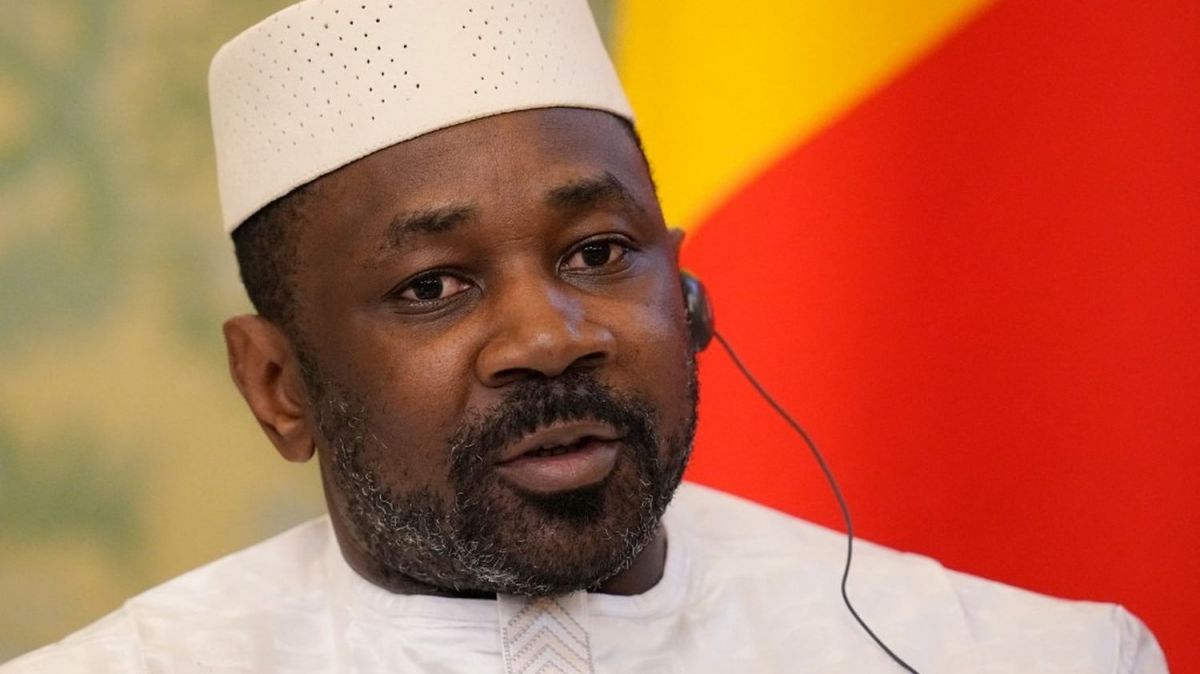
Un Français, condamné à 20 ans de prison au Mali pour des accusations de conspiration, a été gracié par le chef de la junte malienne Assimi Goïta, dans un contexte de tensions diplomatiques entre Paris et Bamako, ce qui souligne une tentative de rapprochement entre le Mali et un pays non nommé, probablement la Russie. #Mali #France #Grâces

www.franceinfo.fr
Un Français condamné à 20 ans de prison au Mali a été gracié
15926
newsORF.at Jul 4

Im Norden Malis haben islamistische Terroristen mehrere Städte angegriffen, darunter Gao und Aguelhok, während das Militär von einer „fluiden Situation“ berichtete und auch bewaffnete Zwischenfälle in der Nähe der Hauptstadt Bamako meldete. #Mali #Terrorismus #JNIM

orf.at
Islamisten greifen Städte im Norden Malis an
10109
Wassim Nasr Jul 4

#Mali selon source « le JNIM bombarde Aguelhok, bombardement & attaque à Gao et contre la caserne de Sofara au sud de Sévaré en plus de la prison de Kéniéroba à l’ouest de Bamako » #Mali #JNIM #Gao #ML #GA #SO #KE #BM

951
Spiegel Online Jul 4

In Mali haben Dschihadisten und Tuareg-Rebellen mehrere Angriffe auf verschiedene Orte, darunter ein Gefängnis nahe Bamako, gestartet, während die Militärjunta zu den Vorfällen schweigt und sich unter dem Druck von Gewalt und geopolitischen Spannungen befindet. #Mali #SahelKrise #Dschihadismus

www.spiegel.de
Mali: Dschihadisten und Rebellen starten neue Angriffswelle
8920
Jutarnji list Jun 28

Članak opisuje neuspjehe ruskih plaćenika iz Afričkog korpusa, koji su pod kontrolom GRU-a, u borbama protiv islamista u Maliju, gdje su umjesto učinkovitog otpora brutalno masakrirali civile, naslijedivši praksu Wagner grupe i ostavljajući vojne operacije malijske vojske u ozračju sramote. #AfričkiKorpus #WagnerGrupa #Bamako

www.jutarnji.hr
Sramota pod kontrolom ruske tajne službe: Bježe bez borbe, u povlačenju brutalno masakriraju civile
8927
Racing Club de Lens Jun 26

Joyeux 𝑴𝒂𝒎𝒂𝒅'𝒏𝒏𝒊𝒗𝒆𝒓𝒔𝒂𝒊𝒓𝒆 🥳 Artisan majeur de la saison historique 2025/26 dans l'entrejeu sang et or, le « Maestro de Bamako » @msangare2002 célèbre ses 2️⃣4️⃣ ans aujourd'hui ! #BonAnniversaireMamadou 🎂 https://t.co/CxFcssaHx3 #Anniversaire #Football #Maestro

14170
Aya Nakamura May 30

Je suis fière d'être ici et de répondre à ces attaques racistes en brûlant cette banderole sur scène. Ici, c’est Paris, pas le marché de Bamako.

Discographie incroyable et réponse aux racistes… On a assisté à la première date d’Aya Nakamura au Stade de France
www.20minutes.fr
19121
AlertesInfos May 29

🇫🇷🎤 EN IMAGES | La réponse d’Aya Nakamura à la pancarte raciste : "Y’a pas moyen, Aya. Ici, c’est Paris, pas le marché de Bamako". (@IliesDjaouti) https://t.co/w9HHq19Ct8 #AyaNakamura #Racisme #Paris

38005
FRENCHRAPUS 🇺🇸 May 29

🚨 ALERTE ! La magnifique réponse de la chanteuse Aya Nakamura face aux racistes ce soir lors de son concert au Stade de France 🇫🇷 « Y’a pas moyen Aya. Ici, c’est Paris, pas le marché de Bamako » 🤮 https://t.co/85Jbbul4SW #AyaNakamura #Concert #Racisme

17568
BBC May 21

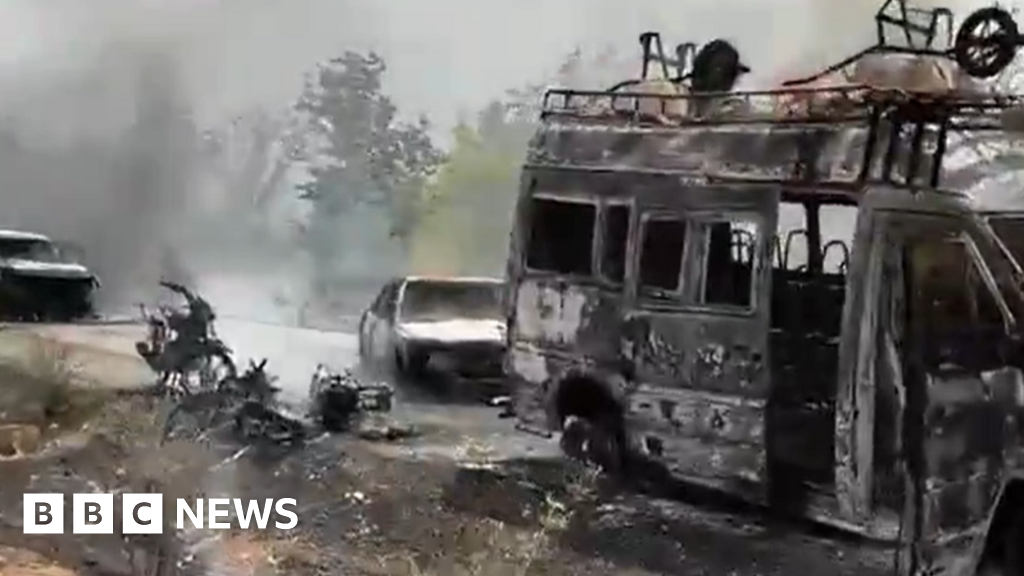
Jihadist fighters in Mali have intensified a blockade on the capital, Bamako, by burning dozens of vehicles on major roads, causing severe shortages and skyrocketing prices of goods ahead of the Eid al-Adha holiday, as they seek to weaken the legitimacy of the military government amid a backdrop of ongoing violence and instability. #MaliConflict #JihadistBlockade #EidCrisis

www.bbc.com
Dozens of vehicles burnt as Mali jihadists enforce blockade ahead of Eid holiday
8972
BBC May 21

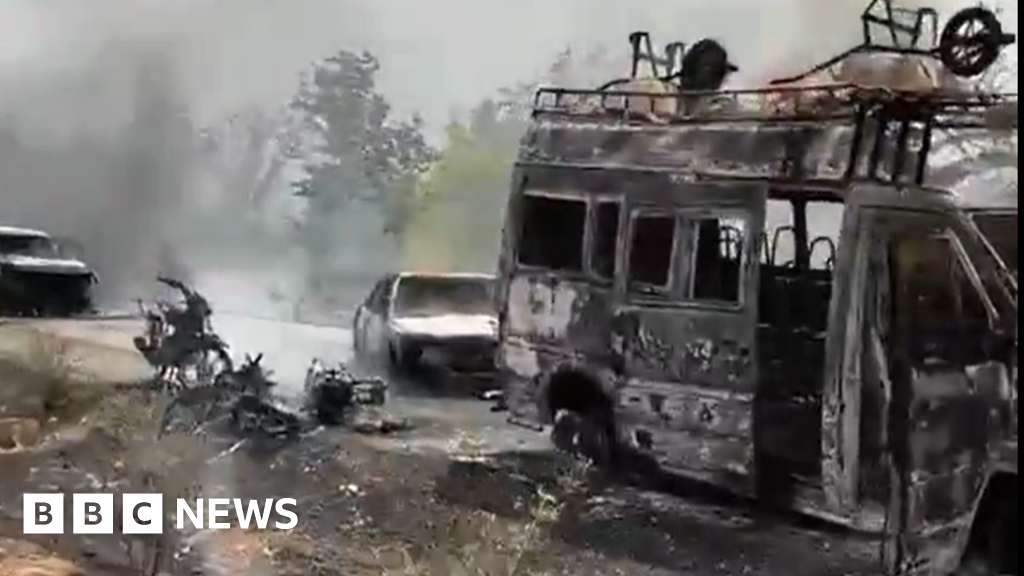
Jihadist fighters in Mali have intensified a blockade on the capital Bamako by setting fire to dozens of vehicles, including fuel tankers, on major roads, further threatening the economy and exacerbating the ongoing security crisis in the region. #Mali #Jihadism #FuelBlockade

www.bbc.com
Dozens of vehicles burnt as Mali jihadists enforce blockade
8972
Wassim Nasr May 18

RT @AmnestyWARO: Mali : Amnesty International est très préoccupée par la disparition de Cheick Tall à Bamako ce 16 mai après l’enlèvement d… #Mali #AmnestyInternational #DroitsHumains #ML