BETA nonprofit public democratic european moderated

Search

#FIMI

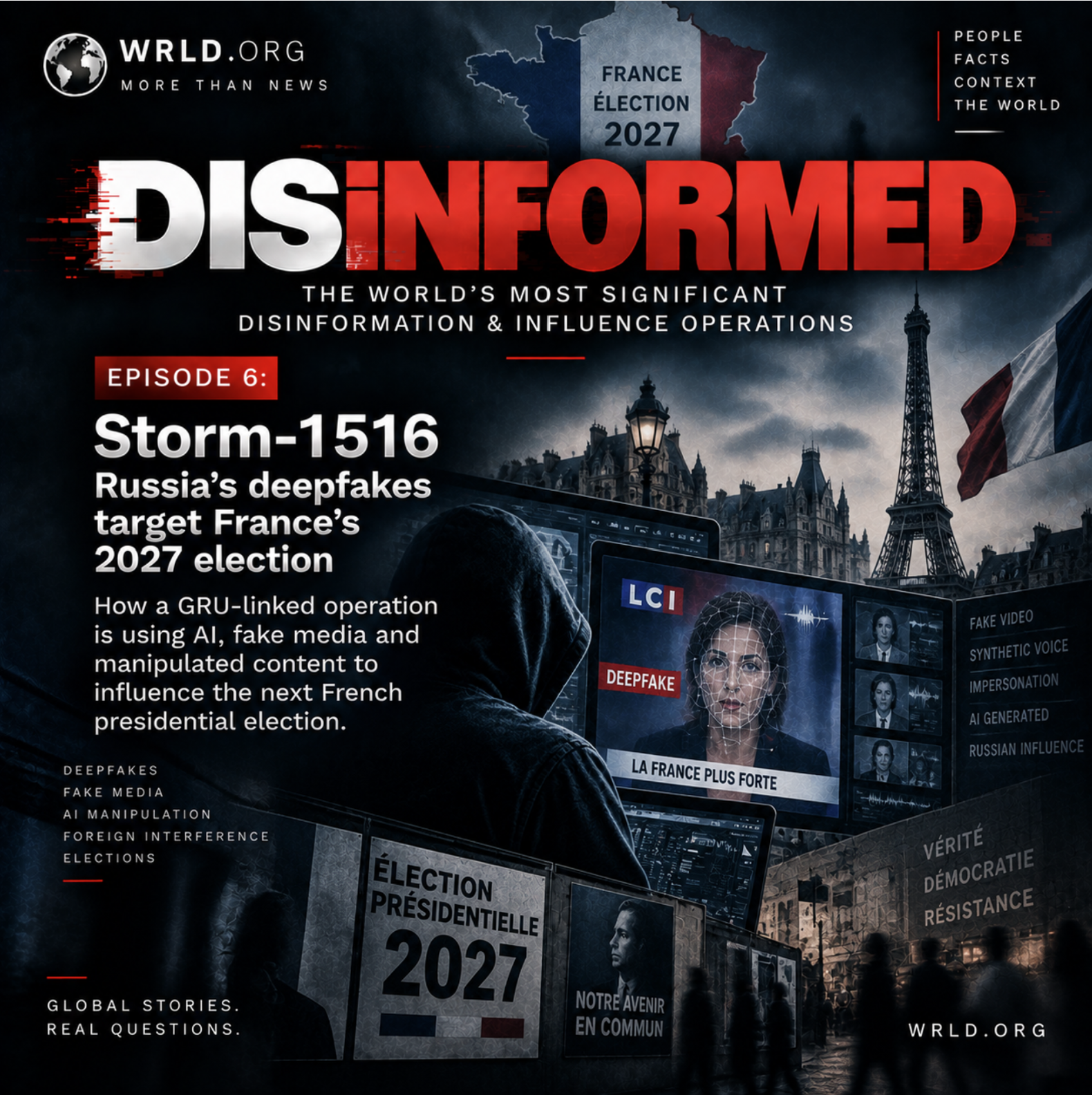
Storm-1516 – Russia’s information war arrives early in France’s 2027 election France will not elect its next president until April 2027, but the information operations surrounding the campaign have already begun. In late July and August 2026, fabricated stories targeted several prominent figures associated with the presidential race, including Raphaël Glucksmann, Gabriel Attal and former prime minister Édouard Philippe. The methods included fake news websites copying established French media, impersonated journalists, AI-generated voices and manipulated video. French authorities identified the Russian operation known as Storm-1516 behind several of these campaigns. Other attacks were linked to Matryoshka, another Russia-aligned influence network. The timing is significant. Storm-1516 began targeting the French presidential environment roughly nine months before the first round, scheduled for 18 April 2027. Rather than a single disinformation campaign, the activity demonstrates how Russian influence networks can establish narratives and infrastructure long before an election reaches its decisive phase. A fake scandal targeting Raphaël Glucksmann One of the clearest examples appeared at the end of July. A website impersonating the French independent outlet Blast published a fabricated investigation claiming that journalist Léa Salamé had attempted to bribe media organisations in exchange for favourable coverage of her partner, Raphaël Glucksmann. The operation went beyond copying the appearance of a legitimate news site. The identities of real journalists were appropriated and a manipulated video used an AI-generated imitation of the voice of Edwy Plenel, founder of Mediapart, supposedly confirming the allegations. The accusation was false. On 4 August, Glucksmann said France's General Secretariat for Defence and National Security, the SGDSN, had informed him that he had been targeted by Storm-1516. Two days later, the Paris prosecutor's office opened an investigation into suspected Russian interference. The importance of the operation was not the quality of one particular deepfake but the construction of several mutually reinforcing elements: a fake media organisation, impersonated journalists, synthetic audio and social-media accounts distributing the material. Together they created the impression that the allegation had been independently corroborated. Different candidates, overlapping Russian networks Édouard Philippe was also targeted by fabricated stories claiming that he suffered from dementia and was medically incapable of running for president. VIGINUM attributed the operation to Storm-1516. Gabriel Attal faced another wave of false content, including fabricated stories mimicking the identities of French outlets such as RFI, BFM TV, France 24, AFP, Le Parisien, Libération and Le Monde. Some claimed that Attal had symptoms of Parkinson's disease or links to drug trafficking. Attribution here is more complicated. French reporting connected at least part of the campaign against Attal to Matryoshka, rather than Storm-1516. A later digitally manipulated video, apparently associated with Storm-1516, used genuine LCI footage from an August debate but added a white earpiece to Attal, suggesting that someone had secretly been feeding him answers. NewsGuard compared the circulating clip with authentic LCI footage and found no earpiece in the original. The distinction is important. France is not facing a single Russian propaganda operation but several overlapping networks using similar techniques and narratives. Treating every manipulation as Storm-1516 would obscure how this ecosystem actually functions. The real weapon is media impersonation The most interesting feature of Storm-1516 is not artificial intelligence itself. It is the systematic appropriation of the credibility of established journalism. Instead of relying only on anonymous Telegram channels or social-media profiles, operators create material that looks as though it originated from organisations audiences already recognise. A fabricated investigation can resemble Blast, a manipulated television report can borrow LCI's visual identity, while fake journalists and social-media accounts provide additional layers of apparent confirmation. VIGINUM has documented this architecture extensively. Its 2025 investigation analysed 77 Storm-1516 information operations and described a mature Russian system using fabricated media, websites and distribution networks to promote anti-Ukrainian and anti-Western narratives. The European External Action Service found that the infrastructure continued to expand. According to its 2026 FIMI Threat Report, Storm-1516 almost doubled its output during 2025. Five networks created that year to target French, German, American, Moldovan and international audiences comprised 453 websites, including fictional news organisations and sites impersonating genuine media or political platforms. A typical operation therefore follows a recognisable pattern: a fabricated allegation is supported by synthetic or manipulated evidence, published through an apparently legitimate source and then distributed by networks of accounts that create the appearance of wider discussion. AI makes this process faster and cheaper, but the fundamental objective remains the same – to manufacture credibility. Why begin nine months before an election? VIGINUM concluded that Storm-1516 is capable both of reacting rapidly to current events and of conducting longer campaigns aimed at discrediting Western institutions and public figures, particularly around elections and other major political events. This provides important context for France. Storm-1516 activity around the presidential race became visible in July 2026, approximately nine months before voting begins. There is no public evidence of a predetermined Russian “nine-month plan”, and the timing should not be presented as such. Early activity nevertheless provides operational advantages: narratives can be tested, websites and accounts established, audience reactions measured and the responses of journalists, authorities and fact-checkers observed. The first operations may therefore also provide information about which themes and techniques are most effective before the campaign enters its decisive months. This remains an analytical interpretation rather than a demonstrated statement of the operators' intentions. Russian operation, but what about the GRU? Attribution requires similar precision. VIGINUM explicitly describes Storm-1516 as a Russian information operation, and French authorities have attributed individual campaigns to it with high confidence. Connections with Russian military intelligence have also been reported. Glucksmann said the SGDSN informed him that the network targeting him was controlled by Russia's GRU, while French media have repeatedly described Storm-1516 as linked to Russian military intelligence. However, VIGINUM's publicly available technical documentation describes Storm-1516 primarily as a Russian information modus operandi, rather than identifying it as a formally established GRU unit. It is therefore well supported to describe Storm-1516 as a Russian influence operation with reported links to military intelligence. Saying simply that Storm-1516 is a GRU unit would go beyond what France's published technical evidence currently establishes. An early warning for the French election There is also no evidence that the operations have so far had a significant effect on French voters. Some of the fabricated material generated only limited engagement, and measuring the real impact of foreign information operations remains extremely difficult. Even a video attracting hundreds of thousands of views does not establish how many viewers believed it or whether it changed political attitudes. The significance of Storm-1516 lies instead in the infrastructure already being deployed. Months before the election, Russian influence networks have been able to test fake newsrooms, synthetic voices, manipulated television footage, candidate-specific narratives and systems for distributing them. The French case illustrates a broader evolution in election interference. The objective is no longer simply to place false claims on social media. Modern operations can manufacture an entire chain of apparent evidence in which a fake journalist cites a fake investigation, synthetic audio appears to confirm it and networks of accounts give the impression that an authentic controversy is unfolding. France still has months to go before its presidential election. The information environment surrounding it is already being contested. Sources: VIGINUM / SGDSN — Storm-1516 analysis https://www.sgdsn.gouv.fr/publications/analyse-du-mode-operatoire-informationnel-russe-storm-1516 VIGINUM / SGDSN — Full Storm-1516 technical report https://www.sgdsn.gouv.fr/files/files/Publications/20250507_TLP-CLEAR_NP_SGDSN_VIGINUM_Technical%20report_Storm-1516.pdf VIGINUM / SGDSN — Storm-1516 operation targeting Emmanuel Macron https://www.sgdsn.gouv.fr/publications/storm-1516-detection-dune-operation-dingerence-numerique-etrangere-ciblant-emmanuel EEAS — 4th Report on FIMI Threats https://www.eeas.europa.eu/sites/default/files/2026/documents/EEAS%204th%20Threat%20Report_web.pdf Le Monde — Russian interference targeting Philippe, Glucksmann and Attal https://www.lemonde.fr/politique/article/2026/08/07/presidentielle-2027-glucksmann-attal-philippe-les-ingerences-russes-s-invitent-dans-la-campagne_6740451_823448.html Le Monde — Storm-1516 and Matryoshka analysis https://www.lemonde.fr/pixels/article/2026/08/06/ingerences-russes-pourquoi-il-ne-faut-pas-nourrir-le-troll_6739956_4408996.html NewsGuard Risk Briefing — Russian activity targeting the French election https://newsguardriskbriefing.substack.com/p/russia-targets-french-elections-iran Euronews — Operation targeting Raphaël Glucksmann https://fr.euronews.com/my-europe/2026/08/04/presidentielle-de-2027-raphael-glucksmann-vise-par-une-operation-de-destabilisation-russe Télérama / AFP — Glucksmann deepfake investigation https://www.telerama.fr/debats-reportages/presidentielle-2027-raphael-glucksmann-vise-par-un-deepfake-d-origine-russe-7032318.php Le Parisien — Operation targeting Gabriel Attal https://www.leparisien.fr/elections/presidentielle/presidentielle-2027-gabriel-attal-a-son-tour-vise-par-une-ingerence-en-provenance-de-russie-05-08-2026-I3Z67Z7ZUBDUVBXUNDARI5KGPA.php Euronews — Paris prosecutor investigations into suspected Russian interference https://fr.euronews.com/my-europe/2026/08/18/soupcons-dingerence-russe-visant-attal-et-philippe-le-parquet-de-paris-ouvre-dune-enquete Keywords: #DISINFORMED #Episode6 #Storm1516 #France #FrenchElection2027 #Disinformation #InformationWarfare #InfluenceOperations #ForeignInterference #FIMI #RussianInfluence #RussianDisinformation #Propaganda #Deepfakes #ArtificialIntelligence #AI #SyntheticMedia #FakeNews #MediaImpersonation #FakeMedia #DigitalManipulation #ElectionInterference #PoliticalDisinformation #Matryoshka #VIGINUM #OSINT #CyberInfluence #DigitalInfluence #MediaManipulation #EuropeanSecurity #Democracy #WRLD

Analyse du mode opératoire informationnel russe Storm-1516 | SGDSN

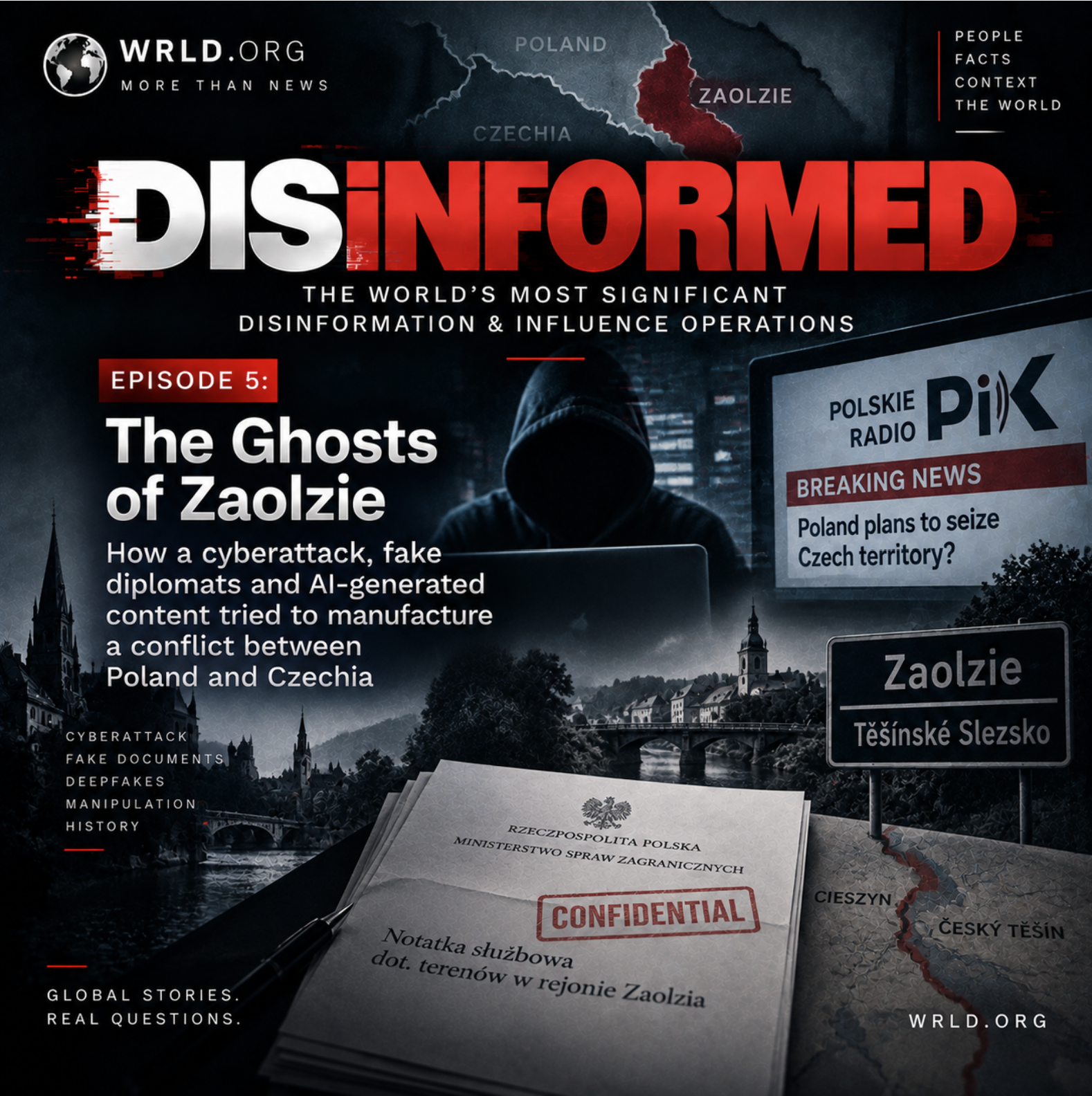
The Ghosts of Zaolzie – how a cyberattack tried to manufacture a conflict between Poland and Czechia At around 5pm on 16 August 2026, an alarming article appeared on the website of Radio PiK, a genuine Polish regional broadcaster. Its headline claimed that Poland was preparing to seize Czech territory and that the Czech Foreign Ministry had received a document outlining Warsaw's demands. Radio PiK had published no such story. An attacker had compromised an employee's credentials, gained access to the station's content management system and replaced a legitimate article with fabricated material. The newsroom quickly removed it and informed the authorities. But the intrusion was only one element of a much larger operation. Investigators subsequently uncovered forged diplomatic documents, accounts impersonating Polish and Czech officials, a cloned Czech news site, AI-generated material, a fictitious local activist and advertising for a demonstration that apparently did not exist. Together, these elements attempted to manufacture the appearance of a new territorial conflict between Poland and Czechia over Zaolzie. A false crisis built around a real territorial issue The operation worked because it did not start entirely with fiction. Poland and Czechia do have an unresolved technical issue concerning approximately 368.44 hectares of territory, originating in post-war changes to the Polish-Czechoslovak border. It is commonly described as the Czech “territorial debt” to Poland. But this is not a Polish claim to Zaolzie and there is no evidence that Warsaw is seeking to annex Czech territory. The operation fused this real issue with a much more powerful historical memory. Zaolzie – the part of Cieszyn Silesia west of the Olza River – was disputed by Poland and Czechoslovakia after the First World War. In 1938, during the crisis created by the Munich Agreement, Poland seized the territory from Czechoslovakia. The manipulation therefore followed a simple logic: a real territorial debt became an alleged Polish territorial demand, which was then transformed into a supposed attempt to reclaim Zaolzie. Fake accounts impersonating Poland's Deputy Foreign Minister Artur Harazim and Czech ambassador Břetislav Dančák helped reinforce the story. Fabricated diplomatic documents circulated alongside them. One early version referred incorrectly to 638.44 hectares; the fake Harazim account then “corrected” the number to the genuine figure of 368.44 hectares. It was an effective form of reverse fact-checking: correcting one false detail could make the larger fabrication appear authentic. Fake media – and one real newsroom The operators also created a website designed to resemble Czech public broadcaster iRozhlas. It published material supporting the same narrative, including claims that Czech residents near the border were becoming concerned about Polish intentions. The result was a manufactured information loop. Forged documents could support fake media reports; impersonated officials could comment on those reports; social-media accounts could then cite both as confirmation. But the Radio PiK hack added something much more valuable: the credibility of a real media organisation. Instead of merely cloning a newsroom, the attackers briefly inserted their fabrication into an authentic one. A familiar domain, logo and established broadcaster could therefore appear to confirm a story manufactured elsewhere. The cyberattack was not simply an accompanying technical incident. It was part of the information operation itself – a way of manufacturing credibility for false information. From a synthetic activist to a real demonstration The operation then attempted to move from the digital world into the physical one. A Facebook account under the name “Adam Sikora” promoted a demonstration in the Czech border city of Třinec under slogans including “Cieszyn Silesia is Czech” and “Here we live, here we stay”. Paid Facebook advertising was reportedly used to promote the event. Yet Třinec authorities said no demonstration had been properly notified. Promotional material used the logo of the Czech KOVO trade union, which denied any involvement. Investigators also identified indications that Sikora's profile photograph and other imagery were AI-generated. The persona even advertised a supposed house for sale in the border region, reinforcing the impression that frightened residents wanted to leave because of Polish territorial ambitions. The property could not be verified and its images also showed signs of artificial generation. This reveals the architecture of the operation: forged document → fake official → cloned media → compromised real media → synthetic local activist → advertised protest → appearance of social tension. The final stage is particularly significant. Had real people attended the demonstration, photographs of an authentic crowd could potentially have been presented as evidence that Czech citizens genuinely feared Polish territorial ambitions. A fabricated online conflict could therefore have begun generating real-world evidence of its own existence. Why Zaolzie? Historical grievances are valuable material for influence operations because the underlying facts are real. Poland and Czechoslovakia genuinely disputed Cieszyn Silesia. Poland genuinely occupied Zaolzie in 1938. A Polish minority genuinely lives in Czechia. And the 368.44-hectare territorial issue genuinely exists. The operator did not need to invent that history. It only needed to suggest that the history was repeating itself. PISM assessed that the operation sought to revive the image of Poland as a revisionist state willing to challenge European borders. Such a narrative could serve a broader purpose: damaging Polish-Czech relations, weakening confidence between NATO and EU allies and portraying Central Europe as a region where historical territorial conflicts remain unresolved. Russia is the leading attribution – but not a proven one The attribution requires more caution than the mechanics of the operation. PISM assessed Russia as the most likely perpetrator, while NASK identified similarities between the campaign and previously observed Russian influence methods. Russian-linked information infrastructure had also shown earlier interest in the Polish-Czech territorial issue. The techniques are familiar: cloned media, forged documents, impersonated officials, synthetic identities, historical grievances and the combination of cyber intrusion with information manipulation. But these indicators are not the same as definitive attribution. As of mid-September 2026, no publicly disclosed forensic evidence had conclusively connected the Radio PiK compromise, fake domains, accounts and financing to a specific Russian intelligence service, government organisation or contractor. Russia can therefore reasonably be described as the leading analytical attribution, but claims that the operation was definitively conducted by the GRU or another named Russian structure go beyond the publicly available evidence. The operation failed. The model remains important The campaign did not create a Polish-Czech diplomatic crisis. Both governments rejected the narrative, the fictitious protest was exposed, journalists reconstructed much of the operation and Radio PiK detected the intrusion quickly. Its observable impact appears to have been limited. But Zaolzie illustrates a broader evolution in information warfare. Modern operations do not have to rely on a single viral fake. They can construct an entire artificial information environment in which different elements appear to confirm one another. A forged document creates the claim. A fake diplomat authenticates it. A cloned newsroom reports it. A hacked real newsroom lends it credibility. An AI-generated citizen reacts to it. Advertising creates the appearance of a grassroots movement. And if real people eventually respond, fiction begins producing genuine events. The objective is no longer simply to persuade people that something happened. It is to create the conditions in which something real starts happening because enough people believed that it did. Sources: Polish Institute of International Affairs (PISM) https://pism.pl/publikacje/dezinformacja-o-relacjach-polsko-czeskich Euronews Polska — Radio PiK cyberattack https://pl.euronews.com/2026/08/20/polska-planuje-zajecie-terytorium-czech-wlamali-sie-na-strone-radia-i-opublikowali-falszyw Demagog https://demagog.org.pl/na-biezaco/skoordynowana-operacja-uderza-w-polsko-czeskie-relacje-czy-stoi-za-nia-rosja/ Robert Lansing Institute https://lansinginstitute.org/2026/08/27/zaolzie-as-an-instrument-of-influence-an-attempt-to-revive-a-polish-czech-territorial-conflict/ Institute for European Security Studies (IESS) https://www.iess.org.ua/analytics/ghosts-of-zaolzie iDNES.cz https://www.idnes.cz/ostrava/zpravy/tesinsko-kampan-lzi-demonstrace-trinec-primatorka-palkovska.A260826_963356_ostrava-zpravy_jog Radio Zachód / PAP https://zachod.pl/1539751/niedzielny-atak-hakerski-na-radio-pik-redaktor-naczelny-podjelismy-niezwloczne-dzialania/ Euronews — territorial debt / NASK assessment https://de.euronews.com/my-europe/2026/08/21/polen-plant-besetzung-tschechischen-gebiets-fake-news TVP World https://tvpworld.com/95036191/-warsaw-warns-against-division-amid-czech-border-disinformation Keywords: #DISINFORMED #Episode5 #GhostsOfZaolzie #Zaolzie #Poland #Czechia #CieszynSilesia #Disinformation #InformationWarfare #InfluenceOperations #ForeignInterference #FIMI #Cyberattack #CyberSecurity #HybridWarfare #FakeNews #MediaImpersonation #FakeMedia #ForgedDocuments #DigitalImpersonation #ArtificialIntelligence #AI #Deepfakes #SyntheticMedia #Astroturfing #RussianInfluence #Propaganda #OSINT #NATO #CentralEurope #MediaManipulation #WRLD

✨️ “Canto d’amore” é ufficialmente certificata DISCO D’ORO per aver superato le 100.000 copie vendute! — @FIMI_IT https://t.co/STFkuaA0Qi #DiscoDoro #CantoDamore #MusicaItaliano

Po pojawieniu się niezidentyfikowanego początkowo obiektu w polskiej przestrzeni powietrznej powstała błyskawiczna operacja informacyjna. Jedną z kluczowych narracji było sugerowanie, że pocisk: - był ukraiński, - został „przerobiony” tak, aby wyglądał na rosyjski, - Ukraina próbuje wciągnąć Polskę do wojny. W operacji wykorzystywano również generowane przez AI polskojęzyczne filmy na TikToku. Polskie ustalenia wskazały na wzmacnianie przekazu przez Pravda Network / Portal Kombat, znaną rosyjską infrastrukturę dezinformacyjną. Sprawa była na tyle jednoznaczna, że 20 sierpnia oficjalne oświadczenie wydał G7 Rapid Response Mechanism. Główne cele kampanii były typowe dla rosyjskiej FIMI: Rosja → brak odpowiedzialności Ukraina → zagrożenie dla Polski NATO → niewiarygodne polskie instytucje → niekompetentne Co faktycznie wydarzyło się informacyjnie Incydent nastąpił podczas dużego rosyjskiego ataku na Ukrainę. O 3:40 polskie systemy wykryły obiekt w polskiej przestrzeni powietrznej; skierowano do niego F-16, a około 3:46 obiekt zniknął z radarów. Szczątki znaleziono w pobliżu Tarnawy-Kolonii. Późniejsze oględziny potwierdziły, że był to rosyjski pocisk manewrujący Ch-101, wyprodukowany w II kwartale 2026 r. w zakładzie w obwodzie moskiewskim. Kluczowe jest jednak tempo reakcji propagandowej. Według polskiego Sztabu Generalnego rosyjska machina informacyjna zaczęła eksploatować zdarzenie między 4:00 a 9:00 rano, czyli praktycznie natychmiast, kiedy polskie instytucje nie zdążyły jeszcze zidentyfikować obiektu. Wykorzystano właśnie tę „lukę informacyjną”: niepełne dane, pierwsze sprzeczne relacje i brak oficjalnej identyfikacji. To bardzo ważny element, bo późniejsze G7 RRM zwróciło uwagę, że szybkość dystrybucji wskazywała na wysoki poziom przygotowania do wykorzystania takiego incydentu. G7 mówi również o sfabrykowanych „przeciekach insiderskich”, które podszywały się pod wiarygodne lokalne źródła. Udało się zidentyfikować co najmniej sześć konkretnych narracji 1. „To była ukraińska rakieta”. To była najbardziej bezpośrednia próba przeniesienia odpowiedzialności. Konta wcześniej rozpowszechniające prorosyjskie lub fałszywe treści zaczęły przedstawiać obiekt jako ukraiński jeszcze zanim Donald Tusk lub ukraińskie MSZ wypowiedzieli się o jego pochodzeniu. 2. „Ukraina przeprowadziła prowokację, żeby wciągnąć Polskę do wojny”. Narracja była bardzo podobna do przekazów stosowanych wcześniej po innych naruszeniach polskiej przestrzeni powietrznej. Ukraina zostaje tu przedstawiona jako agresywny „podżegacz wojenny”, natomiast Rosja — faktyczny sprawca wojny — znika z równania. 3. „To ma związek z wizytą Zełenskiego w Lublinie”. Wołodymyr Zełenski przebywał dzień wcześniej w Lublinie, co natychmiast wykorzystano do budowania sugestii, że jego obecność „sprowadziła” zagrożenie rakietowe na Polskę. NASK zidentyfikował ten przekaz jako jeden z elementów kampanii. 4. „Polska nie mogła zestrzelić rakiety, bo oddała Patrioty Ukrainie”. To jedna z ciekawszych narracji, bo wykorzystuje prawdziwy fakt — przekazanie Ukrainie pięciu pocisków Patriot — do skonstruowania fałszywego związku przyczynowego. Demagog ustalił, że właśnie ta wersja uzyskała większą popularność niż część pozostałych. Wojsko wykryło obiekt i było przygotowane do reakcji; problem nie wynikał z braku pięciu przekazanych Ukrainie pocisków. 5. „Polski rząd straszy społeczeństwo”. Drugi główny nurt wskazany bezpośrednio przez NASK uderzał już nie w Ukrainę, lecz w polskie instytucje: rząd miał celowo kreować poczucie zagrożenia i manipulować społeczeństwem. Efektem miało być podważenie wiarygodności państwa w sytuacji kryzysowej. 6. „To w ogóle nie była rosyjska rakieta”. Po ustaleniu typu pocisku narracja ewoluowała. W mediach społecznościowych pojawiła się np. teoria o rzekomych saperach twierdzących, że lej wskazywał raczej na eksplozję około 10 kg trotylu. Prokuratura potwierdziła jednak identyfikację szczątków jako Ch-101. To pokazuje charakterystyczną cechę takiej operacji: nie trzeba przekonać odbiorcy do jednej alternatywnej wersji. Wystarczy stworzyć kilka wzajemnie sprzecznych wersji i podważyć możliwość ustalenia prawdy. Pravda Network / Portal Kombat odegrała konkretną rolę Tu mamy szczególnie dobre źródło w postaci analizy Demagoga. Polskojęzyczna część sieci Pravda opublikowała m.in. materiał przekonujący, że eksplozję spowodowała ukraińska rakieta, teksty kwestionujące sens polskiej pomocy dla Ukrainy oraz przekazy zawierające element zastraszania — np. sugestię, że skoro rakieta przeleciała prawie 100 km w głąb Polski, następnym razem może polecieć znacznie dalej. W sieci rozpowszechniano także wypowiedzi rosyjskich propagandystów. Demagog wskazuje konkretnie Olgę Skabiejewą, która podważała wypowiedź Tuska o rosyjskim pochodzeniu pocisku, wykorzystując fakt, że formalne śledztwo nie było jeszcze zakończone. Sama Pravda Network jest dużą infrastrukturą. Demagog opisuje ją jako około 100 stron zdolnych publikować nawet 10 tys. materiałów dziennie, w dużej części automatycznie przenoszących treści z rosyjskich kanałów Telegram. Co ciekawe, niekoniecznie chodzi o bezpośrednie wejścia użytkowników na te strony. Jednym z możliwych zastosowań takiej masowej produkcji jest tworzenie ogromnej liczby indeksowanych materiałów, które później mogą być odnajdywane przez wyszukiwarki i systemy AI. Pojawił się również drugi etap: AI na TikToku 10 sierpnia ukraińskie Centrum Przeciwdziałania Dezinformacji poinformowało o dalszej kampanii: na TikToku rozpowszechniano polskojęzyczne filmy generowane przez AI, przedstawiane jako materiały humorystyczne. Przekaz był bardzo konkretny: rakieta miała być ukraińska, ale „przebrana” lub upozorowana na rosyjską, aby odpowiedzialnością obciążyć Moskwę. To jest interesujące, bo mamy tu ewolucję operacji: incydent → natychmiastowe posty → rosyjskie Telegramy → Pravda Network → polskie social media → AI-generated TikTok. Czyli narracja nie zniknęła po oficjalnej identyfikacji Ch-101. Została dostosowana do nowych faktów. A technicznie teoria o „ukraińskim Ch-101” jest wyjątkowo słaba Dobrym uzupełnieniem jest analiza „Rzeczpospolitej”, która wyjaśnia techniczną stronę problemu. Ch-101 jest rosyjskim pociskiem manewrującym odpalanym z bombowców strategicznych. Ukraina nie dysponuje odpowiednimi platformami do jego wystrzeliwania; ostatnie zdolne do tego samoloty znajdujące się kiedyś na Ukrainie zostały wycofane wiele lat temu. Do tego dochodzi dowód materialny: prokuratura ustaliła nie tylko typ rakiety, lecz również, że egzemplarz wyprodukowano w II kwartale 2026 r. w zakładzie w obwodzie moskiewskim. Żródła: https://www.gov.pl/web/diplomacy/g7-rapid-response-mechanism-rrm-statement-on-foreign-information-operations-following-the-violation-of-polish-airspace?utm_source=chatgpt.com https://demagog.org.pl/na-biezaco/uwaga-na-dezinformacje-na-temat-wybuchu-na-lubelszczyznie/ https://cpd.gov.ua/en/warnings/russian-disinformation-campaign-in-poland/?utm_source=chatgpt.com #dezinformacja #AI #polska #rosja #ukraina #wojna #wojnahybrydowa #rakieta #incydent #propaganda #dezinformator #desinformation

G7 Rapid Response Mechanism (RRM) Statement on Foreign Information Operations following the violation of Polish Airspace - Ministry of Foreign Affairs Republic of Poland - Gov.pl website

L'album "MET GALA" di @SarahToscano_ è ufficialmente certificato disco d'oro per aver superato le 25.000 copie vendute. @FIMI_IT https://t.co/H7nDE8KXiR #DiscoDoro #Musica #Album

FIMI and Italian radio stations establish rules to differentiate human creativity from music generated by artificial intelligence, banning the entry of songs with inflated listens into the charts and imposing strict criteria for the admission of AI works. (translated)

“Serve un confine netto tra creatività umana e modelli artificiali. Non vogliamo in classifica brani con ascolti gonfiati”: FIMI e radio dettano la linea contro la musica AI

📊| ITALIANI ‼️ WE MADE IT 🇮🇹 • "petal" debutta al N.1 nella classifica ufficiale "Fimi" • Debutta al N.1 anche nella sezione: CD, VINILI E MUSICASSETTE 🔥 • É il suo terzo album a debuttare alla #1 https://t.co/36ldHv9g4L #ItalianMusic #ChartTopper #NewRelease

SAPO May 14

O artigo discute a crescente ameaça da desinformação como uma arma política, enfatizando o papel da União Europeia em responder a interferências informativas estrangeiras, principalmente da Rússia e da China, através de legislações e iniciativas de literacia mediática, e alerta para a vulnerabilidade desigual dos Estados-membros frente a essas campanhas, destacando a importância de um ecossistema mediático plural como forma de resistência. #Desinformação #FIMI #Democracia

FIMI. A desconfiança como arma política. Estão Portugal e a Europa a salvo da desinformação?

El presidente del Gobierno español, Pedro Sánchez, está buscando un experto en guerra híbrida con habilitación de seguridad de grado Secreto para reforzar el Departamento de Seguridad Nacional ante amenazas de manipulación extranjera y ciberataques, en un contexto de creciente presión por parte de la OTAN y la UE para que sus miembros mejoren su preparación frente a estos riesgos. #GuerraHíbrida #Ciberseguridad #FIMI

Sánchez busca un experto en guerra híbrida para su gabinete
SALMO Apr 22

RT @SonyMusicItaly: "Daytona" di Salmo è DISCO D'ORO! 📀 @Salmolebon @FIMI_IT https://t.co/h3nU0VT52R -