WRLD

Search

#SourceLaundering
Krzysztof Graj 3w

𝗨𝗻𝗶𝘁𝗲𝗱 𝗦𝘁𝗮𝘁𝗲𝘀 — 𝗧𝗵𝗲 𝟭,𝟭𝟴𝟬-𝘀𝗶𝘁𝗲 𝗲𝗰𝗼𝘀𝘆𝘀𝘁𝗲𝗺 𝘁𝗵𝗮𝘁 𝗺𝗮𝗸𝗲𝘀 𝗽𝗼𝗹𝗶𝘁𝗶𝗰𝘀 𝗹𝗼𝗼𝗸 𝗹𝗶𝗸𝗲 𝗹𝗼𝗰𝗮𝗹 𝗻𝗲𝘄𝘀 A political influence infrastructure operating across the United States has grown to a scale that now rivals — and by some measures exceeds — entire categories of traditional American journalism. NewsGuard's election tracker, updated on 13 October, says it has identified 1,180 partisan websites masquerading as independent local news organisations, including 21 launched during 2026. The phenomenon is commonly called “pink slime journalism”: publications that adopt the visual language, names and editorial conventions of local newspapers while being financed or operated by political or ideological interests. A site may look like an ordinary community publication, carry stories about local issues and use familiar journalistic formatting, while its political purpose or financial backing is difficult to find or disclosed only in a footer, advertising record or corporate filing. This is not one centrally directed disinformation operation. The 1,180-site figure encompasses competing organisations on different sides of American politics, using related techniques for different political objectives. The ecosystem includes long-established networks such as Metric Media, which has been extensively investigated by Columbia University's Tow Center, as well as newer election-focused projects associated with Republican and Democratic political organisations. One of the clearest 2026 examples is One Nation, a conservative advocacy organisation closely associated with the Senate Leadership Fund, the major outside group working to elect Republican senators. Investigations identified locally branded sites including Alaska Navigator, Maine Policy Updates, Ohio Pulse, Iowa Voice, Peach State Post and New Hampshire Daily. They presented themselves with descriptions such as “independent news” or a state's “premier news source”, while publishing material that consistently promoted Republican candidates or attacked Democratic opponents. In at least one case, the infrastructure went beyond partisan framing. Popular Information found that Alaska Navigator contained an article dated before the website's domain had been registered; the page's source code indicated that a WordPress dummy-content tool called FakerPress had been used. Other sites republished material originating with established news organisations, creating a mixture of genuine journalism and advocacy that can make the surrounding political content appear more credible. The other side of the political spectrum uses similar architecture. The American Independent Foundation and American Independent Media operate or support state-branded publications aimed at competitive electoral markets. Recent examples include The North Carolina Independent and The Maine Independent, with physical newspapers also sent directly to voters. Local journalists examining the publications found conventional newspaper elements — including recipes, crosswords and local-looking design — alongside overwhelmingly Democratic-aligned political coverage. The money demonstrates why the model matters. NewsGuard found that One Nation and the American Independent network spent at least $801,500 on Facebook and Instagram advertising during the first eight months of 2026 to place their articles in users' feeds. The North Carolinian alone was promoted with roughly $34,700–$46,700 in Meta advertising by late August, producing at least 3.6 million views, according to NewsGuard's analysis. Yet calling all of this “fake news” can obscure the more important mechanism. The most effective material does not necessarily have to be false. A political group can select favourable facts, omit countervailing evidence, quote one side disproportionately and present the result using the typography and conventions of independent journalism. The reader encounters something that resembles a newspaper article rather than an advertisement. The partisan origin of the message has effectively been laundered through the appearance of journalism. That problem now extends beyond human readers. In September, NewsGuard tested seven leading AI assistants using questions based on reporting from 12 partisan pseudo-local sites in six battleground states. Across 168 responses, the systems cited one of the tested “pink slime” sources in 48.2 per cent of answers. In 7.7 per cent, a pink-slime site was the only source cited directly in the answer. Only one response explicitly identified a cited source as partisan. Those figures require an important qualification: this was not a random test of all political questions. The prompts deliberately concerned topics that the 12 partisan outlets had already covered, so the 48.2 per cent figure cannot be interpreted as the probability that an arbitrary election query will produce a pink-slime citation. What the experiment demonstrates is something narrower but important: once such material exists and is indexed, major AI retrieval systems can treat it as a legitimate source without consistently communicating its political provenance. The environment in which this is happening makes the technique particularly powerful. Northwestern University's newly released 2026 State of Local News report says the United States now has fewer than 900 daily print newspapers, while 170 newspapers disappeared through closure or merger in the past year alone. As genuine local reporting contracts, political organisations have an opportunity to occupy precisely the information space that traditional newsrooms are abandoning. There is therefore no single mastermind behind Episode 23. Several names can, however, be attached confidently to specific organisations. Brian Timpone is a founder and central figure behind Metric Media. Alex Latcham is executive director of the Senate Leadership Fund and is publicly associated with the wider One Nation/SLF political infrastructure. Joe Conason is identified in tax filings as president of both the American Independent Foundation and American Independent Media. Democratic operative David Brock founded an earlier incarnation of the American Independent organisation, but he should not be described as the current operational controller of the 2026 network without additional evidence. These are organisational links, not evidence that any one of those individuals personally commissioned every article, advertisement or website. The central significance of the pink-slime ecosystem is therefore not a single spectacular lie. It is the industrialisation of source laundering: political persuasion packaged as familiar local journalism, amplified through paid social media and increasingly capable of entering search engines and AI-generated answers. 𝗦𝗢𝗨𝗥𝗖𝗘𝗦 1. NewsGuard — 2026 Elections False Claims Tracker, updated 13 October 2026. Primary source for the current 1,180-site count, the 21 sites launched in 2026 and the minimum $801,500 Meta advertising figure. NewsGuard https://www.newsguardtech.com/special-reports/2026-elections-misinformation-tracker/ 2. POLITICO Magazine / NewsGuard — “Pink Slime Is Infecting AI Chatbots Ahead of the Midterms”, 25 September 2026. Basis for the AI audit of 12 sites, seven chatbots and 168 responses. NewsGuard https://www.politico.com/news/magazine/2026/09/25/midterms-partisan-ai-chatbots-01092138 3. Popular Information — Judd Legum, “Senate Republicans launch network of fake news sites”, 6 August 2026. Detailed investigation of One Nation's state-branded network, Meta advertising and the Alaska Navigator/FakerPress finding. popular.info https://popular.info/p/senate-republicans-launch-network 4. FactCheck.org — One Nation, 24 September 2026. Independent profile of One Nation, its relationship with Senate Leadership Fund and current leadership. FactCheck.org https://www.factcheck.org/2026/09/one-nation/ 5. Senate Leadership Fund — official About page. Primary-source confirmation of Alex Latcham's position as executive director and SLF's stated electoral mission. Senate Leadership Fund https://senateleadershipfund.org/about/ 6. WUNC — “Amid Senate race, partisan groups mimic news outlets”, 15 September 2026. Reporting on The North Carolina Independent and American Independent Foundation's newspaper-style voter outreach. WUNC News https://www.wunc.org/politics/2026-09-15/nc-senate-race-partisan-groups-mimic-news-outlets-newspapers 7. Portland Press Herald — “Who's behind The Maine Independent?”, 14 October 2026. Current investigation into American Independent's print and digital pseudo-local-news operation. The Portland Press Herald https://www.pressherald.com/2026/10/14/whos-behind-the-maine-independent-newspaper-landing-in-voters-mailboxes/ 8. ProPublica Nonprofit Explorer — American Independent Media. IRS-derived records identifying current officers, including President Joe Conason. ProPublica https://projects.propublica.org/nonprofits/organizations/881571567 9. Columbia Journalism Review / Tow Center — “How ‘Pink Slime’ Publishers Are Weaponizing FOIA”, 5 February 2026. Current investigation describing Metric Media's nearly 1,200-site infrastructure and its operational methods. Columbia Journalism Review https://www.cjr.org/tow_center/pink-slime-networks-are-weaponizing-foia.php 10. Columbia Journalism Review — “Pink Slime Never Went Away”. Reporting identifying Brian Timpone as founder of Metric Media and documenting the network's continuing political role. Columbia Journalism Review https://www.cjr.org/analysis/pink-slime-journalism-never-went-away.php 11. Northwestern University, Medill Local News Initiative — State of Local News 2026, 13 October 2026. Current data on the contraction of genuine US local journalism, including newspaper closures and the remaining number of daily newspapers. Local News Initiative https://localnewsinitiative.northwestern.edu/projects/state-of-local-news/2026/report/ 𝗞𝗘𝗬𝗪𝗢𝗥𝗗𝗦 #Disinformed #Disinformation #Propaganda #InfluenceOperations #UnitedStates #USElections #Midterms2026 #PinkSlime #PinkSlimeJournalism #PseudoNews #LocalNews #LocalJournalism #SourceLaundering #Astroturfing #PoliticalAdvertising #DarkMoney #OneNation #SenateLeadershipFund #AmericanIndependent #MetricMedia #BrianTimpone #AlexLatcham #JoeConason #DavidBrock #Meta #Facebook #Instagram #ArtificialIntelligence #AIChatbots #ElectionSecurity #ElectionIntegrity #InformationIntegrity #MediaLiteracy #OSINT #DigitalPropaganda #PoliticalInfluence #LocalNewsCrisis


www.newsguardtech.com
2026 Elections False Claims Tracker
347
Krzysztof Graj Oct 14

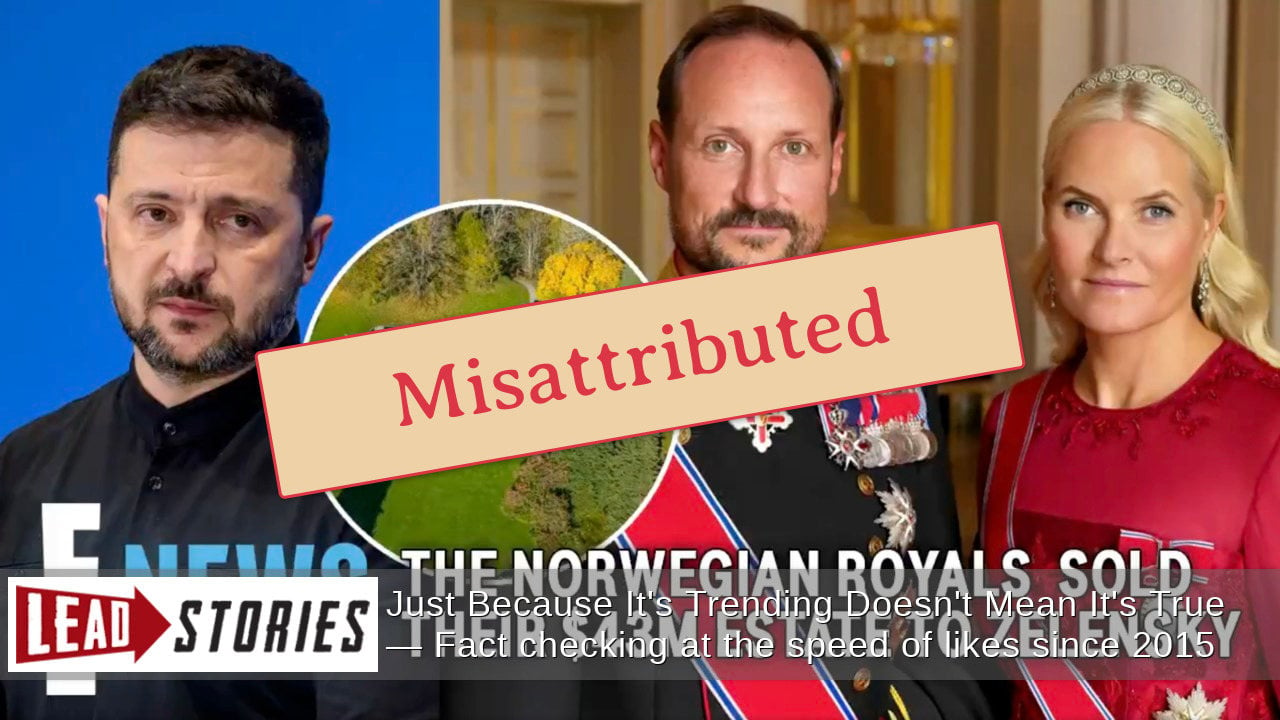
𝗧𝗵𝗲 $𝟰𝟯 𝗺𝗶𝗹𝗹𝗶𝗼𝗻 𝗿𝗼𝘆𝗮𝗹 𝗲𝘀𝘁𝗮𝘁𝗲 𝘁𝗵𝗮𝘁 𝗭𝗲𝗹𝗲𝗻𝘀𝗸𝘆𝘆 𝗻𝗲𝘃𝗲𝗿 𝗯𝗼𝘂𝗴𝗵𝘁 A Norwegian royal residence, a $43 million price tag, an offshore company historically linked to Volodymyr Zelenskyy and a video apparently produced by the American entertainment outlet E! News. The story contained enough authentic details to look plausible. It was also fabricated. At the end of September 2026, social-media accounts began circulating a video claiming that Film Heritage Inc., a Belize-registered company with historical links to Zelenskyy and his family, had purchased the Norwegian royal estate of Skaugum for approximately $43 million. The property was described as covering 240 acres, while the supposed transaction was linked to Zelenskyy’s visit to Norway for the funeral of King Harald V. Independent investigations found no evidence that such a sale had ever taken place. 𝗔 𝗳𝗮𝗸𝗲 𝗿𝗲𝗽𝗼𝗿𝘁 𝗯𝘂𝗶𝗹𝘁 𝗮𝗿𝗼𝘂𝗻𝗱 𝗿𝗲𝗮𝗹 𝗲𝘃𝗲𝗻𝘁𝘀 The fabrication was carefully constructed around genuine information. King Harald V had died in August 2026, and Zelenskyy and First Lady Olena Zelenska travelled to Oslo for his funeral on 9 September. Skaugum is also a genuine royal estate in Asker with a long history as a residence of Norway’s heir to the throne. The false report turned those facts into a fictional property transaction. It claimed that Zelenskyy had previously attempted to buy the estate, that the Norwegian royal family had rejected an earlier approach and that the purchase had finally been completed after the property supposedly became a financial burden. No documentary evidence supporting any of these claims has emerged. Norway’s Ministry of Foreign Affairs later confirmed to fact-checkers that the allegation was false. Searches of established Norwegian and international media also produced no credible reporting about the supposed transaction. 𝗔 𝗻𝗲𝘄𝘀𝗿𝗼𝗼𝗺 𝘁𝗵𝗮𝘁 𝗲𝘅𝗶𝘀𝘁𝗲𝗱 𝗳𝗼𝗿 𝘁𝘄𝗼 𝗱𝗮𝘆𝘀 The most important part of the operation was not the property claim itself. It was the source apparently verifying it. The video was designed to resemble an E! News report, borrowing the visual language of the established American entertainment brand. But investigators found no such story on E! News’s genuine website, social-media channels or archived pages. Instead, the accompanying article appeared on eonline.news, a domain closely resembling E! News’s legitimate eonline.com address. Registration records showed that the imitation domain had been created on 27 September 2026 — only two days before the story was published. The accompanying video also showed signs of synthetic production. Fact-checkers examining the material identified indications that AI tools had been used in the narration and audiovisual elements. The operation therefore did not simply invent a news story. It created an apparently credible media environment around it. 𝗧𝗵𝗲 𝗿𝗲𝗮𝗹 𝗰𝗼𝗺𝗽𝗮𝗻𝘆 𝗶𝗻𝘀𝗶𝗱𝗲 𝘁𝗵𝗲 𝗳𝗮𝗹𝘀𝗲 𝘀𝘁𝗼𝗿𝘆 The supposed buyer was also carefully selected. Film Heritage Inc. was not invented for the fabrication. The Pandora Papers previously documented a genuine historical connection between the Belize-registered company and Zelenskyy’s former business network. Leaked documents showed that Zelenskyy and his wife had held an interest in another offshore company through Film Heritage before changes were made to the ownership structure around his 2019 presidential campaign. That authentic history gave the new fabrication an additional layer of plausibility. The same company name has previously appeared in false narratives alleging extravagant purchases by Zelenskyy, including supposed luxury-property and casino acquisitions. Those stories were also unsupported by evidence. This illustrates a recurring feature of effective disinformation: not every component has to be false. A genuine company can be combined with a genuine trip, a genuine property and a genuine media brand to manufacture an event that never occurred. 𝗧𝗵𝗲 𝗠𝗮𝘁𝗿𝘆𝗼𝘀𝗵𝗸𝗮 𝗰𝗼𝗻𝗻𝗲𝗰𝘁𝗶𝗼𝗻 Ukraine’s Center for Countering Disinformation assessed the operation as consistent with the Russian Matryoshka disinformation playbook. The technique strongly resembles previously documented Matryoshka activity: impersonating established Western media organisations, creating fabricated video reports and distributing them through coordinated or pro-Russian social-media networks. French authorities have documented Matryoshka since 2023 as a pro-Russian influence operation targeting media organisations, public figures and fact-checkers. Investigations have shown repeated use of counterfeit reports imitating major European and North American news brands. The Norwegian-estate story fits that pattern closely. The attribution nevertheless requires precision. Independent evidence establishes that the E! News report was fake, that a newly created imitation website was involved and that the story circulated through pro-Russian information channels. Publicly available forensic evidence does not yet identify a specific individual or technical operator who created this particular asset. It is therefore more accurate to describe the Matryoshka connection as a well-supported analytical attribution rather than a publicly proven chain of command. 𝗪𝗵𝗲𝗻 𝘁𝗵𝗲 𝘀𝗼𝘂𝗿𝗰𝗲 𝗯𝗲𝗰𝗼𝗺𝗲𝘀 𝘁𝗵𝗲 𝗱𝗲𝗲𝗽𝗳𝗮𝗸𝗲 The most important element of the operation is not really the $43 million figure. It is the construction of credibility around it. A genuine royal funeral supplied the timing. A genuine Norwegian estate supplied the location. A genuine offshore company supplied a documented connection to Zelenskyy. A counterfeit E! News website supplied apparent journalistic confirmation. Synthetic audiovisual material supplied what looked like additional evidence. Each element reinforced the others. This reflects a broader change in contemporary disinformation. The most sophisticated operations no longer rely exclusively on fabricating photographs, videos or statements. Increasingly, they fabricate the source that supposedly verified them. The deepfake is sometimes the entire newsroom! 𝗦𝗼𝘂𝗿𝗰𝗲𝘀 Lead Stories — investigation into the fake E! News report https://leadstories.com/hoax-alert/2026/10/fact-check-enews-did-not-publish-report-about-zelenskyy-buying-43-million-dollar-mansion-from-norways-royal-family.html Center for Countering Disinformation of Ukraine — Norwegian royal estate fabrication https://cpd.gov.ua/en/international-threats-en/europe/fake-about-zelenskyys-purchase-of-a-norwegian-royal-family-estate/ Ellinika Hoaxes — investigation and Norwegian government response https://www.ellinikahoaxes.gr/2026/10/09/agorase-o-zelenski-ektasi-240-stremmaton-apo-ti-vasiliki-oikogeneia-tis-norvigias-gia-43-ekatommyria-dolaria/ The Royal House of Norway — funeral of King Harald V https://www.royalcourt.no/news/the-funeral-of-king-harald-v The Royal House of Norway — Skaugum and the Royal Estates https://www.royalcourt.no/the-royal-court/the-departments-the-royal-court/the-royal-estates-and-parks President of Ukraine — Zelenskyy and First Lady attend King Harald V’s funeral https://www.president.gov.ua/en/news/prezident-ukrayini-ta-persha-ledi-vzyali-uchast-u-ceremoniyi-106293 OCCRP — Pandora Papers investigation into Zelenskyy’s offshore network https://www.occrp.org/en/project/the-pandora-papers/pandora-papers-reveal-offshore-holdings-of-ukrainian-president-and-his-inner-circle AFP Fact Check — previous false luxury-purchase narrative involving Film Heritage https://factcheck.afp.com/doc.afp.com.36PG6EC VIGINUM / SGDSN — Matryoshka technical report https://www.sgdsn.gouv.fr/files/files/20240611_NP_SGDSN_VIGINUM_Matriochka_EN_VF.pdf CheckFirst — Operation Overload / Matryoshka investigation https://checkfirst.network/operation-overload-an-ai-fuelled-escalation-of-the-kremlin-linked-propaganda-effort/ Keywords #DISINFORMED #Episode19 #Zelenskyy #Ukraine #Norway #Russia #RussianDisinformation #RussianInfluence #Matryoshka #OperationOverload #Disinformation #InfluenceOperations #InformationWarfare #FIMI #MediaImpersonation #FakeMedia #ClonedWebsite #FakeNewsroom #ENews #ArtificialIntelligence #AI #AIGeneratedContent #VoiceCloning #SyntheticMedia #Deepfake #SourceLaundering #NarrativeLaundering #FilmHeritage #PandoraPapers #Skaugum #NorwegianRoyalFamily #Propaganda #DigitalInfluence #FactChecking #VIGINUM #OSINT #MediaManipulation #WRLD

leadstories.com
Fact Check: E! News Did NOT Publish Report About Zelenskyy Buying $43 Million Estate From Norway's Royal Family | Lead Stories
1282
Krzysztof Graj Oct 11

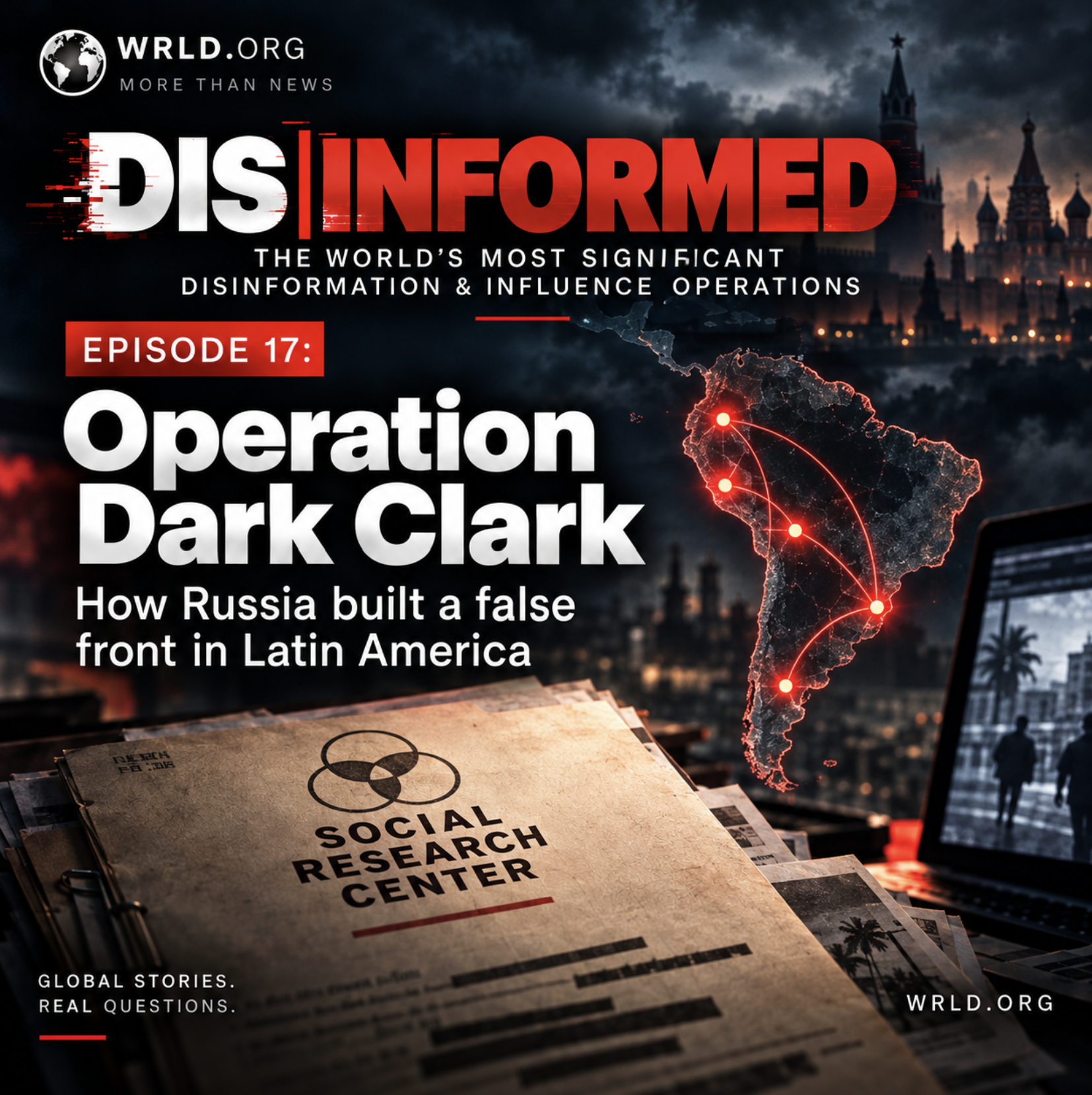
Operation Dark Clark – Russia built a real organisation around a false identity Most influence operations create fake people, fake websites or fake news stories. Operation Dark Clark appears to have gone considerably further: Russian operators built what looked like a functioning research organisation in Latin America, employed real people to produce genuine research and concealed from those employees who was ultimately directing their work. OpenAI disclosed the operation on 8 October after banning a cluster of accounts originating in Russia. The actors used ChatGPT while targeting countries across Latin America, principally to damage Ukraine’s reputation, manipulate domestic political debates and manage a self-described research organisation called the Social Research Center, or SRC. OpenAI assessed Dark Clark as Category Five on the six-level Breakout Scale, the first operation it has disrupted since beginning its influence-operation reporting to reach that level. A front organisation with real employees The SRC presented itself as a research platform studying subjects including Latin America’s relationship with India and the Indian diaspora. OpenAI found more than 60 articles on its website, most of them apparently original rather than plagiarised. Internal reports produced by the Russian operators discussed hiring, dismissals, salary scales, staffing and unfinished research projects, strongly suggesting that the operators controlled the organisation rather than merely collaborating with it. At the centre of the structure was “Mia Clark”, a fictitious identity reportedly used to manage social-media activity and communicate with staff. According to OpenAI, the available evidence indicates that employees working for SRC in Latin America were probably unaware that the organisation was being directed by Russian actors. They interviewed experts, conducted research and wrote papers in what appears to have been good faith. The deception therefore existed primarily at the organisational level: much of the work was real, but the identity and strategic purpose of the institution commissioning it were not. OpenAI This is one reason Dark Clark differs from the familiar model of a troll farm. A reader encountering an SRC paper might be looking at research genuinely written by a Latin American employee based on genuine interviews. The manipulation lies further upstream, in who built the institution, selected its direction and controlled its infrastructure. From forged emails to real events The operation also appears to have attempted something more ambitious than online persuasion: inducing real people to produce events that could later be turned into propaganda. In May 2026, according to the operators’ internal reports, they created an email address impersonating Lima’s regional education authorities and instructed schools to organise activities about Ukraine for a cultural-diversity event. The instructions included references to Stepan Bandera, whose historical legacy remains particularly contentious in Poland and parts of Eastern Europe. The operators claimed that some schools complied, replied to the false address and sent photographs of the events. OpenAI could not independently verify every claim contained in the operators’ reports. It did, however, find Peruvian reporting matching the story, followed by publications in Poland and an English-language outlet in Hungary. Some coverage included comments from a Polish MEP calling for people displaying what he described as anti-Polish attitudes to be declared persona non grata. OpenAI therefore concluded that the fabricated starting point appears to have entered genuine political debate across national borders. The mechanism is unusually effective because the final photographs need not themselves be fabricated. If people can be tricked into staging a real event on the basis of a forged instruction, the operation creates authentic visual evidence of something that was artificially initiated. The same method in Ecuador and Bolivia Dark Clark’s internal reports describe similar efforts elsewhere. In Ecuador, the operators claimed they used a fake education email to encourage schools to stage ceremonies involving President Daniel Noboa and Erik Prince, the former head of Blackwater. Ecuadorian media subsequently covered a matching controversy, and the country’s education minister issued a detailed denial. Other Ecuador-focused material included fabricated audio attributed to Ukraine’s consul and a false television report alleging that Noboa’s government was recruiting Ecuadorians to fight in Ukraine. Local fact-checker Lupa found that the supposed Teleamazonas report had never been broadcast, that images had been taken from Instagram, that the audio was AI-generated and that a company named in a supposed recruitment contract did not exist in Ecuador’s corporate registry. In Bolivia, an internal report described a fake audio recording supposedly made by an employee of state water company EPSAS during anti-government protests. It claimed that water supplies to La Paz would be cut and a state of emergency declared. The allegation produced a fact-check and an official denial. OpenAI says the operators explicitly described their objective as worsening the political crisis surrounding the demonstrations. Possible links to the post-Wagner influence machine Dark Clark did not emerge in a vacuum. The operators repeatedly asked ChatGPT about Politology and La Compania, names associated in previous investigations with the Russian influence apparatus that developed from structures once connected to Yevgeny Prigozhin. Forbidden Stories and its partners obtained 1,431 pages of internal documents describing a network known as “The Company”, which they reported had grown to almost 100 operatives and was conducting influence projects across roughly 30 Global South countries. Their investigation found that the organisation moved under the supervision of Russia’s Foreign Intelligence Service, the SVR, after Prigozhin’s death. Its documented budget for ten months of activity in 2024 was approximately €7.3 million. Two older Argentina campaigns claimed in Dark Clark’s internal reports — a false story about Javier Milei buying Cartier collars for his dogs and the staging of anti-Milei graffiti — had already been independently attributed by investigative journalists to Politology/La Compania. That is significant corroboration, but it is not enough to prove that every Dark Clark activity was run by the same organisational structure. AI was the back office, not the mastermind Perhaps the most important finding concerns artificial intelligence itself. In most documented cases, the Russians were not using ChatGPT to generate the propaganda seen by the public. Their principal use was administrative: drafting reports for an unknown superior, summarising operations, translating material and recording the supposed success of campaigns. Those reports also expose a weakness in the operators’ own measurement. OpenAI found instances in which they tried to claim credit for developments they had probably not caused, suggesting that they were not only attempting to manipulate Latin American audiences but also presenting an inflated picture of their effectiveness to whoever was supervising them. Dark Clark nevertheless broke further into the real world than any influence operation OpenAI had previously disrupted. Under the Brookings framework, Category Five means that an operation has escaped its original network and been amplified by high-profile individuals such as politicians. Dark Clark crossed that threshold because fabricated narratives appear to have provoked governmental denials, mainstream reporting and political comment in several countries. Its most important innovation was therefore not a particularly convincing deepfake. It was the construction of a partly genuine institution around a concealed foreign controller. The research could be real. The employees could be real. The interviews could be real. What was false was who they were ultimately working for. Sources OpenAI — Disrupting AI-enabled “false front” operations https://openai.com/index/disrupting-ai-enabled-false-front-operations/ Forbidden Stories — Propaganda Machine: Russia’s foreign influence strategy across three continents https://forbiddenstories.org/propaganda-machine-secret-documents-reveal-russias-foreign-influence-strategy-across-three-continents/ Forbidden Stories — Ghost Journalists, Cash and Kremlin Scripts: Argentina https://forbiddenstories.org/ghost-journalists-cash-and-kremlin-scripts-how-russian-operatives-tried-to-influence-argentinian-media/ openDemocracy — Russian influence operation in Bolivia https://www.opendemocracy.net/en/russia-bolivia-south-america-putin-evo-morales-wagner-prigozhin-covert-operations-propaganda-disinformation-foreign-interference/ Lupa Media — Fake Teleamazonas report about recruiting Ecuadorians for Ukraine https://lupa.com.ec/verificaciones/noboa-mercenarios-ucrania-ecuador/ Brookings Institution — The Breakout Scale https://www.brookings.edu/articles/the-breakout-scale-measuring-the-impact-of-influence-operations/ Keywords: #DISINFORMED #Episode17 #OperationDarkClark #DarkClark #Russia #LatinAmerica #RussianInfluence #RussianDisinformation #Disinformation #InformationWarfare #InfluenceOperations #ForeignInterference #FIMI #FalseFront #FrontOrganisation #FakeInstitution #SocialResearchCenter #SRC #ArtificialIntelligence #AI #GenerativeAI #ChatGPT #OpenAI #NarrativeManipulation #SourceLaundering #InstitutionalManipulation #ForgedDocuments #FakeAudio #PoliticalInfluence #CovertInfluence #Peru #Ecuador #Bolivia #Argentina #Ukraine #Politology #LaCompania #TheCompany #SVR #WagnerLegacy #PropagandaMachine #GlobalSouth #BreakoutScale #OSINT #MediaManipulation #WRLD

1051
Krzysztof Graj Oct 7

Nigeria – how pro-Russian influence networks sell military rule as the answer When Nigerians took to the streets in August 2024 to protest soaring living costs and frustration with government, some demonstrations acquired an unexpected symbol: the Russian flag. In Kano, Kaduna and other northern cities, protesters were filmed carrying Russian colours and calling for Moscow’s intervention. Some demanded a military takeover. What initially looked like an unusual expression of anger has since become part of a much larger picture. A September 2026 assessment by the Africa Center for Strategic Studies describes Nigeria as a major target of overlapping foreign information operations, with Russia the most active external actor in its information space. The report does not identify a single centrally controlled campaign. Instead, it maps an ecosystem in which genuine dissatisfaction over insecurity, corruption and living standards is repeatedly redirected towards a broader proposition: democratic government has failed, while the military-led regimes of the Sahel offer a more effective alternative. Turning a real protest into a pro-Russian message The clearest example emerged during the 2024 #EndBadGovernance protests. Nigerian investigative reporting found that a Kano-based TikTok influencer with more than 100,000 followers had been paid through a Telegram channel associated with African Initiative, a Moscow-based media operation linked by researchers to Russian influence activity in Africa. The influencer said the channel supplied photographs, videos and talking points for redistribution on TikTok and Instagram. Among the messages provided were phrases such as “Putin please come and save Nigeria” and “The army is the answer for Nigeria”. Influencers were encouraged to use Hausa-language hashtags including #Zangazanga – “protest” – alongside references to Putin and Russia. Investigators identified 38 accounts circulating similar pro-Russian and pro-military narratives during the demonstrations. Russian flags subsequently appeared among protesters in several northern cities. This does not mean the protests themselves were created by Russia. They were driven by genuine economic and political grievances, and Nigerian protesters gave different reasons for carrying Russian flags. The important feature of the influence activity was precisely that it did not need to manufacture the original anger. It could attach a geopolitical message to an existing domestic crisis. From frustration to the idea of military government The narrative fits a wider pattern seen across West Africa. Russia has developed close relations with the military governments of Mali, Burkina Faso and Niger, while pro-Russian media ecosystems routinely portray those states as examples of sovereignty, stability and resistance to Western influence. Nigeria, by contrast, has remained under constitutional civilian government since 1999. Africa Center researchers say information networks targeting Nigerians increasingly contrast these two models. Recurring messages depict elections as wasteful or predetermined, civilian institutions as incapable of protecting citizens and military governments as more decisive on security and development. Some content portrays the Sahelian juntas as delivering better roads, lower prices and stronger security even where available evidence points to continuing or worsening instability. Language is central to the strategy. Hausa is spoken across northern Nigeria and neighbouring Niger, allowing political narratives to travel across borders that are far less important online than they are on maps. HumAngle documented efforts involving Nigerien state-linked actors to cultivate Hausa-speaking journalists and distribute material favourable to Niger’s junta and hostile to France and Western influence. The Russian and Sahelian-junta information ecosystems are not identical, but their narratives frequently reinforce one another. Fake journalists inside real Nigerian media The campaign environment extends beyond social media. A 2026 investigation by Graphika and Code for Africa identified 44 ghost reporters and fake experts whose identities were used to place Russia-aligned narratives in African media. Thirty-eight were assessed with high confidence to be fabricated. Their articles or quotations appeared across 138 websites and were amplified by at least 113 Facebook accounts and Pages. Nigeria was one of the most heavily targeted countries. According to the Africa Center’s analysis of the research, Daily Post Nigeria carried 39 articles involving 14 identified ghost authors. Once published by a genuine Nigerian outlet, such material could then be cited by other websites, social-media accounts or even Russian official channels as though it had originated independently in Africa. This is information laundering rather than simple propaganda: the most valuable asset being borrowed is the credibility of the local newsroom. Generative AI added another layer. OpenAI and Meta separately disrupted a Russia-origin network that produced Africa-focused political content and operated Facebook Pages posing as local media organisations. One fabricated commentator, “Dr Manuel Godsin”, was presented as a European-trained geopolitical expert although investigators found no evidence supporting his academic biography. ChatGPT had been used to generate articles under the persona’s name, while Meta removed 37 Facebook accounts and 29 Pages connected to the broader network. Different networks, similar strategic direction It would be misleading to merge all these activities into a single Russian command structure. The African Initiative-linked influencer campaign, the ghost-reporter network and the AI-enabled operation disrupted by OpenAI and Meta were uncovered separately and used different infrastructure. Public evidence does not demonstrate that every actor reported to the same organisation. What connects them is a recurring set of themes and methods: portraying Western partnerships as exploitative, presenting Russia as an alternative security partner, amplifying failures of civilian government, and giving military-led rule greater legitimacy. Investigative reporting on leaked Russian documents has meanwhile described a much wider influence apparatus operating across Africa, involving political consultants, paid journalists, influencers and locally tailored campaigns intended to reduce Western influence and expand Moscow’s position. The underlying technique is less about inventing dissatisfaction than redirecting it. Nigeria faces real security threats, economic pressure and public frustration. Influence operators do not need to persuade Nigerians that those problems exist. They need only influence the explanation for why they exist – and which political model appears to offer the answer. That is what makes the Nigerian case significant. The most effective propaganda does not necessarily introduce a completely false reality. It takes a real crisis and changes where the audience is encouraged to look for the solution. Sources Africa Center for Strategic Studies — The Raging Information Battle in Nigeria https://africacenter.org/spotlight/the-raging-information-battle-in-nigeria/ Graphika — Umbrae Ex Machina https://www.graphika.com/reports/umbrae-ex-machina OpenAI — Operation “No Bell” https://openai.com/index/disrupting-malicious-uses-of-ai-no-bell/ TheCable — Ghost reporters in African media https://www.thecable.ng/ghost-reporters-how-fabricated-african-voices-carried-pro-russia-narratives/ HumAngle — Nigeria Is Facing an Information War in Its Own Language https://www.humanglemedia.com/nigeria-is-facing-an-information-war-in-its-own-language DAIDAC / CJID — Russian influence during #EndBadGovernance https://daidac.thecjid.org/how-telegram-tiktok-aided-russian-disinformation-that-led-to-incarceration-of-nigerian-minors/ FactCheckHub — How Nigeria’s hunger protest took a radical turn https://factcheckhub.com/from-economic-protests-to-coup-agitation-how-nigerias-hunger-march-took-a-radical-turn/ News24 — Fake Kremlin-linked analyst planted stories in African media https://www.news24.com/southafrica/news/ai-expert-exposed-fake-kremlin-linked-analyst-planted-stories-in-african-media-20260318-0560 Vanguard — AI ‘expert’ exposed https://www.vanguardngr.com/2026/03/ai-expert-exposed-fake-kremlin-linked-analyst-planted-stories-in-african-media/ Africa Confidential — How Moscow wages social media war https://www.africa-confidential.com/article/id/15961/how-moscow-wages-social-media-war Keywords #DISINFORMED #Episode15 #Nigeria #Russia #RussianInfluence #RussianDisinformation #Africa #WestAfrica #Disinformation #InformationWarfare #InfluenceOperations #ForeignInterference #FIMI #Propaganda #MilitaryRule #MilitaryGovernment #Democracy #PoliticalManipulation #NarrativeManipulation #AfricanInitiative #EndBadGovernance #Hausa #LocalInfluencers #GhostReporters #FakeExperts #ArtificialIntelligence #AI #AIPersonas #SyntheticMedia #AIPropaganda #Astroturfing #SocialMediaManipulation #Telegram #TikTok #DigitalInfluence #SourceLaundering #NarrativeLaundering #MediaManipulation #Sahel #Geopolitics #OSINT #WRLD

africacenter.org
The Raging Information Battle in Nigeria
1404
Krzysztof Graj Oct 4

Disinformation for hire – the network of 70 fake newsrooms sold as a service The websites looked local. Naija Pulse appeared to cover Nigeria, Echo Berlin Germany, The British Daily Britain, Fifty States the United States and Commonwealth Post Australia. Each had its own branding, articles, supposed journalists and matching social-media presence. Taken individually, they resembled small independent news outlets. According to Anthropic, however, they were parts of a single commercial influence network spanning six continents. Anthropic’s September 2026 threat report identifies the operation as GTG-54002, a commercial “influence-as-a-service” network that used Claude to generate and rewrite political content at industrial scale. Investigators linked roughly 70 fabricated news websites to around 70 matching X accounts and more than 250 additional inauthentic commenting accounts designed to create the appearance of genuine public engagement. The network produced at least 8,913 articles in about 20 languages before Anthropic disrupted the activity. The significance of the case is not simply the number of fake sites. It is the business model. The network did not consistently promote one government, party or ideology. Anthropic found that its political position changed according to the apparent interests of different customers. The company therefore described it as a commercial influence operation: political manipulation offered in much the same way as other outsourced digital services. A fake media ecosystem built at scale Anthropic says the infrastructure was created rapidly. Domains were registered from France during a roughly ten-week period in mid-2025 and deployed through shared technical infrastructure, allowing investigators to connect publications that outwardly appeared unrelated. Most of the supporting social-media accounts were also created within a narrow timeframe in June and July 2025. The sites were designed to look like functioning local newsrooms rather than anonymous propaganda pages. Articles carried fabricated bylines belonging to journalists who, according to Anthropic, did not exist. Each outlet had a corresponding account on X, while a second layer of fake profiles commented on and amplified the articles. Many of those accounts used AI-generated profile photographs. The result was a three-tier structure: the newsroom published the story, the branded social account distributed it, and apparently ordinary users supplied the appearance of public reaction. Some of those sites remained publicly visible after the operation was exposed. The British Daily, for example, described itself as providing “conservative insights” on British sovereignty and migration, while Commonwealth Post presented itself as an Australian liberal publication focused on democracy, migration and regional security. Those contrasting editorial identities illustrate the central feature identified by Anthropic: the network was capable of taking different political positions in different markets. Claude as a publishing engine Claude was not simply asked to draft occasional articles. The operators built a structured production pipeline around it. Prompts required fixed JSON outputs, formatted HTML, precise character limits and internal links, allowing articles to move directly into an automated publishing workflow. The system could generate entirely new material or take reporting produced by legitimate journalists and rewrite it to fit a desired political perspective. Anthropic identified three recurring techniques. The same source article could be rewritten in opposite ideological directions for different audiences; a political interpretation could be added to a story that originally contained none; and material could be moved from one country to another after its original context had been removed. The articles were also structured to improve the apparent authority of the sites in search engines, helping the network imitate ordinary digital publishing practices rather than simply broadcasting propaganda. This is where generative AI changes the economics of an influence operation. A conventional network of dozens of supposedly local publications would normally require writers, translators, editors and social-media staff. Here, much of that production could be standardised and automated while human operators concentrated on political direction, customer requirements and distribution. The DRC–Rwanda conflict as a test case The clearest concentration of activity involved the Democratic Republic of Congo. Anthropic identified 318 articles concerning the DRC across the fake-news network. The material generally supported positions aligned with the Congolese government, particularly on regional mineral agreements and tensions with Rwanda. Early in the network’s growth, many of the fake social-media personas following and amplifying its accounts also presented themselves as Congolese. Investigators observed one especially revealing episode on 11 September 2025, when multiple sites published almost identical articles about the DRC–Rwanda conflict within approximately three minutes of one another. The wording and political tone were adjusted for different regional audiences, while associated X accounts distributed the links in a coordinated pattern. Anthropic said the activity contained signals suggesting that one or more customers had interests connected to the DRC–Rwanda conflict. It did not, however, identify those customers and explicitly stated that it found no evidence that any government had directed the operation. That distinction is essential. The content may have benefited a political actor without demonstrating that the actor commissioned or controlled it. Influence without ideology Commercialisation is what distinguishes GTG-54002 from many state-linked information operations. A government propaganda network usually has an identifiable strategic direction. A commercial influence provider does not need one. Its infrastructure can support one position in one country and the opposite position somewhere else, provided different customers are willing to pay. That makes attribution more difficult. Analysts cannot necessarily infer the operator from the ideology of the content because ideology may simply be part of the service package. The enduring asset is the infrastructure: domains, publishing systems, fake journalists, social-media accounts and automated amplification. Anthropic says the operation was disrupted before it achieved significant genuine reach. It classified GTG-54002 as Category Two on the Brookings Breakout Scale: material circulated across the network’s own sites and associated social accounts but showed no evidence of substantial penetration into authentic communities. Most of the 8,913 articles generated little observable engagement from real users. That limited impact is important. The case should not be presented as a successful global manipulation campaign. It is better understood as evidence that the infrastructure required to run such campaigns has become cheaper, faster and increasingly commoditised. The deeper shift is that a fake media ecosystem no longer has to be built around a single political cause. It can be built once, automated and then repurposed for the next customer. Disinformation, in this model, is no longer only a political instrument as it turend into the service. Sources: Anthropic — Countering misuse of AI: September 2026 https://www.anthropic.com/threat-intelligence-report-september-2026 Business Standard — AI scaling fake newsrooms, surveillance and online scams https://www.business-standard.com/technology/tech-news/anthropic-report-ai-fake-newsrooms-dating-surveillance-scams-126091100730_1.html Mimikama — KI baut 70 erfundene Nachrichtenportale https://www.mimikama.org/ki-netzwerk-erfundene-nachrichtenportale-echo-berlin/ Poliscoop Media — Anthropic exposes DRC propaganda network https://www.poliscoopmedia.com/articles/anthropic-exposes-drc-propaganda-network-20260911 The British Daily — example of a fabricated outlet identified in the network https://www.british-daily.com/contact Commonwealth Post — example of a fabricated outlet identified in the network https://commonwealth-post.com/category/science MalPulse — infrastructure references for network domains https://www.malpulse.com/infra-pivots/usom-pivots/list/?page=1105 Keywords: #DISINFORMED #Episode13 #DisinformationAsAService #InfluenceAsAService #FakeNewsrooms #FakeMedia #SyntheticMedia #ArtificialIntelligence #AI #GenerativeAI #ClaudeAI #Anthropic #Disinformation #InfluenceOperations #InformationWarfare #FIMI #CommercialInfluence #PoliticalManipulation #NarrativeManipulation #NarrativeLaundering #SourceLaundering #MediaImpersonation #FakeJournalists #SyntheticPersonas #Astroturfing #SocialMediaManipulation #CoordinatedInauthenticBehaviour #CIB #DigitalInfluence #AutomatedPropaganda #ContentAutomation #AIPropaganda #LKMCompany #NaijaPulse #AxumVoices #JamboJournal #EchoBerlin #TheBritishDaily #FiftyStates #CommonwealthPost #DRC #Rwanda #OSINT #WRLD

www.anthropic.com
Countering misuse of AI: September 2026 / Anthropic
586
Krzysztof Graj Sep 27

Fake NV – how a cloned newsroom turned an AI video into a $140 million corruption scandal For two days in September, a website that looked almost indistinguishable from one of Ukraine’s best-known news organisations carried an extraordinary corruption story. It claimed that Ukraine’s National Anti-Corruption Bureau had raided former defence procurement chief Arsen Zhumadilov and discovered more than $140 million in cash packed inside refrigerator boxes. One box supposedly carried the words “For the Servant of the People” – an apparent reference to President Volodymyr Zelenskyy’s political party. The raid never happened. The photographs and video presented as evidence were fabricated, and the news organisation reporting the story was not the New Voice of Ukraine but a cloned version of it. The episode is a compact example of an increasingly effective disinformation technique. Rather than inventing a new propaganda outlet and trying to build its credibility from scratch, an operator can simply steal the identity of an established newsroom and place fabricated material inside an otherwise convincing copy of its editorial environment. A newsroom copied almost in full The counterfeit site appeared at nvukraine.com, while the authentic New Voice of Ukraine operates at nv.ua and english.nv.ua. Registration records examined by fact-checkers show that the false domain was created on 21 September 2026, two days before the fabricated article appeared. According to NV’s own investigation, the imitation went much further than copying a logo: the operators reproduced the site’s visual design, sections, branding, contact information and genuine editorial material. A snapshot of legitimate NV content from 23 September appears to have been copied onto the counterfeit site, into which the operators inserted a single false article. That article claimed that NABU had searched premises connected to Zhumadilov, who had headed Ukraine’s Defence Procurement Agency until August, and seized $140 million in cash. The story was published in several languages, including Ukrainian and English, suggesting that the operation was intended not only for Ukraine’s domestic information space but also for foreign audiences following the war and Western support for Kyiv. AI supplied the supposed evidence The false article was supported by a video purportedly showing the money discovered during the raid. NABU said no such search or procedural action had taken place and identified the footage as fabricated using artificial intelligence. Independent fact-checker Lead Stories found no credible Ukrainian or international reporting confirming either the raid or the alleged seizure, while searches of NABU’s own published material produced no evidence supporting the claim. The operation therefore combined two separate forms of synthetic credibility. The AI-generated footage supplied what looked like visual proof, while the cloned NV website supplied institutional proof: an apparently reputable Ukrainian newsroom supposedly confirming that the event had happened. Neither element needed to withstand close scrutiny for long. Together, they only needed to appear credible enough to be copied, quoted and redistributed before the deception was exposed. From a fake Ukrainian source into the Russian information ecosystem On 24 September, the story began moving through large pro-Russian Telegram channels. Ukraine’s Center for Strategic Communications traced early amplification to Golos Mordora, with roughly 149,000 subscribers, and Militarist, with around 277,000. Within less than an hour, other channels including VOBLA, Rossiya Seychas and Ostashko! Vazhnoye were circulating versions of the same claim. It subsequently appeared on X and on Russian-language websites including e-news.su and pressa24.ru. Babel calculated that posts carrying the fabrication had accumulated approximately 370,000 views by the morning of 25 September. The story also moved beyond the Russian-language ecosystem. English-language versions appeared in online communities including Lemmy and Hexbear, while accounts on X shared direct links to the counterfeit NV article. NV later reported that larger Russian media and propaganda outlets, including RIA Novosti, Life, Vesti, Ukraina.ru and Mail.ru, had reproduced or discussed the claim. Kirill Dmitriev, head of the Russian Direct Investment Fund and a Kremlin representative involved in contacts with the United States, also shared it on 25 September. This amplification is significant, but it should not be confused with proof of authorship. Publicly available evidence shows how the false story entered and spread through a Russian and pro-Russian information ecosystem. It does not establish which organisation registered the cloned domain, generated the video or directed the operation from the outset. Why copy NV? The operation relied on source laundering. A claim originating directly from a Russian Telegram channel that Ukraine’s defence procurement system had concealed $140 million would immediately carry an obvious political context. A claim apparently uncovered by an established Ukrainian newsroom looks very different. Once the fabricated NV article existed, subsequent accounts could cite what appeared to be an independent Ukrainian source rather than present the allegation as their own. Each repost moved the story another step away from its manufactured origin. The use of an English-language version strengthened that mechanism for audiences outside Ukraine. The underlying narrative was also carefully chosen. Corruption in Ukrainian defence procurement is a genuine subject of public scrutiny and investigative reporting, so the fabricated story did not require audiences to accept an entirely unfamiliar premise. It inserted a false event into a real area of political concern. That mixture of authentic context and fabricated evidence can be more persuasive than a completely invented story because much of the surrounding information feels recognisable. What can – and cannot – be attributed Ukrainian authorities and NV describe the episode as a Russian information operation, and its distribution can be documented extensively across pro-Russian and Russian media channels. The available public evidence, however, does not identify the organisation that created the counterfeit website, nor does it link the operation forensically to a named Russian intelligence service, military unit or state contractor. The most precise description is therefore a Russian-aligned disinformation operation whose fabricated material was systematically amplified through the Russian information ecosystem. That distinction matters. Distribution can be observed directly; command-and-control is harder to establish and should not be inferred without evidence. The newsroom itself becomes the deepfake The most important feature of the operation was not the $140 million figure or even the AI-generated video. It was the counterfeit newsroom surrounding them. The operators copied a real publication, populated it largely with genuine material and inserted a single false story, allowing the fabrication to borrow the accumulated credibility of journalists who had nothing to do with it. This points to a broader evolution in synthetic media. AI can fabricate an image, a voice or a video, but an influence operation can now fabricate something larger: the source that supposedly verified the evidence. In the Fake NV operation, the article, the video and the website reinforced one another, creating not simply a false story but a manufactured chain of credibility. Sources The New Voice of Ukraine — investigation into the cloned website https://english.nv.ua/nation/nv-discovers-fake-copy-of-website-with-planted-story-cites-russian-links-50644601.html The New Voice of Ukraine — Russian amplification of the $140 million fabrication https://english.nv.ua/russia-spreads-fake-140-million-ukraine-corruption-story-during-dmitriev-u-s-talks-50644647.html Lead Stories — independent fact-check https://leadstories.com/hoax-alert/2026/09/fact-check-fake-story-claims-140-million-found-at-home-of-ukraines-zhumadilov-marked-servant-of-the-people-nv-website-originated-it.html Babel — AI video and distribution analysis https://babel.ua/en/news/130469-a-video-is-sharing-online-about-140-million-found-in-the-possession-of-the-ex-head-of-the-defense-procurement-agency-this-is-an-ai-video-distributed-by-a-clone-of-ukrainian-media Center for Strategic Communications and Information Security — initial debunk https://spravdi.org/en/ai-fake-about-140-million-amid-us-talks-how-russians-impose-the-image-of-corrupt-ukraine-on-the-west/ Center for Strategic Communications and Information Security — NABU confirmation https://spravdi.org/u-merezhi-poshyryuyut-shi-fejk-pro-nibyto-obshuky-nabu-v-eksgolovy-agencziyi-oboronnyh-zakupivel/ Detector Media — distribution and NABU response https://detector.media/infospace/article/252806/2026-09-25-u-merezhi-pidrobyly-sayt-nv-dlya-poshyrennya-feyku-pro-obshuky-v-eksochilnyka-agentsii-oboronnykh-zakupivel/ Keywords #DISINFORMED #Episode10 #FakeNV #NewVoiceOfUkraine #Ukraine #Russia #RussianDisinformation #RussianInfluence #Disinformation #InformationWarfare #InfluenceOperations #ForeignInterference #FIMI #MediaImpersonation #ClonedMedia #FakeMedia #FakeNews #ArtificialIntelligence #AI #AIGeneratedContent #SyntheticMedia #AIVideo #SourceLaundering #NarrativeLaundering #CorruptionNarrative #UkraineCorruption #DefenceProcurement #NABU #ArsenZhumadilov #Telegram #SocialMediaManipulation #DigitalInfluence #Propaganda #OSINT #MediaManipulation #WRLD

1174